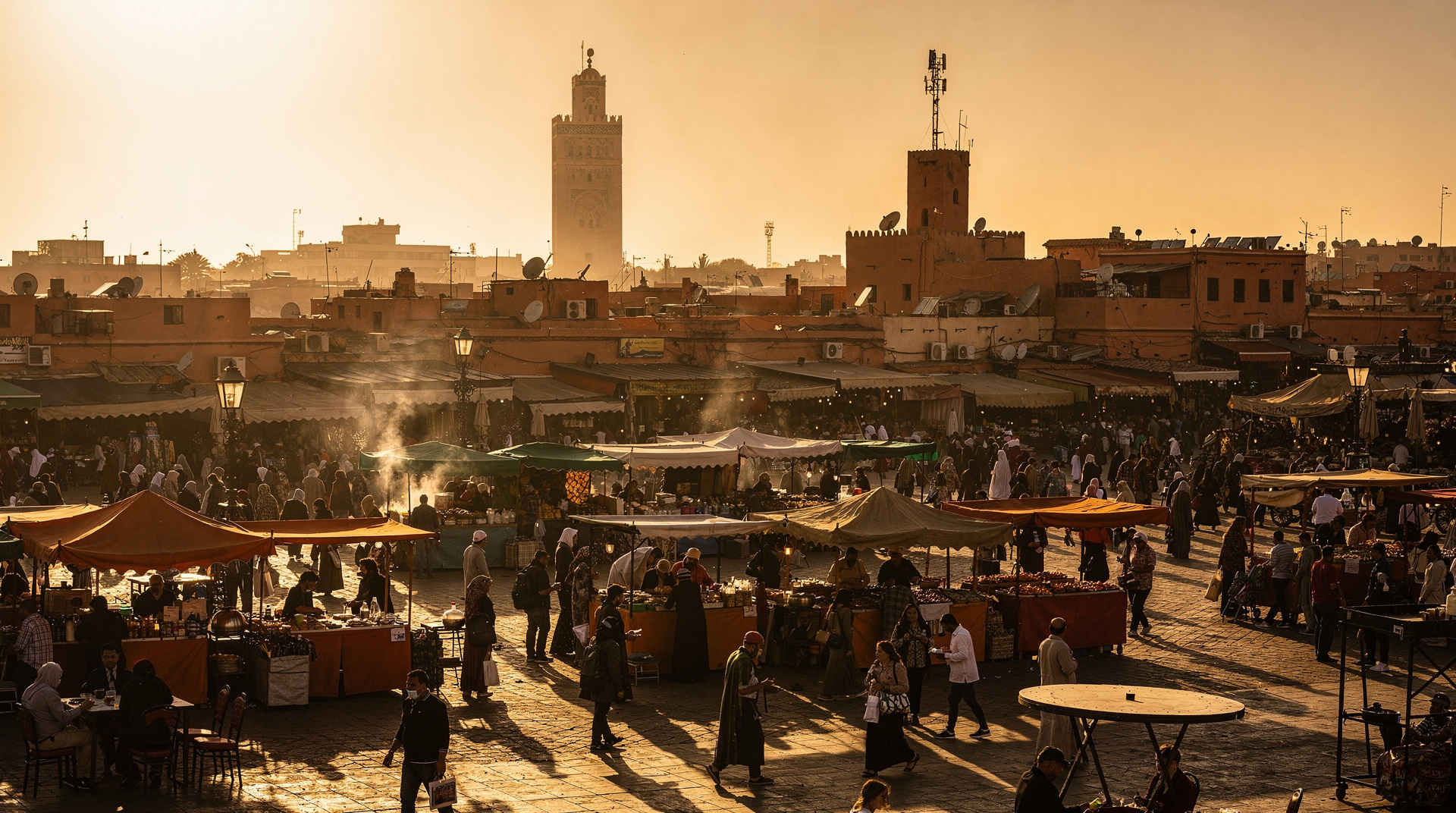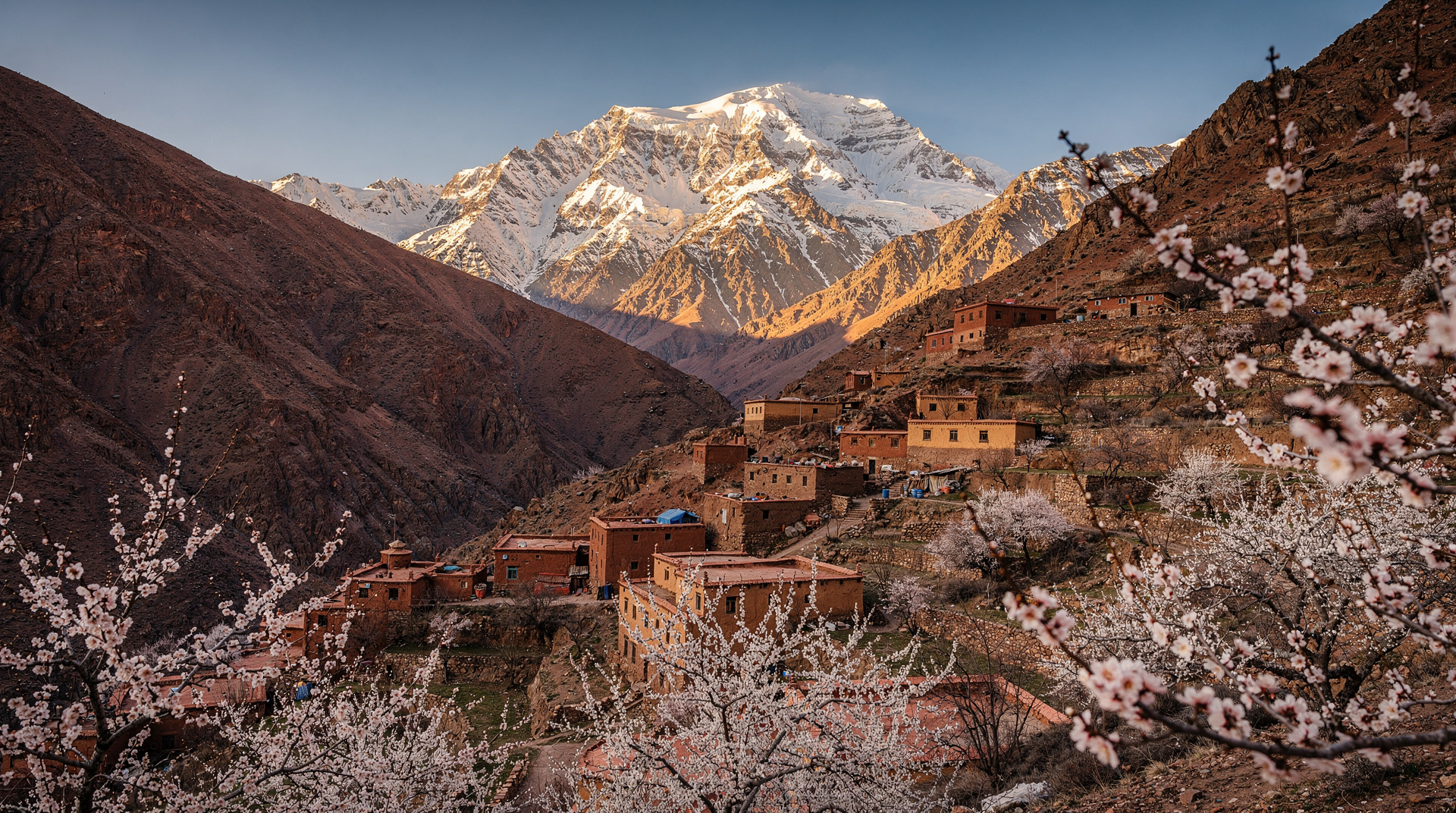
Essaouira vs Asilah vs Taghazout: Which Morocco Coast to Pick
Essaouira, Asilah or Taghazout — which Moroccan coastal town?
Essaouira for a balanced base (medina + food + windsurf + day-trip ease from Marrakech). Asilah for quiet, relaxed, small with Mediterranean influence (best from Tanger). Taghazout for surf, yoga, digital nomads. All three are very different — pick by activity, not 'beach'.
Three coasts, three completely different trips
At a glance
| Where | Morocco’s Atlantic coast — Essaouira (centre), Asilah (far north near Tanger), Taghazout (south near Agadir) |
| Cost | Guesthouses from around 150 MAD/night (Taghazout hostel) to 400+ MAD/night (Essaouira riad) |
| Time needed | 2-3 nights minimum per town; a week or more to pair two comfortably |
| Getting there | Essaouira from Marrakech (2h45 bus); Asilah from Tanger (45min train); Taghazout from Agadir (25min taxi) |
| Best time | Spring/autumn for all three; Taghazout is actually best Oct-Mar for surf swell |
Morocco’s Atlantic coastline stretches more than 2,900 km, and no two stretches are alike. Essaouira, Asilah and Taghazout all sit on that coast, all have whitewashed buildings and ocean views, and all appear on “best Moroccan beach town” lists — yet they serve almost entirely different travellers.
Essaouira is a UNESCO-listed port city with a 300-year-old medina, a food scene that punches above its size, and winds so consistent they shaped the entire culture. Asilah is a small fishing town near Tanger where Atlantic and Mediterranean influences overlap, walls are painted by international muralists each summer, and the pace of life borders on slow enough to feel like a different country. Taghazout is a former fishing village north of Agadir that essentially became a surf camp, attracting beginners chasing point breaks, yoga retreaters, and remote workers who want surf-and-laptop days.
Picking the wrong one for your trip type is a real risk. This guide breaks down the honest differences.
The 2-minute answer: who should go where
| Your priority | Best pick | Why |
|---|---|---|
| First-time Morocco + culture + food | Essaouira | Full medina, excellent restaurants, 2h45 from Marrakech |
| Quiet break, no agenda, small-town feel | Asilah | Tiny, calm, Mediterranean-influenced, 45min from Tanger |
| Surfing — intermediate to advanced | Taghazout | Hash Point and Anchor Point are world-class reef breaks |
| Surfing — absolute beginner | Taghazout or Essaouira | Both have surf schools; Taghazout’s are better-organised |
| Digital nomad (coworking + surf + WiFi) | Taghazout | Established nomad infrastructure, surf-hostel culture |
| Family with young children | Essaouira or Asilah | Sheltered spots, calm afternoons, manageable scale |
| Couple on a romantic weekend | Asilah or Essaouira | Asilah for calm; Essaouira for atmosphere and gastronomy |
| Day-trip from Marrakech | Essaouira | Direct shared taxis and buses, most guides, most tours |
| Day-trip from Tanger | Asilah | 45 minutes south, very easy half-day or full-day |
Head-to-head comparison table
| Factor | Essaouira | Asilah | Taghazout |
|---|---|---|---|
| Vibe | Artistic, windswept, cosmopolitan | Quiet, Andalusian, unhurried | Surf camp, nomadic, casual |
| Size | Medium city (~80,000) | Small town (~35,000) | Village (~5,000) |
| Beach quality | Wide, dramatic, very windy | Compact, relatively sheltered | Reef breaks, rocky entry points |
| Swimming | Difficult (strong currents + wind) | Better, calmer in summer | Not ideal (reef + rip currents) |
| Food scene | Excellent (grilled fish, argan cuisine) | Good (Moroccan + Spanish influenced) | Basic (surf cafes, tagine spots) |
| Surf | Beach break, beginners to intermediate | Not a surf destination | World-class point breaks |
| Kitesurf / windsurf | World-class (consistent Alizé trade winds) | None | None |
| Nearest gateway | Marrakech (2h45) | Tanger (45min) | Agadir (25min) |
| Price level | Mid (riads from 400 MAD/night) | Low-mid (guesthouses from 250 MAD) | Low-mid (hostels from 150 MAD) |
| Family-friendly | Good | Very good | Limited |
| Digital nomad | Moderate | Poor | Excellent |
| Cultural depth | High (UNESCO medina) | Medium (murals, Portuguese history) | Low |
Essaouira: the complete coastal base
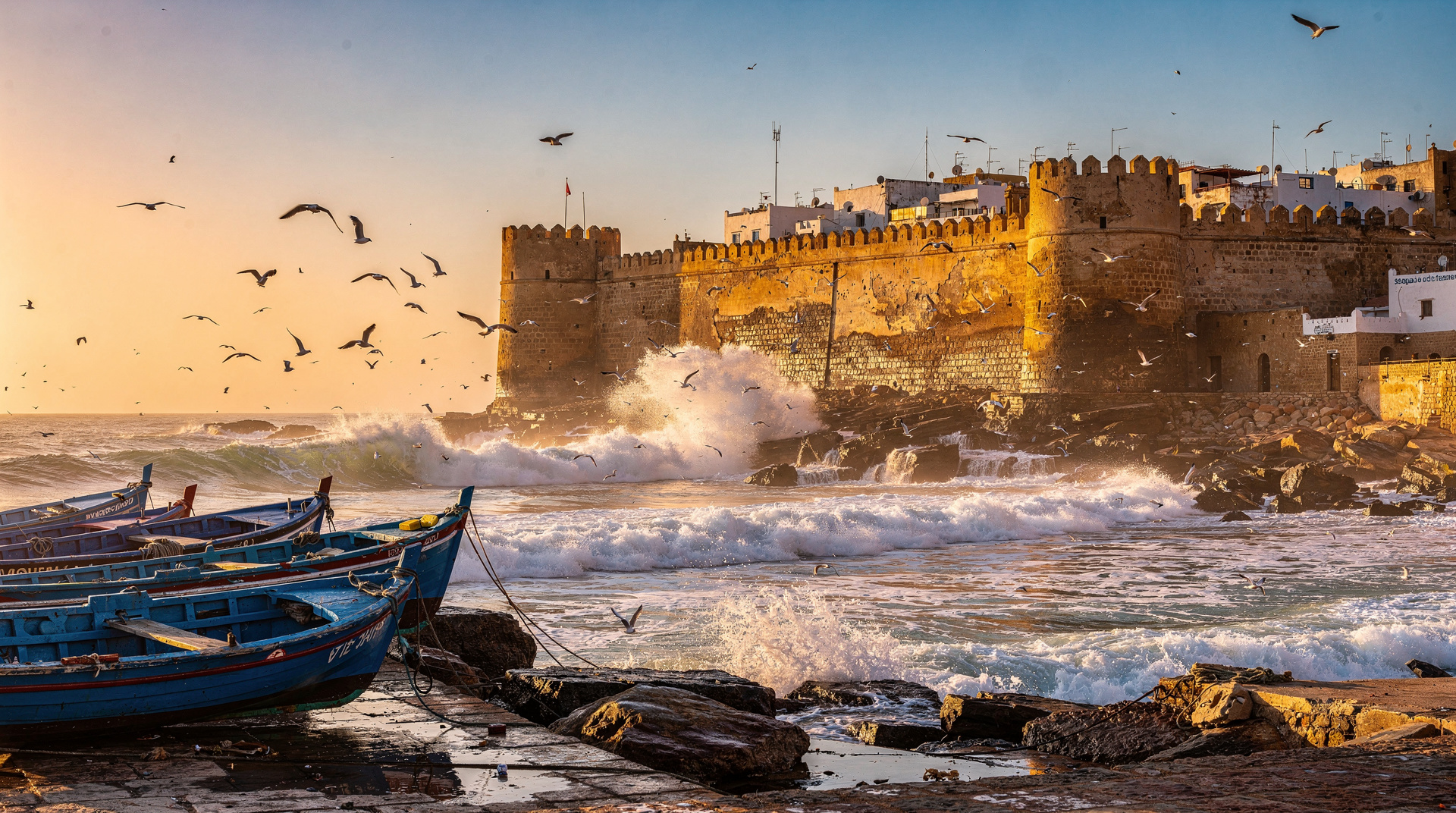
Essaouira sits 170 km west of Marrakech on a promontory where the Atlantic meets a bay sheltered enough for a working fishing port but exposed enough to produce constant trade winds. The medina — entirely enclosed by 18th-century ramparts — is compact, walkable, and genuinely beautiful without being over-restored. Blue boats in the harbour, the smell of charcoal-grilled sardines from the port-side stalls, and gnawa musicians in Djemaa Souk create a sensory atmosphere that few Moroccan coastal towns match.
The medina. Unlike Fes or Marrakech, Essaouira’s medina does not feel overwhelming. The main artery, Avenue de l’Istiqlal, runs 400m from the main gate to the skala (sea rampart). Side streets are navigable without a guide. The Jewish heritage quarter — the Mellah — occupies the northeastern corner and is quiet but historically significant.
Food. Essaouira’s fish stalls at the port entrance are the most honest value proposition in Morocco: grilled dorade, calamari, sea bass, and lobster, priced by weight. Sit-down restaurants include Taros (rooftop terrace, excellent tagines, cocktails), Restaurant Lalla Mira (organic Moroccan cuisine, excellent vegetarian options) and Ocean Vagabond (surf-café atmosphere, good wraps and smoothies). Argan oil appears in everything — the region is within the argan belt — and the cooperative shops on the road from Marrakech are worth stopping for.
Wind. Essaouira earns its nickname “Windy City of Africa” honestly. The Alizé trade winds blow from June to August with particular force — often exceeding 40 km/h by early afternoon. This makes swimming uncomfortable and sunbathing sandy, but it makes Essaouira one of the world’s top kitesurfing destinations. Moulay Bouzerktoun, 27 km north, is the dedicated kite spot. Essaouira beach works best in the mornings before the wind picks up, or in shoulder season (April–May, September–October).
Riads. Budget riad: Riad Dar Maya (from 400 MAD/night), mid-range: Riad Mimouna (from 750 MAD), top-end: La Maison des Artistes or Madada Mogador (from 1,400 MAD/night). Book ahead in summer — occupancy fills by Thursday for weekends.
From Marrakech. Supratours and CTM run direct buses (2h45, around 80 MAD). Shared taxis from Bab Doukkala take slightly longer but run more frequently. The road (N8 then P2401) is good quality and the drive passes argan forest — hiring a car is worth it for the flexibility. See the Essaouira day trip from Marrakech guide for full transport options.
For a guided introduction, this day trip from Marrakech to Essaouira includes transport and activity options including argan co-op stops. Once in town, an Essaouira old town guided walking tour (2–3 hours) covers the ramparts, the fishing port, the medina history and the Mellah in a format that works well for first-timers.
Asilah: the quiet one everyone underrates
Asilah sits 46 km south of Tanger on a headland where the Atlantic mixes with the approaches to the Strait of Gibraltar. It’s small enough that you can walk the entire medina perimeter in 20 minutes, calm enough that the loudest sound most afternoons is the waves on the ramparts below the town, and pretty enough that photographers arrive specifically for the whitewashed walls and painted murals.
The murals. Every August since 1978, Asilah hosts the Moussem Cultural International — an arts festival where international and Moroccan muralists repaint sections of the medina walls. New murals appear each year; old ones fade naturally. The result is an open-air gallery that changes continuously and gives Asilah an arty identity that is entirely organic rather than curated for tourists.
The medina. Asilah’s walled city has clearly Andalusian DNA — Portuguese fortifications from the 15th century, whitewashed houses, and tiled doorways that owe more to Seville than to Fes. The main pedestrian street (Rue Tarfaya) leads to Place Zellaka and the Atlantic-facing promenade. The Portuguese tower and the Hassan II Gallery anchor the main sights.
Beach. The main beach north of the medina (Plage d’Asilah) stretches 3 km and is generally calmer than Essaouira. In July and August it fills with Moroccan families from Tanger and Rabat. The coves south of the medina are smaller and more sheltered. Swimming is genuinely possible here in a way it often is not in Essaouira.
Food. The fishing port produces excellent catches, and the medina restaurants (Casa Garcia, Restaurant Al Khaima) serve straightforward grilled fish and seafood at honest prices. Asilah has a small Spanish-influenced pastry tradition — look for the bakeries near the market square. There are no Michelin-adjacent restaurants here; that’s partly the point.
Logistics. Asilah is not a standalone destination for most international visitors — it works best as a half-day or full-day extension from Tanger. Trains from Tanger-Ville station (45 minutes, 26 MAD) stop at Asilah station, which is a 10-minute walk from the medina. Taxis cover the distance in 35 minutes for 150–200 MAD depending on negotiation. See the Asilah day trip from Tangier guide for the full breakdown.
From Tanger, this Tangier–Asilah half-day trip covers transport, a guided walk of the murals and medina, and free time at the beach — a good option if you want context without researching logistics yourself.
Taghazout: the surf village that became a scene
Taghazout occupies a headland 19 km north of Agadir. Twenty years ago it was a fishing village. Today it is one of the best-known surf destinations in Africa, with a recognisable layout: surf shops on the main street, juice bars and tagine spots with handwritten chalk menus, surf hostels stacked up the hill behind the village, and the world-famous Hash Point break directly in front of the main café terrace.
The waves. Taghazout’s reputation rests on two point breaks: Hash Point (in front of the village, consistent right-hander, best October–April) and Anchor Point (1.5 km north, Morocco’s most famous wave, holds large swell, not for beginners). Killers and Panoramas add variety. In summer the swell drops but offshore winds produce clean, manageable conditions that suit surf schools. Read the detailed Taghazout surf camps guide for camp-by-camp recommendations.
Surf lessons and schools. Multiple operators run lessons on the beach at Taghazout and at the gentler breaks north of the village. This Taghazout surf lesson (2 hours, equipment included) is a reliable entry point — instructors speak English and French, group size is capped. Multi-day surf camps with accommodation start at around 300 EUR/week for budget options; 600–900 EUR/week for mid-range camps with airport transfers and guided sessions.
The nomad scene. Taghazout has invested in nomad infrastructure ahead of most Moroccan coastal towns. Several hostels offer co-working setups (Surf Berbere, Taghazout Bay Surf Camp). WiFi reliability has improved significantly since 2022. The rhythm suits a productive morning session at a laptop followed by an afternoon surf — which is exactly what most residents are doing.
Yoga retreats. Taghazout has a concentration of yoga retreat operators that arrived with the nomad scene. Most retreats run 5–7 days combining morning yoga, surf lessons and day excursions to Paradise Valley (a palm-lined gorge 40 km inland, worth visiting). Prices start at 450 EUR/week all-inclusive for budget retreats.
Agadir proximity. Taghazout is 25 minutes from Agadir by taxi (about 80–100 MAD). Agadir has the airport (AGA, direct flights from multiple European cities), a large Tuesday souk, and beachfront restaurants. The easy connection means you can base in Taghazout for a week and use Agadir for airport transfers, grocery runs, or a city evening. The Taghazout destination page has a full logistics section including taxi rates and bus options.
Beach quality compared honestly
Essaouira beach is dramatic — 6 km of pale sand curving south from the medina, backed by dunes. The problem is the wind, which accelerates past the ramparts from mid-morning. Fine sand becomes airborne; lying on a towel from noon onwards involves constant squinting. Waves are consistent but the undertow is strong enough that recreational swimming is not recommended by the local authorities. The beach is spectacular to walk; less practical to lie on.
Asilah beach is the most functional swimming beach of the three. The headland provides partial shelter, the waves in summer are manageable, and the water temperature is higher than Essaouira (the Canary Current that chills Essaouira weakens somewhat as the coast curves northeast toward the Strait). Families with children who need to actually swim will find Asilah Beach more accommodating. The sand is coarser than Essaouira but the conditions are gentler.
Taghazout is not a swimming beach by design. The point breaks that make it attractive for surfing create currents and reef hazards that make casual swimming inadvisable. There is no wide open-water swim area. The pleasure of Taghazout is watching the surf, walking the rocks, and being in the water on a surfboard — not floating around in calm water.
For a broader view of Morocco’s beach options, see the best beaches in Morocco guide.
Best base by traveller type
For foodies. Essaouira without hesitation. The port fish stalls, argan cuisine, rooftop restaurants and the gnawa music backdrop make it a complete sensory experience. Asilah has good fish but limited restaurant range. Taghazout has surf cafes.
For surfers (intermediate–advanced). Taghazout. Anchor Point and Hash Point are better waves than anything Essaouira offers. The surf infrastructure — board hire, coaches, repair shops, a community of people who know where the swell is — is superior. See the full Morocco surfing guide for break-by-break comparisons across the coast.
For absolute beginner surfers. Taghazout and Essaouira are equal for lessons; Taghazout probably has a slight edge in school quality and wave consistency for beginners in summer.
For families. Essaouira for families who want culture alongside the coast. Asilah for families prioritising beach swimming and a calm pace. Neither is ideal if the children specifically want to surf.
For couples on a romantic short break. Asilah for a genuinely quiet, unhurried weekend. Essaouira for more atmosphere, better dinner options, and the theatrical backdrop of the ramparts at sunset.
For digital nomads. Taghazout clearly. The co-working setups, surf-and-work rhythm, and established nomad community don’t exist at the same level in either Essaouira or Asilah.
For first-time Morocco visitors. Essaouira, specifically on a day trip from Marrakech, gives the best return on time: a complete medina, the Atlantic coast, good food, and a manageable scale. It is also the most photogenic introduction to coastal Morocco.
Getting there: logistics from Morocco’s main gateways
From Marrakech (gateway for most international visitors):
- Essaouira: Direct bus (Supratours/CTM) 2h45, 70–90 MAD. Shared taxi from Bab Doukkala approximately 3h, 120 MAD. Day tours operate daily. Easiest connection from Marrakech.
- Asilah: Not practical from Marrakech directly (9h+ by road). Base from Tanger.
- Taghazout: Marrakech to Agadir by CTM bus (4h, 120 MAD) then taxi 25min. Or Marrakech to Agadir by domestic flight (RAM, 1h, from 400 MAD).
From Tanger (northern entry point):
- Asilah: Train 45min, 26 MAD; taxi 35min, 150–200 MAD. Easiest connection from Tanger.
- Essaouira: Tanger to Casablanca by TGV (1h45), then bus south (4h+). Not easy.
- Taghazout: Not practical from Tanger; 10+ hours by road.
From Agadir (southern gateway, low-cost European flights):
- Taghazout: Taxi 25min, 80–100 MAD. Easiest connection from Agadir.
- Essaouira: Shared taxi or bus, 3h, 100 MAD. Worth doing on a day trip.
- Asilah: Not practical from Agadir.
From Casablanca:
- All three require connections. Essaouira by CTM bus via Marrakech (6h+). Asilah by TGV to Tanger then train south (2h30 total). Taghazout by flight to Agadir then taxi (2h30 total).
Realistic itinerary: pairing two of the three
Most visitors won’t do all three in one trip — the geography makes combining Asilah with either Essaouira or Taghazout logistically awkward. The more natural pairings:
Option 1 — Atlantic coast road trip: Tanger → Asilah → Essaouira (6–8 days)
Day 1–2: Tanger (city tour, Kasbah, Hercules Caves). Day 3: Train or taxi to Asilah (45min). Afternoon medina walk, murals, dinner at the port. Day 4: Asilah beach morning, afternoon drive south to Rabat (2h30) or Casablanca. Day 5: Continue to Essaouira via Marrakech connection or coastal road via El Jadida (6h total drive, doable if you have a car). Day 6–8: Essaouira — medina, port fish, beach walks, optional kitesurf lesson.
The drive between Asilah and Essaouira is 520 km and takes 5–6 hours without stops. It passes El Jadida (Portuguese fortifications worth 2 hours), Oualidia (lagoon oyster town, excellent for lunch) and Safi (pottery capital). If you have a week and a rental car, this is one of Morocco’s best coastal drives. See the Atlantic coast destination guide for the full route.
Option 2 — Surf and culture: Taghazout → Essaouira (5–7 days)
Day 1–3: Taghazout — surf lessons, hash point sessions, yoga retreat or co-working. Day 4: Drive or taxi Agadir then CTM bus north to Essaouira (3h). Check into riad. Day 5–7: Essaouira — medina, food, optional kitesurf or surf lesson at Sidi Kaouki.
This pairing works because both towns have surf elements and both are Atlantic-facing. The contrast — chaotic surf village vs cultured medina city — also makes the combination more interesting than seeing two similar places. For a detailed comparison of just these two, see the Taghazout vs Essaouira guide.
What each town lacks (the honest gaps)
Essaouira’s gap: swimming. The wind that makes it a kitesurf paradise makes lying on the beach or taking a casual dip genuinely unpleasant for much of the day. If a proper swim beach is non-negotiable, this is the wrong pick — see Asilah instead.
Asilah’s gap: almost everything to do after dinner. The town is genuinely quiet — most restaurants and shops wind down early, and there’s no nightlife or late-evening scene to speak of. Fine if you want rest; frustrating if you want a lively evening.
Taghazout’s gap: cultural depth and food range. There’s no medina, no historic monuments, and the food scene is limited to surf cafes and simple tagine spots. It’s a single-purpose destination — surf and the lifestyle around it — and honest about that limitation.
If none of the three quite fits, the Chefchaouen shopping guide and Chefchaouen day trip from Fes guide cover a very different northern Morocco alternative — mountain town rather than coast, but similarly relaxed in pace to Asilah.
Frequently asked questions about Essaouira vs Asilah vs Taghazout
Which of the three is cheapest for a week-long trip?
Taghazout is cheapest for budget travellers. Hostel dormitories start at 150 MAD/night (about 14 EUR), surf lessons from 200 MAD, and meals at the village cafes run 50–80 MAD. The all-in cost for a week in Taghazout — bed, food, one lesson per day — can come in under 500 EUR. Asilah is cheapest for private rooms, with guesthouses from 250–350 MAD/night. Essaouira is the most expensive of the three, with riads from 400 MAD/night and restaurant meals costing 150–300 MAD per person.
Which is best for kids?
Asilah, for families where swimming matters. The beach is calmer, the town is small enough that children are not overwhelmed, and the pace allows for genuine downtime. Essaouira works well for families with older children who have an interest in food and culture, but the wind in summer is a genuine nuisance for young children. Taghazout is least suitable for young children — it is built around surfing, the beach has reef hazards, and the hostel culture does not cater well to families.
Can you combine all three in one trip?
Technically yes, but the geography makes it awkward. Asilah is in the far north (45 min from Tanger), Essaouira is central-west (2h45 from Marrakech), and Taghazout is in the south (25 min from Agadir). Covering all three by public transport requires 3–4 travel days and works only if you are already doing a north-to-south Morocco route (Tanger → Casablanca → Marrakech → Agadir). With 10–12 days and a flexible itinerary it is doable. With 7 days, pick two.
Which has the best beach for actually swimming?
Asilah is the best of the three for swimming. The water is calmer, the Atlantic current is less severe, and the beach north of the medina has no reef hazards. Essaouira beach is too windy and the currents too strong for recreational swimming for most of the year. Taghazout’s beach is not designed for swimming — the breaks that make it great for surfing create hazards for casual swimmers.
In winter, which town works best?
All three work in winter, but for different reasons. Taghazout is actually at its best October to March — the Atlantic swell is at its strongest, temperatures stay at 20–22°C, and the crowd thins from the summer peak. Essaouira is pleasant in winter (15–18°C) with far less wind than summer; the medina and food scene operate year-round. Asilah in winter is very quiet — restaurants may close early, the beach population disappears, and the town feels almost abandoned on weekday evenings. Charming, if that is what you want. If not, winter Asilah is better as a half-day stop than a multi-night base.
Is Essaouira vs Agadir a relevant comparison?
If you are choosing between Essaouira and Agadir specifically, the Essaouira vs Agadir comparison covers that matchup in detail. Agadir and Taghazout are effectively the same destination for planning purposes — most people base in Taghazout for surf and use Agadir for the airport and supermarkets.
Which is closest to an airport for a short break?
Taghazout wins on airport proximity: Agadir’s Al Massira airport (AGA) has direct low-cost flights from multiple European cities, and the taxi to Taghazout is 25 minutes. Essaouira has its own airport (ESU) but with very limited direct international routes — most visitors fly into Marrakech Menara (RAK) instead. Asilah is closest to Tanger Ibn Battouta airport (TNG), also with growing low-cost service. For a long weekend from Europe, Taghazout-via-Agadir or Asilah-via-Tanger are the most convenient entry points.