Quick facts
- Language
- Darija, French
- Population
- ~1.2 million
- Airport
- Fes-Saïss (FEZ)
- Best for
- Medina, history, crafts, culture
Why Visit Fes
| At a Glance | |
|---|---|
| Where | Northern Morocco, Fes-Meknes region, ~7.5 hrs by train from Marrakech |
| Cost | Around 800–1,200 MAD/day mid-range including a good riad, meals, entry fees |
| Time needed | 2–3 days minimum |
| Getting there | Fly into Fes-Saïss (FEZ), or train/bus from Marrakech, Casablanca, Chefchaouen |
| Best time | March–May and September–November |
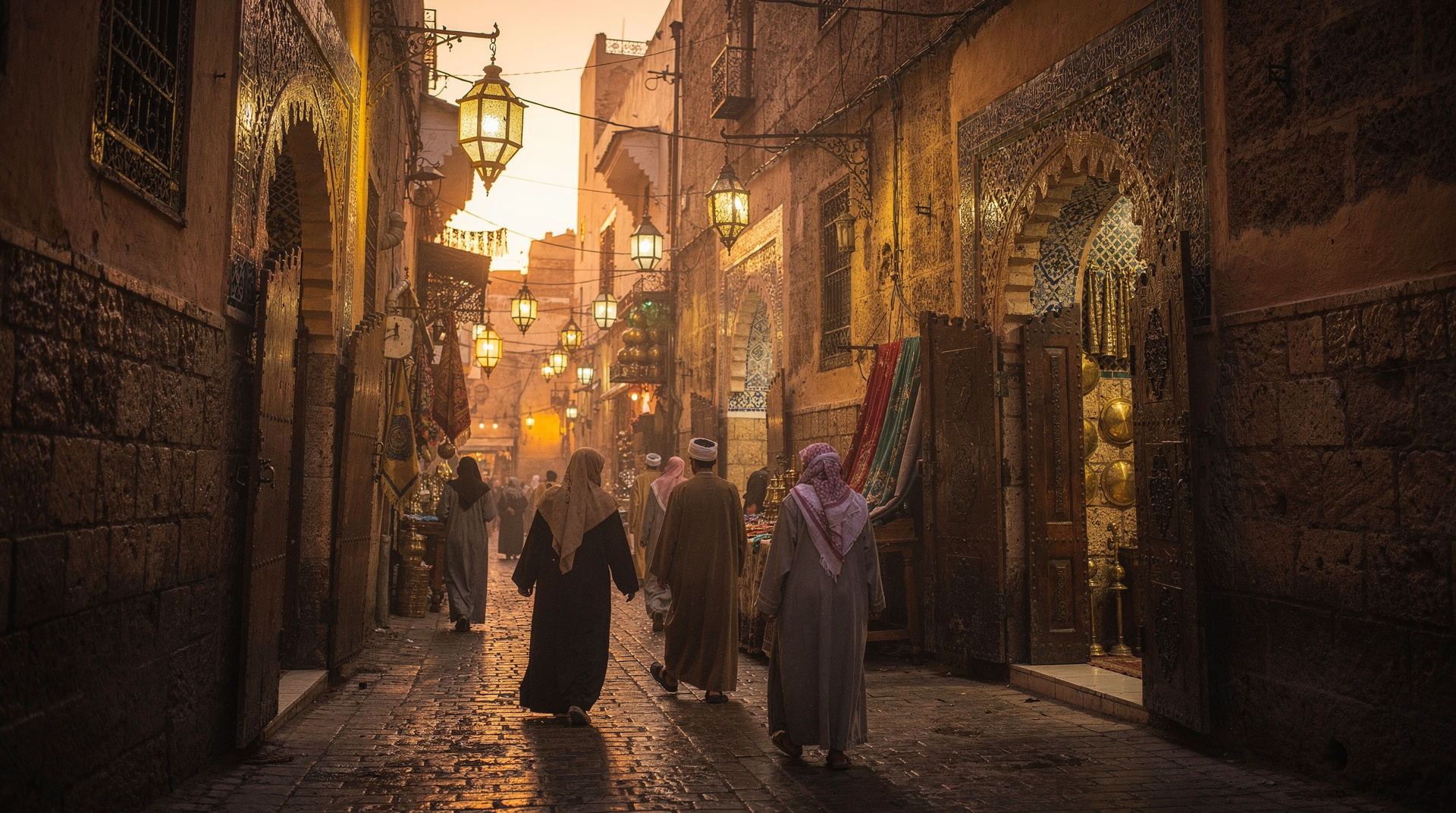
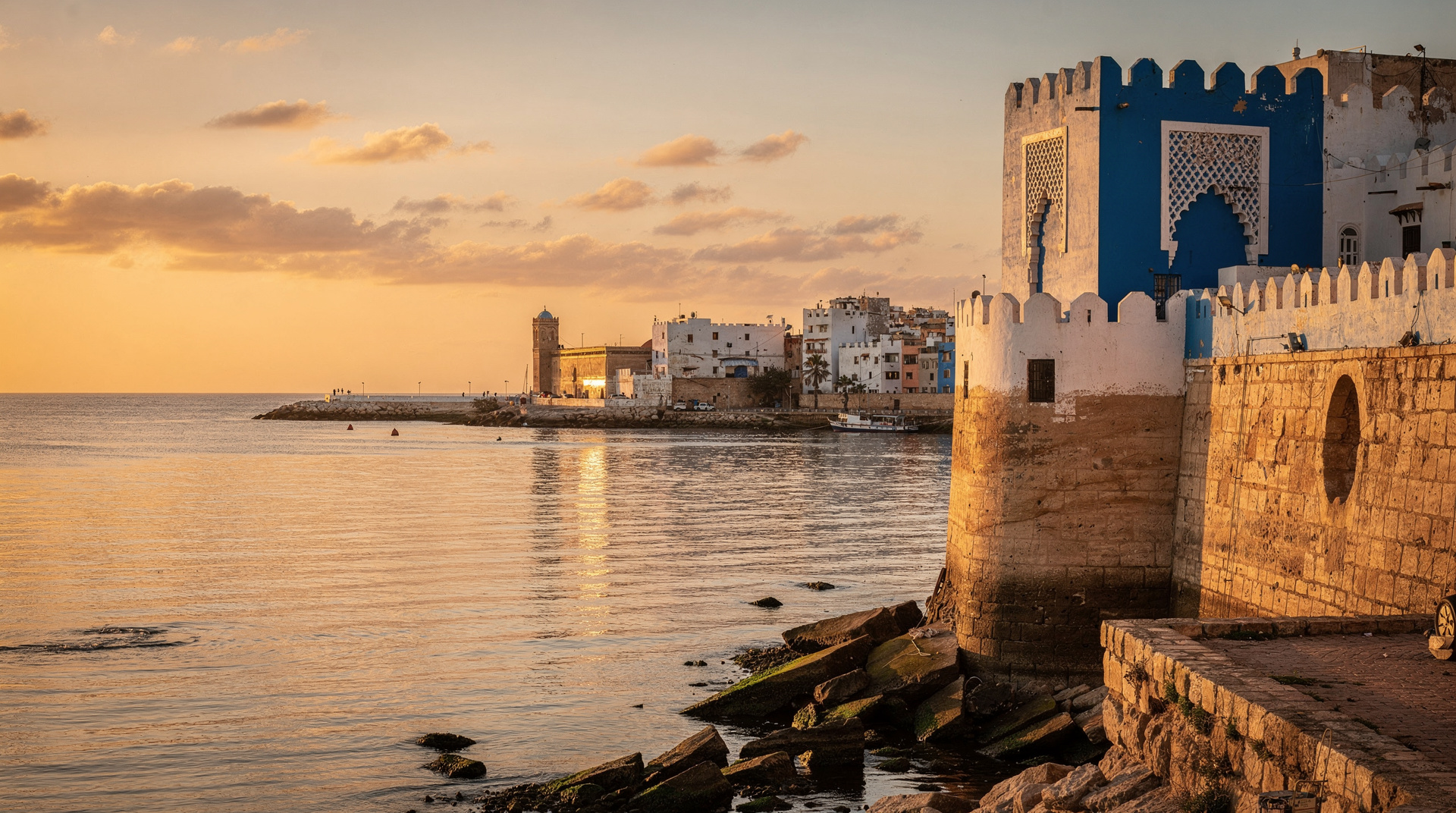
If Marrakech is Morocco’s most seductive city, Fes is its most profound. Founded in the 9th century, Fes el-Bali — the old medina — is the world’s largest living car-free urban area, a UNESCO World Heritage Site of some 9,400 alleyways packed into roughly 3 square kilometres. Walking into it feels less like entering a historic district and more like stepping bodily into the medieval world, with the crucial difference that this medieval world never stopped: the tanners still work the same pits as their predecessors eight centuries ago, the leather sellers still stack their wares in the same doorways, and the mules still carry goods through passages too narrow for anything with an engine.
What surprises first-timers most is the scale of intellectual and religious heritage concentrated here. Al Qarawiyyin, founded in 859 CE by Fatima al-Fihri, is not just a mosque but the world’s oldest continuously operating university. Fes was the intellectual capital of the Islamic world during Europe’s Dark Ages, producing scholars whose work reached Toledo and Palermo. The city wears this history without self-consciousness — it simply lives it.
Fes rewards slow, patient exploration. A few days here, ideally with a knowledgeable guide for at least one morning, will leave a deeper impression than a week in many other destinations.
Getting There
By air: Fes-Saïss Airport (FEZ) lies 15 km south of the city. Ryanair connects it to London Stansted, Brussels, and other European cities. Royal Air Maroc serves Casablanca, from which connections are easy. A grand taxi from the airport to the medina costs around 150–200 MAD (€15–20) for the whole taxi; negotiate beforehand or agree to share.
By train: The Oncf Marrakech-Casablanca-Fes route is the country’s busiest rail corridor. Fes station is in the Ville Nouvelle, 3 km from the medina. Journey time from Casablanca: 3.5 hr; from Marrakech: around 7.5 hr (usually with a change at Casa-Voyageurs). Fares from Casablanca start at 110 MAD in second class.
By bus: CTM operates comfortable coaches from most Moroccan cities. The bus station is a 15-minute taxi ride from the medina. Journey from Marrakech: 8–9 hr overnight. From Chefchaouen: 3.5 hr.
Getting Around
On foot: The only practical way to explore Fes el-Bali. Streets are narrow, uneven, and unlabelled. Download Maps.me with the Fes offline map — it is surprisingly accurate even in the deepest alleys.
Petit taxis: Blue petit taxis run within the city between districts (Fes el-Bali, Fes el-Jdid, Ville Nouvelle). Flag them down or ask your riad to call one. Most trips within the city: 15–30 MAD.
Guides: Hiring a licensed guide (official guides wear a bronze badge) for at least half a day is worth every dirham. The medina is genuinely labyrinthine and a guide unlocks context, craftsmen’s workshops, and hidden courtyards that independent visitors walk past without noticing. Rates: 300–500 MAD per half day. Your riad can arrange a reputable one.
Top Things to Do
Explore Fes el-Bali
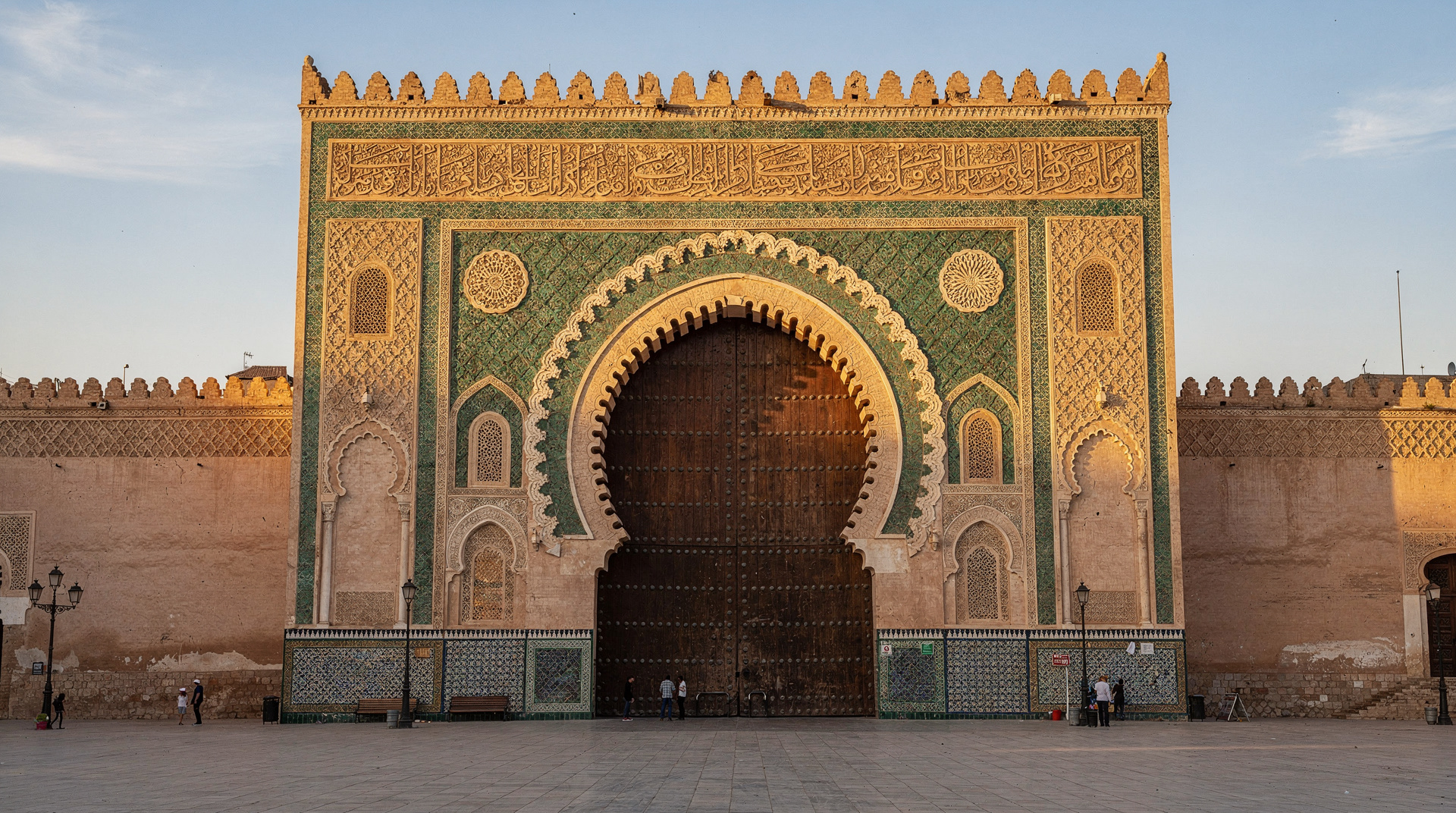
The old city is the reason to come. Enter through Bab Bou Jeloud — the blue-tiled ceremonial gate — and follow Talaa Kebira, the main artery, downhill into the heart of the medina. Do not try to see everything in one go. Pick two or three anchors (madrasa, tannery, mosque) and let yourself wander between them. Getting lost is not a problem; the medina is finite, and every alley eventually reconnects.
Book a guided Fes Medina walking tourChouara Tannery
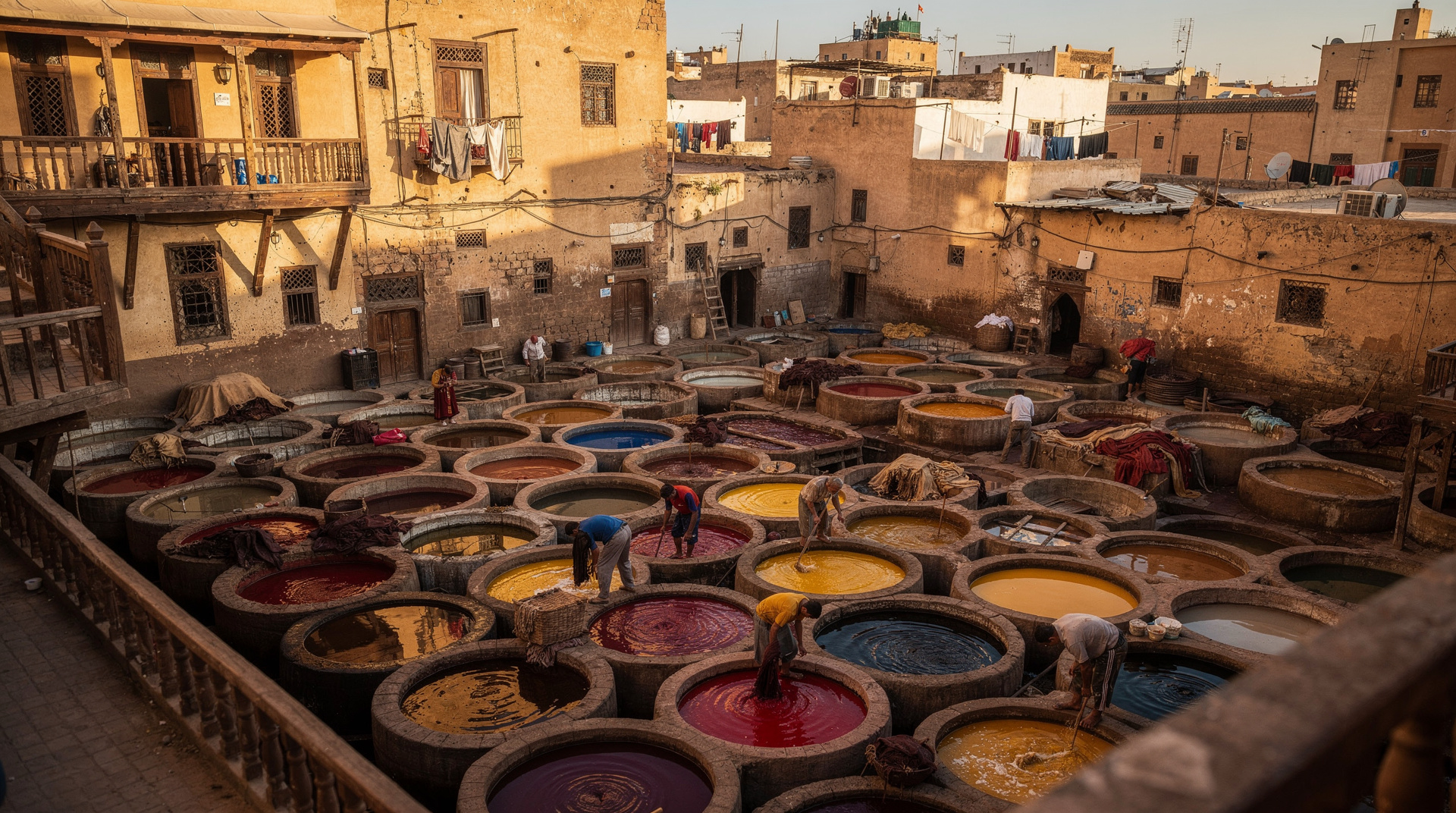
The most famous sight in Fes, Chouara is one of Morocco’s oldest tanneries, operating for over 900 years. The best view is from the leather shops above — shopkeepers will invite you up with a sprig of mint to counteract the smell. Watch the workers standing waist-deep in circular stone vats of pigeon dung, saffron, poppy, and indigo, tanning and dyeing hides as they have always been done. Visit in the morning when the light is best and the workers are most active.
Book a Fes tannery, madrasa and medina guided tourBou Inania Madrasa
Built in the 14th century by the Merinid sultan Bou Inan, this former Quranic school is the finest example of medieval Moroccan architecture open to non-Muslim visitors. The carved cedarwood screens, intricate stucco panels, and black-and-white marble work reach a level of detail that genuinely astonishes. Entry: 70 MAD.
Al Qarawiyyin Mosque and University
The world’s oldest university (founded 859 CE) and one of Morocco’s largest mosques. Non-Muslims cannot enter the mosque, but the entrance is worth seeing, and the university’s library — restored under the direction of architect Aziza Chaouni — holds over 4,000 ancient manuscripts. The library is occasionally open for visitors; ask your guide.
Al Attarine Madrasa
Adjacent to Al Qarawiyyin, this 14th-century madrasa has a smaller but equally gorgeous courtyard. Entry is 10 MAD and it is rarely crowded — a better photographic opportunity than the more visited Bou Inania.
Borj Nord Arms Museum
The 16th-century Portuguese-built fortress above the medina houses a museum of Moroccan weaponry and offers the best panoramic views over the medina’s sea of rooftop satellite dishes, minarets, and cedar terraces. Entry is free; the walk up is steep.
Merenid Tombs
Further up the hill from Borj Nord, the 14th-century Merinid tombs are largely ruined but the views from here — especially at golden hour — are spectacular. Bring a telephoto lens if you have one.
Neighbourhoods
Fes el-Bali: The original 9th-century medina and the heart of everything. Split into two communities, Andalusian (east bank of the Oued Fes) and Kairouyine (west bank), it contains the vast majority of historic monuments, craftsmen’s quarters, and traditional riads.
Fes el-Jdid: Founded in the 13th century as the royal quarter, it contains the Dar el-Makhzen (Royal Palace, exterior only), a fine Jewish mellah, and the Moulay Abdallah quarter. Interesting to walk through between visits.
Ville Nouvelle: Built by the French protectorate from 1916, it is a standard colonial grid of avenues, cafés, banks, and restaurants. The train station is here. Less historic but calm and easy to navigate — good for an evening stroll and dinner outside the medina.
Where to Stay
Luxury (from 3,000 MAD / €300 per night)
Riad Fes is the benchmark luxury riad in the city: 30 rooms, rooftop pool, hammam, and a restaurant widely considered one of the best in the medina. The location near Bab Guissa puts you close to the tanneries.
Palais Amani is a converted 19th-century palace with 14 suites, two pools, and a walled garden that feels remarkable given its medina location. The rooftop dining and cooking classes are excellent.
Mid-range (600–1,800 MAD / €60–180 per night)
Dar Bensouda is a beautifully restored 18th-century palace with mosaic courtyards, carved plaster ceilings, and warm hosts. Excellent value in the mid-range tier.
Riad Laaroussa offers 10 rooms in a 17th-century riad with a plunge pool, hammam, and one of the best breakfast terraces in the medina. Staff are exceptional at arranging guides and day trips.
Budget (under 500 MAD / €50 per night)
Dar Seven is a clean, well-run riad close to Bab Bou Jeloud with a friendly atmosphere and a rooftop terrace. Simple rooms, useful location, and genuinely helpful owners.
Food and Drink
Dar Roumana (5 Derb el Amer, Zkak Romman) is the finest dining room in Fes — a beautifully restored riad where chef Vincent Bielaud produces sophisticated Franco-Moroccan cuisine. The pigeon pastilla and slow-braised lamb are standouts. Three courses: 350–500 MAD. Reserve ahead.
The Ruined Garden (15 Derb Idrissy) is a atmospheric restaurant built around a walled garden in a partially crumbling riad. The menu mixes local and international influences. Particularly good for lunch (130–200 MAD for a main).
La Recreation (outside Bab Bou Jeloud) is a relaxed café-restaurant popular with both locals and travellers for its reliable Moroccan plates and reasonable prices. Good for a post-sightseeing lunch, 80–150 MAD per person.
Restaurant Fassi at Riad Fes: Worth considering for a single splurge dinner even if you are not staying at the hotel. The bastilla (pigeon or seafood) is exceptional.
Street food around Rcif and Seffarine squares: Msemen (square flatbread) with honey and butter, harira soup with a hard-boiled egg, and freshly squeezed orange juice are all sold from small stalls and carts at prices of 10–20 MAD. Breakfast at Seffarine square, with the coppersmiths hammering away around you, is a Fes rite of passage.
Cooking class: Fes cooking classes focus on the city’s distinctive cuisine — bastilla, trid, and rfissa — which differ significantly from the tajine-dominated south. Book through your riad or via Get Your Guide.
Book a Fes cooking class with old medina visitDay Trips from Fes
Volubilis and Meknes: Morocco’s finest Roman ruins at Volubilis (a UNESCO World Heritage Site with intact mosaics and triumphal arches) pair perfectly with the imperial city of Meknes — the Versailles of Morocco, built by Sultan Moulay Ismail using 25,000 Christian slaves. The two together make a full-day trip, easily arranged from Fes.
Book a Volubilis and Meknes day trip from FesChefchaouen: The Blue Pearl of the Rif mountains sits 3.5 hours from Fes by bus. A day trip is possible but an overnight stay is much better. Chefchaouen is a complete visual and emotional contrast to the intense urban density of Fes.
Book a Chefchaouen day trip from FesSample 2-Day Fes Itinerary
Day 1 — Deep Medina Morning: Hire a licensed guide for 4 hours. Start at Bab Bou Jeloud, walk Talaa Kebira to Bou Inania Madrasa, continue to Al Attarine Madrasa, Al Qarawiyyin, and the Chouara Tannery viewpoint. Midday: Lunch at The Ruined Garden. Afternoon: Independent wandering in the Seffarine (brass) and Cherratine (leather) quarters. Sunset: Merinid tombs for the view. Evening: Dinner at Dar Roumana (reserve ahead).
Day 2 — Volubilis, Meknes, and a Slower Morning Early: Breakfast at a rooftop café above the medina. 9 am: Depart for Volubilis (1.5 hr drive). Explore the Roman ruins (2 hr). Lunch in Meknes, then explore Bab Mansour, the Mausoleum of Moulay Ismail, and the medina. Return to Fes by early evening. Alternatively: skip Volubilis and spend a full second day in Fes el-Jdid and the Jewish mellah.
Practical Tips
Fake guides: Unofficial guides will approach you at Bab Bou Jeloud claiming the medina is closed or that there is a festival and offering to lead you to “their cousin’s” shop. Decline politely and hire an official guide through your riad.
Photography at the tanneries: You will be invited into leather shops to view the tanneries from the terrace — this is genuine access, not a scam, but there is an implied expectation to look at the leather goods. You are not obligated to buy, but be respectful.
Mules have right of way: Fully loaded mules are the trucks of the medina. When you hear “balek, balek” (coming through), press yourself against the wall immediately.
Wi-Fi: Most riads have reliable Wi-Fi. Mobile data (buying a Maroc Telecom SIM at the airport is easy and cheap) works surprisingly well even inside the medina.
Budget: Fes is notably cheaper than Marrakech for food and accommodation. A good mid-range riad, meals, and entry fees can be done on 800–1,200 MAD per day.
Frequently Asked Questions about Fes
Do I need a guide in Fes?
You do not strictly need one, but hiring an official guide for at least a morning is strongly recommended on your first visit. The medina’s 9,400 alleys are genuinely disorienting, GPS is unreliable in places, and a good guide unlocks workshops, cultural context, and viewpoints that most independent travellers miss entirely.
How long should I spend in Fes?
Two full days is the minimum for a meaningful visit — one day for the medina with a guide, one for the tanneries and a day trip. Three days is more comfortable and allows for Volubilis, the mellah, and slower-paced souk exploration.
Is Fes el-Bali safe to explore alone?
Yes. Fes el-Bali is generally very safe. The main frustration for solo travellers is persistent touts near Bab Bou Jeloud. Once you are deeper in the medina, away from the main gate, the dynamic changes and the city feels more organic and less performative.
What is the best time of year to visit Fes?
March to May and September to November are ideal: mild temperatures, manageable crowds, and good light for photography. Summer is hot and humid in the tight medina alleys. Winter evenings are cold but the city is atmospheric.
Can I visit Al Qarawiyyin mosque as a non-Muslim?
The mosque itself is closed to non-Muslims. The recently restored library is occasionally accessible — ask your riad or guide for current access rules as these can change.
What souvenirs should I buy in Fes?
Fassi leather goods (particularly bags, wallets, and babouche slippers direct from the tannery quarter) are the most famous. Fassi zellige (hand-cut mosaic tile) work, traditional pottery from Fes el-Jdid’s potters’ quarter, and embroidered silk kaftans are also specialities of the city rather than generic Moroccan imports.
Is Fes or Marrakech better for a first Morocco trip?
They are complementary rather than competing — most itineraries include both. Marrakech is more immediately accessible, with better tourist infrastructure and easier day trips to the Atlas and Sahara. Fes is denser, older, and more demanding, but rewards patient exploration with a depth Marrakech doesn’t match. See Marrakech vs Fes for a full comparison.
What is the best way to see the tanneries without buying anything?
Walk up into any of the leather shops overlooking Chouara — viewing from the terrace is free and expected practice, not a scam, and there is no obligation to buy. A polite “just looking, thank you” (shukran) is entirely acceptable; the mint sprig offered at the door is simply to counteract the smell.
Fes Neighbourhoods Compared
| Neighbourhood | Character | Best for |
|---|---|---|
| Fes el-Bali | Ancient car-free medina, 9,400 alleys | History, tanneries, riads, souks |
| Fes el-Jdid | 13th-century royal quarter | Royal Palace exterior, mellah, quieter walking |
| Ville Nouvelle | French colonial grid | Banks, supermarkets, calm evening dinners |