Quick facts
- Language
- Darija, French
- Population
- ~4 million
- Airport
- Mohammed V International (CMN)
- Best for
- Arrival hub, mosque, Art Deco, food
Why Visit Casablanca
Casablanca is Morocco’s most misunderstood city. Many travellers pass through it — landing at Mohammed V International Airport, the country’s main hub — without stopping. Others spend a night and pronounce it unremarkable. Both reactions miss something real.
The city is not Marrakech or Fes. It does not have a medieval medina or imperial monuments. What it has instead is the Hassan II Mosque — one of the most extraordinary religious buildings in the world — a remarkable inventory of 1930s Art Deco architecture, a genuinely vibrant contemporary food and design scene, and the lived energy of Morocco’s largest city going about its daily business with no particular interest in performing for tourists.
What surprises first-timers about Casablanca is how thoroughly modern and confident it is. This is not the Morocco of the guidebook imagination: no snake charmers, no labyrinthine souks, no donkeys in the street. Casablanca is suits, tramways, rooftop restaurants, beach clubs, and the relentless commercial ambition of a city that generates over 30% of Morocco’s GDP. Understanding Morocco without understanding Casablanca is like understanding France without understanding Paris.
The Humphrey Bogart film of the same name was filmed entirely in Hollywood. The real Casablanca is considerably more interesting than the myth.
| At a glance | |
|---|---|
| Where | Morocco’s Atlantic coast, main international arrival hub |
| Cost | Mosque tour 130 MAD; mid-range hotel from around 900 MAD/night |
| Time needed | 1 day for the essentials, 2 days with a Rabat side trip |
| Getting there | Mohammed V International Airport (CMN), or train from Marrakech/Fes/Tangier |
| Best time | March–May and September–November |
Getting There
By air: Mohammed V International Airport (CMN) is Morocco’s busiest airport, with direct connections from most European capitals and major global hubs. It is 30 km southeast of the city centre. The fastest connection downtown is the ONCF train from the airport terminal directly to Casa-Voyageurs station (central station) in 35 minutes (50 MAD). Taxis are also available (meter should show 200–300 MAD; negotiate or insist on the meter).
By train from Marrakech: Direct Oncf trains cover the Marrakech-Casablanca route in 2 hr 15 min (from 90 MAD in second class). Several daily departures. The train arrives at Casa-Voyageurs station, from which the city centre is a short taxi ride.
By train from Tangier: The TGV Al-Boraq high-speed train covers Tangier to Casablanca in 2 hr 10 min (from 290 MAD in second class). Morocco’s newest and most comfortable rail option.
By train from Fes: The journey from Fes takes 3.5 hr (from 110 MAD). Several daily trains.
Getting Around
Tram (Tramway de Casablanca): Two lines (T1 and T2) cross the city’s main arteries, connecting the train station to the Hassan II Mosque, the Anfa residential district, and various commercial centres. Clean, punctual, cheap (7 MAD per journey). The best way to move between major sights without a taxi.
Petit taxis: Red metered taxis operate within the city. Meters start at 2.50 MAD and most journeys within the city centre cost 20–50 MAD. Flag them on the street or ask your hotel to call one.
Uber: Unlike most Moroccan cities, Casablanca has a functioning Uber presence, though availability can be variable.
On foot: The Corniche (beachfront promenade), the Quartier Habous (new medina), and the Hassan II Mosque are all walkable from each other if you are based in the Ain Diab or centre ville area.
Top Things to Do
Hassan II Mosque
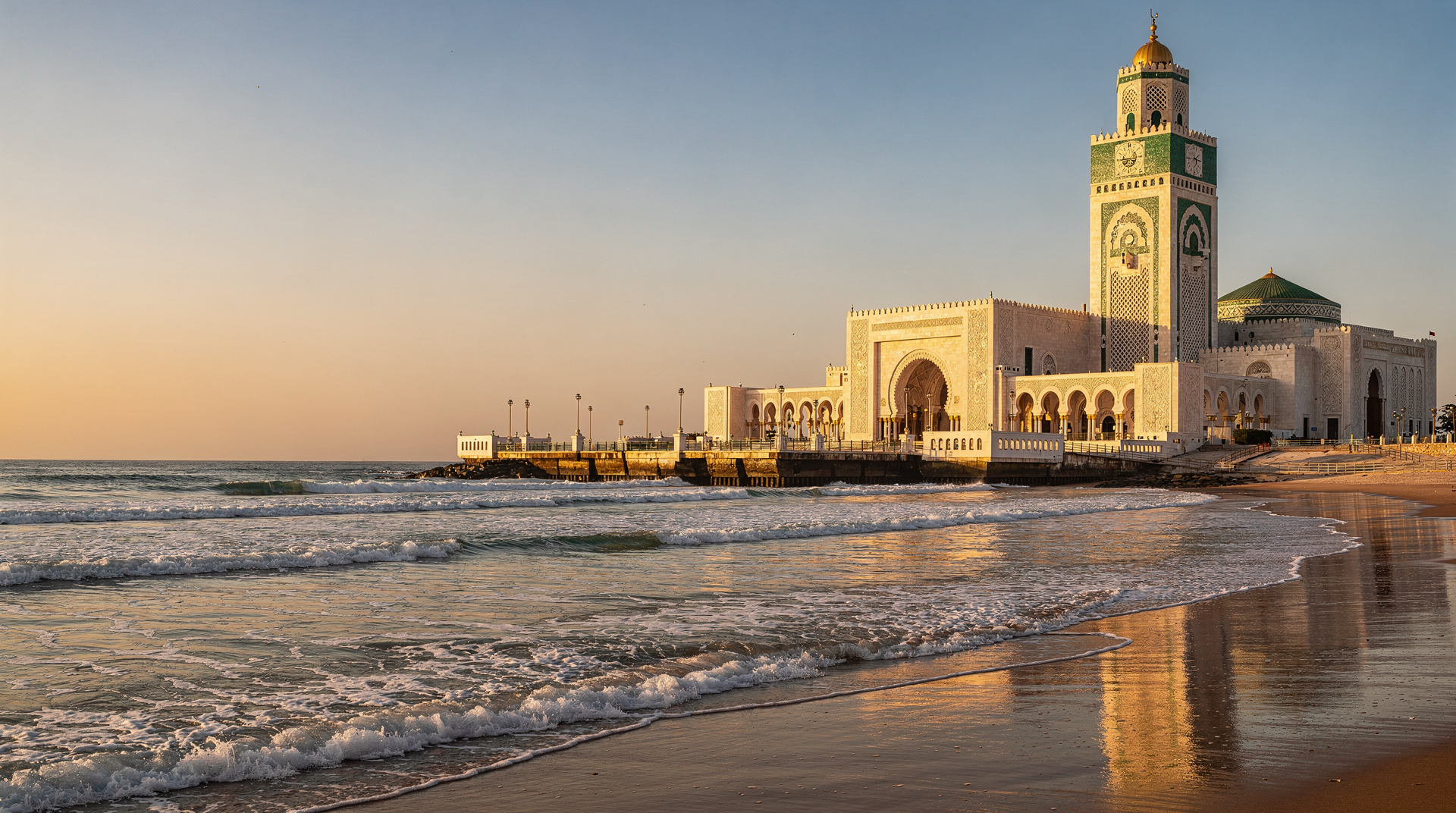
Morocco’s most important contemporary building and one of the great religious monuments of the 20th century, the Hassan II Mosque was completed in 1993 after six years of construction involving 35,000 craftsmen. The statistics are extraordinary: it is the 7th largest mosque in the world by prayer hall capacity (25,000 worshippers inside, 80,000 in the courtyard), the minaret at 210 metres is the world’s tallest, and the retractable roof that slides open to expose the prayer hall to the sky is an engineering marvel. The site was built on a reclaimed section of the Atlantic Ocean, fulfilling a Quranic verse that “God’s throne is on the water.”
Guided tours for non-Muslims run daily (except Friday) at 9 am, 10 am, 11 am, 2 pm, and 3 pm. Entry: 130 MAD. This is non-negotiable; it is the single thing that no visitor to Casablanca should miss.
Book a guided Hassan II Mosque tour with entry ticketArt Deco Architecture Walk
Casablanca contains one of the world’s finest concentrations of 1930s Mauresque and Art Deco architecture — a hybrid style developed by French architects who blended Beaux-Arts modernism with Islamic geometric decoration. The most notable buildings cluster in the central Quartier de la Place des Nations Unies: the Cathédrale du Sacré-Coeur (now a cultural centre), the Central Market building, the Palais de Justice, the Hotel Volubilis, and dozens of apartment buildings with ornate stucco facades. A 2-hour walking tour of the district is excellent, either self-guided with a heritage map or with a licensed guide.
Book a guided Casablanca city tour with mosque entryQuartier Habous (New Medina)
Built by the French in the 1930s as a planned “native quarter” to relieve pressure on the old town, the Habous neighbourhood is an architect’s attempt to create a traditional Moroccan medina from scratch. The result is a surprisingly charming grid of covered arcades, patisseries selling Moroccan sweets, bookshops stacked with Arabic texts, and a royal palace (exterior only). Less historic than the real medina in Fes, but more navigable and genuinely pleasant for an afternoon stroll.
The Corniche and Ain Diab
Casablanca’s Atlantic waterfront stretches south from the Hassan II Mosque through the upscale Ain Diab district, lined with beach clubs, seafood restaurants, and weekend crowds of Casa residents. The Corniche is best on Friday and Saturday evenings when it becomes the city’s social spine. Beach club entrance fees (covering a sun lounger and pool access) run 200–500 MAD depending on the club.
The Old Medina
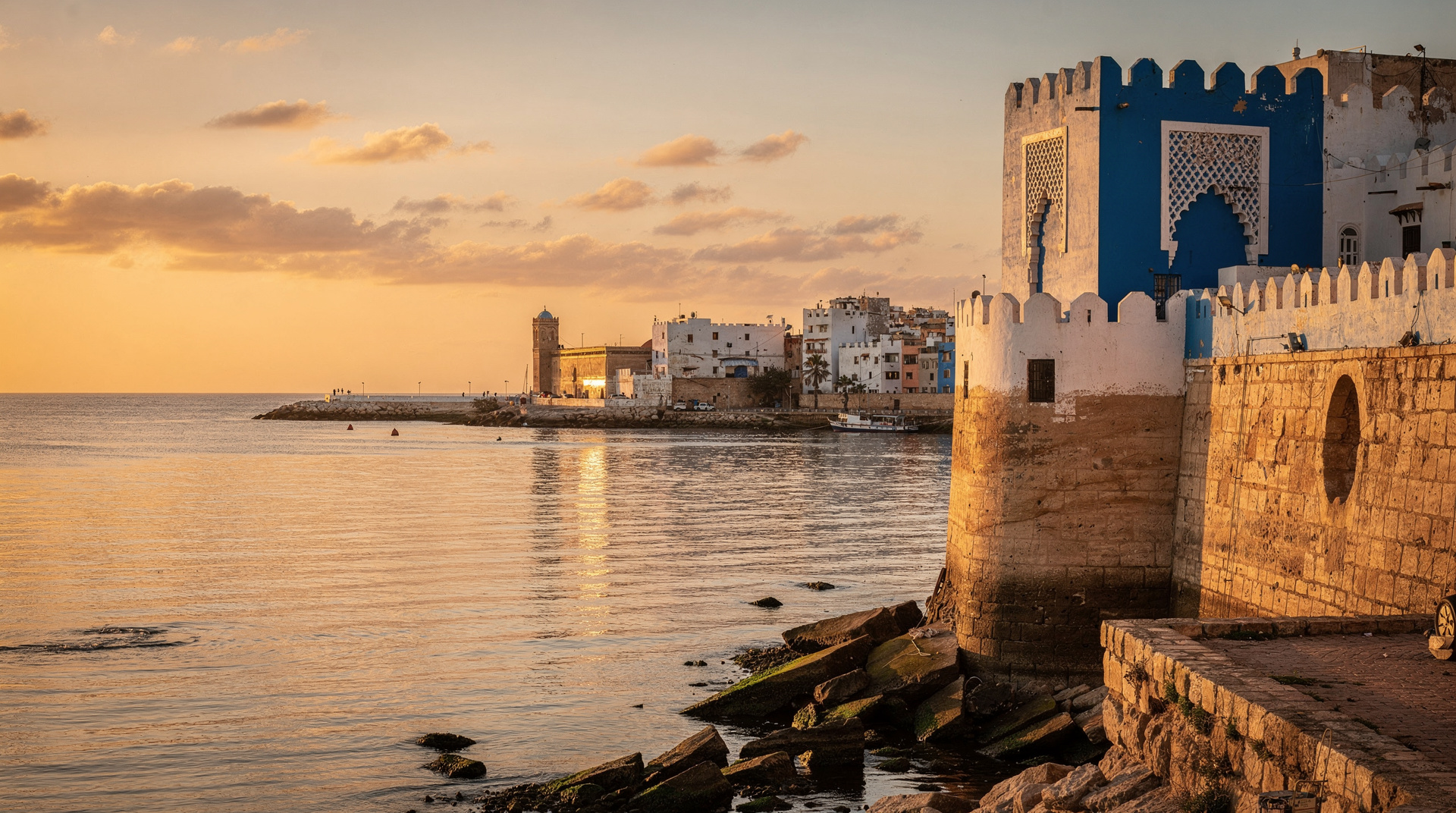
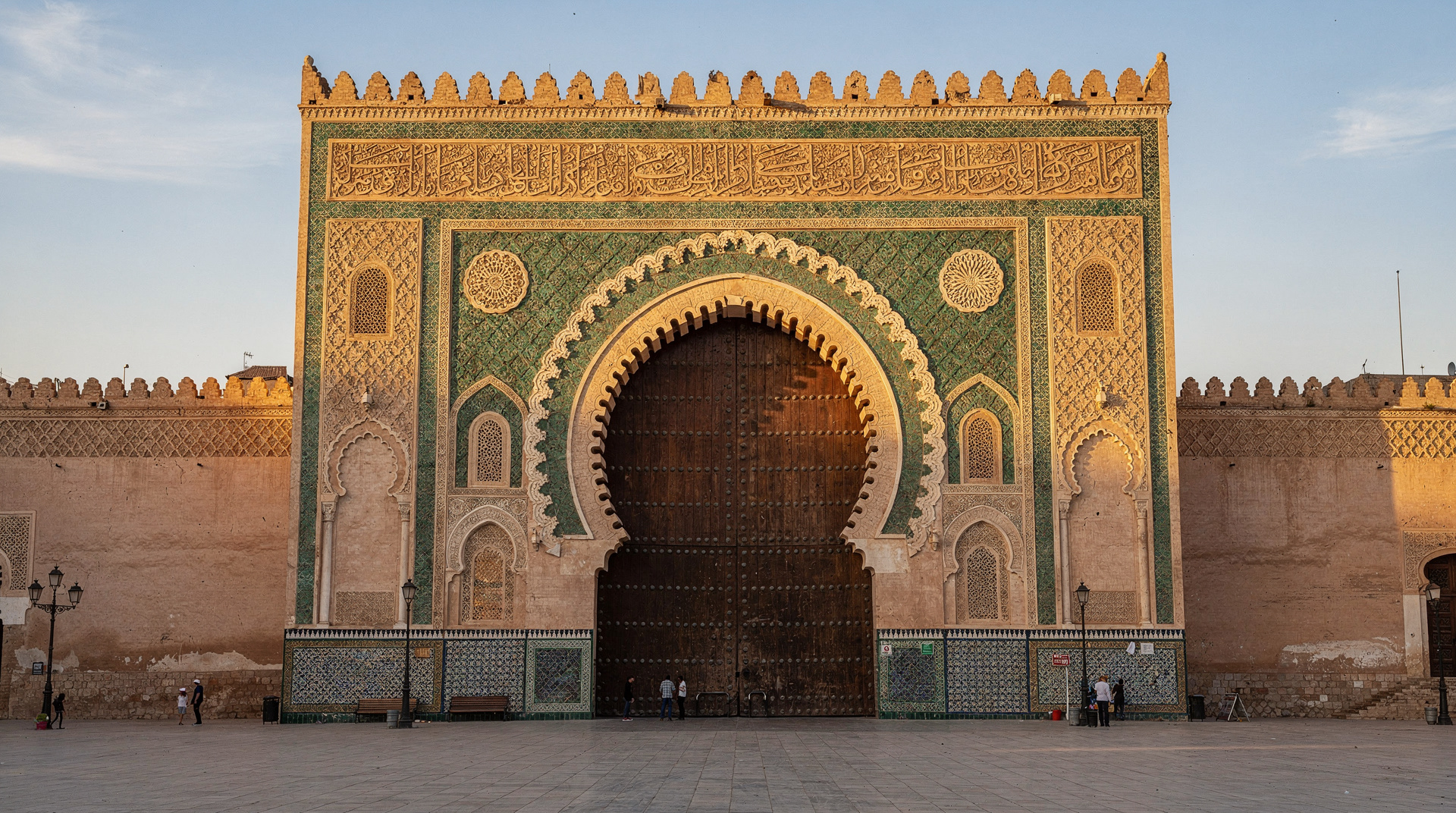
Small and significantly less impressive than those of Fes or Marrakech, Casablanca’s old medina is nonetheless worth an hour’s wander for contrast. It is compact, unrestored, and genuinely used by locals — no souvenir shops, just fruit stalls, mechanics, barbers, and fabric merchants. Enter via the Bab Marrakech gateway.
Museum of Moroccan Judaism
The only museum of Jewish history in the Arab world, this small but moving museum (Villa Mirador, Bd Emile Zola) documents the 2,000-year history of Morocco’s Jewish community and its contemporary Moroccan diaspora in Israel, France, and elsewhere. Entry: 30 MAD. A necessary counterweight to simplistic narratives about Morocco’s religious history.
Neighbourhoods
Centre Ville: The French-planned city centre, home to the Art Deco heritage, major hotels, the Central Market, and most practical urban infrastructure. Where business travellers and transit visitors typically stay.
Anfa and Gauthier: Upscale residential and commercial districts west of centre with excellent restaurants, wine bars, and the city’s most fashionable shops.
Ain Diab: The beach district, 5 km south of centre. Lined with beach clubs, seafood restaurants, and the city’s nightlife scene. Popular with young Casablancans on weekends.
Quartier Habous: The planned 1930s “new medina,” good for sweets, argan products, and a quieter pace than the city centre.
Maarif: A buzzing commercial and residential neighbourhood southwest of centre with excellent local restaurants and neighbourhood cafés popular with Casablanca’s urban middle class.
Where to Stay
Luxury (from 2,500 MAD / €250 per night)
Four Seasons Hotel Casablanca is the most prestigious address in the city, set on the Anfa coastline with direct ocean views, multiple pools, and a spa. The restaurant, Bleu, serves some of the finest contemporary Moroccan cuisine in the country.
Hyatt Regency Casablanca occupies a central location on the Place des Nations Unies and has long been the preferred hotel for business visitors and government delegations. The rooftop pool and casino are assets.
Mid-range (600–1,800 MAD / €60–180 per night)
Hotel & Spa Le Doge is a restored 1930s Art Deco building in the city centre, combining heritage architecture with contemporary comfort. The pool, spa, and rooftop bar make it one of the most appealing mid-range options in town. Doubles from 900 MAD.
Onomo Hotel Casablanca is a modern, design-conscious hotel near the central tram line with clean rooms, a good breakfast, and sensible prices. Popular with business and leisure travellers alike.
Budget (under 500 MAD / €50 per night)
Hotel Guynemer is a well-maintained budget hotel near the central railway station with simple, clean rooms and a helpful reception. Basic but reliable.
Food and Drink
Casablanca has the most diverse and sophisticated dining scene in Morocco, mixing traditional Moroccan cuisine with French, Italian, Lebanese, and contemporary international influences. The city’s wealth and cosmopolitan population support a restaurant culture that Marrakech and Fes cannot match in range.
La Sqala (Bvd des Almohades, near the old medina walls) occupies a beautiful 18th-century fortress courtyard with a garden. The menu is classic Moroccan — bastilla, tagines, couscous — executed reliably well. Popular for both lunch and dinner. Budget 250–400 MAD per person.
Restaurant Al Mounia (Rue Prince Moulay Abdallah, Gauthier) is one of Casablanca’s longest-running fine-dining Moroccan restaurants, with a beautiful riad interior and consistently excellent traditional cooking. The pastilla and lamb dishes are benchmark-quality. Dinner: 400–600 MAD per person.
Bleu at the Four Seasons combines contemporary European technique with Moroccan ingredients in the most accomplished kitchen in the city. A long lunch or dinner here represents Casablanca’s culinary best. Three courses: 500–800 MAD.
Rick’s Café (248 Bvd Sour Jdid) is an affectionate reconstruction of the fictional bar from the 1942 film, complete with a white piano player and “As Time Goes By” on the setlist. The food (international Moroccan) is competent rather than exceptional, but the atmosphere is genuinely fun and the Casablanca Sling cocktail is a required prop. Worth one visit.
Seafood on the Corniche: The string of seafood restaurants along the Corniche (Le Cabestan, La Marée, Le Rouget de l’Isle) all serve fresh Atlantic fish, grilled crustaceans, and oysters from Oualidia. Lunch on the Corniche terrace is one of Casablanca’s pleasures. Budget 300–600 MAD for a proper seafood lunch with wine.
Day Trips from Casablanca
Rabat: Morocco’s political capital sits 90 km north by high-speed train (around 45 min, 90 MAD). The Mohammed V Mausoleum, the Kasbah des Oudaïas, the Roman ruins at Chellah, and the Archaeological Museum make Rabat an excellent full day.
Book a Casablanca to Rabat day tripEl Jadida: The Portuguese fortified city of El Jadida (Mazagan), 100 km south, contains a stunning 16th-century cistern with a reflective pool that has appeared in countless films, including Orson Welles’ Othello. Easy day trip by CTM bus or car.
Oualidia: A small lagoon village 190 km south, famous for its oyster farming — Morocco’s finest oysters come from here. Worth the drive for a seafood lunch at the water’s edge.
Marrakech: The high-speed train from Casablanca to Marrakech (2 hr 15 min) makes a day trip technically possible, though an overnight stay in Marrakech is much better value for the time invested.
Sample 1-2 Day Casablanca Itinerary
Day 1 — The Mosque, the Architecture, the Food Morning: 9 am guided tour of the Hassan II Mosque (book online ahead). 11 am: Walk or tram to the Art Deco centre — Cathédrale du Sacré-Coeur exterior, Central Market, Place des Nations Unies. Midday: Lunch at La Sqala in the fortress courtyard. Afternoon: Quartier Habous for pastry and argan oil shopping. Sunset: Walk to the Corniche for an aperitif. Evening: Dinner at Al Mounia.
Day 2 — Rabat and Return Morning train to Rabat (45 min). Kasbah des Oudaïas, Mohammed V Mausoleum, and Chellah ruins. Lunch in Rabat’s medina. Return by train mid-afternoon. Evening: Rick’s Café for a Casablanca Sling and the house pianist.
Practical Tips
Airport to city: The ONCF airport train is the fastest and cheapest option (35 min, 50 MAD to Casa-Voyageurs). Taxis from the airport are significantly more expensive and subject to negotiation. Avoid unlicensed drivers who approach in arrivals.
Language: Casablanca is more thoroughly French-speaking than most Moroccan cities. English is understood in hotels and upscale restaurants but less consistently than French in everyday interactions.
Security: Casablanca is a large city with standard urban petty-crime risks — pickpockets in the medina, phone snatchers near markets, bag-snatching from café chairs. Standard urban precautions apply. The Ain Diab and Anfa districts feel genuinely safe at night.
Ramadan: If visiting during Ramadan, many local restaurants and cafés are closed during daylight hours. Hotel restaurants operate normally. The breaking of the fast at sunset (iftar) is a beautiful communal experience — ask your hotel if there is a public iftar event nearby.
What not to miss vs what to skip: Do not miss the Hassan II Mosque and the Art Deco quarter. Skip the old medina unless you have very specific interest — it is small, unremarkable, and a poor substitute for the old medinas of Fes or Marrakech.
Casablanca vs Morocco’s other imperial cities
| City | Character | Time needed | Best for |
|---|---|---|---|
| Casablanca | Modern, commercial, confident | 1–2 days | The Hassan II Mosque, Art Deco, arrival logistics |
| Marrakech | Medina, souks, gardens | 3–4 days | First-time Morocco, nightlife, day trips |
| Fes | Medieval, labyrinthine medina | 2–3 days | Craft, history, the largest car-free old city |
| Rabat | Political capital, calm, orderly | 1 day | Monuments without crowds |
For a broader comparison of how the imperial cities fit together, see the imperial palaces of Morocco guide. Those planning to eat their way through the country should also check the street food guide to Fes and street food guide to Marrakech for context on how Casablanca’s more cosmopolitan food scene compares.
Frequently Asked Questions about Casablanca
Is Casablanca worth visiting as a tourist?
Yes, especially for the Hassan II Mosque and the Art Deco architecture. Casablanca is not Morocco’s most romantic destination — that remains Marrakech — but it is authentically Moroccan in a contemporary, forward-looking way. One to two days here provides valuable context for understanding modern Morocco.
Is the Hassan II Mosque the largest mosque in the world?
No, but it is the largest mosque outside Saudi Arabia and features the world’s tallest minaret at 210 metres. The prayer hall holds 25,000 worshippers. The craftsmanship inside — hand-carved plaster, hand-laid marble, cedar wood ceiling — is extraordinary.
Is Casablanca safe?
Generally yes. As Morocco’s largest city it has higher petty crime rates than smaller cities, but violent crime against tourists is rare. Standard urban vigilance — secure your phone and wallet, avoid displaying expensive items in crowded areas — is sufficient.
How long should I spend in Casablanca?
One full day is sufficient if the Hassan II Mosque is your primary interest, combined with the Art Deco quarter and a good dinner. Two days allows for a Rabat day trip and more thorough exploration of the city’s food and design scene.
Is Casablanca connected to other Moroccan cities by train?
Very well so. Direct trains connect to Marrakech (2 hr 15 min), Fes (3.5 hr), Rabat (45 min by Al-Boraq TGV, or 1 hr by conventional train), and Tangier (2 hr 10 min by Al-Boraq TGV). The city is the hub of Morocco’s rail network.
Can non-Muslims visit the Hassan II Mosque?
Yes — the Hassan II Mosque is one of only two mosques in Morocco officially open to non-Muslim visitors (the other is in Casablanca’s Quartier Habous). Guided tours run several times daily. Modest dress (shoulders and knees covered) is required, and shoe removal is requested at the entrance.
Should I stay in Casablanca or head straight to Marrakech on arrival?
If your flight lands in Casablanca and time is short, most travellers are better served heading straight to Marrakech or Fes by train the same day, saving Casablanca for a return-trip stopover. If you have the extra day, seeing the Hassan II Mosque on arrival — before jet lag and itinerary fatigue set in — works well logistically since the airport train runs directly into the city.
Do I need more than a day in Casablanca?
One day covers the essentials (mosque, Art Deco quarter, a good dinner). A second day is worth adding only if you plan the Rabat day trip described above — otherwise the extra time is better spent elsewhere in Morocco.