Quick facts
- Best for
- History, architecture, medina life, Roman ruins
- Days needed
- 4-6 days
- Best time
- Mar–May, Sep–Nov
- Hub city
- Fes
Why visit the imperial cities
Morocco has four imperial cities — Fes, Meknes, Marrakech, and Rabat — each former capitals of one of the country’s dynasties. Of these, the trio of Fes, Meknes, and Rabat forms a natural northern circuit that rewards slower travel. This is the Morocco of marble mosques, cedar-wood madrasas, working tanneries, and Roman legions: a layered history that feels genuinely alive rather than preserved behind glass.
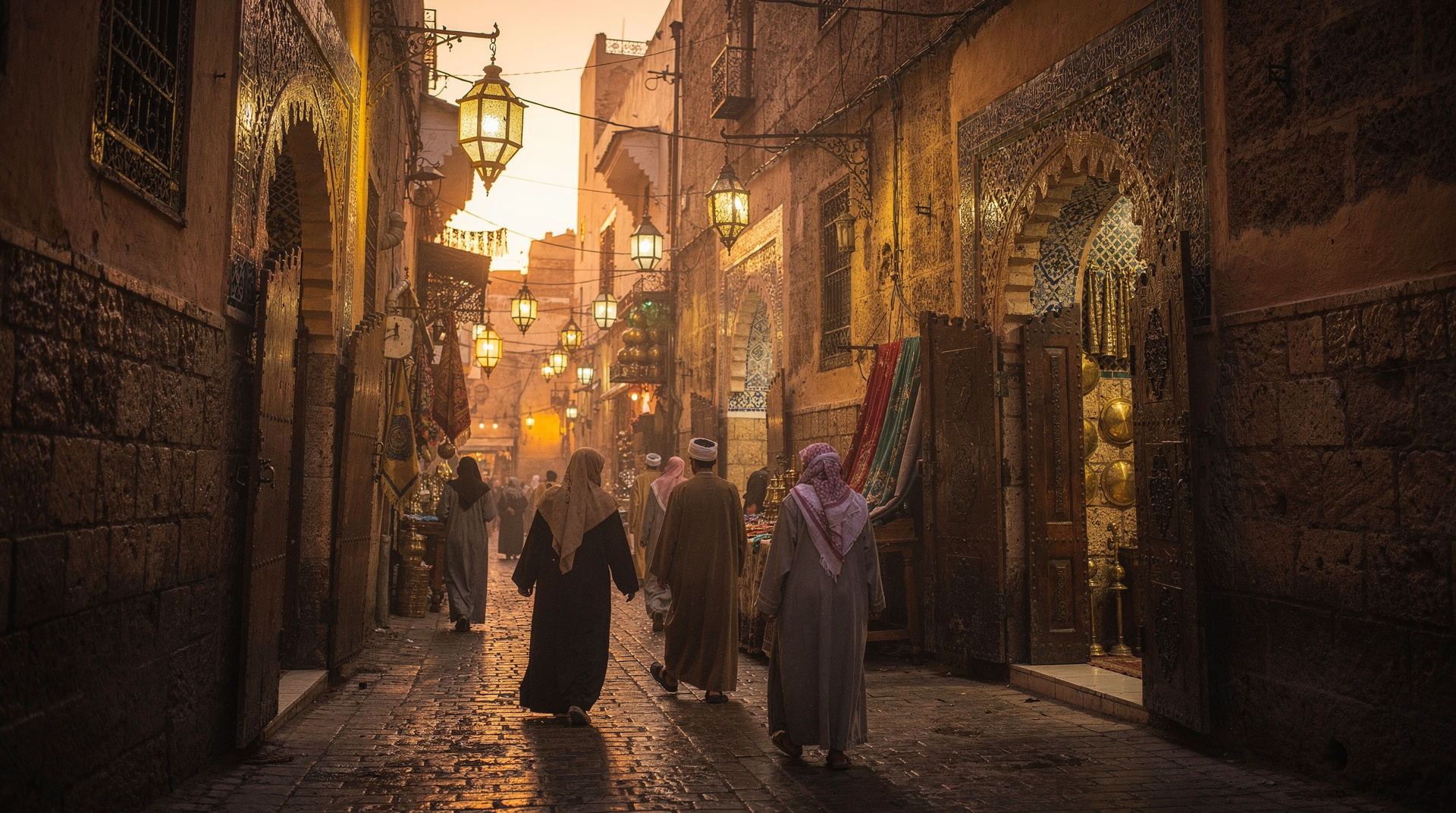
Fes is the undisputed centrepiece. Its medina, Fes el-Bali, is arguably the most intact medieval city in the world — 9,400 narrow lanes, still largely car-free, where leather-workers, weavers, and metalworkers produce goods the same way they did in the 12th century. It is also, frankly, one of the most disorienting places on earth. Getting lost is not a cliché here; it is the experience. Budget time, patience, and a reliable offline map.
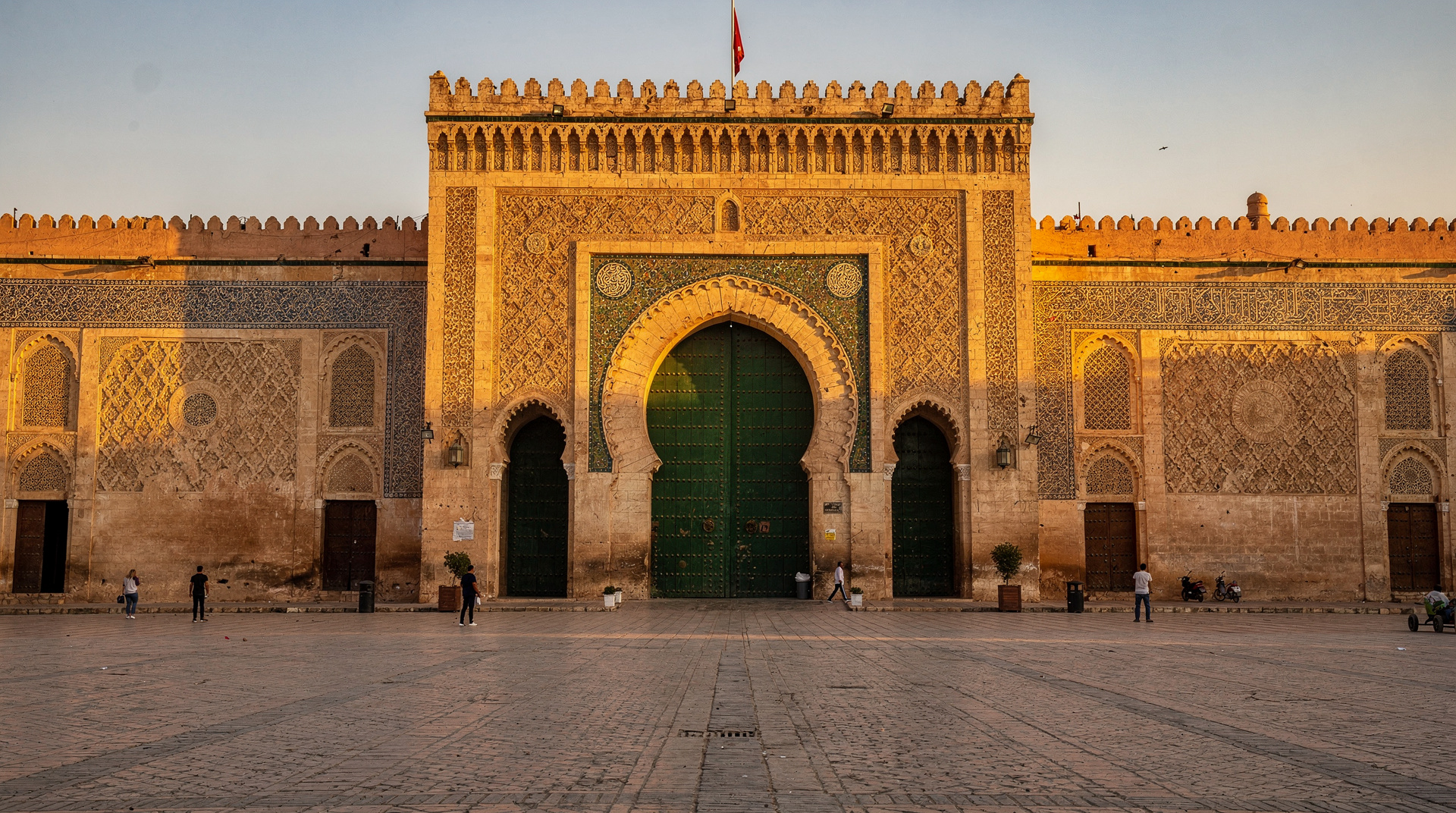
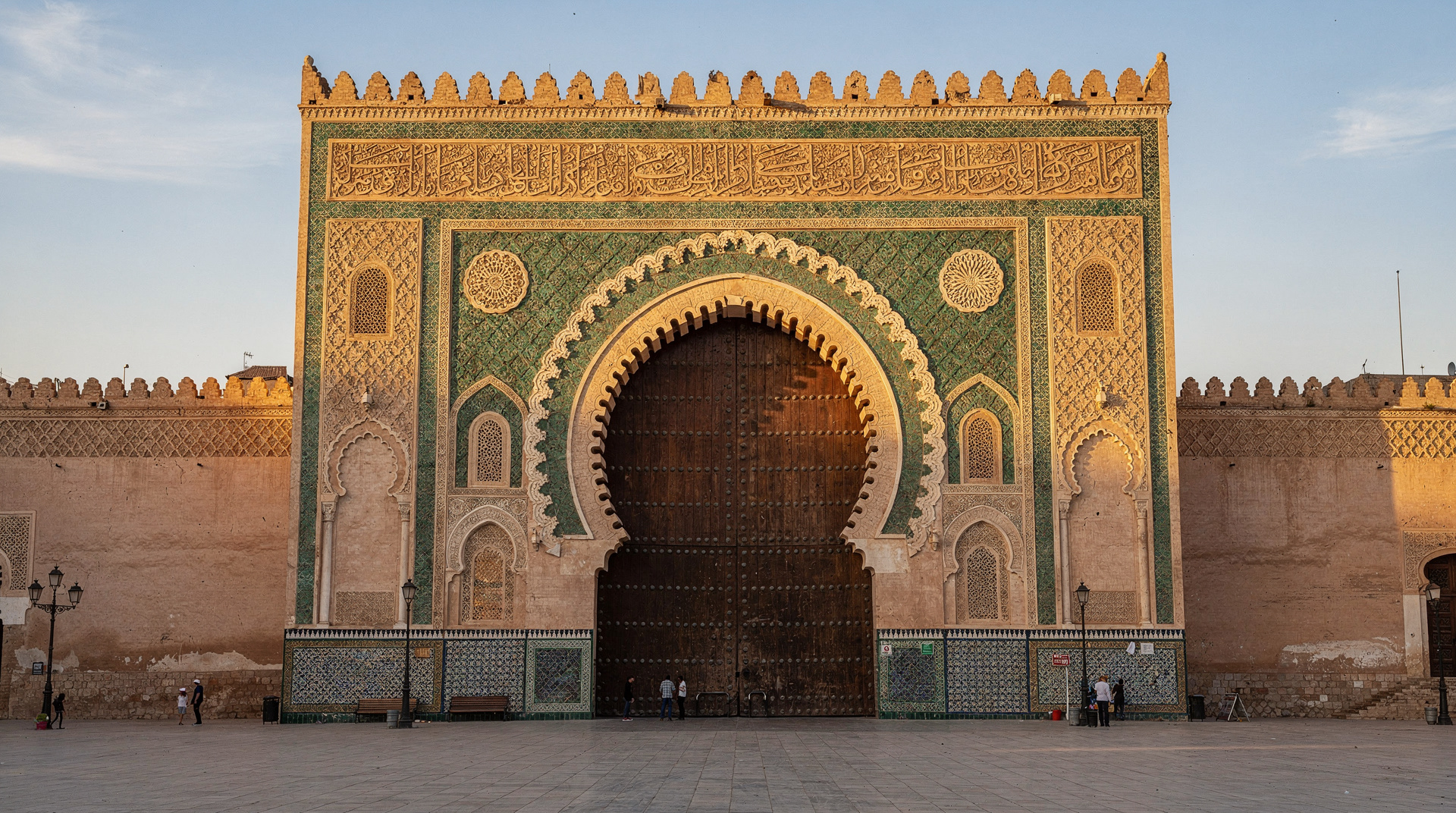
Meknes is Fes’s quieter, more manageable neighbour — a 45-minute train ride or 60-minute drive away. Its imperial walls and monumental Bab Mansour gate are spectacular, the medina is navigable without a guide, and prices run roughly 30 percent cheaper than Fes. Most travellers pass through on a day trip, but a night here is worthwhile.
Volubilis, 30km north of Meknes, is one of the best-preserved Roman sites in North Africa — mosaics still vivid, triumphal arch still standing, olive presses still in place. The nearby hilltop town of Moulay Idriss is Morocco’s holiest city, burial site of Moulay Idriss I (founder of the Idrisid dynasty) and long closed to non-Muslims overnight. Today, visitors can stay, though the atmosphere remains reverent.
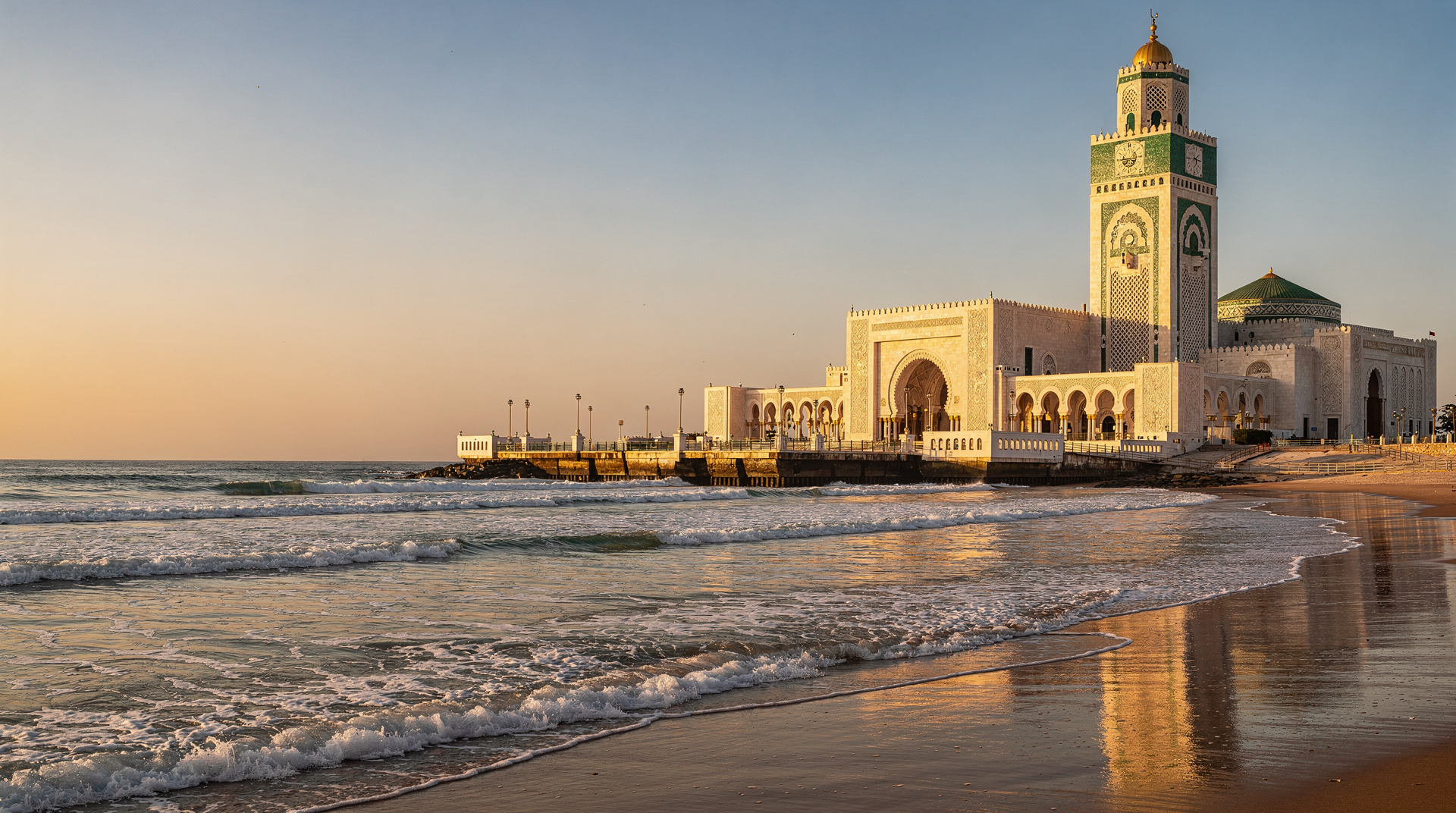
Rabat, the current capital, is the most liveable and least touristy of the imperial cities. The Hassan Tower, Mausoleum of Mohammed V, and the kasbah of the Oudayas are world-class monuments — but tourist infrastructure here is thin, which keeps it genuinely Moroccan.
| At a glance | |
|---|---|
| Where | Northern Morocco: Fes, Meknes, Volubilis/Moulay Idriss, Rabat |
| Cost | Riads from around 400 MAD budget to 3,000+ MAD splurge per night; guided half-day in Fes around 300–400 MAD |
| Time needed | 5–7 days for the full circuit; 2 days minimum if only doing Fes |
| Getting there | Fly into Fes (FEZ) or reach by train/bus from Marrakech or Casablanca |
| Best time | March–May and September–November |
Getting there
Fes has its own airport (FEZ) with direct European connections from Paris, Brussels, and several UK airports. From Casablanca, the train takes around 3 hours 30 minutes (100–150 MAD). From Marrakech, trains run but require a change at Casablanca — total journey 7–8 hours. A CTM bus Marrakech–Fes takes around 8 hours and costs 160–200 MAD.
Within the imperial cities circuit, travel is straightforward. Fes to Meknes by train: 45 minutes, 30 MAD. Meknes to Volubilis: 30 minutes by grand taxi (negotiate a return trip, roughly 200–300 MAD for the taxi, not per person). Meknes to Rabat: 2.5 hours by train. Rabat to Casablanca airport: 45 minutes by train, extremely cheap.
For visitors combining the imperial cities with the Sahara, Fes to Merzouga is a full day’s drive (7 hours via Midelt and Erfoud) or an overnight CTM bus. From Fes to Chefchaouen is 3–4 hours by road — a natural add-on.
Main destinations within the region
Fes
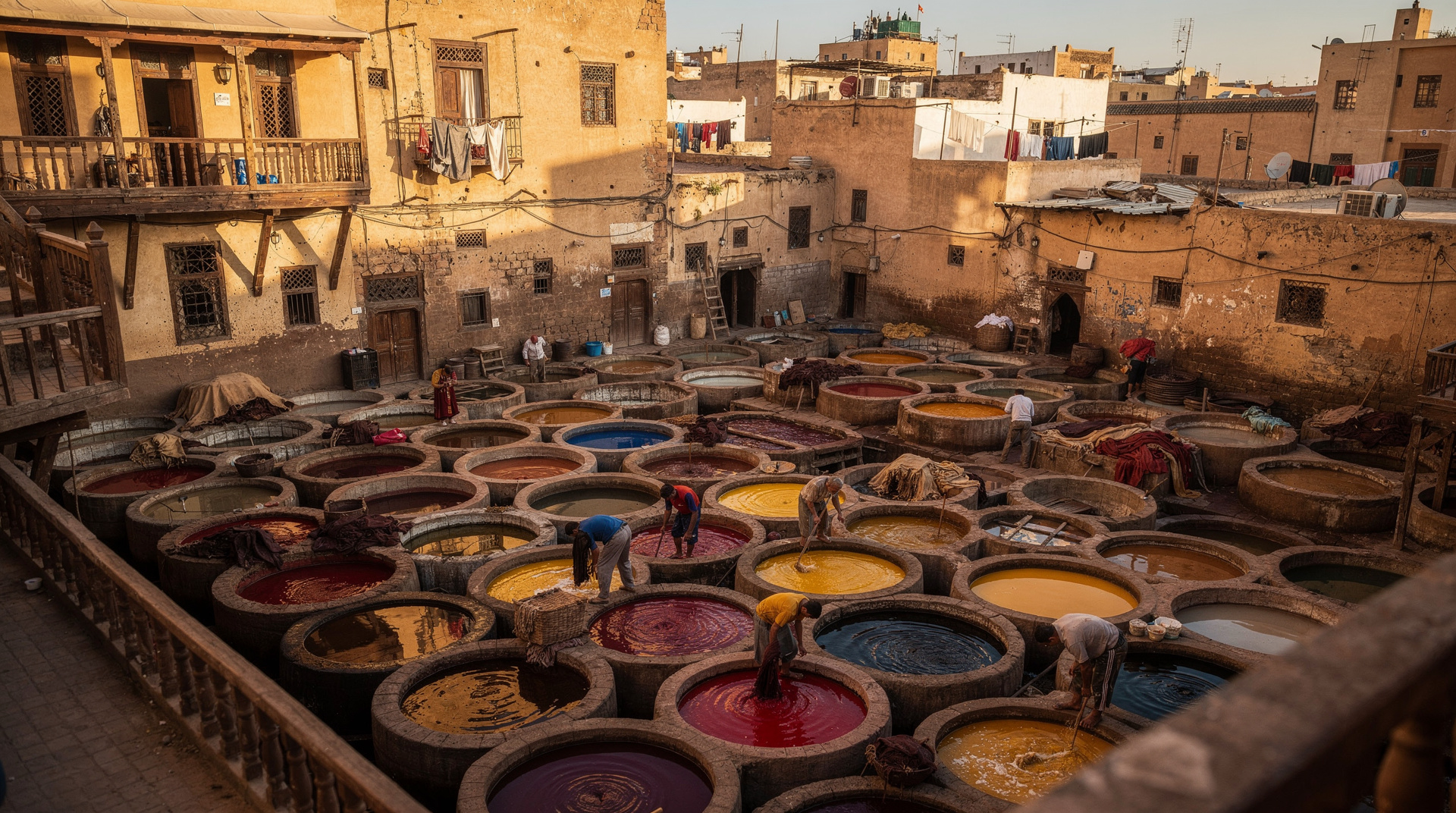
Fes el-Bali is where most time should be spent. The Chouara Tannery, visible from rooftop terraces of surrounding leather shops, is the most photographed scene in Morocco — coloured vats of dye crowded with workers treading hides since the 11th century. The surrounding shops do push hard to sell you a leather jacket, but viewing access is usually free if you’ve committed to looking. Be prepared for the smell — mint is offered at the entrance for good reason.
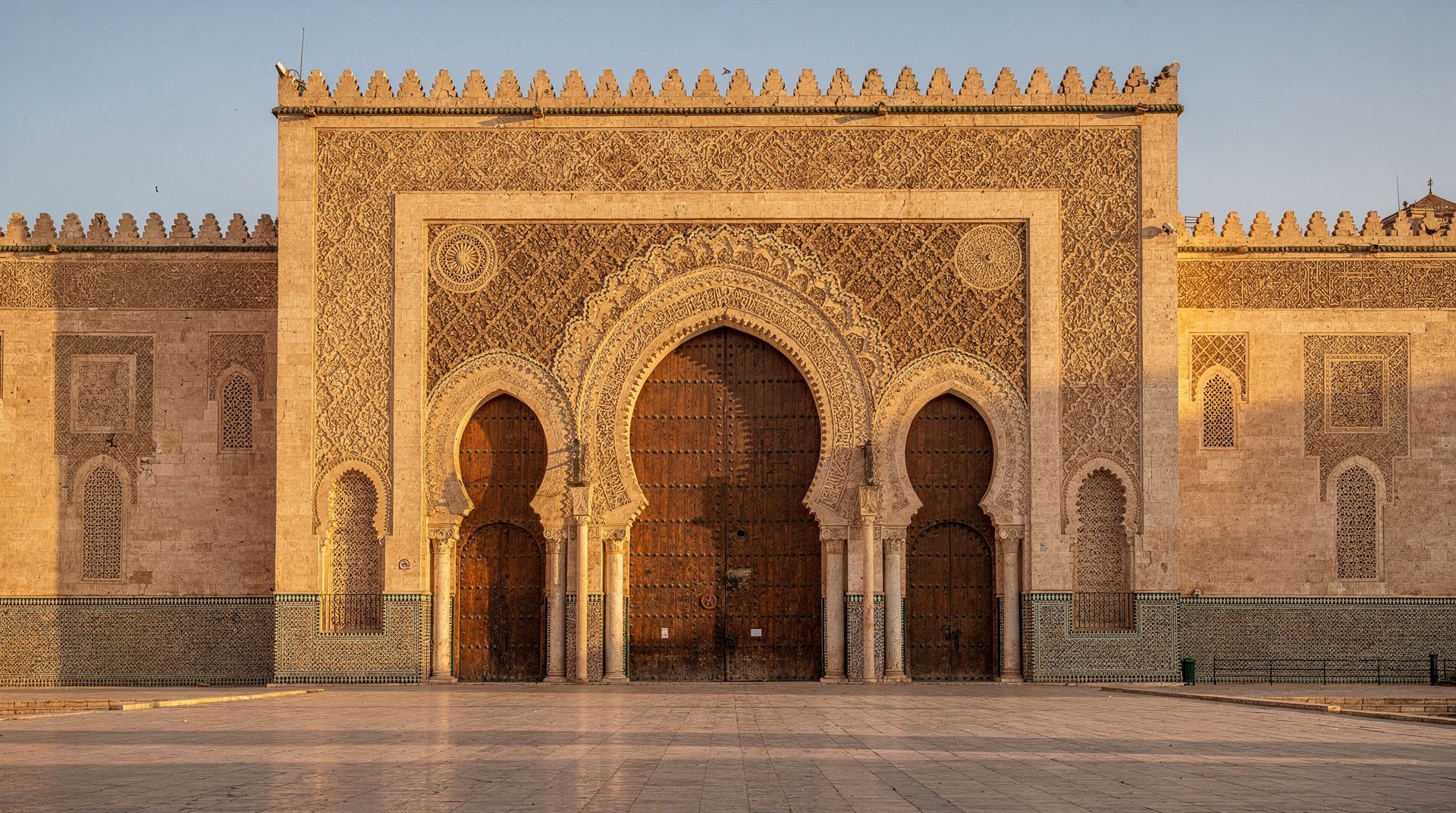
The Bou Inania Madrasa and Al-Attarine Madrasa are architectural masterpieces: zellige tilework, carved plaster, and cedar screens layered to an almost hallucinatory degree. The Quaraouiyine Mosque, founded in 859 and often cited as the world’s oldest continuously operating university, is not open to non-Muslims but its doorways and surrounding quarter are worth seeking out.
Hire a guide for at least half a day in Fes el-Bali — the medina genuinely rewards explanation, and a licensed guide from the tourism office costs around 300–400 MAD for a half day. The Fes full-day cultural tour covers the tanneries, madrasas, and medina lanes with context that transforms the experience.
For accommodation, Fes el-Bali has some outstanding riads. Riad Fes and Palais Amani are at the top end; Dar Roumana and Riad Numero 9 offer excellent mid-range options. Stay inside the medina walls — waking up in the city before the crowds arrive is one of the finest things Morocco offers.
Meknes
Meknes was the imperial capital of Sultan Moulay Ismail (1672–1727), who built it as his answer to Versailles — a city of 25 palaces, 15 gates, 40km of walls, and stables for 12,000 horses. The scale of his ambitions still impresses, even in ruin. The Mausoleum of Moulay Ismail is the one site in Meknes where non-Muslims can enter a working religious space — it is beautiful and relatively uncommercialized.
Bab Mansour, the main ceremonial gate, is one of the most ornate in Morocco: green-and-white zellige tilework rising 18m. The adjacent Lahdim Square is Meknes’s more relaxed answer to Djemaa el-Fna — food stalls, storytellers, and considerably less hassle.
The Meknes and Volubilis day trip from Fes is the most efficient way to combine both sites if you’re based in Fes. If you’re staying overnight in Meknes, the Meknes private guided walking tour gives the city’s monuments proper depth.
Volubilis and Moulay Idriss
Volubilis (Oualili in Berber) sits in a fertile valley with the Middle Atlas rising behind it — the scenery alone justifies the visit. The Roman colony reached its peak in the 3rd century AD, and what remains is remarkably intact: the House of Orpheus with its Triton mosaic, the Basilica, the triumphal Arch of Caracalla, and dozens of private villas with floor mosaics exposed to the open sky. Entry is around 70 MAD. Arrive early (gates open at 8am) before tour groups from Fes and Meknes.
Moulay Idriss, 5km from Volubilis, is a compact hilltop pilgrimage town that tumbles down two hills like a white-and-green cascade. The town is deeply serene in the early morning. The cylindrical minaret of the Moulay Idriss Mosque is unique in Morocco — decorated with green Quranic inscriptions in mosaic tile. Guesthouses here are simple but welcoming; staying the night gives you the town at its most authentic.
Rabat
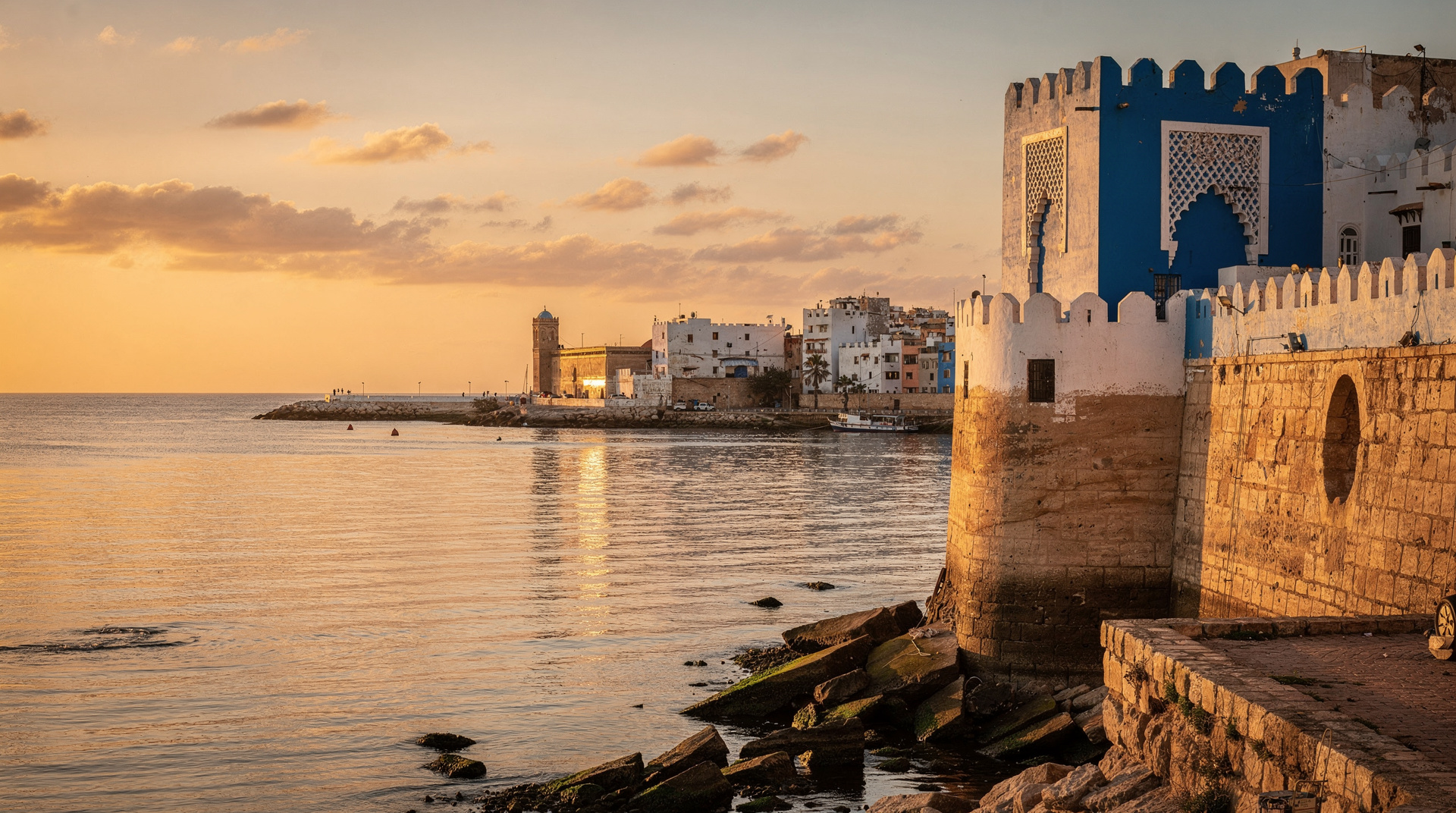
Rabat repays visitors who make the extra effort. The Kasbah of the Oudayas overlooks the Atlantic at the mouth of the Bou Regreg river — its blue-and-white lanes recall Chefchaouen at a fraction of the tourist density. The Hassan Tower, begun in 1195 and never finished, stands alongside the Mausoleum of Mohammed V in a complex that is genuinely moving. The Mohammed VI Museum of Modern and Contemporary Art, opened in 2014, is Morocco’s best art museum.
From Rabat, the train to Casablanca takes 45 minutes (direct to Mohammed V airport), making it the logical endpoint of the imperial cities circuit before a flight home.
When to visit
Spring (March to May) and autumn (September to November) are ideal. Temperatures are mild (18–26°C), the light is beautiful for photography, and crowds are manageable. Summer is hot (30–38°C in Fes, which sits in a bowl and accumulates heat), though Rabat on the Atlantic coast stays more comfortable. The Fes Festival of World Sacred Music in June draws significant crowds and raises riad prices sharply — worth planning around unless the music is your reason for coming.
Winter (December to February) can be cold and rainy in Fes. Snow occasionally dusts the surrounding hills. But this is low season, riad prices drop, and the medina is yours in a way it never is in April.
How many days
Two days in Fes is the realistic minimum; three is better. One day each for Meknes and Volubilis. One to two days in Rabat. Total for the circuit: 5–7 days. Many travellers combine the imperial cities with northern Morocco — Chefchaouen is 3–4 hours from Fes and makes a natural continuation.
Where to stay
Fes, budget: Dar Bensouda, Dar Mehdi — simple, central, 400–700 MAD/night.
Fes, mid-range: Dar Roumana, Riad Numero 9 — restored riads with breakfast, 1,000–1,800 MAD/night.
Fes, splurge: Riad Fes, Palais Amani — some of Morocco’s finest riad hotels, from 3,000 MAD/night.
Meknes: Riad Meknes, Maison d’hôtes Riad Yacout — 600–1,200 MAD/night.
Rabat: Riad Kalaa, La Kasbah — small, character-rich guesthouses from 800 MAD/night.
Food and eating in the imperial cities
Fes has one of the most distinctive culinary traditions in Morocco. The city’s cooking draws on Andalusian influences brought by refugees from Iberia in the 15th century — sweeter spice profiles, preserved lemons used liberally, and a tradition of bastilla (the filo-pastry pigeon pie dusted with icing sugar and cinnamon) that is the region’s signature dish. Eat bastilla at Riad Fes restaurant or at any of the medina’s better-established establishments; versions in tourist restaurants around the tanneries tend to be formulaic.
The Rcif market, at the heart of Fes el-Bali, is the city’s main daily food market. Arrive between 7 and 9am for the full experience: fresh sfenj (doughnuts), msemen (flatbread), argan oil dispensed from clay jars, live chickens being selected for lunch. Consuming street food here — harira soup for 5 MAD a bowl, brochettes straight from the charcoal — is one of the most authentically Moroccan experiences available in the city.
In Meknes, the area around the Lahdim Square has solid street food options. Chez Drissi, a family-run establishment near the medina entrance, is reliable for couscous on Fridays (Moroccan tradition: couscous is served across the country at Friday lunch after mosque).
Rabat’s dining scene is the most cosmopolitan of the three cities. The Agdal neighbourhood has a concentration of cafés and restaurants catering to the capital’s large professional class, serving everything from standard Moroccan tagines to sushi. For traditional Moroccan food with quality ingredients, Dar Zitoun and Le Dhow (a restaurant boat on the Bou Regreg river) are reliable choices.
Understanding the medina structure
All three cities follow the same basic urban grammar: a medina (the original walled city) divided into residential quarters (derbs), a grand mosque at the centre, madrasas (Quranic schools) clustered around it, a main souk street running from the gate to the mosque, and specialist craft quarters radiating outward. Understanding this structure makes navigation intuitive rather than random.
In Fes el-Bali, the two main medina arteries are Talaa Kebira (“the big slope”) and Talaa Seghira (“the small slope”), both descending to the Qaraouiyine Mosque. Navigating between them requires using the mosque as a landmark reference point. The tanneries are northeast of the mosque; the Bou Inania Madrasa is northwest of it on Talaa Kebira.
Getting a quality city map from your riad before venturing out is genuinely advisable. The Medina of Fes is approximately 1.5km across but contains 9,400 streets and lanes — only a small fraction of which appear on any map. Your riad staff will mark the key landmarks and give you the practical routing that guidebooks miss.
Which imperial city to prioritise
Most first-time visitors cannot do all three cities justice on a short trip. This comparison helps allocate time.
| City | Best for | Pace needed | Skip if |
|---|---|---|---|
| Fes | Medina immersion, crafts, the tanneries | 2–3 days minimum | You dislike crowded, disorienting lanes |
| Meknes | A calmer, cheaper imperial capital | 1 day, or a half-day add-on to Volubilis | You’ve already seen Fes and are short on time |
| Rabat | Coastal calm, modern Morocco, museums | 1–2 days | You want maximum medina density per day |
For those weighing Fes against Marrakech as a base for the wider trip, see our Marrakech vs Fes comparison. If Chefchaouen and Fes are competing for the same days, the Chefchaouen vs Fes guide breaks down the trade-off, and the day trips from Fes guide covers Volubilis, Meknes, and Ifrane options in more depth than fits here.
Sample itinerary — 6 days
Day 1: Arrive Fes, settle into your riad, evening walk along Talaa Kebira, rooftop dinner.
Day 2: Full day Fes el-Bali — tanneries, Bou Inania Madrasa, Al-Attarine, Quaraouiyine quarter.
Day 3: Fes el-Jdid (the royal palace quarter) and Jewish mellah in the morning; Fes el-Bali souks in the afternoon.
Day 4: Day trip to Volubilis (morning, arrive before 10am) and Moulay Idriss (lunch, afternoon exploration); return to Meknes, overnight.
Day 5: Meknes — Bab Mansour, Moulay Ismail Mausoleum, Lahdim Square, local lunch.
Day 6: Train to Rabat — Kasbah des Oudayas, Hassan Tower, mausoleum, dinner by the river.
Related
- Northern Morocco — Chefchaouen is 3–4 hours from Fes; a natural extension
- Atlas Mountains — The Middle Atlas begins south of Fes, with Ifrane and Azrou reachable in under 2 hours
- Eastern Morocco — Continue south from Fes through Midelt into the Dades and Sahara
- Also useful: imperial cities itinerary, the imperial palaces guide, and volubilis roman ruins guide
Frequently asked questions about Imperial Cities
Can you visit the imperial cities without a car? Yes. Trains connect Fes, Meknes, and Rabat efficiently, and grand taxis or organised day trips handle Volubilis and Moulay Idriss. A car only becomes useful if you’re continuing on to the Middle Atlas or combining with a wider road trip.
Is Fes worth visiting if I’ve already seen Marrakech’s medina? Generally yes — Fes el-Bali is larger, older, and has far less modern commercial pressure than the Marrakech medina, so the two don’t feel repetitive. If time is tight, prioritise Fes over a second day in Marrakech’s souks.