Quick facts
- Best for
- Dune treks, stargazing, camel rides, desert camps
- Days needed
- 3-5 days from Marrakech
- Best time
- Oct–Apr
- Hub city
- Merzouga
Why visit the Sahara Desert
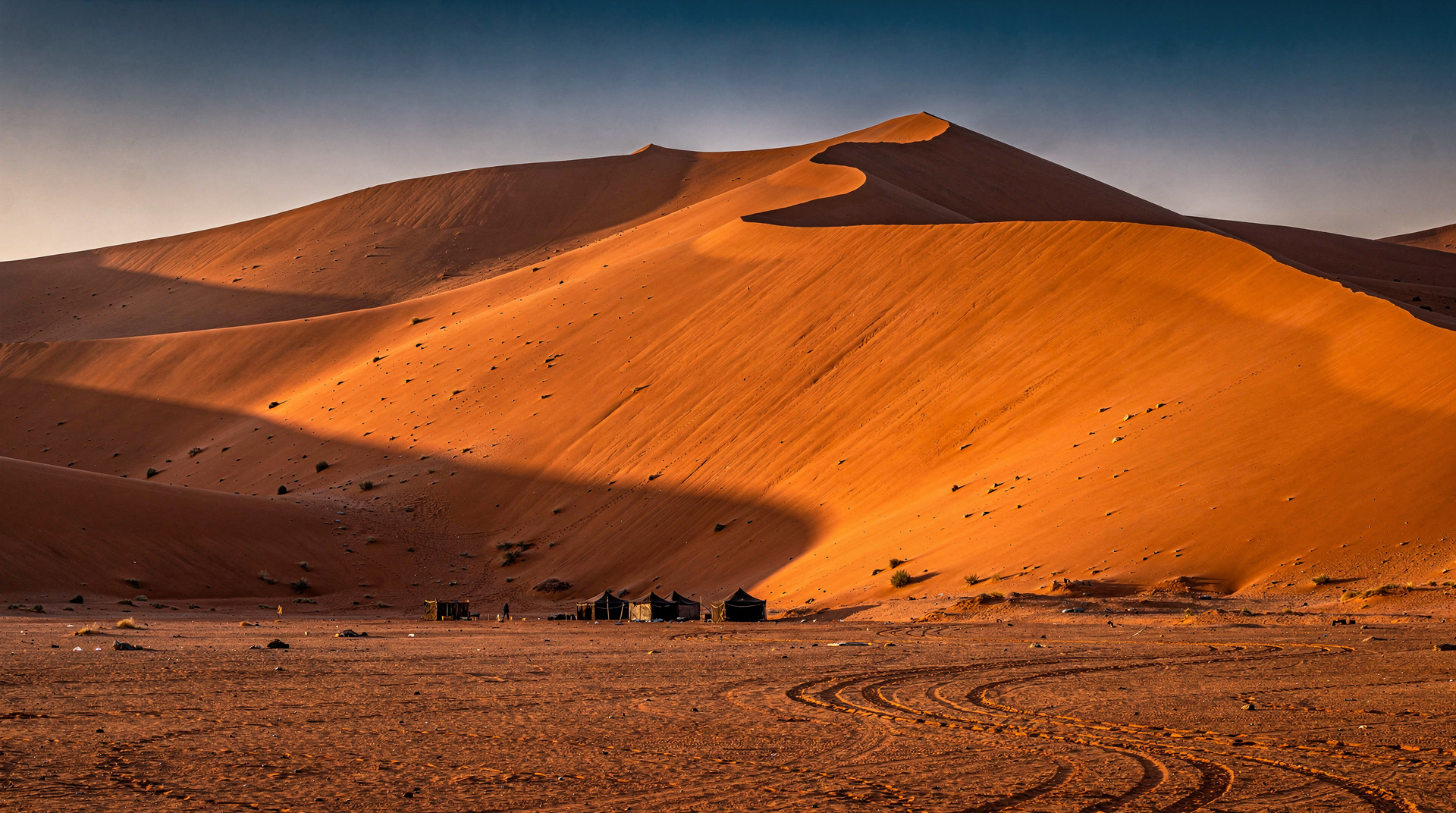
A night in the Sahara is one of those experiences that sounds like a cliché and turns out to be transformative. The silence is total. The stars — unpolluted by any city for hundreds of kilometres — are overwhelming. The dunes at Erg Chebbi near Merzouga rise 150m from the flat hamada, catching the early light in shades of amber and copper that no photograph quite captures. This is not the Morocco of medinas and mint tea — it is something older and more fundamental.
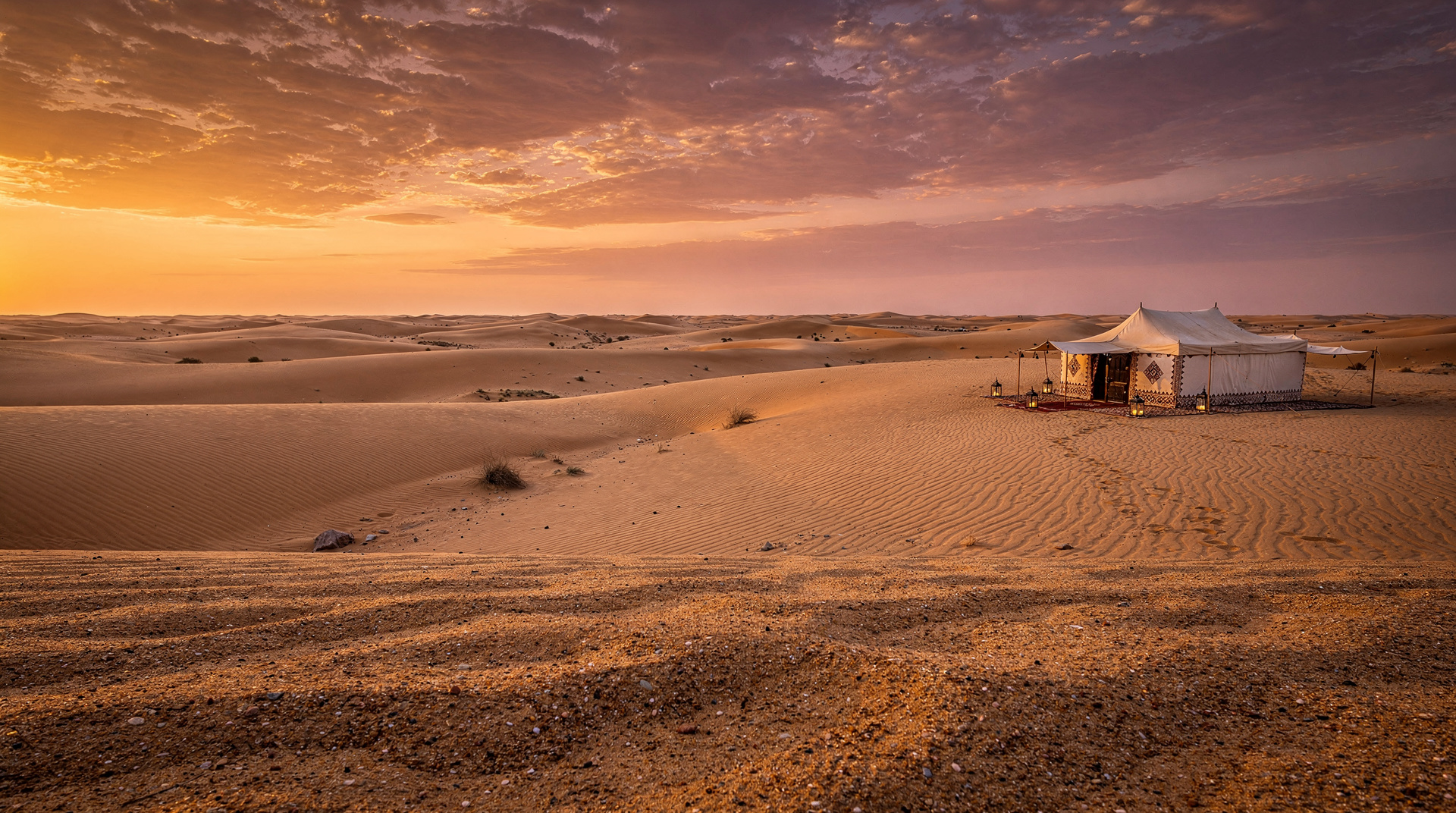
Be honest, though, about what you’re buying. The “authentic desert camp” category has been severely diluted by tourist infrastructure. At peak season, the ridge above Erg Chebbi can have 20 or more camps within sight of each other, many playing Gnawa music through portable speakers and serving tagine to 40 guests. This is not wilderness. The better camps — Scarabeo (Agafay), Sahara Sky (Merzouga), and especially the remote Erg Chigaga camps near M’Hamid — work harder to maintain genuine solitude. Budget accordingly: the cheapest camps (500–800 MAD per person) are very basic; the premium camps (2,000–4,000 MAD) earn their price through location, comfort, and smaller group sizes.
Merzouga is the more developed and accessible dune base. Zagora, further west, sits at the edge of a different kind of desert — more rocky and varied in terrain, less dramatic in terms of sand dunes. Erg Chigaga near M’Hamid is the real wilderness option: 60km of piste (unpaved track) from the nearest town, accessible only by 4x4. The relative effort involved is also the reason it’s remained less crowded.
| At a glance | |
|---|---|
| Where | Merzouga (Erg Chebbi), Zagora, or M’Hamid (Erg Chigaga), all south of Marrakech |
| Cost | Around 500–1,000 MAD/person for a basic Merzouga camp night; 3,000–5,000 MAD/person for a remote Erg Chigaga camp |
| Time needed | At least 1 night in the dunes; 3 days from Marrakech is the common minimum, 5 days for Erg Chigaga |
| Getting there | Multi-day tour or self-drive via Ouarzazate (Merzouga), or via Zagora (shorter drive, less dramatic dunes) |
| Best time | October to April; avoid June–August when Merzouga regularly tops 45°C |
Getting there
From Marrakech to Merzouga: The most common approach is the dramatic southern circuit over the Tizi n’Tichka pass (2,260m) and through Ouarzazate, Kalaat M’Gouna, and Erfoud. Total driving time: approximately 9–10 hours non-stop. In practice, with stops at Ait Benhaddou and the Dades Gorge, it expands to two driving days. Many visitors take this road south and return via Fes (Merzouga to Fes: 7 hours via Midelt), completing a logical loop.
A direct overnight bus (CTM or Supratours) runs Marrakech to Merzouga in around 10–11 hours. Comfortable enough for the price (180–220 MAD), though arriving at 5am with gear to sort is not ideal.
From Fes to Merzouga: 7 hours via Midelt and Erfoud. A very manageable single driving day with stops.
From Marrakech to Zagora: 5–6 hours via Tizi n’Tichka and Agdz — a significantly shorter drive than Merzouga, making Zagora the choice for a quicker desert fix.
From Zagora to M’Hamid and Erg Chigaga: M’Hamid is 95km south of Zagora (1.5 hours on asphalt). From M’Hamid to Erg Chigaga: 60km of piste requiring a 4x4 — around 1.5–2 hours depending on sand conditions. Local 4x4 excursions from M’Hamid cost 600–1,000 MAD per vehicle per day.
Main destinations within the region
Merzouga and Erg Chebbi
Merzouga is a small settlement at the foot of the Erg Chebbi, Morocco’s largest and most photogenic erg (sand sea). The village itself is functional rather than beautiful, strung along the edge of the dunes with hotels, camel stations, and quad-bike hire stands. The dunes are the reason to come, and they genuinely deliver.
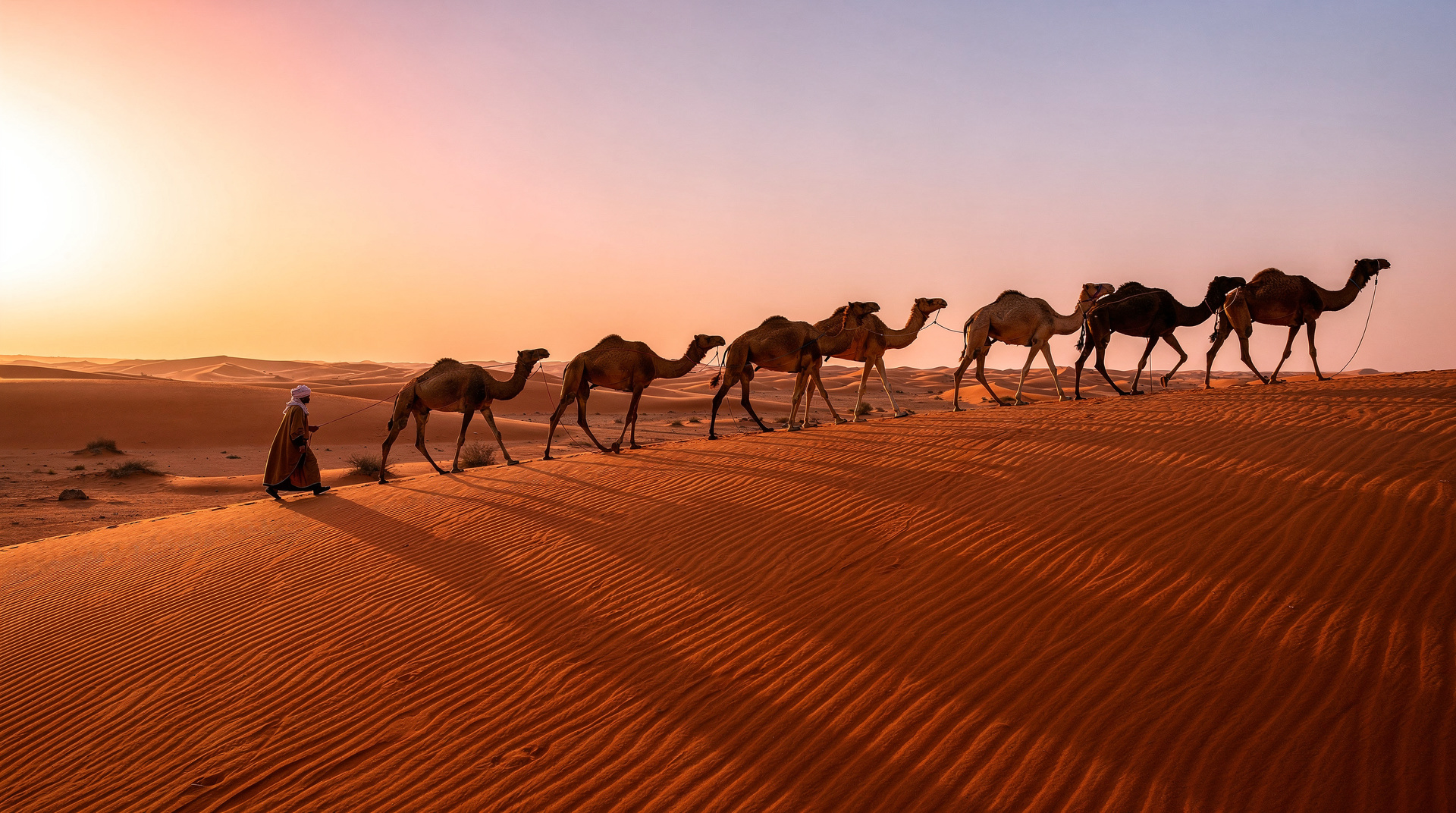
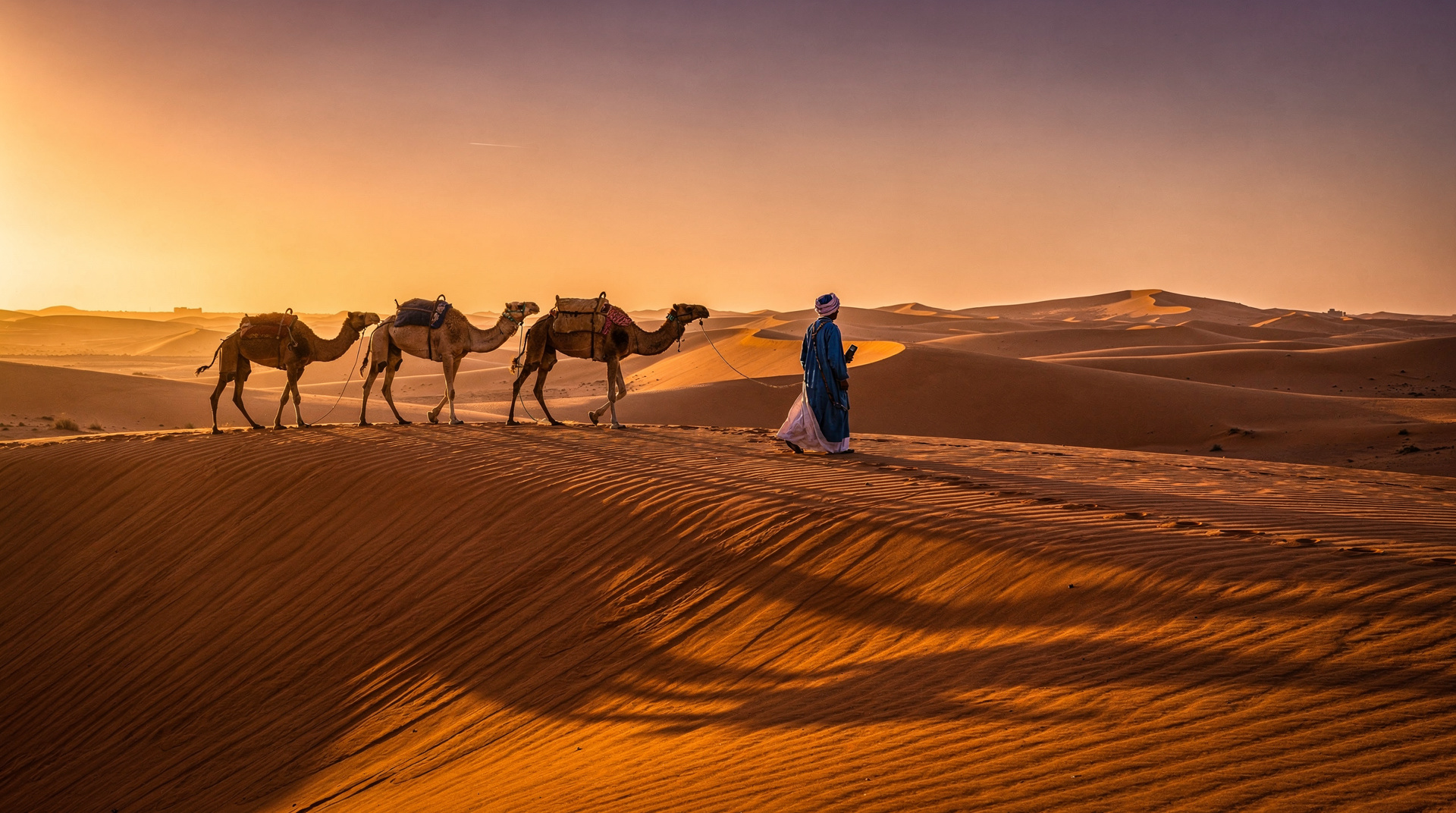
The classic experience: camel ride from your camp to a dune summit for sunset, followed by dinner and music in camp, then up before dawn for the morning light. It sounds tourist-packaged, and it is — but the desert dawn remains magnificent regardless. For the fullest experience, book a camp that is set back from the main road and as far into the dunes as possible.
The Merzouga overnight desert camp with camel ride is a well-reviewed option that includes the camel trek to camp, dinner, and breakfast, with the return ride timed for sunrise.
If you’re coming from Marrakech and want to combine the desert with the southern circuit scenery (Ouarzazate, Ait Benhaddou, Dades Gorge), the 3-day Sahara desert trip from Marrakech to Merzouga covers this route efficiently, including stops at key sites along the way.
Beyond the standard camp night, Merzouga rewards exploration. The Dayet Srij saltlake (3km north) attracts flamingos in spring. The Khamlia village (8km from Merzouga) is home to a Gnawa community descended from sub-Saharan slaves — their music and culture are extraordinary, and visits arranged with local guides feel considerably more genuine than the camp entertainment.
Zagora and the Draa Valley
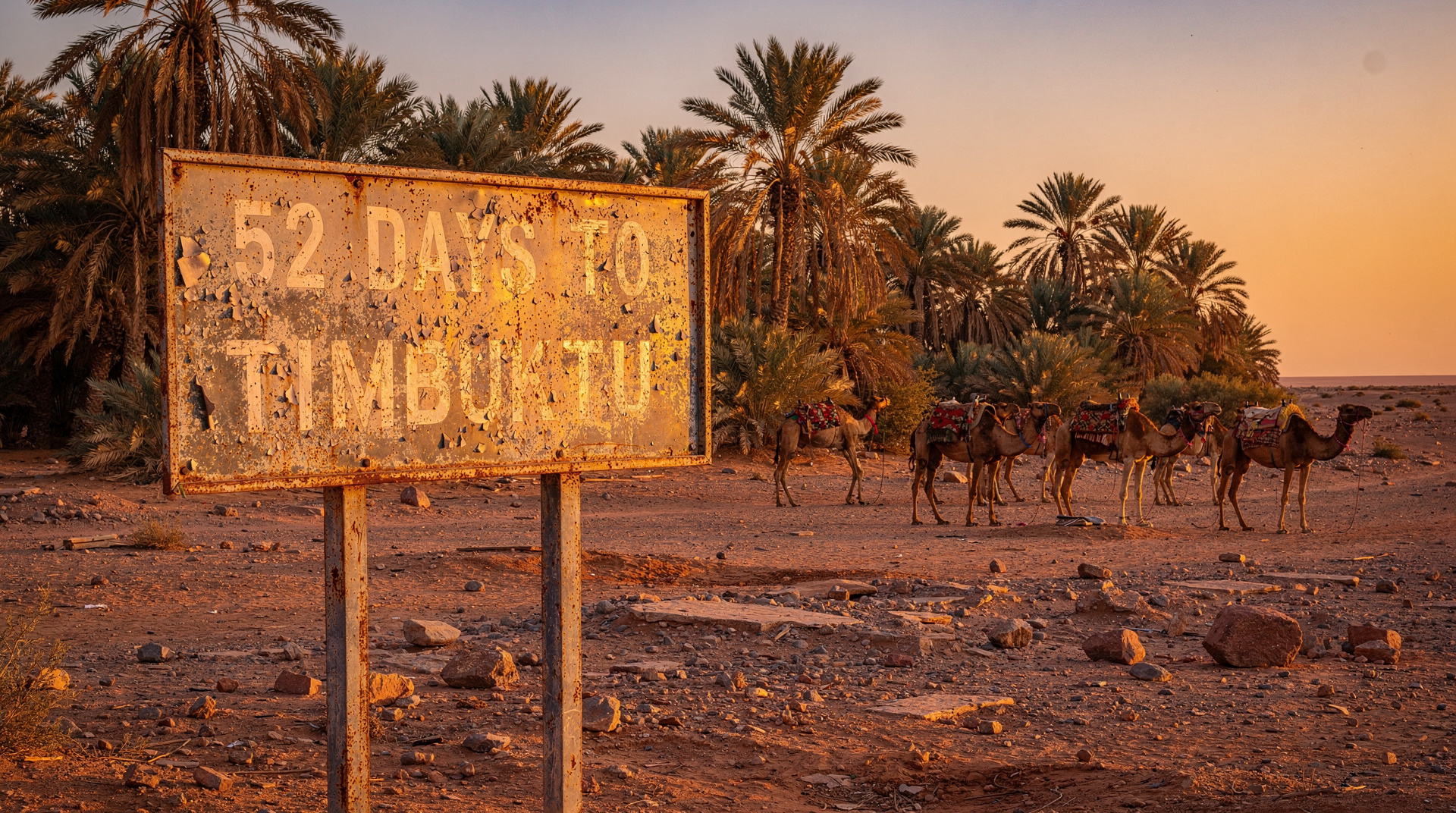
Zagora sits at the point where the Draa River, Morocco’s longest, finally disappears into the desert. The town is known for its famous road sign: “Tombouctou: 52 jours” (Timbuktu: 52 days by camel — a classic Saharan journey reference). The surrounding Draa Valley is a long oasis corridor of date palms, kasbahs, and irrigated gardens running between the Atlas and the desert.
The Zagora desert experience is less dramatic in terms of dunes (Erg Lihoudi is smaller than Erg Chebbi) but more varied: the Draa Valley oasis landscape, the fortified ksar towns, and the approaches to Erg Chigaga all start here. The 2-day desert tour from Marrakech to Zagora is the most time-efficient way to experience this part of the southern desert without a lengthy drive to Merzouga.
M’Hamid and Erg Chigaga
M’Hamid el-Ghizlane is where the asphalt ends and the Sahara truly begins. The town has a frontier quality — basic, dusty, and unpolished in ways that most of Morocco’s tourist circuit is not. From here, guided 4x4 expeditions cross 60km of desert piste to Erg Chigaga, one of Morocco’s two great ergs (the other being Chebbi). Chigaga is larger in area than Chebbi and receives a fraction of the visitors.
Camps at Erg Chigaga are genuinely remote — there is no road, no electricity grid, and no quad bikes buzzing around at dusk. Nights here are as quiet as the Sahara gets in a country with tourist infrastructure. The best camps (Scarabeo has a version here, as does Erg Chigaga Luxury Camp) run 3,000–5,000 MAD per person for an overnight, all-inclusive. It is significantly more expensive than Merzouga, and worth every dirham for the solitude.
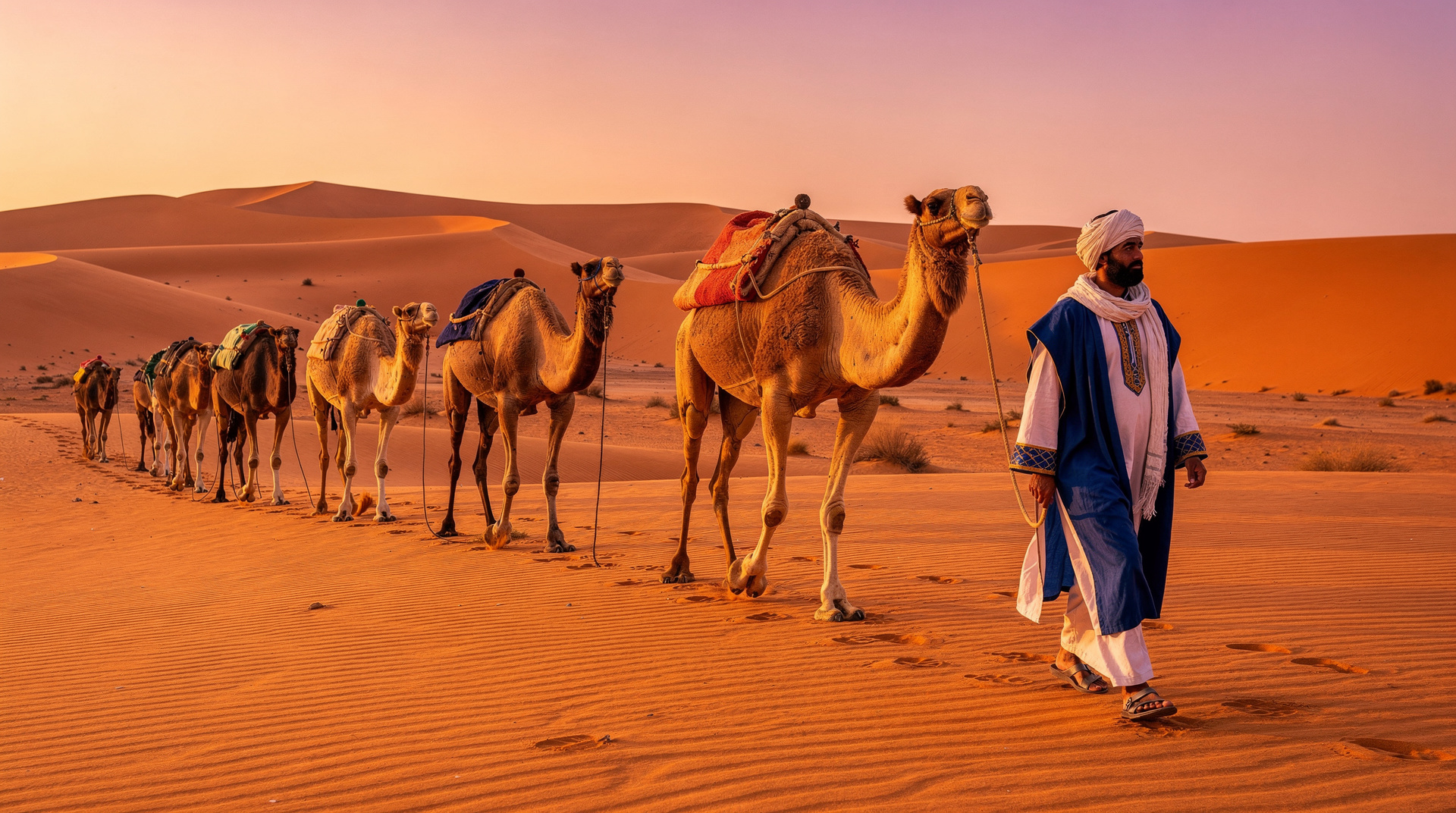
Multi-day camel treks from M’Hamid to Erg Chigaga (3–5 days on camelback, camping each night) are the ultimate Sahara experience and are arranged through M’Hamid-based operators. Expect to pay 800–1,200 MAD/day per person, covering guide, camel, food, and simple camp equipment.
When to visit
October to April is the only comfortable window for desert travel. Temperatures are pleasant during the day (15–25°C) and cold at night (sometimes below 0°C at Erg Chigaga in January — bring layers). Summer is extreme: Merzouga regularly hits 45–47°C in July, making any outdoor activity beyond the early morning almost impossible.
March and April bring occasional sandstorms (chergui winds) that can ground visibility to near zero. Check forecasts if you’re planning a specific dune experience.
What to bring and how to prepare
Clothing: Temperature swings in the desert are extreme. A day in October at Merzouga might reach 28°C; the same night can drop to 8°C. Bring a fleece or light down jacket regardless of when you travel. January nights at Erg Chigaga can fall below 0°C. Sandstorm protection (a light scarf or shemagh to cover the face) is useful and widely sold in Merzouga for 50–100 MAD.
Photography: Dune photography peaks at the golden hour — the hour after dawn and the hour before sunset. Midday light is flat and harsh. Sand in camera equipment is a real risk; a zip-lock bag for lenses and a lens cloth for cleaning is essential. Phone cameras with sealed bodies handle sand better than DSLRs with multiple lens-change operations.
Money: Merzouga is cash-only. The nearest ATMs are in Rissani (27km) and Erfoud (50km). Bring all the cash you need before arrival. Camp rates and camel hire are almost always quoted per person and are negotiable if you’re a group of three or more.
Health: Sun protection is critical — UV intensity in the desert is high year-round. A hat, factor 50 sunscreen, and UV-protective sunglasses are not optional. Hydration: the dry desert air pulls moisture from the body faster than humidity-adjusted people expect; 3–4 litres of water per day is the minimum on active days. Most camps provide bottled water; carry your own during camel rides.
Getting around within the erg: Beyond the standard camel ride, quad bikes (300–500 MAD per hour) and 4x4 excursions with local drivers (400–600 MAD per vehicle) offer different perspectives on the dune landscape. Sandboarding — sliding down dune faces on a board — is increasingly popular and costs around 100 MAD for board hire from camps.
Merzouga vs Zagora vs Erg Chigaga
| Merzouga (Erg Chebbi) | Zagora | M’Hamid / Erg Chigaga | |
|---|---|---|---|
| Drive from Marrakech | 9–10 hours (2 days with stops) | 5–6 hours | 8–9 hours to M’Hamid, plus 4x4 piste |
| Dunes | Tallest, most dramatic (up to 150m) | Smaller (Erg Lihoudi), more rocky terrain | Largest in area, most varied dune types |
| Crowds | Busiest — camps within sight of each other | Moderate | Genuinely remote, few visitors |
| Camp price | 500–3,500 MAD/person | Similar to Merzouga, fewer options | 3,000–5,000 MAD/person |
| Best for | First Sahara trip, limited time | Quick desert fix, Draa Valley scenery | Solitude, serious desert immersion |
Understanding the desert landscape
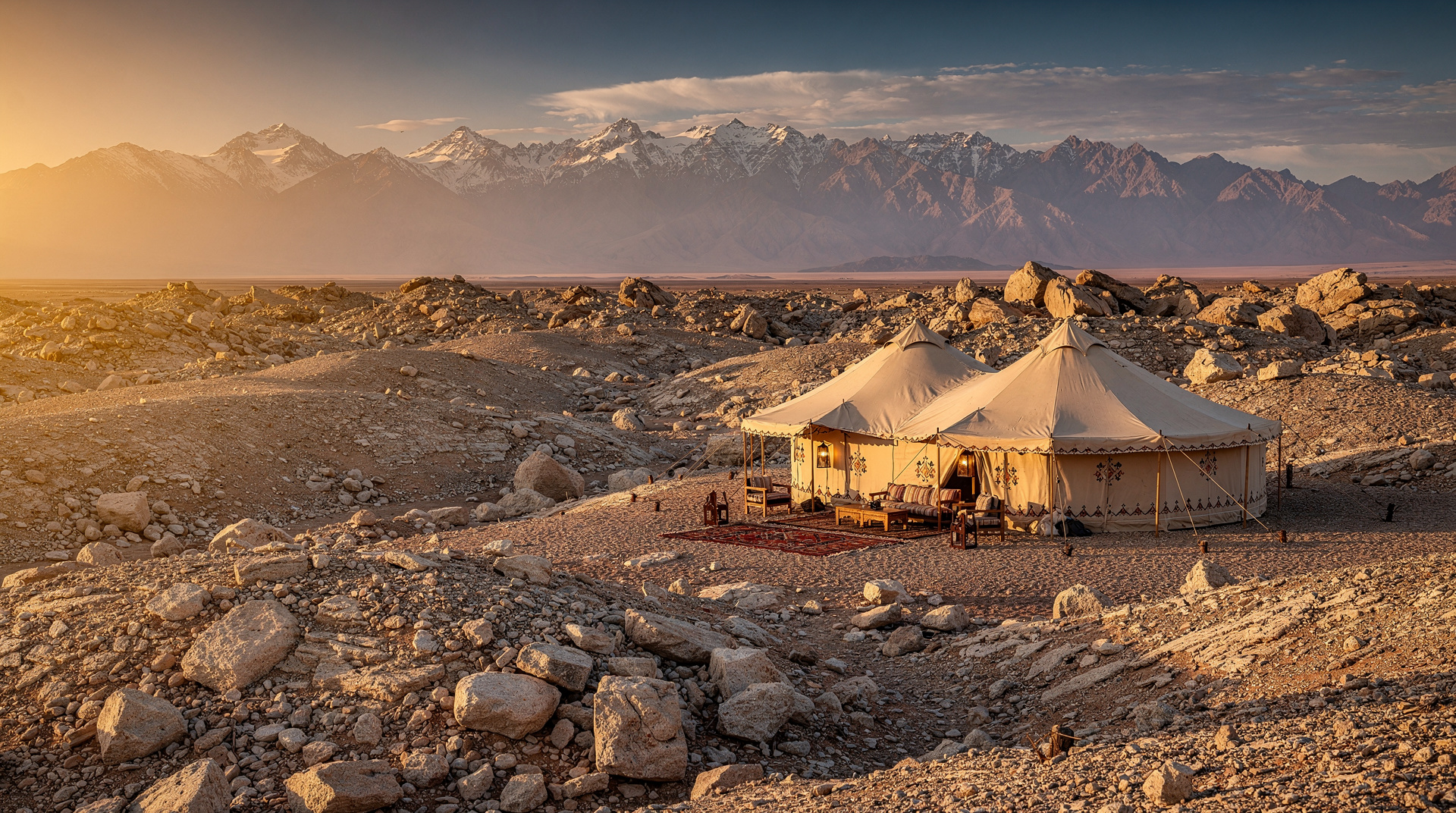
The word “Sahara” covers an enormous variety of terrain — and Morocco’s portion is no different. Most visitors fixate on the ergs (sand dune fields) because they photograph well, but the Sahara is predominantly reg (flat gravel plains) and hammada (rocky plateau). The stony desert between Zagora and M’Hamid, the volcanic hamada south of Ouarzazate, and the pebbly plains around Erfoud are all “Sahara” — they’re just not the version that appears on the posters.
This matters because it shapes the experience. Merzouga’s Erg Chebbi is a genuine sand sea: 22km long, up to 5km wide, with dunes reaching 150m. It is dramatic precisely because it erupts without warning from a flat, featureless plain — there is no gradual build-up. Erg Chigaga near M’Hamid is larger in area and more varied in dune morphology; star dunes, crescent barchans, and linear dunes are all present. The surrounding landscape of Erg Chigaga includes dry riverbeds (oueds), sparse desert vegetation of tamarisk and desert grass, and the occasional fossil-rich limestone outcrop.
The Tafilalt region between Erfoud and Rissani is one of Morocco’s great underexplored areas — a vast palmeraie (date-palm oasis) containing the ruins of the medieval city of Sijilmassa, once one of the most important trans-Saharan trade hubs in the world. The ruins are fragmentary but the setting — a sea of date palms reaching to the horizon, with the Erg Chebbi visible in the distance — is extraordinary. Most visitors pass through Rissani only to change taxis for Merzouga; those who stop find a weekly souk (Thursday and Sunday) and a town whose historic role in the trans-Saharan gold and salt trade shaped all of North Africa.
How many days
Merzouga deserves at least one full night in the dunes — arriving by 3pm, sunset camel ride, stargazing, sunrise return. Most visitors come on 3-day tours from Marrakech (drive down on day 1, dune night on day 2, return or continue north on day 3). Erg Chigaga requires an extra day or two given the distances involved. A dedicated Sahara trip — M’Hamid, piste to Chigaga, 2 nights in the erg, return — works well as a 5-day standalone from Marrakech.
Where to stay
Merzouga, budget: Numerous guest houses and small hotels along the main road, 400–800 MAD/night including breakfast.
Merzouga, mid-range: Riad Madu, Auberge Dunes d’Or — comfortable, good-value bases, 900–1,600 MAD/night.
Merzouga, camp: Sahara Sky Camp, Azalai Desert Camp — well-positioned luxury camps, 2,000–3,500 MAD/person/night all-inclusive.
Erg Chigaga: Remote luxury camps, 3,000–5,000 MAD/person/night. Booking essential, minimum 3–4 months ahead in peak season.
Zagora: Simple hotels in town (400–800 MAD), or stay in the palmery at Dar Raha, Kashba Sirocco — quiet and pleasant, 1,200–2,000 MAD/night.
Sample itinerary — 3 days from Marrakech
Day 1: Marrakech to Merzouga via Tizi n’Tichka, Ouarzazate, and Rissani. Stop at Ait Benhaddou (1 hour), lunch in Boumalne Dades, arrive Merzouga by 5pm. Camel ride to camp for sunset.
Day 2: Sunrise on the dunes. Return to camp for breakfast. Explore Merzouga — Khamlia village, Dayet Srij lake, optional quad bike excursion into the erg. Second night in camp or hotel.
Day 3: Early departure via Midelt and Azrou (Middle Atlas forests), arriving Fes by early evening — completing the classic Marrakech–Sahara–Fes loop.
Frequently asked questions about Sahara Desert
Is one night in the Sahara enough?
One night gives you the essentials — sunset camel ride, dinner, stargazing, sunrise — but it is a rushed visit given the drive involved. Two nights (especially at Erg Chigaga) lets you actually decompress rather than treating the desert as a photo stop between long drive days.
Should I book a Sahara tour from Marrakech or Fes?
Both work. From Marrakech, the classic southern circuit via Ouarzazate and Ait Benhaddou is more scenic. From Fes, the route via Midelt is faster and less touristed. Many travellers do one direction from each city, completing a loop through the Imperial Cities.
Related
- Eastern Morocco — The route through Ouarzazate, Dades Gorge, and Todra Gorge on the way to or from Merzouga
- Marrakech Region — Most Sahara trips begin and end here
- Imperial Cities — Fes is the natural endpoint of the classic Sahara circuit