Quick facts
- Best for
- Souks, day trips, desert edge, Atlas hikes
- Days needed
- 4-7 days
- Best time
- Mar–May, Sep–Nov
- Hub city
- Marrakech
Why visit the Marrakech region
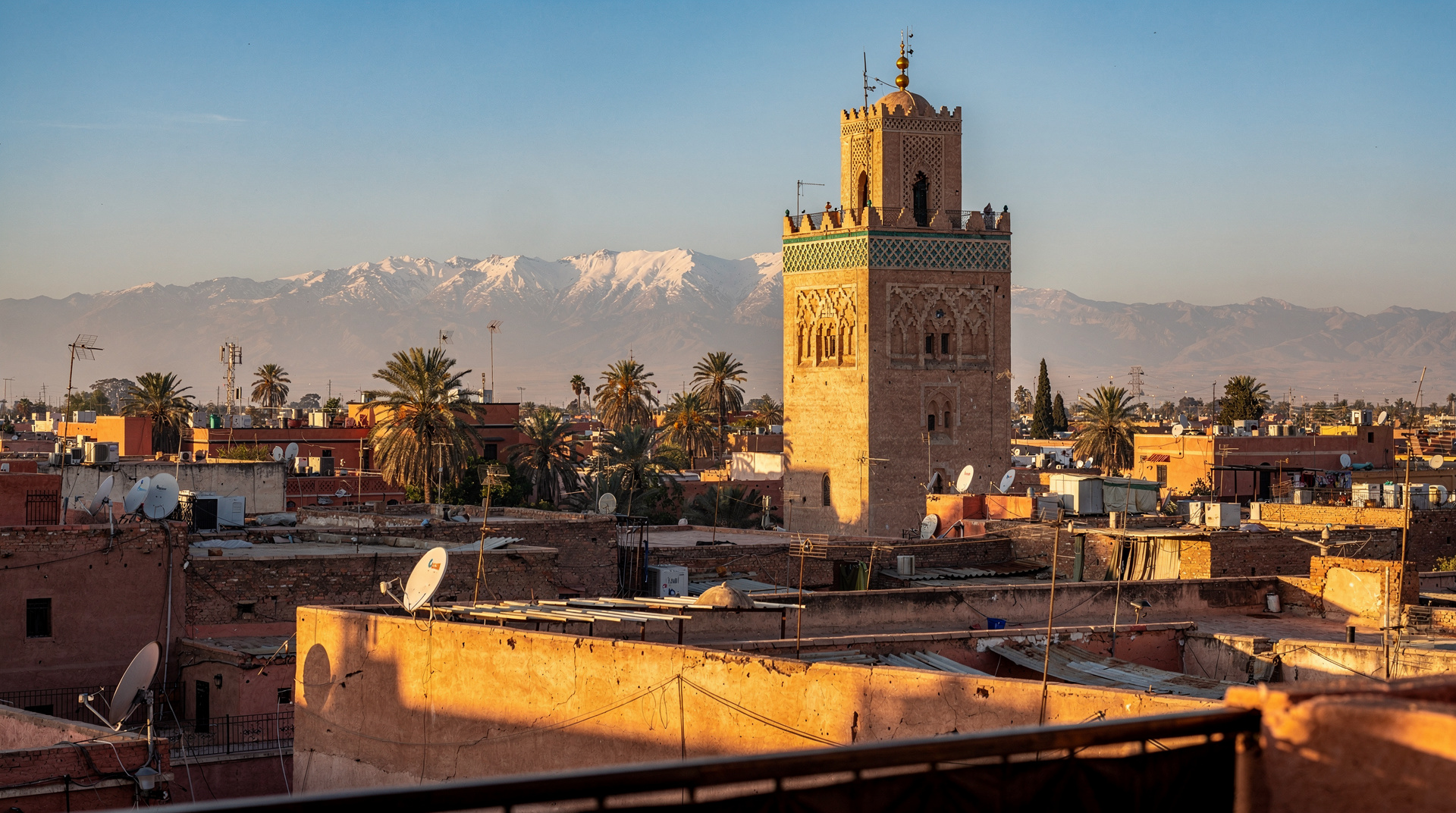
Marrakech is Morocco’s most visited city for good reason — but the city itself is only part of the story. Within a two-hour radius, the landscape shifts dramatically from terracotta medina walls to snow-capped Atlas peaks, cascading waterfalls, and the rocky hammada of the Agafay Desert. This density of experiences, all radiating from a single hub, is what makes the Marrakech region genuinely hard to beat for first-time visitors and return travellers alike.
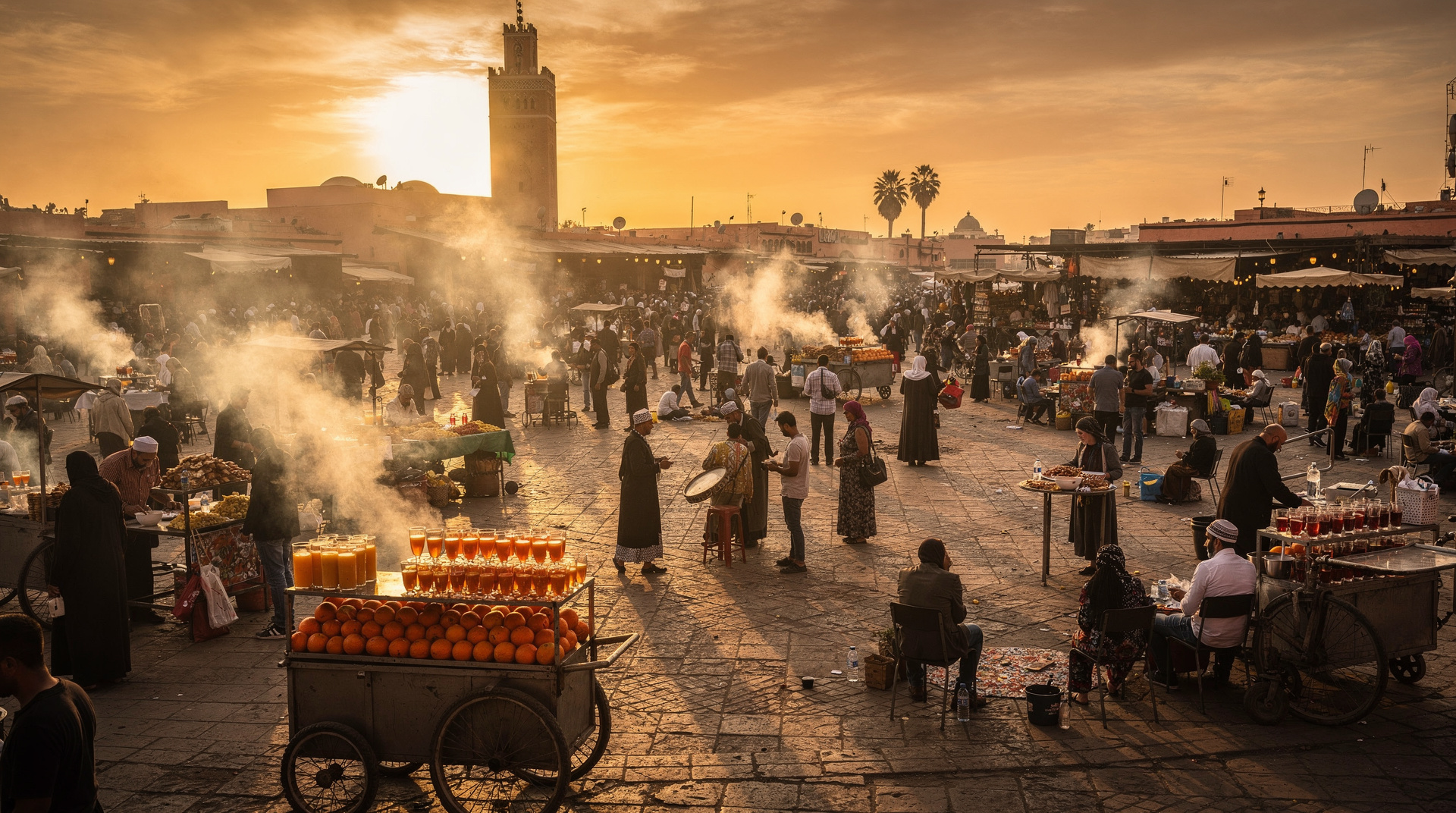
That said, be honest with yourself about expectations. The Djemaa el-Fna square in peak season is loud, crowded, and relentlessly commercialised. Snake charmers will demand money for unsolicited photos. Henna artists can be aggressive. The medina souks are extraordinary, but navigation takes patience and a willingness to get lost. The reward is real: hand-hammered copper lanterns, saffron stalls fragrant enough to slow your pace, and riad courtyards so quiet you forget the chaos outside. Knowing what you’re walking into lets you enjoy it rather than resent it.
The hinterland is where the Marrakech region earns its depth. The Ourika Valley is 45 minutes south and offers Berber villages and a genuine Atlas approach. Imlil, another 30 minutes beyond, is the base for Toubkal climbers and casual trekkers alike. The Agafay Desert — a stony semi-desert plateau just 40 minutes from the city centre — is often oversold as a “desert experience” but it is genuinely atmospheric at sunset, especially from a glamping camp. Ouzoud Waterfalls, 3 hours northeast, is the most spectacular single day trip in the region.
| At a glance | |
|---|---|
| Where | Marrakech city plus its Atlas foothills and desert-edge hinterland |
| Cost | Budget riad from around 300 MAD/night; day-trip taxi hire roughly 400–700 MAD |
| Time needed | 4–7 days for the region; 10+ days if combining with the Sahara or Atlas |
| Getting there | Fly into Marrakech Menara (RAK) or train from Casablanca (~3h) |
| Best time | March–May and September–November |
Getting there
Marrakech Menara Airport (RAK) receives direct flights from most major European cities year-round, with budget carriers including Ryanair, easyJet, and Transavia running routes from London, Paris, Amsterdam, Madrid, and Brussels. A taxi from the airport to the medina costs 80–100 MAD (metered) or 150–200 MAD if you negotiate with a driver outside arrivals. Ride-share apps (Careem, inDrive) typically run cheaper.
From Casablanca, the ONCF train takes around 3 hours and costs roughly 100 MAD in second class. The Casablanca–Marrakech route is one of Morocco’s most reliable rail connections.
Once in Marrakech, the medina is best navigated on foot. Taxis (petits taxis, red) are cheap for cross-city trips — insist on the meter. For day trips into the hinterland, hiring a grand taxi for the day (negotiate a flat rate, typically 400–700 MAD for Ourika or Agafay) is more flexible than organised tours, though guided tours include context that’s hard to replicate solo.
Main destinations within the region
Marrakech medina
The medina is a UNESCO World Heritage Site and the heart of everything. Start at the Djemaa el-Fna square at dusk, when food stalls open and the atmosphere peaks. The Majorelle Garden (book online — queues are brutal without a reservation) and the Yves Saint Laurent Museum next door make a good morning pairing. The Saadian Tombs and Bahia Palace are worth a few hours each, and considerably less crowded than the garden.
For a structured introduction to the city’s history and architecture, the private Marrakech medina and palaces tour covers the key sites with a knowledgeable local guide and skips the worst of the entrance queues.
Budget accommodation around the medina ranges from basic guesthouses (300–500 MAD/night) to mid-range riads with plunge pools (900–1,800 MAD). Riad Yasmine is a popular mid-range choice with an Instagram-friendly pool courtyard. At the top end, La Mamounia and Royal Mansour are two of the finest hotels in Africa — both worth visiting for a drink even if you’re not staying.
Ourika Valley
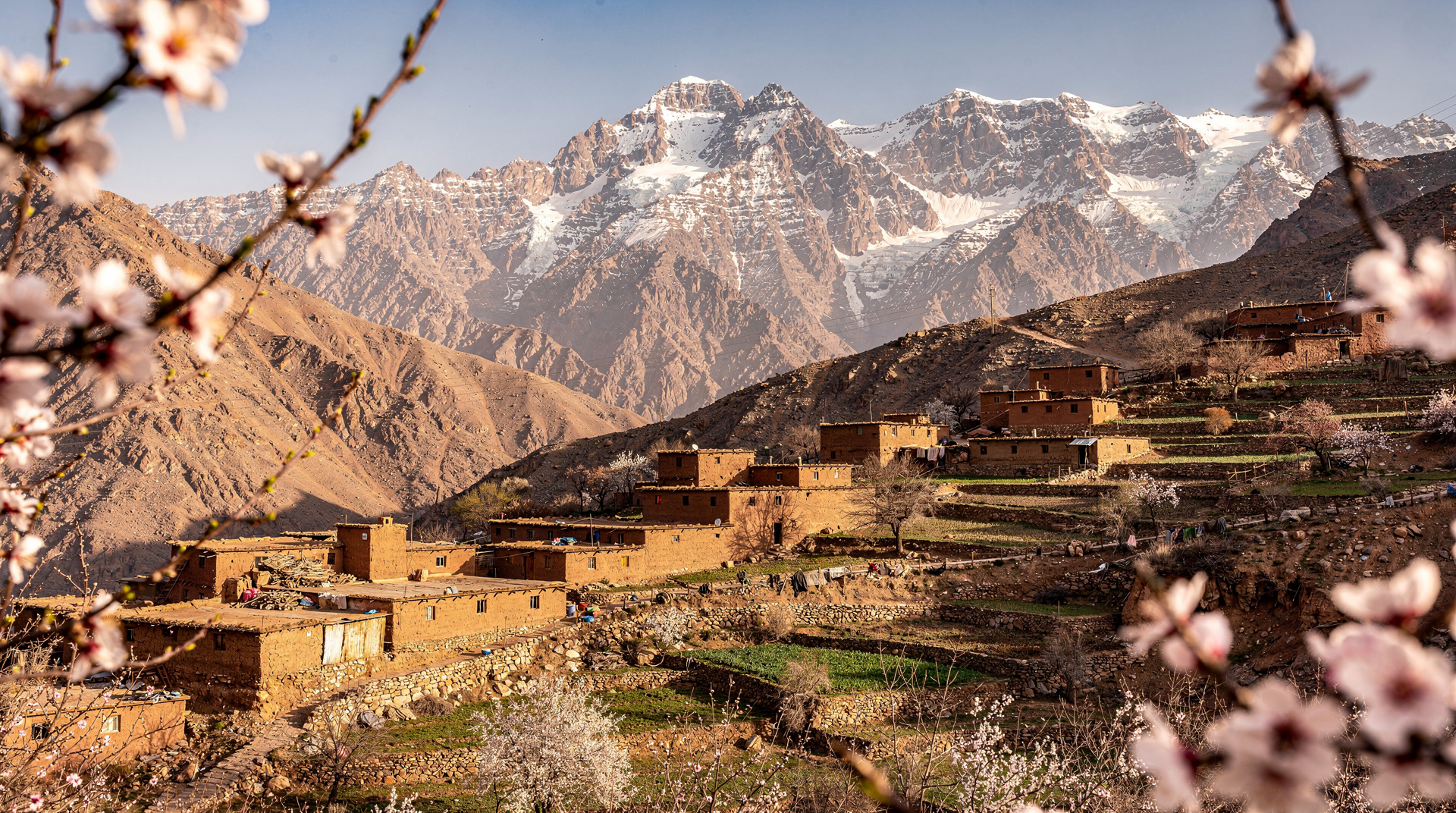
The Ourika Valley follows the Ourika River south into the Atlas foothills, passing Berber villages and market towns before reaching the village of Setti Fatma at 1,500m. From there, a short but steep hike leads to a series of seven waterfalls — the first is accessible year-round, the upper falls require some scrambling. The valley is at its most colourful in spring, when almond trees bloom and the river runs high.
The drive from Marrakech to Setti Fatma takes around 1.5 hours in light traffic, longer on market days when the road through Tnine Ourika is jammed. The Ourika Valley day trip from Marrakech with lunch is a reliable option if you’d rather not drive yourself.
Agafay Desert
The Agafay is not the Sahara — it’s a rocky plateau without sand dunes, and the experience is quite different. But it is close (40 minutes from the medina), scenic in a stark way, and dotted with increasingly stylish camps and lodges that make for a comfortable night under genuinely dark skies. Scarabeo Camp is the best-known option, with well-furnished tents and a pool. Rates run 2,000–4,000 MAD per night. Day-trippers arrive for sunset, dinner, and camel rides, then return to Marrakech — a perfectly valid approach.
Ouzoud Waterfalls
At 110m, the Ouzoud Falls are the tallest in North Africa and, frankly, breathtaking. The falls drop through a series of tiered ledges into a mist-filled basin where Barbary macaques (wild monkeys) scramble around the rocks. Boat trips to the base of the falls are worth doing for the perspective. The drive from Marrakech takes around 3 hours each way. Go on a weekday to avoid the worst of the weekend crowds from both Marrakech and Beni Mellal.
The Ouzoud Waterfalls guided hike and boat trip from Marrakech includes transport, a guide for the hike, and the boat trip — good value given the distance.
Imlil and the Atlas foothills
Imlil is the main gateway to Jbel Toubkal (4,167m), the highest peak in North Africa. Non-climbers come for the village atmosphere, mule tracks through walnut groves, and the spectacular scenery without the commitment of a summit push. A guide is required to ascend Toubkal; most treks are done in two days with a night at the Toubkal refuge. The drive from Marrakech to Imlil takes around 1.5 hours via Asni. Kasbah du Toubkal, perched above the village, is the region’s most famous mountain lodge.
When to visit
Spring (March to May) is the finest time. Temperatures in Marrakech hover around 22–28°C, the Atlas still has snow on its upper flanks, wildflowers bloom in the valleys, and tourist numbers are manageable. October and November are nearly as good — cooler, cleaner air, and the post-summer lull in visitor numbers.
Summer (June to August) is genuinely brutal. Marrakech regularly hits 42°C in July. The medina becomes exhausting by midday. If you must visit in summer, plan activity for early morning and evening, and retreat to your riad during the midday heat. The Atlas mountains are cooler and remain worth visiting.
December to February brings cold nights (below 10°C in the city, snow in the mountains), crowds concentrated around Christmas and New Year, and otherwise quiet streets — a legitimate off-season choice if you don’t mind layering up.
How many days
Four days is the minimum to scratch the surface: two in the medina and two day trips (Ourika or Agafay, plus Ouzoud). Seven days allows a proper pace — time to get lost in the souks without an agenda, a night in Imlil or Agafay, and the Ouzoud trip without feeling rushed. If you’re combining with the Sahara or the Atlas mountains, plan for ten days minimum.
Where to stay
Budget: Guesthouses around Bab Doukkala and the northern medina — quiet lanes, basic but clean, 300–500 MAD/night.
Mid-range: Riad Yasmine, Riad BE Marrakech, or Riad Kniza for traditional courtyard riads with breakfast — 900–1,600 MAD/night.
Splurge: La Mamounia (from 4,500 MAD/night), a century-old grand hotel with gardens that justify the price; Royal Mansour, a pocket-sized medina within a medina built by Mohammed VI, with prices that start where La Mamounia ends.
Outside the city: Scarabeo Camp (Agafay), Kasbah du Toubkal (Imlil), and Tigmi (Tagadert, near Ourika) all provide strong bases for the hinterland.
Practical tips and common mistakes
Djemaa el-Fna at night: The square is free to walk through. You are not obligated to pay for entertainment you didn’t request. Photographers pointing cameras at performers will be asked for money — this is a working occupation, not a performance for tourists, and 5–10 MAD per photo is reasonable. The food stalls in the centre of the square are hygienic and well-cooked; the best ones are always the busiest.
Souk navigation: The medina is divided roughly into specialist souk districts — carpet souks, spice souks, leather goods, metalwork, textiles. Once you understand this structure, navigation becomes easier. “Guide” offers from young men at medina entrances should be politely refused unless you want one. The finest carpets in Marrakech are generally found at fixed-price cooperatives, not the souks; prices are fair and there is no pressure.
Hammams: A traditional hammam is one of the most worthwhile experiences in Marrakech and costs 15–30 MAD at a local hammam (Hammam Dar el-Bacha is a restored 20th-century hammam now open to tourists at higher rates but genuinely beautiful). Bring your own kessa (scrubbing glove) or hire one at the door; soap is provided. The routine is simple: hot room, steam room, scrub, rinse. Tourist-oriented hammams outside the medina charge 200–400 MAD for a similar experience with added massage.
Day trip logistics: Most Marrakech day trips require early starts. The Ouzoud Waterfalls are 3 hours away and crowds peak from 11am to 3pm — departing by 7:30am puts you at the falls before the tour buses. For the Agafay Desert, the critical window is sunset (6–7:30pm depending on season) and sunrise (6–7am). Arriving mid-afternoon for a sunset experience is the optimal timing.
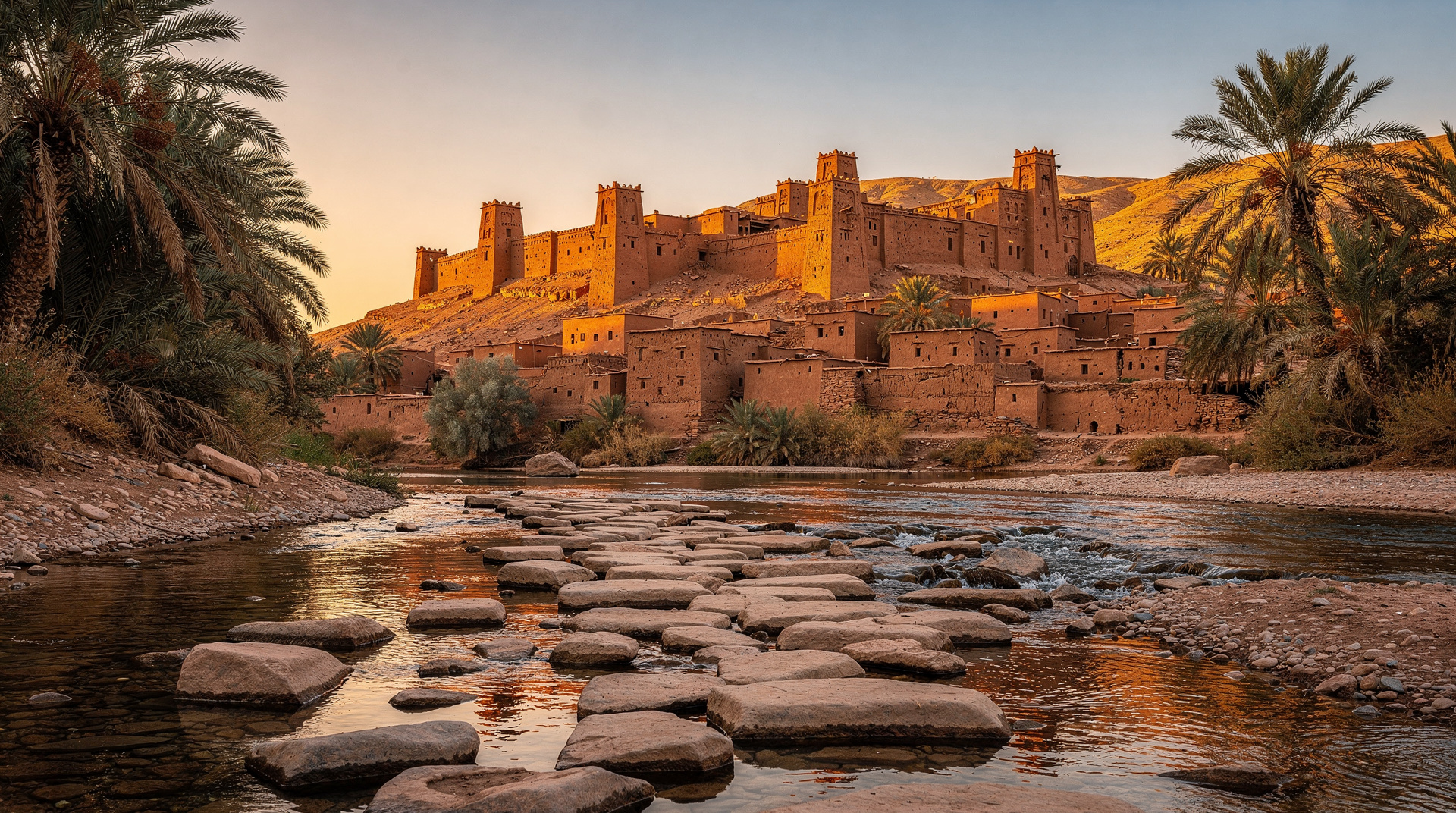
The 3-day Sahara loop: Many visitors attempt the Marrakech–Merzouga–Marrakech loop in 3 days. It works, but it involves roughly 20 hours of driving. The 3-day Sahara tour from Marrakech to Merzouga with a guide eliminates the driving stress — the 3-day desert tour from Marrakech to Merzouga covers this circuit with stops at Ait Benhaddou, the Dades Gorge, and Erg Chebbi in a managed itinerary.
Language and communication: In Marrakech’s tourist zones, French, Spanish, and basic English are widely spoken. In the souks, vendors will engage in whichever language you respond to. Learning a few Arabic phrases (shukran for thank you, la shukran for no thank you, bikam for how much, ghali bezaf for too expensive) shifts the dynamic meaningfully — you are immediately treated less as a tourist and more as a person who made the effort. Darija (Moroccan Arabic) differs substantially from Modern Standard Arabic; most phrases you learn will be Darija-specific.
Riads vs hotels: The vast majority of accommodation worth having in the Marrakech medina is in riads — traditional courtyard houses converted to guesthouses or boutique hotels. Quality varies enormously. The key indicators of a good riad: breakfast served in the courtyard (not your room), a proprietor or manager you can actually speak to, and reviews that mention staff by name. The cheapest riads are often conversion-by-committee buildings that have a courtyard but lack the character that makes a riad stay memorable. Budget an extra 200–300 MAD per night to jump from the functional tier to the genuinely atmospheric.
Choosing a day trip: Ourika vs Agafay vs Ouzoud vs Imlil
With four hinterland options and rarely time for all of them, this comparison helps prioritise.
| Day trip | Distance | Best for | Skip if |
|---|---|---|---|
| Ourika Valley | ~1.5h | Berber villages, easy waterfall hike | You want a full mountain experience — go to Imlil instead |
| Agafay Desert | ~40 min | Sunset, glamping, dinner under stars | You’re expecting actual Sahara dunes |
| Ouzoud Waterfalls | ~3h | North Africa’s tallest falls, macaques | You only have a half-day free |
| Imlil | ~1.5h | Toubkal trekking, mountain village life | You’re not interested in hiking |
For a deeper look at the Imlil option specifically, see the Imlil destination guide and the Imlil vs Ourika trek comparison. If you’re deciding whether to base yourself here or in Essaouira, the Marrakech vs Essaouira base guide covers that trade-off, and the Agafay desert day trip guide goes into logistics beyond what fits here.
Sample itinerary — 5 days
Day 1: Arrive Marrakech, check in, Djemaa el-Fna at dusk, rooftop dinner.
Day 2: Majorelle Garden (pre-booked, 8am slot), YSL Museum, medina souks and spice market, Bahia Palace.
Day 3: Full day Ouzoud Waterfalls (early departure, back by 7pm).
Day 4: Ourika Valley — Berber village visit, Setti Fatma waterfall hike, lunch in the valley.
Day 5: Morning Saadian Tombs and tanneries, afternoon Agafay for sunset, dinner under the stars, return to Marrakech.
Related
- Atlas Mountains — For serious trekking and Toubkal summit attempts
- Sahara Desert — Combine with a 3-day Merzouga extension from Marrakech
- Souss and Anti-Atlas — Southwest Morocco, reachable via Agadir (3h from Marrakech)
- Also useful: first-time visitors guide, day trips from Marrakech, and best riads in Marrakech
Frequently asked questions about Marrakech Region
How many days do you need in the Marrakech region beyond the city itself? Two extra days covers one hinterland day trip well (Ourika or Agafay) plus Ouzoud; four extra days lets you add Imlil and go at a relaxed pace without back-to-back early starts.
Is Agafay worth it if I’m also doing the Sahara? Not really, if time is limited. Agafay is a convenient taste of desert scenery close to Marrakech, but it isn’t sand dunes and doesn’t compare to a genuine Sahara Desert trip. Prioritise Agafay only if the Sahara isn’t in your itinerary.