Quick facts
- Best for
- Off-beat travel, rock climbing, almond blossom, silence
- Days needed
- 3-5 days
- Best time
- Feb–Apr, Oct–Nov
- Hub city
- Agadir or Tafraoute
Why visit the Souss and Anti-Atlas
If you have done Marrakech, Fes, and the Sahara and want to understand a different Morocco — quieter, more rugged, less visited, and in many ways more authentically itself — the Souss valley and Anti-Atlas mountains will reward the detour. This is the Morocco that most guidebooks cover in a paragraph and most travellers skip entirely, which is precisely what makes it worth seeking out.
The Souss plain runs between the High Atlas to the north and the Anti-Atlas to the south, watered by the Souss River and covered in argan trees — the source of the oil that appears in every Moroccan cosmetics shop in the world. Agadir anchors the western coast; the Souss valley runs east toward Taroudant, a walled city that functions like Marrakech without the crowds.
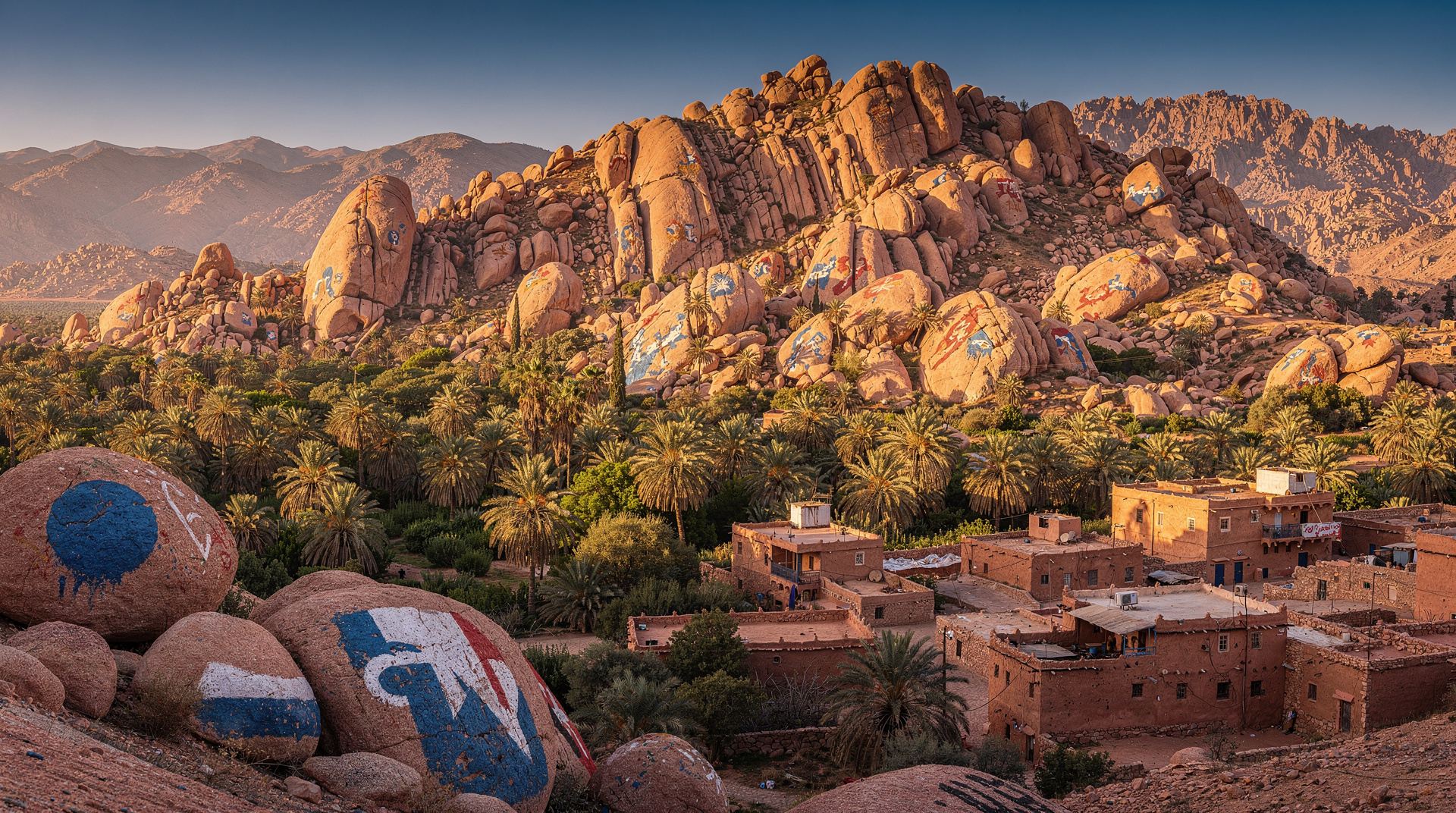
The Anti-Atlas is the older, drier, more elemental of Morocco’s mountain ranges. Its peaks don’t reach Toubkal’s height but their geology is extraordinary: Pre-Cambrian granite and gneiss polished to boulders of improbable size and shape, stacked in formations that attract rock climbers from across Europe. Tafraoute, the main town, sits in a bowl of these pink granite boulders at 1,200m, surrounded by the Ameln Valley and its string of Amazigh villages. The almond trees that cover the hillsides bloom in late January and February — one of the most beautiful natural spectacles in Morocco, and one of the least photographed.
| At a glance | |
|---|---|
| Where | Souss valley and Anti-Atlas mountains, between Agadir and the pre-Saharan south |
| Cost | Budget region overall — guesthouses from around 250–700 MAD, meals 60–100 MAD |
| Time needed | Around 3–6 days for the full Anti-Atlas loop |
| Getting there | Fly into Agadir, then road/taxi east to Tafraoute or Taroudant |
| Best time | February–April and October–November, for almond blossom and mild hiking weather |
Getting there
Agadir is the gateway, with its own international airport (AGA) receiving direct European flights. From Agadir, Tafraoute is 160km east — about 2.5 hours by road via Biougra and the Tizi Mighert pass. CTM buses run Agadir–Tafraoute once daily (around 55 MAD, 3 hours). Grand taxis run to Biougra from Agadir’s main taxi station, and onward from Biougra to Tafraoute in shared taxis (combined fare roughly 60–80 MAD/person).
From Marrakech, Taroudant is 3 hours (via the A7 motorway to Agadir, then east, or over the Tizi n’Test pass — a spectacular mountain road that adds time but is one of Morocco’s finest drives). Tafraoute from Marrakech is around 5.5–6 hours by road.
Sidi Ifni is on the coast, 75km south of Tiznit — 1 hour from Tiznit by road. Tiznit is 90km south of Agadir (1 hour on the N1 coastal road). A car gives the most flexibility in this region; public transport covers the main routes but leaves the Anti-Atlas villages accessible only by taxi or walking.
Main destinations within the region
Tafraoute and the Ameln Valley
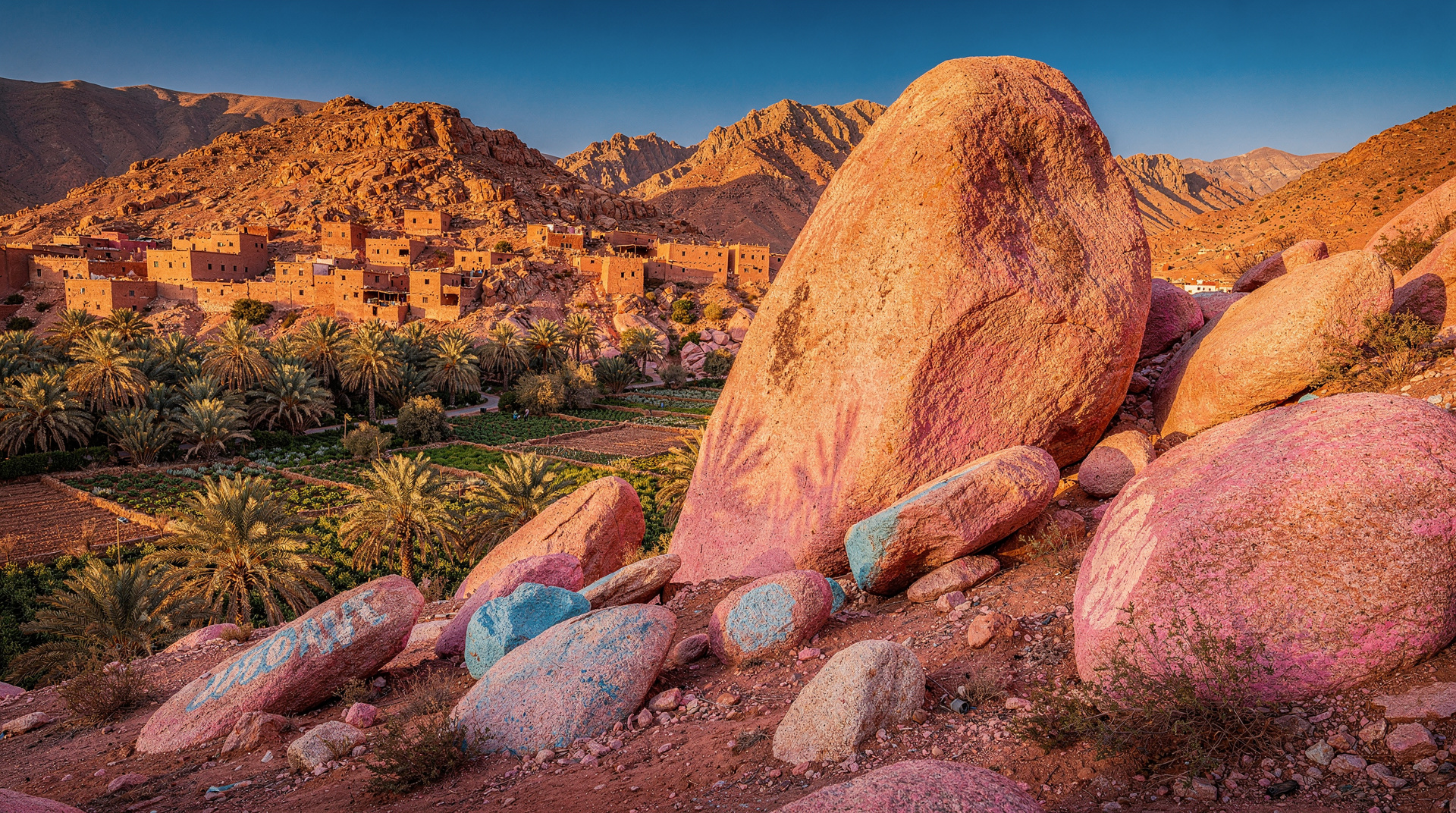
Tafraoute is a town that seems to belong to the landscape rather than to have been imposed on it. The houses are built from the same pink granite as the boulders that surround them; the almond and argan trees fill the valley floor; the Oumesnat village above the town looks down from a cliff face that would make a Swiss village envious. It is also, by Moroccan standards, remarkably unharassed — no persistent guides, minimal tourist pressure, and a daily routine centred around the livestock market and the Thursday souk.
The Ameln Valley extends east from Tafraoute, containing 26 Amazigh villages strung along the southern face of the Jbel Lkest massif. Walking between villages takes a morning or afternoon; the paths are traditional mule tracks, well-worn and easy to follow. The views south toward the Saharan plain are vast.
Rock climbing in the Tafraoute area is world-class. The Tafraout Bouldering and Sport Climbing guide (available locally) documents hundreds of routes from beginner to elite level. The Tasserirt sector, 10km from Tafraoute, has sport routes up to 7c in excellent granite. French and Belgian climbing groups have been coming here for 30 years; the infrastructure (camping, basic cafés at the cliff bases) is well-established.
The Belgian painter Jean Vérame, in 1984, painted a collection of the pink granite boulders in blue, red, and orange — an art installation that has weathered to a faded surrealism over the decades. The “Painted Rocks” are 5km from Tafraoute and are both baffling and worth seeing.
Paradise Valley
Paradise Valley is 60km northeast of Agadir, in the Anti-Atlas foothills above the coastal plain. The name is an exaggeration only in the sense that “paradise” suggests a certain tropical excess — what is actually here is a granite gorge carved by the Assif Tamraght river, with natural swimming pools worn smooth by millennia of water, palm trees, and oleander. In spring, the water level is perfect for swimming; in summer, the shade makes it bearable when the coast is baking.
The approach is via the town of Aourir (10km north of Agadir) and then an 18km road into the hills. A 4x4 is not required in dry season; the road is paved to within 3km of the main swimming area. The final stretch is a track, manageable in a standard hire car with caution.
The Paradise Valley day trip from Agadir with lunch makes the logistics easy if you’re without a car — it includes transport, a guide for the gorge walk, and lunch at a palm-grove restaurant.
Paradise Valley is one of the few places in this part of Morocco where tourist infrastructure is minimal and the experience remains largely natural. No entrance fees, no organised vendors, no touts. A few simple café-restaurants have appeared near the main pools over the years, selling mint tea and tagine.
Taroudant
Taroudant is often called “the grandmother of Marrakech” — a walled medina city with a traditional souk, a Berber market and an Arab market (held on different days of the week), and the entire package of pre-modern Moroccan urbanism at a fraction of Marrakech’s visitor volume and prices. The 7km of well-preserved pink pisé walls are arguably finer than those of Marrakech.
The two medina markets — Berber market (Wednesday and Sunday) and Arab market (daily but especially Thursday) — sell everything from cured olives to hand-forged agricultural tools. Prices are genuinely local, not tourist-market inflated. La Gazelle d’Or, a legendary colonial-era hunting lodge now a luxury hotel (from 8,000 MAD/night), is the most storied address in the region; Riad Maryam is a good mid-range option.
From Taroudant, the road south crosses the Anti-Atlas foothills toward Tafraoute — one of the finest drives in southern Morocco, climbing through argan forest to the Tizi Mighert pass before descending into the Ameln Valley.
Sidi Ifni
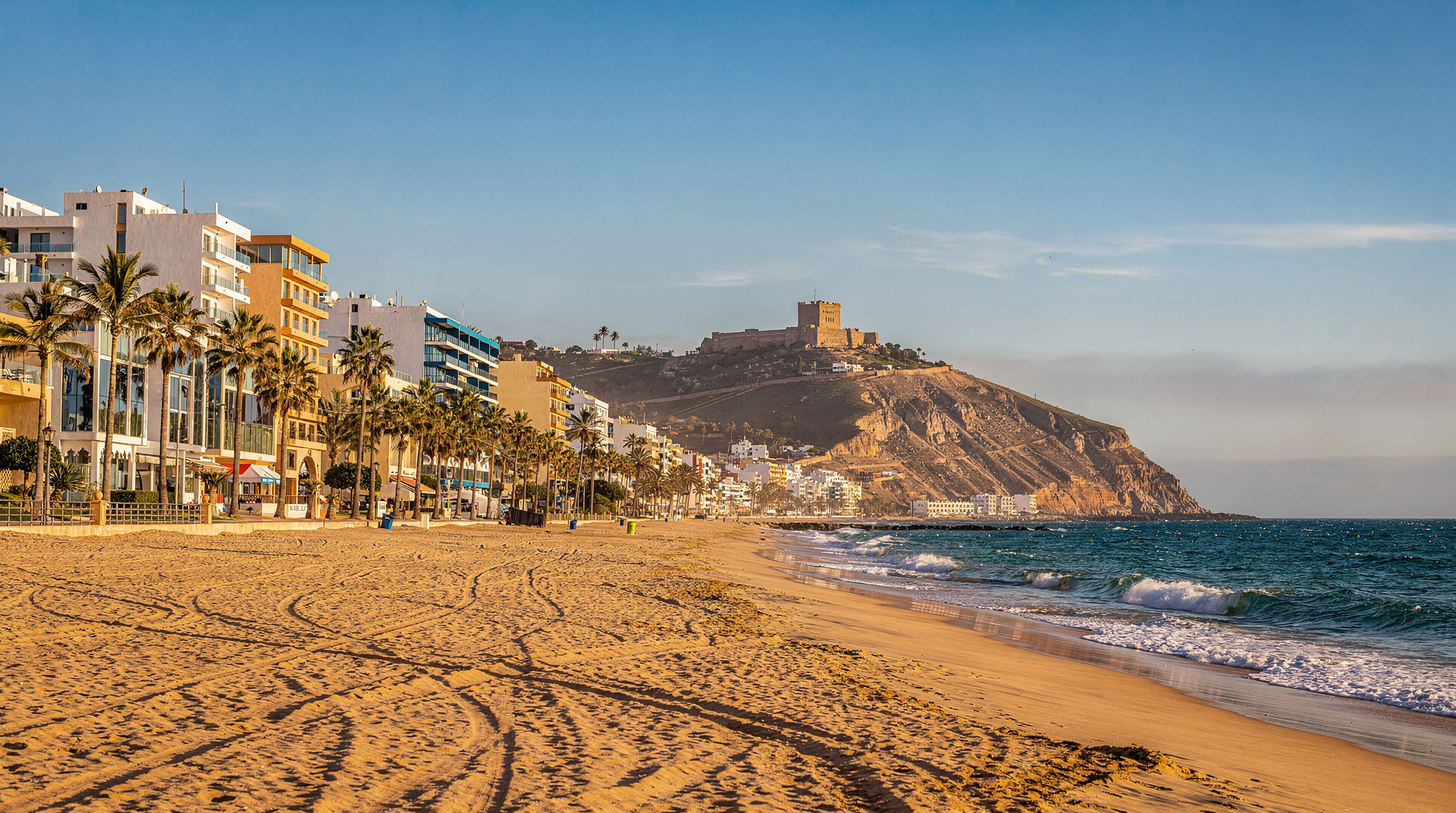
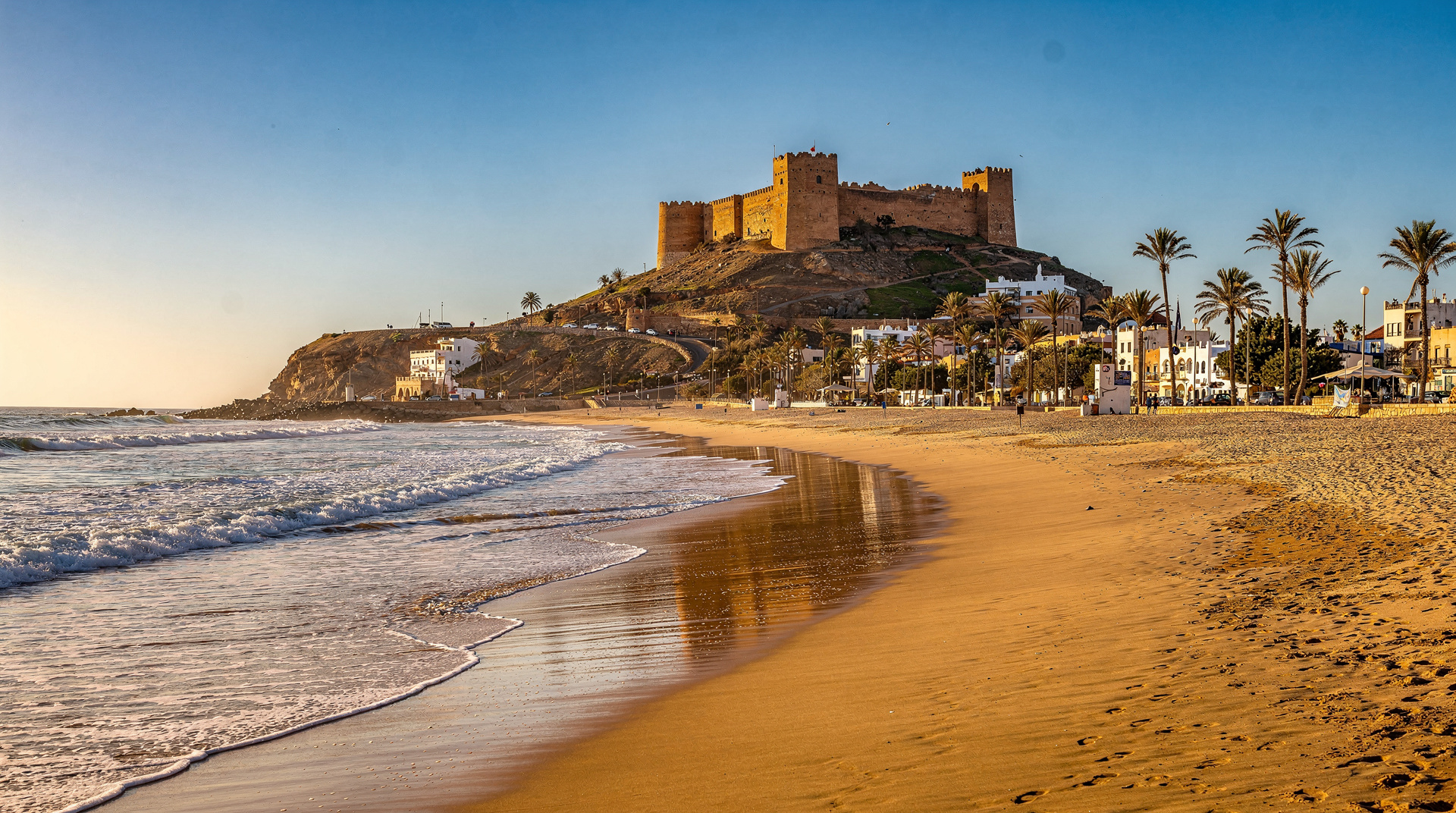
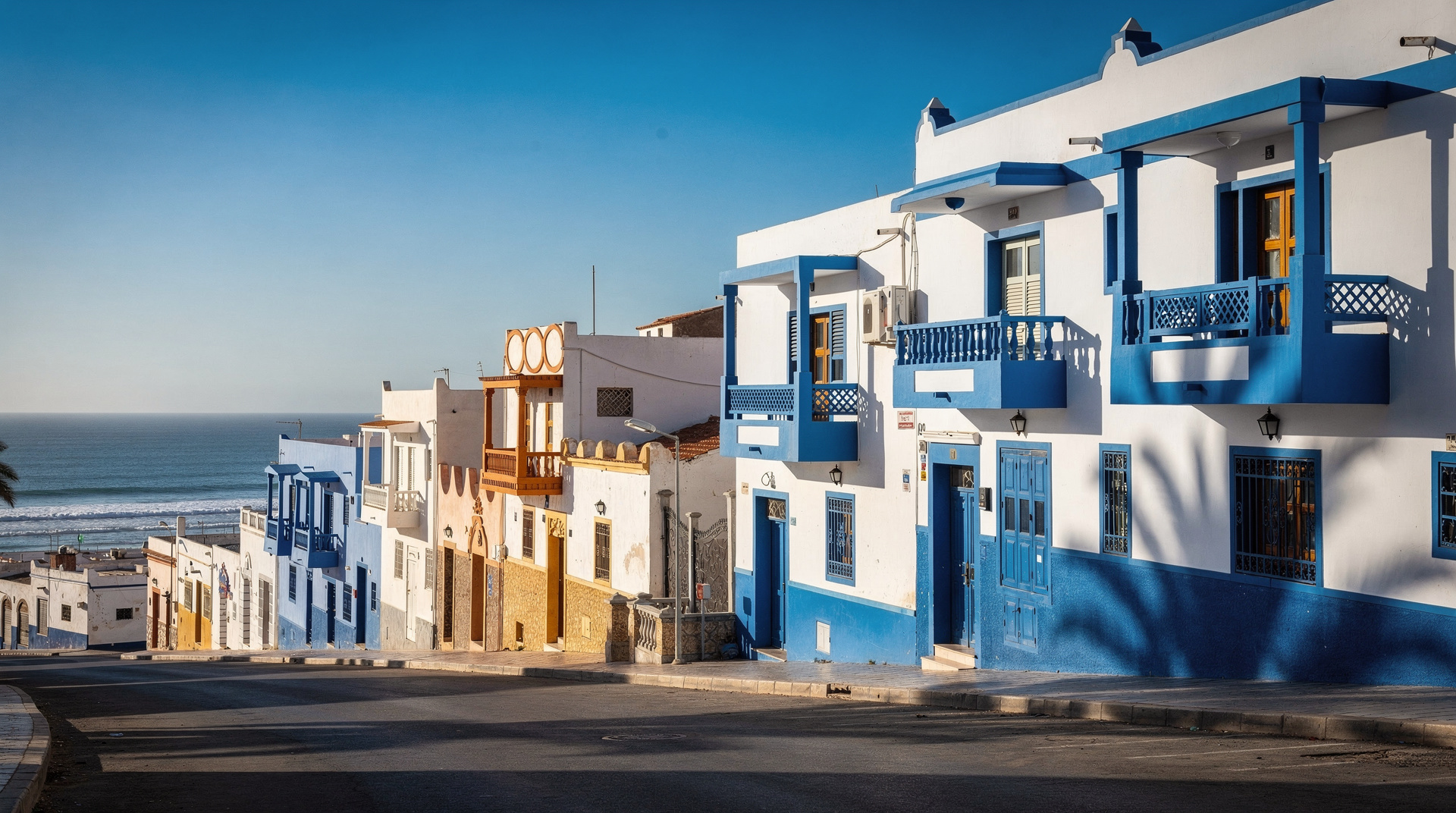
Sidi Ifni, on the Atlantic coast 170km south of Agadir, was a Spanish enclave until 1969 — one of the last pieces of colonial territory in Africa to be returned to Morocco. The Art Deco town centre, designed in the 1930s by Spanish architects, is extraordinary: a town hall, fish market, and residential blocks in faded mustard and white, palm-lined boulevards, and a Spanish-era church converted to a courthouse. The town has the melancholy of a place still working out what it is after its founding purpose departed.
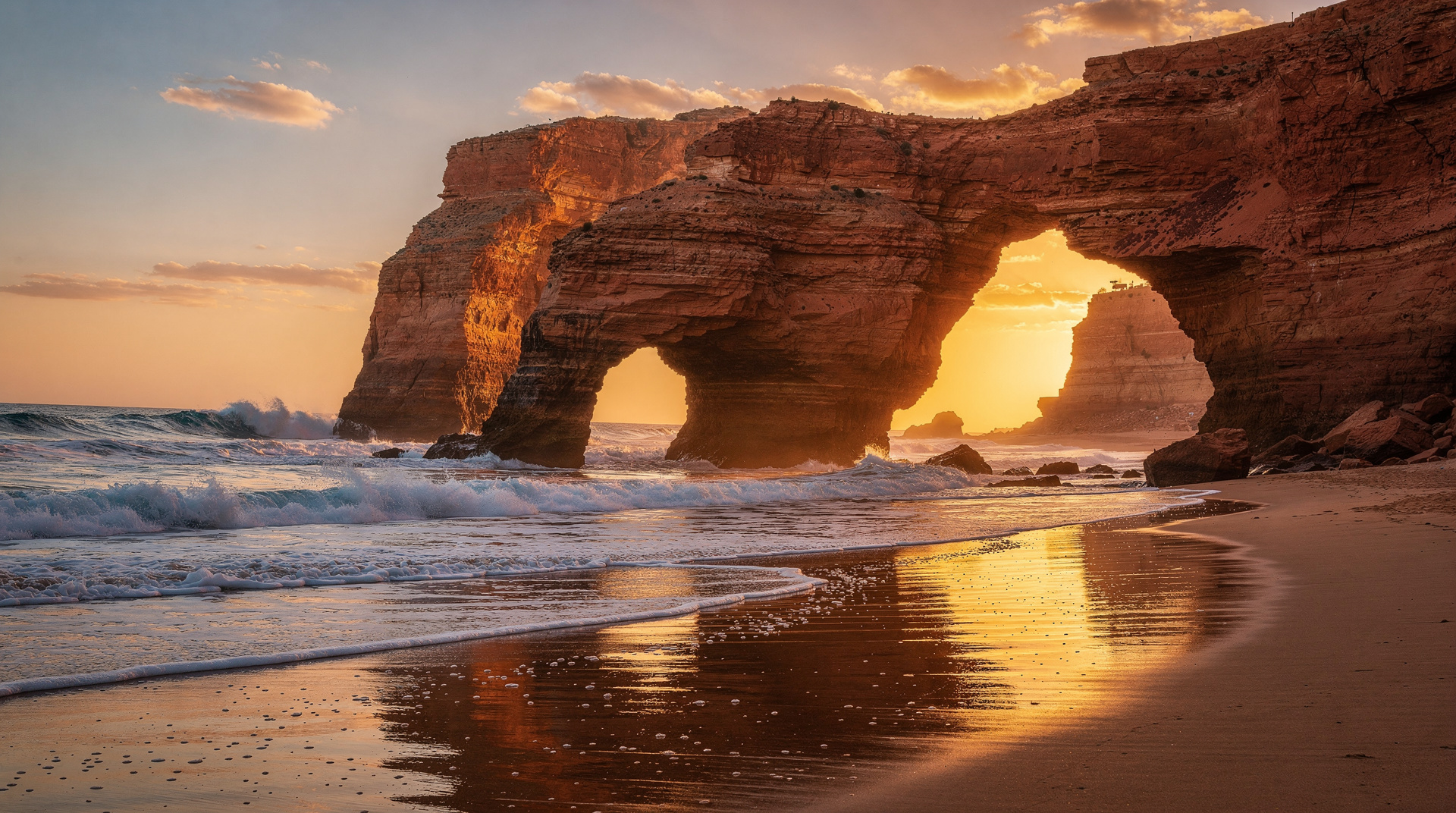
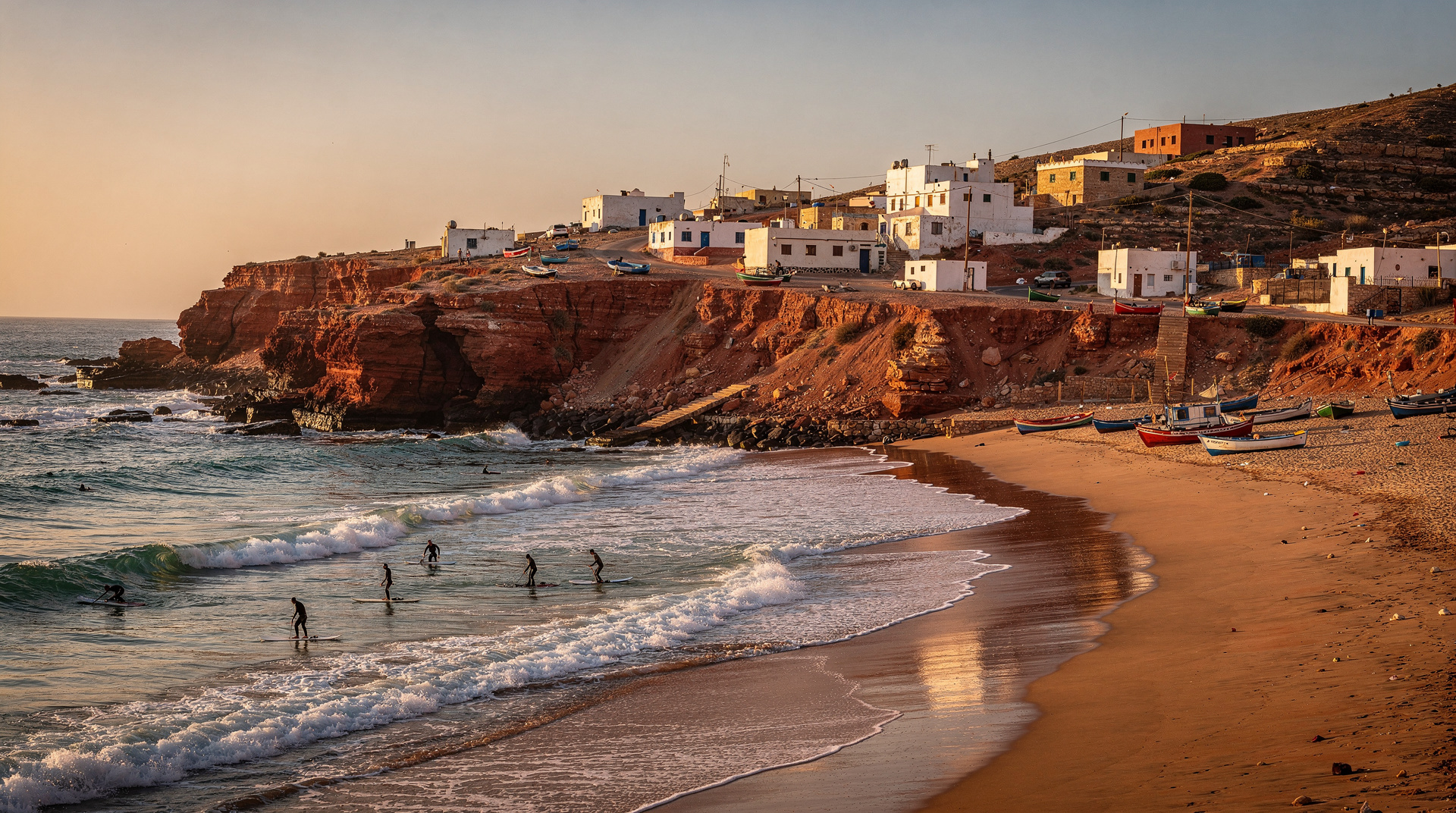
The beach is long and Atlantic-wild — not for swimming (the current and swell make it dangerous) but magnificent for walking. The surf break at Sidi Ifni town beach attracts experienced surfers; the offshore conditions are powerful. Legzira Beach, 10km north, has the rock arches described in the Atlantic Coast section.
The Agadir camel ride at Flamingo River is a gentle introduction to the Souss estuary landscape north of Agadir — flamingo colonies, estuary dunes, and a flat, accessible ride suitable for all ages and experience levels.
When to visit
February and March are the best months for the almond blossom in the Ameln Valley — a brief but spectacular flowering that colours the hillsides white and pink. The moussem (local festival) held in Tafraoute during February celebrates the harvest and includes music and dancing; dates vary by year, check locally.
April and May are excellent for hiking and climbing — warm enough to be comfortable, cool enough to be active. October and November bring stable weather and lower tourist numbers than anywhere else in Morocco (this region has almost no high season to speak of — it’s quiet year-round).
Summer (June to August) is hot in the valleys (35–42°C in Tafraoute), cooler on the coast (22–28°C in Sidi Ifni). Rock climbing in summer is best done at altitude or on north-facing sectors.
How many days
Tafraoute and Ameln Valley: 2–3 nights minimum. Taroudant: 1 night. Paradise Valley: half a day from Agadir. Sidi Ifni: 1 night. A combined Anti-Atlas loop — Agadir, Paradise Valley, Taroudant, Tafraoute, Sidi Ifni, return to Agadir — takes 5–6 days comfortably.
Where to stay
Tafraoute: Les Amandiers Hotel (best in town, great views, 900–1,400 MAD), Maison d’hôte Afoulki (simple, authentic, 400–700 MAD), several basic guesthouses from 250 MAD.
Taroudant: La Gazelle d’Or (legendary luxury, from 8,000 MAD), Riad Maryam (mid-range, 800–1,400 MAD), Riad Dar Zitoune (good value, 600–900 MAD).
Sidi Ifni: Hotel Suerte Loca (Art Deco era, characterful, 500–900 MAD), Camping Sidi Ifni (budget, 100–200 MAD).
Culture and people in the Anti-Atlas
The Souss and Anti-Atlas are Tashelhit-speaking Amazigh territory — one of the three main Berber language groups in Morocco. Tashelhit (also called Shilha or Tasoussit) is the first language of most people in the region; Arabic is widely spoken, French less so than in northern Morocco. Some older residents in rural Anti-Atlas villages speak only Tashelhit. Learning a few words (iyeh for yes, ouho for no, azul for hello, tanmirt for thank you) goes a long way and is received with evident warmth.
The moussem calendar in this region is rich. Beyond the Tafraoute almond festival in February, the Tiznit silver jewellery festival (June) celebrates the tradition of Amazigh silver craftsmanship that has made this region Morocco’s silver-working capital. The souks at Tiznit are the best place to buy Anti-Atlas silver — fibulas, bracelets, necklaces with Berber geometrical designs — at prices considerably below what the same pieces fetch in Marrakech’s tourist souk stalls.
The Argan Cooperative Network provides a model of how rural economic development can work without destroying cultural continuity. Women’s cooperatives across the Souss basin — recognisable by their painted signs and fixed pricing — produce argan oil, olive oil, honey, and amlou (an almond-argan-honey paste that rivals any nut butter in the world). Visiting a cooperative is worthwhile not just for the purchasing but for the manufacturing demonstration — stone grinding, hand-pressing, traditional separation of oil from pulp.
Road trips in the Anti-Atlas
The R104 road between Tafraoute and Tata (southwest, toward the desert) is one of Morocco’s finest drives — 2.5 hours through gorge landscapes, palm oases, and Anti-Atlas villages that see almost no foreign visitors. Akka, at the end of this road, has prehistoric rock engravings (petroglyphs) 8km east of town that depict elephants, rhinoceroses, and crocodiles — evidence of the Sahara’s wetter past.
The mountain road between Tafraoute and Igherm (northeast, toward Taroudant) crosses the Jbel Aklim pass at 1,700m, with views north across the Souss plain to the snow-dusted High Atlas. This road is paved and manageable in a standard hire car outside of snow season (it can close briefly in January). The full loop — Agadir, Taroudant, Tafraoute, Sidi Ifni, Agadir — takes 5–6 days and is one of the most rewarding road trips in Morocco.
Sample itinerary — 5 days
Day 1: Agadir arrival. Afternoon Paradise Valley excursion. Overnight Agadir or Taroudant (1 hour east).
Day 2: Taroudant — Berber market (Wednesday/Sunday) or Arab market, medina walls walk, afternoon drive toward Tafraoute via Tizi Mighert pass.
Day 3: Tafraoute — Ameln Valley village walk (Oumesnat, Afella Ighir), painted rocks, lunch at local café. Afternoon climbing at Tasserirt if equipped.
Day 4: Full day Tafraoute area — complete the Ameln circuit, visit the Thursday souk, sunset from the boulders above town.
Day 5: Drive Tafraoute to Sidi Ifni via Tiznit (2.5 hours), afternoon walk on Sidi Ifni beach and Art Deco town centre, overnight before returning to Agadir (2.5 hours).
Frequently asked questions about Souss and Anti-Atlas
Is the Souss and Anti-Atlas worth adding to a Morocco itinerary?
Yes, if you have already covered the imperial cities and the Sahara, or if you specifically want rock climbing, almond blossom, and a region with almost no crowds. It rewards travellers who value quiet and landscape over headline monuments — read our Anti-Atlas guide for the logistics, or see Tafraoute for the region’s main base.
Do I need a car to visit the Souss and Anti-Atlas?
A car (or a lot of patience with grand taxis) makes a real difference. Public transport covers Agadir–Tafraoute and Agadir–Sidi Ifni, but the Ameln Valley villages, Paradise Valley’s final stretch, and the R104 road toward Tata are far easier with your own wheels. See our getting around guide for the full picture across Morocco.
Related
- Atlantic Coast — Essaouira and Taghazout are north of Agadir; Legzira is just south
- Sahara Desert — The Anti-Atlas grades into the pre-Saharan plains eastward
- Atlas Mountains — The High Atlas is visible from Taroudant; Toubkal is accessible via Marrakech
- Tafraoute — the region’s main base, pink granite and painted rocks
- Taghazout — the closest surf coast, an easy add-on from Agadir
- First-time visitors guide — how this region fits into a wider Morocco trip