Quick facts
- Language
- Darija, French
- Population
- ~80,000
- Nearest Airport
- Marrakech Menara (RAK), 2.5 hr
- Best for
- Beach, seafood, wind sports, relaxation
Why Visit Essaouira
| At a Glance | |
|---|---|
| Where | Atlantic coast, ~2.5 hrs west of Marrakech |
| Cost | Around 400–800 MAD/day mid-range (room + food), more in the Gnaoua Festival window |
| Time needed | 2–3 days is the sweet spot |
| Getting there | Bus/taxi from Marrakech (~2.5–3 hrs) or Agadir (~2.5 hrs) |
| Best time | April–June and September–October for the calmest wind and mild heat |
Essaouira operates at a different frequency from the rest of Morocco. Where Marrakech pulses with intensity and Fes hums with deep history, this whitewashed Atlantic port exhales. The wind — a near-constant alizé trade wind that blows off the Atlantic with such reliability that Essaouira has become a world-class kitesurfing and windsurfing destination — keeps the air clear, the temperatures moderate, and the energy gentle.
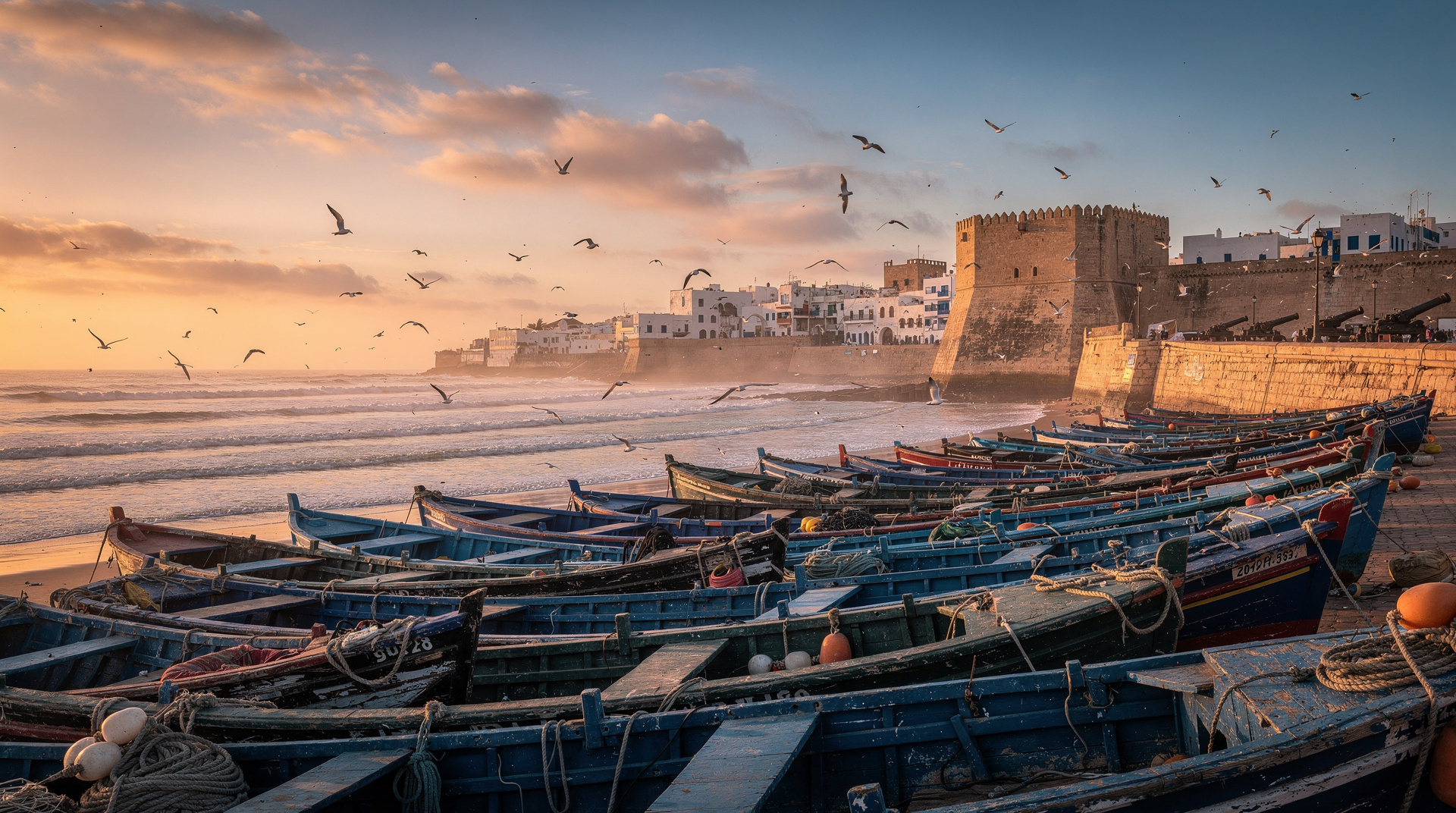
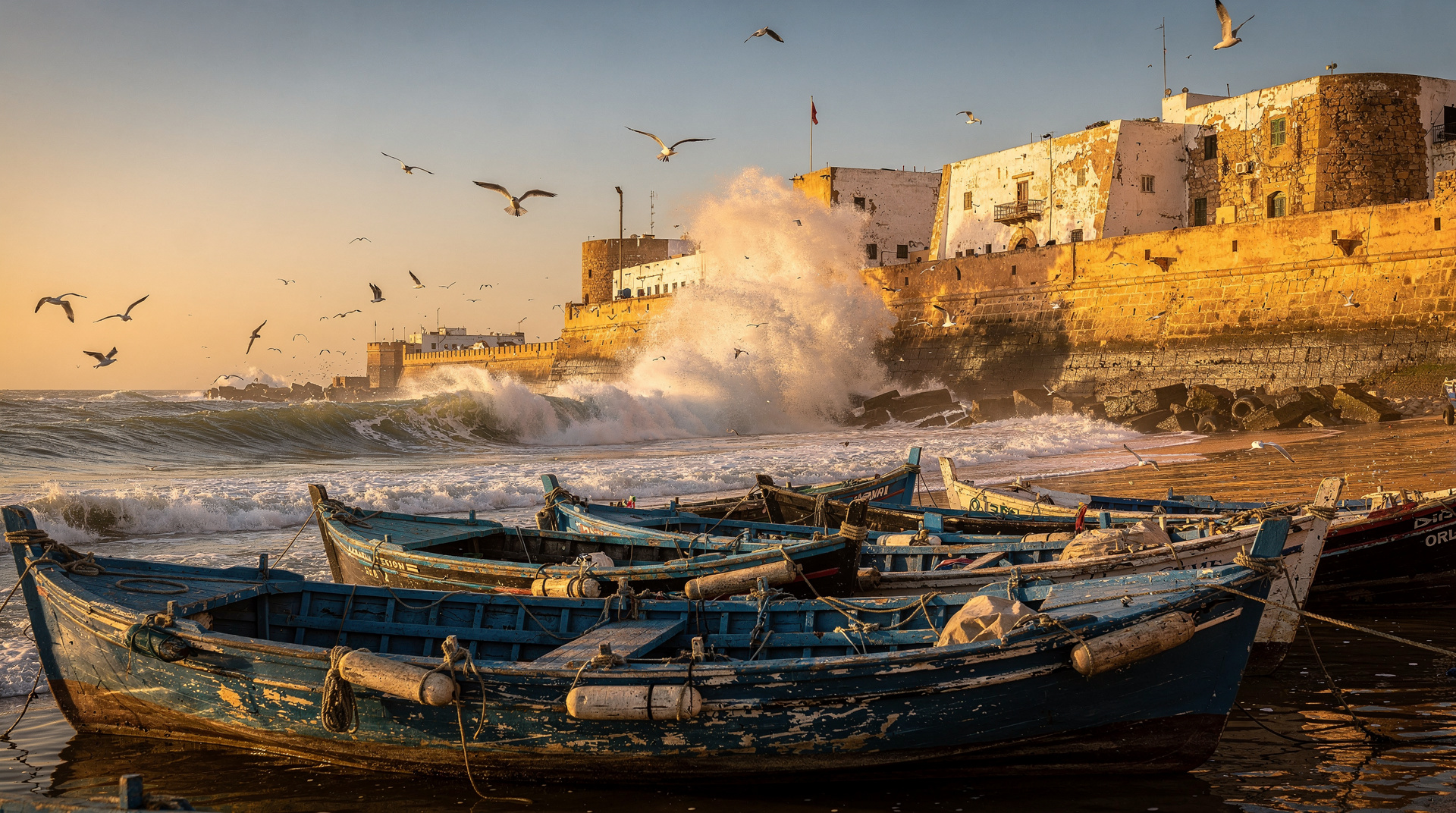
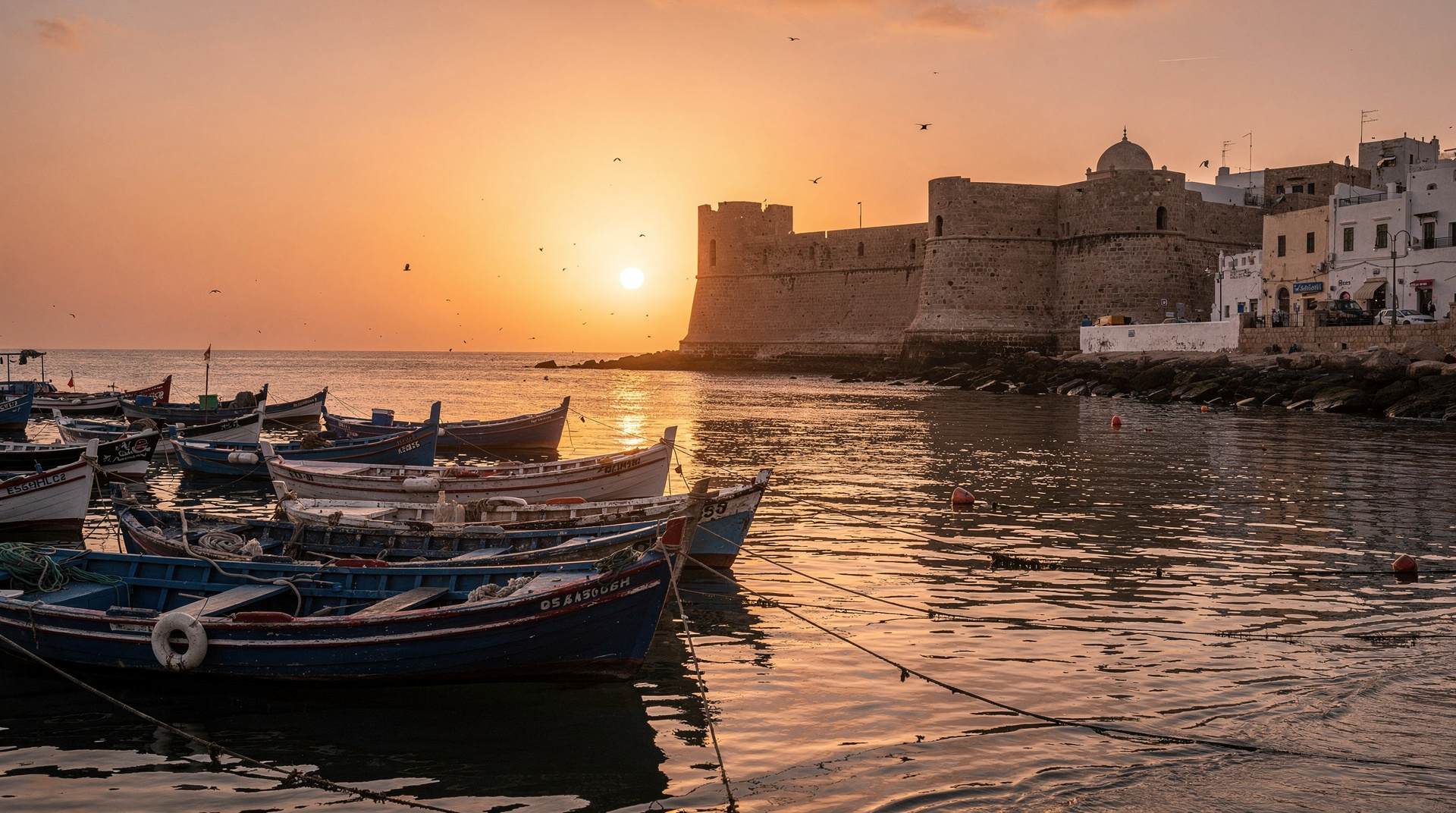
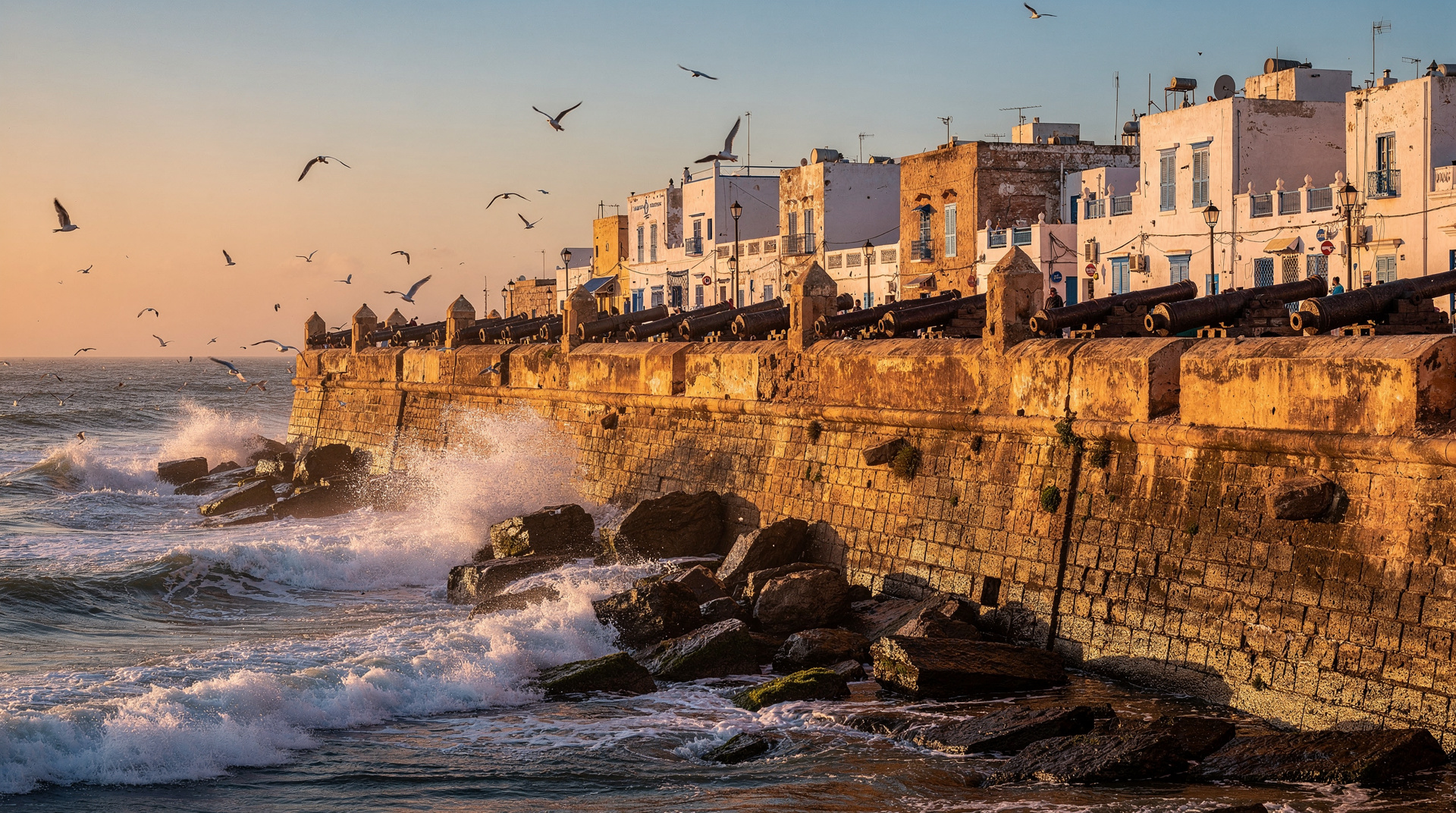
The city is beautiful in a way that feels effortless. The medina (a UNESCO World Heritage Site since 2001) is small, walkable, and unthreatening — fewer touts, wider streets, and a mix of blue and white paint that makes it feel closer to a Greek island than a Moroccan city. The 18th-century sea ramparts (Skala de la Ville) jut into the Atlantic, cannons still aimed at a threat that never came, while blue-painted fishing boats bob in the sheltered harbour below.
What surprises first-timers about Essaouira is how comfortably it wears its tourism. The city has attracted international visitors since the 1960s, when Jimi Hendrix famously spent time nearby and the hippie trail discovered its charms. This long exposure to outsiders has produced a relaxed, confident local culture rather than the defensive guardedness that heavy tourism sometimes breeds elsewhere. Essaouira feels like it genuinely enjoys being visited.
The Gnaoua and World Music Festival, held every June, transforms the city for four days of extraordinary outdoor concerts and represents one of the finest music events in Africa.
Getting There
From Marrakech: The most common approach. CTM and Supratours buses run 5–6 times daily from Marrakech’s Bab Doukkala bus station (2.5–3 hr, from 90 MAD). Shared grand taxis are faster (2 hr) but less comfortable. Organised day trips from Marrakech also depart daily.
Book a day trip from Marrakech to EssaouiraFrom Agadir: Buses run from Agadir in approximately 2.5 hr. Agadir has a large international airport (AGA) with many direct European charter flights, making this a viable entry point.
By air: Essaouira-Mogador Airport (ESU) is 15 km from town and receives occasional charter flights from France and the UK, but is not reliably served. Most travellers fly to Marrakech and continue by land.
By car: The R207 coastal road from Marrakech is scenic and in good condition (tolls apply on the first section). Journey time by car: 2.5 hr.
Getting Around
Essaouira’s medina is tiny — most visitors walk everywhere. The ramparts, harbour, beach, and main souks are all within 20 minutes of each other on foot. The beach stretches south for 10 km and is largely walkable, though cyclists and horses are available for hire along the shorefront.
Calèches (horse-drawn carriages): Available for beach rides, a popular local option. Negotiate the price upfront (150–250 MAD per hour).
Bicycle hire: Several shops near Bab Doukkala rent bikes for 80–150 MAD per day, useful for reaching the kite beach (Moulay Bouzerktoun, 25 km north).
Grands taxis: For journeys to Moulay Bouzerktoun kite beach, Diabat village (famous Hendrix connection), or the airport. Agree price before departure.
Top Things to Do
Walk the Ramparts (Skala de la Ville)
The 18th-century sea bastions are Essaouira’s defining landmark. Walk the wide rampart promenade above the Atlantic, with bronze cannons pointing seaward and seagulls wheeling against the spray. The northern rampart (Skala de la Ville) offers the best views and is open all day without entry fee. The port rampart (Skala du Port) overlooks the fishing harbour — entry 10 MAD.
Explore the Medina
Essaouira’s medina is the rare example of an 18th-century planned port city — grid-based, well-lit, and remarkably easy to navigate. The main artery, Avenue Sidi Mohammed Ben Abdallah, leads from the town entrance through the medina to the square fish market. Side streets contain the marquetry and thuya wood workshops for which Essaouira is famous. The Mouassine souk and the Jewish mellah are worth exploring beyond the main drag.
Book a guided Essaouira medina walking tourThe Harbour and Fish Market
Essaouira’s working harbour is one of Morocco’s most photogenic: rows of blue boats, fishermen mending nets, and seagulls in constant attendance. The adjacent fish market and its grills — where you select your fish from the display and have it cooked to order immediately — are both the best lunch option and the best street theatre in town.
Wind Sports on the Beach
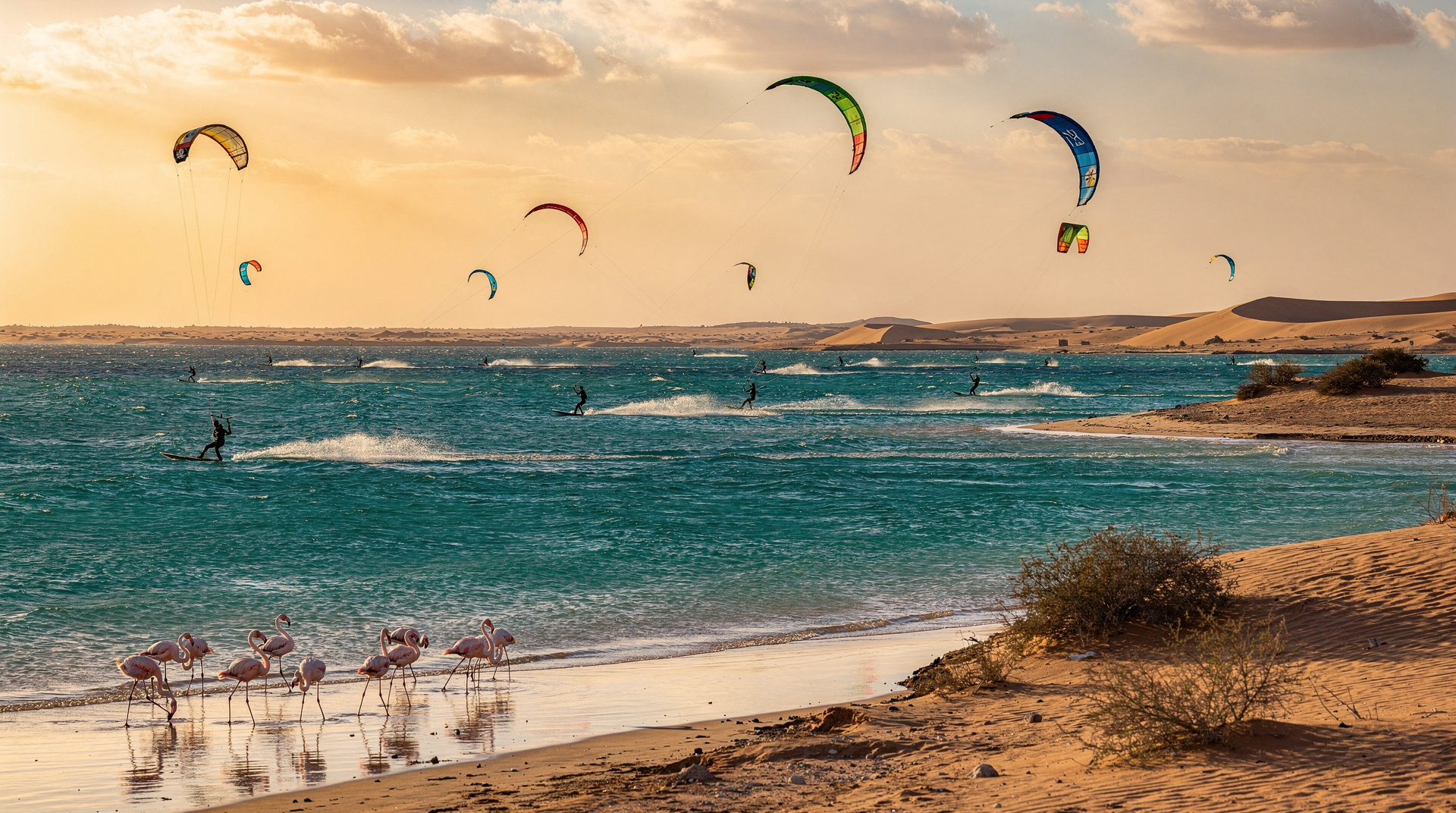
Essaouira’s beach is divided into a swimming section near town and a wind-sports section further south, where the consistent 25-35 knot alizé makes it ideal for kitesurfing and windsurfing. The town hosts many surf schools and wind-sport operators. Lessons for beginners: 400–600 MAD for a 2-hour kitesurfing intro.
Book a surf lesson in EssaouiraHorse Riding on the Beach
The long, flat beach makes for excellent horse riding — particularly at low tide when the sand is firm. Several operators near the beach entrance offer hourly hires with a guide. Prices: 250–400 MAD per hour.
Book horse riding on Essaouira beachThuya Wood Workshops
Essaouira is the centre of Morocco’s thuya wood marquetry industry. Thuya (a cypress relative found only in the Mogador region) has a rich, swirling grain that craftsmen inlay with marquetry in geometric patterns. Visit the workshops along the rampart base — the marquetry artists work in open doorways and welcome observation. Prices for quality pieces: 300–2,000 MAD.
Gnaoua Music
Essaouira is the spiritual home of Gnaoua music in Morocco — the trans-Saharan trance tradition combining West African rhythms with Moroccan musical forms. Beyond the June festival, you can hear live Gnaoua music in the evenings at several cafés and restaurants in the medina. Ask your hotel for current performance venues.
Neighbourhoods
Medina: The entire historic core, compact and walkable. Most accommodation, restaurants, and sights are within the medina walls.
The Ramparts and Skala: The western and northern edges of the medina where the fortifications meet the sea. The Skala de la Ville promenade is the finest urban walking experience in Essaouira.
The Harbour Quarter: The fishing port south of the main ramparts, with the fish market, the Skala du Port fortification, and direct beach access.
The Beach: Essaouira’s 10-km crescent beach stretches south. The northern section (near the old town) has calmer water and is better for swimming in summer. The southern section is dominated by wind sports.
Nouvelle Ville: The modern town outside the medina walls. Less interesting but useful for ATMs, supermarkets (including wine shops), and pharmacies.
Where to Stay
Luxury (from 2,000 MAD / €200 per night)
Heure Bleue Palais (2 Rue Ibn Batouta) is the finest hotel in Essaouira — a restored 18th-century palace with an extraordinary rooftop pool, hammam, cinema room, and restaurant. The 33 rooms combine Moroccan architecture with contemporary comfort. It is not cheap, but nothing else in Essaouira competes at this level.
Villa de l’O is a beautiful boutique option near the ramparts with pool and spa, individually designed rooms, and one of the best breakfasts in town.
Mid-range (600–1,500 MAD / €60–150 per night)
Riad Mimouna is a traditional riad in the heart of the medina with a central courtyard, rooftop terrace, and 9 individually decorated rooms. Genuinely warm hospitality and excellent breakfasts. Doubles from 800 MAD.
Lalla Mira is a charming eco-friendly riad with hammam, organic breakfasts, and a real commitment to sustainability. Popular with travellers who care about responsible tourism.
Budget (under 500 MAD / €50 per night)
Hostel Essaouira: Several well-run hostels near Bab Doukkala offer dorm beds from 120 MAD and private rooms from 300 MAD. A popular base for the wind-sports crowd.
Dar Beida: A clean, friendly guesthouse near the harbour with simple rooms and a rooftop terrace. The owners arrange fishing trips and beach activities.
Food and Drink
Essaouira’s food scene centres on seafood — the Atlantic fishing industry delivers extraordinary fresh fish, langoustine, sea urchin, and shellfish to the harbour market daily. This is the best place in Morocco to eat fish.
Taros (2 Place Moulay Hassan) is Essaouira’s most famous rooftop restaurant and bar — and one of the few licensed bars in the medina. The terrace overlooks the main square. The fish dishes are solid rather than exceptional, but the atmosphere and the view make it the essential social hub. A glass of Moroccan rosé and a sunset here is a proper Essaouira moment. Dinner: 200–350 MAD per person.
Triskala (opposite the post office) is a relaxed café and restaurant run by a French-Moroccan couple, popular with local creatives and long-term expats. Excellent lunch dishes using fresh market ingredients, good coffee, and a thoughtful wine list. Lunch for two: 200–300 MAD.
The harbour fish grill: Select your fish (price by weight, typically 100–200 MAD for a kilo of fish, which feeds two), pay the vendor, and take a seat at the adjacent grill where it is cooked and served with bread, chermoula (herb sauce), and salad. This is the best-value and most authentic eating experience in Essaouira.
Café de la Plage: Simple café directly on the beach with plastic chairs, decent tagines, and the best view of the kitesurfers. Perfect for a post-swim lunch (50–100 MAD).
Chez Sam (in the harbour) is a boat-shaped restaurant directly in the fishing port, serving honest seafood dishes at moderate prices. Popular with both locals and tourists. Grilled fish with chermoula: 120–180 MAD.
Day Trips from Essaouira
Marrakech: Marrakech is 2.5 hours east and the natural bookend to an Essaouira stay. Many travellers begin in Marrakech, spend two nights in Essaouira, and return by bus.
Sidi Kaouki: 25 km south of Essaouira, this small surf village has an even more powerful wind than Essaouira proper and a wild, empty beach backed by dunes and argan trees. Several surf camps operate here.
Moulay Bouzerktoun: 25 km north, this is the kite beach — when the wind is right, dozens of kites fill the sky simultaneously. Even non-participants find the spectacle worth the journey.
Diabat Village: 5 km south, the ruins of a Mogador fortress and the connection to Jimi Hendrix (who reportedly stayed near here and was inspired to write “Castles Made of Sand”) make for an easy afternoon walk along the beach.
Marrakech to Essaouira on the Argan Road: The inland route between Marrakech and Essaouira passes through the endemic argan forest — the only place in the world where argan trees grow wild. Stop at a women’s cooperative to see argan oil production and buy authentic product directly.
Sample 2-Day Essaouira Itinerary
Day 1 — The City Morning: Walk the Skala de la Ville ramparts at 9 am before tour groups arrive. Continue along the northern wall to the harbour. Midday: Fish selection and grill at the harbour market. Afternoon: Explore the medina — Thuya workshops, the mellah, souvenir shopping. Sunset: Aperitif at Taros rooftop. Evening: Dinner at Triskala.
Day 2 — Beach and Wind Morning: Walk or take a horse ride along the beach at low tide. Midday: Surf lesson or wind-sports session (book the evening before). Afternoon: Return to medina for final shopping and the Gnaoua music bar in the evening. Depart next morning by early bus to Marrakech.
Practical Tips
The wind: The alizé is consistent almost year-round but most powerful April–September. It keeps summer temperatures pleasant (rarely above 28°C) but can make beach relaxation difficult if you are not into wind sports. Winter and autumn offer calmer days.
Swimming safety: The ocean current at Essaouira beach can be strong. Swim only in the designated areas near the town and observe local advice. The beach can have dangerous riptides further south.
Photography: The blue boats in the harbour and the sea ramparts photograph best in morning light (8–10 am). The fish market is most active from 6–9 am.
Alcohol: Essaouira is one of the more relaxed Moroccan cities regarding alcohol. Taros bar and several upscale restaurants serve wine and beer. The Carrefour supermarket in the Nouvelle Ville sells wine and spirits.
Gnaoua Festival timing: If visiting in mid-June, book accommodation 2–3 months in advance. The festival fills the city and prices double during the four days of concerts.
Frequently Asked Questions about Essaouira
Is Essaouira too windy for a beach holiday?
It depends on your expectations. The wind is near-constant from spring to summer and makes traditional beach sunbathing uncomfortable for some visitors. Autumn and winter offer calmer days. The wind is the main reason to come for kitesurfers and windsurfers; for those seeking a Mediterranean-style beach experience, Essaouira may disappoint.
How far is Essaouira from Marrakech?
About 200 km, or 2.5–3 hours by bus. CTM and Supratours run frequent daily services. Many travellers combine the two cities on a 5–7 day Morocco trip, using the bus to move between them.
What is Essaouira famous for?
Primarily its Atlantic port medina (UNESCO listed), its seafood, the Gnaoua music tradition, its wind-sport conditions, and the Gnaoua World Music Festival in June. It is also historically associated with the literary and artistic community that settled here from the 1960s onwards.
Is Essaouira good for families?
Very much so. The calm, manageable medina, the long beach (safe for children in the northern section), the horse rides, and the fish grill make Essaouira one of the most family-friendly stops on a Morocco itinerary. There are fewer touts and less disorienting density than Marrakech or Fes.
Can I buy argan oil in Essaouira?
Yes — Essaouira is closer to the argan forest than most Moroccan cities and the local cooperatives sell genuine, cold-pressed argan oil at fair prices. Avoid buying from tourist shops and look for a cooperative with a visible production facility. Expect to pay 150–300 MAD for 100 ml of genuine culinary argan oil.
What is the best time of year to visit Essaouira?
April to June and September to October offer the best balance of mild temperatures, manageable wind, and fewer crowds. July and August bring peak tourist numbers and stronger winds. Winter (November–February) sees the fewest visitors, occasional rain, and calm, clear days.
Is Essaouira or Agadir the better beach base?
They serve different travellers. Essaouira has a walkable historic medina, a food and culture scene, and wind that suits kitesurfers rather than sunbathers. Agadir is a modern resort town with calmer, warmer swimming beaches but little historic character. See our Essaouira vs Agadir comparison for a fuller breakdown.
How many days should I spend in Essaouira?
Two full days covers the medina, ramparts, and harbour comfortably; three allows time for a wind-sports lesson or a day trip to Sidi Kaouki or Moulay Bouzerktoun without rushing. Many travellers pair it with Marrakech on a short coast-and-city itinerary.
Essaouira vs Nearby Coastal Towns
| Essaouira | Sidi Kaouki | Taghazout | |
|---|---|---|---|
| Character | Historic medina, UNESCO ramparts | Wild, undeveloped surf village | Established surf town |
| Wind/waves | Strong wind, moderate swell | Stronger wind than Essaouira | Better for surfing than kiting |
| Best for | Culture + wind sports combined | Off-grid surf camps | Long-stay surfers, digital nomads |
| Distance from Marrakech | ~2.5 hrs | ~3 hrs | ~4 hrs (via Agadir) |
For a wider coastal comparison, see coastal Morocco: Essaouira, Asilah & Taghazout compared.