Quick facts
- Language
- Darija, Spanish, French
- Population
- ~45,000
- Nearest Airport
- Tangier Ibn Battouta (TNG), 3 hr
- Best for
- Photography, hiking, slow travel
Why Visit Chefchaouen
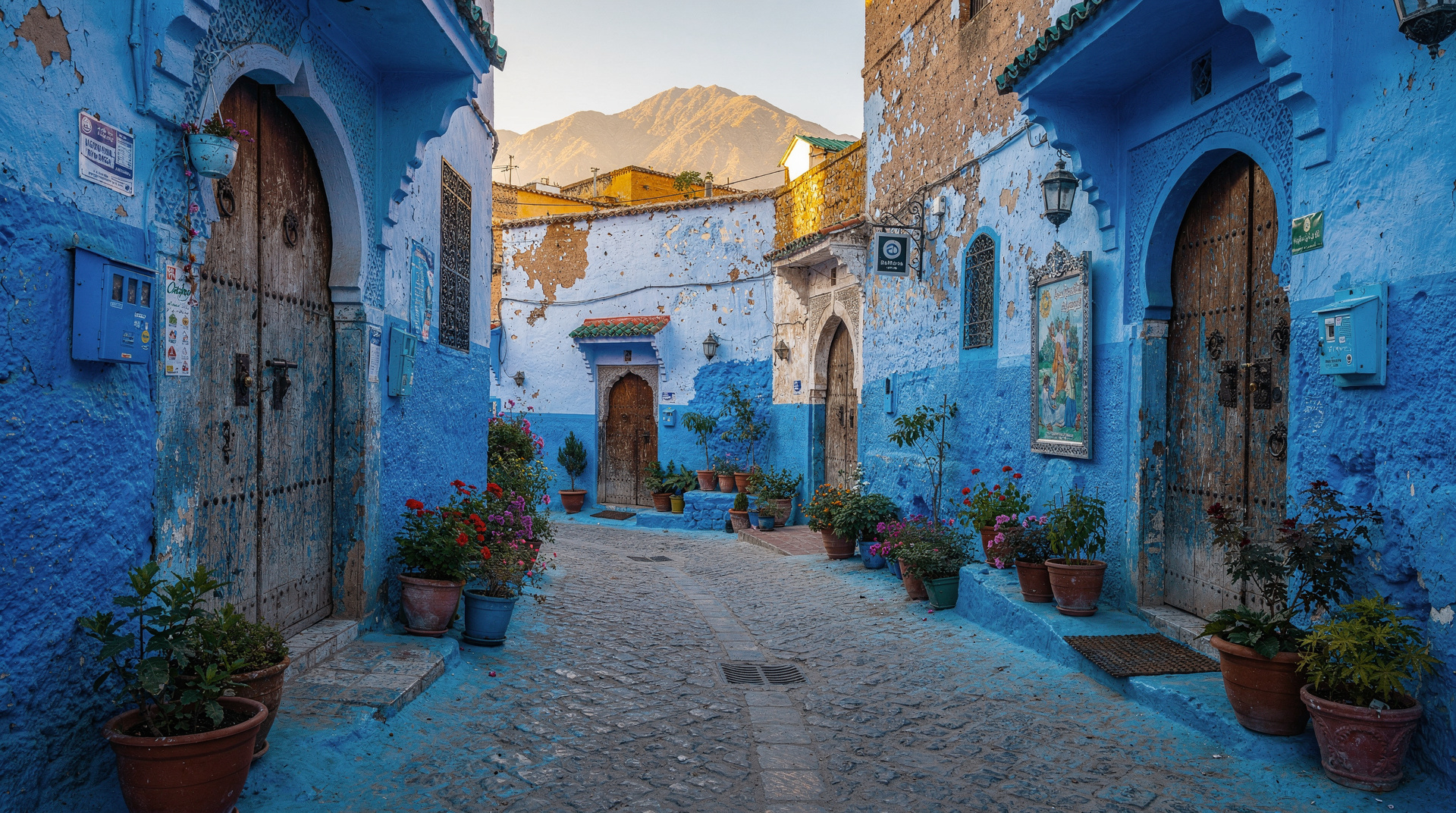
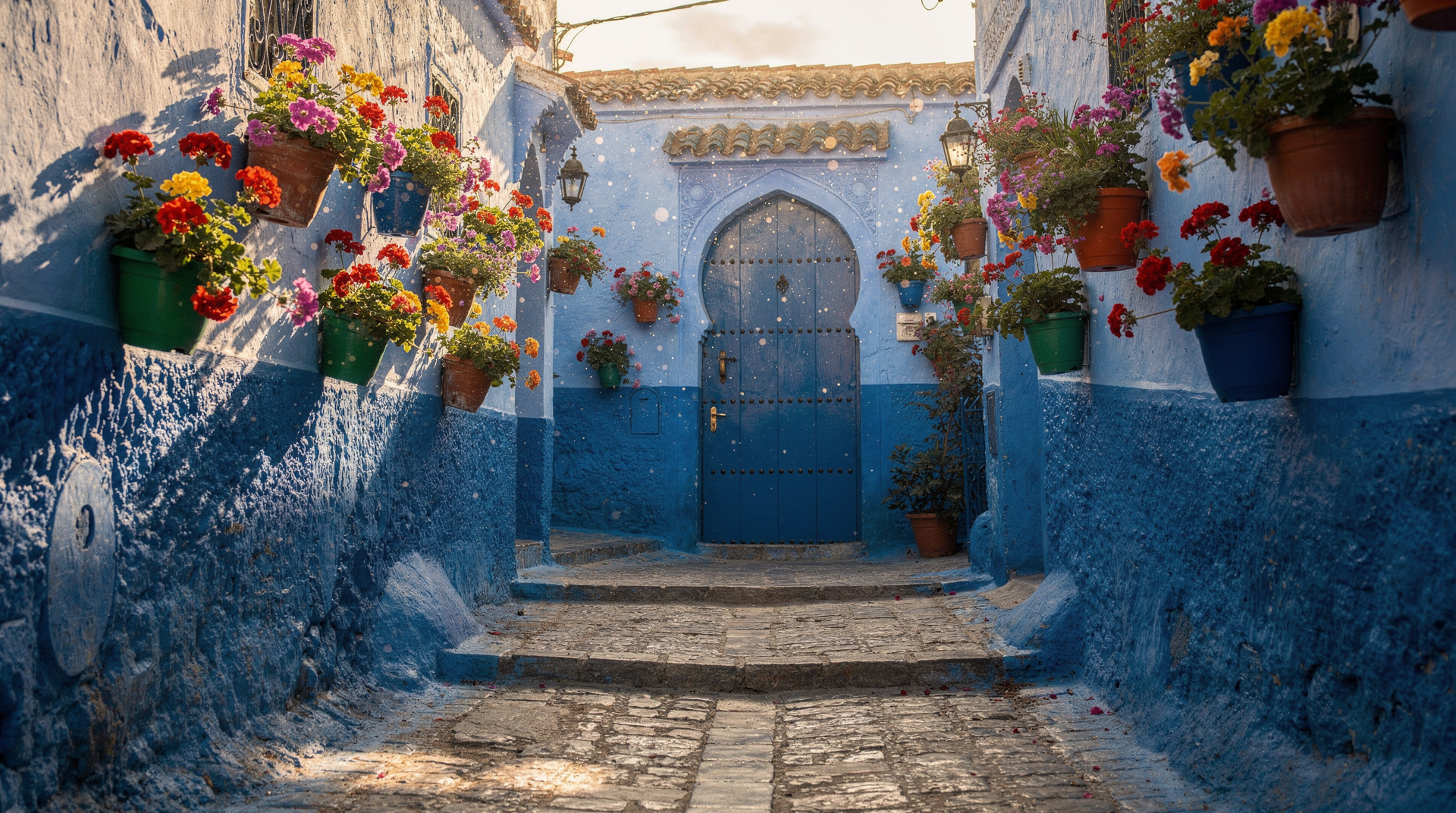
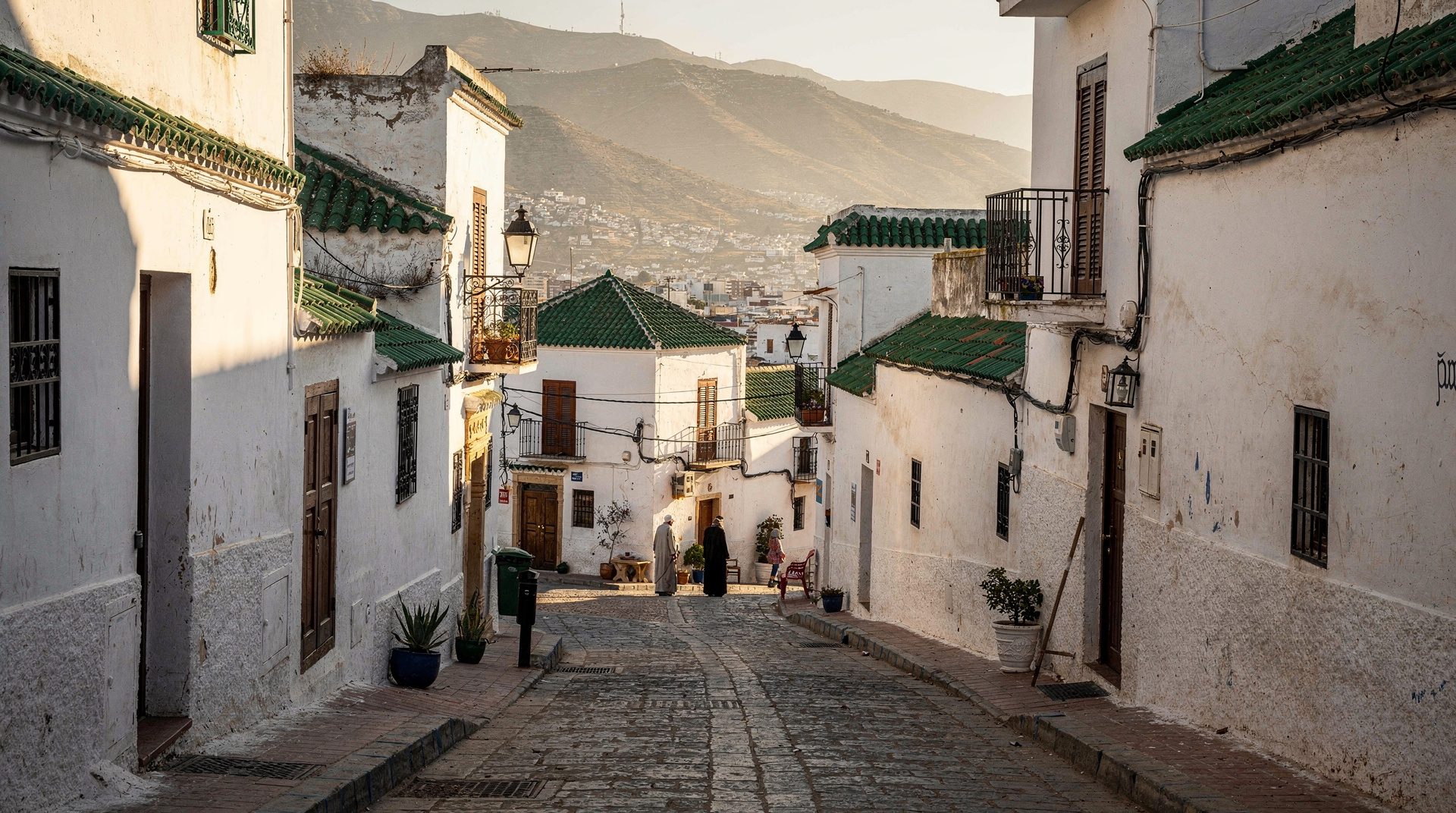
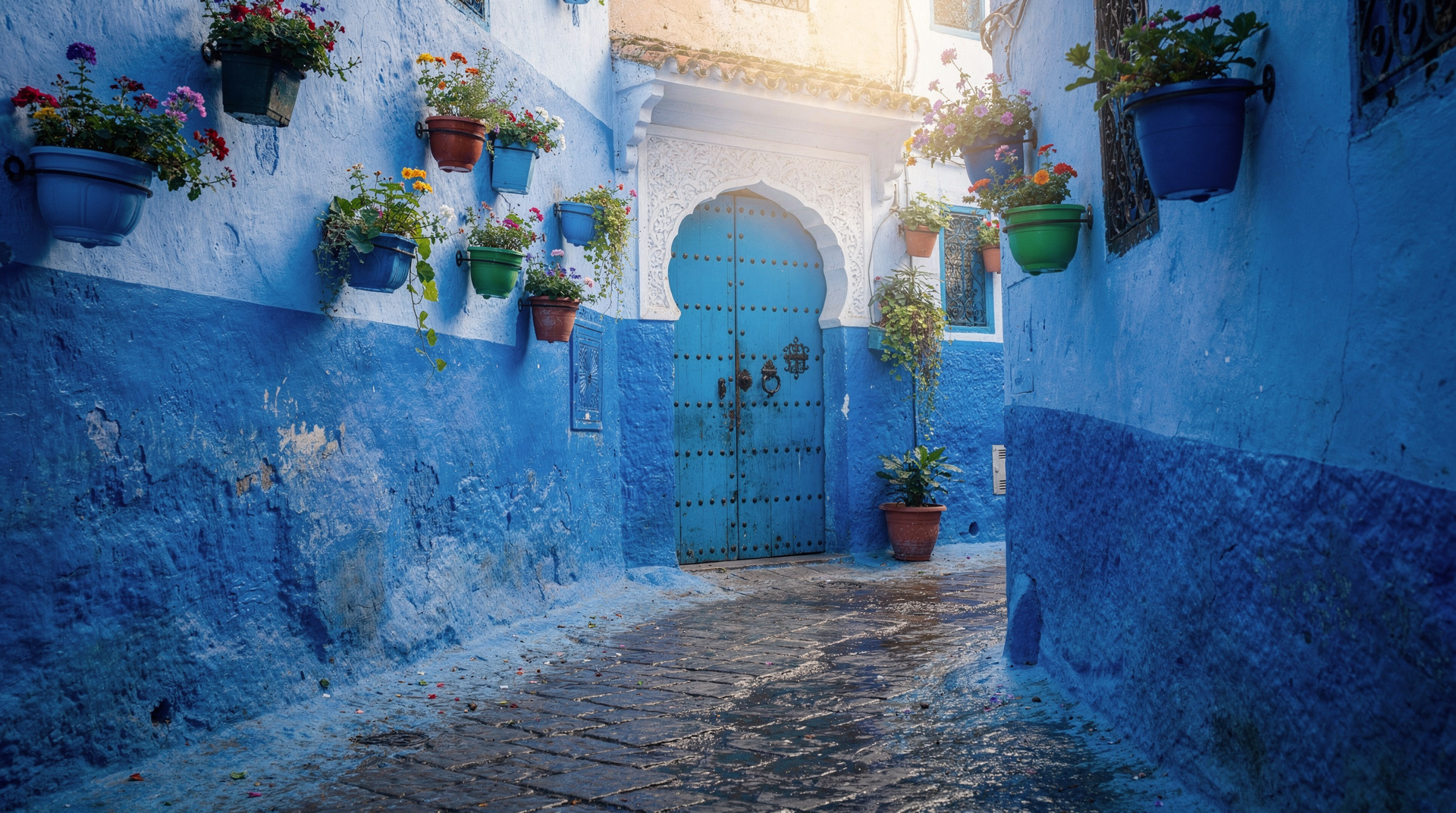
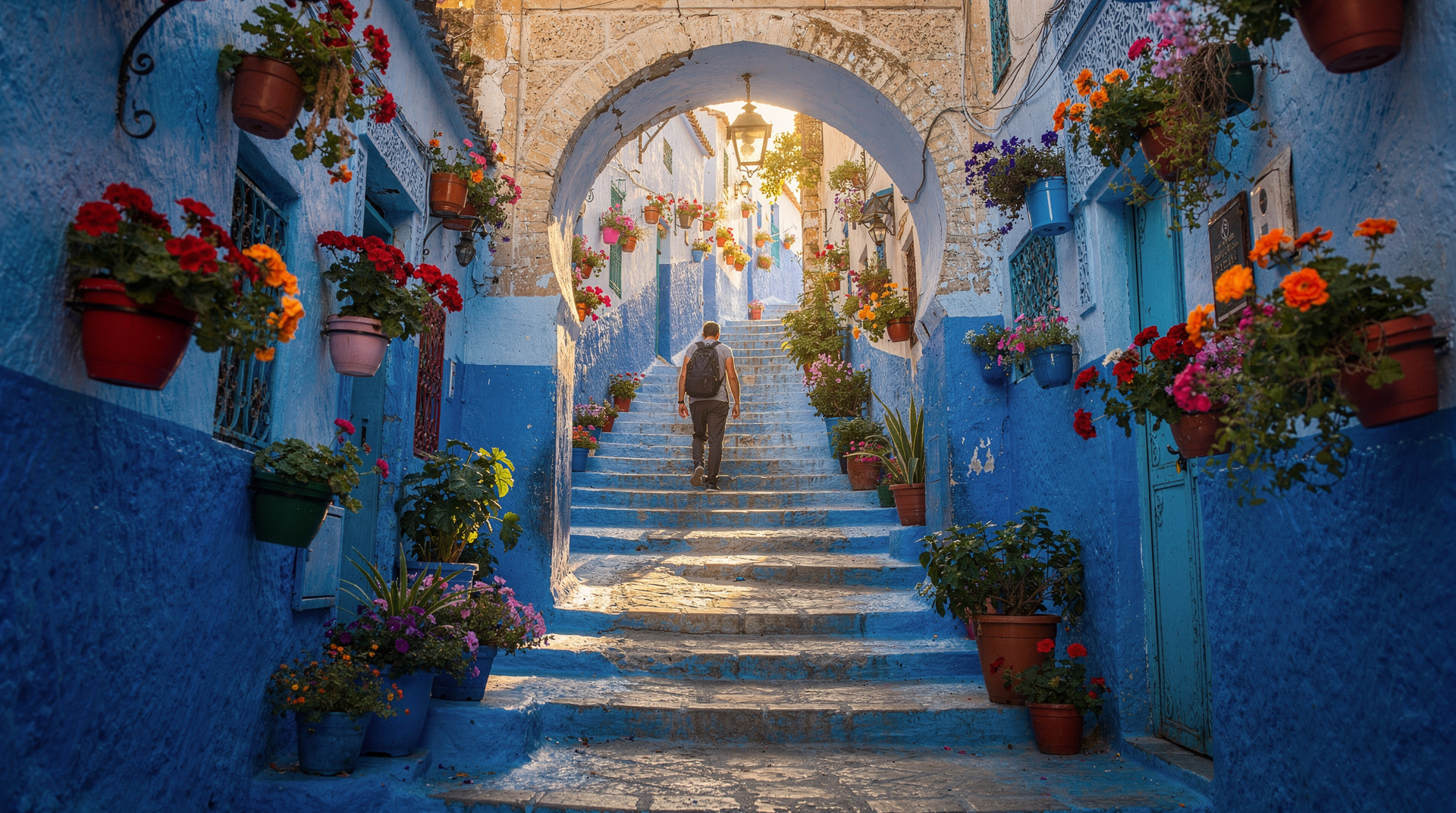
There is a moment that almost every visitor to Chefchaouen remembers: rounding a corner in the medina to find an alley so comprehensively painted in graduated shades of blue — from pale sky to deep indigo — that the effect is less architectural and more like walking into an Yves Klein painting. The Blue Pearl of the Rif mountains has become one of North Africa’s most photographed places, and the photography is fully warranted: the town is genuinely, remarkably beautiful.
But Chefchaouen is more than a backdrop. Founded in 1471 as a fortress against Portuguese invasion, it became a refuge for Moorish and Jewish exiles expelled from Andalusia after 1492, a history that shaped its Spanish-tinged architecture, its tolerance, and its distinctive aesthetic. The blue paint itself has layered explanations: some say it was introduced by Jewish refugees for whom blue represented the divine; others that it repels mosquitoes; most locals will tell you it simply looks beautiful and keeps the streets cool in summer — which it does.
What surprises first-timers about Chefchaouen is the pace. After the sensory assault of Marrakech or the intellectual density of Fes, the Blue City operates at a notably calmer register. Cats outnumber touts. The souks sell woollen jellabas and freshly pressed argan oil rather than mass-produced tat. The hiking trails above town lead into Rif mountain forests within 20 minutes of leaving the medina gate.
| At a glance | |
|---|---|
| Where | Rif mountains, northern Morocco, between Tangier and Fes |
| Cost | Budget around 400-800 MAD/day (mid-range riad, meals, one activity) |
| Time needed | 2-3 days, more if hiking |
| Getting there | Bus or grand taxi from Tangier (2-3 hr) or Fes (3.5-4 hr); no direct airport |
| Best time | April-June or September-October |
Getting There
By bus from Tangier: CTM buses run several times daily from Tangier to Chefchaouen (3 hr, around 75 MAD). This is the most common route for travellers coming from Spain by ferry. A shared grand taxi is faster (2 hr) and costs around 80–100 MAD per seat.
By bus from Fes: CTM connects Fes to Chefchaouen in 3.5–4 hr (from 75 MAD). Several daily departures. The route over the Rif mountains is scenic.
By bus from Casablanca or Marrakech: Longer journey (6–7 hr from Casa, 8 hr from Marrakech) but perfectly doable overnight.
By car: Chefchaouen sits on the N2 highway, accessible from both Tangier and Fes. There is a paid car park just outside the medina walls. Driving inside the medina is not possible.
No direct airport: The nearest airports are Tangier (TNG, 3 hr) and Casablanca (CMN, 5.5 hr). Some travellers also use Fes-Saïss (FEZ, 3.5 hr by bus).
Getting Around
Chefchaouen’s medina is tiny enough to cross in 20 minutes — getting around on foot is the only option and the only pleasure. The main square, Plaza Uta el-Hammam, is the anchor from which all exploration radiates. The winding blue alleys fan out from here into the residential upper medina (above the kasbah) and the commercial lower medina (towards Bab el-Ain and the modern town).
For the Akchour waterfalls day trip, shared grand taxis depart from the main taxi stand outside the medina walls. The trip to Akchour village takes about 45 minutes and costs 25–35 MAD per seat.
Top Things to Do
Wander the Blue Medina
The medina’s compact, car-free streets are best explored without a fixed agenda. Start at Plaza Uta el-Hammam — the central square, shaded by orange trees and flanked by the 15th-century kasbah and the Grand Mosque — and work your way uphill into the residential quartiers where the blue is deepest and the tourists fewest. Early morning (before 9 am) and late afternoon (4–6 pm) offer the best light and the thinnest crowds.
Book a guided Chefchaouen medina tourThe Kasbah Museum
The 15th-century kasbah on Plaza Uta el-Hammam houses a small but well-curated museum covering the town’s Andalusian and Moorish history, local crafts, and traditional musical instruments. The central garden is a quiet haven. Entry: 20 MAD.
Ras el-Maa Waterfall
A 10-minute walk from the medina, this small but charming waterfall marks the edge of the town where the Oued Ras el-Maa stream tumbles down from the Rif. Local women still wash laundry here on flat rocks — one of the more photogenic and unpretentious scenes in Chefchaouen.
Spanish Mosque at Sunset
A 20-minute uphill walk from the medina, the ruined Spanish mosque from the colonial era offers the defining panorama of Chefchaouen: the blue medina cascading down the valley, framed by the twin peaks of Jbel Rif. This is the shot. Come an hour before sunset and stay until after the light fades.
Akchour Waterfalls Day Trip
The Akchour waterfalls in the Talassemtane National Park are one of northern Morocco’s finest natural attractions: a series of pools and cascades culminating in a dramatic 100-metre fall in a narrow gorge. The hike from Akchour village (accessible by shared taxi) to the God’s Bridge natural arch takes 1.5 hr each way; the upper falls add another 2 hr. A full day with an early start is needed.
Book an Akchour Waterfalls day trip from ChefchaouenSouk Shopping
Chefchaouen’s souks specialise in quality, locally produced goods rather than the mass-manufactured items common in larger medinas. Look for: handwoven Rif blankets in earthy stripes, leather sandals (babouches) in soft goatskin, dried herbs and mountain honey from the Rif, and woven baskets. Prices are more fixed here than in Marrakech or Fes, and haggling is less aggressive.
Neighbourhoods
Plaza Uta el-Hammam and surrounds: The social heart of Chefchaouen. Restaurants, cafés, and the kasbah cluster around this central square. It is busy during tourist peak hours but transforms into a local evening gathering point after dark.
Upper Medina (above the kasbah): The most photographed quarter — blue walls, flower pots, and stepped alleys that climb toward the Jbel Rif. Fewer shops, more residential, and significantly quieter than the lower medina.
Lower Medina (toward Bab el-Ain): The more commercial section with carpet shops, grocers, and the wool market. Less Instagram-pristine, more genuinely functional.
Ain Tissimane quarter: A quieter residential area below the Spanish mosque path, worth exploring if you want to see everyday Chefchaouen life rather than tourist infrastructure.
Where to Stay
Mid-range (500–1,500 MAD / €50–150 per night)
Casa Hassan is the classic Chefchaouen hotel — a beautifully restored 19th-century riad right in the heart of the medina with a celebrated restaurant and terrace views over the blue rooftops. Consistent quality and genuinely warm hospitality make it the benchmark. Doubles from 700 MAD.
Dar Echchaouen offers 14 rooms in a tastefully decorated traditional house with a rooftop terrace overlooking the medina. Excellent breakfasts and helpful staff. Doubles from 600 MAD.
Riad Janoub is a charming smaller riad in the upper medina with individually decorated rooms and one of the best terrace views in town. Quiet, intimate, and excellent value.
Budget (under 400 MAD / €40 per night)
Auberge Dardara is a friendly, well-run hostel-style guesthouse on the edge of the medina with private rooms available. Popular backpacker hub with helpful owners who can arrange Akchour taxi sharing and hiking guides.
Hotel Andaluz near Bab el-Ain is one of the most affordable proper hotels in town — clean rooms, simple breakfast, and a good location for entering and exiting the medina without getting lost.
Food and Drink
Chefchaouen’s food culture reflects its Andalusian heritage and Rif mountain surroundings: the cooking is simpler and fresher than Marrakech, with more emphasis on herbs, goat cheese, honey, and mountain lamb.
Restaurant Casa Hassan (Rue Targhi, in the Casa Hassan hotel) is the finest dining option in town, serving a refined menu of Moroccan classics in an elegant setting. The harira, mechoui (slow-roasted lamb), and bastilla are all excellent. Dinner for two: 300–450 MAD.
Chez Pépé (Plaza Uta el-Hammam terrace) is a relaxed café-restaurant with a terrace directly on the main square. Good for mint tea, msemen pancakes, and a simple tagine lunch. Views of the kasbah and minaret. Main courses: 60–120 MAD.
Bab Ssour Restaurant (near Bab el-Ain) is a local favourite for breakfast and lunch — excellent Moroccan omelettes, fresh bread, and amlou (argan paste with honey) for about 30 MAD.
Food market near Bab el-Ain: Wednesday and Sunday are market days, when farmers from the surrounding Rif mountains bring fresh produce — dried herbs, mountain honey, goat cheese, and seasonal vegetables — to sell in the town market. Worth timing your visit around.
Kif: Chefchaouen is in the heart of Morocco’s primary cannabis-growing region, and the product is openly visible. It is illegal — Moroccan law applies equally to tourists — and consumption carries real legal risk. Many cafés will have it on offer; declining is perfectly normal.
Day Trips from Chefchaouen
Akchour Waterfalls and Talassemtane National Park: Already covered above — the single best day trip from Chefchaouen and one of the finest hikes in northern Morocco.
Fes: Three and a half hours by bus, Fes makes an ambitious but doable day trip, though staying overnight is much better. Most travellers use Chefchaouen as a stopping point between Tangier and Fes rather than a day-trip destination.
Tangier: Tangier is 3 hours away — feasible as a day trip if you leave early.
Book a Chefchaouen day trip from TangierSample 2-Day Chefchaouen Itinerary
Day 1 — The Blue Medina Morning: Arrive early, drop bags, and head immediately to the upper medina for the best light (8–10 am is ideal for photography). Walk through the blue alleys toward Ras el-Maa waterfall. Midday: Lunch at Chez Pépé on the square. Afternoon: Kasbah museum, then climb to the Spanish mosque for sunset. Evening: Dinner at Casa Hassan restaurant.
Day 2 — Akchour and Slower Exploration Early: Breakfast in the market district near Bab el-Ain. By 8 am: Share a grand taxi to Akchour village (25–35 MAD). Hike to the God’s Bridge natural arch (1.5 hr each way) and the upper waterfalls if energy allows. Return by mid-afternoon. Late afternoon: Final walk in the lower medina and souvenir shopping. Evening: Rooftop mint tea and early night before an onward journey.
Practical Tips
Crowds and photography: Instagram has made Chefchaouen genuinely crowded during European school holidays (July–August, Christmas, Easter). Shoulder season (April–June, September–October) is significantly more pleasant. Photographers should rise before 7 am to get the blue alleys without other visitors in frame.
Temperature: Chefchaouen sits at 600 metres in the Rif mountains. Summers are pleasantly cooler than the lowlands (rarely above 30°C), but winters are cold with occasional snow above town. Pack a layer even in May.
Spanish here: Given the town’s proximity to the Spanish enclave of Ceuta and its Andalusian history, Spanish is more widely understood here than in most Moroccan cities. Useful if your French is weak.
Wi-Fi: Most guesthouses and cafés have Wi-Fi. Mobile data coverage is good in town but drops in the Akchour gorge.
What to skip: The main drag of tourist shops between Bab el-Ain and the plaza is heavily commercialised and sells largely the same souvenirs as Marrakech, but at roughly equivalent prices. Focus instead on the dedicated local craft shops selling Rif-specific products.
Chefchaouen vs Fes as a Northern Base
Travellers deciding between basing in Chefchaouen or Fes for the northern leg of a Morocco trip are really choosing between two different registers. Fes is denser, more historically layered, and demands active engagement — the medina is a genuine maze and the sights (tanneries, medersas, Al-Qarawiyyin) require walking and concentration. Chefchaouen is smaller, calmer, and photogenic without effort; it rewards slowing down rather than sightseeing hard. Read the full Chefchaouen vs Fes comparison if you’re trying to choose, or the day trip from Fes guide if you plan to see both.
Beyond Akchour: The Wider Talassemtane Park
Most visitors treat Akchour as a single day trip, but the Talassemtane National Park extends well beyond the God’s Bridge trail. Serious hikers can arrange multi-day treks through cedar and fir forest toward remote Rif villages, staying in basic gîtes along the way — worth arranging locally through Chefchaouen guesthouses rather than booking in advance. For those short on time, the standard Akchour waterfalls hike captures the best of the park in a single long day, and can also be approached as a day trip from Tangier for travellers who skip Chefchaouen entirely.
Shopping With Intent
Beyond the general souk overview above, a few Chefchaouen-specific purchases are worth planning around: handwoven wool blankets (best bought directly from Rif cooperative stalls rather than resellers near the plaza), and the town’s small but growing crop of independent designer shops selling updated takes on traditional garments. See the dedicated Chefchaouen shopping guide for cooperative addresses and realistic price anchors before you haggle.
Frequently Asked Questions about Chefchaouen
Why is Chefchaouen painted blue?
The origins are layered. Jewish refugees who arrived in the 15th century painted buildings blue, a colour associated with heaven and divinity in Jewish tradition. After the Jewish community left in the 1940s–1950s, the practice continued among Muslim residents who appreciated the cooling effect and aesthetic appeal. Today it is maintained partly by tradition, partly by tourism economics.
Is Chefchaouen worth visiting on a day trip?
A day trip from Tangier or Fes is possible, but two nights is strongly recommended. The magic of Chefchaouen is largely in the early morning and evening light — elements that day-trippers almost always miss. An overnight stay also allows time for the Akchour waterfall hike.
How difficult is the hike to Akchour?
The trail to God’s Bridge is moderate — well-marked, with some rocky sections and river crossings on stepping stones. The upper waterfall extension adds significant elevation gain and requires reasonable fitness. Good walking shoes are essential; sandals are not suitable.
Is Chefchaouen safe for solo female travellers?
Yes. Chefchaouen has a gentler, less harassment-heavy atmosphere than larger Moroccan cities. The medina is small and well-trafficked. Evening walks on the plaza and in the lower medina are generally comfortable. The usual precautions apply.
What is the best accommodation option in Chefchaouen?
Staying inside the medina — in a riad or traditional guesthouse — is strongly preferred over the modern hotels outside the walls. Casa Hassan is the most reliable mid-range option; smaller guesthouses in the upper medina offer a quieter, more immersive experience.
Can I get from Chefchaouen to Marrakech in one day?
Technically yes by overnight bus, but it is a long journey (8–9 hr). More comfortable is a stop in Fes or Casablanca along the way.
Is Chefchaouen too touristy now?
The Uta el-Hammam plaza and the main tourist drag can feel Instagram-saturated in peak season, but the upper medina and Ain Tissimane quarter remain quiet and lived-in a short walk away. Visiting before 9 am shifts the experience considerably — see the crowds-and-photography note above.