Quick facts
- Best for
- Blue city, Rif hiking, Mediterranean coast, day trips
- Days needed
- 4-7 days
- Best time
- Apr–Jun, Sep–Oct
- Hub city
- Chefchaouen or Tangier
Why visit northern Morocco
| At a Glance | |
|---|---|
| Where | Rif Mountains and Mediterranean/Atlantic coast, between Tangier and Fes |
| Cost | Guesthouses roughly 400–1,100 MAD/night; buses and grand taxis are cheap (30–65 MAD per short hop) |
| Time needed | 4–7 days for Chefchaouen, Tangier, Akchour and the coastal towns |
| Getting there | Fly into Tangier (TNG), or bus/train from Fes, Casablanca, or Rabat |
| Best time | April–June and September–October for green hills and mild temperatures |
Northern Morocco is the region most misunderstood by first-time visitors. Chefchaouen, the famous blue city tucked into the Rif Mountains, has been so comprehensively photographed that people arrive expecting a painted film set and find instead a real, working mountain town whose blue walls are just the beginning of what it offers. Tangier, meanwhile, has reinvented itself in the past decade from a city with a seedy reputation into one of Morocco’s most culturally interesting ports. And between these two anchors lies a coastal strip — Asilah, the Tetouan medina, the beaches of Martil and Cabo Negro — that most itineraries skip entirely.
The Rif Mountains add a dimension beyond the architecture. The range that separates the Mediterranean coast from the interior is green, forested in places, and threaded with hiking trails that lead to waterfalls, Berber villages, and views of the Spanish coast across the Strait of Gibraltar. Akchour, 20km from Chefchaouen, has a two-hour waterfall circuit that is genuinely spectacular in spring.
One note of honesty: the Rif region has historically been Morocco’s main kif (cannabis) growing area. Chefchaouen in particular has a persistent association with offers to buy drugs, primarily targeted at foreign visitors. It has reduced in recent years but not disappeared. A polite, firm refusal is all that’s needed; it is not threatening, just mildly persistent. The area is entirely safe for travellers.
Getting there
Tangier Ibn Battouta Airport (TNG) has direct European flights from Madrid, Paris, Brussels, and several smaller European airports. High-speed ferry services connect Tangier Med port (45km from the city) to Algeciras, Spain in 35 minutes; Tarifa to Tangier city port in 60 minutes. Tangier is thus a natural entry point from Europe for those not flying into Marrakech or Casablanca.
The Al Boraq high-speed train (TGV equivalent) connects Tangier to Casablanca in 2 hours 10 minutes and to Rabat in 1 hour 40 minutes — one of the fastest and most comfortable rail journeys in Africa. Ticket costs 250–290 MAD in second class.
From Fes to Chefchaouen: 3–4 hours by road via the N13 (Fes–Meknes–Chefchaouen). CTM runs this route (65 MAD). From Tangier to Chefchaouen: 3 hours by road or bus. Chefchaouen has no train station; all access is by bus or shared taxi. The CTM bus station sits below the medina, a 15-minute walk uphill.
For Tetouan: 1 hour from Tangier by shared grand taxi (30 MAD/person). For Asilah: 46km south of Tangier on the Atlantic coast, 45 minutes by train or taxi.
Main destinations within the region
Chefchaouen
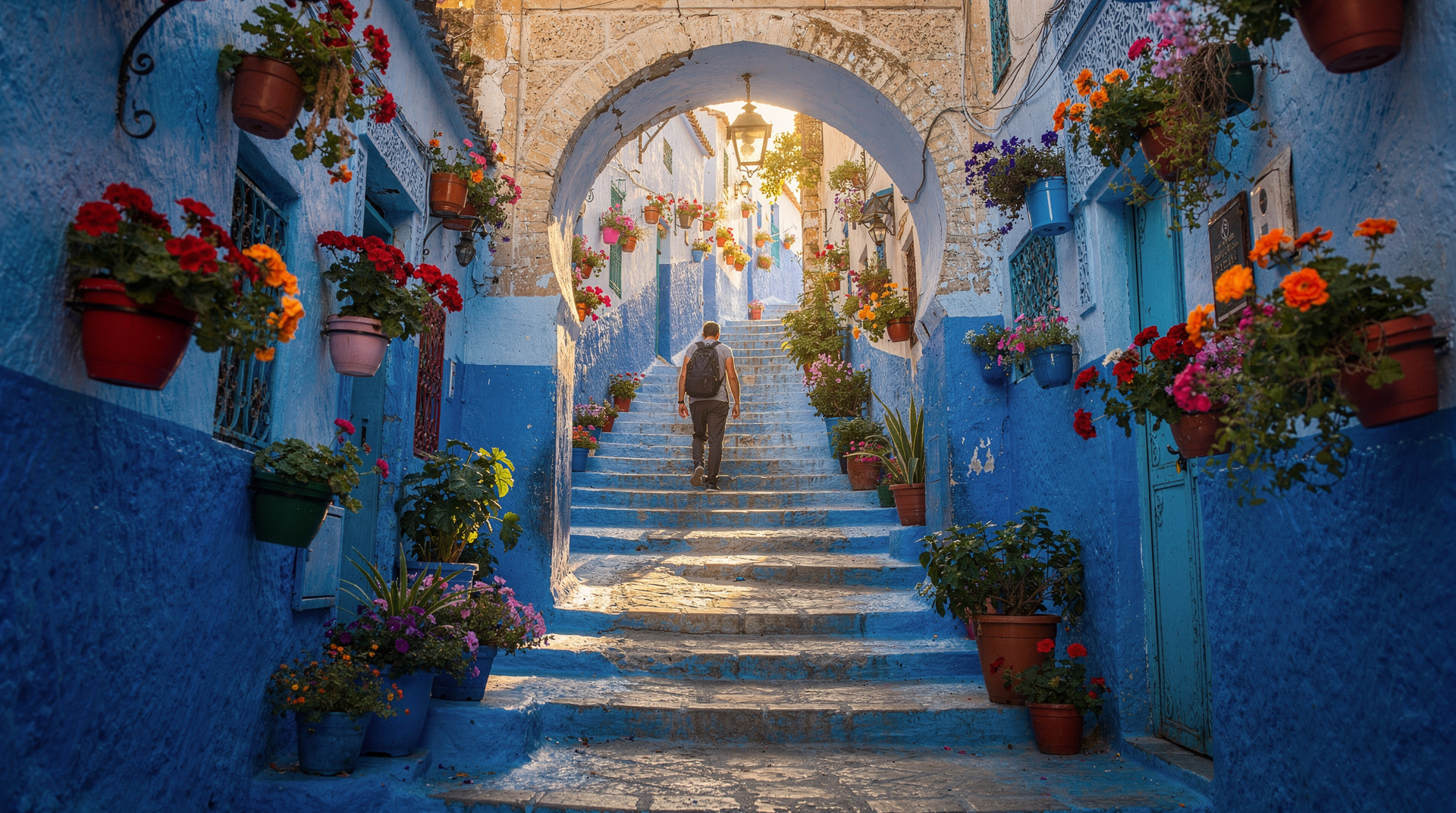
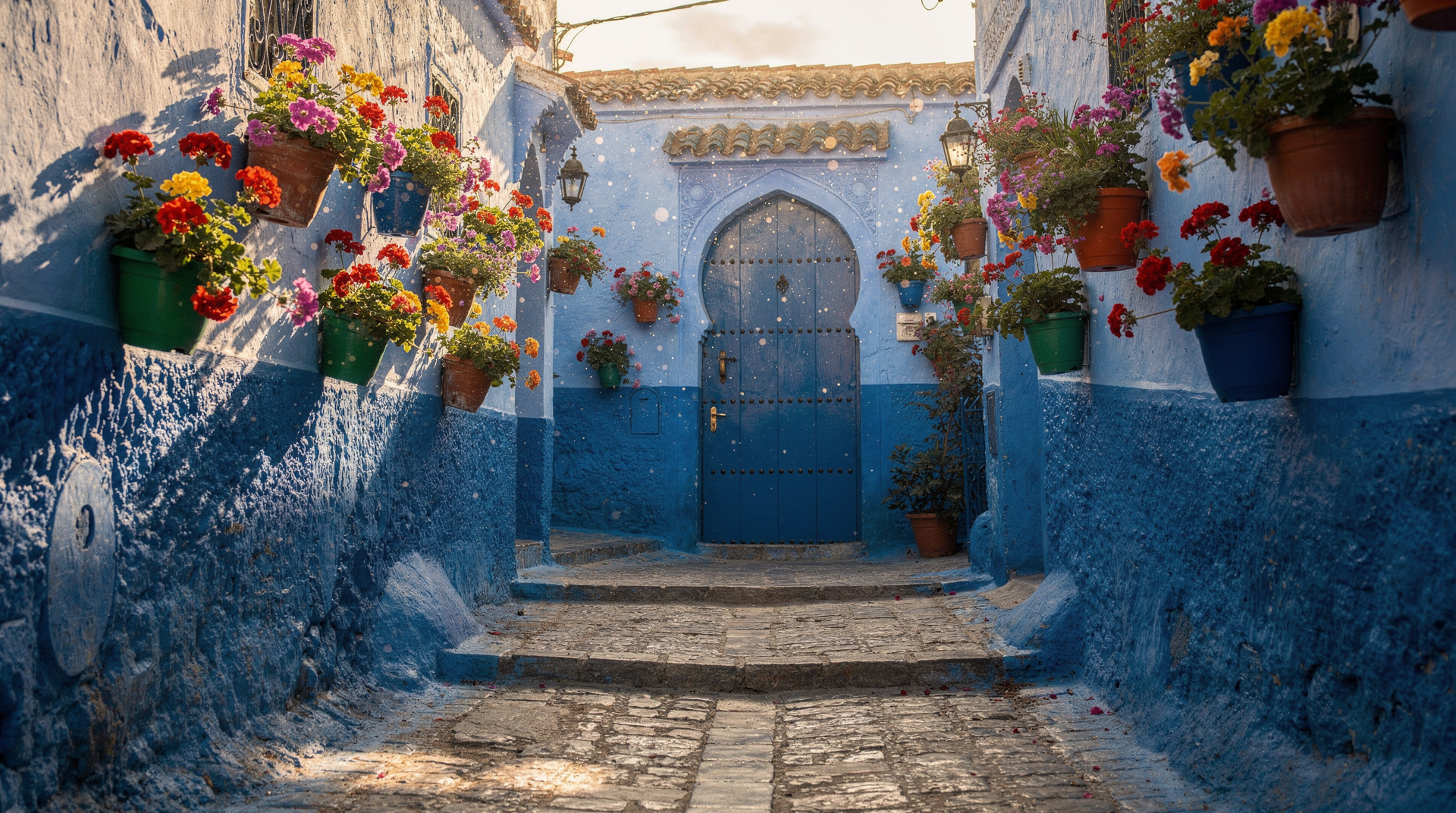
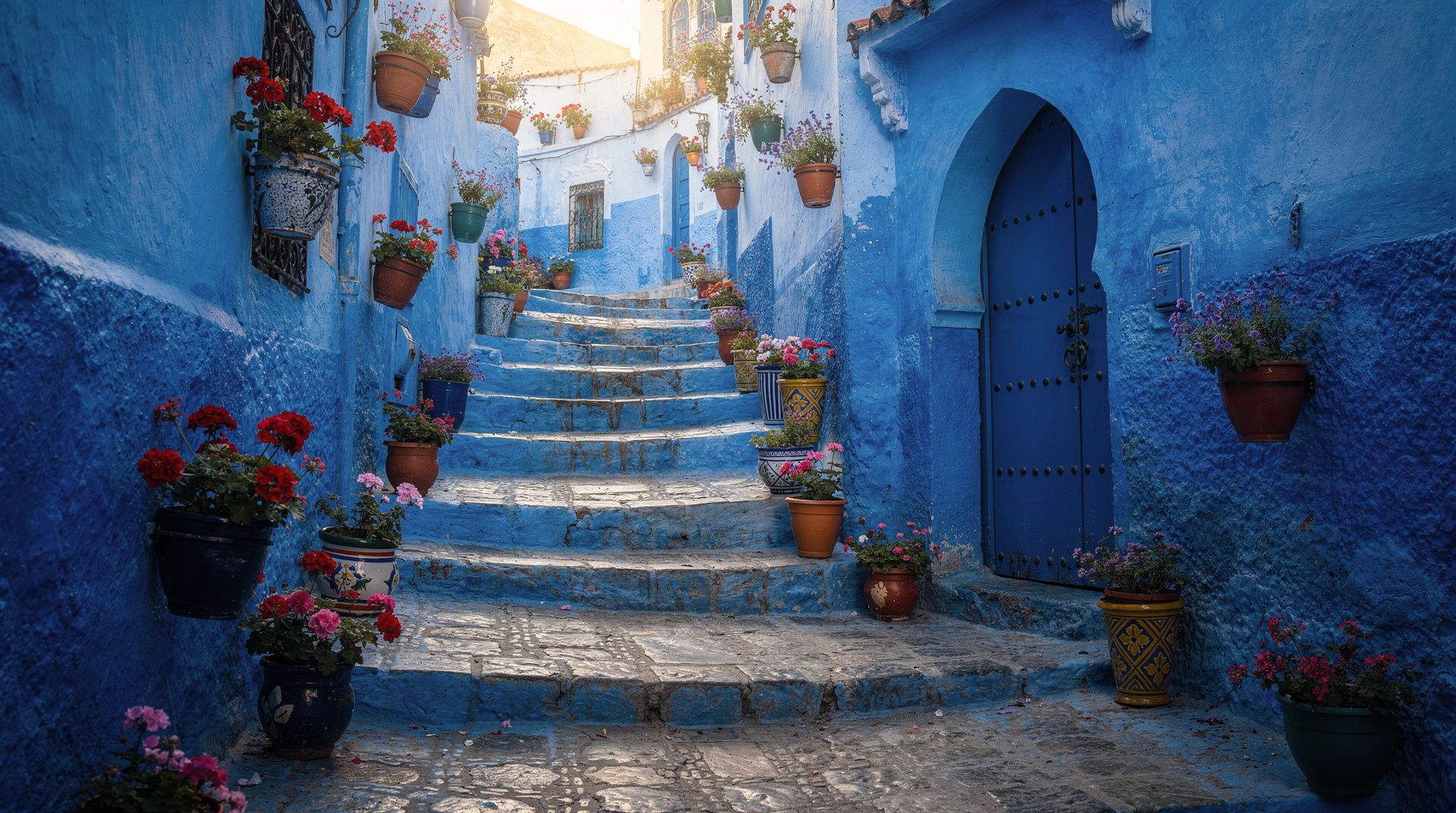
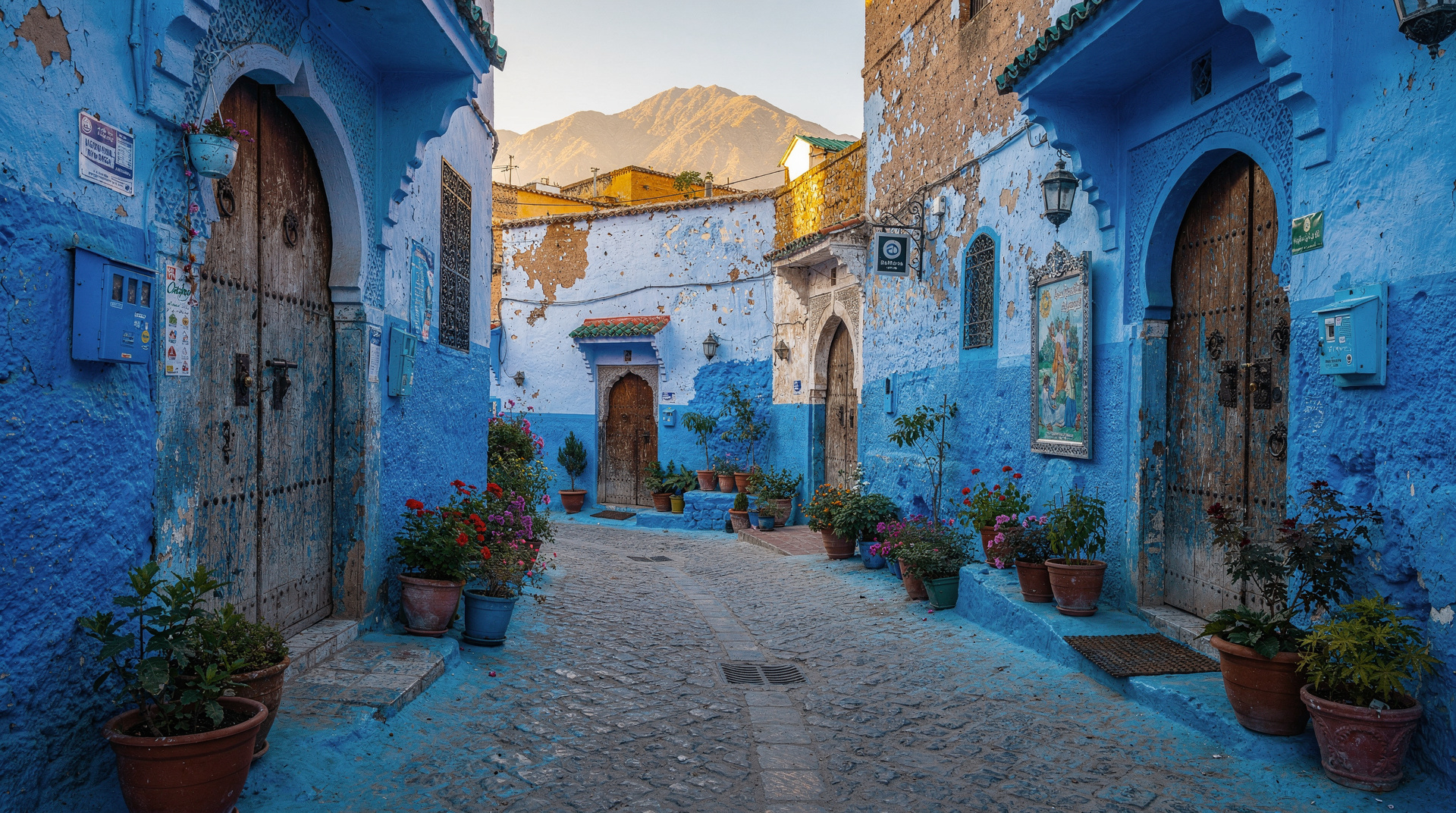
Chefchaouen (Chaouen locally) is perched on the southern slope of two peaks (the name means “the two horns” in Berber). Its medina is painted in varying shades of blue — from cobalt to sky to pale cerulean — a tradition that dates mainly from the 1930s when Jewish refugees from Nazism settled here and, some say, brought with them the Central European tradition of painting entrances blue to ward off evil. Others attribute it to practical reasons: the blue reflects heat and deters insects. The reason matters less than the effect, which is genuinely remarkable.
The medina is small enough to explore thoroughly in half a day, but compelling enough to reward a full day and evening. The main square, Plaza Uta el-Hammam, anchors the upper town with its café tables, kasbah, and ancient mosque. Lanes branch off in every direction, ascending toward the Spanish mosque above the medina (a 30-minute walk, worth it for the panoramic view) and descending through quieter residential quarters below.
The Chefchaouen guided medina tour goes beyond the blue photographic spots into the weaving workshops, Rif mountain herb stalls, and lesser-visited quarters that most solo visitors miss.
Accommodation in Chefchaouen is excellent value by Moroccan standards: comfortable, character-rich guesthouses run 400–900 MAD/night, well below equivalent riads in Marrakech or Fes. Casa Hassan and Dar Mounir are long-standing reliable options; Lina Ryad & Spa is the most refined property in town.
If you’re arriving from Tangier and want a day-trip introduction to Chefchaouen before deciding to stay, the Chefchaouen day trip from Tangier is efficient, though an overnight in the blue city is strongly recommended.
Akchour Waterfalls
Twenty kilometres from Chefchaouen, the Oued Farda gorge leads to two distinct waterfall circuits. The lower bridge circuit (1.5–2 hours round trip) follows the river through forest and over wooden footbridges to a series of pools and cascades — the pools are swimmable in summer. The upper God’s Bridge route (4–5 hours round trip) continues upriver to a spectacular natural rock arch spanning the gorge. The trail is well-used but unmarked in places; going with a local guide or joining an organised excursion from Chefchaouen is advisable.
The Akchour Waterfalls day trip from Chefchaouen includes transport and a guide — a reliable option that lets you focus on the hike rather than navigating the approach road.
Best visited in spring (April to June) when the waterfalls are at maximum flow and the forest is at its most vivid. Summer visits are still worthwhile for swimming; winter can see the upper trails become slippery.
Tangier
Tangier’s reputation as a faded, hustler-ridden port city has been substantially rewritten in the past decade. The city has received significant investment — the Grand Socco and Boulevard Pasteur have been renovated, the medina has been partially restored, and a new marina and business district have emerged. The result is a city of genuine interest: cosmopolitan, historically layered, and with a literary heritage (Paul Bowles, William Burroughs, Tennessee Williams all spent significant time here) that the excellent Café Hafa and American Legation Museum still reference.
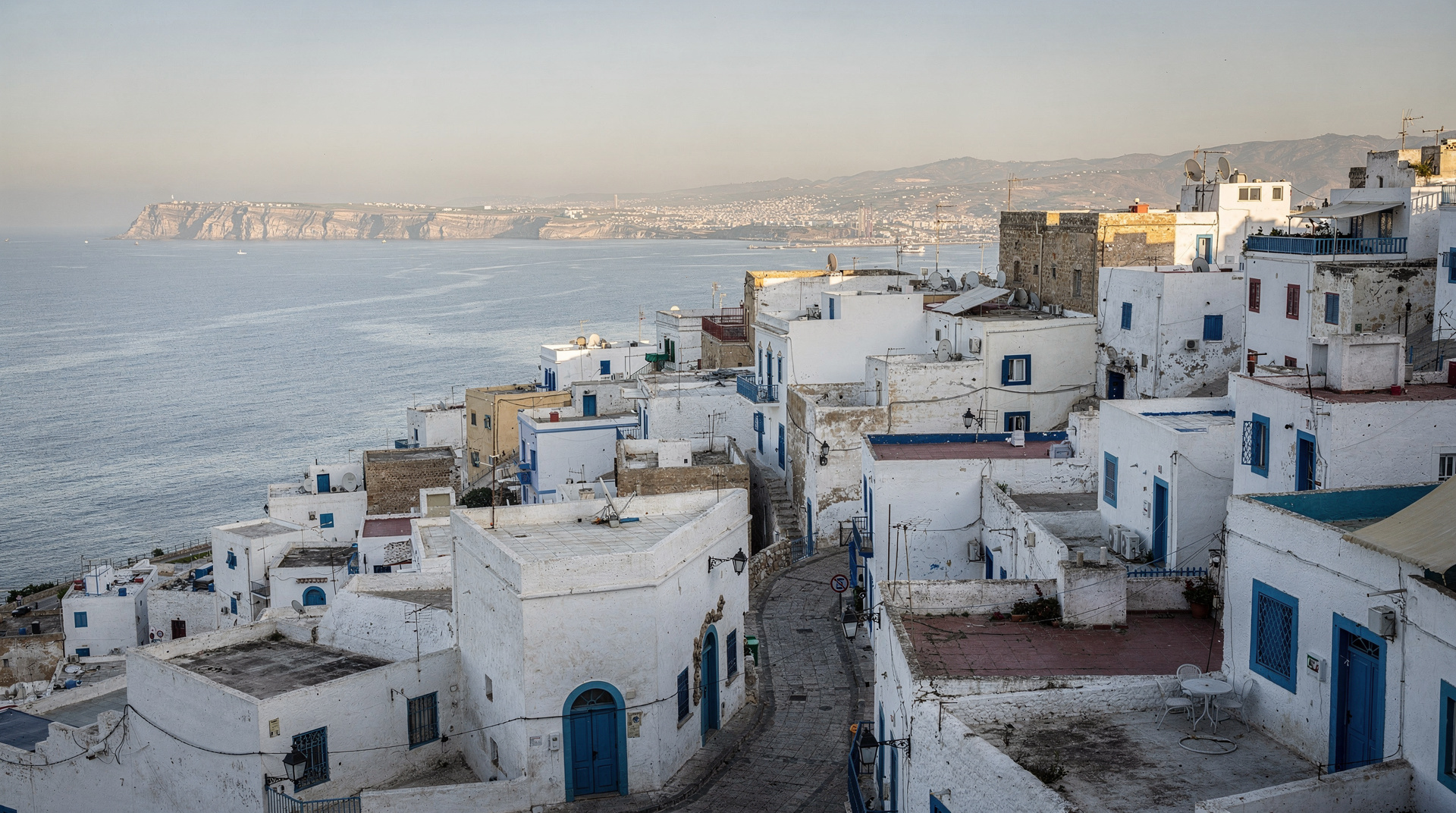
The Kasbah quarter at the top of the medina has panoramic views over the Strait of Gibraltar — on clear days, Spain is visible 14km away. The Mendoubia Gardens below the Grand Socco contain one of the largest banyan trees in Morocco. The Tetouan Museum of Contemporary Art in the nearby Villa Harris is a good introduction to Moroccan modern art.
Tangier is best approached as an overnight stop rather than a rushed transit point. Hotel Continental, in the medina, is one of Morocco’s most atmospheric historic hotels — basic rooms, extraordinary setting, surprisingly affordable (800–1,200 MAD). El Minzah Hotel on Rue de la Liberté is the classic grand hotel choice.
Tetouan
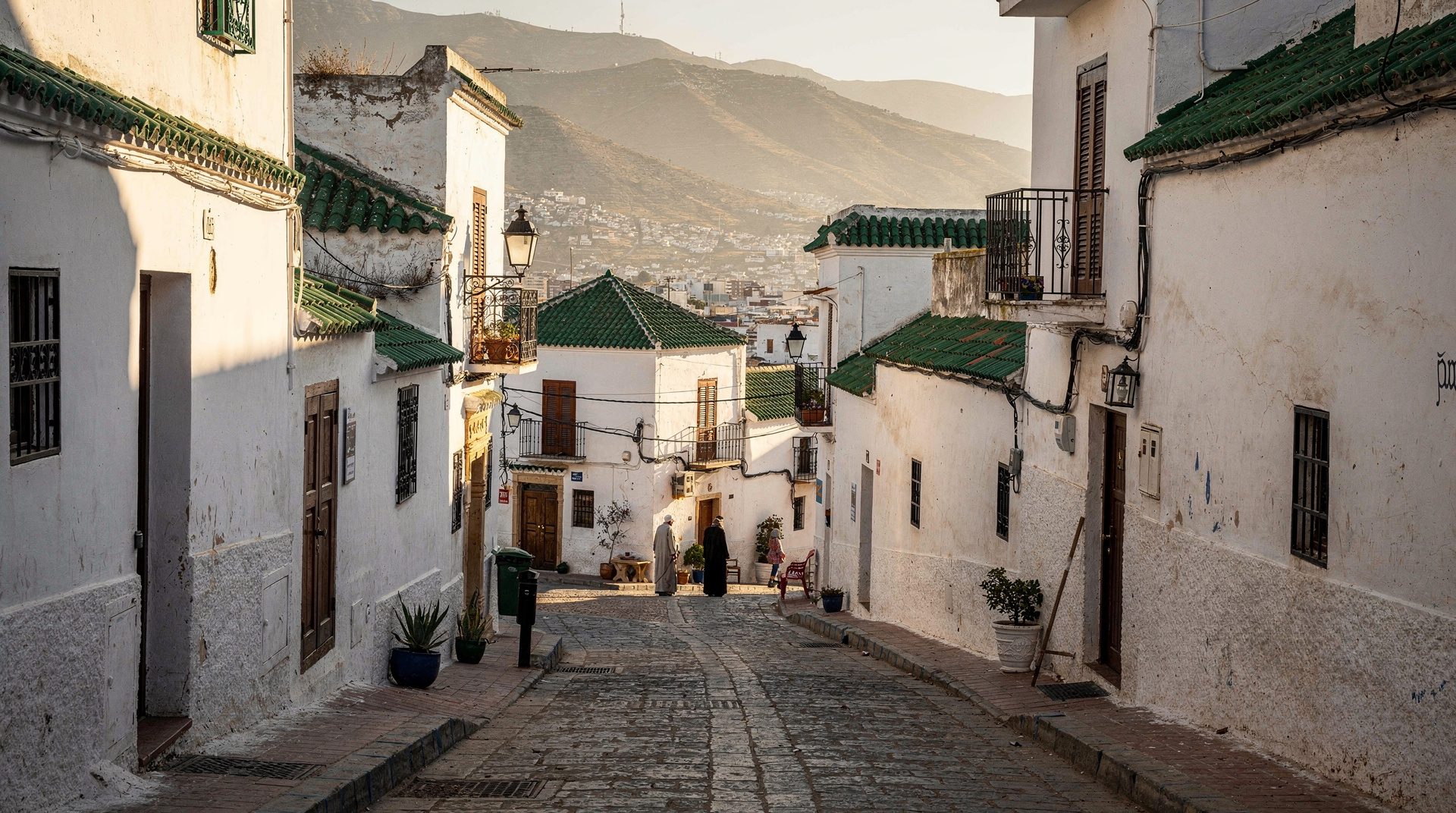
Tetouan’s medina is a UNESCO World Heritage Site that receives a fraction of Chefchaouen’s visitors despite being architecturally richer. The city was a major centre of Hispano-Moorish culture after the expulsion of Muslims and Jews from Andalusia in 1492; its medina retains a distinctly Andalusian character — white-plastered houses, elaborate wooden balconies, and an urban layout that echoes Granada more than it echoes Marrakech.
The Artisan School of Tetouan, attached to the medina, is one of the few places in Morocco where traditional craft training is still conducted in the classical manner. Visitors can watch students at work on zellige tilework, wood carving, and leather binding. Ethnographic Museum and Archaeological Museum are small but well-curated.
Asilah
Asilah is a small Atlantic coastal town 46km south of Tangier, best known for its International Cultural Festival in August, when visiting muralists repaint the town’s white medina walls with large-scale public art. Outside of August the murals remain, the medina is calm, and the beach — long, Atlantic-facing, with reliable surf — is excellent. A pleasant 1–2 day stop between Tangier and Rabat.
When to visit
April to June is the finest time in the north. The Rif Mountains are green, temperatures are warm but not hot (20–28°C), and the region is not overwhelmed by tourists. September and October are equally good. July and August are hot and crowded — Chefchaouen fills with Moroccan domestic tourists in August, prices rise, and the medina loses some of its character. The Asilah festival in August is worth planning around specifically.
Winter (November to March) brings rain and cool temperatures. The Rif can be cold at altitude. Chefchaouen in January is quiet and misty — atmospheric for some, too quiet for others.
Food and drink in the north
Northern Morocco has a distinct culinary identity shaped by its Andalusian heritage, its Mediterranean coast, and the Rif Mountain agricultural tradition. In Chefchaouen, the local specialty is kefta bil beid (spiced minced meat with eggs) cooked in a clay pot, served with warm khobz bread. The goats cheese produced in the Rif valleys (jben) appears on breakfast tables across the region — fresh, mild, and very good. Look for it at the small market stalls in the upper medina rather than the tourist cafés.
Tangier’s coastal position means excellent fresh fish. The port area (near the old Medina harbour) has a handful of no-frills fish restaurants where the catch comes straight from the boats — grilled sea bass and dorade, fried smelts, and prawn brochettes at prices that shock visitors used to Marrakech tourist-zone markups. Saveur de Poisson, a legendary if eccentric restaurant in the medina, serves a single fixed menu of fish-based dishes — no choice, no written menu, extraordinary value at around 150 MAD per person.
Coffee culture in the north is strong and genuinely good. Spanish café culture seeped across the Strait during the years of the Spanish Protectorate (1912–1956), and the legacy is Moroccan coffee with a European sensibility — properly extracted, often paired with pastries that owe more to Seville than to Fes. Café Central on the Grand Socco in Tangier and the cafés around Plaza Uta el-Hammam in Chefchaouen are the places to absorb this at length.
Hiking trails in the Rif
Beyond Akchour, the Rif Mountains offer hiking terrain that is largely undiscovered by international trekkers. The Jbel Tissouka (2,122m) above Chefchaouen is a half-day climb with panoramic views of the entire Rif range and, on clear days, the coastline toward Spain. The Talassemtane National Park, which surrounds Chefchaouen, has marked trails through cedar and fir forest that are peaceful and well-maintained.
The Jbel Bouhachem area, west of Chefchaouen toward Tetouan, is even less visited. A network of mule tracks connects Rif villages through cultivated terraces, walnut groves, and high pastures. Multi-day trekking here, with nights in village guesthouses (basic, 200–300 MAD/night), is one of the most authentic rural experiences in northern Morocco. Local guides based in Chefchaouen (Bureau des Guides, Bab el-Ain) can organise multi-day circuits at 400–600 MAD/day.
How many days
Chefchaouen: 2–3 nights minimum (one for the medina, one for Akchour). Tangier: 1–2 nights. Tetouan: half a day to 1 day as a side trip from Tangier or Chefchaouen. Asilah: 1 night. Total for the northern circuit: 5–7 days.
Where to stay
Chefchaouen: Casa Hassan (classic riad, 700–1,100 MAD), Lina Ryad (best in town, 1,400–2,200 MAD), Dar Mounir (good value, 500–800 MAD).
Tangier: Hotel Continental (historic, 800–1,200 MAD), El Minzah (grand hotel, 1,500–2,500 MAD), multiple boutique riads in the medina from 600 MAD.
Asilah: Simple guesthouses from 400 MAD; Dar Manar for a more refined option (900–1,500 MAD).
Sample itinerary — 5 days
Day 1: Arrive Tangier — ferry or flight, medina walk, Kasbah views, dinner at El Minzah terrace.
Day 2: Morning Asilah day trip (1.5 hours, beach and medina), afternoon return to Tangier or overnight in Asilah.
Day 3: Tangier to Chefchaouen by bus or grand taxi (3 hours), afternoon medina exploration, sunset from Spanish mosque.
Day 4: Full day Akchour Waterfalls hike — lower circuit or God’s Bridge depending on fitness.
Day 5: Morning Chefchaouen — breakfast in Plaza Uta el-Hammam, medina photography, afternoon bus to Fes (3–4 hours) or return toward imperial cities.
Choosing a base: Chefchaouen vs Tangier vs Tetouan vs Asilah
| Base | Best for | Pace | Nights |
|---|---|---|---|
| Chefchaouen | Photography, Rif hiking, relaxed medina wandering | Slow, low-key | 2–3 |
| Tangier | Culture, history, coastal city energy, arrival/departure point | Urban, moderate | 1–2 |
| Tetouan | Andalusian architecture, low crowds, craft traditions | Slow, day-trip friendly | Half day–1 |
| Asilah | Beach, murals, quiet coastal town | Very slow | 1 |
None of these need more than a night or two individually; the value of the northern circuit is in combining two or three of them. See our Chefchaouen vs Fes comparison if you’re deciding how to split time between the north and the imperial cities.
Planning the Rif and coast together
The mistake first-timers make is treating northern Morocco as a single stop (usually just Chefchaouen) rather than a small region with its own internal logic. Tangier makes the most sense as an arrival or departure point given its airport and ferry links; Chefchaouen as the scenic, slow-paced heart of the trip; and Tetouan or Asilah as half-day-to-one-night detours for travellers who have the extra time. Our day trips from Tangier and day trips from Chefchaouen guides break down which of these work as day excursions versus overnight stops.
For hikers, Akchour deserves more than a rushed afternoon — the guide to the Akchour waterfalls hike covers both the lower bridge circuit and the longer God’s Bridge route in detail, including which one suits your fitness level and time budget.
Frequently asked questions about Northern Morocco
Is Chefchaouen worth visiting if you’ve already seen the photos online?
Yes — the blue medina is genuinely striking in person, and the town has real depth beyond the photogenic corners: hiking access to Akchour, a working local market, and a pace of life that rewards an overnight stay rather than a rushed day trip.
How many days should you spend in northern Morocco?
Most travellers are well served by 4–5 days: 2 nights in Chefchaouen (including a day at Akchour), 1–2 nights in Tangier, and a half-day detour to Tetouan or Asilah. Add a night if you want to properly explore both coastal towns.
Related
- Imperial Cities — Fes is 3–4 hours from Chefchaouen; a natural circuit
- Atlantic Coast — Continue south from Tangier/Asilah toward Essaouira
- Atlas Mountains — Accessible from Fes after the northern circuit