Quick facts
- Language
- Tamazight, Darija, French
- Population
- ~3,000
- Nearest Airport
- Errachidia (ERH), 2 hr; Fes (FEZ), 5.5 hr
- Best for
- Desert, dunes, camels, stargazing
Why Visit Merzouga
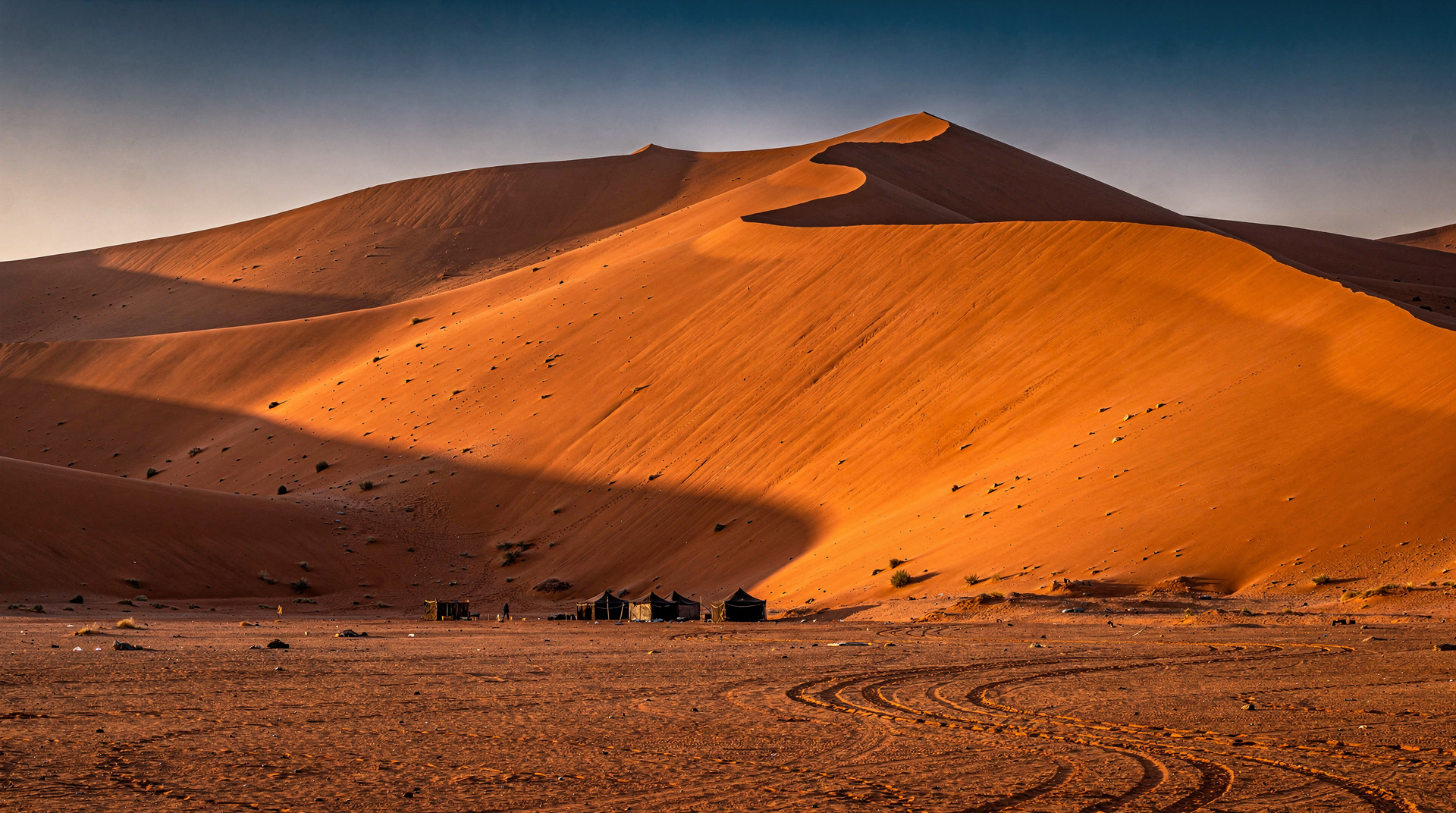
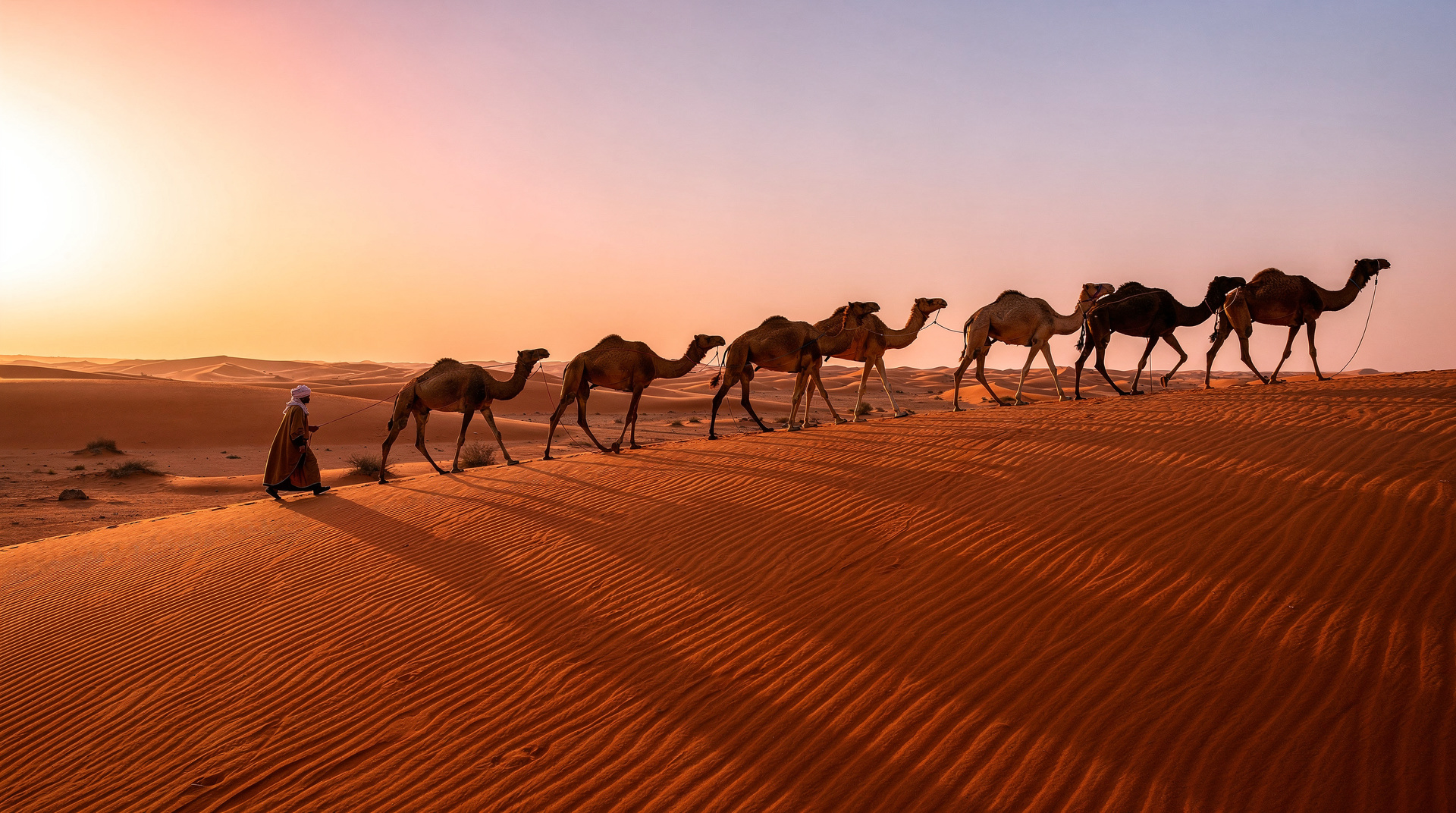
The Sahara does not ease you in. Standing at the edge of Erg Chebbi — the great sea of orange dunes that rises abruptly from the flat hamada steppe outside Merzouga village — the scale is immediate and absolute. The dunes here reach 150 metres at their highest point, stretching roughly 22 kilometres north to south and 5 kilometres wide. In late afternoon light, the sand shifts from gold to copper to deep amber as the shadows lengthen and the silence deepens into something that feels almost gravitational.
Merzouga is the main settlement at the base of Erg Chebbi, a small Berber and Saharan town that exists primarily as the gateway to the dunes. It is not a city — there is no medina, no ancient monuments, no souks. What it offers instead is access to one of North Africa’s most extraordinary landscapes, and the infrastructure — desert camps, camel guides, quad bikes, and 4x4 operators — to experience it properly.
What surprises first-timers about Merzouga is the scale of the quiet. Even in high season, walking 30 minutes into Erg Chebbi’s interior puts you beyond the camps, beyond the other tourists, in a landscape that feels genuinely vast and genuinely remote. The night sky here — in the absence of any light pollution — is among the best stargazing opportunities in all of Morocco.
Merzouga sits at the far southeastern corner of Morocco, 560 km from Marrakech and 380 km from Fes. Getting here requires commitment, which is part of why arriving feels like an achievement.
At a glance
| Where | Southeastern Morocco, edge of Erg Chebbi dunes, Sahara Desert region |
| Cost level | Budget camps around 200-350 MAD/person including meals; mid-range 600-1,200 MAD; luxury 2,000-4,000 MAD |
| Time needed | 1-2 nights at minimum; most visitors arrive as part of a 3-day loop from Marrakech or Fes |
| Getting there | 3-day tour from Marrakech (via Tizi n’Tichka pass) or 5.5-6 hr private transfer from Fes |
| Best time | October to April; summer regularly exceeds 45°C at midday |
Getting There
From Marrakech (most popular route): The classic 3-day tour from Marrakech crosses the High Atlas via the Tizi n’Tichka pass (2,260 m), drops through the Draa Valley, passes Aït Benhaddou, Ouarzazate, Boumalne Dades, the Todra Gorge, and arrives at Merzouga on the second night. This is one of the great road journeys in Africa — dramatic scenery throughout.
Book a 3-day Sahara desert trip from Marrakech to MerzougaFrom Fes (alternative route): The route from Fes via the Middle Atlas (Ifrane, Midelt, Errachidia) reaches Merzouga in 5.5–6 hours by private car or shared transport. Scenic in a different way — cedar forests and limestone gorges rather than the dramatic southern passes.
By bus: CTM and Supratours run to Rissani (30 km from Merzouga), from where a grand taxi completes the journey. Journey time from Marrakech by direct bus: around 10 hours. From Fes: 8–9 hours. Most desert travellers prefer a shared or private vehicle for the flexibility to stop at viewpoints.
By air: Errachidia Airport (ERH) is 80 km from Merzouga. Royal Air Maroc operates flights from Casablanca; a grand taxi from Errachidia to Merzouga costs around 300–400 MAD.
Getting Around
Merzouga village itself is walkable in 15 minutes. The key logistical question is accessing Erg Chebbi — the dune field begins about 1 km east of the village centre. Most desert camps are located at the dune edge and can be reached on foot or by short taxi (20 MAD).
Camel: The traditional way to enter the dunes. A sunset camel trek from the village edge to a desert camp takes 45 minutes to 1 hour. Camels are comfortable for short trips; not recommended for more than 2 hours for those unaccustomed.
4x4: Faster access to the dunes interior and essential for exploring further-flung areas like Erg Chigaga (400 km away).
Quad bike: Available to rent from operators along the village main road. 200–400 MAD per hour depending on bike size. The most liberating way to explore the outer edges of the dune field independently.
Sandboard: Rentable from camp operators (50–100 MAD). More fun in theory than practice but worth trying once on a steep north face.
Top Things to Do
Camel Trek at Sunset
The defining Merzouga experience: mounting a camel as the afternoon light turns golden, swaying up into the dunes as the sun drops toward the horizon, and arriving at a desert camp as the sky deepens to violet. Even visitors who are sceptical about “tourist” activities tend to be won over by the genuine spectacle. Book through your camp operator or a village agency.
Book a sunset camel trek to a Merzouga desert campOvernight Desert Camp
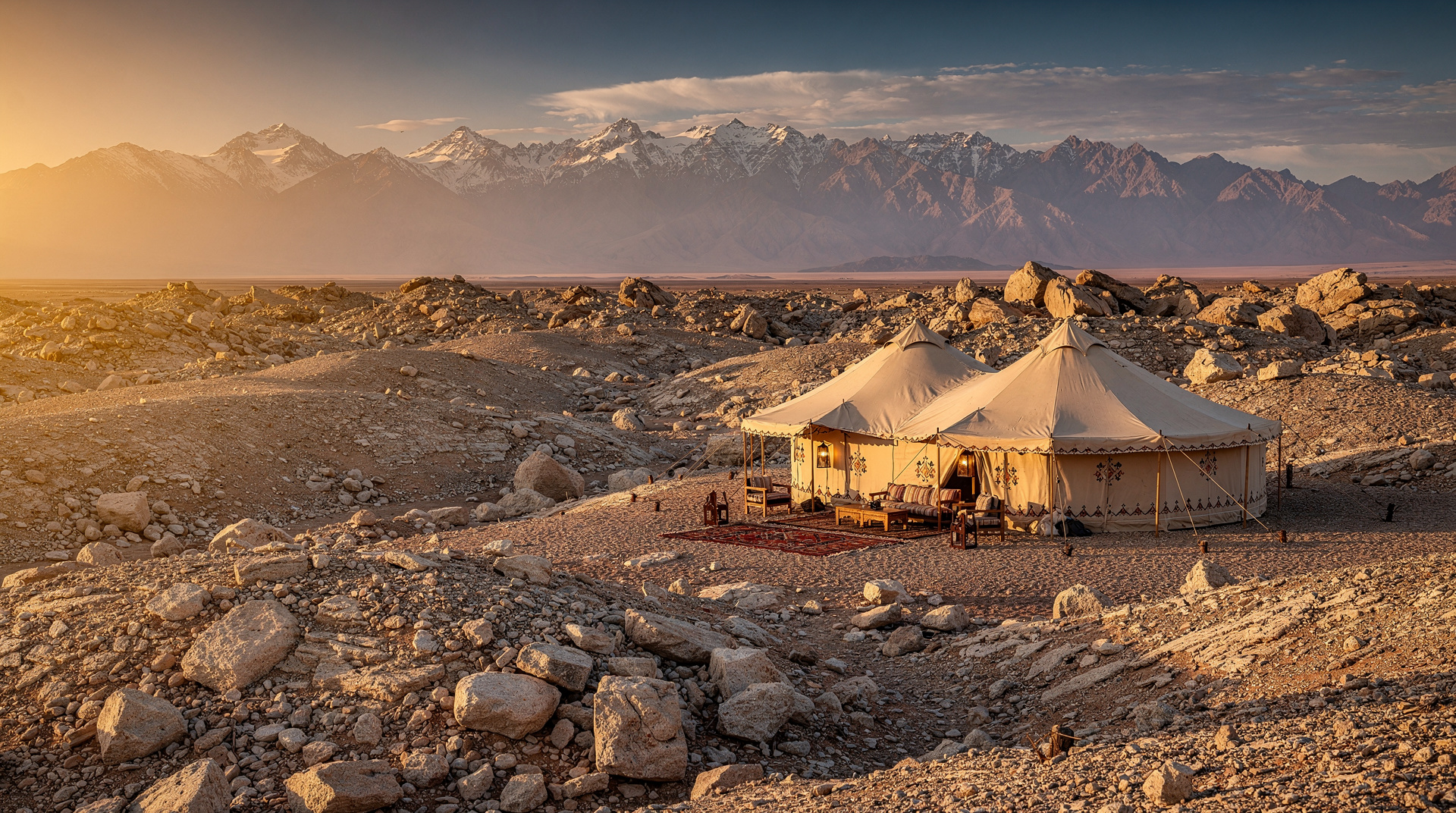
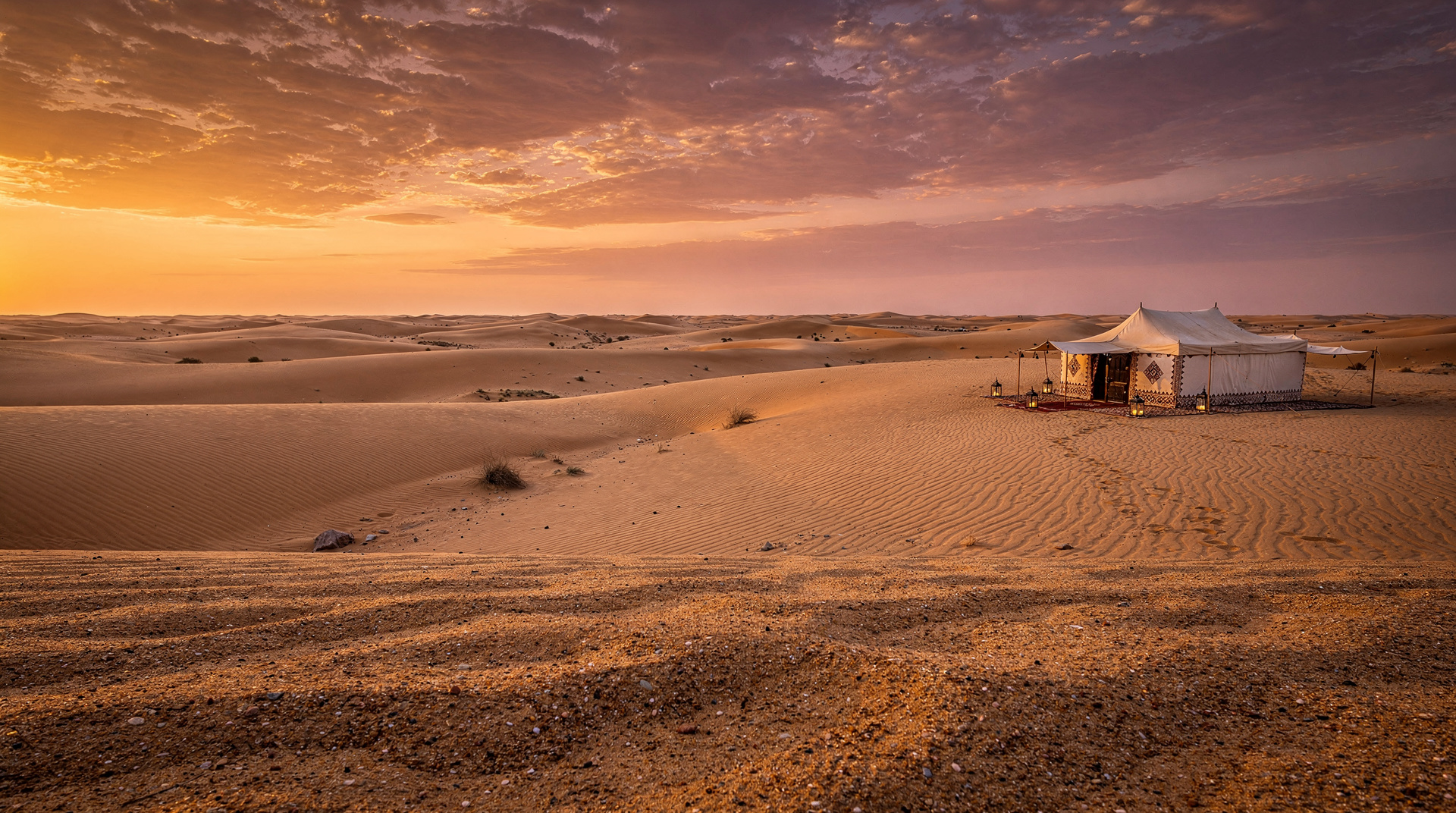
Sleeping in the dunes under a genuinely unpolluted sky is one of the most memorable things you can do in Morocco. Budget camps (glorified tents with a shared toilet block) charge 200–350 MAD per person including dinner and breakfast. Mid-range camps (private en-suite tents, proper beds, hot shower) run 600–1,200 MAD per person. Luxury glamping camps charge 2,000–4,000 MAD per person with fine dining, fire pits, and private terraces.
Book an overnight desert camp experience with camel rideStargazing
Merzouga sits in one of Morocco’s darkest zones. On a clear night — common in the desert — the Milky Way is visible with the naked eye and the density of stars is extraordinary. Many camps offer telescope sessions with a guide. Even without a telescope, simply lying back in the sand 20 minutes from camp and looking up is an experience that stays with travellers for years.
Quad Biking in the Dunes
Quad biking around the outer edges of Erg Chebbi gives a different perspective on the dune field’s size and drama. Most operators along the main village road rent machines by the hour. Safety helmets are provided; experience is not required.
Book quad biking in the Erg Chebbi dunesSunrise on the Dunes
Wake at 5 am, walk 10 minutes from camp to the highest dune crest, and watch the Sahara light up. This is genuinely worth the early alarm: the pink and gold tones on the sand in the first 30 minutes of daylight are extraordinary, and you will often have the view to yourself before the day-trippers arrive from Rissani.
Mhamid and Erg Chigaga
For those who want a remoter, less-touristed desert experience, Erg Chigaga — accessible by 4x4 from Mhamid (5 hr southwest of Merzouga) — offers even larger dunes and sparser tourism infrastructure. This requires more planning and higher budgets but rewards serious desert travellers. Ask camp operators in Merzouga about combined itineraries.
Khamlia Village and Gnaoua Music
Just 7 km from Merzouga, the small village of Khamlia is home to a community descended from sub-Saharan slaves brought across the Sahara centuries ago. They maintain the Gnaoua musical tradition (trance music using guembri bass lute and metal castanets) and host informal sessions for visitors. A genuinely moving experience outside the usual tourist circuit.
Where to Stay
Luxury Desert Camps (from 2,000 MAD / €200 per person per night)
Dar Seven Merzouga offers elegantly furnished tents at the dune edge with private terraces, en-suite bathrooms, chef-prepared dinners, and a rooftop viewing platform. One of the most tasteful luxury desert accommodation options in Erg Chebbi.
Luxury Desert Camps Merzouga (multiple operators under various names) offer glamping-standard tents with proper furniture, quality bedding, and full board. The experience bridges the gap between camping and boutique hotel.
Book a luxury desert camp with camel ride and dinnerMid-range (600–1,500 MAD / €60–150 per night)
Riad Madu is a well-regarded permanent riad-style hotel in Merzouga village with pool, garden, and a reliable team of camel guides. Good for families or those who prefer a solid room base over sleeping in the dunes.
Auberge Kasbah Erg Chebbi combines a traditional kasbah-style building with an adjacent desert camp — comfortable rooms with an easy walk to the dunes. Consistently well-reviewed.
Budget (under 400 MAD / €40 per night)
Standard auberges and guesthouses in Merzouga village offer clean basic rooms with dinner and breakfast. The experience is more functional than atmospheric, but serves well as a home base for day and overnight dune activities.
Food and Drink
Merzouga’s food scene is simple and oriented around comfort after desert activities rather than culinary adventure. Most camps and hotels serve set-menu dinners of harira soup, Moroccan salads, tagine or mechoui lamb, Berber bread (khobz), and pastries.
Best meals: At a mid-range or luxury desert camp, dinner under the stars with Gnaoua musicians playing beside a fire is the definitive Merzouga dining experience. The food may not reach Marrakech’s culinary heights, but the context is irreplaceable.
In the village: Several small restaurants along the main road serve standard Moroccan plates at local prices — tagine, couscous, brochettes — for 50–100 MAD. Café du Sud is reliable for breakfast omelettes and fresh mint tea.
Dietary requirements: Alert your camp operator in advance. Vegetarian tagines and salads are standard; vegan and gluten-free require advance notice.
Alcohol: Not available at desert camps or in the village. If this matters, bring your own wine from a licensed supermarket in Ouarzazate or Errachidia.
Day Trips from Merzouga
Todra Gorge: 1.5 hours northwest of Merzouga, the Todra Gorge is a dramatic slot canyon where 300-metre limestone walls close to 10 metres apart. Excellent for walking and rock climbing. Combine with the Dades Gorge on the way between Merzouga and Ouarzazate.
Rissani: 30 km from Merzouga, Rissani is the ancient capital of the Tafilalt region and the ancestral home of the current Alaouite royal dynasty. Its Tuesday, Thursday, and Sunday souks are among the most authentic rural markets in Morocco.
Erfoud: 50 km north, Erfoud is famous for its fossil industry — the surrounding desert contains extraordinary concentrations of trilobite, ammonite, and orthoceras fossils. The workshops where artisans cut and polish the fossil-bearing marble make for a fascinating visit.
Aït Benhaddou via the Draa Valley: The iconic UNESCO ksar is 4 hours west by car — doable as part of an onward journey to Marrakech rather than a day trip.
Sample 2-Night Merzouga Itinerary
Day 1 — Arrival and the Dunes Arrive at Merzouga village by early afternoon (if coming from the north, the drive through Midelt and Errachidia is scenic). Check into village guesthouse or riad. 4 pm: Mount camel at dune edge for sunset trek to desert camp. Dinner and Gnaoua music around the fire. Sleep under the stars.
Day 2 — Sunrise, Village, and Khamlia 5 am: Walk to dune crest for sunrise (non-negotiable). 8 am: Camel back to village, breakfast. Morning: Quad bike around outer dunes or 4x4 to Mhamid direction overlook. Midday: Drive to Khamlia village for Gnaoua music session. Afternoon: Explore Rissani souk (if visiting on Tuesday, Thursday, or Sunday). Evening: Return to camp or village for dinner.
Day 3 — Todra Gorge and Onward Early start for Todra Gorge (1.5 hr drive). Walk the gorge floor (1 hr). Continue to Boumalne Dades or Ouarzazate depending on onward destination.
Practical Tips
Best time to visit: October to April for comfortable temperatures. Summer (June–August) sees midday temperatures exceeding 45°C — heat that genuinely limits activity and makes the dune experience unpleasant. Spring (March–April) offers warm days and cool nights, ideal for hiking and camping. Winter nights can drop near 0°C; pack accordingly.
What to bring: Sunscreen (factor 50 minimum), sunglasses, a light scarf or buff for wind and sand, a warm layer for evenings, and a headlamp if you plan to walk in the dunes at night.
Camp booking: Book your desert camp or overnight experience at least a week ahead in high season (March–April, October–November). Last-minute arrivals can find options but with less choice.
Photography: The dunes photograph best in the first and last hour of daylight. Protect camera equipment from fine sand — a zip-lock bag inside your camera bag helps.
Bargaining: Camel prices and camp prices are more fixed than souk prices in the cities. Get quotes from multiple operators in the village before committing.
Health: Desert sand and dust can affect respiratory conditions. Merzouga has a basic clinic; the nearest hospital is in Errachidia.
Merzouga vs the Other Desert Options
| Option | Best for | Trade-off |
|---|---|---|
| Merzouga / Erg Chebbi | Tallest accessible dunes, best tourist infrastructure | Busier camps in peak season, more crowded sunrise viewpoints |
| Zagora / Erg Chigaga | Remoter, larger dunes, fewer tourists | Longer drive from Marrakech, less accommodation choice |
| Agafay | Sunset dinner near Marrakech, no long drive | Stone plateau, not real sand dunes |
Our Merzouga vs Zagora guide and Merzouga vs Agafay guide both break down which desert experience suits your time budget, and the Atlas vs Sahara guide is useful if you’re deciding between mountains and desert for a short trip.
Choosing Your Route: Marrakech or Fes
The route you choose shapes the whole trip, not just the destination. The Marrakech route via the Tizi n’Tichka pass, Aït Benhaddou, and the Dades and Todra gorges is the more scenic and more popular option — most travellers doing a single desert excursion pick this one, and our Sahara from Marrakech vs Fes guide compares both in detail. The Fes route through Ifrane and the Middle Atlas cedar forests is quieter and pairs naturally with an imperial-cities itinerary that already includes Fes and Meknes.
Either way, booking the trip as a single multi-day tour rather than assembling transport yourself is strongly recommended for a first Sahara visit — our guide to booking a Sahara tour and the dedicated 3-day Sahara tour from Marrakech guide cover what to check before paying a deposit, including which operators actually own their camps versus subcontracting.
Frequently Asked Questions about Merzouga
How do I get from Marrakech to Merzouga?
The best way is a 3-day organised tour that covers the scenic southern route via Ouarzazate, Aït Benhaddou, Dades Gorge, and Todra Gorge before arriving in Merzouga. Private car hire with a driver is the most flexible option. Budget travellers can use a combination of buses and shared grand taxis, but journey times are significantly longer.
What is the difference between Erg Chebbi and Erg Chigaga?
Erg Chebbi (at Merzouga) is more accessible and has more tourist infrastructure. Erg Chigaga (near Mhamid) is larger, more remote, and significantly less visited — the choice for travellers who want a purer desert experience. Erg Chigaga requires a 4x4 and more advance planning.
Are desert camps comfortable?
Quality varies enormously. Budget camps have basic foam mattresses and shared facilities. Mid-range camps offer proper beds in furnished tents with private bathrooms. Luxury camps rival boutique hotels for comfort, with high-quality linens and gourmet cooking. Read reviews carefully and match expectations to budget.
Is it safe to walk into the dunes alone?
Yes, during daylight hours — but tell your camp manager where you are going and take water. The dunes can disorient at ground level, and afternoon desert heat is serious even in shoulder season. At night, walk with a companion or guide.
What should I wear in the desert?
Loose, breathable clothing covering arms and legs protects against sun and sand. A keffiyeh or scarf is invaluable on camel rides when wind-blown sand is a constant presence. Closed-toe shoes with socks for dune walking. Layered warm clothing for evenings in winter months.
Can children do the camel trek?
Yes — the camel trek is generally suitable for children over 5 who are comfortable with animals. The camels walk slowly and are led by a handler. Children should sit in front of or behind an adult on the camel. Quad biking is generally not offered to those under 16.
How many nights should I spend in Merzouga?
One night gives you the essential experience (sunset camel trek, dinner and music, sunrise), but two nights allow time to also try quad biking, visit Khamlia village, and explore Rissani’s souk without rushing the whole visit into a single tight window.
Is Merzouga worth it if I’ve already seen the Agafay desert near Marrakech?
Yes — the two are not comparable. Agafay is a stone plateau within easy reach of Marrakech, useful for a short evening trip, while Merzouga sits within Erg Chebbi’s true sand dunes reaching 150 metres high. Travellers who found Agafay underwhelming specifically because it lacked real dunes should still make the trip to Merzouga.