Quick facts
- Language
- Tamazight, Darija
- Population
- ~300 (in the ksar)
- Nearest Airport
- Ouarzazate (OZZ), 30 km; Marrakech (RAK), 4 hr
- Best for
- History, film tourism, photography, Draa Valley
Why Visit Aït Benhaddou
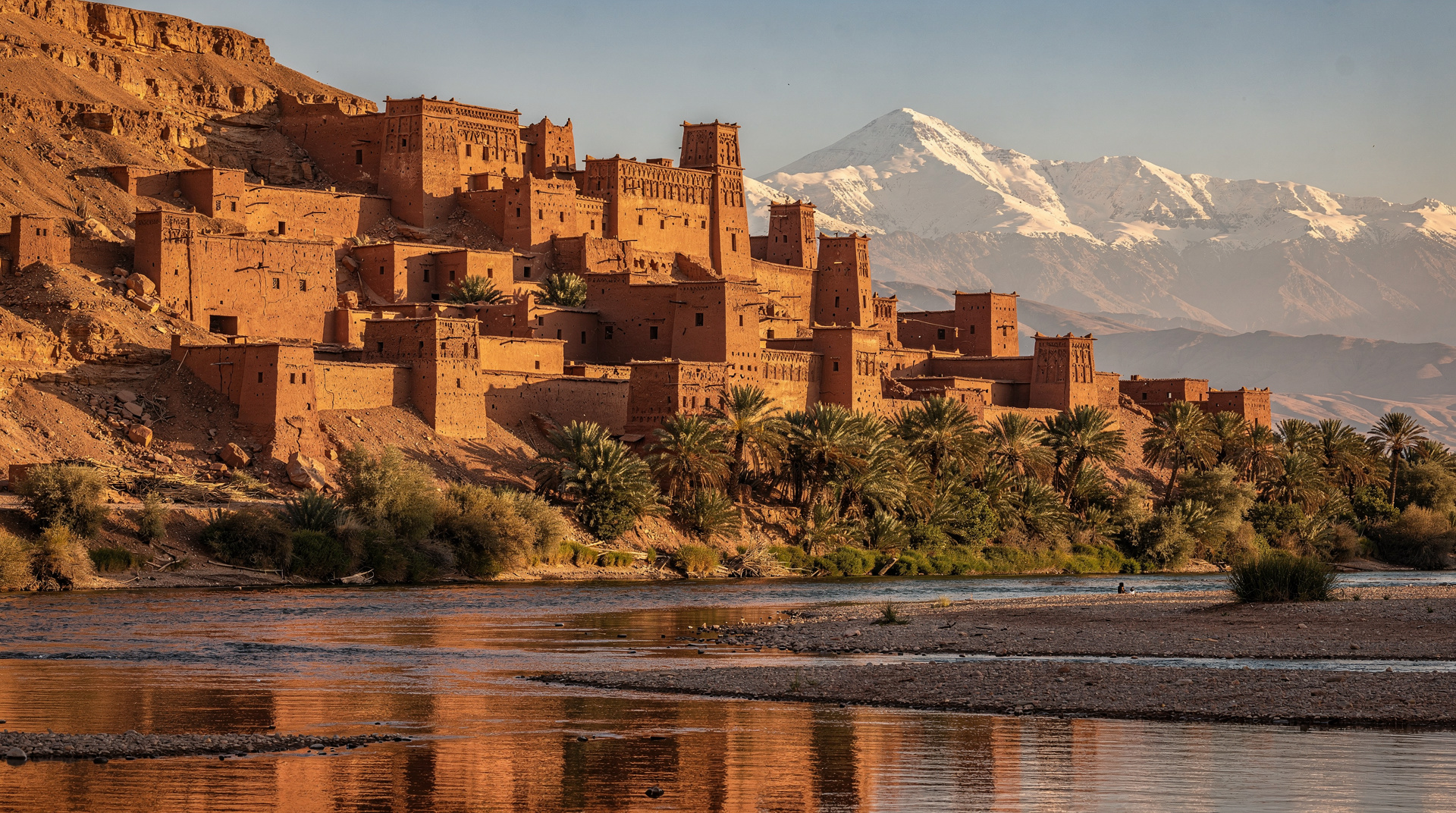
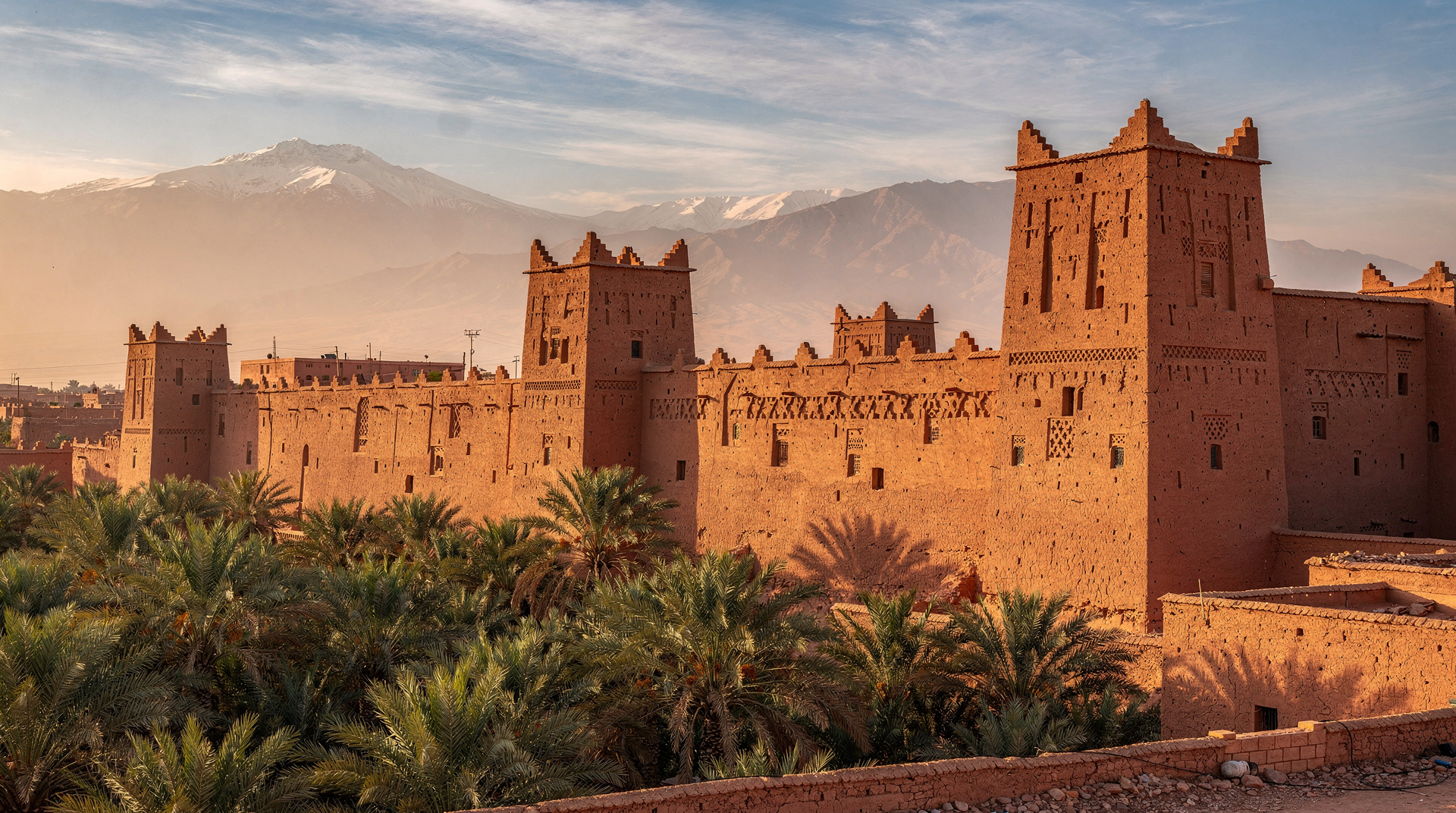
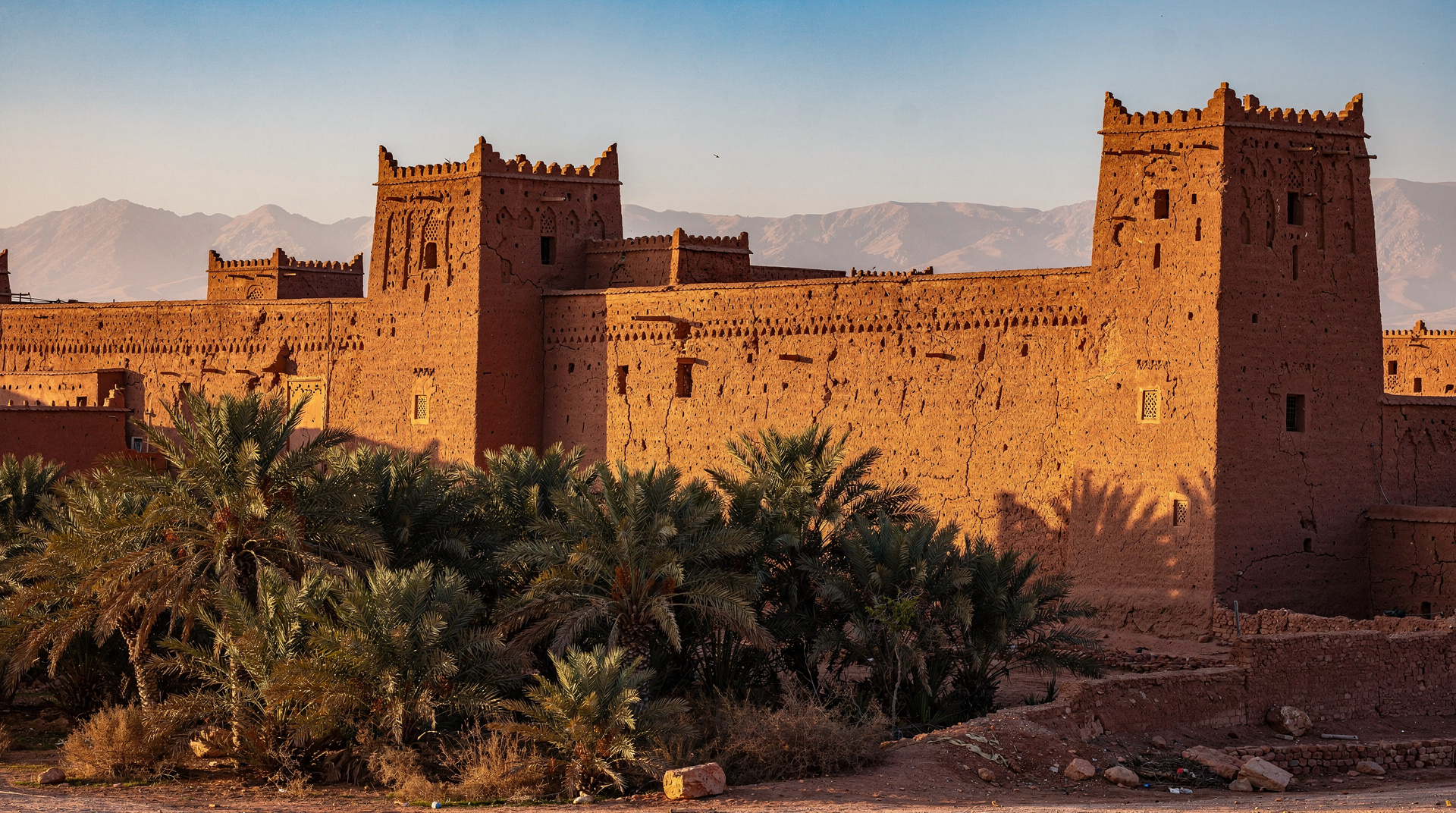
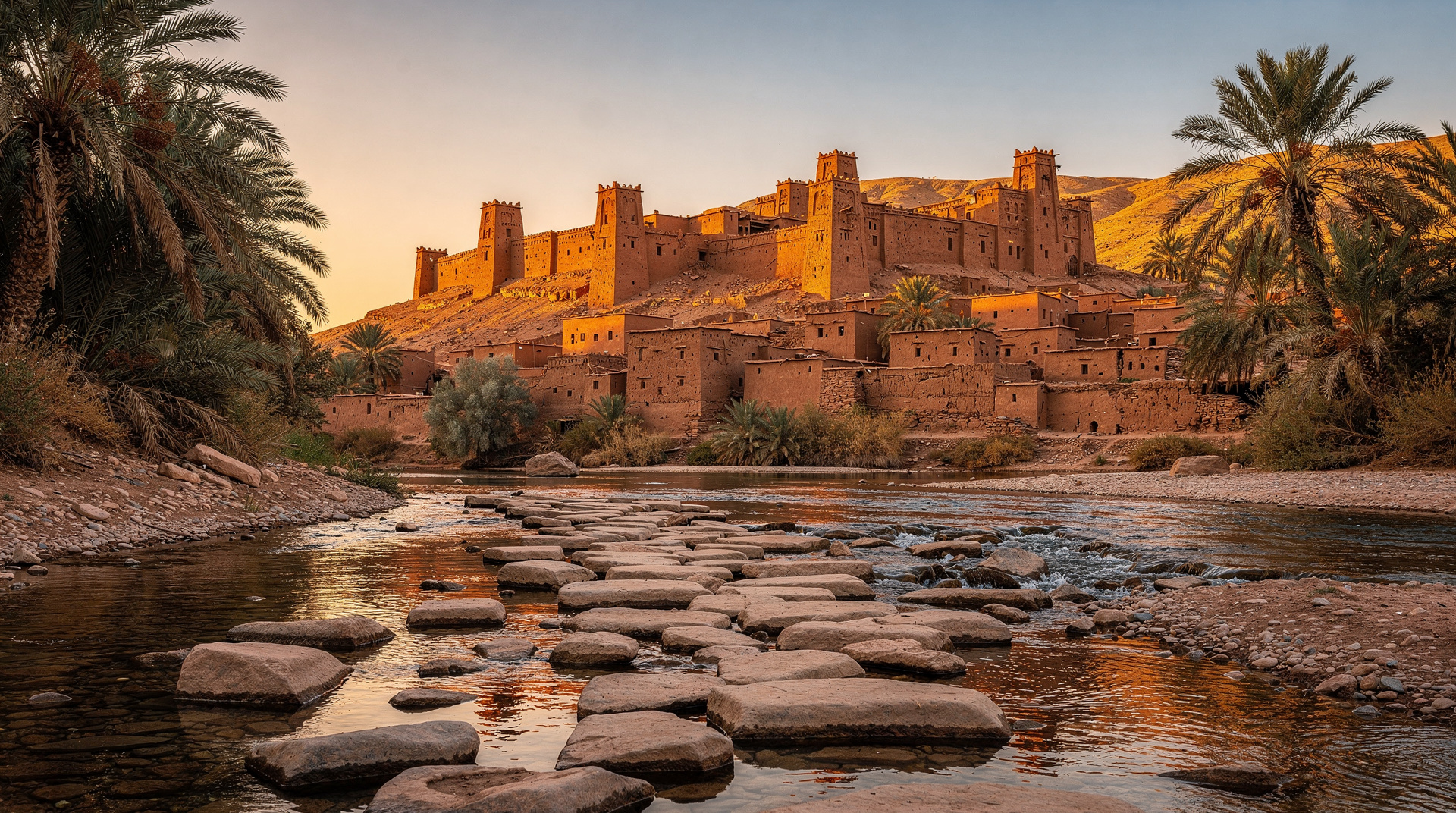
Few places in Morocco make quite the visual impact that Aït Benhaddou does on first sight. The ancient ksar — a fortified earthen village — rises from the Ounila riverbank in a cascade of mud-brick towers, crenellated walls, and ochre-brown kasbahs, the colour of the structures so perfectly matched to the surrounding desert landscape that they seem to have grown organically from the earth beneath them. Which, in a sense, they have: the buildings are constructed from pisé (rammed earth), straw, and gypsum, the same materials used here since the 11th century.
Designated a UNESCO World Heritage Site in 1987, Aït Benhaddou (also written as Aït Ben Haddou) is the finest preserved example of southern Morocco’s ksar architecture — a form of collective fortified village unique to the Draa and Ziz valleys, where Berber, Arab, and sub-Saharan caravan trade routes intersected for centuries. The site consists of six kasbahs (family compounds) grouped within defensive walls, crowned by a granary (agadir) at the top of the hill.
What surprises first-timers about Aït Benhaddou is how cinematic it is — and how deliberately so. The ksar has served as a film location since the 1960s and has appeared in over 20 major productions: Lawrence of Arabia (1962), Jesus of Nazareth (1977), Gladiator (2000), Alexander (2004), Babel (2006), Prince of Persia (2010), and multiple episodes of Game of Thrones (as Yunkai and scenes from Essos). Film tourists who have watched Daenerys stand on these battlements will find the reality more impressive than the screen version.
| At a glance | |
|---|---|
| Where | 30 km northwest of Ouarzazate, 3.5–4 hr from Marrakech via the Tizi n’Tichka pass |
| Cost | 20 MAD entry fee; local guide around 100–150 MAD for 1.5 hr |
| Time needed | Half-day for the ksar alone; a full day combined with Ouarzazate |
| Getting there | Self-drive, grand taxi from Ouarzazate, or organised day tour from Marrakech |
| Best time | October to April; arrive before 10 am or after 3 pm to avoid tour groups |
Getting There
From Marrakech: The most common approach. The N9 highway climbs the High Atlas via the Tizi n’Tichka pass (2,260 m) before descending into the Draa Valley. Journey time by car: 3.5–4 hr. This road is one of the most scenic drives in Morocco — the Atlas views from the pass are extraordinary. Many travellers combine Aït Benhaddou with a Merzouga desert trip, spending 2–3 days crossing southern Morocco.
Book a day trip from Marrakech to Ouarzazate and Aït BenhaddouFrom Ouarzazate: Aït Benhaddou sits 30 km northwest of Ouarzazate on the N9. Grand taxis depart from Ouarzazate’s main taxi stand (roughly 30–40 MAD per seat, or 200 MAD for the whole taxi). Journey time: 30–40 minutes.
By organised tour: Day tours from Marrakech are common (departing around 7 am, returning around 8 pm). They typically combine Aït Benhaddou with Ouarzazate’s Atlas Film Studios and occasionally Telouet Kasbah. Long days but efficient.
Book a half-day Aït Benhaddou and Ouarzazate tourNo direct bus: There is no direct bus service to Aït Benhaddou. Take any bus to Ouarzazate and connect by grand taxi.
Getting Around
Aït Benhaddou is a walk-everywhere destination. The ksar itself is accessed by fording the Ounila river (stepping stones are available when the river is low; a small footbridge has been constructed for when it is not) and walking up through the earthen streets to the granary at the top. The entire ksar can be explored on foot in 1.5–2 hours.
The village of Aït Benhaddou (on the west bank of the river, facing the ksar) has a handful of hotels, restaurants, and souvenir shops along the single main road. All walkable.
Entry fee: The ksar has an entry fee of 20 MAD, collected at the river crossing.
Top Things to Do
Explore the Ksar
Cross the river and enter the ksar through the main gate. Follow the earthen paths uphill past decorated kasbah doorways, carved zellij niches, and private family homes (a small number of families still live inside the ksar). Work your way to the agadir (granary) at the top for panoramic views over the Draa Valley, the palmerie, and the Atlas foothills. Late afternoon light turns the earthen walls golden — arrive by 4 pm for the best photography.
Book an Aït Benhaddou and Telouet Kasbah day trip from MarrakechFilm Location Spotting
The ksar is so heavily used as a film set that specific locations are identifiable from major productions. The eastern ramparts featured as Yunkai’s walls in Game of Thrones (Season 3, Episode 9 — “Mhysa”). The main gate area was used in Gladiator for market scenes set in Morocco. A local guide (available at the entrance for 100–150 MAD) can point out specific filming locations and share behind-the-scenes stories.
Photography
Aït Benhaddou is among the most photogenic places in Morocco, and the photography opportunities are exceptional: the approach across the river with the ksar reflected in still water, the geometric shadows on mud-brick walls in afternoon light, the rooftop panorama at sunset. The south-facing main facade catches the best light from 3 pm onward. The west side of the village (looking back across the river toward the ksar) offers the classic postcard view.
The Palmerie and River Walk
A 30-minute walk along the Ounila river, south of the ksar, leads through a beautiful palmerie (palm grove) with views back to the ksar and the surrounding hamada. Donkeys, sheep, and the occasional camel add to the atmosphere.
Telouet Kasbah
35 km north of Aït Benhaddou (via the Tizi n’Telouet mountain road), Telouet Kasbah was the seat of the Glaoui clan — the most powerful tribal lords in southern Morocco under the French protectorate. The kasbah is mostly ruined but the surviving reception rooms, with their extraordinary plasterwork and tilework, are strikingly beautiful and largely unvisited. The mountain road to Telouet is spectacular. Combine with Aït Benhaddou in a full day.
Neighbourhoods and Layout
The Aït Benhaddou site divides naturally into two areas:
The Ksar (east bank): The UNESCO-protected ancient village on the hillside. Most activity, all the historic architecture, and the best views.
The Village (west bank): The modern settlement facing the ksar across the river, where hotels, restaurants, and tourist shops operate. Staying here allows access to the ksar in the early morning and at sunset, before and after the day-trip crowds.
Where to Stay
Aït Benhaddou has limited but adequate accommodation, concentrated in the village facing the ksar. Staying overnight allows you to experience the site at its best — empty in the early morning and golden at sunset — which day-trippers from Marrakech entirely miss.
Mid-range (600–1,500 MAD / €60–150 per night)
Riad Maktoub is a well-regarded riad-style hotel in the village with a rooftop terrace offering direct views of the ksar. Clean, comfortable rooms, generous breakfast, and a helpful owner who can arrange local guides. Doubles from 700 MAD.
Dar Mouna is a traditional guesthouse run by a local family with seven rooms, a central courtyard, and rooftop dining. The view of the ksar from the rooftop at sunset justifies the stay. Half-board available.
Chez Brahim is an old favourite among budget travellers — simple rooms, a central location, and a downstairs restaurant serving excellent slow-cooked lamb tagine. The owner’s family has lived in the area for generations.
Budget (under 400 MAD / €40 per night)
Several basic auberges line the village road with clean rooms and functional facilities. Fine for an overnight stop on a longer journey.
Ouarzazate (30 km)
For more comfort and variety, Ouarzazate has a wider range of hotels including international chains (Berbère Palace, Kenzi Azghor). The 30-minute drive to Aït Benhaddou is easy.
Food and Drink
Eating options at Aït Benhaddou are limited but sufficient. The village has several restaurants catering to day-trip groups, with quality varying considerably.
Restaurant La Baraka (in the village facing the ksar) is the most reliable option — honest Moroccan cooking with a terrace view of the earthen walls. The lamb tagine with prunes and almonds is recommended. Set menus for tour groups run 120–180 MAD; à la carte is better value and more flexible.
Dar Baha serves good harira soup and msemen at local prices. Good for breakfast before the ksar opens or a simple lunch.
Auberge Etoile Filante offers a rooftop terrace with the best view of the ksar from the village side. Food is serviceable — order the simplest dishes (tagine, brochettes) for the best results.
Practical food advice: If doing Aït Benhaddou as a day trip from Marrakech, consider bringing your own picnic supplies from the city, or plan a proper lunch in Ouarzazate (30 minutes south) where the dining options are better.
Day Trips from Aït Benhaddou
Ouarzazate: The “Hollywood of Africa” sits 30 km southeast. Its Atlas Film Studios are the largest in the world and have hosted productions from The Man Who Would Be King to Gladiator to The Mummy. Tours of the studios are available (entry around 60 MAD plus guided tour fee). The Kasbah Taourirt — another fortified earthen palace — is the most impressive sight in the town itself.
Draa Valley: Continuing south from Ouarzazate, the Draa Valley road follows the river through a 200-km corridor of palmeries, kasbahs, and ruined ksour toward Zagora and the Sahara margins. Even a 60 km drive south reveals extraordinary landscapes.
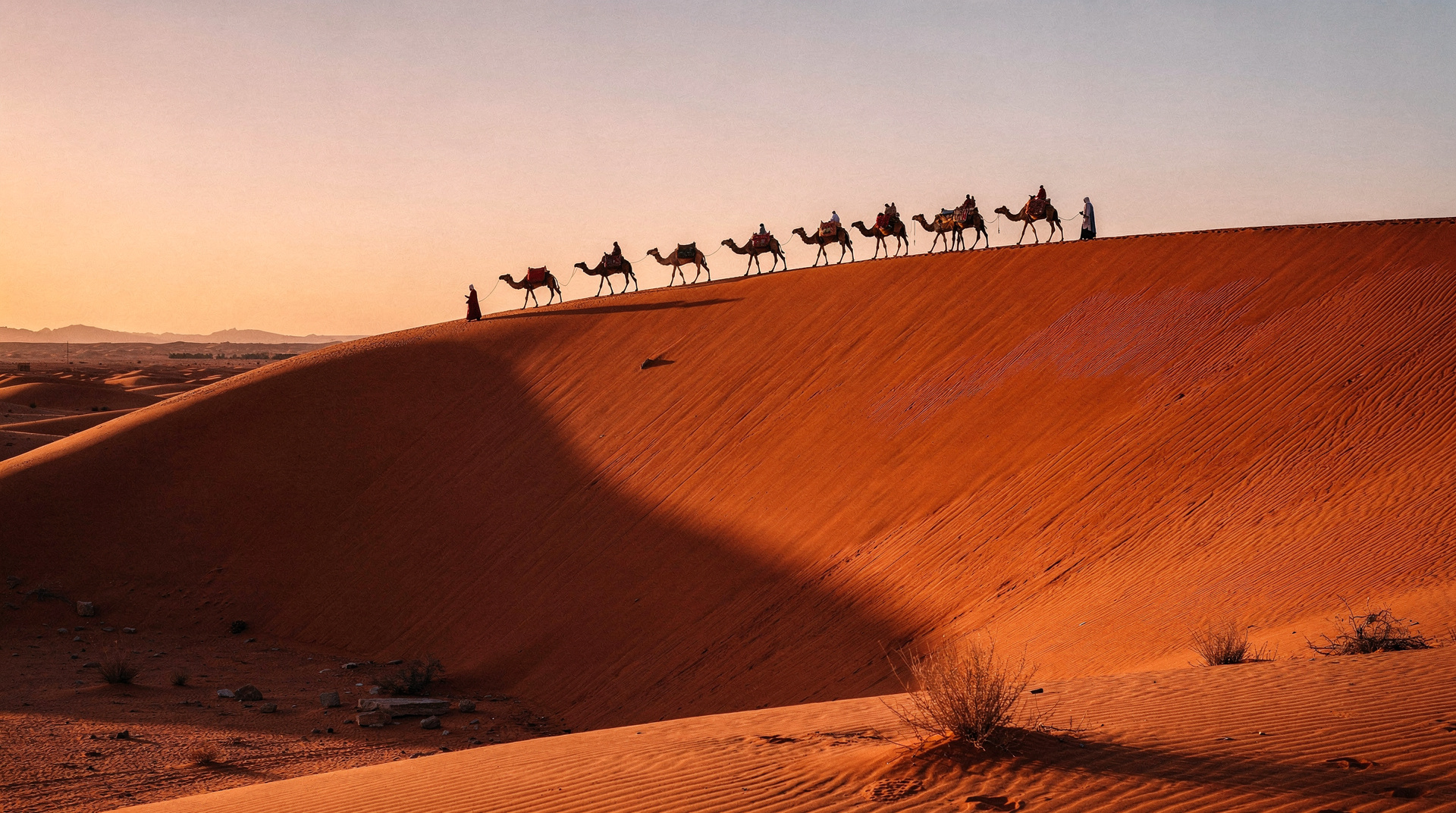
Merzouga and Erg Chebbi: 4.5 hours further east via Boumalne Dades and the Todra Gorge. Aït Benhaddou serves as the perfect first stop on the classic southern Morocco loop: Marrakech — Tizi n’Tichka — Aït Benhaddou — Ouarzazate — Dades Gorge — Todra Gorge — Merzouga.
Todra and Dades Gorges: Both gorges lie 2–2.5 hours east of Ouarzazate and are among southern Morocco’s finest landscapes. Todra (narrow slot canyon, 300 m walls) and Dades (wider switchback valley, “Monkey Fingers” rock formations) are complementary half-days.
Sample Half-Day to Full-Day Itinerary
Half-day (arriving from Marrakech on day trip): Depart Marrakech 7 am. Arrive Tizi n’Tichka 9:30 am — stop for photos of the Atlas panorama. Arrive Aït Benhaddou 11 am. Cross the river, explore the ksar (2 hr). Lunch at La Baraka. 2 pm: Depart for Ouarzazate (30 min). Visit Kasbah Taourirt and atlas studios (optional). 4 pm: Drive back to Marrakech, arriving around 8 pm.
Overnight stay: Day 1: Arrive afternoon after Tizi n’Tichka. Check into riad. Walk to ksar at 4 pm for the best afternoon light (no groups). Sunset from the agadir. Dinner at Dar Mouna. Day 2: Ksar again at sunrise (empty). Breakfast. Drive to Telouet Kasbah (1 hr). Return and continue onward to Ouarzazate, Dades, or Merzouga.
Practical Tips
Avoid midday: Tour buses from Marrakech arrive at the site between 11 am and 2 pm, filling the ksar with groups. Arrive before 10 am or after 3 pm for a far more peaceful experience.
Guides: Unlicensed guides will approach at the river crossing. Hiring a local guide at the entrance (100–150 MAD for 1.5 hr) is worth doing on your first visit — the family histories behind each kasbah, the filming anecdotes, and the architectural details are all more interesting with context.
River crossing: The stepping stones across the Ounila river are manageable when the river is low (most of the year). After rain or in spring snowmelt, the river can rise significantly. The new footbridge avoids wet feet year-round.
What to buy: The souvenir shops in the village sell standard Moroccan tourist items — carpets, ceramics, silver. A more interesting purchase is a small earthen kasbah model made by local artisans. Amethyst and quartz crystals from local mines are also sold here at reasonable prices (50–200 MAD).
Photography considerations: A wide-angle lens captures the full facade from the river bank. For details of carved doorways and plasterwork inside the ksar, a standard or short telephoto works well. The western facade catches afternoon light from 3 pm.
Frequently Asked Questions about Aït Benhaddou
How long does it take to visit Aït Benhaddou?
A self-guided visit takes 1.5–2 hours to explore the full ksar. With a guide and the river walk, allow 3 hours. Combined with lunch and the drive from Marrakech, a day trip takes the full day (7 am to 8 pm). An overnight stay is recommended to see the site at sunrise and sunset.
Is Aït Benhaddou the same as Ouarzazate?
No — they are separate places 30 km apart. Aït Benhaddou is the UNESCO ksar. Ouarzazate is a larger town with its own kasbah and the Atlas Film Studios. Most tours visit both in a single day.
Can I stay inside the ksar?
A very small number of families still live inside the ksar, but there is no tourist accommodation within the ancient walls. All hotels are in the village on the west bank of the river, directly facing the ksar.
What films were made at Aït Benhaddou?
Among the most famous: Lawrence of Arabia (1962), Gladiator (2000), Game of Thrones (Seasons 3–4), The Last Temptation of Christ (1988), The Mummy (1999), Babel (2006), and Prince of Persia (2010). The site has also appeared in numerous French television productions and music videos.
Is it worth stopping at Aït Benhaddou if I am doing the Marrakech-Merzouga desert route?
Absolutely — it is the single most important cultural and architectural stop on the entire southern Morocco route. The Tizi n’Tichka pass and Aït Benhaddou together make the journey from Marrakech to Merzouga one of the great overland trips in Africa rather than merely a transit between two endpoints.
Is Aït Benhaddou tourist-free outside peak hours?
Relatively so. Early morning (before 10 am) and late afternoon (after 3 pm) see dramatically fewer visitors. The middle of the day is extremely busy with tour groups from Marrakech, particularly July–August and around major European holidays.
How does Aït Benhaddou compare to the rest of the southern Morocco route?
It’s the single richest cultural stop between Marrakech and Merzouga — more historically dense than the Dades Valley or Todra Gorge, which are primarily scenic. Most travellers on the imperial cities and desert circuit treat it as the anchor stop of day one.
Aït Benhaddou on the Southern Morocco Route
Aït Benhaddou rarely stands alone — it’s almost always one stage of the classic Marrakech-to-Sahara loop. Here’s how it fits against the other major stops:
| Stop | Distance from Aït Benhaddou | Character |
|---|---|---|
| Ouarzazate | 30 km | Film studios, kasbah, better dining |
| Dades Valley | ~2 hr | Switchback gorge, “Monkey Fingers” rock formations |
| Todra Gorge | ~2.5 hr | Narrow slot canyon, climbing |
| Zagora | ~4.5 hr | Draa Valley palmeries, alternate Sahara gateway |
| Merzouga | 4.5 hr | Erg Chebbi dunes, the classic Sahara finish |
For a full multi-day plan that strings these together, see the imperial cities itinerary or our broader Morocco itineraries for shorter and longer variants of the same route.