Quick facts
- Best for
- Trekking, Berber villages, alpine scenery
- Days needed
- 2-7 days
- Best time
- Apr–Jun, Sep–Oct
- Hub city
- Marrakech (High Atlas), Fes (Middle Atlas)
Why visit the Atlas Mountains
The Atlas range is Morocco’s spine — a wall of peaks running 2,500km from the Atlantic coast to Tunisia, separating the Mediterranean north from the Saharan south. In Morocco, it divides into three distinct massifs: the High Atlas, the Middle Atlas, and the Anti-Atlas. Each has its own character, its own wildlife, and its own version of Berber (Amazigh) culture. Together, they are the country’s most underrated destination for anyone who moves beyond the postcard cities.
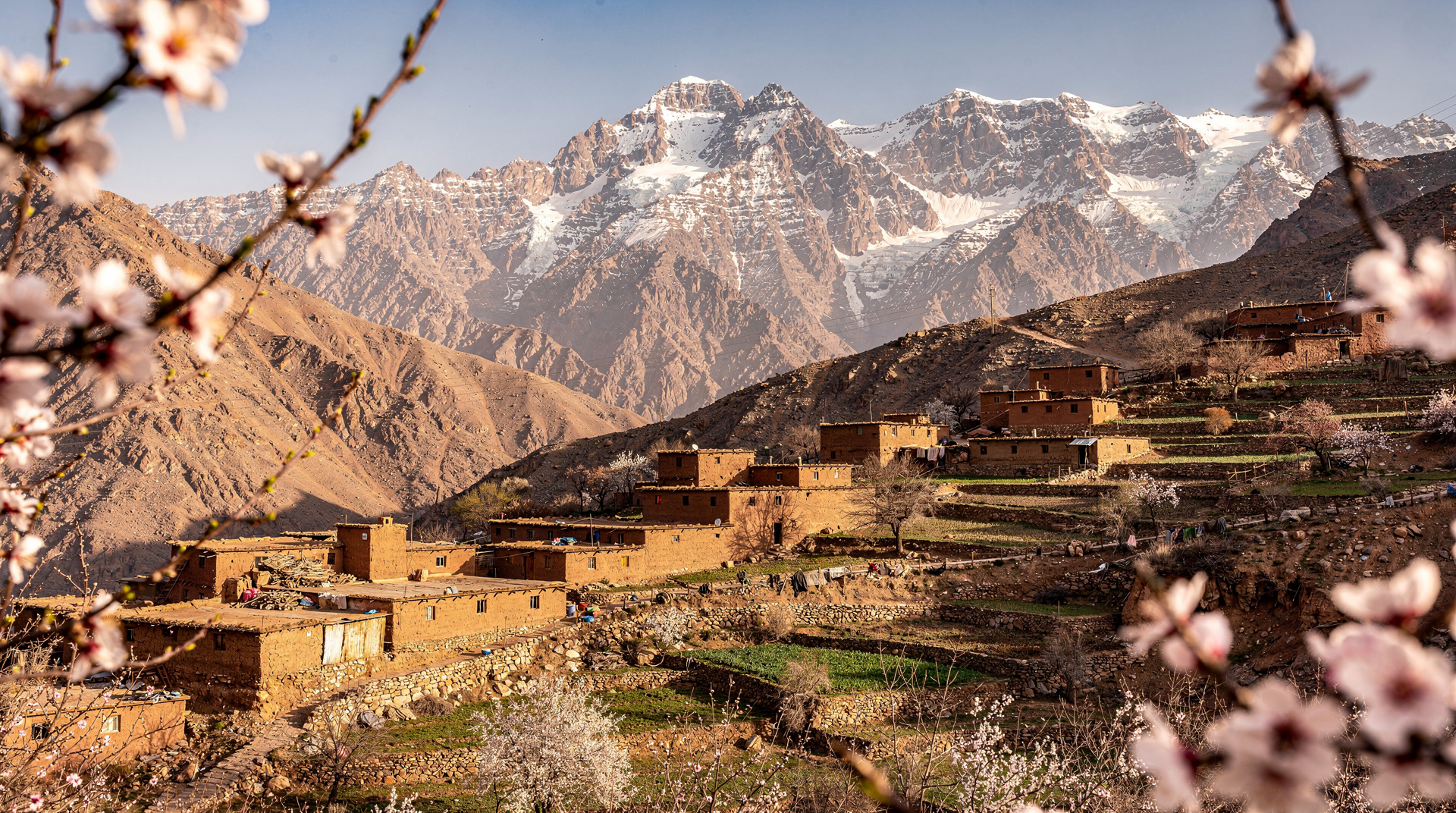
The High Atlas is defined by Jbel Toubkal (4,167m), North Africa’s highest peak, and by the valleys that radiate out from it — the Ourika, the Azzaden, the Ait Bougmez. These valleys are home to Amazigh communities who have farmed terraced fields and kept mule trails since long before the Arab conquest. The pace of life here is genuinely different from the city: mornings start with bread baked in clay ovens, afternoons unfold at the rhythm of irrigation channels and seasonal markets.
The Middle Atlas, centred around Ifrane and Azrou, is another world again — a plateau of cedar forests, volcanic lakes, and skiing (yes, skiing) at the Michlifen resort. Ifrane itself is a colonial anomaly: a Swiss-chalet-style town built by the French protectorate in the 1930s, improbably intact and genuinely charming.
The Atlas is not without challenges. Trails can be unmarked. Weather above 3,000m is unpredictable even in summer — snow has been recorded at the Toubkal refuge in July. A guide is legally required above Imlil for Toubkal summit attempts, and practically advisable for any multi-day trek. This is not a landscape to improvise in, but with preparation it rewards completely.
| At a glance | |
|---|---|
| Where | High Atlas near Marrakech, Middle Atlas near Fes |
| Cost | Guide around 600–800 MAD/day; village guesthouses from around 250–400 MAD/night |
| Time needed | 1 day for a taste, 2 days for the Toubkal summit, 5–7 days for a full traverse |
| Getting there | Grand taxi or organised transfer from Marrakech (Imlil, Ourika) or Fes (Ifrane, Azrou) |
| Best time | April–June and September–October; winter needs mountaineering gear above 3,000m |
For a first orientation between the two most popular valleys, the Imlil vs Ourika trek comparison is a useful starting point before committing to an itinerary.
Getting there
High Atlas (Imlil, Ourika, Toubkal area): The base is Marrakech. Imlil is 64km south via Asni — around 1.5 hours by road. Grand taxis from Marrakech’s Bab er-Rob square run to Asni (25 MAD/person) and from Asni to Imlil (15 MAD/person in a shared taxi). A private grand taxi from Marrakech to Imlil costs around 350–450 MAD. Many trekking outfitters in Imlil can arrange transfers if you’re booking a guided trek.
Ourika Valley is 45 minutes south of Marrakech via the Ourika road — no train, bus from Bab er-Rob to Tnine Ourika (10 MAD), then onward shared taxis to Setti Fatma.
Middle Atlas (Ifrane, Azrou, Midelt): Ifrane is 65km south of Fes — around 1 hour by car. CTM buses run Fes–Ifrane several times daily (30–40 MAD). The train goes to Fes; from there, you need road transport south.
Main destinations within the region
Imlil and the Toubkal area
Imlil (1,740m) is the most visited High Atlas village for good reason — it sits at the confluence of several valleys and serves as the primary base for Toubkal. The village itself is pleasant but geared towards trekkers: mule rental, guide services, guesthouses, and gear hire are all available. Kasbah du Toubkal, converted from a former caïd’s residence, is the region’s landmark accommodation — atmospheric, well-run, and a useful base whether you’re summiting or not.
The two-day Toubkal summit route is Morocco’s most popular multi-day trek. Day one: Imlil to the Neltner refuge (3,207m), around 5–6 hours. Day two: summit attempt (2–3 hours, depending on snow conditions) and return to Imlil. The route is physically demanding but technically straightforward outside the winter months (November to April, when crampons and ice axes are needed). In spring and autumn, most fit hikers in good condition can make the summit without technical climbing experience — but altitude affects people differently, and acclimatisation matters.
The Berber village and Atlas Mountains day trip from Marrakech is the most accessible introduction: a full day that visits Imlil and surrounding villages without requiring an overnight.
For a more immersive experience, the three valleys and waterfalls Atlas day trip takes in a broader sweep of the foothills including seasonal waterfalls and village market stops.
Licensed guides are required for the Toubkal ascent and advisable for any multi-day trekking. Hiring through Imlil-based cooperatives (Bureau des Guides) is reliable and supports the local economy directly. Rates run approximately 600–800 MAD/day for a guide, separate from mule hire (around 200–250 MAD/day per mule if needed for gear).
Ourika Valley
The Ourika Valley follows the river south from the plain into the Atlas foothills, reaching Setti Fatma at 1,500m. This is an accessible introduction to the High Atlas without the commitment of a full trek. Berber villages line the valley floor, women in bright djellabas tend terraced fields of mint and saffron, and the river fills with meltwater in spring. The weekly Sunday market at Tnine Ourika (25km from Marrakech) is one of the most authentic rural markets in central Morocco — go early, before day-trip groups arrive.
From Setti Fatma, a 30–45 minute steep hike up the left side of the gorge reaches the first of seven waterfalls, which runs year-round. The upper falls (3–5 hours round trip from Setti Fatma) are rarely visited and genuinely wild. Be aware that “guides” who attach themselves uninvited in Setti Fatma and demand payment at the top are a known irritation — agree on any arrangement before you start.
Accommodation in the valley ranges from simple guesthouses in Setti Fatma (250–400 MAD/night) to the beautifully designed Tigmi lodge at Tagadert, which bridges the gap between valley experience and Marrakech comfort at around 2,500–4,000 MAD/night.
Ait Bougmez Valley (the Happy Valley)
Less visited but arguably more beautiful than Ourika, the Ait Bougmez — sometimes called the Happy Valley — lies in the central High Atlas, around 4 hours from Marrakech via Azilal. The valley floor at 1,800m is intensively cultivated with wheat and barley; the villages are built from pale pisé (rammed earth) that blends with the surrounding cliffs. Tabant is the main village and has basic guesthouses and a weekly market. Multi-day treks across the passes to the Dades valley on the south side of the Atlas are possible from here, connecting to eastern Morocco.
Ifrane and the Middle Atlas
Ifrane (1,650m) feels like a small corner of the Alps dropped into Morocco. Its steep-pitched roofs, manicured parks, and absence of medina chaos attract Moroccan families year-round — especially in summer when Fes residents come for the cooler air, and in winter for the skiing at Michlifen (15km away). A stone lion sculpture at the town entrance marks the grave of the last Atlas lion, reportedly shot here in 1922.
The cedar forests around Azrou (18km from Ifrane) are home to one of Morocco’s most accessible wildlife spectacles: troops of Barbary macaques that have become habituated to tourists. Feeding them is discouraged (and increasingly illegal), but watching them move through the cedar canopy is exceptional. The forests also hide wild boar, golden jackals, and large raptors.
The volcanic lakes of the Middle Atlas — Aguelmame Sidi Ali and Aguelmame Azigza — are accessible from the Ifrane–Khenifra road. Both are surrounded by cedar and oak forest, fish-rich (rainbow trout in particular), and almost entirely off the tourist circuit.
When to visit
High Atlas trekking: April to June and September to October are optimal. July and August are hot at altitude but technically feasible; the Toubkal summit can be crowded in August. November to March: Toubkal requires winter mountaineering equipment, but valley villages (Ourika, Imlil approaches) are accessible and strikingly beautiful in snow.
Middle Atlas: Year-round. Skiing at Michlifen runs roughly December to March. Ifrane and the cedar forests are accessible all year, though the mountain roads can close briefly after heavy snow.
How many days
For a day trip from Marrakech to Imlil or Ourika: 1 day, worthwhile but scratching the surface. For a two-day Toubkal trek: arrive Imlil by midday on day one, summit and return to Imlil by end of day two. For a proper multi-day traverse: 5–7 days, with nights in village guesthouses. Middle Atlas exploration from Fes: 2–3 days covers Ifrane, Azrou, and the lakes.
Where to stay
Imlil: Kasbah du Toubkal (iconic, 2,500–4,000 MAD), Riad Atlas Prestige (mid-range, 800–1,500 MAD), multiple basic guesthouses in the village (300–600 MAD).
Ourika/Setti Fatma: Village guesthouses, 250–500 MAD. Tigmi at Tagadert for design-conscious visitors (2,500–4,000 MAD).
Ifrane: Hotel Perce-Neige, Les Merinides — both comfortable mid-range, 700–1,200 MAD. Several Airbnb chalets available.
Trekking practicalities
Guides and regulations: A licensed guide is legally required for the Toubkal summit route and strongly advisable for any multi-day traverse. The Bureau des Guides in Imlil is the official licensing authority; rates are set and displayed — 600–800 MAD/day for a guide, 200–250 MAD/day per mule. Unlicensed “guides” offer lower prices; the gap reflects unregistered status, not expertise. Using licensed guides supports the local system and gives you recourse if something goes wrong.
Accommodation on trek: The Toubkal circuit has three main hut/refuge options. The Neltner Refuge (CAF refuge, 3,207m) is the standard first-night stop — bring a sleeping bag (dormitories, 180 MAD) or book private rooms (380 MAD) in advance in spring peak season. The Azib Tamsoult and Ouaneskra gites in the Azzaden Valley are simpler but authentic, run by local Amazigh families, and excellent value at 200–300 MAD/night including dinner.
Water and altitude: Altitude affects people at different rates. Dehydration accelerates altitude sickness. Drink 3–4 litres of water per day on trek days above 2,500m. The standard advice is to ascend no more than 300–500m per day once above 3,000m. The Toubkal circuit is compact enough that this is difficult to implement strictly — most people go from 1,700m (Imlil) to 3,207m (refuge) in one day. Resting fully at the refuge before a summit attempt reduces risk considerably.
Seasons in detail: April to June offers the best balance — snow on the upper routes is mostly consolidated, days are long, and flora in the lower valleys is spectacular. July and August see the most climbers on Toubkal; the upper mountain can feel crowded at the summit. September and October bring excellent conditions and dramatically fewer people. November to March, the upper Atlas requires winter equipment and experience; snow can fall rapidly and the refuge access track ices overnight.
Wildlife: The High Atlas is home to Barbary ground squirrels (visible around Toubkal refuge), golden eagles and lammergeier vultures (watch the thermals above the ridgelines), Atlas mountain vipers (not aggressive, rarely seen), and wild boar at lower elevations. Barbary macaques are found in the cedar forests of the Middle Atlas, particularly around Azrou and Ain Leuh.
Sample itinerary — 4 days (High Atlas focus)
Day 1: Drive Marrakech to Imlil (1.5 hours), afternoon acclimatisation walk to Aroumd village above Imlil, overnight at Kasbah du Toubkal.
Day 2: Trek Imlil to Neltner refuge (3,207m), 5–6 hours, overnight at the refuge.
Day 3: Summit Toubkal (2.5–3 hours up, 2 hours down), descend to Imlil via Azzaden valley variation, overnight at guesthouse.
Day 4: Morning in Imlil, drive back via Ourika Valley for lunch at a riverside restaurant, return to Marrakech.
Choosing your Atlas experience
| Option | Effort | Best for | Days |
|---|---|---|---|
| Ourika Valley day trip | Low | First-timers, families, limited time | 1 day |
| Imlil day trip (no summit) | Low–moderate | Village atmosphere without the climb | 1 day |
| Toubkal 2-day summit | High | Fit hikers wanting North Africa’s highest point | 2 days |
| Multi-day High Atlas traverse | High | Serious trekkers, remote villages | 5–7 days |
| Middle Atlas (Ifrane/Azrou) | Low | Cedar forest, macaques, no altitude concerns | 1–3 days |
The Toubkal summit guide and Toubkal trek guide cover the two-day route in full operational detail — gear lists, refuge booking, and realistic pacing. For longer routes, the Atlas multi-day trek guide and the Mgoun trek guide cover the next tier up in commitment. Anyone planning a Berber-village-focused trip rather than a summit push should read the Berber villages tour guide and the Berber culture guide before booking a guide.
Frequently asked questions about Atlas Mountains
Do I need to be an experienced climber to summit Toubkal?
No technical climbing experience is required outside winter (November–April), when crampons and an ice axe become necessary. Outside those months it is a strenuous but non-technical trek — good baseline fitness, comfort with steep scree, and acclimatisation matter more than climbing skill. A licensed guide is legally required regardless of experience.
Is the Atlas Mountains region safe to visit independently?
Yes, for day trips and valley visits such as Ourika. For the Toubkal summit route and any multi-day trek, hiring a licensed guide through the Imlil Bureau des Guides is both a legal requirement and a genuine safety measure — weather changes fast above 3,000m and trails are not consistently marked.
Related
- Marrakech Region — The Atlas gateway city, with Ourika and Agafay day trips
- Eastern Morocco — South side of the High Atlas, Dades Gorge, Todra Gorge
- Souss and Anti-Atlas — The Anti-Atlas continues southwest, drier and wilder