Asilah day trip from Tangier: murals, medina and the Atlantic
Is Asilah worth a day trip from Tangier?
Yes. Asilah is 45 minutes by train or car from Tangier — compact enough to cover in half a day yet genuinely beautiful. The whitewashed medina, Atlantic ramparts, and open-air murals make it one of Morocco's most visually distinctive small towns.
A coastal art town hiding in plain sight
Most visitors who land in Tangier — via the Tanger-Ville ferry terminal or the Tanger-Ibn Battouta airport — move on to Chefchaouen, Fes, or Casablanca without spending a night. Fewer still think to head south instead. That is a mistake, because 45 minutes down the Atlantic coast sits one of Morocco’s most underrated towns.
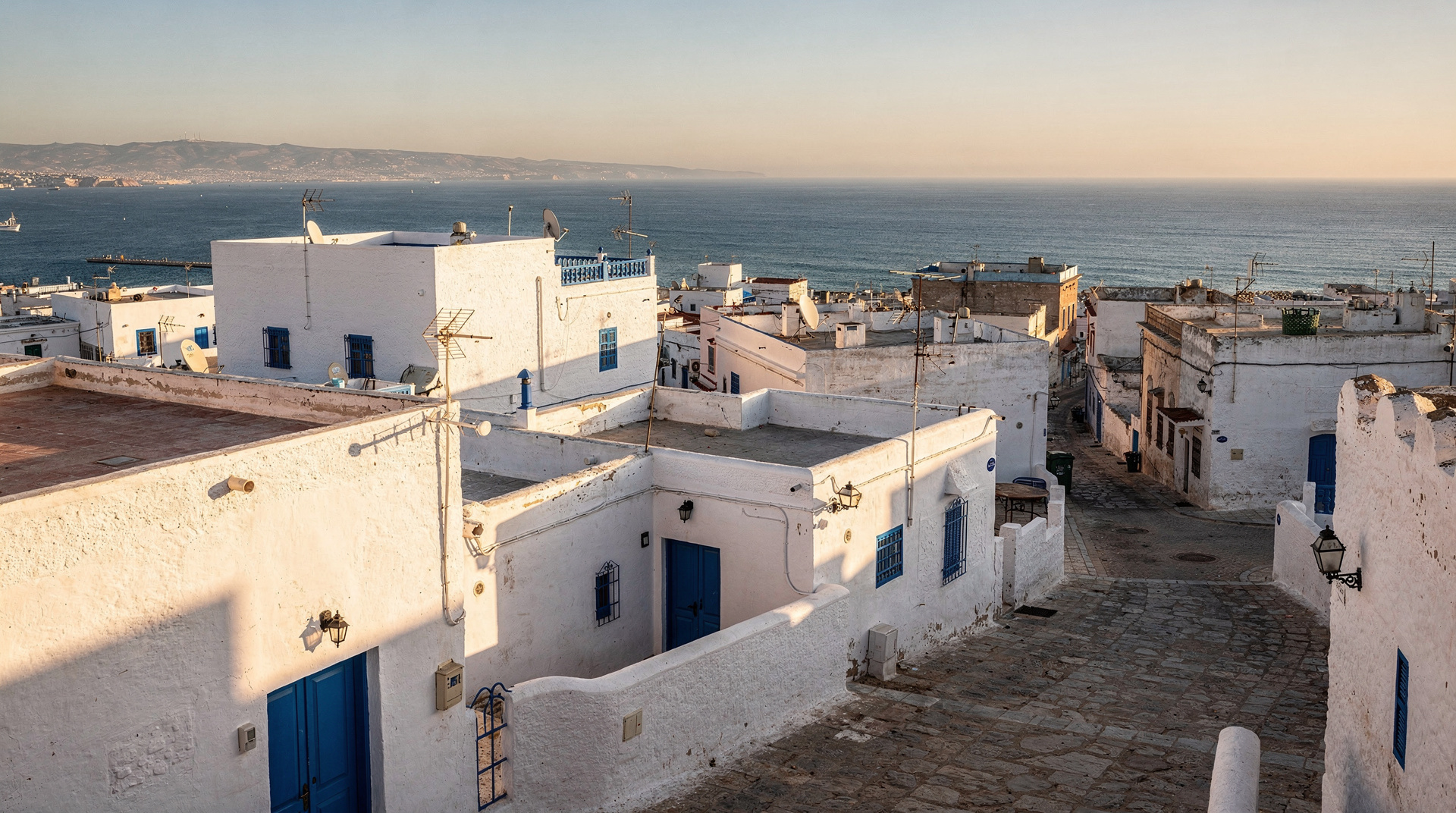
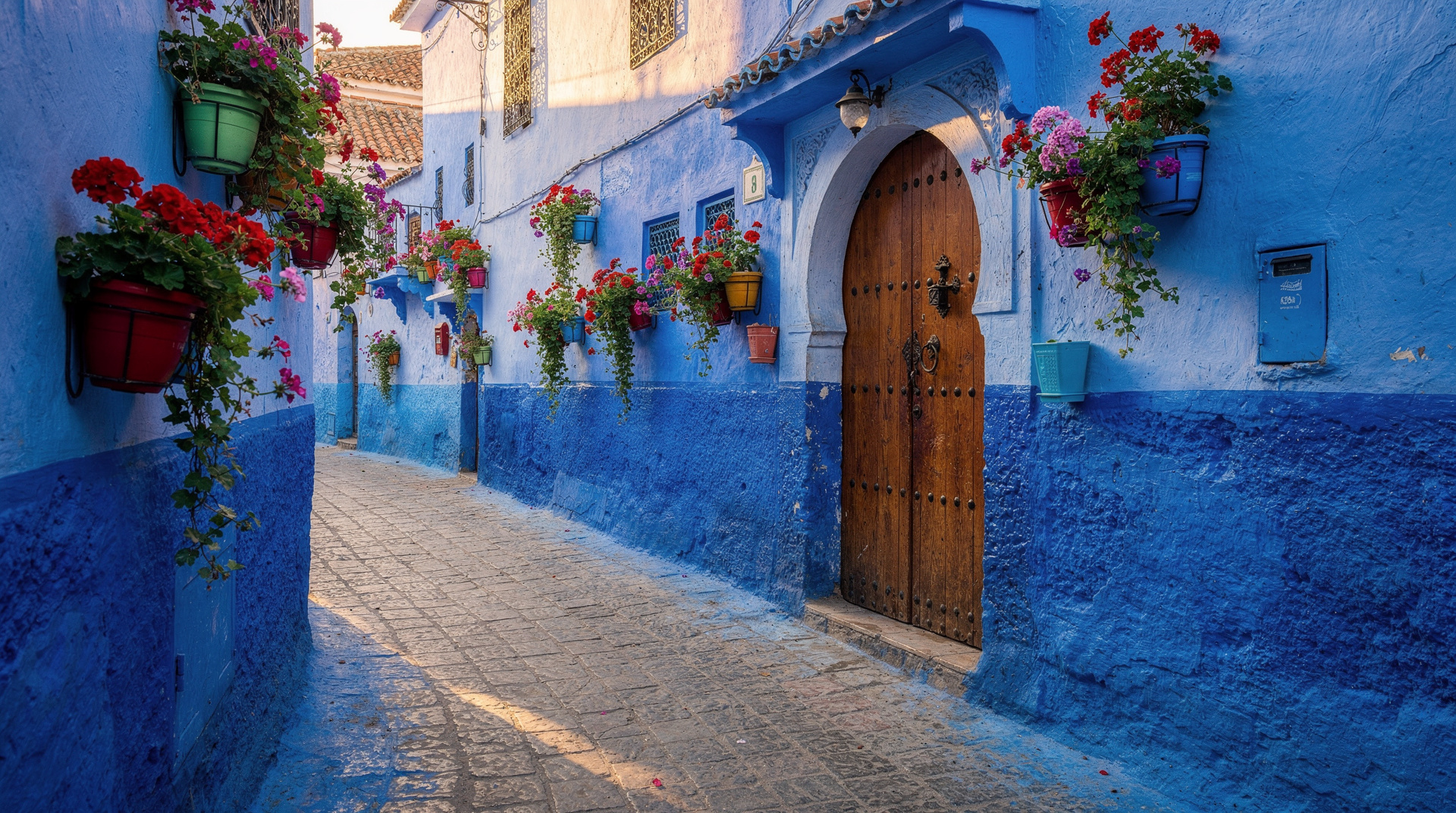
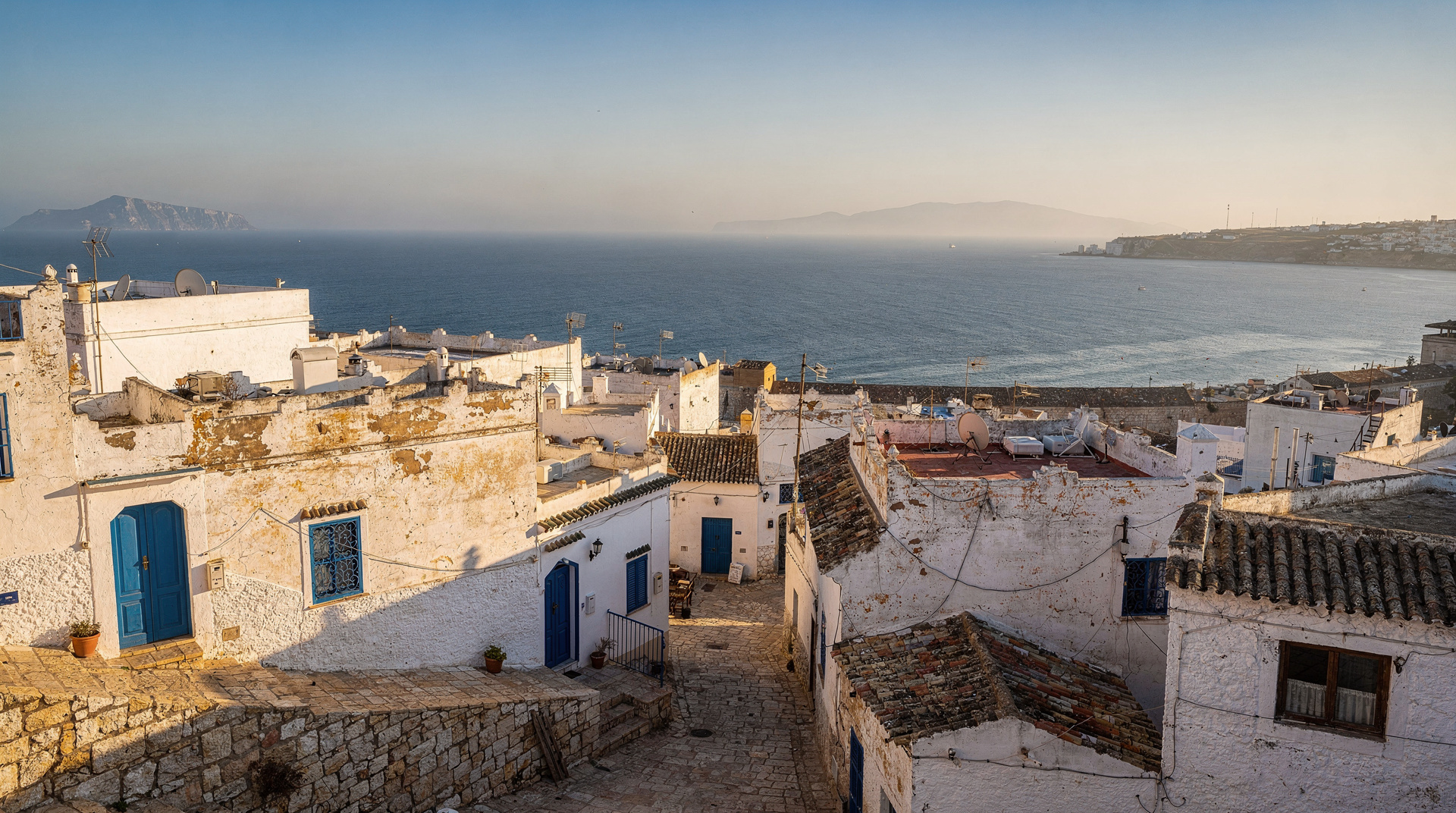
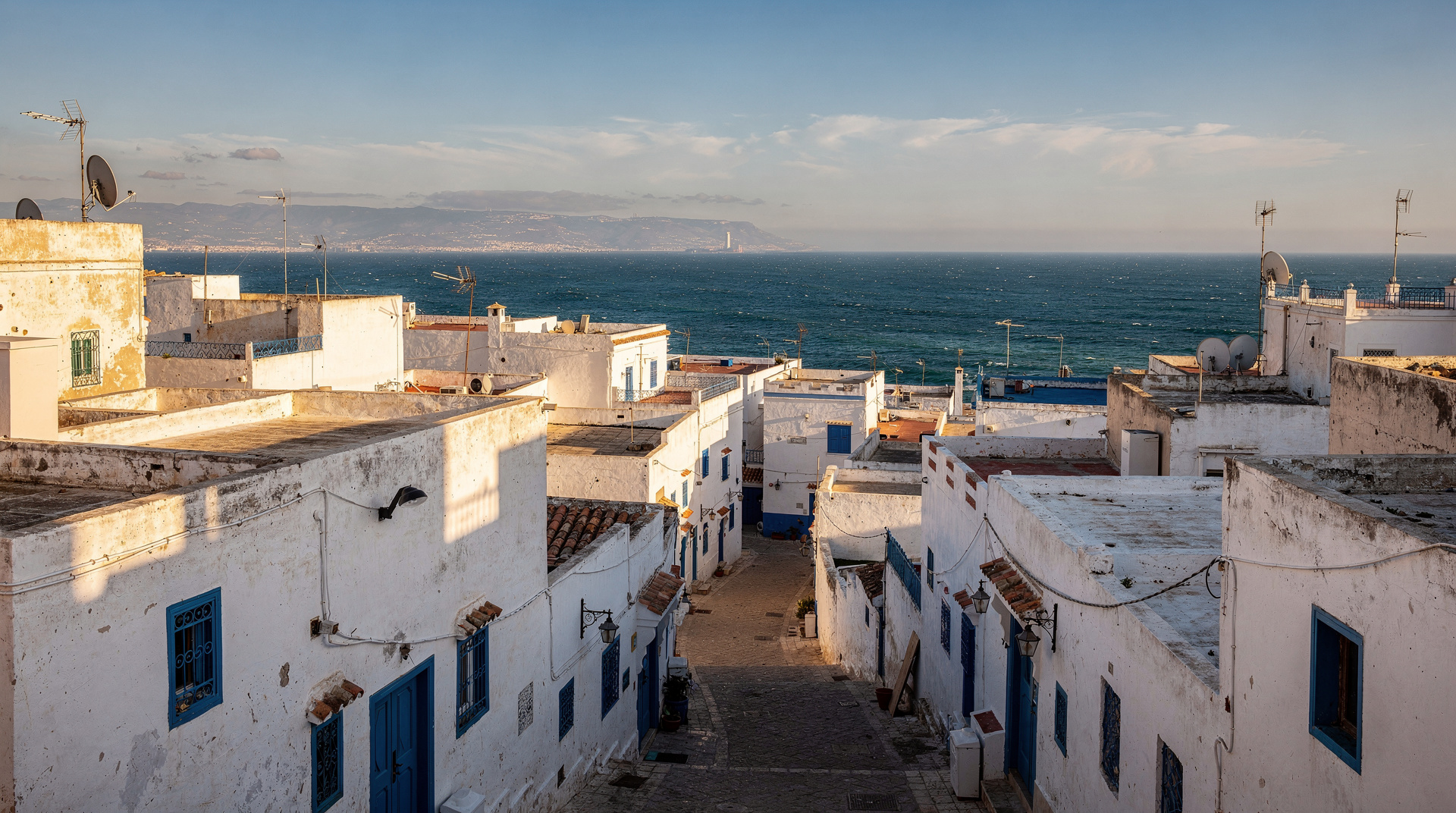
Asilah (also spelled Assilah or Asila) is a small port town of about 30,000 people with a walled Portuguese medina, a habit of painting its walls in geometric blue-and-white patterns, and an annual arts festival that has left its mark in commissioned murals across the entire old town. It has none of the hectic energy of Tangier and none of the overtouristed self-consciousness of Chefchaouen. What it has is Atlantic light, a genuinely walkable old town, and some of the best seafood on the northern coast.
As a day trip, Asilah is almost perfectly sized: enough to fill four to five hours at a pleasant pace without the sense that you need more time. As a stop before or after Tangier, it works just as well. This guide covers how to get there, where to spend your time, and what to eat.
| Where | 40km / around 45 minutes south of Tangier on the Atlantic coast |
| Cost | Around 25–40 MAD each way by train or shared taxi; lunch 80–150 MAD per person |
| Time needed | Half a day (3–5 hours), or overnight for a slower pace |
| Getting there | ONCF train, private car, shared grand taxi, or an organised half-day tour |
| Best time | April–June and September–October; August for the arts festival |
Why Asilah matters as a day trip
Tangier is a fascinating city with its own deep travel logic — the Petit Socco, the Kasbah, the American Legation Museum — but after a morning in the medina many visitors find themselves at loose ends in the afternoon. Asilah fills that gap perfectly.
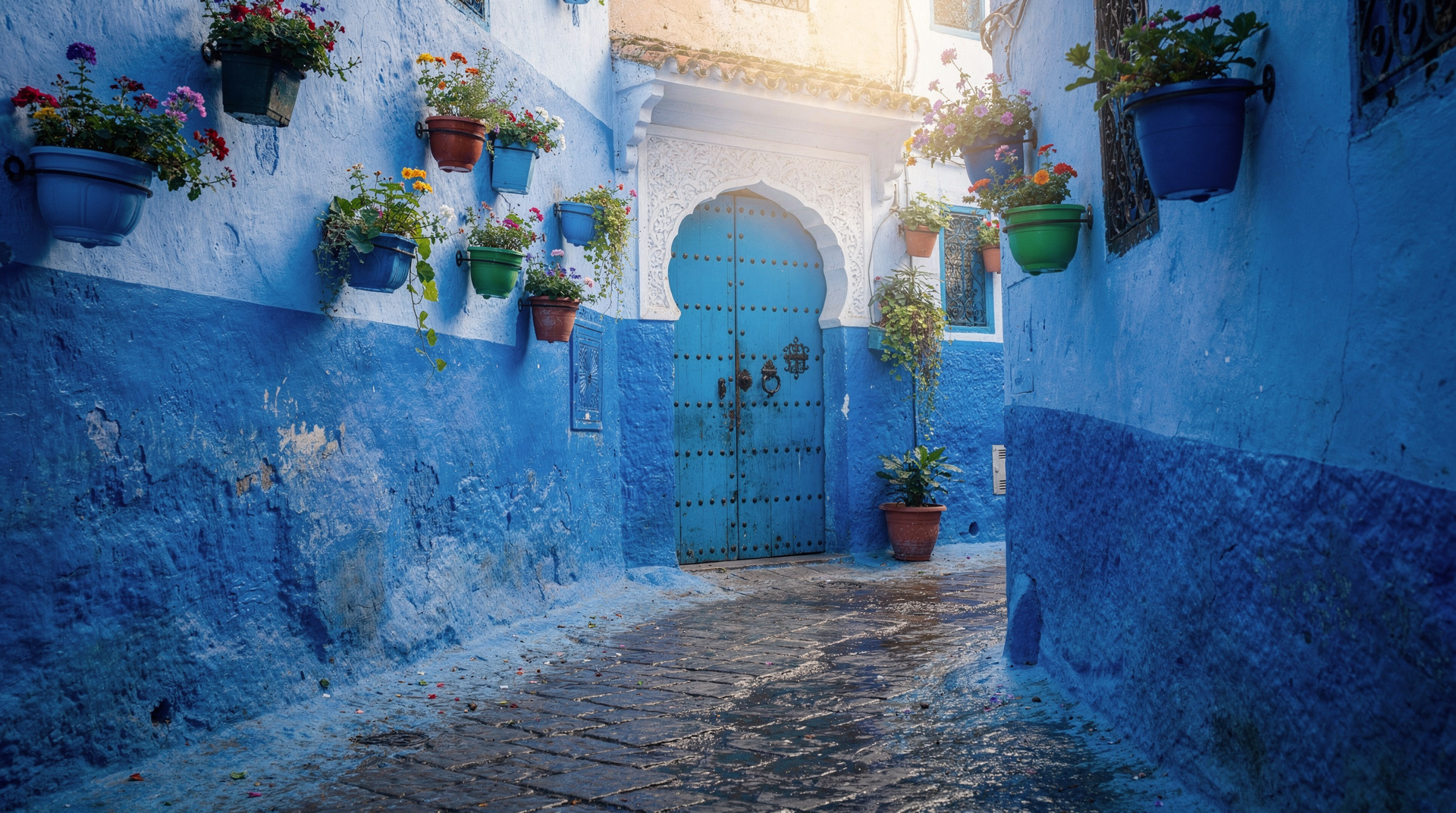
Unlike most Moroccan medinas, Asilah’s old city is mostly residential. There is no souk industry, no carpet shop gauntlet, no one following you with a “free tour.” The walls are decorated with large-scale murals that change year to year as local and international artists add to them during the August Moussem Cultural Festival. Walking through the medina here feels like walking through a living gallery, one that has been accumulating layers since 1978.
The Portuguese-built ramparts date from the 15th century and run along the clifftops above the Atlantic. Below them, the ocean rolls in against the rocks and a long Atlantic beach stretches north toward the Tangier peninsula. In summer it fills with Moroccan families. In spring and autumn it is empty and excellent.
If you are visiting Tangier and wondering whether to allocate a morning or afternoon to Asilah — do it. It requires almost no planning and repays the small effort significantly.
If Asilah is only one option among several, our overview of day trips from Tangier lays out the alternatives side by side, and the Asilah destination page gives a wider picture of the town itself.
How to get there from Tangier
By train: The easiest option. ONCF runs regular trains between Tanger-Ville station and Asilah station — journey time is 45 minutes, tickets cost around 25–35 MAD, and trains run several times per day in each direction. The Asilah train station is a 10-minute walk from the medina. Check the current ONCF timetable before you go; the morning departures typically leave around 7:30am, 9:00am, and 10:30am, with return trains from Asilah starting around 2:00pm.
By car: Take the N1 coastal road south from Tangier — 40km, around 45 minutes without traffic. There is a paid car park just outside the medina walls near Bab Kasaba. Driving inside the medina is not possible; the streets are pedestrian-only.
By grand taxi: Shared grand taxis run from the Tangier grand taxi station (near Place Jamia el-Arabia) to Asilah for around 30–40 MAD per seat. A private grand taxi will cost 150–250 MAD for the full car. Negotiate before you get in.
By organised tour: If you prefer a guided experience, the Tangier–Asilah half-day trip handles transport and includes a guide for the medina walk — useful if you want context for the murals and Portuguese history.
Suggested day itinerary
Asilah is walkable in a morning. The following schedule works whether you arrive by 9:00am or 10:00am.
Arriving in Asilah Walk from the station (or car park) toward Bab el-Kasbah, the main gate into the medina. This is the most photogenic entry point — the gate frames a view of white walls and blue trim that is quintessentially Asilah.
The Medina: 9:00am–12:00pm The medina is small — roughly 600 by 300 metres — but dense with detail. Give yourself at least two hours to wander properly.
Start on Rue Bin Ouidane and work your way south toward the sea ramparts. The murals are concentrated on the outer walls of the medina near the ramparts and in the narrow alleys around Place de la Victoire. They range from abstract geometric patterns in bold blues and whites to figurative work by international artists — some quite sophisticated. The level of open-air art here is genuinely unusual in Morocco.
The Centre Hassan II des Rencontres Internationales, a former palace in the heart of the medina, hosts temporary art exhibitions and is free to enter when open. Worth a look.
The Ramparts: 11:00am–12:00pm Walk the ramparts along the sea-facing wall — it takes about 20 minutes at a stroll. The views north toward Cap Spartel and south along the beach are excellent on clear days. The towers at the corners of the fortification are intact and climbable (though without railings in places — watch your step).
Lunch: 12:00pm–1:30pm See the eating section below.
The Beach: 1:30pm–3:00pm After lunch, the wide Atlantic beach north of the medina is worth a short walk even if you don’t swim. The beach is broad and clean, with a few beach cafés open in season. In spring and autumn it is largely deserted. The light in the afternoon hour before 3:00pm is some of the best for photography.
Return to Tangier: 3:00pm or later Most day-trippers find that half a day is enough — the town is small. If you have caught an early train, you can be back in Tangier for a late lunch or early evening easily.
Top highlights in Asilah
The murals
Asilah’s biggest differentiator. The international arts festival that began in 1978 has produced over 40 years of commissioned outdoor work, and the medina walls are layered with it. Some works are repainted each year; others have survived for decades. The quality is genuinely high — this is not naive folk art but serious international contemporary work. Bring a charged camera and plan to photograph without rushing.
The sea ramparts
The Portuguese fortifications date from 1471 and are in unusually good condition for Morocco. Walking the sea wall takes 15–20 minutes and provides excellent coastal views. The bastion towers at the corners offer elevated vantage points over the Atlantic.
The Centre Hassan II
This converted palace hosts art exhibitions, conferences, and cultural events year-round. During the August festival it becomes the main venue. In quieter months there are usually changing exhibitions of Moroccan and international work.
The beach
Long, clean, and uncrowded outside July and August. The swimming is safe on calm days — the Atlantic here can have strong surf when the wind is up. The walk along the beach from the medina north is about 2km to the far end.
The fish market
Just outside the medina walls near the port, the early morning fish market is worth seeing if you arrive before 9:00am. Local fishermen bring in the catch from the Atlantic; the variety is exceptional. If you are buying to cook, prices here are well below Tangier.
Where to eat in Asilah
Asilah’s food is dominated by fresh Atlantic seafood — specifically grilled fish, calamari, and shrimp that arrived in Moroccan harbours that morning. This is the correct thing to eat here.
Restaurant Al Khaima (Rue Zallaka, near the sea ramparts): The most consistent option in town. Long terrace with views of the ramparts, excellent grilled sea bass and dorade, good Moroccan salads. Lunch for two: 200–350 MAD. Expect a wait on weekends.
Restaurant Sevilla (Place Zalaka): A terrace restaurant popular with day-trippers and long-stay visitors alike. Good fish tagine and reasonable prices (main courses 80–150 MAD). The location near the central square makes it convenient if you want to eat between medina walks.
Café-Restaurant La Perle (near Bab el-Kasbah): Smaller, more local in feel. Good for a morning coffee and msemen or a simple fish lunch. Less formal than Al Khaima.
The café inside the medina walls (various): Small cafés scattered through the medina serve mint tea, coffee, and simple snacks. Good for a break mid-morning without committing to a full sit-down meal.
Budget 80–150 MAD per person for a proper fish lunch with salad and bread. Add 40–60 MAD if you want a soft drink or fresh juice.
What to skip
The “guided tours” outside the train station: Unofficial guides who approach at the station and offer medina tours are rarely worth the investment in Asilah — the town is genuinely easy to navigate independently and the medina has no labyrinthine complexity. If you want a guide, book through the organised day-trip option from Tangier mentioned above.
The craft shops selling national-brand souvenirs: Some shops in Asilah sell the same mass-produced items found in every Moroccan medina — Berber rugs from Fes, thuya wood boxes from Essaouira, pseudo-Touareg jewellery. If you want Asilah-specific crafts, look for locally produced ceramics and the distinctive embroidered textiles using the blue-and-white colour palette of the town.
Lunch at the tourist-priced restaurants on the main square during peak season: In July and August the square restaurants charge premium prices for average food. Side-street options are consistently better.
Is Asilah worth overnighting instead?
Honestly, a night in Asilah is a very good idea if your schedule allows it. The town transforms in the evening when day-trippers leave — the medina goes quiet, local families fill the café terraces, and the light on the ramparts at dusk is exceptional.
There are several good guesthouses inside the medina walls. Dar Barbaro and Dar el Kébira are well-reviewed mid-range options with traditional rooms and rooftop terraces. A night in either gives you the morning light (6:00–8:00am in the medina is remarkable) and removes the time pressure of a day trip entirely.
If you have two nights in Tangier and are considering how to use them, consider spending the second night in Asilah and continuing south toward Rabat or Casablanca the following morning rather than backtracking to Tangier.
Asilah versus other northern day trips
Travellers deciding how to spend a limited number of days in the Tangier area often weigh Asilah against Tetouan or Akchour. The three trips have different characters and are not really interchangeable.
| Day trip | Distance from Tangier | Best for | Time needed |
|---|---|---|---|
| Asilah | 45 min | Art, ramparts, seafood, relaxed pace | Half day |
| Tetouan | 1 hour | Andalusian medina, UNESCO old town | Half to full day |
| Akchour | 2–2.5 hours | Waterfalls, hiking, nature | Full day (long) |
Asilah is the easiest of the three logistically and the best choice if you also want time in Tangier’s own medina the same trip. For a broader comparison of how Tangier stacks up against Morocco’s other coastal cities, see Tangier vs Casablanca.
Combined trips from Tangier
Asilah combines well with other northern Morocco day trips, though not necessarily on the same day:
Asilah + Tangier medina (same day): Arrive in Tangier in the morning, spend the afternoon in the Tangier medina and kasbah, then do Asilah the following morning before moving on. If you would rather not navigate the old town alone, a private walking tour of the Tangier kasbah, medina and souks is one option for that afternoon.
Asilah + Tetouan: Both towns make good single-day destinations from Tangier — Asilah to the south, Tetouan to the east. Doing both on the same day is logistically awkward without a car.
Asilah as part of an Atlantic coast route: If you are driving south from Tangier toward Casablanca, Asilah makes a natural mid-morning stop before continuing to Rabat or El Jadida. The N1 coastal road is more scenic than the A1 motorway and adds only 20 minutes. If you want to see the headland you glimpse from the Asilah ramparts, a Tangier tour with Cap Spartel and the Hercules Caves covers it on a separate day.
Asilah + Akchour: These are not compatible as a single day trip — Akchour from Tangier is a full day in the opposite direction. Choose one per day.
Practical information
Best time to visit: April to June and September to October for pleasant temperatures, thin crowds, and good Atlantic light. July and August see significant domestic tourism — the beach and medina fill with Moroccan families, which is a different but not worse experience. The August festival (usually the second half of the month) is genuinely worth timing a visit around.
What to bring: Sun protection is essential — the reflective white walls and Atlantic glare are intense. Comfortable walking shoes (cobblestones in the medina). A small bag for your camera and a light layer in spring — the Atlantic breeze can be cooler than expected even on warm days.
Currency: Cash is essential. Some restaurants accept cards but most small cafés and shops do not. The nearest ATM to the medina is near the post office on Avenue Hassan II in the new town.
Safety: Asilah is one of Morocco’s more relaxed towns for tourism. Harassment of tourists is minimal compared to Tangier or Marrakech. Solo travellers and solo female travellers generally report a comfortable experience. Our guides to scams to avoid in Morocco and photography etiquette in Morocco are worth a skim before you go, especially if you plan to photograph the murals and the people who pass them.
Where Asilah fits in a longer northern route
Asilah rarely needs to be the whole plan. Many travellers use it as a calm first or last stop in the north, then continue along the coast or inland. The northern Morocco itinerary shows how it can sit alongside Tangier, Tetouan and Chefchaouen, while the Atlantic coast itinerary picks up the coastal thread further south. If you are curious how the town compares with other seaside bases, Essaouira, Asilah and Taghazout compared is a useful read, and for a more personal take on the city you are leaving behind, see first impressions of Tangier.
Language: French and Darija. Spanish is understood by older residents given Asilah’s long association with the Spanish protectorate zone in northern Morocco.
Frequently asked questions about Asilah day trip from Tangier
How long does Asilah take as a day trip from Tangier?
Three to five hours in Asilah is enough to cover the medina, ramparts, and lunch at a comfortable pace. With travel time, plan for 6–7 hours total for the round trip from central Tangier.
Can I combine Asilah with Chefchaouen in the same day?
No — not comfortably. Chefchaouen from Tangier is 3 hours each way and deserves a full day minimum. Chefchaouen and Tetouan is a more logical Tangier day-trip combination.
Is the train the best way to get from Tangier to Asilah?
For solo travellers and couples, yes — it is the cheapest and most reliable option. For groups of three or four, a shared grand taxi is roughly the same cost and more flexible.
What is the Asilah festival and should I time my trip around it?
The Moussem Culturel International d’Assilah happens in August (usually the second half of the month). It is Morocco’s longest-running international arts festival — open-air concerts, art exhibitions, and mural-painting by invited artists. If you are in northern Morocco in August, timing a visit to overlap with the festival is worthwhile.
Is Asilah suitable for families with children?
Very much so. The beach, the walkable medina, the lack of heavy traffic inside the old town, and the seafood restaurants with outdoor terraces all make Asilah one of the more child-friendly day trips from Tangier.
Are there beaches in Asilah for swimming?
Yes. The main beach north of the medina is long and clean. The Atlantic can have undertow and waves, particularly when the wind is up — check conditions before swimming. The beach is generally calm in summer.
Do I need cash for a day trip to Asilah?
Yes, plan on it. Most restaurants outside the main square and nearly all cafés and small shops are cash-only; the closest reliable ATM to the medina is on Avenue Hassan II in the new town, not inside the walls themselves.