Akchour waterfalls day trip from Tangier: the long haul guide
Can you do Akchour waterfalls as a day trip from Tangier?
Technically yes — it's 3 hours each way, leaving about 4 hours at the waterfalls. It is a genuinely long and tiring day. If you have the flexibility, basing yourself in Chefchaouen (45 minutes from Akchour) gives you a much more relaxed experience of one of northern Morocco's finest hikes.
The honest case for a very ambitious day
Akchour is one of the finest natural sites in Morocco. The waterfalls at the end of the Talassemtane National Park trail — a 100-metre cascade in a narrow limestone gorge, reached via a path that crosses the Oued Farda river multiple times through cedar and pine forest — are genuinely extraordinary. The God’s Bridge natural arch, about 1.5 hours from the trailhead, is equally impressive. On a clear spring day with the river running high from snowmelt, the hike to Akchour is the best thing you can do in northern Morocco.
From Chefchaouen, this trip is simple: 45 minutes by shared taxi, a full day of hiking, 45 minutes back. From Tangier, it requires either a 3-hour drive in each direction (with Chefchaouen as a midpoint) or a very organised group tour that handles the logistics. The round trip from Tangier is 6 hours of driving for 4 hours at the waterfalls.
This guide tells you exactly what the day involves, whether the effort is worth it from Tangier, and what you will see when you get there.
| At a glance | |
|---|---|
| Where | Talassemtane National Park, roughly 3 hours’ drive east of Tangier via Chefchaouen |
| Cost | 400–600 MAD/person for an organised tour; 70–80 MAD bus + 25–35 MAD taxi for public transport |
| Time needed | A full 13-hour day, door to door |
| Getting there | Organised tour (recommended), CTM/Supratours bus + shared taxi, or self-drive |
| Best time | April–June and September–October; avoid a July/August departure without a very early start |
Why Akchour is worth the journey
The Akchour waterfalls sit in the Talassemtane National Park, which covers the central Rif mountains between Chefchaouen and the Jbel Tissouka ridge. This is proper mountain terrain — not the dramatic arid peaks of the High Atlas, but dense mixed forest, river valleys, and a green landscape that catches many Morocco visitors completely off guard.
The hike to Akchour follows the Oued Farda river from the small village of Akchour upstream through progressively narrowing gorges. Two main destinations reward the effort:
God’s Bridge (Pont de Dieu): A natural limestone arch spanning the gorge about 1.5 hours from the trailhead. The arch is a genuine geological surprise — a 20-metre span carved by the river through a limestone buttress. It is a beautiful and unusual formation, and the surrounding pool makes it an obvious swimming spot in warm months.
The upper waterfalls: A further 1.5–2 hours beyond God’s Bridge, the upper falls are the destination that justifies the “spectacular” designation. A 100-metre cascade drops into a green pool. The gorge walls close in on both sides. The light that penetrates is cathedral-like. It is genuinely worth the hike.
If you are based in Tangier and seriously considering this trip, the distance should not be your only calculation — what matters is whether you can arrive at the trailhead early enough to reach the upper falls and return before dark.
How to get from Tangier to Akchour
There is no direct public transport from Tangier to Akchour. Akchour village is accessible only by shared grand taxi from Chefchaouen (25–35 MAD per seat, 45 minutes). This means any trip from Tangier involves either:
Option A — Tangier → Chefchaouen → Akchour by public transport:
- CTM or Supratours bus from Tangier to Chefchaouen: 3 hours, 70–80 MAD
- Shared grand taxi from Chefchaouen to Akchour village: 45 minutes, 25–35 MAD
- Total one-way travel: 3.75 hours
- Round-trip travel time: 7.5 hours — leaving roughly 3.5–4 hours at the waterfalls if you depart at 6:00am
This is the cheapest option but leaves very little time for the actual hike unless you stay overnight in Chefchaouen.
Option B — Organised tour from Tangier: The Akchour waterfalls day trip from Tangier handles all transport in a private vehicle, typically leaving around 7:00–8:00am and returning around 8:00–9:00pm. This is by far the most efficient option — a driver makes the Tangier–Chefchaouen leg faster than the bus, and the return timing is flexible. Expect to pay 400–600 MAD per person for a group tour.
Option C — Rent a car: If you have a rental car, the drive from Tangier to Akchour village via the A4/N2 to Chefchaouen and then the P4201 mountain road to Akchour is 3 hours. The final section from Chefchaouen to Akchour is a narrow but paved mountain road — manageable in a standard car. Note that the road requires care in wet conditions.
| Option | Cost (per person) | One-way time | Time at waterfalls | Best for |
|---|---|---|---|---|
| A — Bus + shared taxi | 95–115 MAD | ~3.75 hours | 3.5–4 hours | Budget travellers with an early start |
| B — Organised tour | 400–600 MAD | ~3 hours | 4–5 hours | Anyone who wants the day handled for them |
| C — Rental car | Fuel + rental cost | 3 hours | Flexible | Drivers wanting full control of timing |
Using Chefchaouen as a base
This deserves its own section because it changes the equation completely. If you have two or three nights in northern Morocco, spending them in Chefchaouen rather than Tangier and doing the Akchour day trip from there is a dramatically better experience:
- Travel to the trailhead: 45 minutes instead of 3 hours
- Departure time: 8:00am instead of 5:30am
- Time at waterfalls: 7–8 hours instead of 4 hours
- Hiking pace: Relaxed instead of rushed
The Akchour day trip from Chefchaouen guide covers this in detail. If you are currently planning from Tangier and have schedule flexibility, adjusting your base is the clearest upgrade you can make to this particular experience.
If you are committed to Tangier as your base — ferry connections, a specific accommodation, limited time — the tour option from Tangier remains a viable, if demanding, day.
For the Chefchaouen route, the Akchour waterfalls day trip from Chefchaouen is the most popular guided option.
Suggested itinerary from Tangier (the full day)
This schedule assumes you are joining an organised tour departing from central Tangier.
5:30–6:00am: Pick-up from your hotel in Tangier.
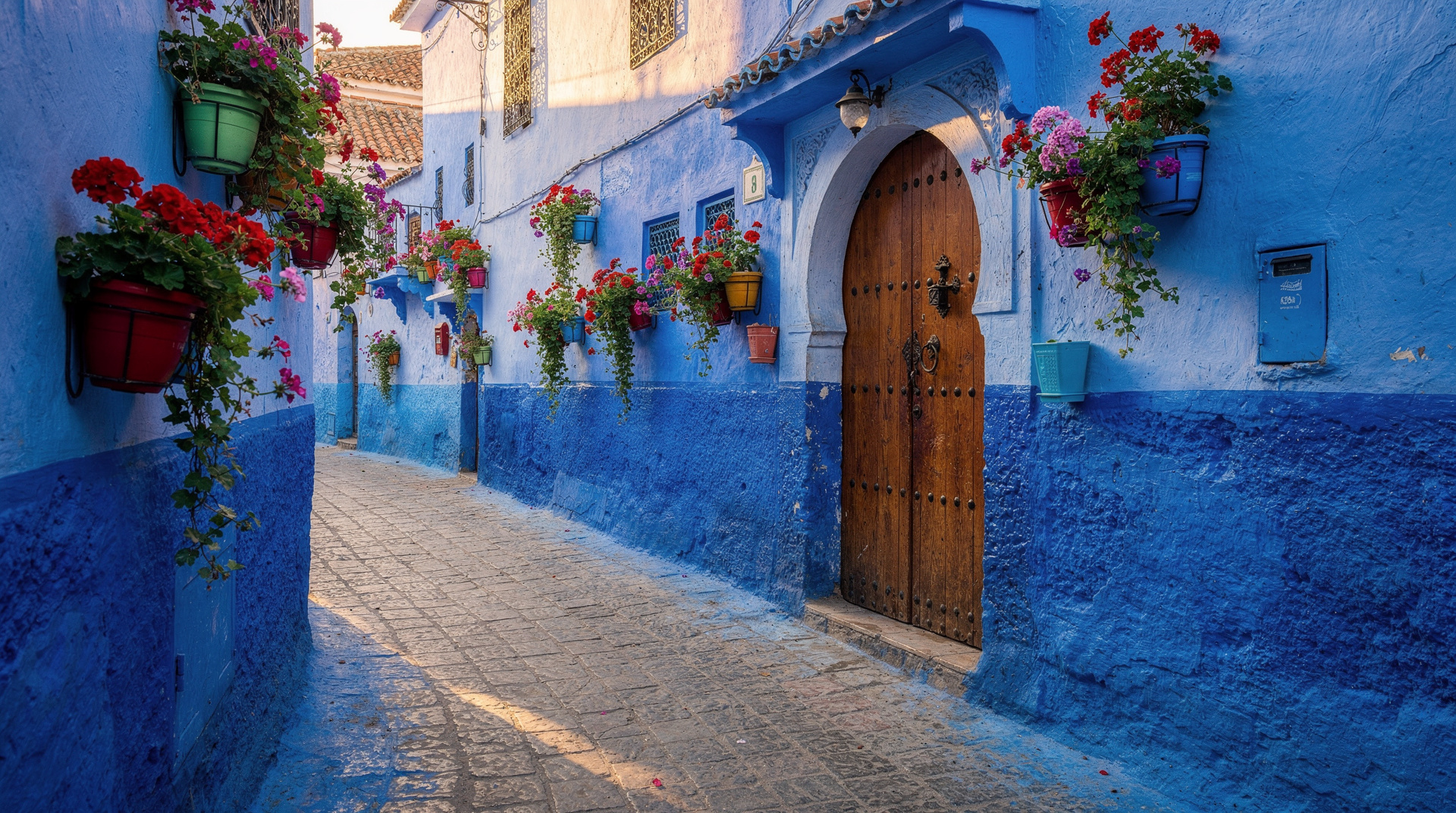
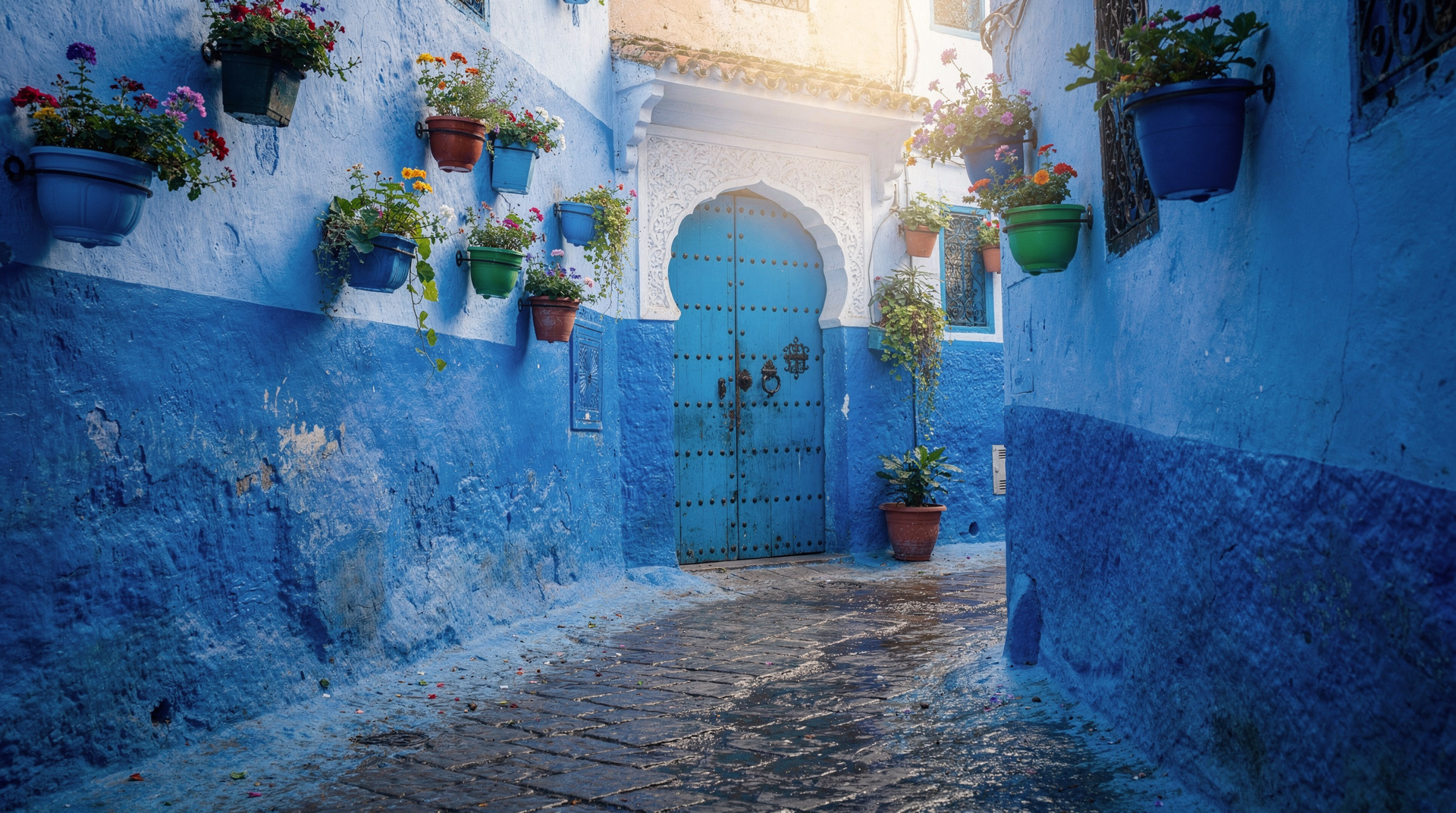
7:00–7:30am: Pass through or stop briefly in Chefchaouen. Some tours make a quick stop here; others drive through. If you have never seen the blue medina, even a 30-minute stop is worthwhile — though it will cost you time at the waterfalls.
8:00–8:30am: Arrive at Akchour village. The trailhead is at the far end of the village, past a small cluster of basic cafés. Use the toilet facilities at the cafés before starting the trail — there are none on the route.
8:30–10:00am: Hike to God’s Bridge (1.5 hours at a moderate pace, with river crossings on stepping stones or simple bridges). The path is well-used and mostly clear. There are some rocky sections in the later portion. The river crossings can be wet in spring.
10:00–10:30am: Time at God’s Bridge. The natural arch is most photogenic in morning light. Swimming in the pool below is excellent in warm months.
10:30am–12:30pm: Continue to the upper waterfalls (an additional 1.5–2 hours of more demanding hiking with significant elevation gain in the final approach). This section requires reasonable fitness and good footwear — trail shoes or walking boots, not sandals.
12:30–1:30pm: Lunch at the upper falls area or on the return trail. Some hikers bring their own; basic food is available at the trailhead cafés.
1:30–3:30pm: Return hike to Akchour village.
3:30–6:30pm: Drive back to Tangier.
6:30–7:00pm: Arrive back in Tangier.
Total: A 13-hour day. Honest.
Top highlights on the Akchour trail
The river crossings
The Oued Farda is crossed seven or eight times on the way to God’s Bridge, via stepping stones and simple wooden or concrete bridges. In spring (April–June) the river runs high and fast — crossings can be slippery and occasionally ankle-deep even on the stepping stones. This is part of the charm but requires you to accept that your feet will likely get wet.
God’s Bridge (Pont de Dieu)
The natural limestone arch is the most visited feature on the trail and the most accessible — most day-hikers reach this and turn back. The pool beneath the arch is cold, clear, and an excellent swimming spot in summer. The arch itself is roughly 20 metres wide and 5 metres high — substantial enough to be genuinely impressive.
The upper gorge
Between God’s Bridge and the upper falls, the gorge narrows dramatically. The path in this section is less maintained — some scrambling, some very narrow ledge-walking above the river. This is where the hike earns its “full day” designation. The payoff is the falls themselves: a 100-metre drop into a dark pool in a narrow gorge. On a clear day with sunlight reaching the water, it is one of the most beautiful places in Morocco.
The forest
Much of the trail runs through mixed cedar, cork oak, and Aleppo pine forest. In spring this is green and cool, with birdsong and the sound of the river constant companions. The contrast with the arid landscapes that many visitors associate with Morocco is striking.
Where to eat
Catering options near Akchour are limited.
Cafés at Akchour village trailhead: Basic tagine, grilled brochettes, Moroccan omelettes, fresh bread, and mint tea. Functional rather than memorable, but honest and cheap (tagine 60–90 MAD). These cafés are your best lunch option if you are returning to the trailhead around midday.
Picnic: Many experienced hikers bring their own lunch — bought in Chefchaouen or Tangier before departure. This is the best option for those continuing to the upper falls, where you will want to eat without racing back to the trailhead.
Tangier food after the return: If you are on an organised tour returning to Tangier in the evening, budget for dinner in the city. The Tangier medina area has good options including Restaurant Saveur de Poisson on Rue de la Liberté for fresh fish and El Morocco Club on Place du Grand Socco for a more atmospheric setting.
What to skip
Stopping too long in Chefchaouen on the way: The blue medina deserves its own visit, not a rushed 30-minute stop on the way to a waterfall hike. If you are passing through Chefchaouen en route to Akchour, resist the urge to spend more than a quick photo break there — you are here for the waterfalls, and your time budget is tight.
The horse and mule tours at the trailhead: Some guides at Akchour village offer horse or mule rides to God’s Bridge. These are unnecessary (the trail is walkable), considerably more expensive than walking, and not as pleasant as the hike itself. Skip them.
Visiting in July or August without an early start: Summer heat at Akchour can be significant, particularly in the open sections of the gorge. If you visit in peak summer, the trail must be done with a very early start (at the trailhead by 7:30am) to avoid midday heat. This makes the drive from Tangier even more punishing.
Is it worth overnighting in Chefchaouen instead?
If there is one recommendation this guide wants to make clearly: yes.
Chefchaouen is one of Morocco’s most distinctive and genuinely beautiful small cities. Spending one or two nights there transforms the Akchour day trip from a gruelling endurance exercise into a relaxed highlight of a northern Morocco itinerary. The Chefchaouen travel guide has full accommodation recommendations.
From Chefchaouen, you can also combine Akchour with an afternoon in the blue medina — a much more natural pace. The Akchour day trip from Chefchaouen guide covers this in full.
Combined trips
Akchour + Chefchaouen (overnight): The most logical combination. Drive from Tangier to Chefchaouen (3 hours), spend the night in the blue medina, then do Akchour the following morning. Return to Tangier on day three or continue toward Fes or Tetouan.
Akchour + Tetouan: Not advisable on the same day — both Tetouan and Akchour deserve full days and are in different directions from Tangier.
Akchour + Asilah: Completely incompatible as a single-day combination. Asilah is 45 minutes south of Tangier; Akchour is 3 hours east. Save each for a separate day.
Should you base in Tangier at all for this hike?
If Akchour is a priority rather than an afterthought, the honest answer is usually no. Basing in Chefchaouen for even one night turns this from a 13-hour endurance day into a relaxed 45-minute-each-way outing with 7–8 hours at the falls — see the full comparison in the Akchour day trip from Chefchaouen guide. Tangier remains the right base if you’re arriving by ferry, have limited nights in Morocco, or Akchour is one stop among several northern highlights like Tetouan or Asilah rather than the main event.
Practical information
What to wear: Trail shoes or walking boots are essential — sandals are genuinely not suitable for the rocky path and river crossings. Bring a light waterproof jacket in spring. A sun hat for the open sections.
Water: Bring at least 2 litres per person. The river water is not reliably safe to drink without treatment. The spring heat makes dehydration a real concern on the upper trail.
Fitness level: Moderate to demanding. The hike to God’s Bridge (1.5 hours each way) is manageable by most fit adults. The extension to the upper falls requires reasonable fitness, some comfort with exposed paths, and good footwear. The round trip to the upper falls is approximately 18–20km.
Best months: April, May, and June are ideal — the river is full, the forest is green, the air is cool. September and October are also excellent. July and August are hot but manageable with an early start.
Phone signal: Coverage in Akchour village is limited. Inside the gorge it is effectively zero. Tell someone your planned return time before you start the hike.
Frequently asked questions about Akchour waterfalls day trip from Tangier
How long is the hike to Akchour waterfalls?
To God’s Bridge: 3 hours return (1.5h each way). To the upper falls: 6–7 hours return from the trailhead. A full day is needed to reach the upper falls and return comfortably.
Do I need a guide for the Akchour hike?
The main trail to God’s Bridge is well-used and well-marked enough to navigate independently. The trail to the upper falls is less clear in places. A local guide is useful for the upper section and for finding the best river crossings, but not strictly essential for fit, experienced hikers.
Can I swim at Akchour?
Yes. The pools at God’s Bridge and at the upper falls are popular swimming spots in summer. The water is cold even in July. In April and May the flow can be too fast and cold for comfortable swimming.
What is the entrance fee for Talassemtane National Park?
There is no entrance fee for the hiking trail. Some local guides at the trailhead charge a nominal fee for their services if you ask for guidance.
Is the drive from Tangier to Akchour difficult?
The Tangier to Chefchaouen leg (A4/N2) is a standard highway drive. The Chefchaouen to Akchour section is a mountain road — narrow in places, but paved and manageable in a standard car. Allow extra time in wet conditions.
Is it worth doing Akchour from Tangier if I only have one day in northern Morocco?
If you only have a single day and Akchour is your priority, it’s doable but exhausting — expect a 13-hour day with 4 hours at the falls. Many travellers in this situation choose a shorter, closer option instead, such as Asilah or a half-day in Tetouan, and save Akchour for a future trip with a Chefchaouen base.