Akchour day trip from Chefchaouen: the definitive guide
How do you do the Akchour waterfalls day trip from Chefchaouen?
Take a shared grand taxi from Chefchaouen's main taxi stand to Akchour village — 45 minutes, 25–35 MAD per seat. The hike to God's Bridge takes 1.5 hours each way; the upper waterfalls add another 2 hours each way. A full day is needed for both. No guide required for the main trail but useful for the upper section.
The best day trip in northern Morocco, done right
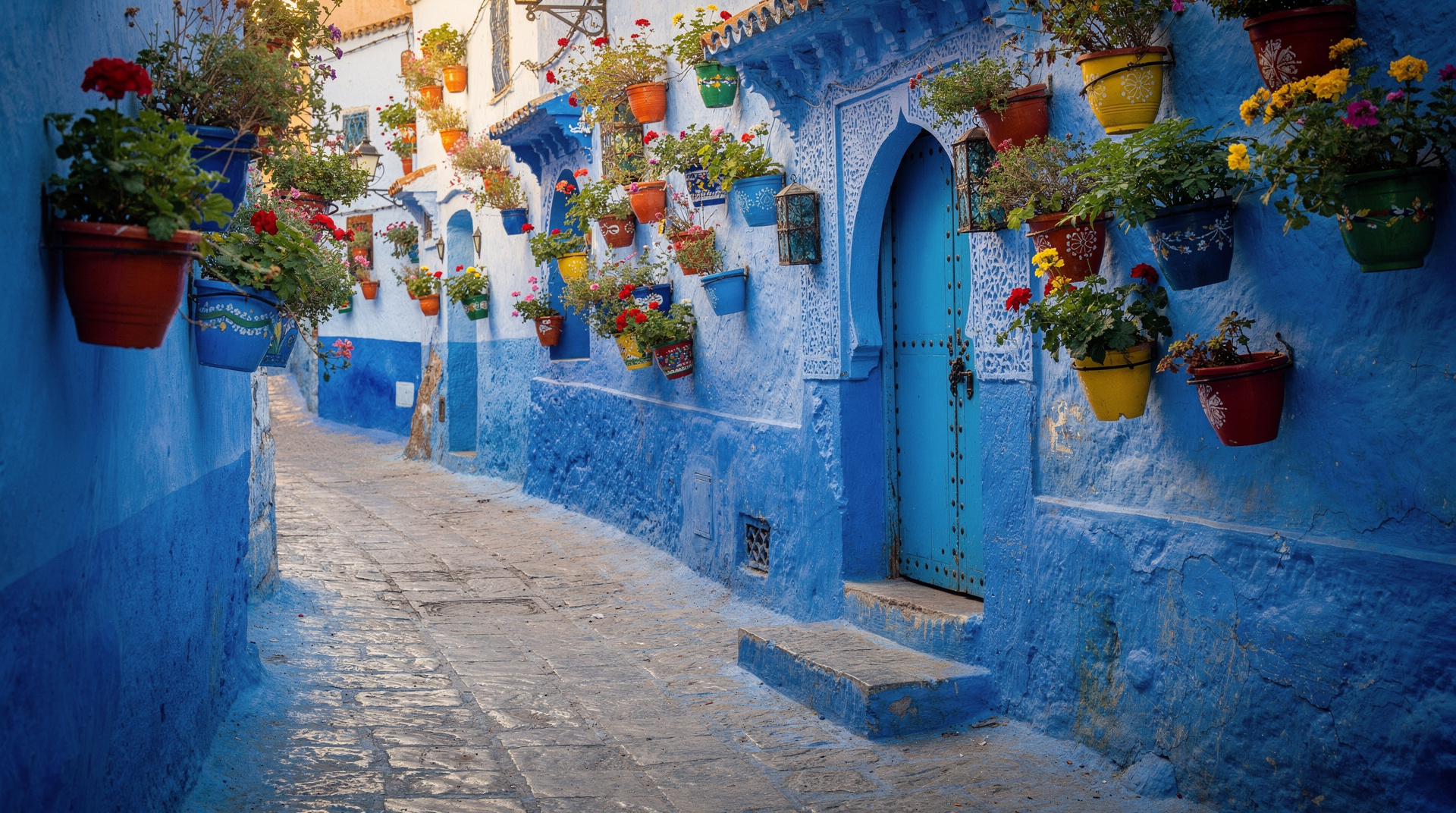
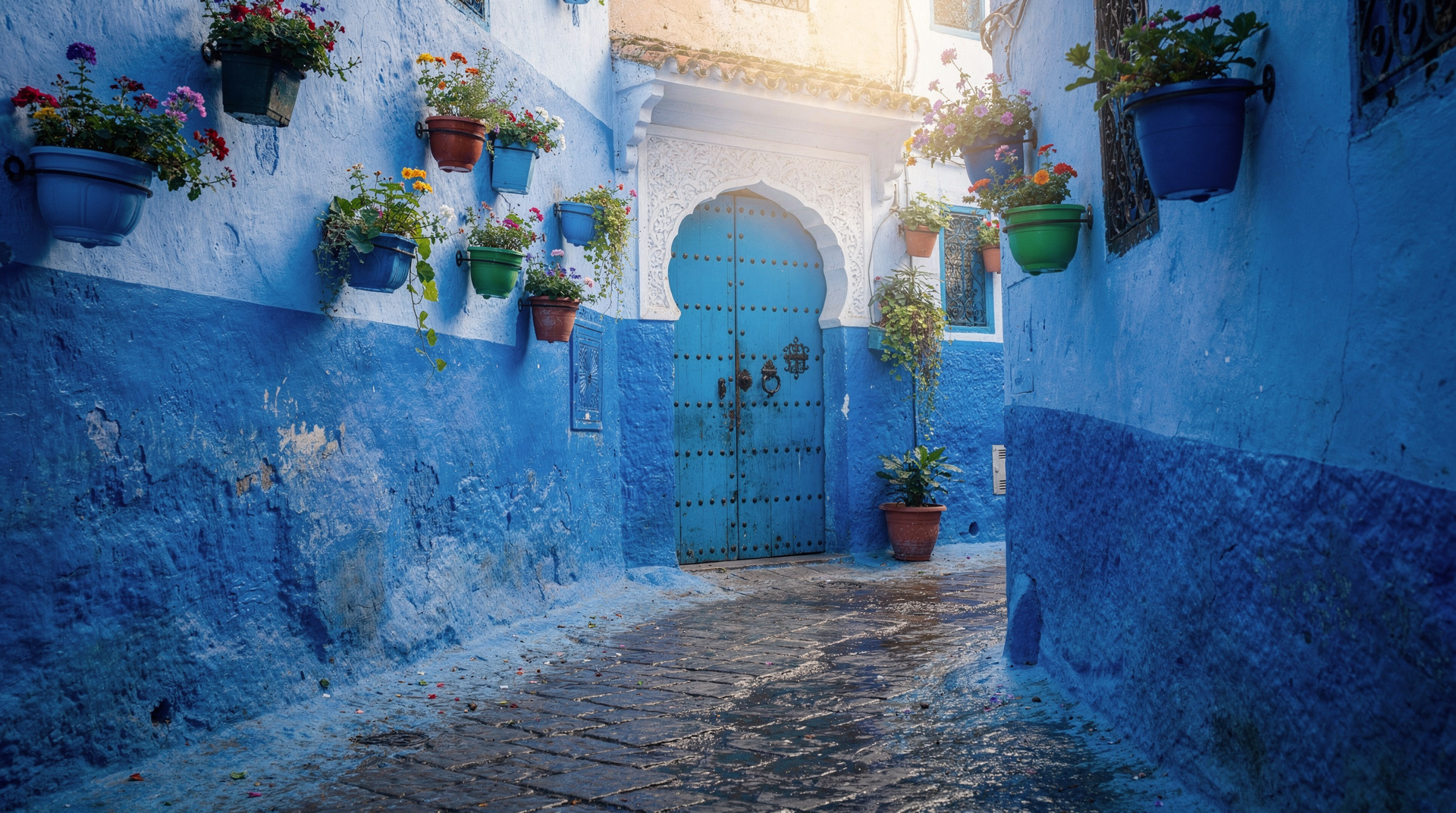
Chefchaouen is widely understood as a place to be, not a place to rush through — the blue alleys reward slow wandering, the cafés are excellent, and the Spanish mosque sunset is a repeated pleasure rather than a single tick-box. Most visitors who spend more than one night naturally look for what to do beyond the medina on day two.
The answer is almost always Akchour.
The waterfalls in Talassemtane National Park, 30km northwest of Chefchaouen, are what the word “spectacular” is meant for: a sequence of natural pools, a dramatically photogenic natural limestone arch (God’s Bridge), and a 100-metre waterfall in a narrow gorge, all reached by a trail that winds through cedar and mixed forest along the Oued Farda river. At 45 minutes from Chefchaouen by shared taxi, Akchour is the easiest half-day in northern Morocco and the best full day.
This guide is the definitive version — taxi logistics, trail options, what to bring, what to skip, and the honest answer on whether the upper falls are worth the extra two hours.
| At a glance | |
|---|---|
| Where | Talassemtane National Park, 30km / 45 min north of Chefchaouen |
| Cost | Around 25–35 MAD each way by shared taxi, plus 60–90 MAD for lunch at the trailhead |
| Time needed | Half day for God’s Bridge only; a full day (7–8 hours) for God’s Bridge + upper falls |
| Getting there | Shared grand taxi from Chefchaouen’s taxi stand, private taxi, or a guided tour |
| Best time | April–June and September–October for full river flow and comfortable temperatures |
Why Akchour works so well from Chefchaouen
The proximity is the fundamental advantage. From Tangier, Akchour requires a 3-hour drive in each direction — a gruelling commitment for a hiking day. From Chefchaouen, the shared taxi deposits you at the trailhead in 45 minutes, the return is equally simple, and you have a full 7–8 hours to spend in the valley.
This means you can:
- Leave at 8:00am and be hiking by 9:00am
- Reach the upper waterfalls by midday
- Swim, eat, and rest for an unhurried afternoon
- Return to the trailhead by 4:00pm and be back in Chefchaouen for dinner
None of this is possible from Tangier. The Akchour day trip from Tangier guide exists because people ask — but the Chefchaouen base is the obvious correct choice if you have any flexibility in your northern Morocco itinerary.
The secondary advantage is that Chefchaouen itself deserves two to three nights, and the Akchour day fits naturally into this structure. You are not forcing a detour; you are using a rest day productively.
Getting to Akchour from Chefchaouen
By shared grand taxi: The standard and most practical option. Grand taxis depart from the main taxi stand outside the medina walls (near the bus station), running to Akchour village when full (typically 6 passengers). Cost: 25–35 MAD per seat. Frequency is highest in the morning (8:00–10:00am) when hikers are heading out. Return taxis from Akchour run through the afternoon; the last realistic return is around 5:00–5:30pm.
If the taxi is not filling up naturally, you can negotiate to pay for the empty seats (effectively hiring the whole taxi for 150–200 MAD) — this is common when only 2–3 people are going and saves significant waiting time.
By private taxi: More expensive (350–500 MAD for the round trip, including waiting time at the trailhead) but gives you flexibility on departure and return timing. Worth considering for groups of four or more where the per-person cost becomes reasonable.
By guided tour from Chefchaouen: The Akchour waterfalls day trip from Chefchaouen includes transport and a guide for the hike — the most convenient option for solo travellers who want company or hikers who want botanical and geological context for the trail.
The guided hiking version is specifically oriented toward the full hike with expert trail knowledge — recommended for those attempting the upper falls for the first time.
The trail: three options
The Akchour trail from the village trailhead offers three main objectives at increasing difficulty and distance:
| Option | Distance | Time | Difficulty | Best for |
|---|---|---|---|---|
| God’s Bridge only | 8km return | 3 hours | Moderate | Families, moderate hikers, half-day visitors |
| Upper waterfalls only | 14km return | 5–6 hours | Moderate–demanding | Late starters skipping God’s Bridge |
| Both (full day) | ~20km return | 7–8 hours | Demanding | Fit hikers with an 8am start |
Option 1 — God’s Bridge only (recommended for moderate hikers)
Distance: 8km return (4km each way) Time: 3 hours return Difficulty: Moderate — well-used path, several river crossings on stepping stones, some rocky sections What you see: The dramatic natural limestone arch spanning the gorge (approximately 20m wide), a deep pool for swimming, and the forest scenery of the river canyon
This is the most popular option and completely satisfying as a half-day hike. The trail is easy enough for reasonably fit walkers including older adults and teenagers.
Option 2 — Upper waterfalls only (recommended for fit hikers)
Distance: 14km return Time: 5–6 hours return Difficulty: Moderate to demanding — significant elevation gain in the final approach, some exposed sections above the river What you see: The 100-metre waterfall in the narrow upper gorge — the most dramatic single feature on the trail
This option skips God’s Bridge and goes directly to the falls. Less logical than Option 3 (God’s Bridge is on the way) but useful if you are starting very late.
Option 3 — God’s Bridge + upper waterfalls (full day, recommended)
Distance: 20km return approximately Time: 7–8 hours return Difficulty: Demanding — all of Option 1 plus significant additional elevation and distance What you see: Everything
This is the correct full-day option for fit hikers departing by 8:00am. God’s Bridge by 10:30am, upper falls by 1:00pm, swim and lunch, return by 5:00pm. It is demanding but not technically difficult — no specialist equipment required, no exposed scrambling (though the upper section requires care on some rocky stretches). The reward-to-effort ratio is among the highest of any day hike in Morocco.
Suggested full-day itinerary
7:30am: Breakfast in Chefchaouen. A substantial breakfast before a hiking day is worth the time — most Chefchaouen guesthouses serve from 7:00am, or buy msemen and fresh bread from the market stalls near Bab el-Ain.
8:00–8:30am: Take the shared grand taxi from the Chefchaouen taxi stand. Arrive at Akchour village around 8:45am.
8:45am: Toilet stop at the cafés in Akchour village (there are no facilities on the trail). Buy a bottle of water if you have not brought sufficient from Chefchaouen.
9:00am: Start hiking. The trail leaves from the far end of the village and immediately begins following the river. The first section is flat and easy — shaded forest with the sound of the river constant.
10:00–10:30am: First major river crossings. In spring, the Oued Farda is substantial — the stepping stones may be underwater and crossings can involve wading ankle-deep. This is fine and expected; bring footwear that can get wet or change into sandals for the crossings.
10:30–11:00am: Arrive at God’s Bridge. The natural arch appears as the gorge narrows dramatically. The pool beneath the arch is cold, clear, and excellent for swimming in warmer months. Spend at least 30 minutes here — this is one of the day’s highlights and should not be rushed.
11:00am–1:00pm: Continue to the upper falls. This section is harder — the path climbs significantly and in places requires careful foot placement on rocky ledges. The final approach to the falls is steep. A guide is particularly useful for this section.
1:00–2:00pm: The upper falls. The 100-metre cascade drops into a dark pool in a narrow gorge. This is the payoff. Eat lunch here, swim if the pool conditions allow, and take time to absorb the setting. The light at midday filters through the gorge in columns — excellent for photography.
2:00–4:00pm: Return hike (faster downhill). The trail back passes God’s Bridge again — if you want a final swim, this is the place.
4:00–4:30pm: Return to Akchour village. The café at the trailhead is well-deserved at this point — mint tea and a tagine or brochettes.
5:00pm: Shared taxi back to Chefchaouen. Arrive around 5:45pm.
Evening: Dinner in Chefchaouen. After a 7–8 hour hiking day, you have earned a good meal at Restaurant Casa Hassan or one of the other medina restaurants.
Top highlights
God’s Bridge (Pont de Dieu)
The natural limestone arch is the most visited and most photographed feature of the Akchour trail. The formation was created over millennia by the Oued Farda cutting through a limestone buttress — the river still flows beneath the arch. The scale (roughly 20m wide, 5m above the river at the keystone) is impressive, the pool beneath it swimmable, and the surrounding gorge makes for some of the best photography on the northern Morocco circuit.
Best time to visit: morning, when the light enters the gorge at an angle that illuminates the arch without harsh shadows.
The upper waterfalls
If God’s Bridge is the most visited highlight, the upper falls are the most memorable. A 100-metre drop in a confined gorge, the water misted by the fall, the walls of the gorge so close that they shade the pool below even at noon — it is one of those places that exceeds expectation after a demanding approach hike. The cold pool at the base is the natural reward for the climb.
The river crossings
The stepping-stone crossings of the Oued Farda are a specific pleasure of the Akchour trail — not a difficulty to overcome but a feature to enjoy. The series of crossings (seven or eight on the way to God’s Bridge) give the hike its rhythm and its connection to the river. In spring, the crossings involve real water; in autumn they are dry-footed. The spring version is better.
The cedar and pine forest
Talassemtane National Park protects one of Morocco’s most important remaining cedar and mixed-forest ecosystems. The trail runs through forest for much of its length — cool even in summer heat, scented with pine resin and damp earth, and noisy with birdsong that is completely absent from the arid landscapes that dominate southern Morocco.
The gorge scenery
The valley progressively narrows from a wide river basin near the trailhead to a tight gorge at God’s Bridge and an even tighter slot at the upper falls. The pink-grey limestone walls, the green canopy overhead, and the clear river below create a visual sequence that improves with every kilometre walked.
Where to eat
Cafés at Akchour village trailhead: The small cluster of cafés at the trailhead is your only food option unless you bring your own. Tagines (60–90 MAD), brochettes, Moroccan omelettes, fresh bread, and mint tea. The food is functional — you will not be disappointed after a full hiking day. Order your return meal before you start hiking; some cafés will have it ready when you return.
Picnic at the falls: Bringing your own lunch is the best option for hikers targeting the upper falls. Buy provisions in Chefchaouen before departure — bread, cheese, fruit, dried fruit and nuts, and plenty of water. Eating a picnic at God’s Bridge or the upper falls pool is one of the more pleasant lunches available in northern Morocco.
Dinner in Chefchaouen: See the Chefchaouen travel guide for the full restaurant rundown. After a demanding hike, the three-course menu at Restaurant Casa Hassan is a strong recommendation.
What to skip
Visiting without enough water: This point cannot be overstated. The river water at Akchour looks clean but is not safe to drink without treatment. Bring 2 litres per person minimum; 3 litres in warm months. The trailhead café sells bottled water but at higher prices than Chefchaouen.
Sandals or flip-flops: The trail is rocky, the river crossings involve slippery stones, and the upper section requires confident footing. Trail shoes or walking boots are not a luxury here — they are the difference between a comfortable and an unpleasant day.
The horse and mule “tours”: Local guides at the Akchour village entrance sometimes offer horse or mule rides to God’s Bridge. These cost considerably more than walking, are no faster on the actual trail, and deprive you of the hiking experience that makes Akchour what it is. The trail is designed for feet.
Setting off after 10:00am for the upper falls: If you want to reach the upper waterfalls and return comfortably before the last taxis leave, you need to be at the trailhead by 9:00am maximum. An 11:00am start means turning back before the upper falls or being stranded in the village after 5:30pm when taxis become unreliable.
Is Akchour worth overnighting near?
There are very basic guesthouses in Akchour village and at some of the farms along the valley. Spending the night gives you dawn access to the trail (the gorge at sunrise before other hikers arrive is genuinely magical) and allows a second day exploring different sections of the Talassemtane park.
For most travellers to Chefchaouen, however, the 45-minute taxi gives plenty of access and there is no strong reason to leave Chefchaouen’s excellent guesthouses for a basic farmhouse. The day trip calibration is correct for the Akchour experience.
Combined trips
Akchour + Chefchaouen medina (same day, light version): Return to Chefchaouen by 4:00pm after a half-day hike to God’s Bridge only, then spend the golden hour (4:00–6:00pm) in the medina. This is an excellent combination — the physical hike and the visual medina contrast well.
Akchour + Spanish mosque sunset: Return from Akchour by 5:00pm, drop your gear, and walk up to the Spanish mosque (20 minutes from the medina) for the 6:30–7:00pm sunset. One of Chefchaouen’s best evenings.
Akchour on day 2 of a Chefchaouen stay: The ideal structure for a 2-night Chefchaouen visit — day 1 in the medina, day 2 at Akchour. The Chefchaouen guide has a full two-day itinerary.
Akchour from Tangier (the hard version): See the Akchour from Tangier guide for the logistics if Chefchaouen is not on your itinerary.
Akchour vs other Rif Mountains day hikes
Akchour is the best-known Rif hike from Chefchaouen, but it’s worth knowing what else is in the area for comparison. The Talassemtane National Park covers a much larger area than the Akchour trail alone, with quieter trekking routes further into the cedar forest for those with more time or a private guide.
Compared to the Atlas Mountains day trips further south, the Rif offers denser forest, cooler gorges, and a completely different green landscape — but shorter, less dramatic elevation than a High Atlas trek. If your Morocco itinerary includes both regions, expect Akchour to feel more intimate and Atlas hikes to feel more monumental; neither replaces the other.
Practical information
Season: April to June is ideal — full river, green forest, comfortable temperatures. September and October are also excellent. July and August work but are hot; start by 7:30am to avoid midday heat in the open gorge sections. The trail may be inaccessible after heavy rain when the river is very high — ask locally if there has been recent precipitation.
What to bring: Trail shoes or walking boots (essential). 2–3 litres of water per person. Packed lunch or snacks. Swimwear and a small towel (the pools are worth it). Sun protection for the open valley sections. A light waterproof layer in spring.
Fitness level: God’s Bridge — moderate, suitable for most fit adults including older walkers and teenagers. Upper falls — demanding, suitable for fit walkers comfortable with rocky terrain. The full day route (both) — demanding, suitable for regular hikers.
Phone signal: None inside the gorge. Tell someone your plans before departing. The village cafés have some connection.
Frequently asked questions about Akchour day trip from Chefchaouen
How much does the shared taxi from Chefchaouen to Akchour cost?
25–35 MAD per seat each way. This is the standard shared grand taxi rate. If the taxi is not filling, you may need to pay for 2–3 empty seats (60–100 MAD total for the car) to depart without waiting.
Is it safe to hike Akchour alone?
The main trail to God’s Bridge is safe for solo hikers — it is well-used and the trail is clear. The upper falls section is less clear in places and the consequences of a wrong turn are more serious. Solo hikers without previous experience in unmarked mountain terrain should either take a guide or hike to God’s Bridge only.
Can I swim at Akchour waterfalls?
Yes. God’s Bridge pool is the most popular swimming spot — cold, clear, and accessible. The upper falls pool is also swimmable but colder and more difficult to access. In spring (April–May) the flow can be very fast — test conditions before jumping in. Children should be closely supervised near the pools.
What is the difference between God’s Bridge and the upper waterfalls?
God’s Bridge is the natural limestone arch about 1.5 hours from the trailhead — the most photographed feature and a beautiful destination in itself. The upper waterfalls are a further 2 hours beyond God’s Bridge — a 100-metre cascade in the upper gorge. Both are worth seeing; the full-day hike that includes both is the most rewarding option.
Are there entrance fees for Talassemtane National Park?
No entrance fee for the hiking trail. You pay only for the taxi transport and any food at the trailhead cafés. Guided tours have their own pricing.
What should I do if I miss the last taxi from Akchour?
The last reliable shared taxis leave Akchour around 5:00–5:30pm. If you miss this, a private taxi from Akchour village to Chefchaouen can usually be arranged by phone through the café owners — expensive (250–400 MAD) but not impossible. The alternative — walking back — is not practical as the road is not lit and the distance is 30km.
Is Akchour better than doing a day trip from Tangier?
Yes, decisively, if you have the flexibility to base yourself in Chefchaouen. The Akchour from Tangier version turns a relaxed 7–8 hour hiking day into a rushed 13-hour round trip with only about 4 hours at the waterfalls.
Can I combine Akchour with the Chefchaouen medina in one day?
Only in a light version — return by early-to-mid afternoon from a half-day hike to God’s Bridge only, then spend the remaining daylight in the medina. The full-day route (God’s Bridge plus upper falls) doesn’t leave meaningful time for the medina afterward.