Atlas Mountains vs Sahara Desert: If You Can Only Do One
Should I prioritise the Atlas Mountains or the Sahara Desert in Morocco?
Sahara for most first-time Morocco visitors — the dune landscape at Erg Chebbi is one of the world's iconic travel experiences and harder to replicate elsewhere. Atlas Mountains for trekkers, climbers, and travellers who've already seen Sahara-type landscapes. Both are extraordinary; the Sahara is harder to justify skipping on a first visit.
The choice that shapes your entire Morocco itinerary
Most Morocco trips are built around a question that planners hit early: do I include the Sahara, the Atlas, or both? The answer determines whether you’re spending 3 extra days heading south to the dunes or 2-3 extra days trekking in the mountains. Both experiences are genuinely excellent. But if your time is limited and you must prioritise, this guide helps you make that call.
| At a glance | Atlas Mountains | Sahara Desert |
|---|---|---|
| Where | Imlil / Ourika, 1.5-2h from Marrakech | Merzouga / Zagora, 7-10h from Marrakech |
| Cost | Day trip around 30-35 EUR; multi-day trek 35-60 EUR/day guided | Desert camp around 30-350 EUR depending on comfort level |
| Time needed | 1 day (foothills) to 4-7 days (multi-day trek) | 2-3 days minimum for the full circuit |
| Best time | April-June, September-October | October-April (avoid summer heat) |
The quick comparison table
| Factor | Atlas Mountains | Sahara Desert |
|---|---|---|
| Distance from Marrakech | 1.5-2h to Imlil / Ourika | 7-10h to Zagora / Merzouga |
| Time needed | 1-4 days (depends on trek level) | 2-3 days minimum |
| Physical effort | Moderate to high (trekking) | Low to moderate (camel riding, walking dunes) |
| Accessibility | Easy day trip to foothills | Multi-day commitment |
| Season | Best April-June, Sept-Oct | Oct-April (avoid summer heat) |
| Wildlife | Barbary macaques, birds | Fennec fox, desert birds |
| Photography | Mountain landscapes, Berber villages | Dunes, camel silhouettes, night sky |
| Cultural experience | Berber mountain villages, mule trekking | Desert camp life, camel caravans |
| Accommodation | Guesthouses in Imlil, mountain refuges | Desert camps (basic to luxury) |
| Iconic image of Morocco | No — not the postcard | Yes — Erg Chebbi is Morocco’s image |
| Best for | Hikers, mountain lovers, active travellers | All types — broad appeal |
| Combined with other sites | Yes (Ouarzazate/Aït Benhaddou on the route south) | Yes (kasbah route, Dadès, Todra) |
| Weather risk | Snow possible Oct-April at altitude | Extreme heat June-September |
The case for the Atlas Mountains
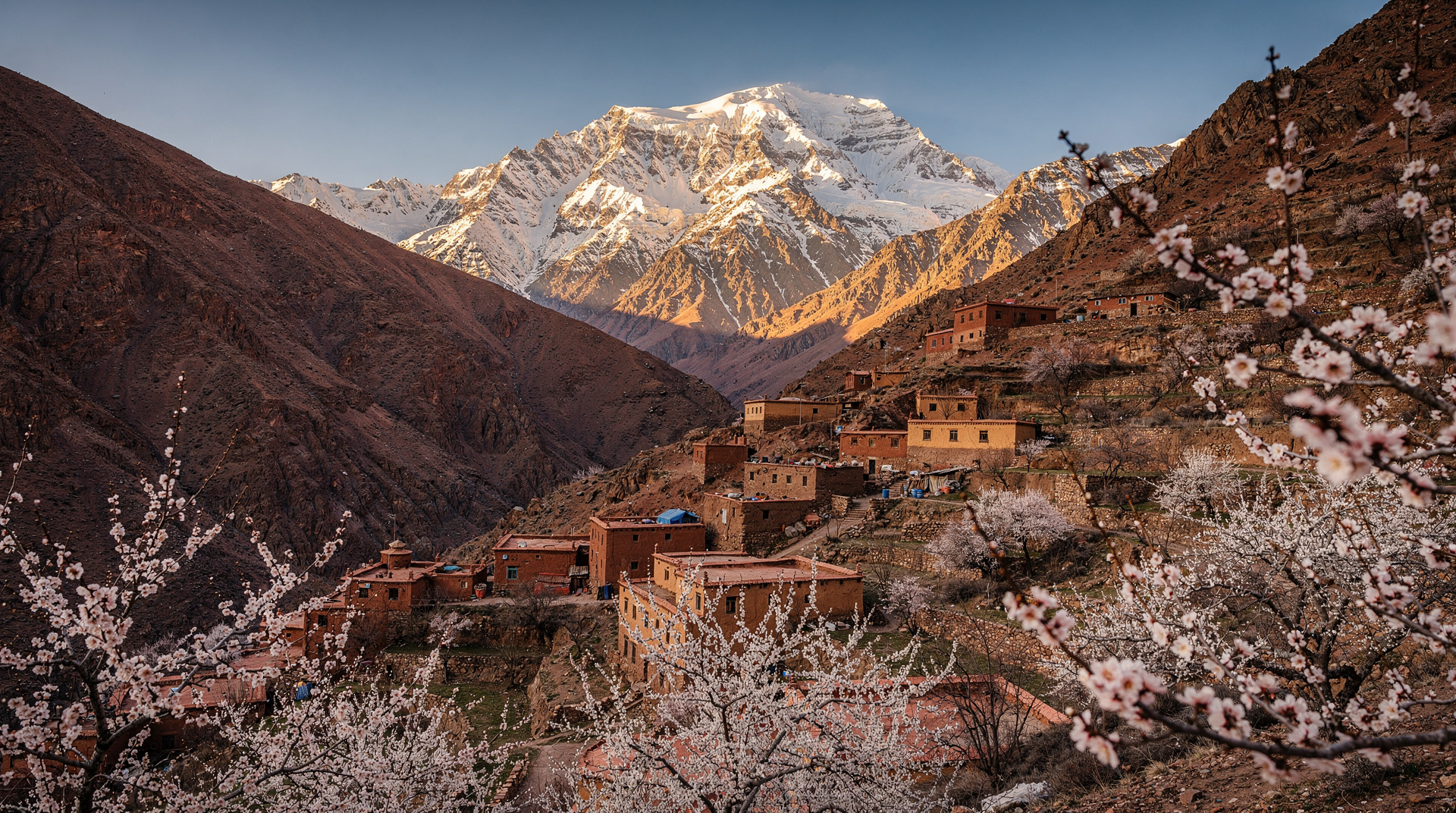
The High Atlas is Morocco’s geographic spine — a range that peaks at Jebel Toubkal (4,167m), the highest mountain in North Africa outside Ethiopia. The mountains are not just a trekking venue; they’re a living cultural landscape of Amazigh (Berber) villages that have operated the same agricultural terracing and communal water management systems for centuries.
Why the Atlas works:
- Imlil village (1.5-2h from Marrakech) is the base for Toubkal trekking — the summit can be reached in 2 days from Imlil by reasonably fit trekkers without technical climbing experience
- The mountain landscape has real drama — snow-capped peaks visible from Marrakech in winter, cedar forests, high-altitude valleys, the Azzadene and Ait Mizane rivers
- Berber village culture in the Atlas is more intact than in many parts of Morocco. The villages around Imlil and in the Ourika Valley provide genuine encounters with Amazigh life — communal water channels, mule transport, traditional agriculture
- As a day trip from Marrakech, the Atlas foothills are accessible without a multi-day commitment. The Ourika Valley (1.5h from Marrakech) has waterfalls, Berber villages, and a very different landscape from the city
- Combining Atlas with the southern kasbah route is easy — the N9 highway crosses the High Atlas via the Tizi n’Tichka pass (2,260m) on the way to Ouarzazate and the desert, allowing Atlas scenery on transit rather than as a dedicated stop
The honest limitations:
- The Atlas is not Morocco’s unique selling point globally. Mountains exist everywhere; the Sahara is Morocco’s truly distinctive experience
- Toubkal trekking requires reasonable fitness and weather cooperation — April and early October are the reliable windows; January-February can be deep snow
- Without committing to trekking, the Atlas is best as a day trip or overnight from Marrakech rather than a multi-day focus
If you want the mountains without the logistics, a Berber village and Atlas Mountains day trip from Marrakech is a low-commitment way to sample the foothills before deciding whether to trek.
The case for the Sahara
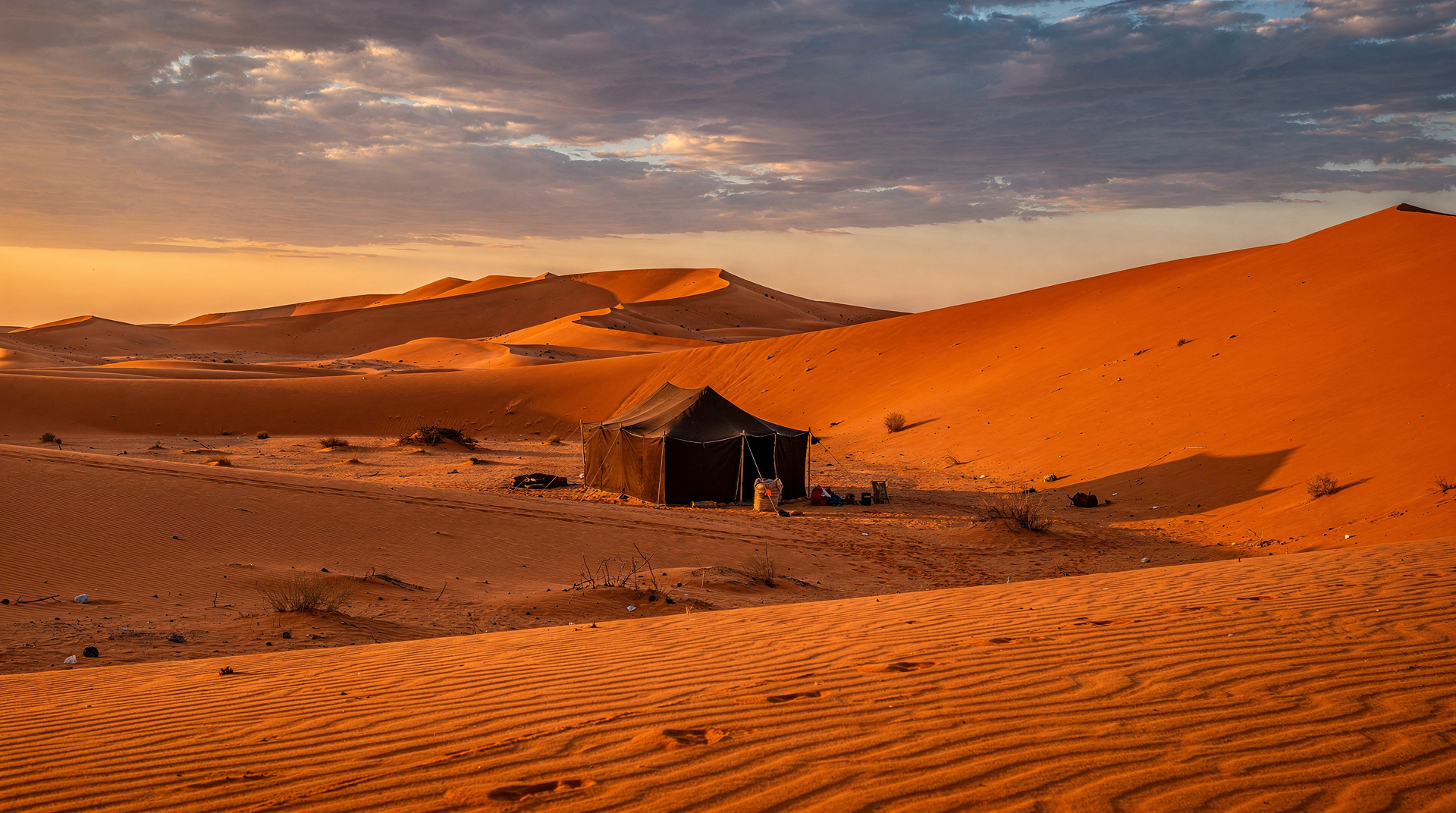
Morocco’s Sahara — specifically the dune field of Erg Chebbi near Merzouga — is one of the world’s great landscapes. The dunes reach 150m height, glow copper at sunset, and produce a silence and scale of space that takes most visitors completely by surprise. The night sky from inside the erg, on a new moon, is one of the clearest anywhere in North Africa.
Why the Sahara works:
- The iconic Morocco postcard image — a camel silhouette on an orange dune ridge at sunset — is real and reproducible in Merzouga. This is actually what it looks like
- The dune experience has no close substitute in Europe or the Mediterranean. You can trek in mountains anywhere; genuine Saharan dunes at this scale require either Morocco, Namibia, or a more remote location
- The route from Marrakech through Ouarzazate, Aït Benhaddou, Dadès Gorge, and Todra Gorge to Merzouga is one of the world’s great road trip circuits — the desert is the destination, but the journey adds Kasbahs, canyon landscapes, and mountain passes that make the circuit irreplaceable
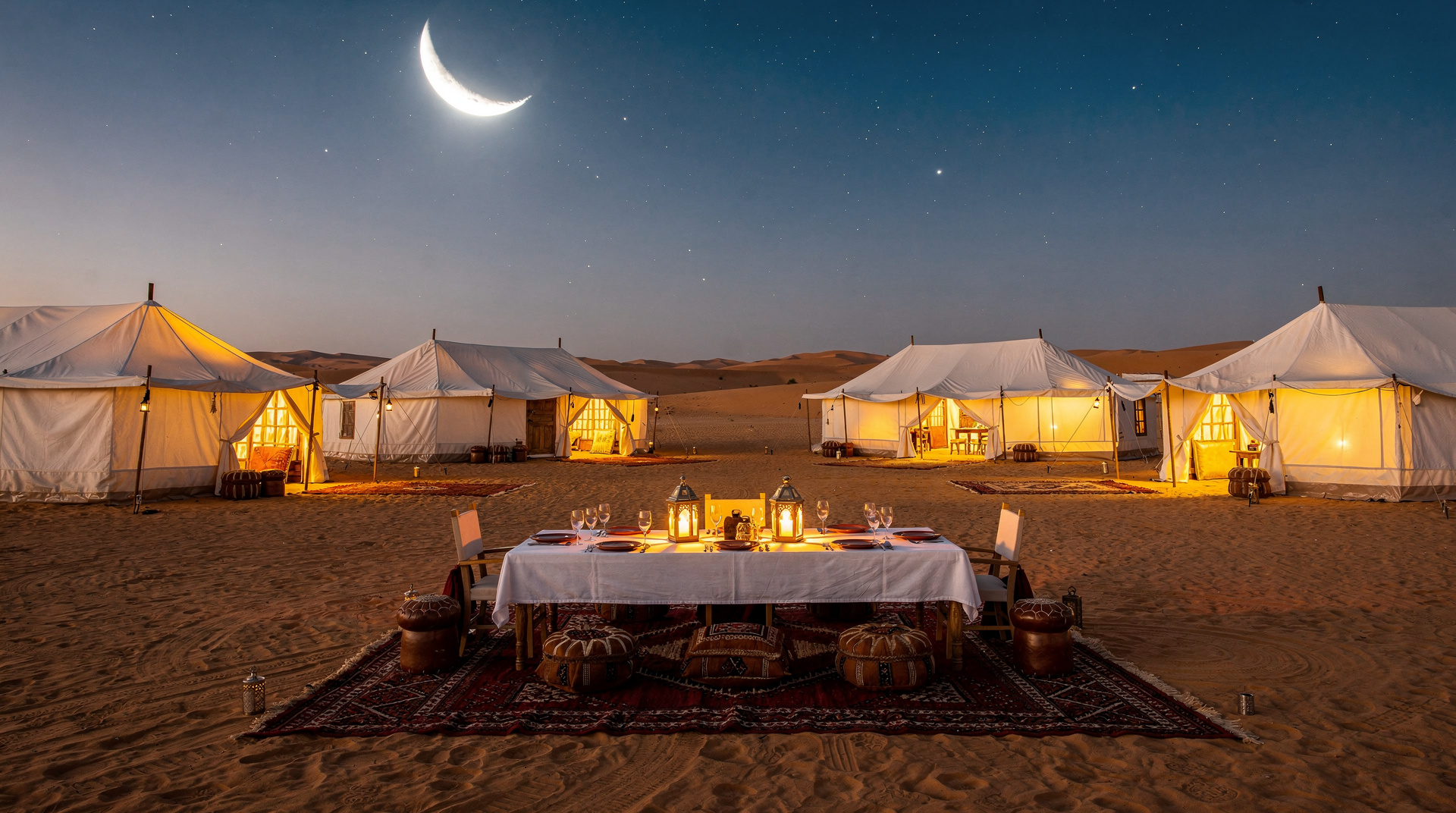
- Desert camp experiences range from 30 EUR basic bivouac to 350 EUR luxury glamping with private en-suites, Berber music, and gourmet dinners. The range means the Sahara is genuinely accessible across all budgets
- The circuit works as a one-way trip from Marrakech to Fes (or reverse), maximising what you see without retracing steps
The honest limitations:
- The desert is 7-10 hours from Marrakech — a serious commitment of travel days
- Summer (June-August) is genuinely extreme — 45-48°C at Merzouga, sand that holds heat through the night. The experience is only comfortable October-April
- Merzouga in peak season (March-April, October) has become crowded at the main camp sites — sunrise camel rides can feel like organised queues. Mitigated by choosing smaller camps or visiting mid-week
The 3-day Marrakech to Merzouga Sahara desert trip is the standard format — it covers the kasbah route and one night in the dunes as a complete experience. If you’re short on time, a two-day Zagora desert tour from Marrakech is a shorter option, though Zagora’s dunes are less dramatic than Erg Chebbi.
By traveller type
First-time Morocco visitors: Sahara. The dune experience is Morocco’s globally unique contribution; the Atlas can be added as a day trip from Marrakech without extending the trip.
Trekkers and hikers: Atlas. The Toubkal summit is one of Africa’s best accessible high-altitude treks; the Sahara doesn’t offer serious trekking.
Photographers: Both are outstanding, but for different subjects. Sahara wins on iconic landscape photography; Atlas wins on portrait and village photography.
Families with children: Atlas day trips (Ourika Valley, Ouarzazate) are more manageable for children. The 10-hour Sahara drive is challenging with young children.
Active / adventure travellers: Atlas for the physical challenge. Sahara for the exploration.
Luxury travellers: Both have excellent luxury options. Atlas has mountain lodges; Sahara has genuine luxury glamping camps.
Verdict by scenario
7-day Morocco trip: Include the Sahara (3 days) and do the Atlas as a day trip from Marrakech. You get both without extending the trip.
10-day trip: Sahara circuit (3-4 days) plus 2-day Atlas trekking from Imlil. Comfortable pacing with time to spare.
5-day trip: Choose one. Sahara gets the vote — the kasbah route plus one night in the dunes is a complete experience that’s hard to replicate elsewhere.
Returning visitor: Atlas in depth — Toubkal summit trek (3-4 days) or the M’Goun traverse for serious trekkers.
Can you combine both?
Yes — this is the ideal Morocco itinerary. The standard combination:
- Day 1-2: Marrakech medina
- Day 3: Day trip to Atlas foothills (Imlil or Ourika Valley)
- Day 4-6: Southern circuit — Tizi n’Tichka, Ouarzazate, Aït Benhaddou, Dadès Gorge, Todra Gorge, Merzouga
- Day 7: Morning in dunes, afternoon drive toward Fes or return to Marrakech
This covers the Atlas scenery on the Tizi n’Tichka crossing, a dedicated Atlas day trip near Marrakech, and the full Sahara experience. For a 10-day trip, this is the natural structure.
The Atlas Mountains guide covers the trekking routes and Imlil logistics in detail. The Merzouga vs Zagora comparison helps you choose between the two main desert destinations once you’ve committed to the Sahara. For full itinerary planning, see the 10-day Morocco itinerary.
If you’re still torn: two extra angles
Distance from your other stops matters more than the guidebook ranking. If your trip already runs Marrakech to Fes overland, the Sahara circuit through Ouarzazate and the Ait Benhaddou kasbah route sits directly on that path — you’re not adding a detour, just extending days already allocated to travel. A dedicated multi-day Atlas trek (see the multi-day Atlas trek guide), by contrast, is a genuine side quest from Marrakech with no onward continuation.
If you’ve done a mountain trip before, the calculus flips. Travellers who’ve trekked in the Alps, Andes, or Himalaya often find the Atlas beautiful but familiar, while the Sahara remains genuinely singular. First-timers to both landscape types tend to rate the Sahara’s novelty higher; repeat trekkers often rate the Atlas experience — particularly the Berber village access described in the Berber culture guide — as the more memorable one.
Frequently asked questions about Atlas Mountains vs Sahara Desert
Can I see both the Atlas and Sahara in one week?
Yes, with tight but achievable pacing: Marrakech (2 nights), Imlil/Atlas day trip, drive through Tizi n’Tichka to Ouarzazate (1 night), Merzouga dunes (1-2 nights), return to Marrakech or continue to Fes. You’ll cover both without wasted days.
Is Toubkal difficult to climb?
The standard Toubkal route is a long, steep hike rather than a technical climb — no ropes or technical equipment required in summer conditions. The key requirements are good physical fitness, acclimatisation (sleeping at the Refuge at 3,207m before the summit day), and appropriate footwear and clothing. In winter conditions (October-April), crampons and ice axe experience are required. See the Atlas Mountains trekking guide for the full route breakdown.
What time of year is best for each?
Atlas: April-June for wildflowers and good visibility; September-October for stable weather before snow. Avoid July-August if doing Toubkal (heat plus crowds). Sahara: October-April for comfortable temperatures. Avoid June-September at Merzouga specifically — the heat is dangerous.
Is the Atlas scenery visible from the Sahara circuit anyway?
Yes. The Tizi n’Tichka pass (the main road from Marrakech to Ouarzazate) crosses the High Atlas at 2,260m — even if you’re just transiting to the desert, you’ll drive through significant mountain scenery with genuine views. This is why the southern circuit delivers more than just dunes.
Can I do the Sahara without a tour operator?
Yes, by renting a car and driving yourself. The roads to Merzouga are all paved and in good condition for a standard vehicle. The advantage of a tour is the logistics knowledge — your driver knows the best camps, the timing, and the back roads. Self-drive is viable for confident, independent travellers. See the private tour vs self-drive Morocco guide for the full logistics comparison.
Is one more expensive than the other?
Roughly comparable at the budget end, but the Sahara has a wider range. A basic desert camp night runs from around 30 EUR, while a multi-day Atlas trek with a licensed guide averages 35-60 EUR per day. At the top end, luxury Sahara glamping (up to 350 EUR/night) exceeds anything comparable in the Atlas, where mountain lodges rarely go much above mid-range pricing.
Which one is better for a honeymoon or special trip?
The Sahara tends to win for a single unforgettable night — a luxury desert camp with a private dinner under the stars is hard to beat for atmosphere. The Atlas suits couples who want an active, shared physical experience together, like a 2-day Toubkal push or a gentler multi-day valley walk.