Merzouga vs Zagora: Which Moroccan Desert Should You Visit?
Should I go to Merzouga or Zagora?
Merzouga wins on dune scale and classic Sahara atmosphere — Erg Chebbi dunes reach 150m. Zagora suits travellers with limited time (7h from Marrakech vs 10h) or tighter budgets. If you have 3 days and want the real deal, Merzouga. If you only have 2 days, Zagora is a reasonable compromise.
Merzouga vs Zagora: the honest desert comparison
Two deserts, two completely different experiences. Morocco’s southern fringes hold multiple erg (sand sea) zones, but for most travellers the choice narrows to Merzouga’s Erg Chebbi or Zagora’s Erg Lehoudi. They’re both legitimate Sahara experiences — but they’re not interchangeable.
This guide lays out the differences in distance, dune quality, camp standards, cost, and atmosphere so you can make the call without guesswork.
At a glance
| Merzouga | Zagora | |
|---|---|---|
| Where | Erg Chebbi, near the Algerian border | Erg Lehoudi, start of the Draa Valley |
| Drive from Marrakech | Around 10h (2-driver relay) | Around 7h |
| Minimum time needed | 3 days recommended | 2 days workable |
| Typical shared-tour cost | Roughly 250-450 EUR pp | Roughly 180-320 EUR pp |
| Best time | March-May, October-November | March-May, October-November |
The quick comparison table
| Factor | Merzouga (Erg Chebbi) | Zagora (Erg Lehoudi) |
|---|---|---|
| Distance from Marrakech | ~10h drive | ~7h drive |
| Distance from Fes | ~8h drive | ~11h drive |
| Dune height | Up to 150m | Up to 30-40m |
| Dune colour | Deep orange-red | Pale gold |
| Overnights needed | 2 nights minimum (3 recommended) | 1 night possible |
| Camp quality range | Budget to ultra-luxury | Budget to mid-range |
| Infrastructure | More developed | More basic |
| Typical 3-day tour price | 250–450 EUR per person (shared) | 180–320 EUR per person (shared) |
| Camel rides available | Yes, extensive | Yes, shorter routes |
| Quad biking | Yes, multiple operators | Limited |
| Sandboarding | Yes | Minimal |
Merzouga: the case for Erg Chebbi
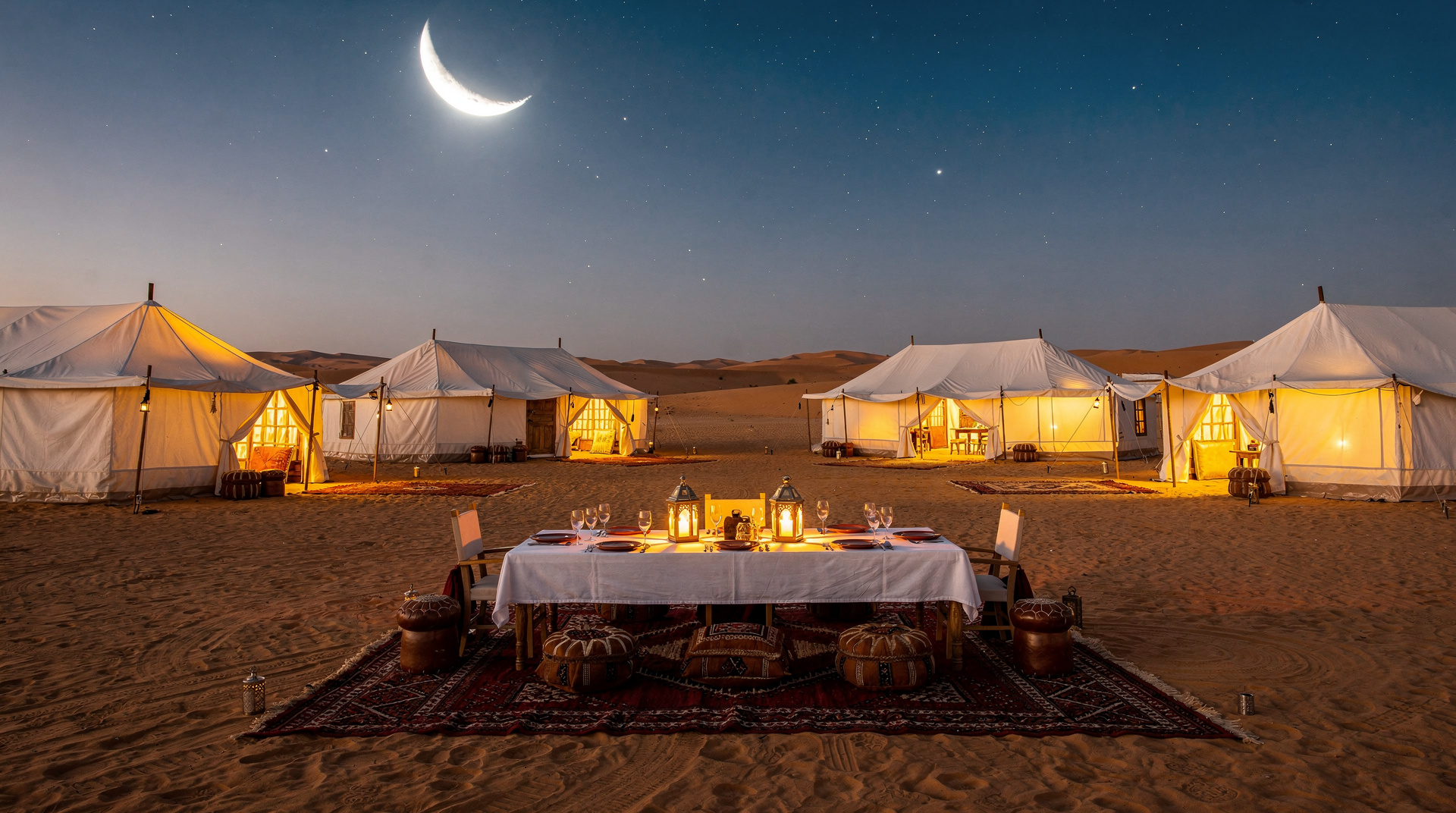
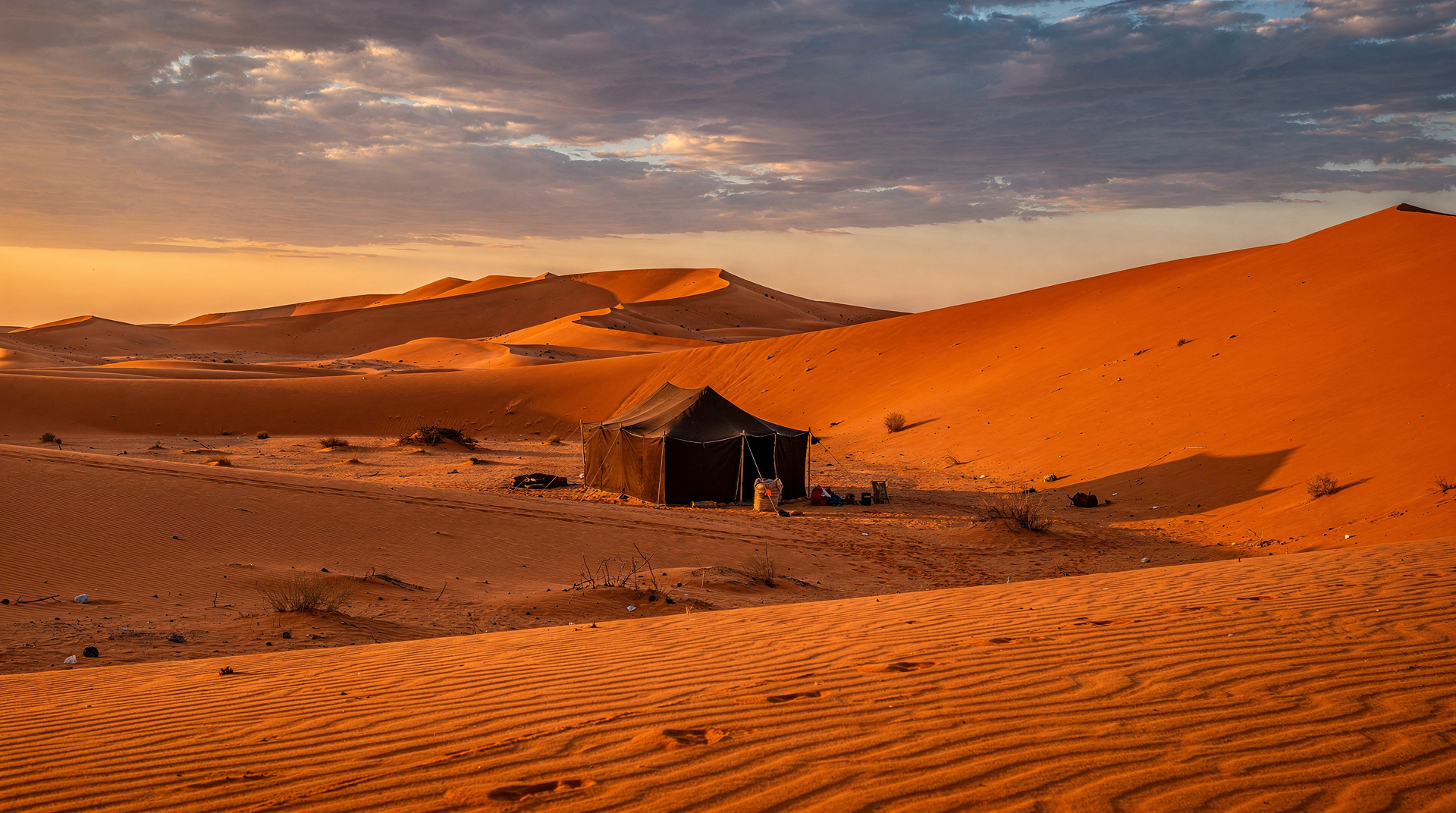
Erg Chebbi is what most people picture when they think “Moroccan Sahara.” The dunes are enormous — the highest peak near Merzouga touches 150m — and they shift in colour from amber at midday to deep copper at sunset. The erg itself covers roughly 22km by 5km, so you can walk or ride camels for hours without reaching an edge.
What works well at Merzouga:
- The dune experience is genuinely dramatic. Climbing to a ridge at sunrise with nobody else visible in any direction happens here.
- Camp infrastructure has matured. You’ll find everything from basic bivouacs at 30 EUR per person to luxury glamping tents with private en-suites, heated pools, and gourmet dinners at 300+ EUR per night.
- The village of Merzouga itself is relatively developed — ATMs, restaurants, riad accommodation outside the dunes, and reliable 4G in most spots.
- Activities beyond camels: quad biking, sandboarding, 4WD excursions into the erg, visits to Gnawa music villages, fossil markets.
The friction points:
- Distance is the main issue. The drive from Marrakech runs roughly 10 hours via Ouarzazate and the Todra Gorge area. Doing this in one day is brutal and wastes daylight. Most organised tours handle it as a two-driver relay with stops at Kasbah Ait Ben Haddou and Dades Valley.
- Because Merzouga is the “famous” option, it draws more tour groups. Sunrise camel rides can feel crowded in peak season (March-May, October).
For the full Merzouga loop from Marrakech, this 3-day Sahara desert trip from Marrakech to Merzouga covers the classic route with stops at Ait Ben Haddou and Dades.
Zagora: the case for Erg Lehoudi
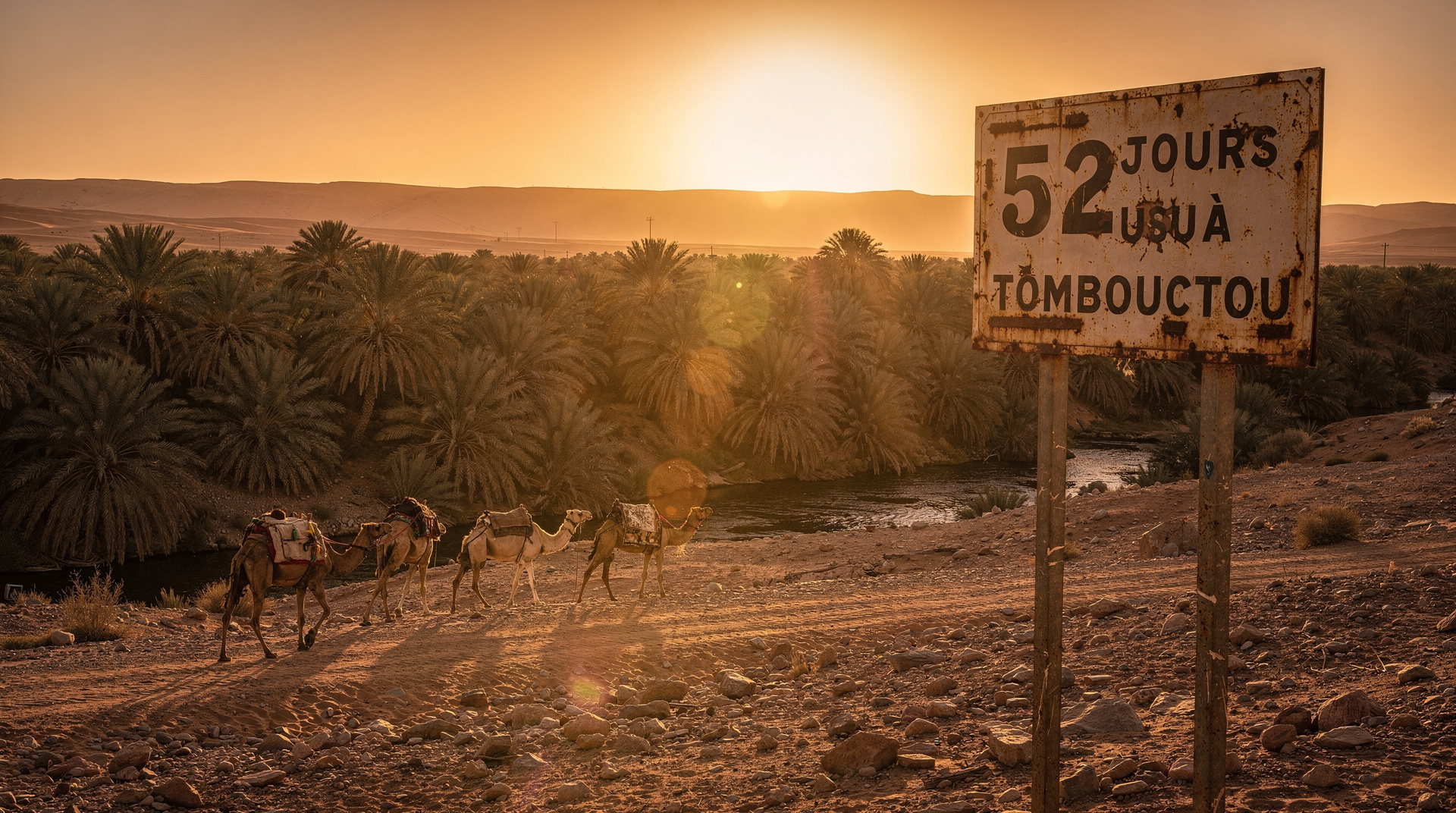
Zagora sits at the start of the Draa Valley, and the desert around it is genuinely ancient-feeling — this is the region where trans-Saharan caravans once departed for Timbuktu (a famous road sign in town reads “Tombouctou 52 jours”). The Erg Lehoudi dunes don’t match Merzouga’s scale, but the surrounding landscape of palm oases, kasbahs, and dark hammada (stony desert) is atmospheric in its own right.
What works well at Zagora:
- Doable in 2 days from Marrakech — 7h each way means a tight but manageable weekend.
- Less crowded. You’re less likely to share your sunrise moment with 40 other tourists.
- The Draa Valley route itself is a highlight: palmeraies, ancient kasbahs, and the contrast of green oasis against orange rock.
- Lower cost across the board: camps, transport, and packaged tours are all cheaper than Merzouga equivalents.
The friction points:
- The dunes are modest. At 30-40m, Erg Lehoudi won’t produce the dramatic ridge-top vistas of Erg Chebbi. If “massive dunes” is your main motivation, Zagora won’t fully deliver.
- Camp quality peaks at mid-range. There are comfortable camps, but the ultra-luxury glamping scene is concentrated around Merzouga and Agafay.
- The 7h drive is still a long drive. You spend a significant portion of a 2-day trip in transit.
The 2-day desert tour from Marrakech to Zagora is the standard approach — it handles transport and one night in a desert camp.
Who should choose Merzouga
- You have at least 3 days for the southern loop
- Experiencing large Sahara dunes is the centrepiece of your Morocco trip
- You want access to luxury camps or specific activities (quad, sandboard)
- You’re travelling from Fes rather than Marrakech (8h from Fes vs 10h from Marrakech — more manageable)
- Budget allows 250+ EUR for a shared tour or 400+ EUR for private
Who should choose Zagora
- You have exactly 2 days and want to tick “desert” without a gruelling transit
- You’re travelling with children who’d struggle with long drives
- Budget is a genuine constraint
- You’re already planning to see the Draa Valley — the desert is a natural add-on
- You prefer quieter, less touristy experiences even if the scenery is less dramatic
What about combining both?
Possible but not ideal for most itineraries. The two deserts are in different directions from Marrakech, and routing through both adds 500+ km with minimal logical connection. The exception is a 10-14 day trip that includes Merzouga on a Marrakech-Fes loop and swings through Zagora on the way back — but that’s a specialist itinerary, not a standard tour.
If you’re building your full Morocco loop, the Sahara from Marrakech vs Fes gateway guide explains the routing logic in detail.
Timing matters at both destinations
Peak season at both deserts is March-May and October-November. Summer (June-August) is genuinely extreme — temperatures at Merzouga hit 45-48°C regularly and the sand holds heat through the night. It’s survivable but not comfortable.
Ramadan affects camp services — fewer cooks, altered schedules, reduced activity options. In 2026, Ramadan runs approximately February 19 to March 19. Check the best time to visit Morocco guide for the full seasonal breakdown.
Winter nights (December-February) at both locations drop to near 0°C, even after scorching afternoons. Pack for the contrast.
Price reality check
A shared group tour (minibus, driver-guide, 1 night desert camp, breakfast) from Marrakech:
- Merzouga 3-day: 250–450 EUR per person depending on camp category
- Zagora 2-day: 180–300 EUR per person
Private tours cost roughly 2-2.5x the shared price. For a couple, a private tour to Merzouga works out at 600–900 EUR total, which is often worth it for the flexibility on timing and stops.
Camp upgrades make a significant difference at Merzouga. The jump from a standard camp (basic tent, shared toilets, buffet dinner) to a luxury camp (private tent suite, en-suite bathroom, curated dinner) is typically 100–200 EUR per person per night. See the luxury desert camps comparison for specifics.
For budget planning across your whole Morocco trip, the Morocco budget guide breaks down costs by travel style.
Practical logistics
Getting there independently: Both destinations are theoretically reachable by public transport (CTM bus to Zagora or Rissani for Merzouga), but the last stretch involves petit taxis and coordination that’s difficult if you don’t speak Darija. Organised tours are genuinely more efficient here.
When to book: October and April get booked out quickly for the better camps. If you have specific dates, confirm your camp at least 3-4 weeks ahead.
Cash: Merzouga village has ATMs; Zagora town has ATMs. Desert camps are cash only for extras. Bring MAD before you head into the erg.
Frequently asked questions about Merzouga vs Zagora
Can I do Merzouga in 2 days from Marrakech?
Technically yes, but it’s a punishing itinerary — roughly 10h of driving each way, with almost no daylight time at the dunes. A 3-day minimum is strongly recommended. If 2 days is all you have, Zagora is the more honest choice.
Which desert has better camps?
Merzouga has a far wider range and higher ceiling. Luxury glamping camps with private bathrooms, pools, and quality food are concentrated there. Zagora tops out at comfortable mid-range.
Are the Zagora dunes real Sahara?
Yes, Erg Lehoudi is genuine Sahara terrain. The dunes are smaller than Erg Chebbi but the desert landscape around Zagora — hammada, palmeraies, ancient caravan routes — is authentically Saharan.
Is Merzouga worth the extra drive time?
For most travellers, yes. If the Sahara is a priority on your trip (not just a box to tick), the extra 3 hours of driving is worth it for significantly more dramatic scenery and better activity options.
Can I see the Milky Way from both locations?
Both offer excellent dark-sky conditions far from city light pollution. Merzouga camps are often slightly better positioned inside the erg, away from the village lights, but both will produce spectacular night skies on a new moon in clear weather.
What should I pack for the desert?
For both: layers (it gets cold at night year-round), sunscreen, a headscarf for wind-blown sand, cash in MAD, and a charged power bank. Flip-flops for sand walking are useless — closed shoes or sandals with straps work better for dune climbing.
Is it worth doing both Merzouga and Zagora on the same trip?
For most itineraries, no — see the section above on combining both. Unless you have 10-14 days and are already routing through both regions for other reasons, pick one desert and spend the time saved elsewhere in Morocco.
Which desert is better for families with young children?
Zagora, for the shorter drive alone. A 10-hour transit each way to Merzouga is hard on small children; Zagora’s 7-hour version, while still long, is more manageable, and the calmer, less crowded camp environment suits younger kids better than Merzouga’s busier peak-season scene.
Activities compared
At Merzouga (Erg Chebbi)
Beyond camel rides, the Merzouga area has a developed activity infrastructure:
Quad biking: Multiple operators in the village rent quads for erg exploration. Typical pricing 30-50 EUR per hour. The wide, relatively flat sections at the base of the erg are the main quad terrain.
Sandboarding: Boards rented at most camps for around 10 EUR. Works best on steep, untracked faces — the guide or camp staff will point you to the best slope for the day depending on wind.
Gnawa music villages: The community of Khamlia near Merzouga is home to descendants of West African former slaves who maintain the Gnawa musical tradition. An afternoon visit to Khamlia — separate from the camp performances most tourists experience — gives genuine context to the music.
Fossil sites near Erfoud: The region around Erfoud and Rissani is one of the world’s richest paleontological areas. Trilobite, ammonite, and orthoceras fossils appear in market stalls throughout the area. Several operators run guided fossil-hunting excursions to actual extraction sites.
At Zagora (Erg Lehoudi)
Zagora’s activity menu is thinner but the surrounding landscape offers its own specific experiences:
Draa Valley exploration: The valley between Zagora and the Moroccan south is lined with ancient kasbahs, palmeraies, and Ksour (fortified villages). A half-day in the valley covers landscapes that feel entirely different from the dune-focused Merzouga area.
Tamegroute: A village 18km south of Zagora containing a famous ancient library (15,000+ manuscripts) and a still-functioning Sufi zawiya (religious school). Entry requires permission but is generally accessible for respectful visitors.
Road to M’Hamid: The road south from Zagora to M’Hamid (90km) passes through increasingly remote desert territory. The village of M’Hamid itself is the last before the Sahara becomes impassable without serious equipment — a worthwhile destination for those doing Zagora on a rented vehicle.
A third option: Zagora’s other erg
Zagora tours sometimes get routed to Erg Chigaga rather than Erg Lehoudi — a bigger, more remote dune field further south near M’Hamid, closer in scale to Merzouga but requiring an extra half-day of driving from Zagora town. If your itinerary mentions Erg Chigaga specifically rather than “Zagora desert,” you’re looking at a different product with different dune scale; the Zagora vs Erg Chigaga guide breaks down that distinction, which many tour listings blur.
More broadly, if you’re still deciding between a Sahara detour at all versus staying in the High Atlas, the Atlas vs Sahara Morocco guide is worth reading before locking in either desert. And whichever erg you pick, camel trekking in Morocco covers what the ride itself actually involves — pace, discomfort, and how long is genuinely enjoyable versus endured.
For the exact day-by-day shape of the classic route, the 3-day Sahara tour from Marrakech guide walks through the Merzouga version stop by stop.
Where to go next once you have picked a desert
Choosing the erg is only one decision in the trip. If Merzouga wins, the Merzouga destination page and the sandboarding in Merzouga guide help you plan what to do once you arrive, and stargazing in the Sahara explains how to get the most from the night sky. If Zagora suits you better, the Zagora destination page covers the town and its surroundings.
Whichever way you lean, think about how the desert fits the rest of your route. The desert-focused Morocco itinerary shows how a Sahara stay can anchor a longer trip, and the how to book a Sahara tour guide explains what to check before paying a deposit, from camp names to what is included. For a broader look at the tour styles on offer, see the 4x4 Sahara tours guide.