Best beaches in Morocco: top 10 for every type of traveller
What are the best beaches in Morocco for different types of travellers?
For dramatic scenery: Legzira (sea arches) and Asilah (whitewashed walls above the sea). For surfing: Taghazout and Imsouane. For families: Agadir's long sandy beach. For kitesurfing: Dakhla lagoon. For calm water: Oualidia's protected lagoon. For culture plus beach: Essaouira.
Morocco’s 2,000km of coast — and why most of it goes unvisited
Morocco has one of the most varied coastlines in the world — 2,092km from the Strait of Gibraltar in the north to the disputed territory of Western Sahara in the south, encompassing the Atlantic Ocean to the west and the Mediterranean Sea to the north. Despite this extraordinary length, most visitors see only Agadir’s resort beach or Essaouira’s windy ramparts, unaware that the coast between them (and far beyond in both directions) contains some of the most compelling beach destinations in the Mediterranean-Atlantic world.
This list covers 10 genuinely distinct beach experiences — from sea-arch drama to kite-friendly lagoons, from whitewashed hilltop towns to untouched Atlantic surf breaks — with practical information on how to reach each and the best time to visit.
| At a glance | |
|---|---|
| Where | Atlantic and Mediterranean coast, from Asilah in the north to Dakhla in the far south |
| Cost | Free beach access everywhere; grilled seafood plates around 40-80 MAD, oysters around 6 for 80-120 MAD |
| Time needed | A day trip for most beaches near Agadir/Essaouira; Dakhla needs 2+ days including travel |
| Getting there | Rental car for maximum flexibility; CTM/Supratours buses and grand taxis cover the main coastal towns |
| Best time | April-June and September-October for warm, uncrowded conditions |
1. Legzira: the most dramatic beach in Morocco
Location: 12km north of Sidi Ifni, Souss coast
Best for: Photography, walking, scenery
Nearest city: Agadir (2.5 hours north), Sidi Ifni (12km south)
Legzira’s natural sea arches — terracotta-red sandstone formations rising directly from the beach to 15–20m — are among the most striking coastal formations in Africa. The beach curves around two main arch systems, framing the breaking surf in a composition that is simultaneously prehistoric and immediately arresting. One of the original arches collapsed in 2016, which has if anything concentrated attention on the remaining formations.
The beach is not swimmable (strong currents, no infrastructure for lifeguarding), but as a walking and photography destination it is exceptional. At low tide, you can walk beneath the arches; at high tide, the sea reaches their bases.
Getting there: From Agadir, take the N1 south to Tiznit, then the P1080 to Sidi Ifni, then 12km north on the coast road. Grand taxis run from Sidi Ifni. No direct public transport from Agadir — a rental car or day tour from Agadir is the practical option.
Stay nearby: Sidi Ifni’s small hotels (Casa Vera, Hôtel Suerte Loca) are 12km away. Mirleft (see entry below) makes a better base for coastal exploration.
2. Paradise Valley: the oasis swimming pools
Location: Inland from Agadir, Souss Valley
Best for: Swimming in river pools, family day trips
Nearest city: Agadir (30km)
Paradise Valley is not technically a beach — it is a palm oasis along the Oued Tamraght river, where a series of natural rock pools carved by the river provide swimming in clear, cool freshwater. The dramatic cliffs around the gorge, the overhanging palm canopy, and the turquoise colour of the pools make this one of the most photographed “beach” destinations in southern Morocco despite being 20km inland.
In spring (March–May), the flow is strongest and the pools are at their deepest. Summer heat makes this an even more popular escape. The café infrastructure along the path to the upper pools serves good mint tea and simple food.
Book a Paradise Valley day trip from Agadir with lunchGetting there: Day tours from Agadir are the easiest option. By car: take the Tiznit road south from Agadir, turn right at the Tamraght sign, follow the valley road inland.
3. Essaouira: culture and wind on the Atlantic
Location: Atlantic coast, 2.5 hours west of Marrakech
Best for: Culture, windsurfing, photography, seafood
Type: Long Atlantic beach with consistent wind
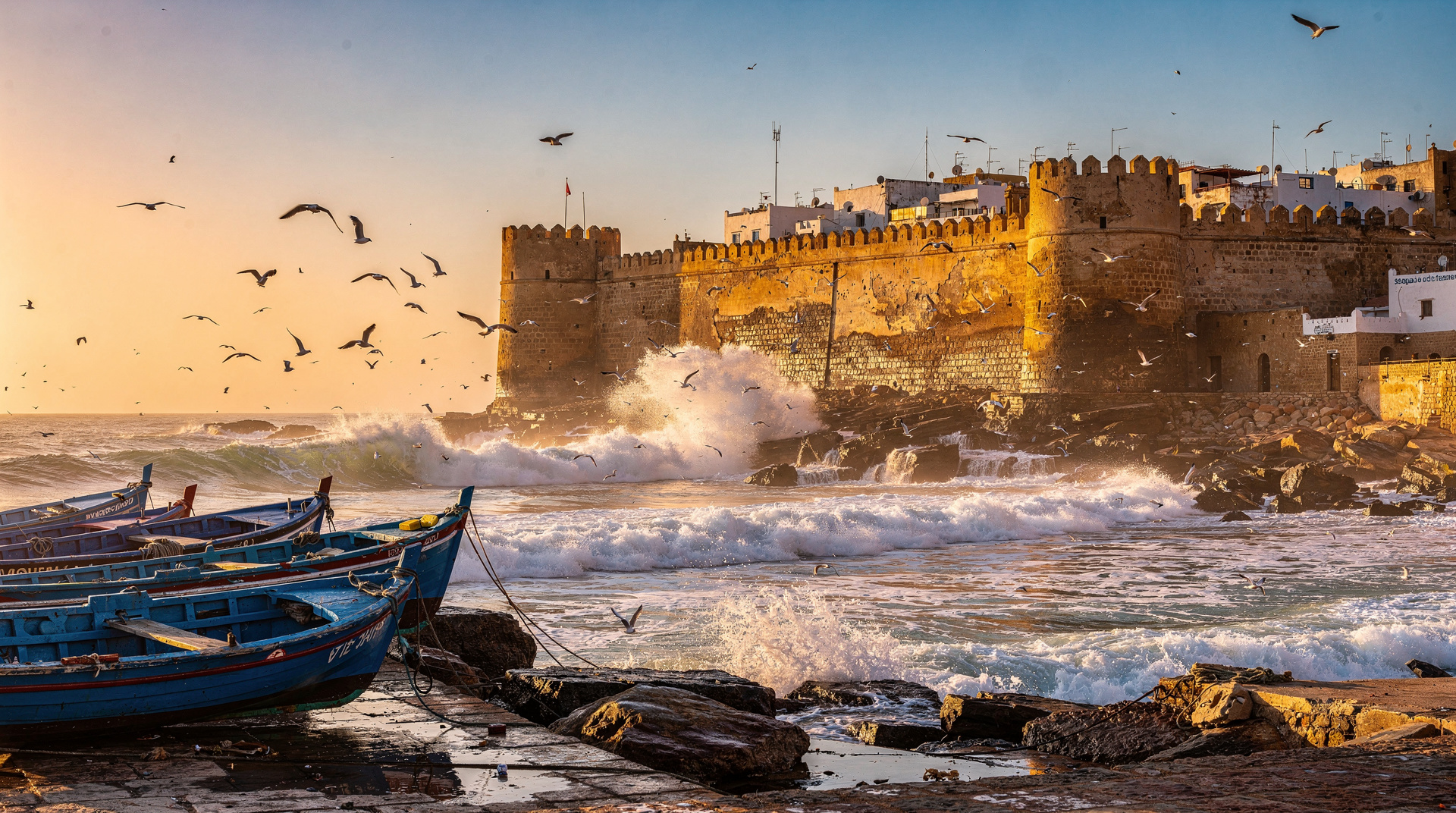
Essaouira’s beach is long (15km of sand), consistently windy (the Alizé trade wind blows almost daily from April to October), and attached to a UNESCO-listed medina that makes the town one of Morocco’s most complete cultural beach destinations. You don’t come to Essaouira purely for the beach — you come for the ramparts, the blue fishing boats, the seafood restaurants in the port, and the wind that fills the kite school flags along the shore.
The swimming is variable — the wind creates significant wave activity and the currents are not lifeguarded — but the beach walking, horse riding, and watersports access are excellent. Essaouira is also the best place on Morocco’s coast to eat: the fresh fish and seafood grills in the port (40–80 MAD for a full grilled fish plate) are among the country’s best value meals.
For the surfing and kitesurfing possibilities, see the dedicated Essaouira surf guide and kitesurfing guide. If you would rather be on the sand than in the water, you can arrange horse riding along the beach, or try a surf lesson if you want to test the waves with an instructor.
Getting there: CTM and Supratours buses from Marrakech (2.5 hours, from 100 MAD). Shared taxis also run this route. Day trips possible from Marrakech but an overnight is recommended.
4. Oualidia: Morocco’s calm-water lagoon
Location: Atlantic coast, between El Jadida and Safi
Best for: Families, swimming, oysters, windsurfing beginners
Type: Protected lagoon
Oualidia’s lagoon is the exception to the Atlantic’s generally powerful wave character — a natural protected bay behind a sand bar where the water is calm, warm, and swimmable by children and non-swimmers. The lagoon is also Morocco’s oyster capital: the oyster beds that line its shores produce a significant portion of Morocco’s oyster supply, and the beachside restaurants serve them fresh (6 for 80–120 MAD) alongside grilled seafood.
The town itself is modest (a few hotels, restaurants along the beach road, a kasbah ruin on the headland) but the combination of calm water and excellent seafood makes Oualidia one of the Atlantic coast’s most pleasant beach stops. It is particularly good for families and for visitors who want a beach day without competitive wind and currents.
Getting there: On the N1 coastal road between El Jadida and Safi. Reachable by bus or shared taxi from Casablanca (2.5 hours north) or Essaouira (2.5 hours south). See the Atlantic coast road trip guide for how to incorporate Oualidia into a coastal itinerary.
5. Taghazout: Morocco’s premier surf town
Location: 20km north of Agadir
Best for: Surfing, surf camps, beginners to advanced
Type: Atlantic surf beach with multiple breaks
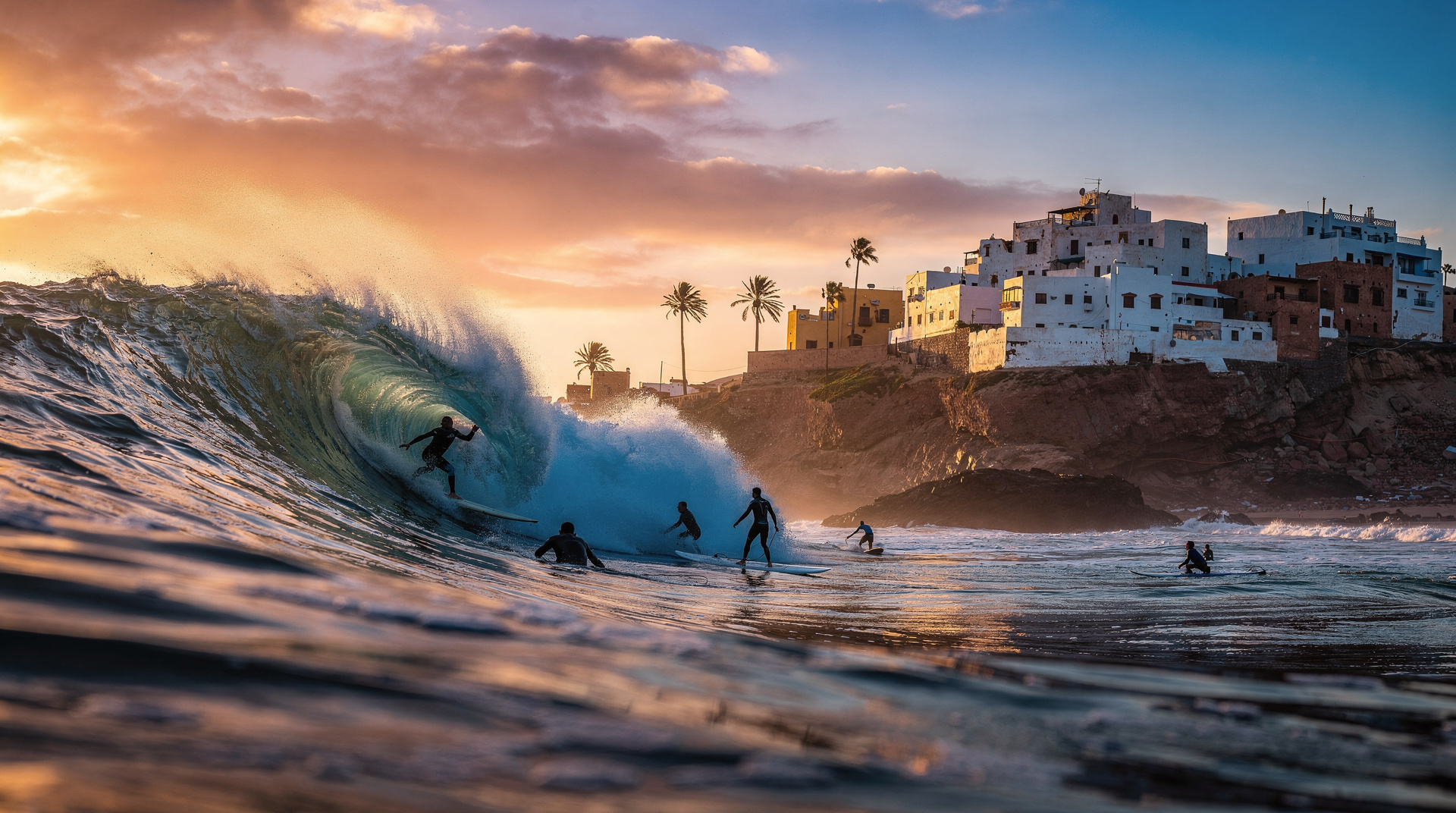
Taghazout has transformed from a quiet fishing village into Morocco’s surfing capital over the past two decades, driven by consistent Atlantic swells, a concentration of quality breaks within a short radius, and a growing ecosystem of surf camps and schools that make it accessible to complete beginners. The main breaks — Anchor Point, Hash Point, Killer Point, Panoramas — range from beginner-friendly beach break to world-class point break territory.
The town itself has outgrown its original character somewhat — the main street is now firmly oriented toward surfers, with surf shops, smoothie cafés, and accommodation at every price point — but the surrounding area retains stretches of emptier coast. For the full surfing breakdown, see the Morocco surfing guide.
Getting there: 20km north of Agadir on the P2083. Grand taxis from Agadir’s main taxi stand run this route. Surf camps typically include pickup from Agadir airport.
6. Mirleft: cliffs, deserted beaches, no crowds
Location: 35km south of Sidi Ifni, Souss-Anti-Atlas coast
Best for: Off-the-beaten-track, scenery, small guesthouses
Type: Cliff-backed coves and long surf beaches
Mirleft is where Morocco’s Atlantic coast empties out. South of Sidi Ifni, the tourist density drops to almost zero. Mirleft’s collection of cove beaches — some accessible by cliff path, one with a rock arch, several long surf beaches with no infrastructure — represents what the Algarve or the Catalan coast might have looked like 40 years ago.
The small town (3,000 residents) has a handful of genuinely excellent small guesthouses (Kerdous, La Maison Anglaise, La Villa Camélia) run by a mix of Moroccan and European owners who came here, fell in love with the isolation, and stayed. The surfing is uncrowded and the sunsets are exceptional.
Best beaches: Plage Mirleft (long, surf), Plage Aftas (cove, snorkelling), Plage Amsra (cliff access, dramatic). A car is essential to access the outlying beaches.
Getting there: Grand taxis from Sidi Ifni (35km north). From Agadir, the most efficient approach is a rental car — Mirleft is 3 hours south and the road quality requires flexibility that public transport doesn’t offer.
7. Sidi Kaouki: surfers, horse riders, and empty beach
Location: 25km south of Essaouira
Best for: Surfing, horseback riding, solitude
Type: Long exposed Atlantic beach with surf
Sidi Kaouki’s beach stretches for 20km with a small sanctuary (the marabout of Sidi Kaouki) as its only landmark. The surf here is more consistent than Essaouira’s but more exposed — there are no natural breaks to moderate the Atlantic swell. This makes it excellent for surfing (particularly longboarding) and wind sports, but not for casual swimming.
The village above the beach has 3–4 guesthouses and a couple of restaurants. It is a genuinely quiet place — a functioning alternative to Taghazout for surfers who want fewer neighbours. Several outfitters offer horse riding along the beach at sunset, one of the more cinematically Moroccan experiences available.
Getting there: 25km south of Essaouira on a partially paved road. Grand taxi from Essaouira or a rented bike (a popular option for the fit visitor).
8. Asilah: whitewashed art town on the Atlantic
Location: 40km south of Tangier, northern Atlantic coast
Best for: Culture, town beach, photography, day trips from Tangier
Type: Town beach with medina setting
Asilah is Morocco’s most aesthetically curated small town — a Portuguese-built medina with whitewashed walls splashed annually with new murals (the Asilah Arts Festival each August attracts international artists), a small rampart walk above the Atlantic, and a sandy town beach directly below the walls.
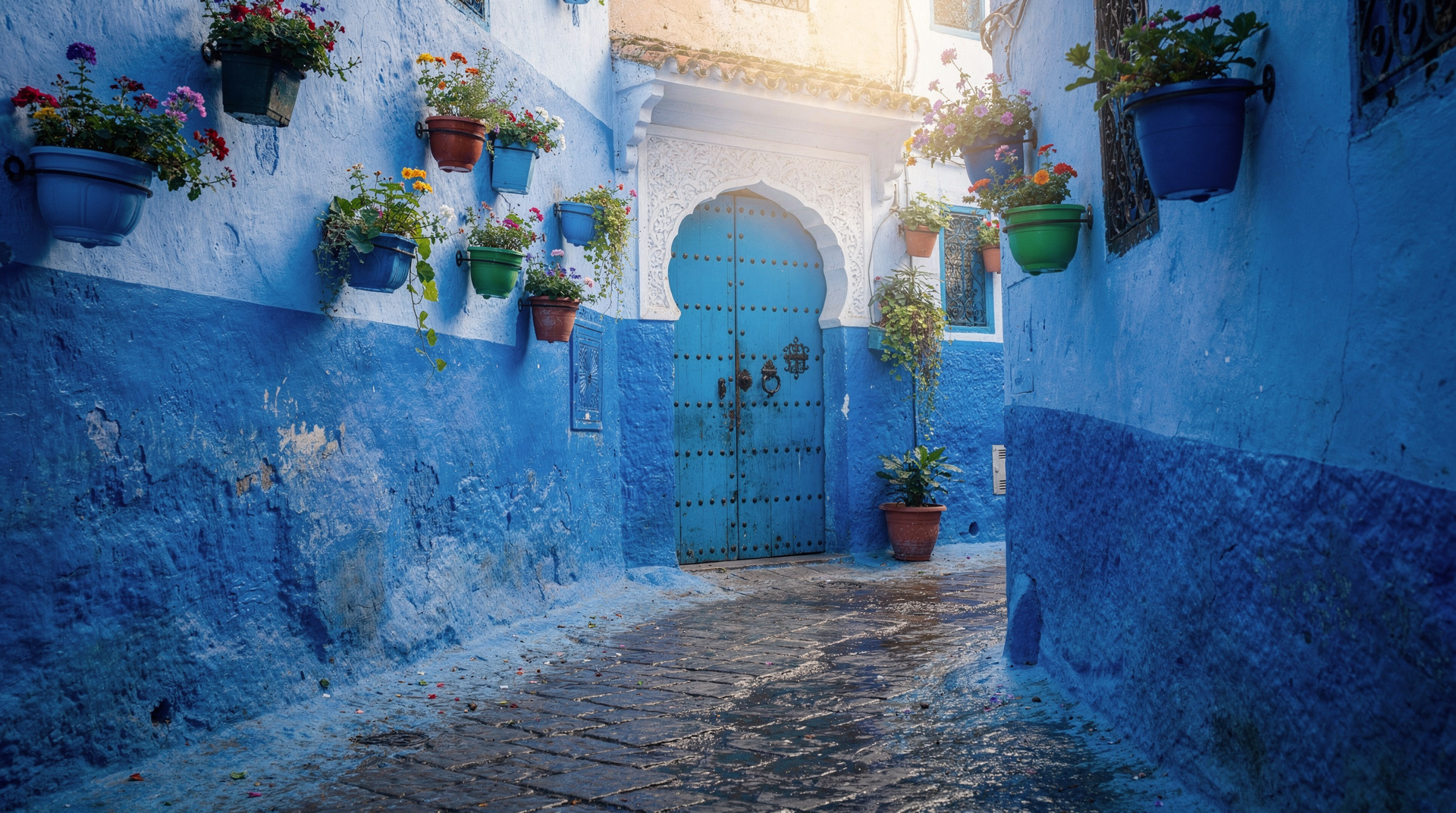
The beach is pleasant and generally calmer than the Atlantic coast further south — the position near the Strait of Gibraltar moderates the wave character. The medina is one of the most photogenic in Morocco, painted in a palette of whites and blues that anticipates Chefchaouen’s more famous colour scheme.
Getting there: Regular trains and CTM buses from Tangier (40 minutes). Day trip from Tangier is the most common approach; overnight stays in Asilah’s riads are excellent.
9. Dakhla: the world’s best kite lagoon
Location: 550km south of Agadir (Western Sahara)
Best for: Kitesurfing, windsurfing, flat-water sports
Type: 40km protected lagoon
Dakhla’s lagoon is one of the premier kite and windsurf destinations on the planet — a 40km-long, 25km-wide lagoon protected by a sand spit, with the Saharan wind blowing consistently from the northeast at 25–35 knots for approximately 300 days per year. The water inside the lagoon is flat, shallow, and warm. The combination of constant wind, flat water, and sunshine has attracted a global kite community that sustains a dozen or more surf camps and kite schools along the lagoon shore.
Dakhla is remote — it is in the disputed Western Sahara territory, which Morocco administers but which is the subject of ongoing UN negotiations. Access requires a valid passport (no visa required for most nationalities), and the 550km drive from Agadir is genuinely long but manageable over two days. Alternatively, Royal Air Maroc flies from Casablanca.
For the full kitesurfing breakdown, see the Morocco kitesurfing guide.
Getting there: Fly from Casablanca Casablanca to Dakhla on Royal Air Maroc (2 hours). Drive south on the N1 from Agadir — a spectacular journey through coastal desert. Moroccan border crossing into Western Sahara is routine and quick.
10. Agadir: the reliable resort
Location: Southern Atlantic coast
Best for: Families, resort amenities, first-time visitors to Morocco’s coast
Type: Long organised resort beach
Agadir’s 8km of sandy beach is Morocco’s most developed coastal resort — consistently calm (protected bay), clean sand, sun lounger rentals, supervised swimming, and a full range of watersports (jet skis, banana boats, parasailing). It is not Morocco’s most interesting beach, but it is the most reliably family-friendly and the most accessible for visitors who want a beach holiday with amenities rather than an adventure.
The 2004 seafront renovation produced a pleasant promenade with restaurants and cafés. The beach is clean (Blue Flag certified in some sections), the water is swimmable most of the year, and the hotel strip behind the promenade offers every price point from budget to five-star.
Getting there: Agadir Al-Massira Airport (AGA) receives direct flights from most European cities. The city is well-served by CTM from Marrakech (3.5 hours), Essaouira (2.5 hours), and Casablanca (6 hours).
Choosing between the beaches
Not every beach on this list suits every trip, and a few pairings work better than others. Legzira and Mirleft belong together: both sit on the quiet southern stretch, and the Legzira beach page and the Mirleft destination guide help you decide how to split your time. If you only have a day around Agadir, the Taghazout destination guide and the Paradise Valley destination guide show how to combine surf town and river pools without rushing.
For a cultural stop with sea air, compare Essaouira and Agadir directly in Essaouira vs Agadir, or weigh up the surf-town alternative in Taghazout vs Essaouira. Travellers based in Marrakech can read the Essaouira day trip from Marrakech to see what a single day on the coast really gives you.
In the north, the Asilah day trip from Tangier and the Asilah destination guide cover the town beach and medina in more detail. In the far south, the Dakhla destination guide goes deeper on the lagoon and its remoteness, while the Sidi Kaouki destination guide is the better companion if you want a quieter alternative to Essaouira’s windy shore.
Comparing the beaches
| Beach | Swimming | Surfing | Kite | Scenery | Crowds |
|---|---|---|---|---|---|
| Legzira | Not recommended | No | No | Exceptional | Low |
| Paradise Valley | Excellent (pools) | No | No | Very good | Moderate |
| Essaouira | Moderate | Yes | Yes | Very good | Moderate |
| Oualidia | Excellent | No | Beginner | Good | Low |
| Taghazout | Moderate | Excellent | Yes | Good | High (surfers) |
| Mirleft | Variable | Good | No | Exceptional | Very low |
| Sidi Kaouki | Not recommended | Good | Yes | Very good | Very low |
| Asilah | Good | No | No | Excellent | Moderate |
| Dakhla | Lagoon | No | Exceptional | Striking | Low-moderate |
| Agadir | Excellent | No | No | Good | High |
Planning a coastal Morocco trip
The Atlantic coast road trip — from Tangier south through Rabat, Casablanca, El Jadida, Oualidia, Essaouira, Agadir, Mirleft, and beyond — is one of the great drives in Africa. See the Atlantic coast road trip guide for the full itinerary with driving times and stop recommendations.
For surfing specifically, the Morocco surfing guide covers the best spots by region and season. For kitesurfing, the Morocco kitesurfing guide covers Dakhla, Essaouira, and Moulay Bouzerktoun in detail.
The Essaouira destination guide and the Agadir and Taghazout section provide practical planning information for Morocco’s two most accessible beach destinations.
Frequently asked questions about Best beaches in Morocco
Is swimming safe on Morocco’s Atlantic beaches?
Variable by location. The Atlantic coast has a generally powerful wave character with significant rip currents on exposed beaches. Oualidia lagoon and Agadir bay are reliably safe for swimming. Essaouira, Taghazout, Legzira, and Sidi Kaouki require caution — swim only in designated areas, and if there are no lifeguards, look for local advice before entering.
When is the best time to visit Morocco’s beaches?
April to June and September to October offer the best combination of warm (not hot) temperatures, manageable crowds, and good surf and kite conditions. July and August are peak season — crowded and very hot inland. The Atlantic coast remains cooler than inland Morocco throughout summer due to the ocean influence.
Can I visit Dakhla without a special permit?
No special permit required — standard passport, which Morocco stamps on arrival. Western Sahara is administered by Morocco and Moroccan visa rules apply. Most Western nationalities enter Morocco without a visa for up to 90 days, which covers the entire Western Sahara territory.
Which Morocco beach is best for a first-time visitor with limited time?
Essaouira, if you want culture and beach combined and are based near Marrakech (2.5 hours by bus). Agadir if you want a straightforward, reliable resort beach with amenities for families. Both are easy day trips or short stays without a rental car.