Airbnb vs Riad in Marrakech: Which Accommodation?
Should I book a Marrakech riad or Airbnb apartment?
For most visitors, a riad is the better choice — the courtyard architecture, medina location, and personal service are central to the Marrakech experience. Airbnb apartments in Gueliz work well for longer stays or families needing kitchen access and more space. Be aware: some Marrakech medina Airbnb listings operate legally ambiguously, and the short-term rental market is less regulated than formal riad accommodation.
The accommodation debate that divides Marrakech visitors
Marrakech’s accommodation market is split between the famous riad model — historic courtyard houses converted to boutique hotels — and a growing Airbnb/short-term rental market of apartments in both the medina and the modern Gueliz neighbourhood. Both work, but they serve different needs and come with different considerations.
This guide addresses the comparison honestly, including the legal context that affects some Airbnb listings in the medina.
At a glance
| Where | Medina (riads and traditional-house Airbnbs) vs Gueliz/Hivernage (modern apartments) |
| Cost | Riad around 80-200 EUR/night mid-range; Airbnb apartment around 60-150 EUR/night |
| Time needed | Applies to any stay length; kitchen-equipped apartments pay off most on stays of 7+ nights |
| Getting there | Riads are walk-in only via medina alleys — confirm a meeting point in advance; Gueliz apartments allow car access |
| Best time | Book riads months ahead for peak season (October-April); Airbnb availability is generally more flexible |
The quick comparison table
| Factor | Riad | Airbnb (Apartment) |
|---|---|---|
| Location options | Medina (primarily) | Medina + Gueliz + Hivernage |
| Architecture | Historic courtyard house | Varies — modern to traditional |
| Service | Included — reception, breakfast, concierge | Self-service (host may or may not be nearby) |
| Breakfast | Usually included | Not typically |
| Kitchen access | Rarely | Usually yes |
| Space for groups | 2-12 rooms typically | Apartments from studio to 5-bed |
| Price (per night, mid-range) | 80-200 EUR | 60-150 EUR |
| Legal certainty | Licensed properties are fully legal | Variable — see below |
| Check-in experience | Personal, at the riad | Key exchange, may be unstaffed |
| Neighbourhood feel | Medina immersion | More residential |
| Car access | Usually no (medina) | Possible in Gueliz |
| Courtyard / outdoor space | Always | Only if specifically advertised |
| Noise level | Medina ambient noise | Varies by property |
| Cancellation flexibility | Variable | Platform policy applies |
The case for a riad
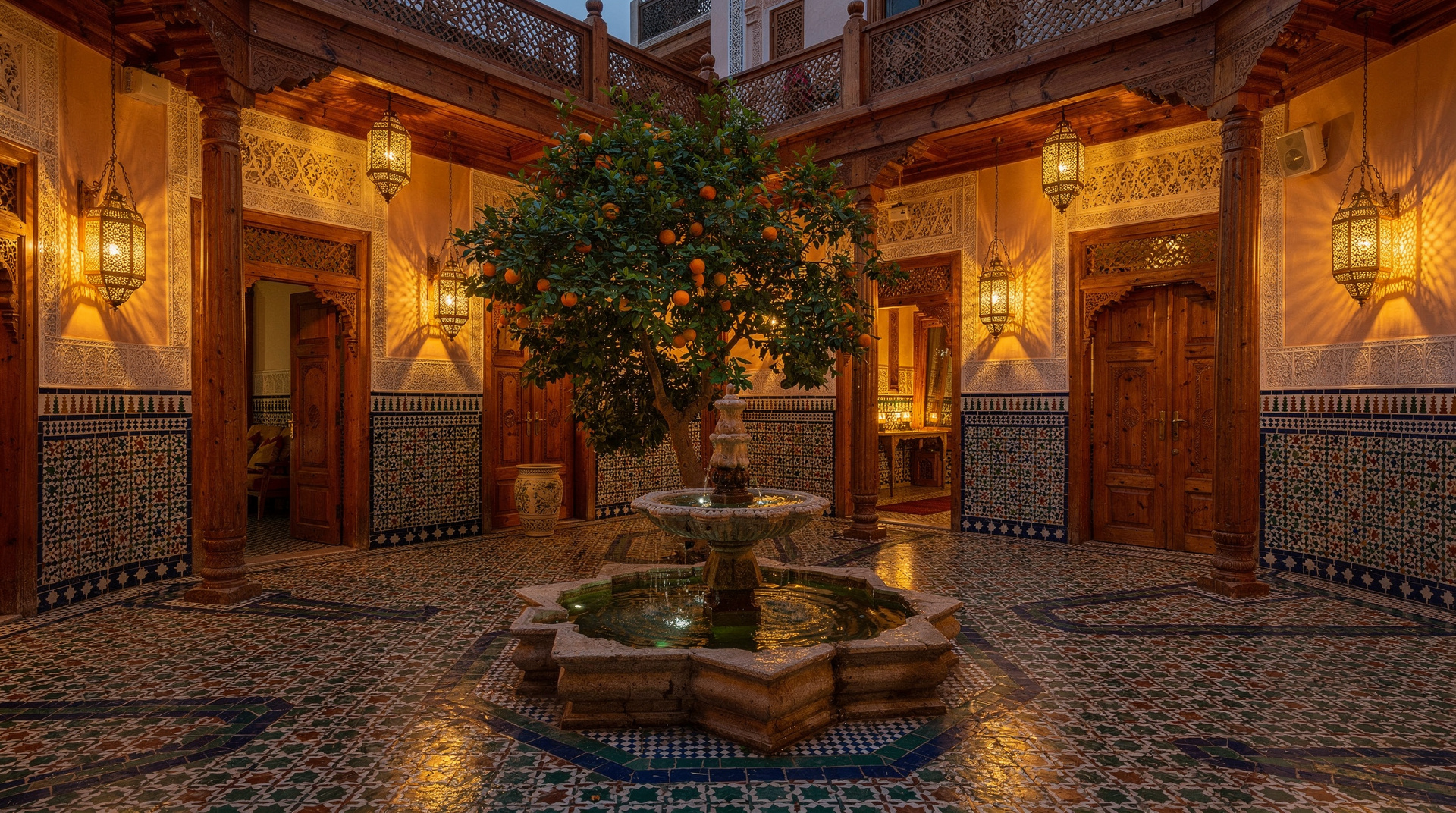
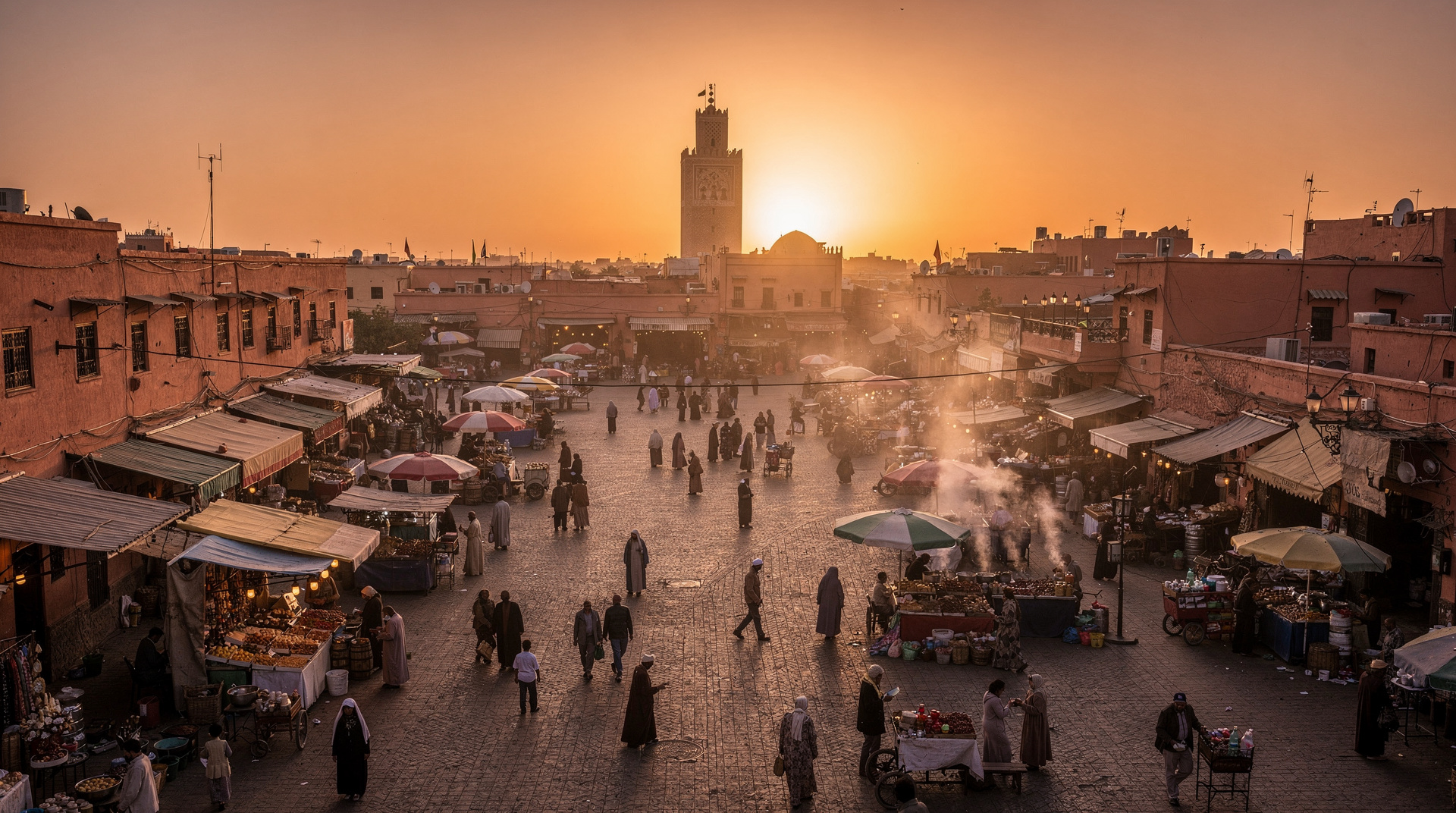
The riad is Marrakech’s defining accommodation product. Walking through an unmarked door in a medina alley into a tiled courtyard with a fountain, orange trees, and a rooftop terrace — this is a fundamentally Moroccan experience that an apartment can’t replicate.
Why a riad wins:
- The architecture is the accommodation. The zellige tilework, carved plaster ceilings, cedar wood furniture, and central fountain aren’t decorative extras — they’re the building itself, typically 100-300 years old
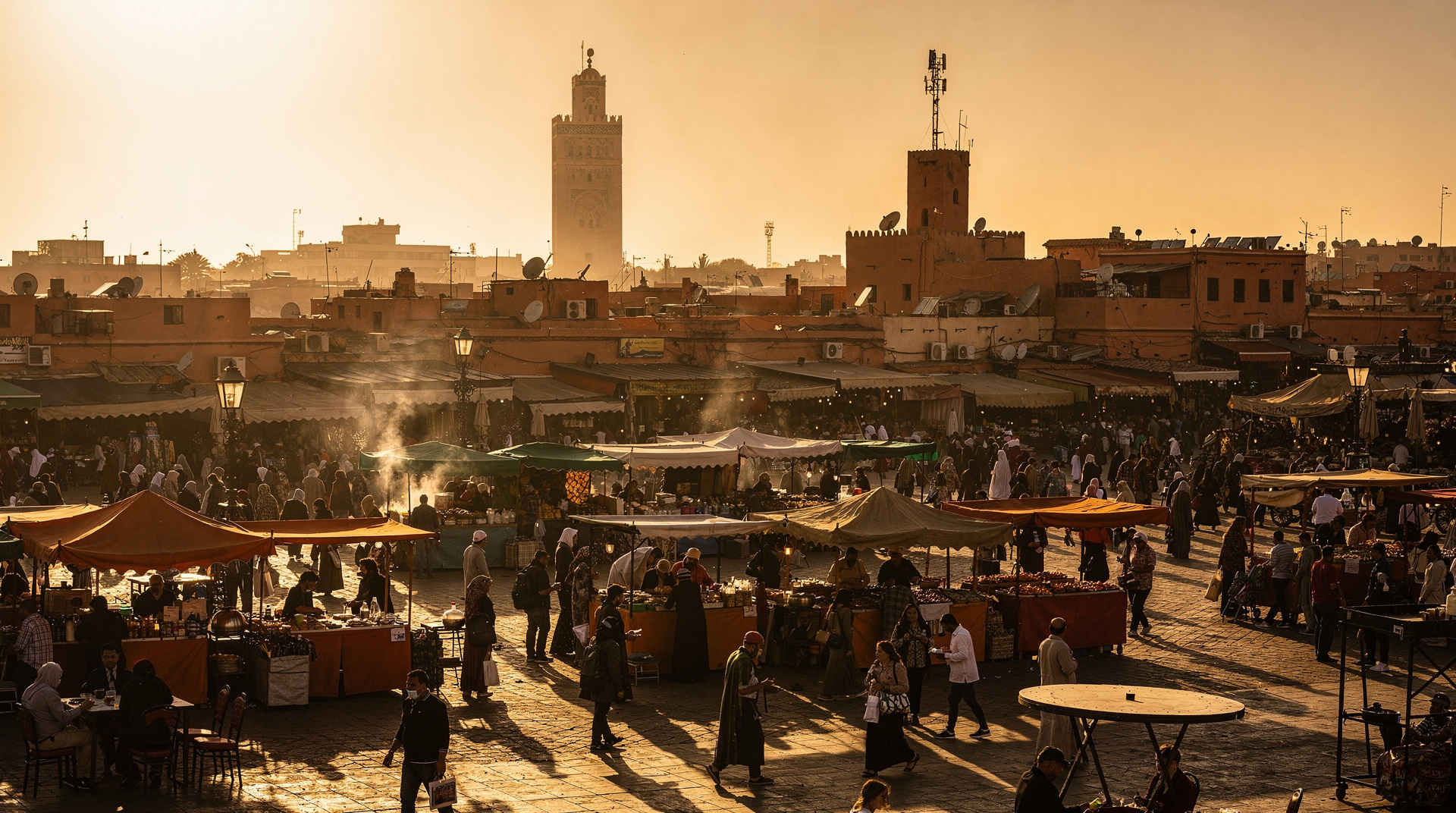
- Medina immersion is immediate. Your riad is inside the historic city, within walking distance of every major monument and souk. You wake up to the call to prayer and the smell of the neighbourhood bread oven
- Service quality at well-run riads is genuinely personal. A 10-room riad has the same number of guests as a single floor of a large hotel, with a team that knows your name and preferences
- Breakfast is almost always included and is a genuine pleasure: fresh msemen, Moroccan bread, amlou, honey, olive oil, fresh juice, and mint tea in the courtyard
- The riad model is well-understood: licensing requirements, quality standards, and guest protection are clearer than the Airbnb market
- In-house hammam services, cooking classes, and guided tours are often arrangeable through the riad — the concierge function matters for first-time visitors. For example, many riads will organise a traditional hammam and spa experience — 2–3 hours, includes kessa scrub and massage for you on arrival day
The honest limitations:
- Walking to the riad through medina alleys with luggage is the standard arrival experience — unavoidable, occasionally frustrating
- GPS doesn’t reliably navigate medina alleyways. Most riads send WhatsApp location pins and offer to meet at the main gate — use this
- Riads rarely have large pools at mid-range price points. Rooftop terraces are standard; ground-level pools require going to the luxury end (200 EUR/night and above)
- The medina is noisy at night — souks winding down, occasional music, cats, calls to prayer at 5am. This is part of the experience but not for everyone
The case for an Airbnb apartment
Airbnb and similar platforms have a growing Marrakech presence, primarily in two areas: the medina (traditional houses rented as whole properties) and Gueliz (the French-era new city, with modern apartments).
Why an Airbnb apartment can work:
- For groups of 4-8 people, renting an entire riad-style house as a whole property can be more cost-effective than booking individual riad rooms — and you have the space entirely to yourselves
- Kitchen access is available in most apartments — useful for longer stays, families with children who need flexible meal timing, or travellers avoiding restaurant costs
- Gueliz apartments offer car access (parking available), proximity to modern restaurants and supermarkets, quieter nights, and a more residential atmosphere for travellers who want less medina immersion
- Self-catering options give dietary control that riad breakfast service doesn’t — important for families with specific needs
- For longer stays (1-2 weeks), apartment pricing can be significantly better than nightly riad rates, and the kitchen makes the economics of a longer trip work better
The legal situation — an honest note:
Morocco regulates short-term tourist accommodation. Properties that take tourist guests are supposed to be registered with the tourism authorities and carry the relevant licence. In practice, many individual medina properties listed on Airbnb operate without this licensing — which creates ambiguity about guest rights, tax compliance, and the building owner’s insurance coverage.
This doesn’t mean these properties are unsafe or that your stay will be problematic — most experiences are fine. But it does mean:
- Your booking may not carry the same legal protections as a licensed property
- In the event of a problem (maintenance failure, booking dispute), resolution may be more difficult than with a licensed riad
- The property may operate without the safety checks that licensed establishments require
Whole-property rentals (renting the entire building, often marketed as “exclusive riad rental”) are more commonly above-board. Individual apartment rooms within a family home are the most legally ambiguous category.
If legal clarity matters to you, filter for properties that explicitly state they hold a tourism licence (licence d’exploitation touristique) — though this information isn’t always displayed on the platform.
Medina vs Gueliz: the neighbourhood choice
The choice of accommodation type is inseparable from the neighbourhood question.
Medina Airbnb: Usually converted traditional houses that function similarly to riads. The appeal is the same as a riad — architecture, location, medina immersion. The downside is that many operate without full licensing and service is more variable (Airbnb host rather than professional riad staff).
Gueliz Airbnb: Modern apartments in the French-era new city. Very different experience — contemporary building, car access, proximity to Gueliz restaurants (some of Marrakech’s best modern dining is here), and a completely different atmosphere from the medina. Good for longer stays, families, and travellers who want Marrakech as a base without constant medina immersion.
Hivernage Airbnb: The neighbourhood between Gueliz and the medina — upscale, with some hotel-apartment options. Less character than Gueliz, less proximity to medina than staying in the old city.
By traveller type
First-time visitors: Riad, without question. The medina experience and personal service orientation provide context that transforms the trip.
Families with children: Depends on the children’s ages. Riad for families who can handle narrow alleys and steps (riads typically have several staircases). Gueliz apartment for families who need kitchen access, car accessibility, and a more predictable environment.
Longer stays (7+ nights): Airbnb apartment in Gueliz for cost efficiency and kitchen access. You can base there and take daily excursions into the medina.
Groups of 6-12: Whole-property riad rental on Airbnb or via specialist riad agencies can work very well — you get the architecture and the exclusivity.
Budget travellers: Budget riads (60-90 EUR/night) and budget Airbnb apartments are priced similarly. The riad typically wins on character.
Luxury seekers: La Mamounia, the Royal Mansour, and Selman are in the riad/palace-hotel category and provide the best luxury Marrakech has. No Airbnb matches these.
Verdict by scenario
3-night romantic trip: Riad in the medina — non-negotiable for the atmosphere.
7-night family trip: Gueliz apartment with kitchen. Day trips to the medina as needed.
Solo traveller on a budget: Riad hostel room (yes, some riads offer hostel-style dorms at 25-40 EUR/night) or a budget Gueliz apartment.
Group of 8 friends: Whole-property riad rental — a 8-12 room riad rented exclusively is exceptional value and a genuinely memorable group experience.
Finding quality accommodation in each category
For riads: specialist booking platforms like Riads Maroc or direct booking through the riad’s own website often provide better prices and clearer communication than generic hotel platforms. For luxury riads, advance booking is essential — the top properties in Marrakech book out months ahead in peak season.
For Airbnb: prioritise properties with large numbers of reviews (not just high ratings) and filter for “entire place” rather than private rooms in shared properties for the clearest experience. For medina properties, ask the host explicitly about their tourism licence status before booking.
The Marrakech destination guide includes specific neighbourhood recommendations and key landmarks to check when evaluating accommodation. The riad vs hotel guide provides more detail on the riad model across Morocco more broadly.
Whether you choose a riad or an apartment, first-timers benefit from a structured orientation. The Bahia Palace, Madrasa Ben Youssef and medina guided tour — half-day with a licensed guide, from €20pp gives you the spatial logic of the medina in a single morning, making independent navigation much easier afterwards.
Frequently asked questions about Airbnb vs Riad in Marrakech
How do I find my riad in the medina? The GPS doesn’t work.
This is the most common Marrakech arrival problem. Best approach: message your riad to confirm the meeting point before you arrive (most will send a WhatsApp pin and offer to send staff to the nearest gate or landmark). Landmarks to navigate from: Djemaa el-Fna (south medina) and Bab Doukkala (north medina) are the most reliable anchor points. Avoid arriving late at night without confirmed directions.
Can I park a rental car at a medina riad?
No. Medina streets don’t allow cars. Parking is available in official lots outside the medina walls — the largest are around Bab Doukkala and near the Djemaa el-Fna. Most riads will advise on the nearest lot. Factor in a 5-15 minute walk with luggage.
Is Airbnb cheaper than riads in Marrakech?
At the mid-range level, prices are broadly comparable. The cost difference becomes more significant for longer stays (Airbnb weekly rates are usually better) and for groups using whole-property rentals. For a couple for 3 nights, a quality riad and a quality medina Airbnb property are usually within 20-30 EUR/night of each other.
Are medina Airbnbs safe?
Safety in terms of physical security is generally fine — Marrakech’s medina is relatively safe and Airbnb hosts are motivated to maintain their listings. The “safety” concern is more about legal compliance and service quality consistency than personal security. Read reviews carefully and ask hosts directly about any concerns.
What’s the best neighbourhood in Marrakech to stay?
For first-time visitors: the medina, as close to the main souk area as your budget allows. For repeat visitors or longer stays: Gueliz for a completely different Marrakech experience. The Mellah (Jewish quarter) near Bahia Palace is underrated — quieter than the main medina core, slightly cheaper, and genuinely atmospheric.
Where do I actually find well-reviewed riads to book?
Start with a curated shortlist rather than a generic search — the best riads in Marrakech guide covers a range of price points, and the best riads for a Marrakech honeymoon guide is useful if privacy and a rooftop plunge pool matter more than location.
Is a hostel a realistic budget option instead of either?
Yes, for solo travellers and younger budget travellers. The budget hostels in Morocco guide covers dorm and private-room hostel options in the medina, which sit below both riad and Airbnb pricing.
What your choice means for the rest of your stay
The accommodation decision ripples into how the rest of your Marrakech time works. A riad concierge will typically arrange your hammam visit directly — worth knowing the etiquette beforehand via the hammam etiquette guide or the broader traditional hammams in Morocco guide. If you’re staying in Gueliz rather than the medina, expect to budget more taxi time to reach the souks and monuments each day — factor that into your daily plans, especially if your trip also includes day trips like the Agafay desert day trip, which most operators pick you up for regardless of neighbourhood.
Where accommodation fits into the wider trip
Your base shapes how the rest of the itinerary feels. If Marrakech is one stop among several, a riad is easy to pair with the first-time visitors guide and the 7-day Morocco itinerary, both of which assume you will be on foot in the medina for part of each day. Travellers weighing Marrakech against other bases can read the Marrakech vs Essaouira base comparison before locking in dates.
Luxury travellers who want the full palace-hotel experience rather than a riad or an apartment will find detail in the La Mamounia review and the Royal Mansour review. Families choosing between a kitchen-equipped apartment and a courtyard house should also look at the kid-friendly riads in Marrakech guide, which shows that a riad can work with children when you pick the right property.
Finally, if you are still deciding how much of your budget should go to the bed itself, the budget guide helps you balance accommodation against food, transport and excursions.