Quick facts
- Language
- Tamazight, Darija, some English
- Population
- ~2,500
- Distance from Agadir
- 20 km north (25 min by car)
- Best for
- Surfing, yoga, beach, Atlantic scenery
Morocco’s Surf Village
Taghazout is the kind of place that changes plans. Travellers stop for two nights on the way between Agadir and Essaouira and find themselves still there a week later — pulled in by the consistency of the surf, the warmth of the village’s small fishing-community character, and the rare quality of doing very little in a very beautiful place.
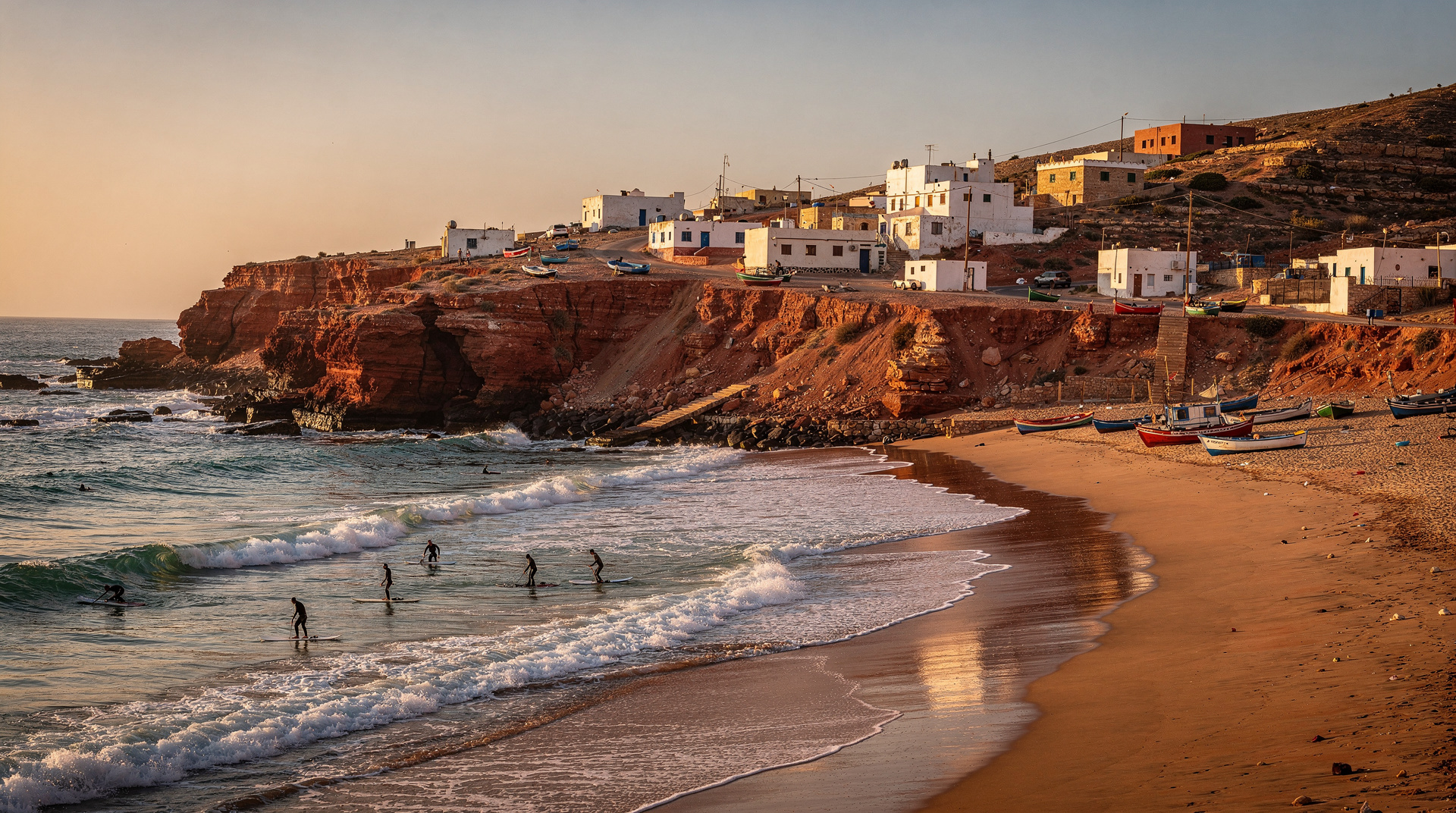
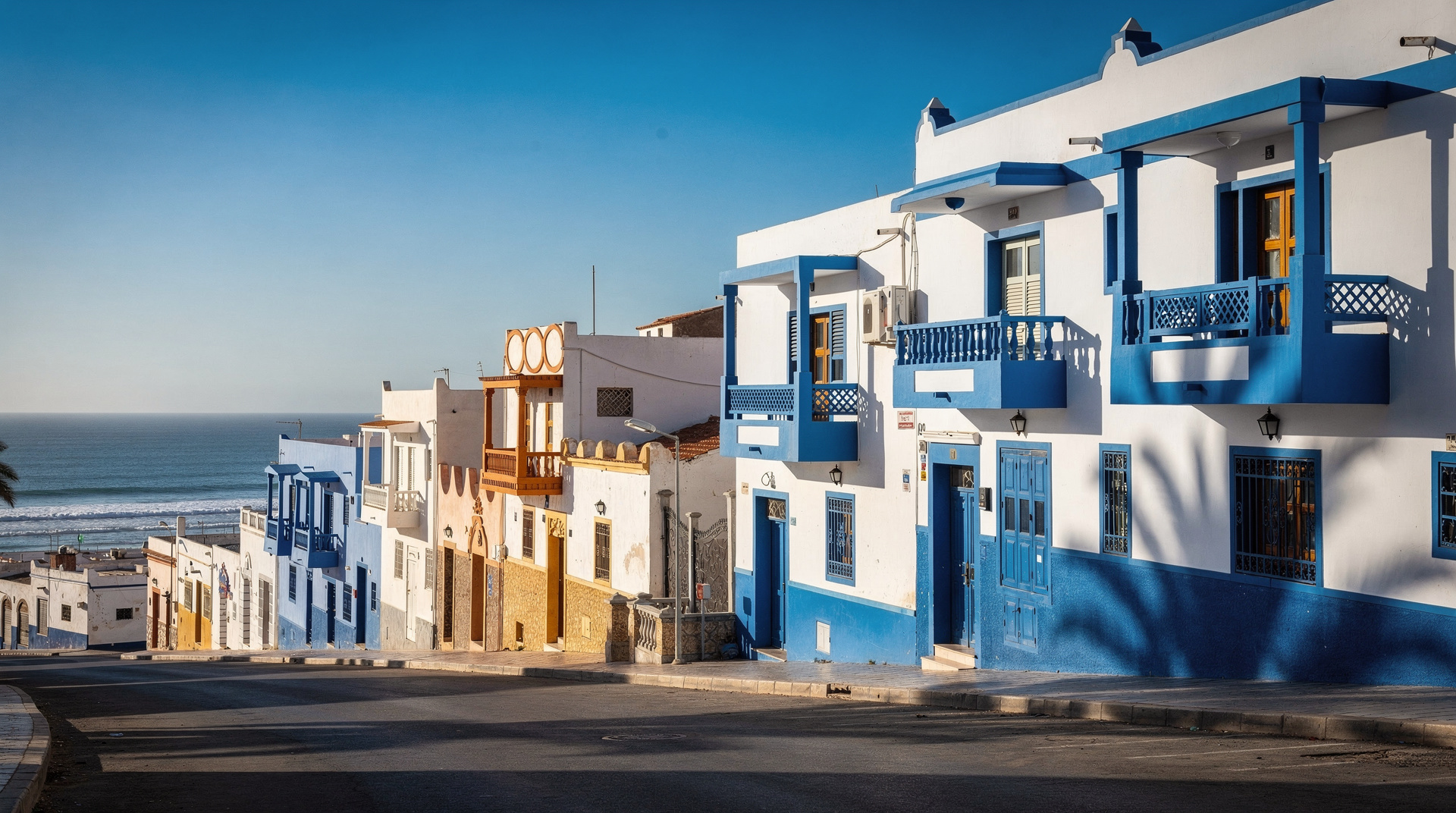
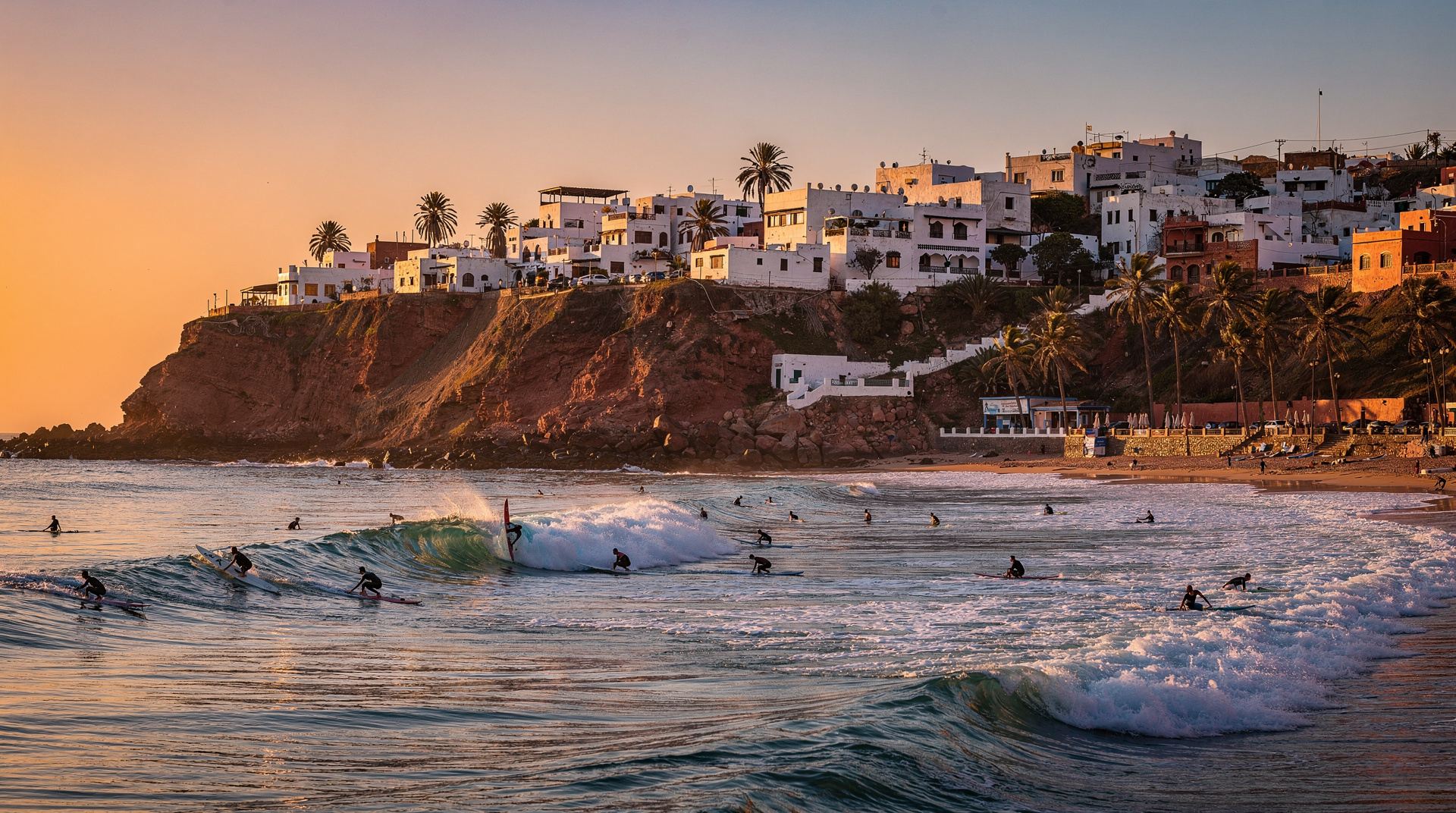
The village is small: a cluster of whitewashed cube houses and surf-school signs clinging to a headland above a series of Atlantic breaks, 20 km north of Agadir. For most of its history, Taghazout was a Berber fishing hamlet. International surfers began arriving in the 1970s, drawn by breaks that work year-round and are accessible to beginners and intermediate riders while still offering legitimate challenge in big swell. By the 2010s, Taghazout had added yoga retreat centres, boutique surf lodges, and a small food scene to its repertoire — enough infrastructure to be comfortable, but retaining enough village character not to feel like a resort.
What sets Taghazout apart from Agadir’s beach strip 20 km south is exactly this character: fishing boats pulled up on the beach, cats sleeping on sea walls, a main street narrow enough to reach both sides with outstretched arms, and the sound of waves audible from every corner of the village.
| At a glance | |
|---|---|
| Where | Atlantic coast, 20 km north of Agadir |
| Cost | Budget to mid-range — guesthouses from around 300 MAD, surf lodges 800–1,200 MAD/night |
| Time needed | 2–5 days, longer for a dedicated surf or yoga week |
| Getting there | Grand taxi from Agadir (~20 MAD, 25–30 min) or airport transfer |
| Best time | October–April for surf, May–September for beach and yoga without swell |
Getting There
From Agadir: Grand taxis run north from Agadir’s main taxi station toward Taghazout roughly every 30 minutes (20 MAD per person, 25–30 minutes). Alternatively, rent a car at Agadir Airport — the N1 coastal road north is well-maintained and spectacular.
From Agadir Airport (AGA): A grand taxi or private transfer to Taghazout costs approximately 200–250 MAD. Most surf lodges and retreat centres offer airport pickup for guests.
From Essaouira: 160 km south on the coastal N1 — approximately 2 hours by car. Essaouira is reachable as a day trip from Taghazout for drivers.
From Marrakech: 230 km southwest — around 3.5–4 hours by road via the N8 and A7. There is no direct bus; transfer at Agadir.
Getting Around
Taghazout village is tiny — you can walk end to end in 10 minutes. The main street runs along the clifftop above Taghazout Bay; alleyways lead down to the beach access points.
Surf breaks: The main surf spots extend both north and south of the village. Hash Point and Anchor Point are within 1 km on foot; Panoramas, Mysteries, and Killers are 2–5 km north and are best reached by bicycle, motorbike taxi (moto-taxi, around 20–30 MAD), or rental car.
Agadir: For banks, supermarkets, medical facilities, and restaurant variety, Agadir is 25 minutes by taxi. Grand taxis from the main Taghazout road junction run regularly.
Bicycle rental: Available through several surf schools and guesthouses at around 80–120 MAD per day — excellent for exploring the coastal track north to Aourir and Tamraght.
Top Things to Do
Surfing
Taghazout’s Atlantic breaks offer some of the most reliable surfing in the Mediterranean/Atlantic zone between October and April. Anchor Point (2 km north) is the headline spot — a right-hand point break that works best in 2–4 metre swell and rewards intermediate to experienced surfers with long, fast walls. Hash Point (directly below the village) is the most accessible beginner spot and where most surf schools operate. Mysteries (5 km north) is a hollow right-hander that gets powerful in big swell. Devil’s Rock (north of Aourir) works in smaller conditions and is suitable for intermediate surfers.
Book a surf lesson for beginners in TaghazoutYoga and Wellness Retreats
Since the early 2010s, Taghazout has developed a substantial yoga retreat economy alongside its surf culture. Several dedicated retreat centres — Surf Berbere, Yoga and Surf Morocco, and Taghazout Surf and Yoga Camp among them — run week-long programmes combining morning yoga, afternoon surf lessons, and evening relaxation. These are popular with travellers who want a structured wellness break rather than independent surf exploration. Prices typically run 700–1,200 EUR per person per week all-inclusive.
Argan Forest Walk
The UNESCO-listed argan forest begins just inland from the coastal strip. Walking into the trees in the early morning — past goats climbing improbably into the branches to eat the fruit (this is entirely real, not a staged photo opportunity) — takes you into an ancient agricultural landscape that has sustained Berber communities for millennia. Local guides from Taghazout village can lead forest walks of 2–4 hours; expect to pay around 150–200 MAD. For a more active take on the same landscape, a quad bike tour through the Agadir dunes and argan forest departs from Agadir rather than Taghazout.
Paradise Valley Day Trip
Sixty kilometres northeast of Taghazout, the Paradise Valley canyon oasis near Imouzzer is one of the most beautiful natural sites in southern Morocco. Natural rock pools fed by the Assif Tamraght river are surrounded by palm and oleander; the route there passes through dramatic Anti-Atlas foothills. Hire a grand taxi from Taghazout or Agadir for approximately 300–400 MAD round trip. If you would rather not arrange transport yourself, a Paradise Valley day trip with lunch from Agadir is an option, though you will need to get to Agadir first.
Aourir Thursday Market
The small town of Aourir (known locally as Banana Village for its banana plantations), 4 km north of Taghazout, runs one of the region’s best Thursday markets — a local souk for Berber crafts, fresh produce, olives, argan products, and household goods. Entirely authentic, almost no tourist pressure. Walk or cycle along the coastal track from Taghazout.
Tamraght and Imessouane
Continuing north past Aourir, the village of Tamraght offers another cluster of surf breaks and a similar (even quieter) village atmosphere to Taghazout. Further north, Imessouane — 55 km from Taghazout — has a small natural harbour and one of the longest longboard waves in Morocco. A half-day road trip north combines both.
Where to Eat
La Cigale (main street, Taghazout) serves reliably good Moroccan food — tagines, grilled fish, harira — on a terrace with sea views. Popular with returning visitors. Expect 80–130 MAD per person.
Panorama Restaurant (above Panoramas break, north of village) earns its name — the terrace view over the Atlantic is excellent, and the fresh fish (caught that morning by the village boats) is simply grilled to good effect. A full lunch runs 100–150 MAD.
L’Arganier (main street) focuses on Souss-Massa regional cooking — argan oil drizzled on amlou (almond paste with honey), tagines cooked with argan-based smen (fermented butter), and local couscous. A good choice for anyone interested in the specific food culture of the region. Around 100–150 MAD.
Taghazout’s juice and smoothie stalls: Multiple small stands on the main street blend fresh avocado, banana, argan oil, and honey — a genuinely nourishing post-surf drink for around 25–40 MAD.
Where to Stay
Surf Lodges and Retreat Centres (700–2,500 MAD / €70–250 per person)
Surf Berbere is the most established surf lodge in the village — comfortable rooms, daily surf guiding included, yoga classes available, roof terrace with Atlantic views. Packages from around 800 MAD per person per night with breakfast.
Taghazout Bay Resort (south of the village, larger scale) is a newer development with full hotel facilities, pools, and direct beach access. Less village character but more amenity-rich.
Tigmi Taghazout is a boutique surf-and-yoga house with strong social atmosphere — popular with solo travellers and couples. Weekly packages include accommodation, two surf sessions daily, and yoga.
Mid-range (400–900 MAD / €40–90 per night)
Dar Surf and several similar guesthouses along the main street offer comfortable rooms with surf-school packages available. Clean, well-run, and good value for the location.
Budget (under 300 MAD / €30 per night)
Several Taghazout guesthouses offer basic rooms for independent travellers — clean but minimal, often without hot water in budget options. Better value in Aourir, 4 km away.
Practical Tips
Best surf season: October to April. The biggest, most consistent swells run November to February. March and April offer more manageable swell for intermediate surfers. Summer (June–August) is generally flat — not worth coming for surf in this period.
Wetsuit: Water temperatures range from 17°C (January–February) to 23°C (September). A 3/2mm wetsuit is sufficient for autumn; a 4/3mm for winter. Most surf schools and lodges have rental wetsuits.
Surf school selection: There are dozens of surf schools in Taghazout; quality varies. Look for ISA (International Surfing Association) certification, small group sizes (maximum 6 per instructor), and reviews on independent platforms rather than just the school’s own site.
Respect: Taghazout is still a working fishing village with a mosque and conservative local community alongside the international surf scene. Modest dress when not at the beach; alcohol is not sold in the village itself (available in Agadir or at licensed hotels).
Connectivity: Mobile data (Maroc Telecom, Orange, Inwi) is good in the village. Most guesthouses have Wi-Fi; it slows during peak hours when many guests are streaming.
When to Visit
October to April is the surf season and the optimal time for all activities. October and November offer warm water (22°C), rising swell, and uncrowded beaches. February and March are the most powerful swell months — exciting for experienced surfers, overwhelming for beginners. April has lighter, cleaner surf and warming temperatures.
May to September is pleasant in terms of climate (warm, sunny, 25–30°C) but largely flat for surf. Yoga retreats and beach relaxation remain excellent. The village is quieter and prices drop.
How to Fit Taghazout into a Longer Itinerary
Atlantic surf week (7 days): Fly into Agadir → 5 nights Taghazout (surf or yoga programme) → 2 nights Essaouira (kitesurfing or beach) → fly home from Agadir.
South Morocco coast (10 days): Marrakech (3 nights) → Essaouira (2 nights) → Agadir (1 night) → Taghazout (3 nights) → fly home from Agadir. This combines imperial culture with two contrasting beach and surf destinations.
Quick add-on from Agadir: If you are staying in Agadir on a beach holiday, a day trip or two-night stay in Taghazout offers a completely different energy — village life and authentic surf culture instead of resort strip.
For broader planning, read our Atlantic Coast destination guide, our Morocco safety guide, our surfing in Taghazout guide, and our budget planning guide.
Frequently asked questions about Taghazout Travel Guide
Is Taghazout good for beginner surfers?
Yes — Hash Point, directly below the village, is a gentle, forgiving beginner break and where most surf schools run their lessons. More experienced riders head to Anchor Point and Mysteries a little further north. See our surfing in Taghazout guide for a full breakdown by skill level.
Do I need a car in Taghazout?
Not really. The village itself is walkable end to end, grand taxis and moto-taxis cover the surf breaks and Agadir easily, and a rental bicycle handles the coastal track to Aourir and Tamraght. A car helps mainly for the Paradise Valley day trip or exploring further north toward Essaouira.