Quick facts
- Language
- Darija, Tamazight, French
- Population
- ~750,000
- Airport
- Agadir Al Massira (AGA), 25 km south
- Best for
- Beaches, surf, family holidays, Atlantic coast
Beyond the Resort Strip
Agadir divides Morocco travellers cleanly into two camps: those who love it and those who dismiss it. The dismissers have a point — Agadir’s seafront is a strip of large international hotels, beach clubs, and fast food chains that could, on a grey morning, be mistaken for a Spanish costa. The city was rebuilt entirely after a catastrophic earthquake in 1960 destroyed the medieval kasbah and killed 15,000 people, and the result is modern, functional, and not particularly Moroccan in atmosphere.
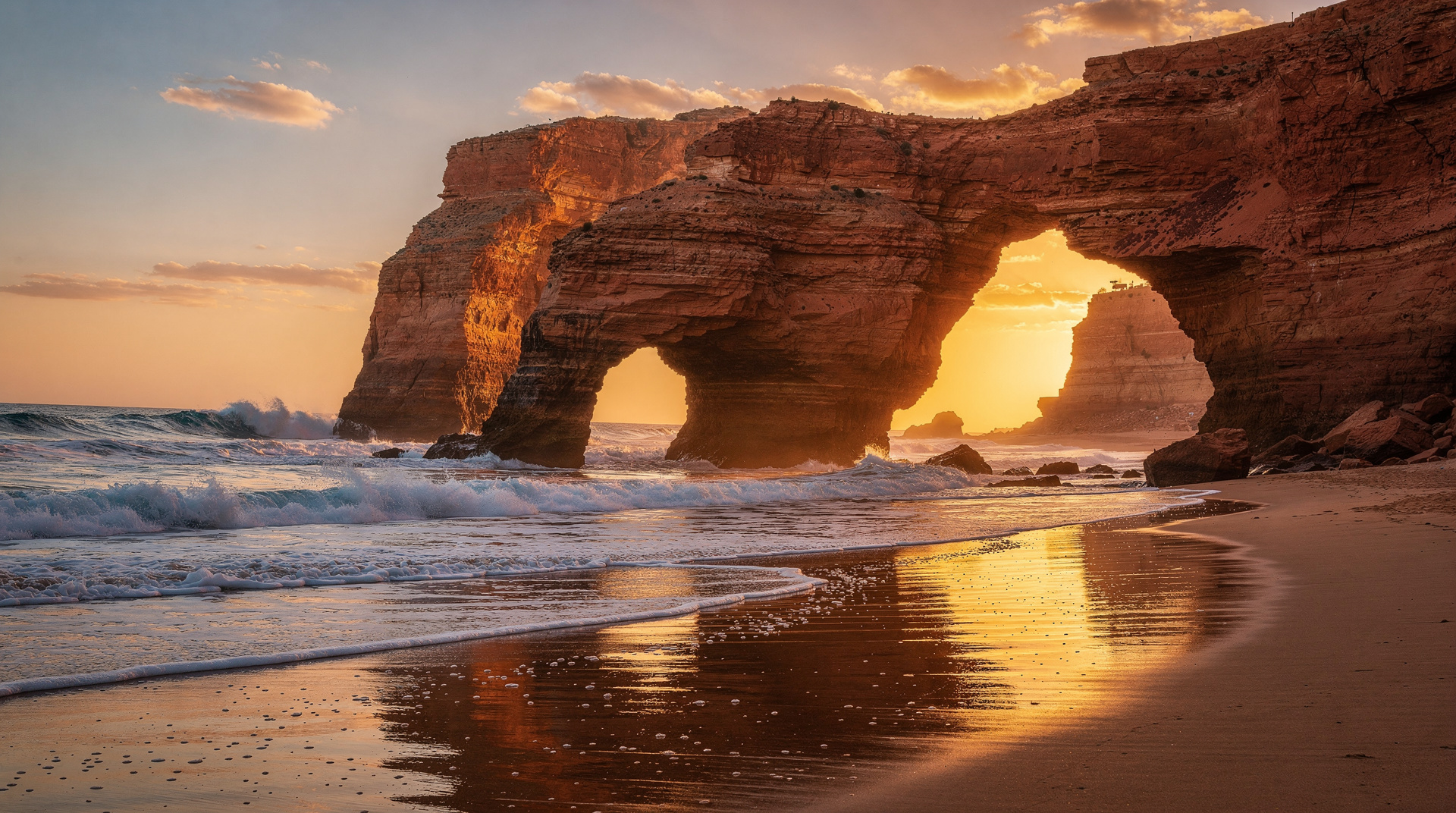
But the lovers of Agadir have an equally valid perspective. The beach — 9 kilometres of broad, sheltered Atlantic sand — is genuinely exceptional: clean, wide, and warmer and less windy than Essaouira further north. The climate is among the most reliable in Morocco: 300 days of sunshine a year, average January temperatures around 20°C. And Agadir serves as the best base in southern Morocco for reaching some remarkable places: the surf village of Taghazout 20 km north, the extraordinary oasis canyon of Paradise Valley 60 km northeast, the wild Anti-Atlas mountains, and the argan forest that produces Morocco’s liquid gold.
For families, sun-seekers, and those who want a relaxed Atlantic holiday as a counterpoint to the intensity of the imperial cities, Agadir delivers exactly what it promises.
| At a glance | |
|---|---|
| Where | Atlantic coast, southern Morocco, ~3h from Marrakech |
| Best for | Beaches, surf base, family holidays, reliable sun |
| Time needed | Around 3-5 days as a base, or a night or two en route to Taghazout/Essaouira |
| Getting there | Direct flights to Agadir Al Massira (AGA), or ~3h drive/bus from Marrakech |
| Best time | April-October for beach; year-round mild climate |
Getting There
By air: Agadir Al Massira Airport (AGA) is 25 km south of the city. Ryanair, easyJet, TUI, Thomas Cook, and Royal Air Maroc fly direct from dozens of European cities, often at very competitive prices. A taxi to the city centre costs 200–250 MAD (negotiate before you get in); blue petit taxis are not permitted from the airport.
By bus: CTM and Supratours serve Agadir from Marrakech (3–3.5 hours, from 110 MAD), Casablanca (7 hours, from 160 MAD), and Essaouira (2.5–3 hours, from 80 MAD). The CTM station is centrally located near the beach.
By car: From Marrakech, the A7/N10 motorway and then the N1 coastal road takes around 3 hours. The road over the High Atlas via Tizi n’Test (alternative route) is more dramatic but longer — allow 4.5 hours.
By train: Agadir has no direct rail connection. The nearest ONCF station is Marrakech; transfer to a bus or shared taxi for the final leg.
Getting Around
The beach strip: Agadir’s seafront promenade (Boulevard Mohammed V) and the parallel beach road are walkable if you are staying centrally. The beach stretches north to the Kasbah ruins and south to the port area — a leisurely 90-minute walk end to end.
Petit taxis: Orange taxis within the city centre cost 10–20 MAD. They operate on meters; most drivers are straightforward with tourists.
Grand taxis: For Taghazout (20 km north), Paradise Valley (60 km), or the souk district, grand taxis from the main taxi station on Avenue du Président Kennedy are the most practical option. Negotiate a price before departure: Agadir to Taghazout should be around 150–200 MAD for the car.
Rental car: Worthwhile if you plan to explore the Anti-Atlas or make day trips independently. International agencies operate from the airport; local agencies in the city are cheaper but reliability varies.
Top Things to Do
The Beach
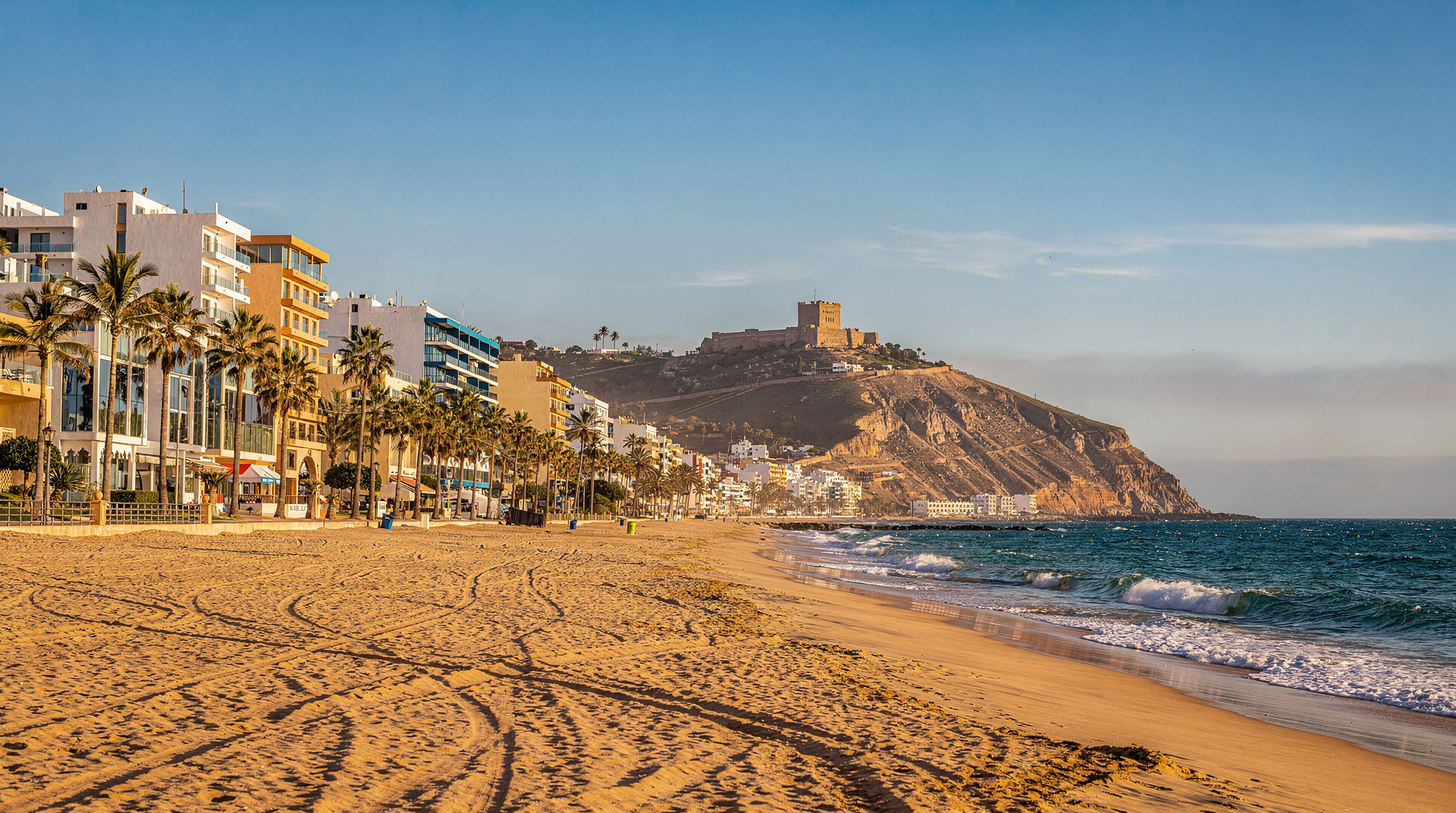
Agadir’s main beach is simply one of the best in North Africa — a wide arc of firm, clean sand backed by a palm-lined promenade. The northern section near the Sheraton is less crowded and better maintained; the southern end near the port gets livelier in summer. Sunbeds and parasols rent for 40–60 MAD per day from beach operators. Watersports (jet ski, parasailing, pedalo) are available along the central section.
Souk el Had
Agadir’s Sunday market is the largest in the region — a vast covered souk spread across multiple sections for spices, argan products, clothing, household goods, and fresh produce. Unlike the tourist-oriented souks in Marrakech, Souk el Had is primarily a local market where prices are posted and the products (particularly argan oil, saffron, and dried herbs from the Souss Valley) are of excellent quality.
Book a guided tour of Agadir’s Souk el HadParadise Valley
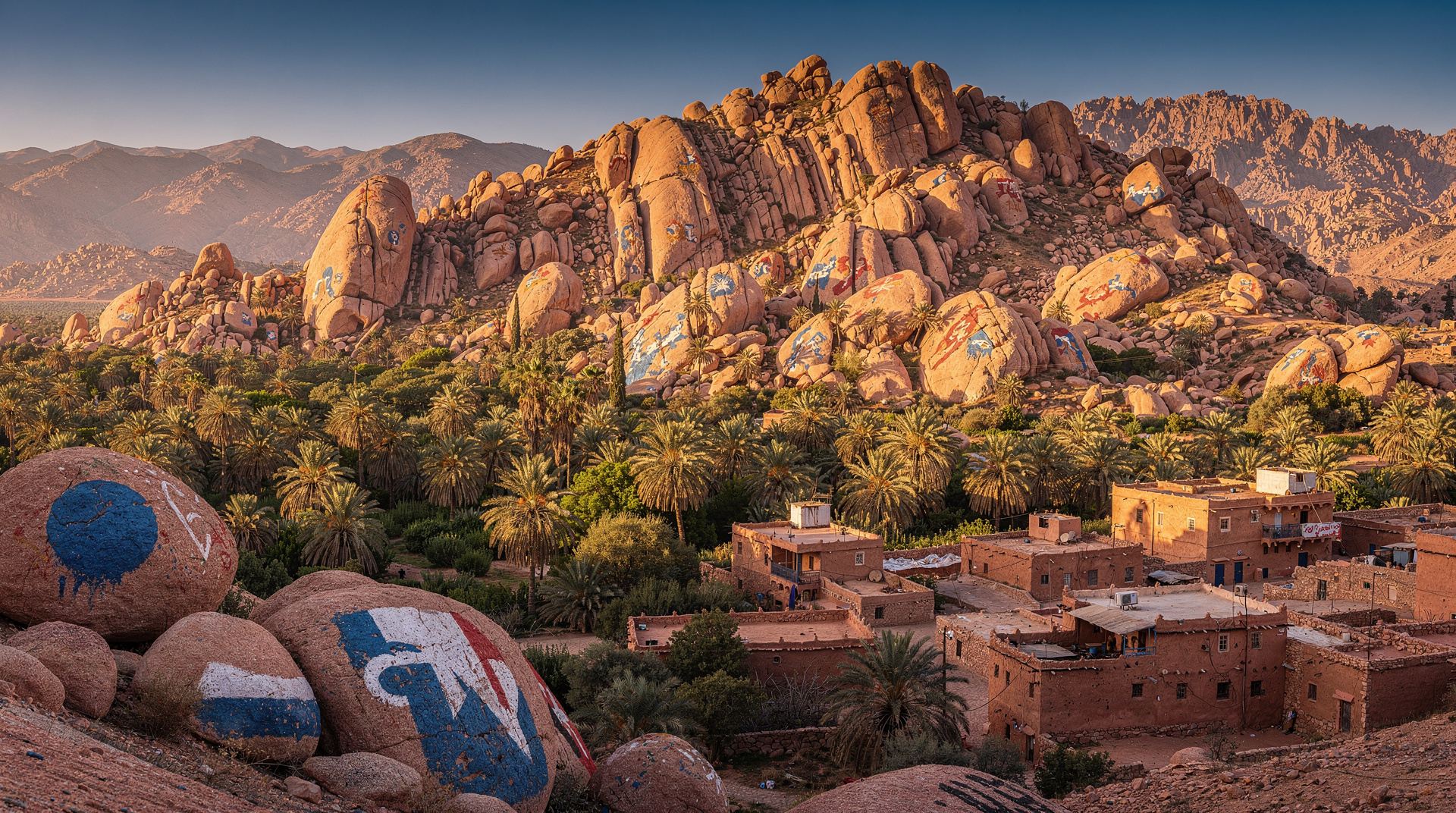
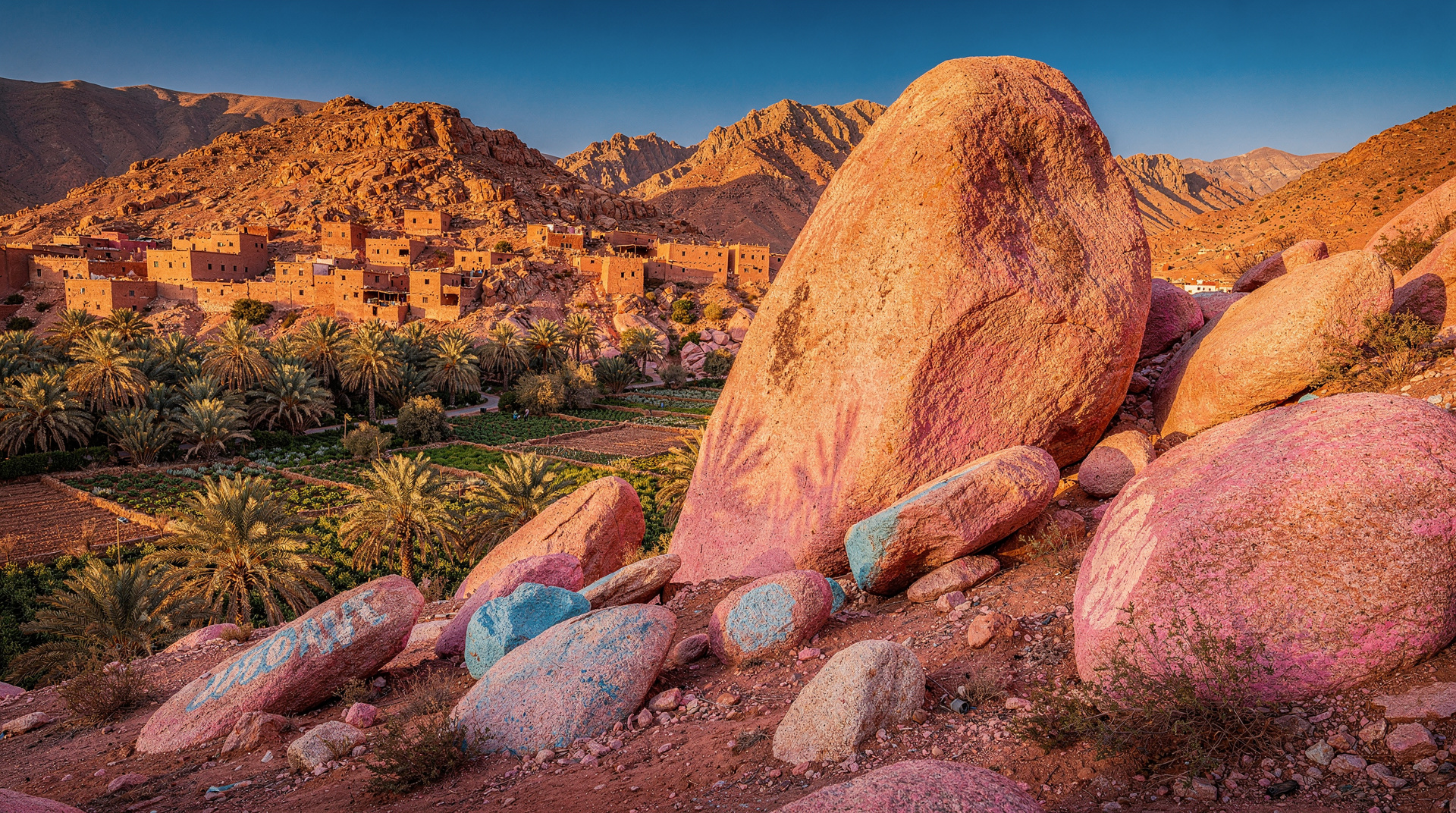
Sixty kilometres northeast of Agadir in the foothills of the Anti-Atlas, Paradise Valley is a narrow palmerie canyon carved by the Assif Tamraght river. Berber villages cling to the canyon walls above pools of turquoise water that have served as swimming holes for generations. A day trip here — including a guided walk to the natural rock pools and lunch with a local family — is the best nature excursion from Agadir and one of the genuine highlights of the whole southern Atlantic region.
Book a Paradise Valley day trip with lunch from AgadirAgadir Kasbah (Agadir Oufella)
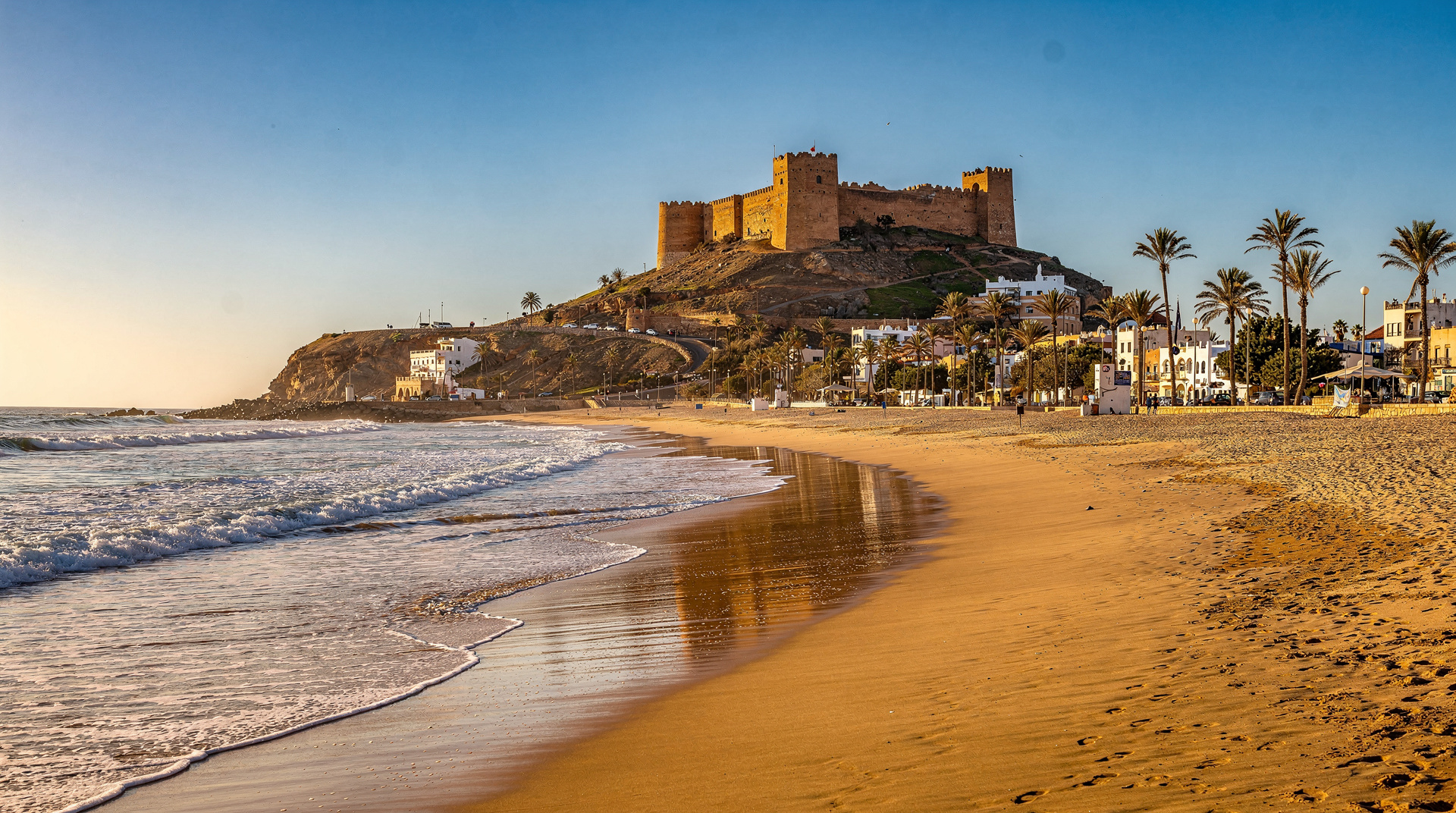
Perched on a 236-metre hill north of the city, the ruined kasbah is all that survived the 1960 earthquake — a haunting shell above a panoramic view of the bay. Access is by car or taxi (30 MAD petit taxi from centre); the walk up from the parking area is steep. The views at sunset are exceptional. The kasbah walls bear an inscription in Arabic: “If you destroy God and the King, expect no peace.”
Camel Ride along the Souss River
The estuary of the Souss River, south of the port, is a protected flamingo habitat and a pleasant place to spend a late afternoon. Camel rides along the riverbank with flamingos in the background are offered by several operators near the port area — a gentle, low-key experience that works well for families.
Book a camel ride along the Agadir flamingo riverQuad Biking in the Dunes and Forest
Inland from Agadir, the argan forest and coastal dunes offer a satisfying quad biking circuit — not Saharan dunes, but rolling sandy terrain through genuine forest. Tours run from 2 hours to half a day and include safety equipment.
Book a quad bike tour in the Agadir dunes and argan forestEssaouira Day Trip
The historic port of Essaouira — UNESCO-listed blue-and-white medina, ramparts over the Atlantic, fresh grilled fish — is 2.5 hours north by bus or car. An excellent day trip from Agadir, especially for those who did not visit Essaouira from Marrakech.
Book a day trip from Agadir to EssaouiraWhere to Eat
Fish Restaurant at the Port: The fish market at the southern end of Agadir’s port district is lined with informal restaurants where you choose your fish from the display, it is weighed, and then cooked to order. A full meal of grilled sardines, sea bream, and salads runs 80–150 MAD per person. This is the most honest and satisfying eating experience in Agadir.
La Scala (Rue des Orangers, Talborjt district) is one of Agadir’s better Moroccan restaurants — good bastilla, excellent lamb tagine, and a covered terrace away from the resort strip. Budget around 150–250 MAD per person.
Jazz sous les Étoiles (Boulevard Hassan II) is a popular terrace restaurant with live jazz and a menu spanning Moroccan and Mediterranean dishes. The ambience in the evening is excellent; food is reliable rather than exceptional. Around 200–300 MAD per person.
Jour et Nuit (corniche promenade) is the best café on the beachfront — good coffee, fresh pastries, and a front-row seat to the promenade activity.
Where to Stay
Luxury (from 3,000 MAD / €300 per night)
Sofitel Agadir Thalassa Sea and Spa is the premium address on the beach — a vast resort complex with direct beach access, thalasso spa, four restaurants, and impeccable service. The antithesis of a boutique experience, but excellent for a relaxed high-end break.
Royal Decameron Tafoukt is an all-inclusive resort well-regarded for its facilities, pool areas, and service consistency.
Mid-range (500–2,000 MAD / €50–200 per night)
Hotel Anezi Tower (Avenue du Général Kettani) occupies a high-rise in the city centre with a rooftop pool and good views over the bay. Comfortable rooms from 700 MAD; good value for families.
Riad Villa Blanche is a rare boutique riad-style property in Agadir — unusual in a city of large hotels. A quieter, more personal experience. Rooms from 900 MAD.
Budget (under 400 MAD / €40 per night)
The Talborjt district (the old city centre) has dozens of budget hotels and guesthouses from 200–400 MAD — basic rooms, usually with roof terraces. Further from the beach but better value.
Day Trips and Excursions
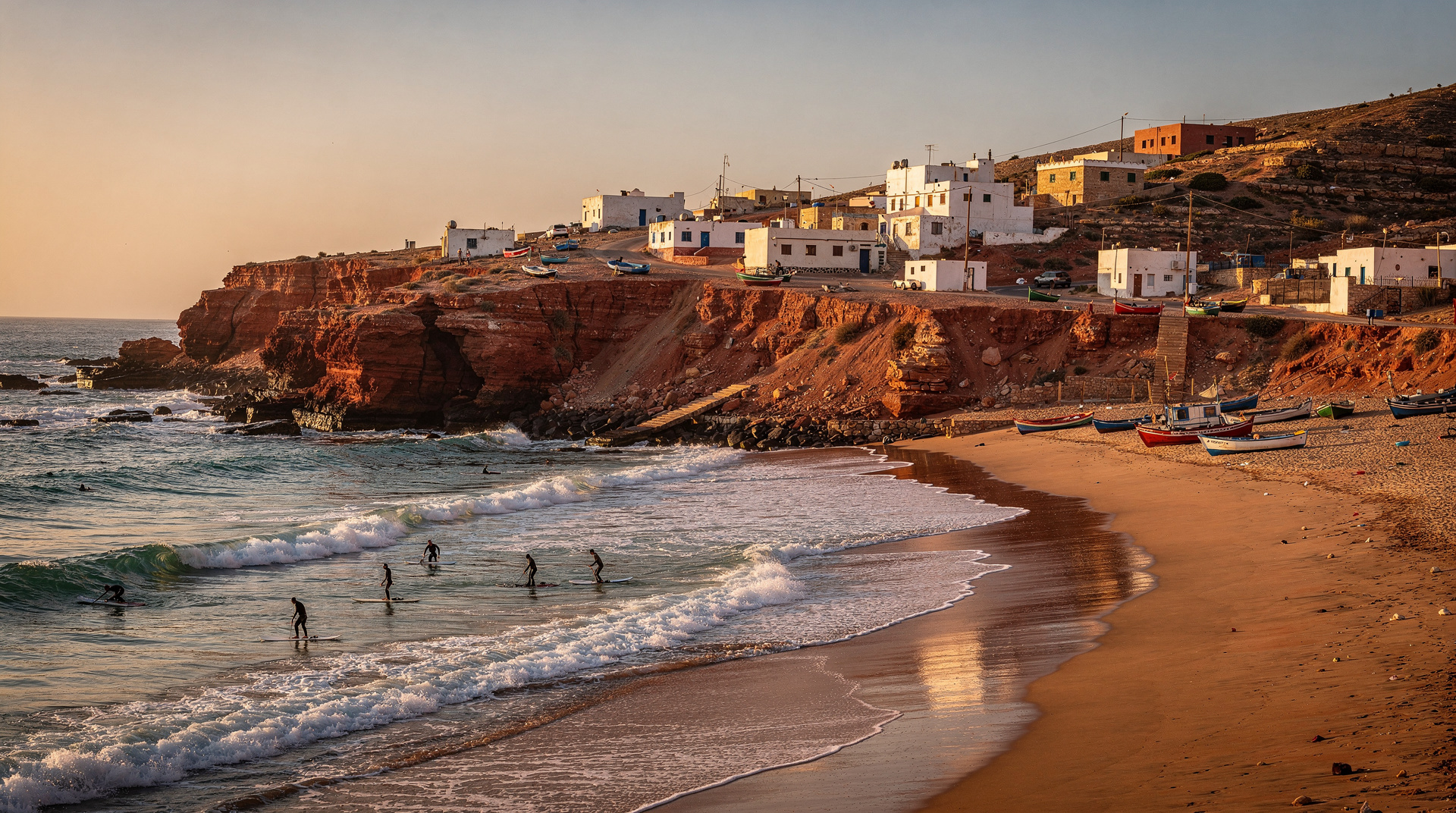
Taghazout: The surf village 20 km north is the most popular day trip from Agadir — easy by grand taxi or car, with excellent surf breaks and a relaxed atmosphere.
Paradise Valley: The best nature excursion from Agadir — a canyon oasis with natural swimming pools (60 km, full day).
Essaouira: 2.5 hours north for UNESCO medina, fish restaurants, and windswept Atlantic ramparts.
Marrakech: 3 hours inland — possible as a very long day trip but better done as an overnight. Agadir-based operators run day tours.
Tiznit and the silver souks: 90 km south, the walled city of Tiznit is Morocco’s silversmithing capital — a traditional medina with a famous covered jewellery souk and an authentic Berber town feel.
Practical Tips
Alcohol: More widely available in Agadir than almost anywhere else in Morocco, reflecting the resort-tourism character of the city. Hotel bars, licensed restaurants, and supermarkets such as Marjane all stock wine, beer, and spirits.
Argan oil: Agadir is the heart of Morocco’s argan-producing region — the trees are endemic to the Souss Valley and listed by UNESCO. Buy argan oil (culinary and cosmetic) from fixed-price cooperatives rather than souk traders; the cooperatives are run by Berber women’s associations and the oil is guaranteed authentic. Prices should be 150–300 MAD per 100 ml for quality culinary argan oil.
Beach safety: The Atlantic produces occasional strong currents and undertow, especially in the southern sections of the beach. Observe flagging systems and swim in supervised areas.
Heat: Agadir’s beach climate peaks in summer (July–August, 28–32°C) but remains pleasant year-round. January–February averages 20°C — warm enough for beach days, genuinely mild.
Tourist zone vs real city: Most hotels are concentrated in the northern coastal strip between the marina and the Sheraton. The real city — markets, local restaurants, traditional crafts — is in the Talborjt and Secteur Industriel districts, a 10-minute taxi ride away.
When to Visit
April to October covers Agadir’s most reliable beach season. Summer heat peaks at 30–32°C rather than the inland extremes of Marrakech, and the Atlantic breeze keeps it comfortable.
November to March is quieter and cooler but rarely cold (15–20°C daytime). Good for those seeking uncrowded beaches and lower prices. European school holiday periods push prices up significantly December–January.
Surf season: Taghazout and the area’s best surf runs October to April, when Atlantic swells are most consistent.
How to Fit Agadir into a Longer Itinerary
Atlantic coast route (7 days): Fly into Agadir → 2 nights including Paradise Valley and Taghazout → bus north to Essaouira (2 nights) → bus north to Marrakech (2 nights) → fly home.
South Morocco sun-and-culture mix: 5 nights Agadir base with day trips to Taghazout, Paradise Valley, and Tiznit, then a 3-day drive north via Essaouira and Marrakech.
Extended south loop: Fly into Agadir → drive south to Tiznit → cut inland through the Anti-Atlas → Taroudant → back to Agadir. A superb 4-day circuit for drivers who want to see the non-touristy southern Morocco.
For broader planning help, see our guide to getting around Morocco, budget guide for Morocco, and tips on planning your first Morocco trip.
Agadir vs Essaouira: which coastal base?
Both are Atlantic bases, but they suit different trips. Agadir wins on climate reliability, beach width, and family infrastructure — sheltered water, watersports, and international resort comforts. Essaouira wins on atmosphere and authenticity — a walkable UNESCO medina, fresh grilled fish stalls, and a windswept artistic character that Agadir’s rebuilt cityscape doesn’t have. See the full Essaouira vs Agadir comparison for a detailed breakdown by traveller type.
A realistic day: Paradise Valley plus Agadir Kasbah
A well-paced day combines the two best half-day excursions: morning at Paradise Valley (canyon pools, Berber village, lunch), returning to Agadir by mid-afternoon, then a sunset visit to Agadir Kasbah for the panoramic bay view as the light turns gold. This avoids the mistake of trying to cram both into a single tight morning-to-morning window.
Frequently asked questions about Agadir Travel Guide
Is Agadir worth visiting if I’ve already seen Marrakech and Fes?
Yes, as a different kind of experience rather than more of the same — Agadir offers reliable beach time and easy access to Taghazout surf and Paradise Valley, none of which the imperial cities provide. It’s a complementary stop, not a substitute.
How many days do I need in Agadir?
Three days covers the beach, Souk el Had (if your visit includes a Sunday), and one day trip (Paradise Valley or Taghazout). Five days allows a more relaxed pace plus Essaouira or Tiznit as an additional excursion.