How to Plan a Morocco Trip: Step-by-Step Guide
How do I plan a trip to Morocco?
Start by deciding your core interest (desert, cities, coast, mountains, or mix). Choose your duration — 7-10 days is ideal for a meaningful first trip. Book flights and accommodation first, then tours. The Marrakech-Sahara-Fes loop or Marrakech-only approach work for most travellers. Sort your Sahara tour early — good camps book out.
Building your Morocco trip from scratch
At a glance
| Minimum trip length | Around 7 days for a coherent first trip |
| Ideal first-timer length | 9-10 days (Marrakech + Sahara + one extra region) |
| Book first | International flights, then Sahara camp if the desert is on your list |
| Best months | October and April for the best weather balance |
| Visa | Not required for US/UK/EU/Canada/Australia (90-day stamp on arrival) |
Morocco is easy to travel badly. Not unsafe — just overwhelming in the number of options, complicated by the Sahara tour decision, and often visited in too short a time for what people want to see.
This guide takes you through the planning sequence in the order that actually makes sense: what to decide first, what to book when, and how to structure an itinerary that doesn’t leave you spending half your time in transit.
Step 1: Decide what kind of Morocco trip you want
Morocco can be approached very differently depending on your interests. Before picking cities, answer these questions:
Is the Sahara desert non-negotiable? If yes, your trip structure revolves around the desert loop. The minimum trip for Marrakech + Sahara is 6-7 days. The desert requires 3 days by itself (not including travel days) — any less and you’re spending most of those 3 days in a vehicle.
Are you primarily interested in cities and culture? A 7-day cities-focused trip (Marrakech 3 nights, Fes 3 nights, Chefchaouen 1 night) is coherent and doesn’t require the long southern drives.
Is the coast or surfing a priority? Agadir, Taghazout, and Essaouira each have distinct characters. A coast-focused trip stays in the west and doesn’t need to go south or east.
Do you want all of the above? You need 10-14 days to do it justice. One week trying to cover desert, cities, and coast results in mainly transit.
Step 2: Choose your duration
| Duration | What’s realistic |
|---|---|
| 4-5 days | One city deeply (Marrakech or Fes) + 1 day trip. Sahara not realistic. |
| 6-7 days | Marrakech + Sahara loop + 1 extra city. Tight but doable. |
| 8-10 days | Marrakech + Sahara + Fes, or cities + coast. Comfortable pace. |
| 12-14 days | Marrakech + Sahara + Fes + Chefchaouen + Tangier or coast. The full sweep. |
The most common mistake is trying to do a 10-day itinerary in 7 days. The distances are real; transit time eats into experience time. Better to see fewer places slowly than more places at a run.
Step 3: Pick your itinerary structure
Option A: The Southern Loop (most popular first trip)
Best for: Travellers whose priority is the Sahara + Marrakech
7-day structure:
- Days 1-2: Marrakech
- Days 3-5: Sahara loop (Aït Ben Haddou → Dadès → Merzouga → return)
- Day 6: Recovery/Marrakech
- Day 7: Departure
9-day structure (recommended):
- Days 1-2: Marrakech
- Days 3-5: Sahara loop to Merzouga
- Day 6: Return Marrakech or overnight Ouarzazate
- Days 7-8: Essaouira or Atlas day trips
- Day 9: Departure
Option B: The One-Way Loop (most efficient first trip)
Best for: Travellers who want cities + desert without backtracking
9-day structure:
- Day 1: Fly into Marrakech
- Days 2-3: Marrakech
- Days 4-6: Marrakech → Aït Ben Haddou → Dadès → Merzouga
- Day 7: Merzouga → Ziz Valley → Fes
- Days 8-9: Fes
- Day 10: Fly out of Casablanca or Fes
This structure covers 1,000+ km without repeating any road.
Option C: The Northern Circuit
Best for: Travellers interested in the blue city, Roman ruins, and Spain-via-Morocco crossing
8-day structure:
- Days 1-2: Fes
- Day 3: Meknes + Volubilis day trip
- Days 4-5: Chefchaouen
- Days 6-7: Tangier
- Day 8: Ferry to Tarifa or flight home
No desert, no Atlas — but coherent, culturally rich, and very different from the south.
Option D: The Extended Trip
Best for: Travellers with 12+ days who want everything
12-day structure:
- Days 1-2: Marrakech
- Day 3: Essaouira
- Days 4-6: Sahara loop (Merzouga)
- Days 7-8: Fes
- Day 9: Meknes/Volubilis
- Days 10-11: Chefchaouen
- Day 12: Tangier, depart
Step 4: Check timing before you book anything
Two factors can reshape your entire planning:
Ramadan: In 2026, approximately February 19 to March 19. Morocco during Ramadan is a different experience — not necessarily bad, but significantly different. Restaurants operate on different hours, the pace of cities shifts, and some activities are reduced. See the best time to visit Morocco guide for the full seasonal picture.
Peak season camps: If your itinerary includes the Sahara in October or spring (March-May), luxury camps book out weeks ahead. Set your desert dates before booking anything else.
Your own weather preference: October and April are the best balance months. August is too hot for the south. December-January is excellent for the Sahara but cold in the mountains.
Step 5: Book in this order
1. International flights — as early as possible, particularly for school holiday periods (July-August, Christmas)
2. Desert camp (if applicable) — before your riad. The 3-day Merzouga tour with luxury camp bundles transport and accommodation in one confirmed booking.
For the Agafay evening option near Marrakech, the Agafay dinner under the stars with sunset camel ride is bookable closer to the date but still fills up in peak October. The better Merzouga camps in peak October book out weeks ahead; the best Agafay camps book even faster
3. Desert tour or transport — confirm your 3-day Sahara tour operator and get the itinerary and camp name in writing. See the how to book a Sahara tour guide for the full process
4. Accommodation in cities — riads in Marrakech and Fes medinas take longer to navigate to; book somewhere with good logistical reviews (clear directions, responsive owner) for your first night especially
5. Day trips and activities — these can usually be booked closer to the date, though specific experiences (Majorelle Garden has timed entry) benefit from advance booking
Step 6: Pre-departure preparation
Documents:
- Passport valid for 6+ months beyond departure date
- No visa required for US/UK/EU/Canada/Australia (90-day stamp on arrival in 2026)
- Return or onward ticket (technically required; have this booked)
Money:
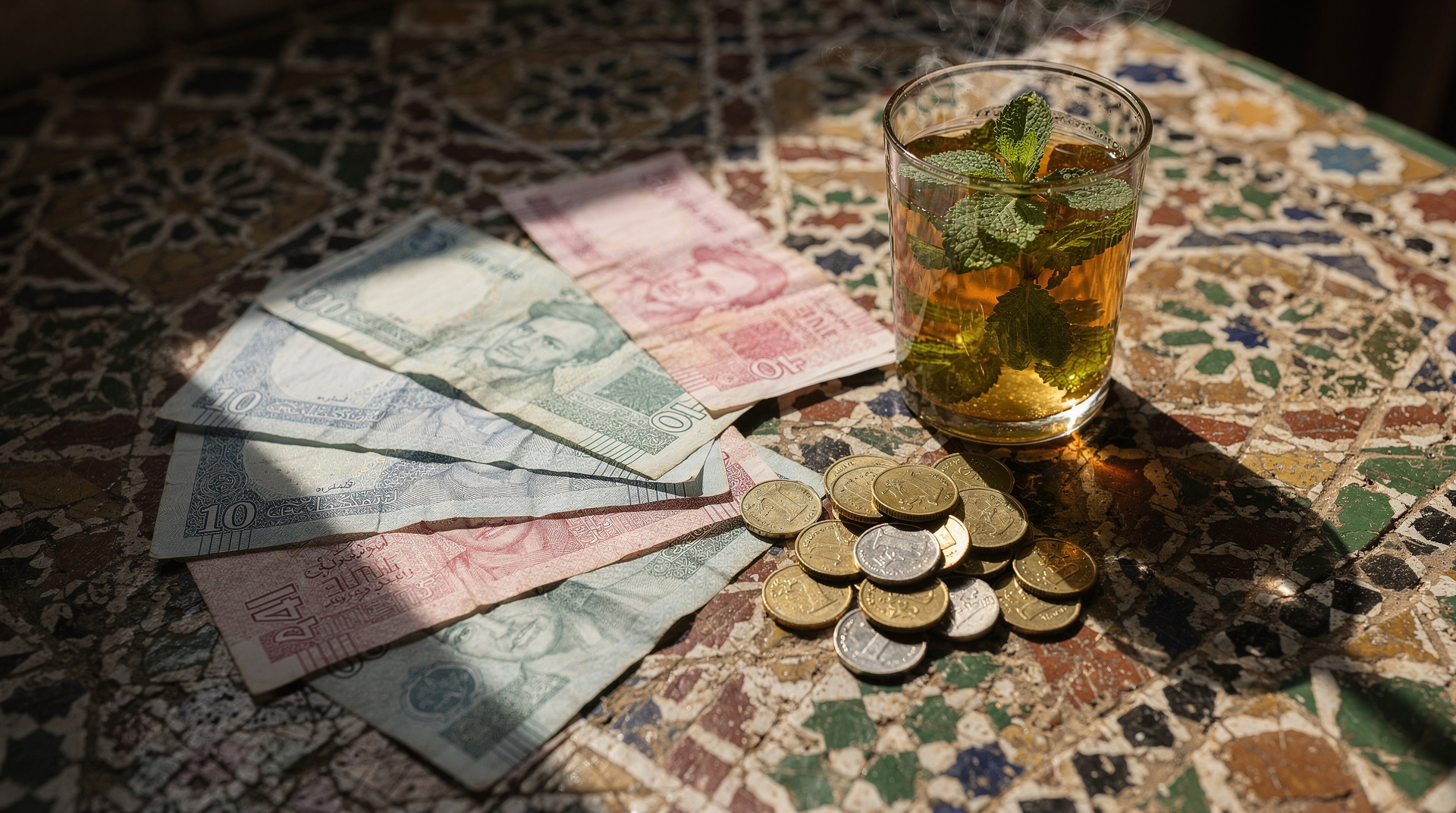
- The Moroccan Dirham (MAD) cannot be purchased outside Morocco — do not look for it before you arrive
- Withdraw MAD at Casablanca or Marrakech airport on arrival, or from city ATMs
- Bring a backup card — ATMs occasionally have availability issues in smaller towns
- Carry cash at all times; the medina economy runs on it
For the full cost picture, the Morocco budget guide breaks down daily spend by travel style.
Entry requirements: The Morocco visa and entry guide covers passport validity, what the 90-day stamp means, and what you need at the border.
Apps to download:
- Google Maps with offline data for your cities downloaded
- WhatsApp (standard for communication with local operators and riads)
- ONCF app (if using trains)
What to pack for a mixed itinerary:
- Light, modest clothing (cover shoulders and knees when visiting mosques and medersas)
- Warm layer for desert nights and mountain areas (even in summer)
- Sturdy closed shoes (essential for dunes, important for medina cobblestones)
- Small daypack for medina exploration
- Headscarf for women (useful, not mandatory — for mosques and medersas and wind protection in the desert)
- Power adapters (Morocco uses Type C and E plugs, European standard)
Step 7: On-the-ground logistics
First day in any Moroccan city: Let your riad staff orient you. They know the neighbourhood, can give you a walking route to key landmarks, warn you about current scam patterns, and arrange legitimate transport. This conversation is worth more than an hour of independent research.
Navigating the medina: Download offline maps before leaving WiFi. Keep your phone accessible to you (not to strangers) for navigation. Avoid following unsolicited helpers. See the 25 first-timer mistakes guide for the specific tactics that reduce friction.
Transport within cities: Petit taxis in Marrakech and Fes are reliable and cheap. Insist on the meter in Marrakech (say “conteur”). Have your destination address written in French or Arabic.
Safety: Read the Morocco safety guide before you go. The main risks are petty scams and street harassment, not violent crime. Understanding the landscape in advance means you deal with it more confidently if it arises.
Sample 9-day first-trip itinerary
| Day | Location | Main activity |
|---|---|---|
| 1 | Arrive Marrakech | Airport, riad check-in, Djemaa el-Fna evening |
| 2 | Marrakech | Medina, Bahia Palace, souks, Majorelle Garden |
| 3 | Marrakech → Ouarzazate | Tizi n’Tichka pass, Aït Ben Haddou, overnight |
| 4 | Ouarzazate → Dadès | Rose Valley, Dadès Gorge, overnight |
| 5 | Dadès → Merzouga | Todra Gorge, Erfoud, desert camp overnight |
| 6 | Merzouga → Marrakech | Sunrise dunes, drive back (arrive evening) |
| 7 | Marrakech | Gueliz new city, hammam, slower day |
| 8 | Marrakech → Essaouira | Day trip to the Atlantic coast |
| 9 | Depart | Morning flight |
This itinerary is manageable but Day 6 (desert to Marrakech) is a long drive. Building in an overnight at Ouarzazate on the return (making it 10 days) improves the experience significantly.
Frequently asked questions about planning a Morocco trip
How far in advance should I plan a Morocco trip?
For a 7-10 day trip in peak season (October, April), 2-3 months ahead for flights and desert tours/camps. For shoulder season, 6-8 weeks ahead is usually sufficient. Last-minute Morocco trips (1-2 weeks ahead) are possible but limit your options for better riads and desert camps.
Do I need a guide for the whole trip?
No. Organised city exploration benefits from a guide for the first day in complex medinas (particularly Fes). Desert tours include driver-guides. City movement by petit taxi and independent medina exploration works fine the rest of the time.
What’s the minimum trip length for a meaningful Morocco experience?
7 days is the minimum to feel like you’ve actually seen the country rather than passed through. Less than 7 days forces you to choose: one city well, or multiple cities badly. The best time to visit guide helps align your dates with the right seasons.
Should I pre-book all accommodation or leave some flexibility?
Pre-book your first and last nights in each city, and your desert camp specifically. Leaving some flexibility for smaller towns and night stops on the Sahara loop is fine — guesthouses in Ouarzazate and Dadès are rarely fully booked except in peak season.
Is Morocco suitable for a honeymoon?
Yes — Morocco is one of the better honeymoon destinations at mid to luxury level. The riad experience (intimate courtyard accommodation, personalised service), the desert glamping camps, and the combination of scenery with genuine luxury options make it well-suited. Avoid budget constraints on a honeymoon — the upgrade from standard to luxury accommodation is particularly noticeable in Morocco.
What should I not miss on a first Morocco trip?
The Sahara (Erg Chebbi) sunrise from a dune ridge if your trip length allows. Fes el-Bali medina — there’s nowhere else quite like it. One hammam experience. The Aït Ben Haddou kasbah. A meal in a traditional riad courtyard setting. The Atlas mountain landscape. Essaouira if the coast is accessible from your itinerary.
Should I hire a private driver instead of self-driving or joining tours?
For a first trip, many travellers find a private driver strikes the best balance — no need to navigate mountain roads or negotiate grand taxis, but more flexibility than a fixed group tour. It costs more than self-driving but less than you’d expect relative to the convenience gained, especially on the Sahara loop’s long driving days.
Is 7 days enough if I only want Marrakech and the Sahara?
Yes, but it’s tight. Two nights in Marrakech, three days for the Sahara loop (Aït Ben Haddou, Dadès, Merzouga, return), and one recovery/departure day. Extending to 9 days gives you breathing room and the option to add Essaouira or an extra Marrakech day — see the duration table above for how the extra days change what’s realistic.
Managing the medina experience
The historic medinas are Morocco’s most impressive and most challenging environments. A few structural tips that make them work better:
First morning rule: Don’t enter the medina alone on your first morning until your riad has given you orientation. Marrakech and Fes riads should provide this — a 15-minute conversation covering which gate to exit from, how to find your way back, which areas to avoid, and what the current patterns of tourist approaches are. This conversation is worth more than any map.
Morning vs afternoon: Medinas in the morning (8am-11am) are local-facing — fresh bread deliveries, school children, neighbourhood commerce. Afternoon and evening shifts the balance toward tourists, particularly in the souk areas. If you want the most authentic atmosphere, go early.
Leave time to be lost: The medina reward is not just the monuments. It’s the unexpected courtyard, the sound of a Quranic school, the craftsman working in a doorway. This only happens if you leave time that’s not allocated to a specific landmark. Plan to get somewhat lost on at least one medina morning.
Guide for monuments, solo for wandering: The combination that works best for most travellers: a licensed guide for the first day (monuments, context, history), then solo exploration from a known landmark on day 2. You’ve already seen the main sites; now you can wander without worrying about missing something.
Riad accommodation: what to look for
The riad experience — staying in a traditional courtyard house, usually within the medina — is one of Morocco’s defining travel experiences. But riads vary more than hotels. What to look for:
Courtyard: The central patio with fountain is the soul of a riad. Some riads have been over-converted and the courtyard is cramped or used as a reception area rather than a living space. Photos of the courtyard are the most important thing to check before booking.
Roof terrace: A rooftop terrace with Atlas or medina views is common at better riads. Check if it’s shared or private to rooms.
Owner presence: Riads run by their owners (rather than managed remotely) consistently deliver better experiences — more personal service, better local knowledge, more responsive to issues. Read reviews specifically for mentions of the owner or manager.
Location within the medina: Some riads are at the noisy edge near major gates; others are deep inside the medina in quiet residential lanes. Both have trade-offs (easy access vs authentic atmosphere). Your preference for noise vs quiet determines which matters more.
Breakfast: Riad breakfasts range from a table of fresh bread, olive oil, honey, and fruit (simple but good) to full spreads with msemen (Moroccan pancakes), fresh orange juice, yogurt, and eggs. Reviews mentioning breakfast quality are a useful quality signal for the riad overall.
Choosing between private driver, self-drive, and organised tours
| Option | Best for | Trade-off |
|---|---|---|
| Private driver | First-timers who want flexibility without navigation stress | Costs more than self-drive; less spontaneous than solo |
| Self-drive | Confident drivers who want full control of pace | Mountain roads (Tizi n’Tichka) demand real driving skill; no local logistics buffer |
| Organised group tour | Budget-conscious travellers, solo travellers wanting company | Fixed schedule, less flexibility on stops and timing |
| Train + city guides | Cities-only itineraries (Option C above) | Doesn’t reach the Sahara loop towns directly |
See the private tour vs self-drive guide for a deeper comparison, and should you use a private driver in Morocco for a first-hand account.