Marrakech vs Fes: Which Imperial City Should You Visit?
Should I visit Marrakech or Fes?
Visit both if your itinerary allows — they're very different. Marrakech is more accessible, more international, and the better base for Atlas and Sahara trips. Fes has the more intact historic medina, a more deeply traditional atmosphere, and a stronger sense of living Moroccan culture. If forced to choose, first-timers typically prefer Marrakech's polish; travellers seeking authenticity tend to prefer Fes.
The comparison every Morocco planner eventually faces
If you’re doing Morocco properly, you should see both. They’re different enough that saying one is “better” misses the point — they offer opposite versions of what a Moroccan city experience can be.
But if you’re working with 5 days and can only deeply explore one, or if you’re deciding which city to base out of, the differences are meaningful. This guide lays them out honestly.
At a glance
| Where | Marrakech (south, Atlas gateway) vs Fes (north, older medina) |
| Minimum time each | Around 2-3 nights to do either city justice |
| Getting between them | No direct train — via Casablanca (8-9h) or CTM bus (around 8h) or the 3-day Sahara loop connecting both |
| Best time | Spring (Mar-May) or autumn (Sep-Nov) for both — see the best time to visit guide |
| Guide needed | Optional in Marrakech, strongly recommended for a first day in Fes |
The quick comparison
| Factor | Marrakech | Fes |
|---|---|---|
| Medina navigability | Challenging but manageable | Genuinely maze-like |
| Tourist infrastructure | Extensive | Good in the medina core |
| International atmosphere | High | Moderate |
| Historical depth | Significant | Exceptional |
| Living traditional culture | Present | More intact |
| Day trips | Atlas, Agafay, Essaouira | Chefchaouen, Meknes, Volubilis |
| Desert gateway | Yes (Merzouga, Zagora) | Yes (Merzouga closer) |
| Riad quality range | Budget to extraordinary luxury | Similar range |
| English spoken | Widely in tourist areas | Less than Marrakech |
| Size | Compact enough to walk | Much larger medina |
| Tanneries | No | Yes (famous) |
| Food scene | Excellent | Excellent, different |
Marrakech: the case for the Red City
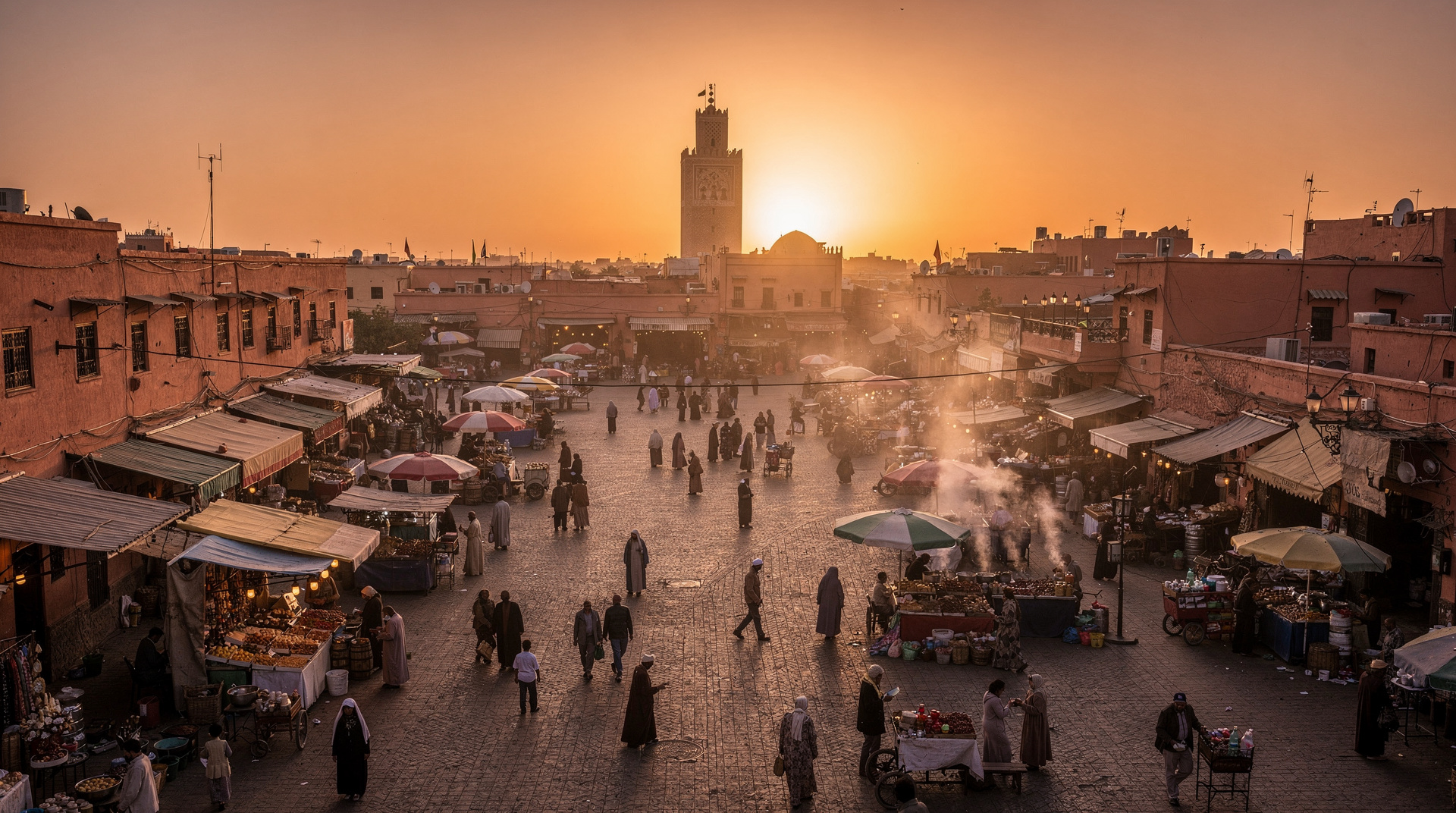
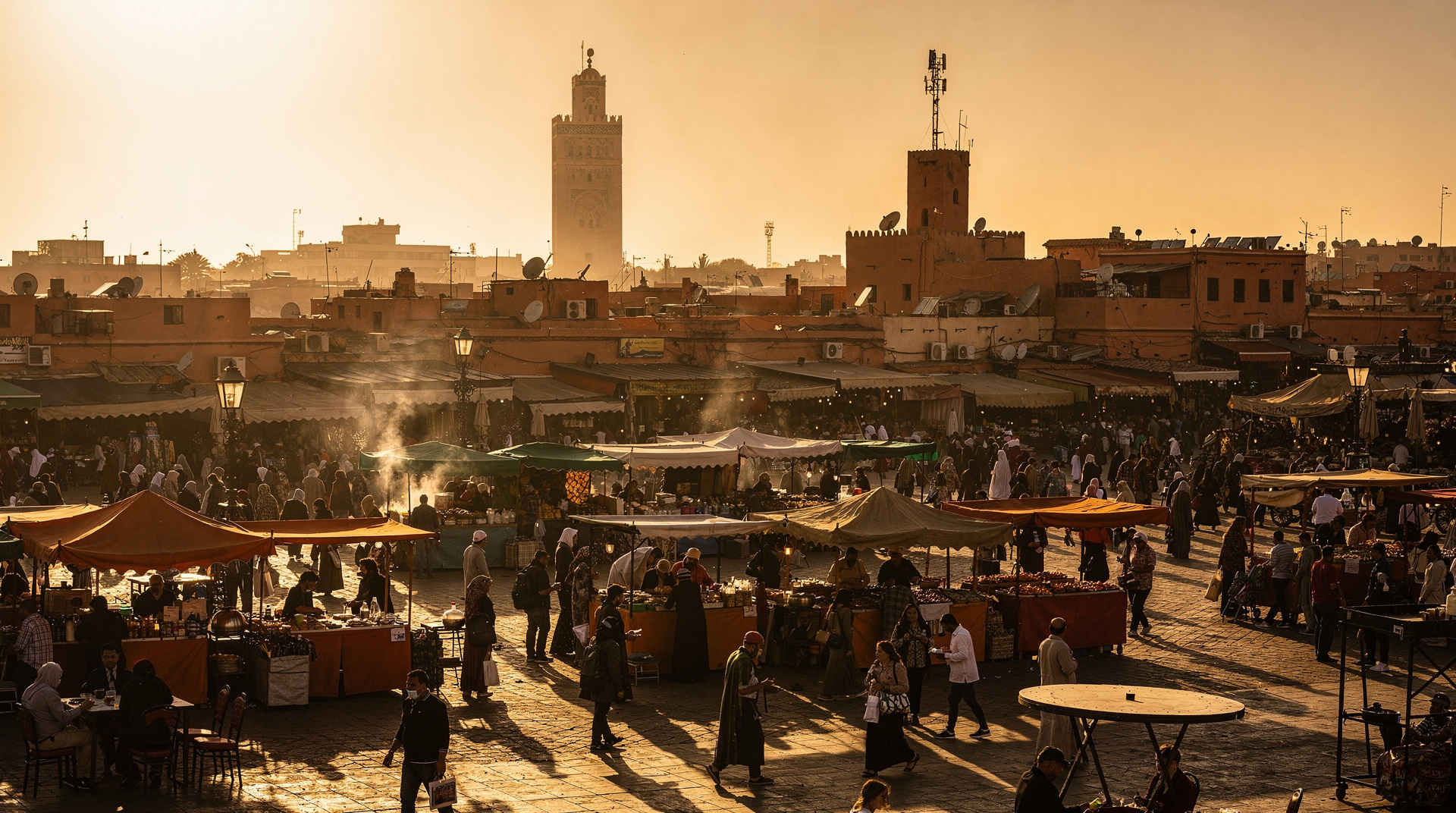
Marrakech has been welcoming foreign visitors at scale for decades. The infrastructure reflects that: hundreds of riads, dozens of good restaurants, a medina that’s disorienting but not the three-day puzzle of Fes, and the Djemaa el-Fna as a social focal point that’s genuinely spectacular despite — or because of — its circus atmosphere.
What Marrakech does better:
The food and riad scene has evolved into something genuinely exciting. You can eat extremely well in Marrakech across a wide price range — from excellent local food in the Mellah neighbourhood to ambitious Moroccan-French cuisine in the Gueliz new city.
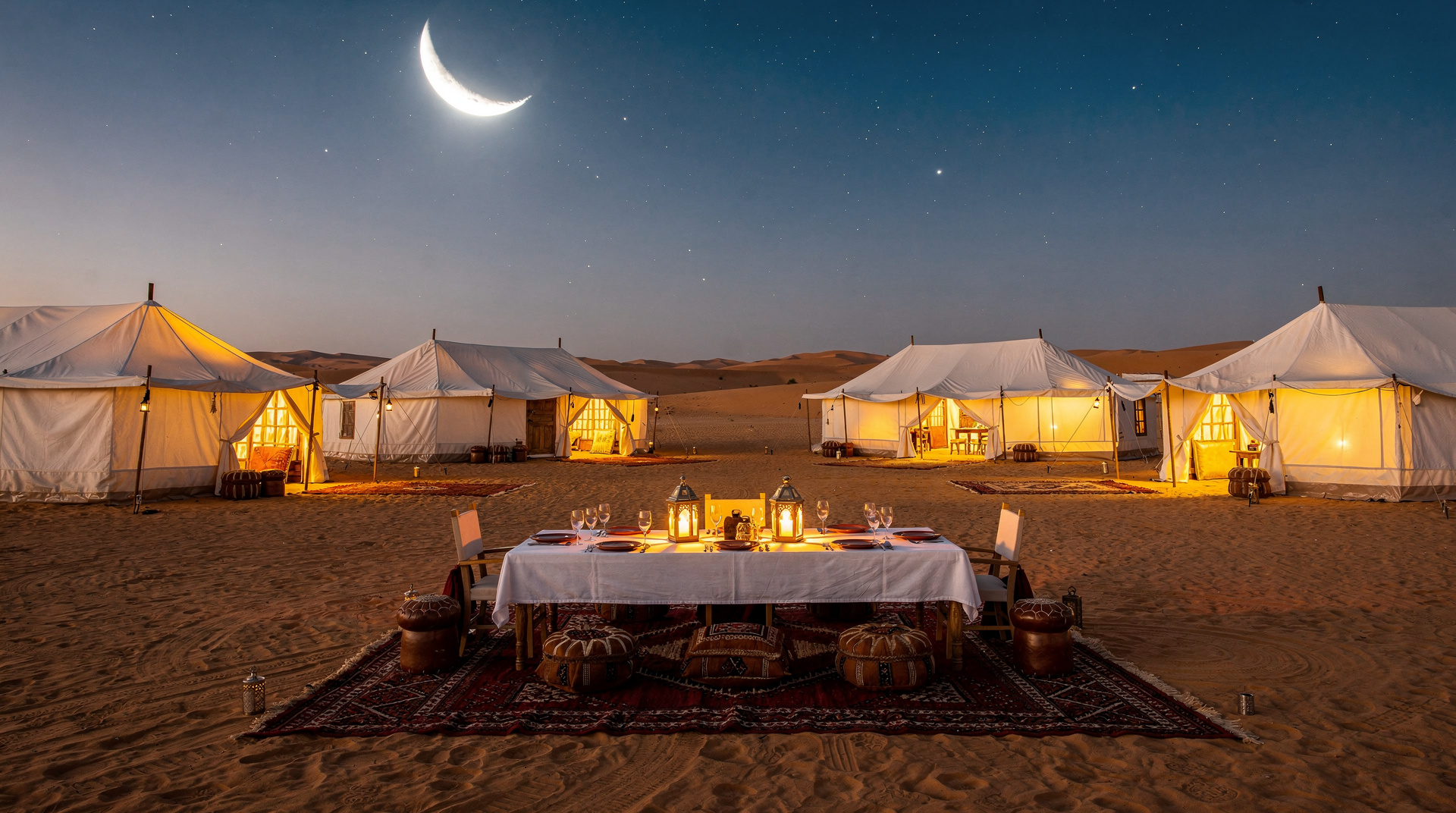
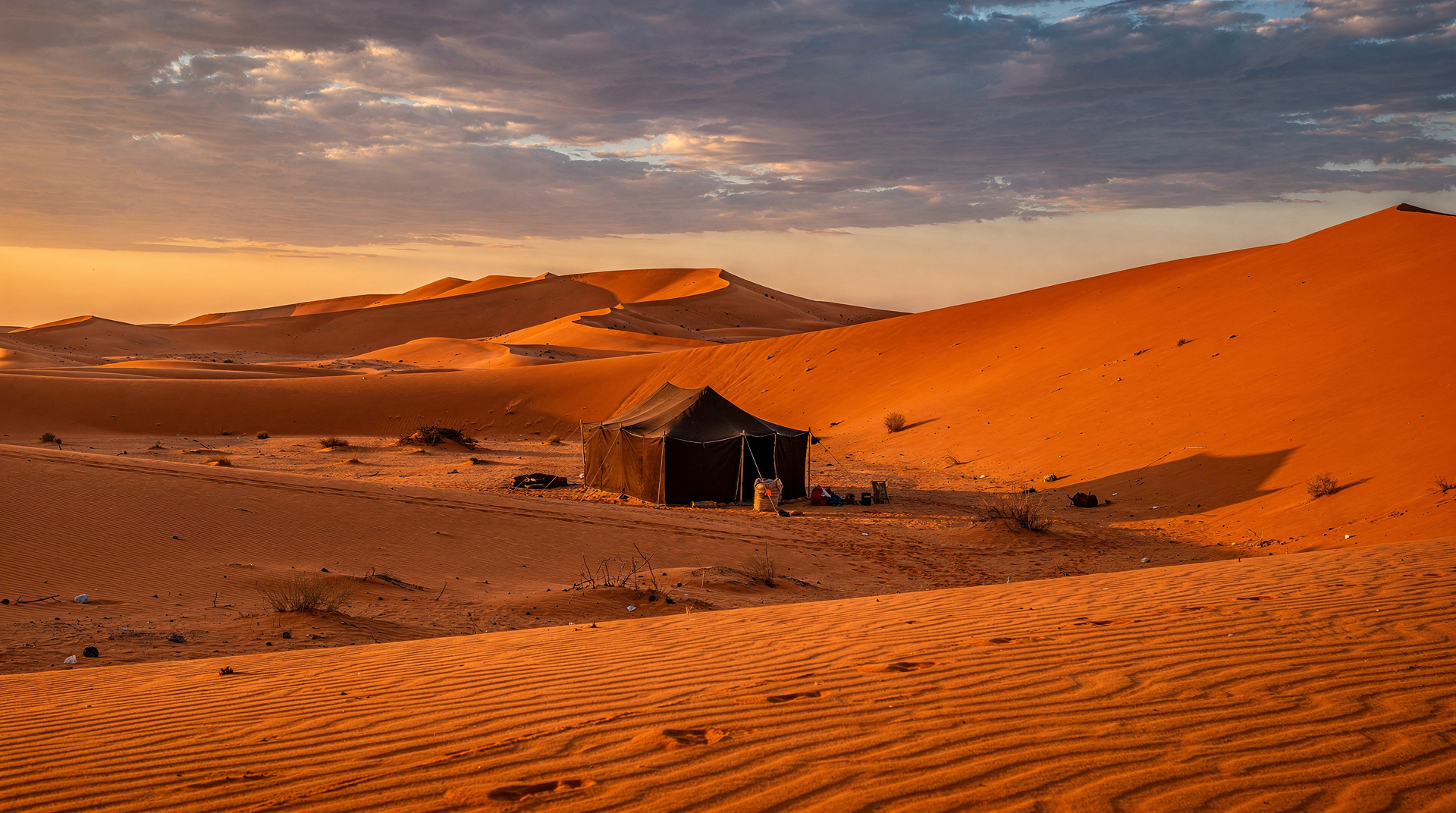
The day trips from Marrakech are exceptional. Agafay desert is 45 minutes away. The Atlas foothills and Imlil (Toubkal base village) are 2 hours. Essaouira is a 3-hour coastal drive. The Sahara desert loop (Ouarzazate, Aït Ben Haddou, Dadès, Merzouga) starts here.
Logistics are smooth. English is widely spoken in tourist areas. Marrakech Menara airport is modern and well-connected.
What Marrakech doesn’t do as well:
The tourist pressure in the core medina is constant. The Djemaa el-Fna is spectacular on your first evening; by the third day it can feel like being inside a fairground designed for your money. The medina outside the tourist core is interesting but the tourist bubble is harder to escape here than in Fes.
Marrakech is expensive relative to other Moroccan cities. Medina riad prices can match mid-range European hotels at the good end of the market.
For a guided introduction to Marrakech’s key sites, a private Marrakech medina tour covering palaces and tombs provides the historical context that makes the monuments meaningful.
The Majorelle Garden and Berber Museum entry in the Gueliz new city adds the Yves Saint Laurent connection and one of Morocco’s best garden experiences.
Fes: the case for the oldest medina in the world
Fes el-Bali is a UNESCO World Heritage Site and one of the world’s best-preserved medieval cities. Founded in 808 CE, it has functioned continuously for over 1,200 years as a centre of Islamic scholarship, craft production, and trade. The medina is not a museum recreation — it’s a living, working city of 150,000 people who buy bread, send children to school, and run leather tanneries in systems that have operated since the 11th century.
What Fes does better:
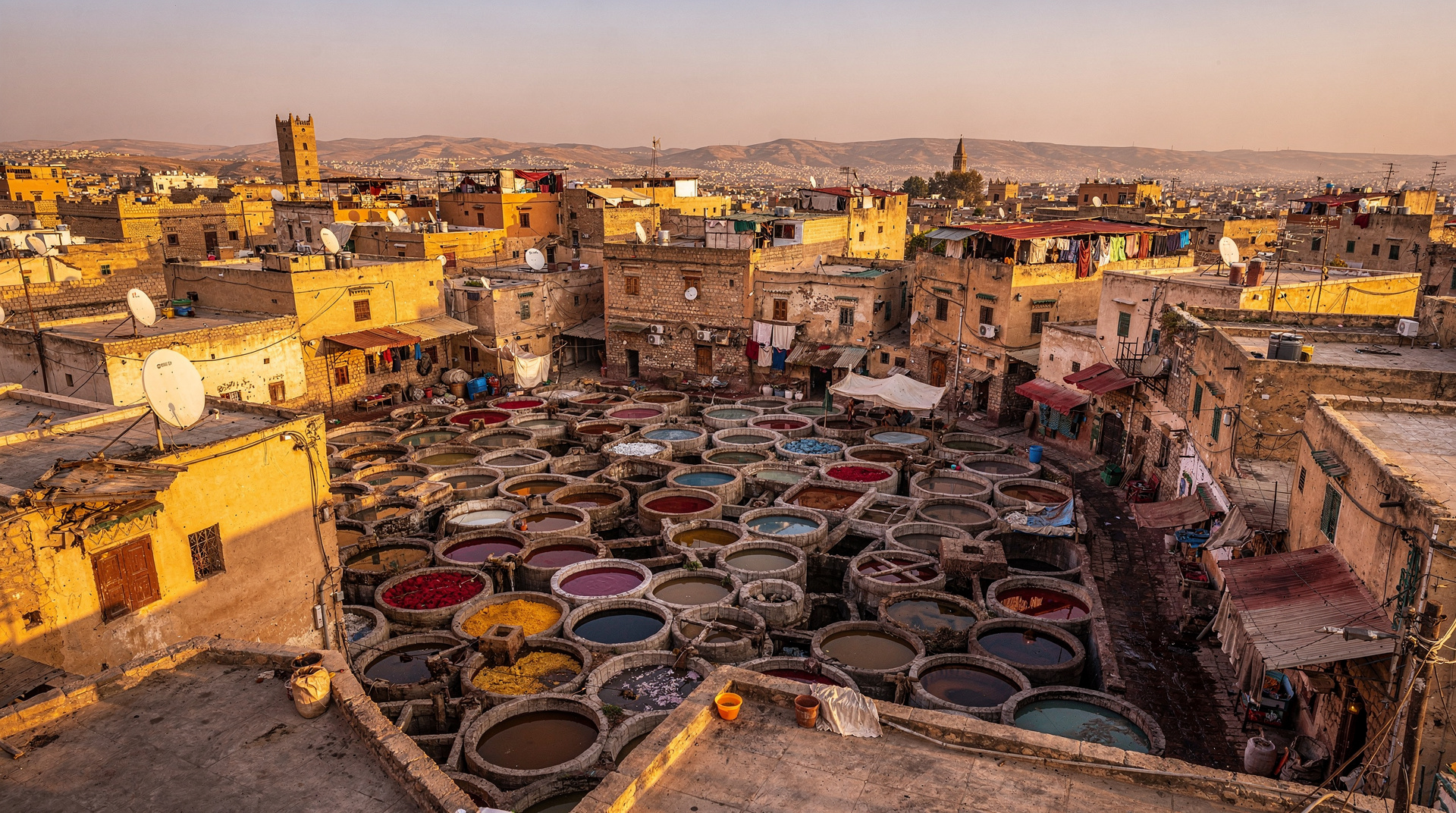
The historical depth is unmatched in Morocco. The Al-Qarawiyyin mosque-university (founded 859 CE and considered by UNESCO as the world’s oldest continuously operating university) is here. The Bou Inania madrasa has the most beautiful zellige tilework in Morocco. The Chouara tannery — where leather has been cured and dyed using largely unchanged methods for centuries — is one of the most visually arresting scenes in Africa.
The traditional craft infrastructure is more intact in Fes than anywhere else in Morocco. Coppersmiths, weavers, musical instrument makers, and ceramic painters still operate in the same quarters their guilds have occupied for generations.
The food is different from Marrakech — Fassi cuisine (Fes cuisine) has its own distinct character, more delicate in some ways, with dishes like bastila (pigeon and almond pastilla) and specific preparations that don’t appear elsewhere in Morocco.
What Fes doesn’t do as well:
The medina is genuinely difficult. 9,000+ alleys, limited signage, few landmarks visible above rooftop level. Getting lost is not just possible — it’s effectively guaranteed for first-time visitors who go without guidance. Budget for a licensed guide for your first full day.
The city moves at a different speed from Marrakech — slower, more conservative, less internationally oriented. For some travellers this is the point; for others it’s friction.
Tourism infrastructure, while good, is thinner than Marrakech. Fewer English speakers in service roles, shorter hours at some riads, fewer good restaurant options outside the tourist core.
For Fes, a guided tour is more valuable here than almost anywhere else in Morocco. A Fes full-day cultural tour provides context for the monuments and navigates the medina in a way that makes it comprehensible rather than overwhelming.
The medinas: a direct comparison
| Aspect | Marrakech Medina | Fes el-Bali |
|---|---|---|
| Size | Large | Enormous (UNESCO’s largest living medieval city) |
| Navigation difficulty | Hard without a map | Very hard with a map |
| Monument concentration | High | Very high |
| Souk quality | Excellent | Excellent, different specialisations |
| Living culture visibility | Present | More intense |
| Tourists per square meter | High | Lower overall, concentrated at key sites |
| Guide necessity | Optional but helpful | Strongly recommended |
Day trips: which city wins
From Marrakech:
- Agafay desert (45min)
- Imlil/Atlas mountains (2h)
- Essaouira Atlantic coast (3h)
- Ouarzazate (2.5h) — gateway to the Sahara circuit
- Casablanca day trip possible by train (3h30)
From Fes:
- Meknes (1h) — another imperial city with excellent medina and nearby Roman ruins at Volubilis
- Volubilis Roman ruins (1.5h)
- Chefchaouen blue city (3-4h) — doable but tight as a day trip; better as an overnight
- Merzouga Sahara (8h) — too far for a day trip but the gateway point for the desert loop
Marrakech wins on day trip variety and proximity to the south. Fes wins on the combination of medina quality plus accessible classical Morocco (Meknes, Volubilis) in the surrounding region.
Which to use as your base
Use Marrakech as your base if:
- Your trip includes the Sahara or Atlas
- You’re flying in and out of the same airport
- This is your first Morocco trip and you want smooth logistics
- You want the broadest range of accommodation quality
- You have less than 7 days in Morocco
Use Fes as your base if:
- You’re particularly interested in traditional Moroccan culture and craft
- You’re doing a northern Morocco focus (Fes, Chefchaouen, Tangier, Meknes)
- You’re arriving from or departing to Europe via Casablanca (Fes is linked by rail)
- You want a less tourist-heavy experience of Moroccan daily life
Do the Marrakech-Sahara-Fes loop if:
- You have 7+ days
- You want to see both cities and the desert
- You’re comfortable with a one-way itinerary that doesn’t return to the start
For the desert routing logic between these two cities, the Sahara from Marrakech vs Fes guide covers the routes and one-way options in detail.
Food comparison
Both cities have excellent food scenes but different characters.
Marrakech: International influences alongside traditional Moroccan. The Gueliz new city has Moroccan-French bistros, wine bars, and international restaurants. The medina has high-quality traditional restaurants in old riad settings. Street food around Djemaa el-Fna is an experience (if overpriced — it’s atmosphere, not cuisine).
Fes: More deeply traditional. Fassi cuisine is considered by Moroccans themselves as the most refined cooking tradition in the country. Dishes like chicken bastila with almonds and cinnamon, fresh-made noodles, and specific preparations of lamb are better here than anywhere else in Morocco.
The honest verdict
If you can only choose one: Marrakech for logistics, accessibility, and the Sahara/Atlas connection. Fes for cultural depth, authentic traditional atmosphere, and historical density.
The real answer is to see both. The Morocco trip planning guide shows how to structure an itinerary that covers both imperial cities and other key regions within typical trip lengths.
Frequently asked questions about Marrakech vs Fes
Is Fes or Marrakech more touristy?
Marrakech receives significantly more international tourists and the tourist infrastructure is more developed. Fes has substantial tourism but feels less overrun in the residential quarters away from the main tanneries and monuments.
Which city is safer?
Both are generally safe for tourists by Moroccan and regional standards. Marrakech has more persistent medina touting and scam activity. Fes has more navigation difficulty. See the Morocco safety guide for the full breakdown.
How many days should I spend in each city?
Minimum 2 nights (3 better) in Marrakech, 2 nights in Fes. With only 2 nights in each, you’ll cover the main sites without feeling rushed. With 3 nights each, you’ll have time for day trips.
Can I take a train directly between Marrakech and Fes?
No direct train. Routes go via Casablanca, making the train journey 8-9h. CTM buses run direct Marrakech-Fes in about 8h. Many travellers do this route via the Sahara desert loop instead — a 3-day trip that sees more of the country.
Which has better riads?
Both have excellent riads at every price point. Marrakech has more options at the luxury end and a more evolved riad-hotel scene. Fes riads are often cheaper for comparable quality and have a more authentic feel less affected by intensive tourism.
Is it worth hiring a guide in both cities?
In Fes, a guide for the first full day is strongly recommended — the medina complexity makes it genuinely difficult without one. In Marrakech, a half-day orientation is helpful but the city is more navigable independently.
Which city is better for a honeymoon or couples trip?
Both work well but for different moods — Marrakech for spa culture, luxury riads and evening atmosphere around Jemaa el-Fna; Fes for a quieter, more intimate sense of discovery. See the best time for couples/honeymoon guide for seasonal advice either way.
Neighbourhood-level differences
Marrakech beyond the main medina
Most visitors concentrate entirely on the area around Djemaa el-Fna and the main souk lanes. The Mellah (Jewish quarter) to the south of the Bahia Palace is quieter, more residential, and has a different architectural character — worth half a morning. The Riad Laarouss neighbourhood (north of the main square, towards the Zaouia) has some of the most intact historic fabric in the city.
The Gueliz new city (Ville Nouvelle) is where Marrakech lives when it’s not performing for tourists. French-era architecture, working cafes with local clientele, the best wine bars in the city, good independent restaurants, and a completely different atmosphere from the medina. Many travellers skip it entirely; worth an evening at minimum.
Fes beyond the famous sites
The Fes Jdid (newer medina, 13th century) is almost entirely overlooked by visitors who focus on Fes el-Bali. It contains the Mellah, the Royal Palace exterior wall (the golden door is genuinely stunning), and a functional neighbourhood medina without the tannery-level tourist concentration.
The Andalusian quarter of Fes el-Bali (the eastern bank of the river, less visited than the western bank with the tanneries) has excellent examples of religious architecture — particularly the Andalusian Mosque and the Cherratine Madrasa — with a fraction of the visitor pressure. If you have two days in Fes, split them between the two banks.
Shopping comparison
Both cities are excellent for Moroccan craft but with different specialisations.
Marrakech souk specialities: Leather goods (bags, belts, slippers), woven textiles, spices, lanterns, and argan products. The souk organisation is loose — similar goods appear in multiple areas and you can wander without a specific destination.
Fes souk specialities: Blue and white ceramics (Fassi pottery), marquetry woodwork, brasswork, and textiles. The Fes souks are organised by craft type (coppersmith souk, dyer’s souk, tanner’s area) in a more legible structure than Marrakech — once you have the orientation, finding specific categories is easier.
Negotiation culture and souk dynamics are similar in both cities. The first-time visitors guide covers the souk system and how to shop without overpaying.
Weather and seasonal comparison
Both cities share Morocco’s broad seasonal pattern, but Fes runs noticeably cooler and wetter in winter than Marrakech, and Marrakech gets hotter in summer than Fes because of its position at the edge of the pre-Sahara plain.
| Season | Marrakech | Fes | Crowds |
|---|---|---|---|
| Spring (Mar-May) | Warm, comfortable, best overall | Mild, occasional rain early on | High — peak season |
| Summer (Jun-Aug) | Very hot (35°C+), medina walking hard midday | Hot but a few degrees cooler | Moderate — heat deters some |
| Autumn (Sep-Nov) | Warm, settling by October | Comfortable, good light for photography | High |
| Winter (Dec-Feb) | Mild days, cold nights | Colder, more rain, riads can feel chilly | Lower — best value |
If timing is the deciding factor, the Morocco spring vs autumn guide breaks down which season suits which itinerary.