Surf camps in Taghazout: honest breakdown for beginners and experienced surfers
Which surf camp in Taghazout is best for beginners?
Surf Berbère and Taghazout Surf Lodge are the most consistently reviewed beginner camps with structured coaching, accommodation, and meals in one package. Expect €600-900/week including accommodation, surf lessons, and breakfast. Paradis Plage is better for intermediate to advanced surfers who want upscale facilities.
Taghazout: Morocco’s surf capital
Taghazout is a small fishing village 18km north of Agadir on Morocco’s Atlantic coast. In the 1970s it was a stop on the hippie trail. By the 2000s it was a recognised surf destination. By 2026 it’s Morocco’s most organised surf camp scene — with enough variety to cover every budget, every level, and every approach to wave riding.
The waves themselves are the foundation. The Taghazout area has around 10 distinct surf spots within a 10km stretch of coastline, ranging from beginner-friendly beach breaks to serious reef breaks. This variety is what makes it work — camps can place beginners at one beach and advanced surfers at another simultaneously.
This guide covers the main camps, explains the differences between Taghazout’s key surf spots, and breaks down what’s realistic to expect at each price tier.
| At a glance | |
|---|---|
| Where | Taghazout village and Tamraght, 18-23km north of Agadir on Morocco’s Atlantic coast |
| Cost | Around €450-1,200+ per week depending on camp tier, including accommodation, lessons and most meals |
| Time needed | A one-week package is the standard format; a 3+3 night hybrid works for confident surfers |
| Getting there | Agadir Al Massira Airport (AGA), then around 20-30 minutes by taxi to Taghazout |
| Best time | October-April for the most consistent swell; May-September for warmer water and quieter camps |
The surf spots: what’s where
Understanding the geography matters for choosing a camp — some properties are better located for specific wave types.
Anchor Point (Hash Point): The most famous break in the Taghazout area. A right-hand point break that, in good conditions, produces long, walling waves of 200-400m. Not for beginners — consistent waist-to-head-high waves with reef below. Best October-April when Atlantic swells are consistent.
Mysteries: Another right-hand point break, slightly more sheltered than Anchor Point. Can work on smaller swells, making it useful when Anchor Point is too big. Intermediate to advanced.
Banana Point: A mellower right-hand break, better for intermediate surfers stepping up from beach break surfing. More consistent than Anchor Point on smaller swells.
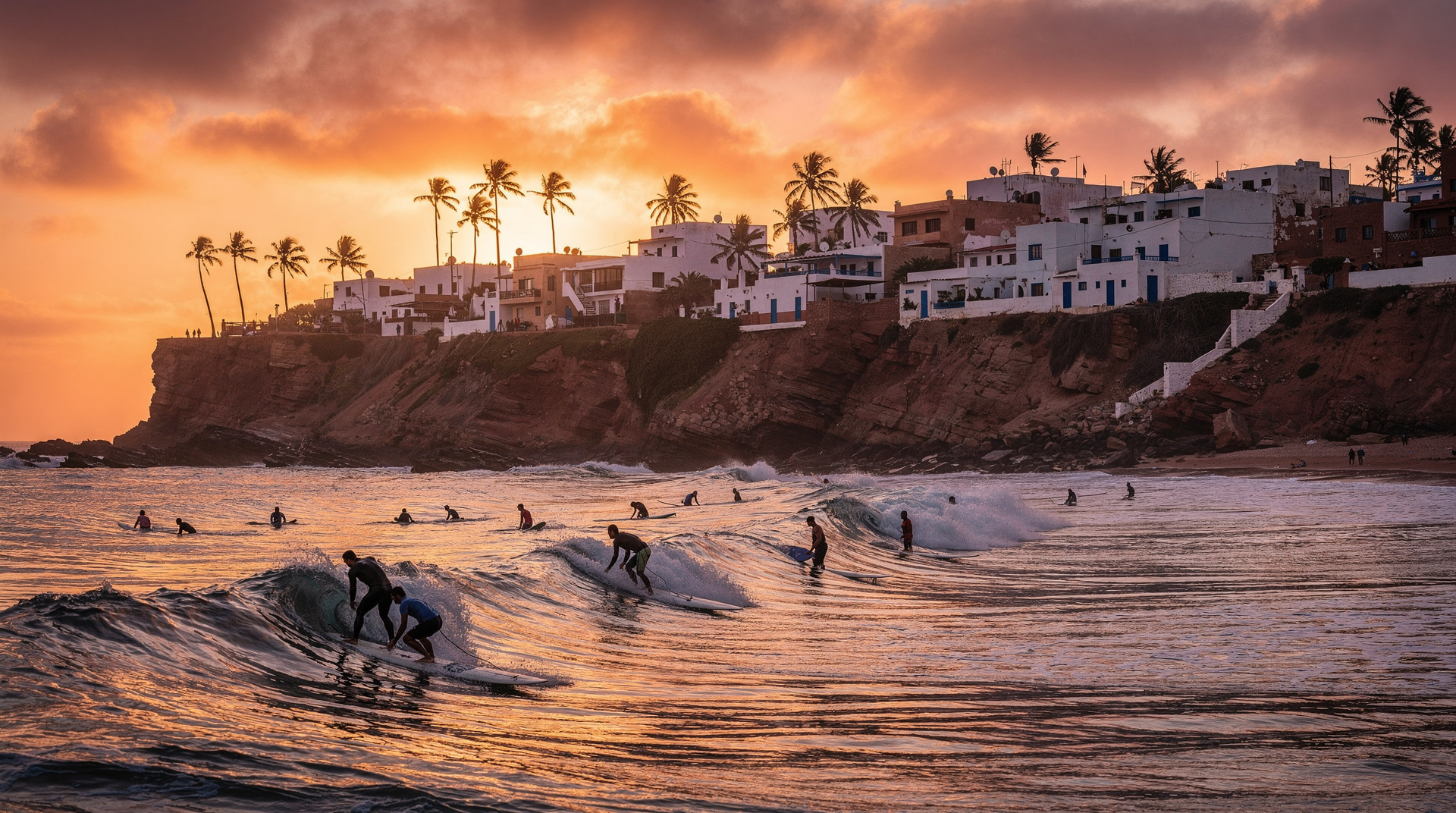
Panoramas: A beach break that works on most swell sizes. The go-to spot for lessons and beginner sessions — sandy bottom, multiple peaks, forgiving conditions. Most camps run beginner lessons here.
Tamraght: 5km south of Taghazout, with beach and point break options. Slightly less crowded than the main Taghazout breaks during peak season. Several camps are located here and transport to other spots by van.
Main surf camps: honest breakdown
Surf Berbère
One of the most established camps in the Taghazout area, operating since 2009. Surf Berbère has two properties — one in Taghazout village and one in the Tamraght area — and caters to a genuinely wide range of levels. The coaching structure is one of the better-organised in the area: video analysis, level-specific sessions, and progression tracking over a week. ISA-certified instructors.
Package structure: Weekly packages (7 nights) include accommodation, breakfast and dinner, daily surf lessons, equipment, and airport transfer. The beginner package focuses on Panoramas beach break. The intermediate and advanced packages move between spots based on conditions.
Weekly package price: €620-950 per person depending on room type (single/shared/private room) Standout: Coaching quality, progression tracking, variety of spots Limitation: The Taghazout village property is more urban than the Tamraght one; noise can be an issue on some nights
Taghazout Surf Lodge
A well-reviewed mid-range camp with 20 rooms, a pool, and a food program that is better than average for the camp segment. The lodge sits on the cliff above the village with views over the breaks, which is useful for watching conditions before paddling out. Coaches here have a reputation for patience with beginners and solid technical communication in English and French.
Weekly package price: €700-1,000 per person Standout: Pool, food quality, cliff location with break views Limitation: Less established coaching structure than Surf Berbère for intermediate progression
Paradis Plage
This is in a different category from the camps above. Paradis Plage is a 5-star surf and wellness resort 8km north of Taghazout on its own private beach at Imsouane. 49 rooms and suites, spa, pool, beach club, restaurant, and a surf program that caters to intermediate and advanced surfers rather than beginners.
The surf at Imsouane is different from Taghazout — a long right-hand point break (one of the longest in Morocco, producing rides of 400-700m on good days) that suits intermediate surfers who want long, predictable waves rather than the more technical point breaks around Taghazout.
What you actually pay for: The facilities at Paradis Plage are genuinely upscale — private beach, quality food sourcing, spa treatments, and professional surf coaching. The atmosphere is wellness resort more than surf camp.
Price: €180-450/night (room only); surf packages available from €1,200/week Standout: Facilities, Imsouane point break, spa, private beach, food quality Limitation: Expensive; the surf here is less varied than Taghazout; better for intermediate/comfortable beginners than true novices or advanced surfers
Morocco Surf Camp Taghazout
A budget-to-mid-range option in the village. Lower price point, smaller operation, and a more social/hostel atmosphere. Good for budget travellers, solo surfers wanting to meet people, and younger crowds.
Weekly package price: €450-650 per person (shared room) Standout: Price, social atmosphere, central village location Limitation: Less coaching structure than competitors; food quality is more variable
Surf House Morocco
A reliable mid-range option with an emphasis on smaller group sizes (maximum 8 surfers per instructor). Slower-paced coaching approach that works well for adults who want to progress without feeling rushed. Popular with solo female travellers.
Weekly package price: €650-900 per person Standout: Small group sizes, adult-paced coaching, solo-female-friendly atmosphere Limitation: Smaller operation means less flexibility on surf spot selection
Beginner vs advanced: choosing the right camp
Beginners should prioritise: ISA-certified instructors, video analysis (most camps offer this but not all), soft-top foam boards for first days, maximum 6-8 students per instructor, and proximity to a beach break (not a reef break).
Best beginner camps: Surf Berbère, Surf House Morocco, Taghazout Surf Lodge
Intermediate surfers (can paddle and catch unbroken waves independently) should prioritise: access to multiple breaks based on conditions, intermediate-specific coaching sessions, and a camp flexible enough to van you to the right break each day.
Best intermediate camps: Surf Berbère (intermediate program), Taghazout Surf Lodge, Paradis Plage (for longer-wave preference)
Advanced surfers (comfortable at head-high+ reef breaks): Most Taghazout camps are honest about the fact that advanced coaching is thin on the ground. Advanced surfers often stay at camps for the accommodation and self-organise, renting a board and getting to Anchor Point independently. Paradis Plage is the exception — their advanced coaching program has the most developed infrastructure.
Camp comparison table
| Camp | Level | Price/week | Pool | Rooms | Best for |
|---|---|---|---|---|---|
| Surf Berbère | Beginner-advanced | €620–950 | No | Shared/private | Coaching quality |
| Taghazout Surf Lodge | Beginner-intermediate | €700–1,000 | Yes | Private | Food, views, pool |
| Paradis Plage | Intermediate-advanced | €1,200+ | Yes (+ beach) | Private (hotel) | Luxury, long waves |
| Morocco Surf Camp | Beginner | €450–650 | No | Shared | Budget |
| Surf House Morocco | Beginner-intermediate | €650–900 | No | Small groups | Small groups, adults |
Best time to surf Taghazout
October-April: Best swell season. Atlantic groundswells from the northwest produce consistent waves across all levels. Water temperature: 16-20°C (wetsuit required — 3/2mm minimum). Air temperature: 20-25°C. This is peak season for camps — book 4-6 weeks ahead.
May-September: Smaller swells, warmer water (22-24°C), less consistent conditions for experienced surfers. Beginners can still progress at Panoramas beach break. Paradis Plage at Imsouane still picks up swell from the point. Camps are quieter and sometimes offer 10-15% discounts.
July-August: Heat is intense (35-38°C in Agadir, slightly cooler at Taghazout due to Atlantic influence). Water is warmest. Accommodation in the village fills with Moroccan domestic tourists and European summer travellers.
What a typical surf camp week looks like
Day 1 (arrival): Check in, equipment fitting, beach assessment with coach, first session in the afternoon (or next morning depending on arrival time).
Days 2-5: Morning session (7-9am), breakfast, optional free time or optional afternoon session (3-5pm). Evening: communal dinner, optional social. Conditions determine which break each day.
Day 6: Typically a rest day or optional excursion — Paradise Valley (a gorge 30 minutes inland with swimming holes) or an Agadir city visit.
Day 7 (departure): Morning session, pack, transfer.
This is the standard structure. Paradis Plage varies significantly — more spa days, less structured sessions, optional golf (yes, golf) and yoga.
For the dedicated surfing guides, the Taghazout surf guide covers waves in detail. The surfing Morocco guide compares Taghazout with Essaouira and other Atlantic spots. For itinerary context, the surf Morocco itinerary covers a full-week surf trip with accommodation and transport logistics.
Single-session surf lessons for beginners in Taghazout are available without a full camp package — useful if you want to try surfing without committing to a week. The Agadir destination guide covers getting to Taghazout from Agadir airport (20 minutes by taxi, ~€10).
Practical logistics for surf camp arrivals
Getting there: Agadir Al Massira Airport (AGA) is the nearest airport — 30 minutes to Taghazout by taxi. Direct flights from London, Paris, Amsterdam, Madrid, and other European cities. Ryanair, easyJet, and Transavia serve Agadir from multiple European hubs.
What to bring: A good camp provides boards and wetsuits. Bring: reef-safe sunscreen (essential — the spray applies while you’re in the water), a rash guard or UV lycra shirt (cheaper than sunburn treatment), water sandals, and a light windproof layer for evening.
Money: Taghazout village is increasingly card-friendly but still primarily cash. Bring sufficient MAD (Moroccan dirhams) for tips, drinks, and village purchases. The nearest ATM is in Tamraght (5 minutes) or Agadir (30 minutes).
The Taghazout destination guide covers the village itself — restaurants, transport, and what to do beyond surf.
Beyond surfing: what Taghazout offers
Taghazout is a surf village but spending a week here reveals more than surf breaks. The surrounding landscape and coastal culture provide enough context to fill rest days.
Paradise Valley: 30km northeast of Taghazout, accessible by taxi or camp excursion. A dramatic gorge with natural pools suitable for swimming, palm trees, and a walking trail through the Souss-Massa river system. The pools are best in spring (March-May) before summer heat reduces the water level. Most camps organise a day trip here mid-week, and if yours doesn’t, you can book a Paradise Valley day trip with lunch from Agadir on your own.
Tamraght village: The village immediately south of Taghazout has a more lived-in character than the surf-tourism-dominated Taghazout itself. The Tuesday market is a genuine local affair — not tourist-oriented. Good for understanding the daily rhythm of a coastal Berber community.
Imsouane: 60km north of Taghazout, a fishing village with the long right-hand point break that Paradis Plage is positioned near. Even if you’re not staying at Paradis Plage, a day trip to Imsouane to surf the point or watch from the clifftop is worth the journey.
Agadir (day trip): The nearest city (30 minutes) has a corniche beach strip, modern restaurants, and supermarkets — useful for restocking, cash withdrawal, and a change of atmosphere from the village. The souk El Had in Agadir is one of Morocco’s largest markets, covering 7 hectares and selling everything from spices to plumbing fixtures. If you’d rather not wander it alone, a guided tour of Agadir’s Souk el Had is an option.
Eating and drinking in Taghazout
The village has developed a solid food scene around surf camp demand. Key options:
Mint Cafe: The most popular café in the village. Good coffee, avocado toast, and Moroccan breakfast. Reliable WiFi — useful for remote workers between surf sessions.
Panorama café: Positioned above Panoramas beach with a view over the break. The terrace is the best place in the village to eat breakfast and watch the waves simultaneously.
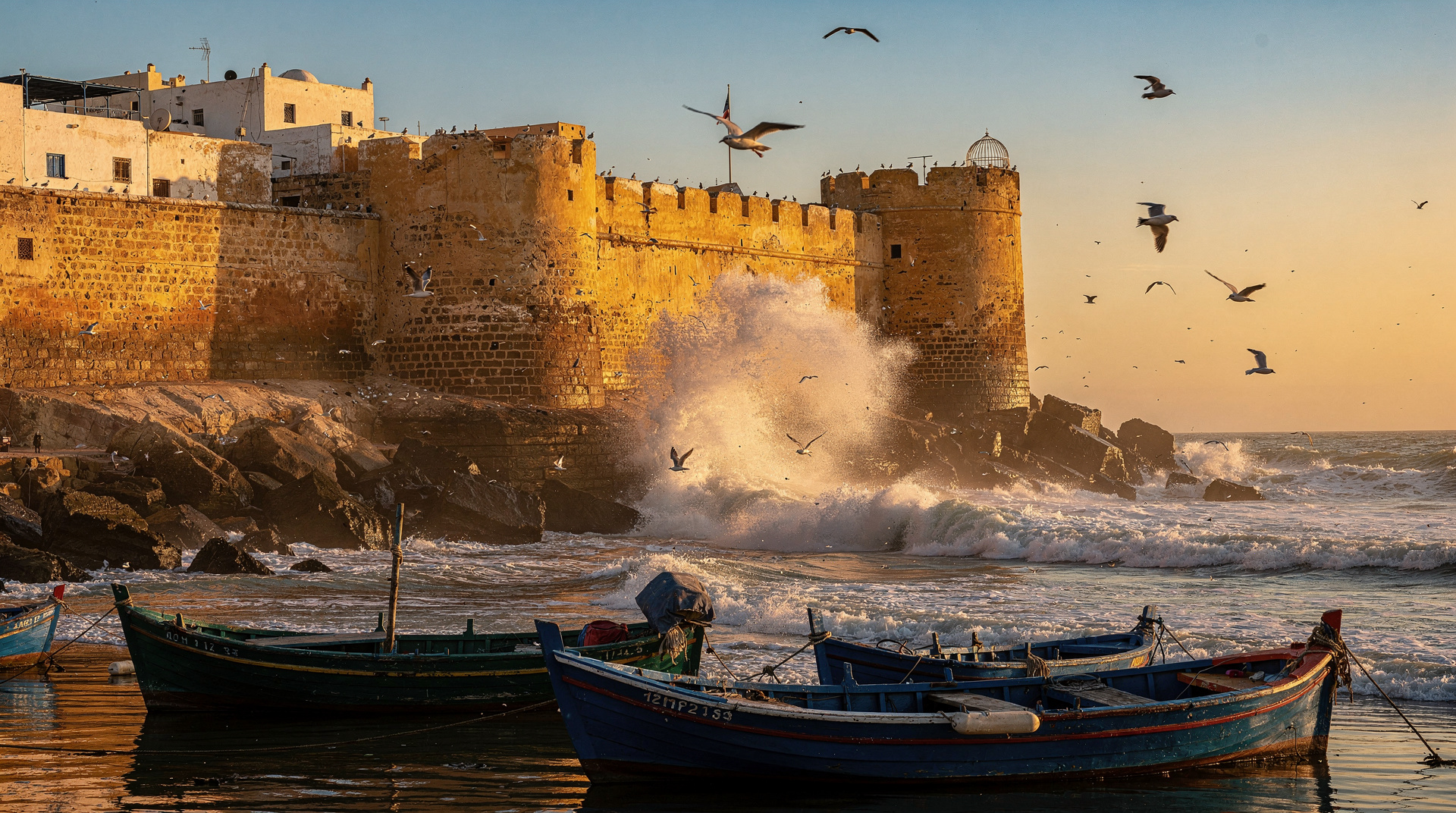
Fish tagine at the harbour: Taghazout’s small fishing harbour still functions. Several simple restaurants adjacent to it serve fresh fish tagine for 60-100 MAD (€6-10) — the best value fish meal in the area.
Surf camp dinners vs eating out: Most camps include dinner. On nights when you skip the camp dinner and eat in the village, the social dynamic shifts — meeting other travellers from different camps, local fishermen, and guides happens most naturally at the village restaurants.
Who Taghazout is not right for
Taghazout’s surf camp model works well for specific traveller types and poorly for others.
Not suitable for: Travellers who want extensive sightseeing (the village has no major historical sites; all cultural content requires a day trip). Luxury travellers who need high-end restaurants and service (the village is casual and limited in fine dining options — Paradis Plage is the exception). Those who dislike group travel dynamics (camp meals and sessions are inherently group activities).
Best suited to: Those committed to daily surf practice for 5-7 days; solo travellers looking to meet people with a shared interest; couples where both partners surf or are willing to learn; anyone who wants to feel physically active and outdoors the majority of the time.
How to choose between a week camp and self-organised surfing
Week camp with full package (accommodation + lessons + food): The right choice for beginners who want coaching structure, and for solo travellers who want the social infrastructure. Pros: coaching, equipment, community. Cons: less flexibility, more expensive if you don’t use all inclusions.
Accommodation-only with independent surfing: Some experienced surfers book a basic room in Taghazout (250-400 MAD/night for a private room at a guesthouse) and rent a board daily (100-200 MAD/day). This works for confident surfers who know the local break culture. It requires more knowledge to do safely — understanding which breaks suit your level without a coach requires honest self-assessment.
Hybrid approach: A 3-night camp with lessons, then 3 nights of independent surfing. This gives you the coaching introduction and then the freedom to practice what you’ve learned independently. Surf Berbère and Surf House Morocco can accommodate this structure.
The how to book a Sahara tour guide has analogous thinking for the desert excursion planning that often accompanies a Taghazout surf week — many visitors combine a week in Taghazout with a 3-day Sahara loop from Marrakech on the same Morocco trip. The budget Morocco itinerary shows how this combination works within a 10-12 day trip budget.
Female surfers in Taghazout: an honest assessment
Taghazout has become increasingly welcoming to female surfers but it’s worth being specific about the context.
Positive: Most surf camps actively recruit female participants and instructors. Surf House Morocco specifically has a reputation for female-friendly coaching. The beach at Panoramas (beginner break) is shared between locals, visitors, and diverse demographics without issue. Female coaches at several camps (Surf Berbère, Surf House) mean women can request a female instructor.
Challenging: The village itself is conservative. Walking through Taghazout village (as opposed to the beach) in swimwear is not standard — cover up between beach and accommodation. Catcalling in the village can occur, particularly on the main road. The beach is fine; the village streets require more awareness.
Practical tip: Stay at a camp with direct beach access or a clearly marked beach route that doesn’t require walking through the busiest market area. Surf Berbère’s Tamraght property and Surf House Morocco are both positioned better for direct beach access.
Environmental considerations at surf camps
Taghazout’s rapid growth as a surf destination has created environmental pressure. Key issues:
Plastic: Morocco has banned single-use plastic bags but bottles and packaging remain a problem. The best camps have water refill stations and actively discourage single-use plastic. Check whether your camp provides reusable water bottles.
Reef-safe sunscreen: Conventional sunscreen contains oxybenzone and octinoxate, which are damaging to coral and marine life. At Taghazout the reef breaks mean surfers are consistently above reef systems. Bring reef-safe sunscreen from home — local availability is limited.
Surf impact: The growth in surf camp participants (particularly beginner sessions at Panoramas) means the beach gets crowded during peak hours. The 7-9am sessions are less crowded; afternoon (3-5pm) sessions at Panoramas are the most populated. Experienced surfers who want less crowded conditions should target morning sessions and consider Anchor Point or Mysteries rather than the beginner breaks.
Camp building practices: Several new camps opened in Taghazout since 2020 with significant construction — some involving development on previously natural cliff areas. When choosing a camp, checking the establishment date and their building approach is worth doing if environmental impact matters to you.
Taghazout in context: what the full Morocco trip looks like
Taghazout doesn’t exist in isolation — it’s one component of what most visitors do in Morocco. The typical Taghazout trip fits one of these templates:
Surf week only: Fly Agadir, surf for 7 days, fly home. The simplest and most common approach. Total Morocco seen: Taghazout, beach, maybe Agadir for an evening.
Surf + Marrakech: Most common expansion. Fly Agadir, surf 5-7 days in Taghazout, bus or taxi to Marrakech (3.5 hours), spend 2-3 nights in the medina, fly home from Marrakech. Covers the surf and the city in a single trip.
Atlantic coast route: Agadir in, Taghazout surf camp, then north by local transport through Essaouira (2 nights), Marrakech (2 nights), and out. The coastal leg Taghazout-Essaouira takes 2.5-3 hours by road and is beautiful. The surf Morocco itinerary has this exact route mapped.
For how Taghazout fits into a bigger Morocco trip including imperial cities, the 14-day Morocco itinerary shows one structure. The Agadir destination guide covers the city that serves as the transport hub for all Taghazout arrivals.
Frequently asked questions about Surf camps in Taghazout
Do I need to know how to swim to join a Taghazout surf camp?
Yes, basic swimming competence is expected and usually required by camps for safety reasons, even for beginner-level surf lessons. If you’re not a confident swimmer, mention this when booking so the camp can adjust the lesson approach.
How far in advance should I book a Taghazout surf camp?
4-6 weeks ahead for the October-April peak season, when established camps like Surf Berbère and Taghazout Surf Lodge fill up. May-September is quieter and can often be booked with less lead time, sometimes at a discount.