Morocco + Andalusia: 10-Day Itinerary (Marrakech → Seville)
Two continents, one itinerary — why Morocco and Andalusia belong together
The connection between Morocco and Andalusia is not a tourism construct. For 700 years, southern Spain was part of the Islamic world. When the last Moorish kingdom fell at Granada in 1492, hundreds of thousands of Andalusian Muslims and Jews fled south across the Strait of Gibraltar and settled in Fes, Chefchaouen, Tetouan, and Marrakech. The architectural DNA they brought with them is still visible: the same geometric tilework, the same carved plasterwork arabesques, the same preference for inward-facing courtyard houses over ostentatious facades.
This 10-day itinerary makes that connection tangible. You begin in Morocco — Marrakech’s medieval medina, the Fes tanneries, Chefchaouen’s Andalusian-refugee blue lanes — and end in Spain, where the Alcázar of Seville and the Mezquita of Córdoba show you what the craft traditions look like in their European context. The ferry crossing between Tangier and Tarifa (35 minutes, 14 km across the Strait) is one of the most charged moments in travel: you board in Africa and step off in Europe before lunch.
Ten days is tight for both countries but entirely achievable if you prioritise movement. You will average two nights per stop except Marrakech (Day 1–2) and Seville (Day 9–10 combined). Pace yourself: Morocco’s medinas demand more energy than European sightseeing. Build in at least one slow afternoon per city.
Route at a glance: Fly into Marrakech → Fes by train → Chefchaouen by bus → Tangier by bus → ferry to Tarifa → Cádiz → Seville (day trip Córdoba) → fly home from Seville
Total estimated cost (per person, mid-range, flights excluded): €900–1 400
Trip snapshot
| Where | Marrakech → Fes → Chefchaouen → Tangier → ferry → Cádiz → Seville (+ Córdoba day trip) |
| Cost (per person, flights excluded) | around €960–1,375 mid-range |
| Time needed | 10 days is tight but workable; 14 days lets you add Granada |
| Getting there | fly into Marrakech (RAK), fly out of Seville (SVQ) |
| Best time | March–May or September–November |
| Difficulty | moderate — one ferry crossing and several city-to-city transfers |
Morocco-first or Spain-first? The direction debate
Most travellers ask this question and most end up going Morocco-first. Here is why that is the right choice for this itinerary.
Morocco-first (recommended): Starting in Marrakech gives you a genuine immersion in North African urban life before the Andalusian echo of it. When you reach Seville’s Alcázar and see the same zellige tile patterns and carved cedar ceilings you just walked past in the Bahia Palace and the Bou Inania Medersa, the connection is intellectually and emotionally satisfying. The trip builds toward something rather than retreating from something.
Spain-first: Works logistically — fly into Seville, travel to Tangier, cross to Morocco, exit via Casablanca or Marrakech. Advantage: you end in Morocco, which many travellers prefer (ending somewhere more surprising rather than returning to the familiar). Disadvantage: Andalusia’s Moorish architecture can feel like a pale preview rather than a glorious echo. The “aha” moment at the Mezquita hits harder after you have already been to Fes.
Practical note on Schengen: If you hold a passport that requires a Schengen visa, Morocco-first solves a bureaucratic problem. You enter the Schengen Area only once, in Tarifa, and exit from Seville — no complex multi-entry visa required. See the visa section below for full details.
Day-by-day breakdown
Day 1: Arrive Marrakech
Menara Airport (RAK) has direct connections from most European cities. Land, clear immigration (visa-free for most passports), and take a petit taxi to your medina riad. Agree the fare before boarding — the airport metered rate to the medina runs about 80–100 MAD (€7–9).
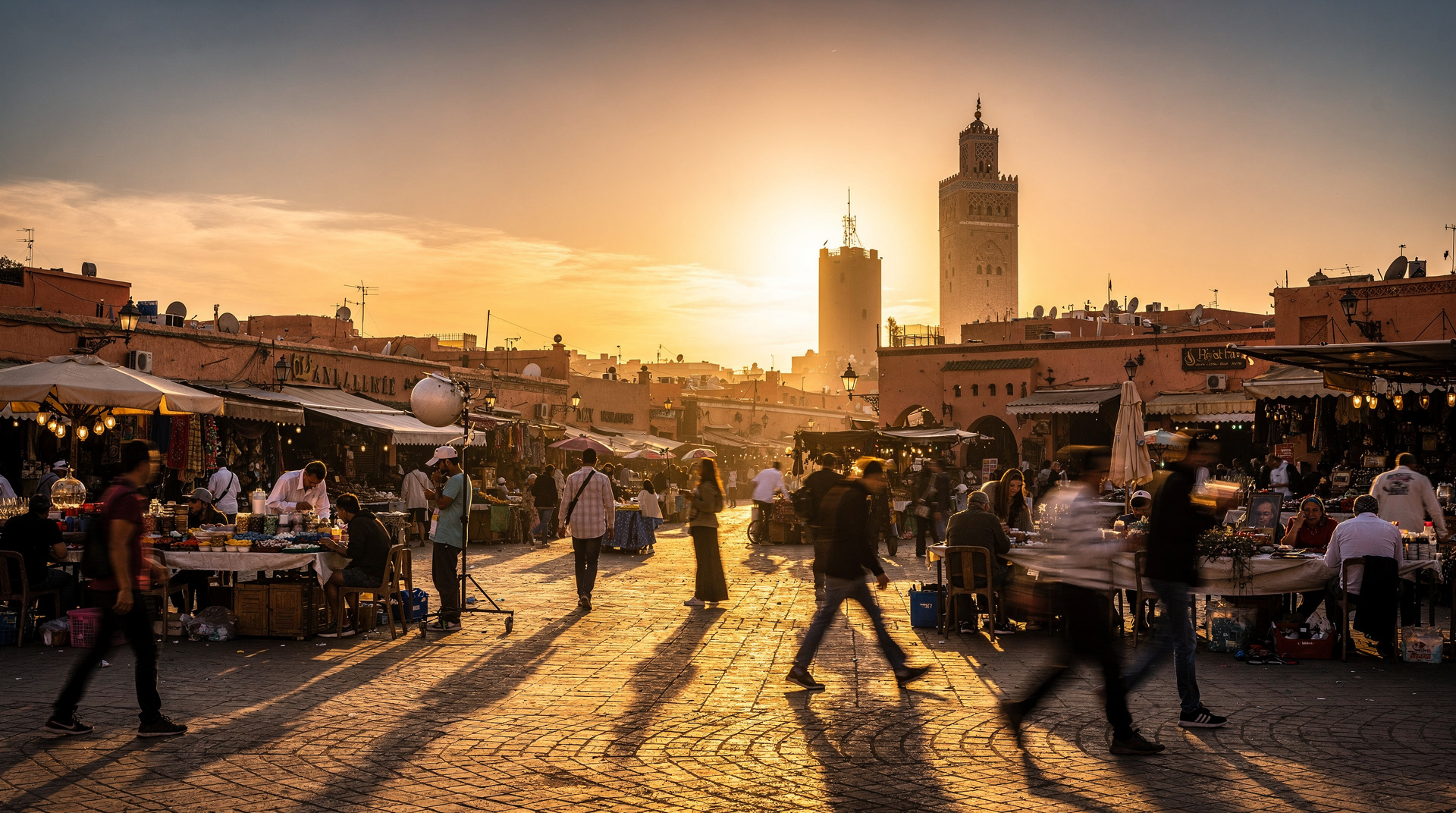
Check in and resist unpacking immediately. Walk out to Djemaa el-Fna square as the sun drops — the transformation from daytime market to evening carnival happens around 17:30 and is one of travel’s great spectacles. Smoke from a hundred charcoal grills, Gnawa musicians, orange juice vendors, storytellers circled by standing crowds. Dinner here costs €5–8 for a full meal.
Stay: Riad near Bab Doukkala for easy taxi access. Riad BE Marrakech or Riad Dar Alfarah: €60–100/night. Book direct to avoid platform fees.
Day 2: Marrakech medina in depth
You have one full day in Marrakech before the train north. Use it for the core medina circuit.
Morning: Bahia Palace (40 MAD entry) and the Saadian Tombs (70 MAD) are best before 10:00. The Saadian Tombs in particular — 16th-century royal mausoleum sealed for 300 years, rediscovered by French aerial survey in 1917 — receives a crush of visitors after mid-morning. The Marrakech medina guided tour covering Bahia Palace, Ben Youssef Madrasa, and the souks covers these efficiently with historical context (from €25 pp).
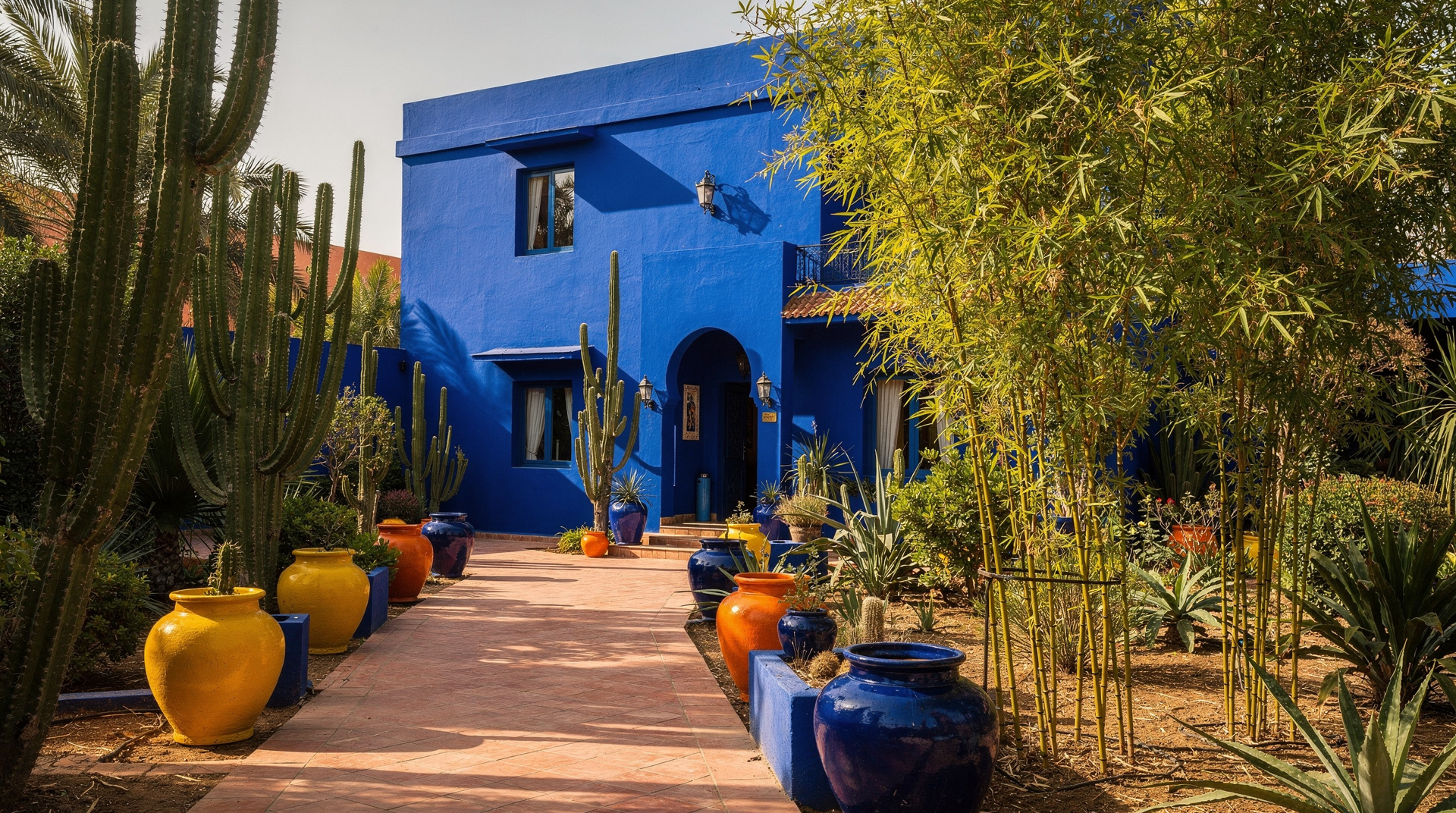
Afternoon: Walk north through the souks toward the Ben Youssef Medersa (formerly the largest Koranic school in the Maghreb, 14th-century, immaculate carved plasterwork). Majorelle Garden is 3 km northwest of the medina — take a petit taxi (15 MAD). Book tickets online: €9 garden-only, €18 with YSL Museum.
Evening: Hammam before the train journey. Les Bains de Marrakech near Bab Doukkala offers a traditional scrub and massage for €30–45.
Day 3: Marrakech to Fes by train
ONCF trains run Marrakech–Fes twice daily. The most practical departure is 08:05, arriving Fes around 16:00 (with a change at Casablanca Voyageurs or direct on select days — check oncf.ma). Journey time approximately 7h45–8h. First-class ticket: 230–270 MAD (€21–25). Book at least the evening before from any ONCF station or online.
The train passes through Casablanca’s industrial sprawl, then north through the Gharb plain — flat, green in spring, agricultural. Pack food for the journey; the train café car serves sandwiches at inflated prices. Arrive in Fes, navigate to your riad near Bab Bou Jeloud before dark. The Fes medina is not a place to find your accommodation after nightfall with luggage.
Stay: Riad Laaroussa or Dar Bensouda: €80–130/night mid-range.
Day 4: Fes medina — a full day
Fes el-Bali is the most complete medieval city on earth. The medina contains 150,000 people in a street plan unchanged since the 9th century. It is genuinely easy to get lost; the disorientation is productive once you accept it.
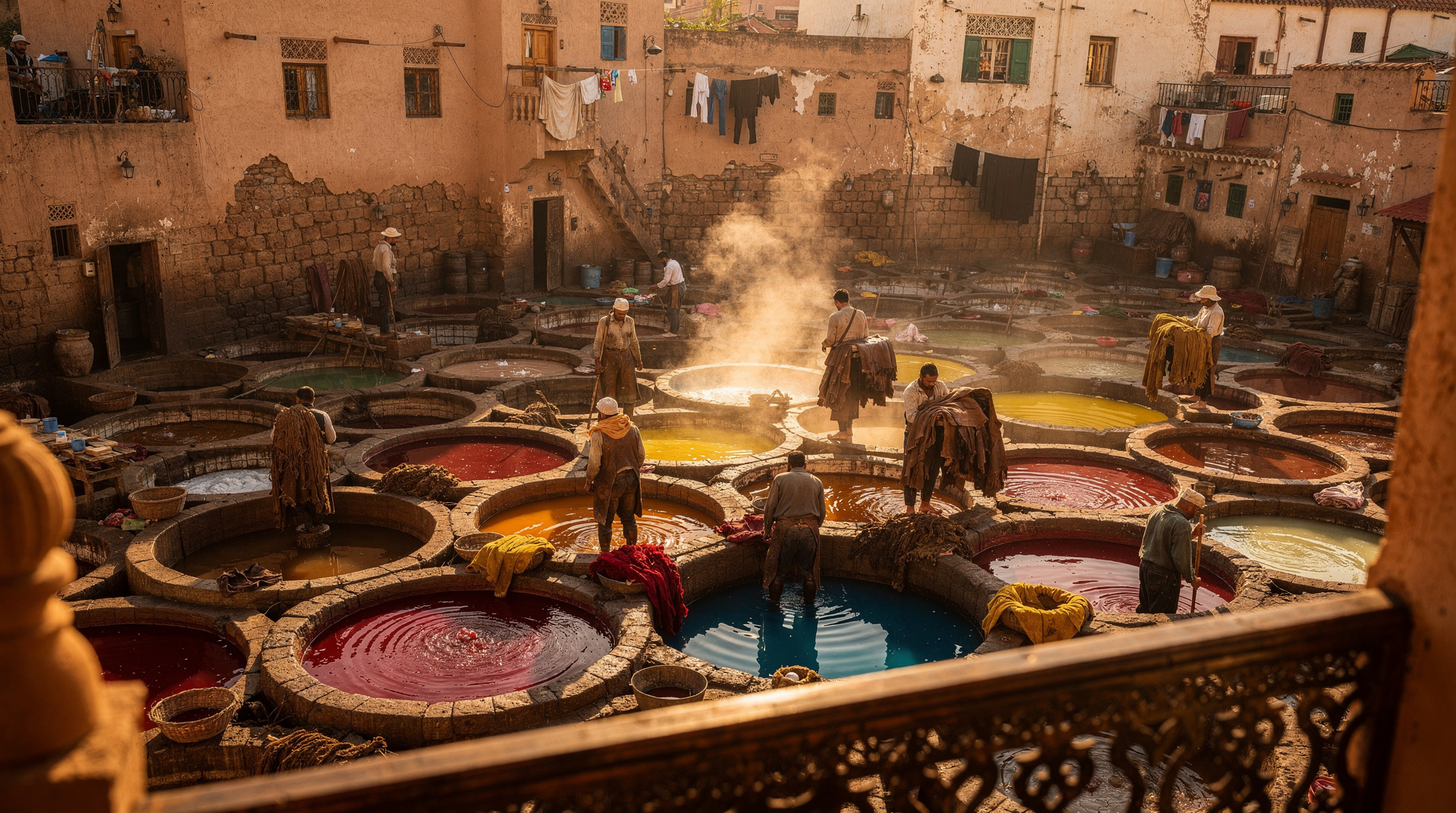
Book a full-day guided cultural tour of Fes (from €35 pp). This is the one city in Morocco where a guide is not optional — it is essential. A good guide covers the Chouara Tanneries (best viewed from the leather merchant balconies above — access is free if you politely decline to buy), Bou Inania Medersa, the Attarine Spice Market, the Qarawiyyin University (founded 859 AD, the world’s oldest operating university), and the Andalusian quarter across the Oued Bou Khrareb river.
Afternoon: The Andalusian quarter is quieter and less visited than Fes el-Bali’s main circuit. It was settled by refugees from Córdoba in the 9th century — you are now at the first of many points on this trip where you can trace the same people across both sides of the Strait.
Evening: Dinner at a riad restaurant. Dar Hatim or Riad Rcif both do excellent set-menu Moroccan meals for €20–35 pp.
Day 5: Fes to Chefchaouen
CTM bus from Fes to Chefchaouen: 4–5 hours, approximately 80 MAD (€7). Departs Fes CTM station around 08:00; check the timetable at ctm.ma. Alternatively, hire a grand taxi from Fes to Chefchaouen (around €15–20 per seat, faster at 3h30).
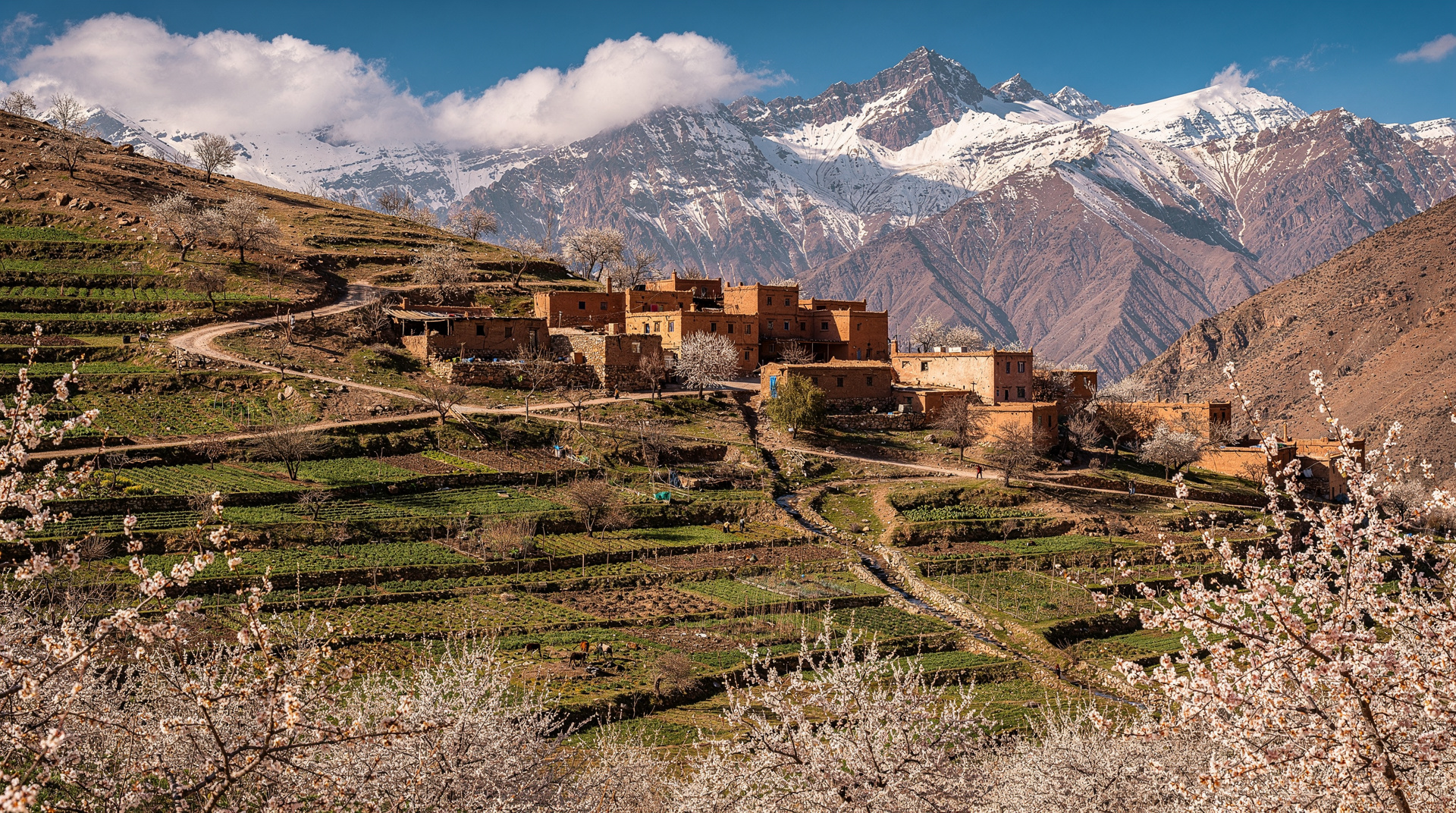
Chefchaouen sits at 600m in the Rif mountains. The altitude means it is consistently 5–8°C cooler than the coast or Fes in summer. The medina was founded in 1471 by Andalusian Muslim and Jewish refugees from the Spanish Reconquista — this is the first explicit Andalusian connection on the Morocco leg of the trip. The distinctive blue paint on medina walls dates from the 1930s, not from some ancient Andalusian tradition, but the whitewashed house forms and the specific type of blue-and-white tile used in fountains and entrances do have Andalusian precedent.
Check in, walk the Uta el-Hammam plaza at golden hour (the light on the Ras el Maa waterfall turns pink-orange), and eat at Bab Ssour or Restaurant Tissemlal for tagine and bread.
Stay: Dar Meziana or Casa Perleta: €40–75/night.
Day 6: Chefchaouen — blue city and Rif hike
One full day in Chefchaouen used well. The Chefchaouen private walking tour with a local guide (from €30 pp) explains the Andalusian foundation history, points out the specific architectural features that link the medina to Granada and Córdoba, and gets you into corners most independent walkers miss.
Morning: The Bab Ssour quarter and the Spanish mosque on the hill above the medina. The hike takes 25 minutes each way and the viewpoint over the blue rooftops into the Rif range is definitive. Go before 09:00 to avoid the tour group rush.
Afternoon: The Akchour Waterfalls day hike is excellent if you have energy — shared taxi to the trailhead costs 20–25 MAD each way, and the trail through the gorge (4–5 hours return) passes a natural swimming pool. Alternatively, a mellow afternoon in the souks: Chefchaouen specialises in woollen blankets, jellabas, and kif-related paraphernalia (the Rif produces large quantities of cannabis; possession is technically illegal but tolerance is localised and widely known).
Day 7: Chefchaouen → Tangier → ferry → Tarifa → Cádiz
This is the longest travel day of the itinerary. Start early.
06:30 Shared taxi from Chefchaouen to Tetouan (1h, 50 MAD). Change to another grand taxi or CTM bus to Tangier (1h30, 50–60 MAD). Alternatively, CTM runs a direct Chefchaouen–Tangier service (3h30, 80 MAD) departing around 07:00.
Tangier: Arrive by 11:00–12:00. The ferry terminal is at Tangier Ville port, not Tangier Med — confirm this when booking. Tangier Ville port is in the centre of the city; Tangier Med is 45 km east and requires a separate bus (25 MAD).
The Tangier kasbah and medina private walking tour (3 hours, from €40 pp) is worth booking if you have time before your ferry — Tangier’s kasbah has genuine atmosphere and the Grand Socco feels different from any other Moroccan medina.
Ferry crossing: See the dedicated section below for full logistics. Budget Tarifa arrival at 16:00–17:00.
Tarifa → Cádiz: Bus from Tarifa bus station (100m from the ferry terminal) to Cádiz: 1h30, €9–12. Several daily departures, last bus around 21:00. Alternatively, if you arrive late, stay the night in Tarifa — small white Andalusian town, good fish restaurants, affordable compared to Cádiz.
Cádiz accommodation: Hotel Patagonia Sul or Hospedería Las Cortes: €65–100/night.
Day 8: Cádiz and the road to Seville
Cádiz is the oldest continuously inhabited city in western Europe, founded by Phoenicians around 1100 BCE. The Old City occupies a narrow peninsula surrounded by Atlantic water on three sides. It is architecturally extraordinary and largely ignored by tourists in a hurry to reach Seville — use the morning here before moving on.
Walk the sea walls, visit the Catedral de Cádiz (€7 entry, rooftop access included), and eat at the Mercado de Abastos for fresh seafood at midday. The Oratorio de San Felipe Neri is where the 1812 Spanish liberal constitution was proclaimed — modest but historically significant.
Cádiz → Seville: Bus from Cádiz bus station to Seville’s Plaza de Armas: 1h45, €11–15. Or take the Cercanías train from Cádiz to Seville Santa Justa (1h30, €14). Several daily departures. Arrive Seville by mid-afternoon.
Seville afternoon: Check in and walk the riverfront along the Guadalquivir. The Torre del Oro (€3) is a 13th-century Almohad watchtower — another direct connection to Morocco’s Almohad empire, the same dynasty that built the Koutoubia minaret in Marrakech. The Alameda de Hércules quarter has the best tapas bars.
Stay: Hotel Adriano or Hotel Alminar in the Santa Cruz quarter: €80–130/night.
Day 9: Seville (Alcázar, cathedral) + day trip to Córdoba
Morning — Alcázar de Seville: Book tickets online well in advance (€14.50, or €17 for timed entry including upper floors). The Royal Alcázar is a UNESCO World Heritage Site and the finest Mudéjar palace in existence: an Islamic building commissioned by a Christian king (Peter I, 1364) and built by Muslim craftsmen from Granada and Toledo. The garden — 87,000 square metres of fountains, orange trees, and tile-lined canals — rewards slow wandering.
After the Alcázar, cross the square to the Cathedral. The Giralda bell tower (€13 combined ticket, no stairs — ramps) was the minaret of the Almohad Great Mosque. The Koutoubia minaret in Marrakech and the Hassan Tower in Rabat are its direct contemporaries, built by the same dynasty in the same decade. At 98 metres, the Giralda is one of the most visible landmarks on the Iberian peninsula.
Afternoon — day trip to Córdoba: AVE high-speed train from Seville Santa Justa to Córdoba: 45 minutes, €15–25 (book at renfe.com or via the Renfe app). Spend 3 hours in Córdoba — the Mezquita is the only non-negotiable (€11 entry, book online to avoid queues).
The great mosque’s 856 arches of alternating red and white stone, the forest of columns, the 10th-century mihrab inlaid with gold Byzantine mosaics, and the Renaissance cathedral inserted into its heart by the Bishop of Córdoba in 1523 — it is simultaneously the most magnificent Islamic monument in Europe and the most vivid symbol of its own destruction. Charles V, when he saw what had been built, reportedly said: “You have destroyed something unique to build something ordinary.” Return to Seville by 21:00.
Day 10: Seville — return
Morning: The Barrio de Santa Cruz (the former Jewish quarter, now Seville’s tourist core — narrow white lanes, orange trees, iron-grille windows) and the Plaza de España (1929 Ibero-American Exposition pavilion: 50,000 tiles, each depicting a different Spanish province, sweeping semicircle around a fountain-filled plaza — spectacular and usually underrated in guidebooks).
Seville Airport (SVQ) is 10 km from the city centre. Bus EA from Puerta de Jerez: 35 minutes, €4. Taxi: €25–30. Flights to most European cities depart throughout the day.
Ferry logistics: Tangier to Tarifa
The ferry crossing between Tangier and Tarifa is the pivot of this itinerary. Know the details before you travel.
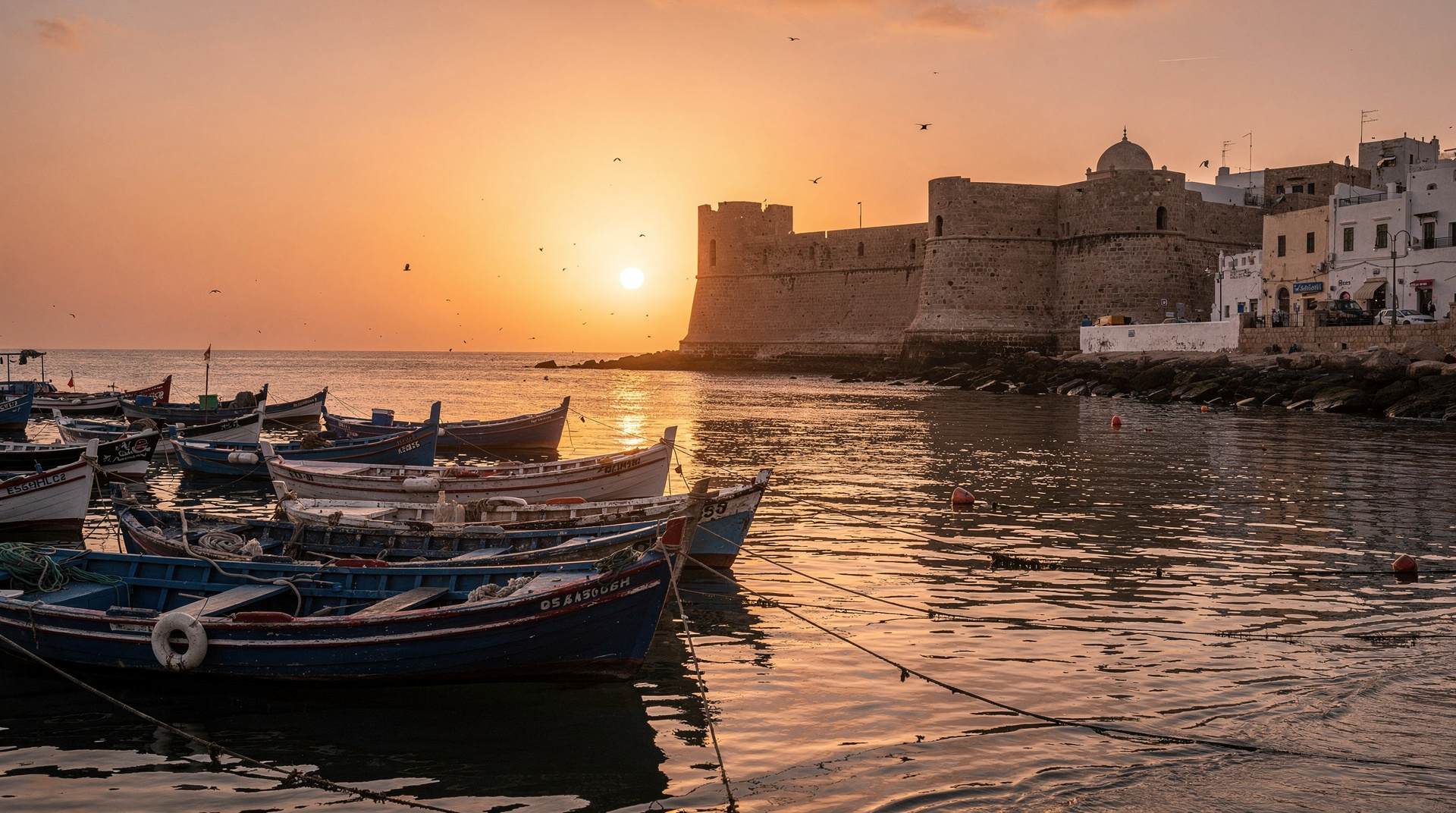
Port: Depart from Tangier Ville port (central Tangier) or Algeciras port (Spain). Tarifa is only accessible from Tangier Ville. From Algeciras (35 km northeast of Tarifa), FRS and Balearia run ferries to Tangier Med — but Tangier Med is 45 km east of Tangier city and is a container port, not useful for entering the city efficiently.
Crossing time: Tangier Ville → Tarifa: 35–40 minutes. Algeciras → Tangier Med: 90 minutes.
Companies:
- FRS Iberia (frs.es): The most reliable operator on the Tarifa–Tangier route. Ferries run every 2 hours from approximately 07:00 to 22:00 (summer), reduced frequency in winter. Adult foot-passenger: €38–55 depending on season and booking time.
- Inter Shipping: Also runs the Tarifa–Tangier route, slightly cheaper (€32–45), slightly older vessels.
Booking: Book online at frs.es. You will need your passport number and nationality. In summer (July–August), book at least 2 weeks ahead — the crossing is popular and afternoon sailings fill fast. In spring and autumn, 2–3 days’ notice is usually sufficient.
At the port: Budget 45 minutes before departure for Moroccan passport control, Spanish arrival hall, and boarding. The Tangier Ville port is compact but queues move slowly during busy sailings. Have your passport and ferry ticket (printed or on phone) accessible.
Cost included in budget: €38–55 per person.
Transport overview: trains, buses, and the ferry
This itinerary is designed to work entirely without a car — a deliberate choice that keeps it accessible for most travellers.
Morocco:
- Marrakech → Fes: ONCF train via Casablanca, 7h45–8h, 230–270 MAD (€21–25). Book at oncf.ma or any station.
- Fes → Chefchaouen: CTM bus, 4–5h, 80 MAD (€7). Or grand taxi, 3h30, 60 MAD per seat.
- Chefchaouen → Tangier: Grand taxi via Tetouan, 2h30 total, 100 MAD (€9). Or CTM direct, 3h30, 80 MAD.
Spain:
- Tarifa → Cádiz: Bus, 1h30, €9–12.
- Cádiz → Seville: Bus or Cercanías train, 1h30–1h45, €11–15.
- Seville → Córdoba (day trip): AVE, 45 min, €15–25 each way.
Total transport within the trip (excluding ferry): approximately €70–90 per person.
Realistic budget breakdown (per person, mid-range)
| Category | 10 days | Notes |
|---|---|---|
| Accommodation (9 nights) | €550–800 | Mix of riads (Morocco) and hotels (Spain) |
| Food | €180–250 | Morocco cheaper (€15–20/day), Spain higher (€30–40/day) |
| Internal transport | €70–90 | Trains + buses throughout |
| Ferry (Tangier–Tarifa) | €40–55 | One-way foot passenger |
| Entry fees + tours | €120–180 | GYG tours, Alcázar, Mezquita, Fes medina |
| Total (flights excluded) | €960–1 375 |
Budget version: Stay in hostels, eat street food throughout, skip the guided tours in Morocco. Realistically achievable at €600–750 excluding flights.
Comfort version (this itinerary): Mid-range riads and hotels with en-suite bathrooms, 1–2 GYG guided tours per city. €960–1 375 excluding flights.
Luxury version: Boutique riads at €150–200/night throughout, private transfers, Alcázar upper-floor access, rooftop restaurant dinners. Add €600–800 to the comfort estimate.
Best season for this itinerary
March to May is the best window. Morocco in spring is comfortable for medina walking (18–24°C in Marrakech and Fes), the Rif mountains above Chefchaouen are green, and Seville’s orange blossom fills the streets in April. The ferry crossing is calm.
September to November is equally good and in some ways better: Seville loses the brutal Andalusian summer heat (July averages 36°C, often spikes to 42°C), Morocco stabilises after the August tourist peak, and Fes and Chefchaouen feel less crowded.
Avoid December to February unless you specifically want fewer crowds at the expense of cold evenings in the Rif (Chefchaouen sits at 600m; overnight temperatures fall to 5–8°C in winter) and the possibility of Atlantic storms affecting the ferry crossing.
Ramadan considerations: If your trip overlaps with Ramadan (dates vary annually; in 2026 it runs approximately late January to late February), adjust expectations. Most Moroccan restaurants that cater to tourists remain open, but the medina atmosphere changes dramatically — quieter by day, intensely alive after iftar at sunset. Many Moroccans prefer to travel during this time and appreciate that tourists participate respectfully. Check the dates each year as the Islamic calendar shifts approximately 11 days annually.
Visa requirements
Morocco: Visa-free for most Western passport holders (EU, UK, USA, Canada, Australia, Japan, and many others) for stays up to 90 days. Check the Moroccan embassy website for your specific nationality. No visa-on-arrival process — you simply clear immigration on arrival.
Spain (Schengen Area): Spain is part of the Schengen Area. Entry requirements depend on your passport:
- EU, EEA, and Swiss passport holders: No visa required.
- UK passport holders: No visa required for short stays (post-Brexit rules apply — 90 days in any 180-day period within the Schengen Area).
- USA, Canada, Australia, New Zealand, Japan: Visa-free for up to 90 days within a 180-day Schengen period.
- Other nationalities: Check whether you need a Schengen short-stay visa (Visa C). This itinerary enters the Schengen Area only once (via Tarifa ferry) and exits from Seville airport — you need a single-entry Schengen visa, not multi-entry.
The multi-entry trap: If you were doing this in reverse (Spain-first), flying to Seville, crossing to Morocco, then re-entering Spain, you would need a multi-entry Schengen visa. Morocco-first avoids this complexity: you enter Schengen once at Tarifa and exit at Seville — single-entry is sufficient. This is a practical reason to go Morocco-first if you hold a passport that requires a Schengen visa.
For current visa information, always check your government’s travel advisory and the Spanish consulate in your country — regulations change, and this itinerary cannot substitute for official guidance.
Variant itineraries
7-day version (Morocco only + one night Spain)
If you have 7 days, cut the Spain section to a single Seville night and use the time for a richer Morocco experience. Consider the 7-day Morocco itinerary as a standalone option, or compress this route:
- Day 1–2: Marrakech
- Day 3–4: Fes
- Day 5: Chefchaouen
- Day 6: Tangier + ferry + Tarifa overnight
- Day 7: Seville (fly home)
This version does Morocco justice and gives you Seville’s Alcázar as a capstone. Córdoba drops out, which is a real loss — but 7 days cannot do everything.
14-day version (add the Atlantic coast)
With 14 days, extend Morocco significantly. After Marrakech, add:
- Days 3–4: Essaouira (2 nights on the Atlantic coast)
- Day 5: Marrakech → Fes via overnight train (saving a hotel night)
- Days 6–7: Fes (add the Volubilis + Meknes day trip)
- Day 8: Chefchaouen
- Day 9: Chefchaouen second day (Akchour hike)
- Day 10: Chefchaouen → Tangier
- Days 11–14: Seville + Córdoba + optional Granada
See the 14-day Morocco itinerary for the extended Morocco section, and consider adding Granada as a second Andalusian stop — the Alhambra palace is arguably the finest surviving Nasrid building in the world and the most explicit architectural parallel to anything in Morocco.
Frequently asked questions about Morocco + Andalusia
Will a single-entry Schengen visa work for this trip?
Yes — if you go Morocco-first (fly into Marrakech, exit from Seville), you enter the Schengen Area only once. A single-entry Schengen Visa C is sufficient. If you reverse the route and re-enter Spain from Morocco, you need a multi-entry visa.
Which direction is cheapest?
Flights to Marrakech are often cheaper than to Seville from northern Europe, particularly on Ryanair, easyJet, and Transavia. Seville-out flights can be cheaper than Casablanca-out due to Seville’s lower airport taxes. Compare both options. If you fly into Casablanca rather than Marrakech, add a 3h train connection (Casablanca → Marrakech, 2h40, 105 MAD).
Can I skip Tangier and take a direct ferry from somewhere else?
If you exit Morocco from Tangier Med rather than Tangier Ville, the ferry goes to Algeciras (not Tarifa) and takes 90 minutes. From Algeciras, you can bus to Tarifa in 30 minutes or take the bus directly to Seville (3h, €15). You sacrifice the shorter crossing but gain Tangier Med’s more modern port facilities. You can also skip Tangier entirely and take the ferry from Tarifa booked from Tangier Ville without visiting the city — but Tangier’s medina and kasbah are worth 2–3 hours if your ferry timing allows.
Is there a direct Marrakech to Spain flight?
Yes — Ryanair operates Marrakech Menara (RAK) to Seville (SVQ) seasonally. This eliminates the ferry and the Tangier–Chefchaouen section but costs you three of the best destinations on the route. If the route matters to you (and it should), take the overland path. If you have done northern Morocco before and just want Marrakech + Seville, the direct flight is valid.
Which ferry company is best: FRS or Inter Shipping?
FRS is more reliable, more frequent, and has newer vessels. Inter Shipping is cheaper (sometimes €10–15 less per ticket) but departures are less predictable off-season. In summer, both are broadly comparable. Book FRS for peace of mind; Inter Shipping if you are on a tight budget and flexible on departure time.
How do I get from the Tarifa ferry terminal to the bus station?
The Tarifa ferry terminal and bus station are approximately 100m apart — they share the same waterfront area. You can walk between them in under 2 minutes. Buses to Cádiz and Algeciras depart from the same station.
Can I do this trip without speaking Spanish or Arabic?
Yes, comfortably. In Morocco, tourist-facing staff in riads, restaurants, and transport hubs speak French and English. In Chefchaouen and Tangier, some Spanish speakers remain (northern Morocco has historical Spanish connections). In Andalusia, English is understood in tourist areas; some basic Spanish helps in markets and smaller restaurants. Download the Google Translate app and the offline Spanish and Arabic packs before you leave.
Is 10 days too rushed, and should I add Granada?
Ten days is genuinely tight — you are averaging roughly 1.5 nights per stop across two countries. It works if you accept that this is an introduction, not an exhaustive tour, of either country. If you can extend to 12–14 days, Granada is the single best addition: the Alhambra is arguably the finest surviving Nasrid palace complex anywhere, more complete than the Alcázar in Seville. Add it between Córdoba and Seville, or as a final stop before flying home from Málaga instead of Seville.
What this itinerary deliberately leaves out
Ten days across two countries means hard cuts. Essaouira and the Atlantic coast are the biggest omission on the Morocco side — if coastal Morocco matters to you more than the Fes-Chefchaouen cultural axis, look at the Morocco + Spain + Portugal 21-day itinerary instead, which includes Essaouira.
On the Spain side, Granada and the Alhambra are the notable absence (see the FAQ above), and Ronda — the dramatic gorge-top white town — is skipped in favour of Córdoba’s stronger Morocco connection through the Mezquita. None of these cuts are wrong; they reflect a deliberate choice to prioritise the Marrakech-Fes-Chefchaouen-Seville-Córdoba axis, which tells the clearest version of the Andalusian-Moroccan architectural story in the available time.
Before you go: further reading on Morocco Escape
- Marrakech destination guide — full breakdown of the medina, day trips, and where to stay
- Fes destination guide — tanneries, medersas, and the Qarawiyyin explained
- Chefchaouen destination guide — the blue city without the clichés
- Tangier destination guide — what the city is actually like today
- Morocco by train itinerary — the ONCF network in full, with schedules and booking tips
- Getting around Morocco — trains, buses, taxis, and what to expect
- Morocco visa and entry guide — full current requirements for all passports
- Morocco + Spain + Portugal 21-day itinerary — the extended version of this route with Portugal added