7 Days in Morocco
Overview of this 7-day Morocco itinerary
Seven days is the sweet spot. It is enough time to do Marrakech properly, push south to the Sahara, and come back via the coast — hitting Essaouira on the way. You will move every two or three days, which is fast enough to be stimulating and slow enough not to feel like punishment.
This is the itinerary most first-time Morocco visitors end up wishing they had done. The Marrakech-Sahara loop handles itself via a 3-day guided tour (Days 2–4), then you recover in Marrakech on Day 5 before a half-day transfer to the Atlantic coast for Day 6. Day 7 is the gentle return.
Be honest with yourself about pace. Morocco demands more energy than European city breaks. The medina disorients. The desert drives are long. Build in time to sit, have tea, do nothing. The riads exist for exactly this purpose.
Route at a glance: Marrakech (2 nights) → Aït Benhaddou → Todra Gorge → Merzouga dunes (1 night) → Marrakech (1 night) → Essaouira (2 nights) → Marrakech airport
Best season: October–November and March–April. These shoulder months give you mild temperatures, fewer crowds, and the full Sahara night-sky experience without summer heat.
Total estimated cost (per person, mid-range, flights excluded): €800–1200
At a glance
| Where | Marrakech (3 nights) + Sahara loop via Aït Benhaddou/Todra (2 nights) + Essaouira (2 nights) |
| Cost (pp, mid-range, flights excluded) | around €800–1200 |
| Time needed | 7 days is the sweet spot; workable down to 6 by day-tripping Essaouira |
| Getting there | fly into Menara Airport (RAK); Sahara leg via guided 3-day tour, Essaouira via bus/taxi/transfer |
| Getting around | on foot in medinas; guided tour for the desert; grand taxi or private transfer to the coast |
| Best time | October–November or March–April |
Day 1: Marrakech — arrive and breathe
Morning: arrival
Menara Airport to your medina riad is a €4–6 petit taxi ride. Agree the price before getting in. Your riad will send GPS coordinates; the last 200 metres are always on foot through lanes too narrow for cars. This is not a problem — it is the medina working as intended.
Check in, have lunch on your riad’s rooftop (most serve food), and resist the urge to immediately plunge into the souks. Marrakech rewards patience. Let the sounds settle around you first.
Afternoon: Djemaa el-Fna and the souks
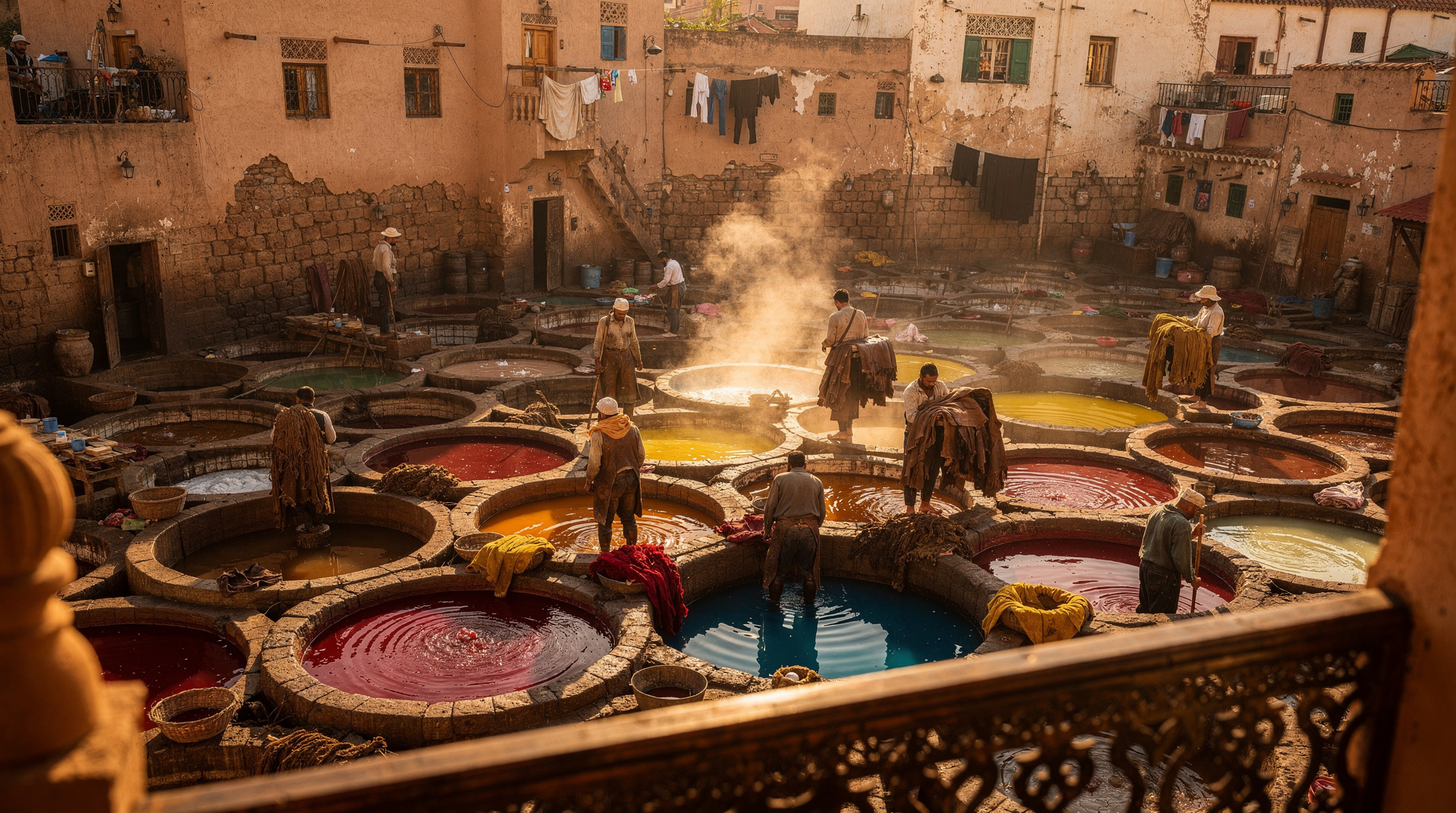
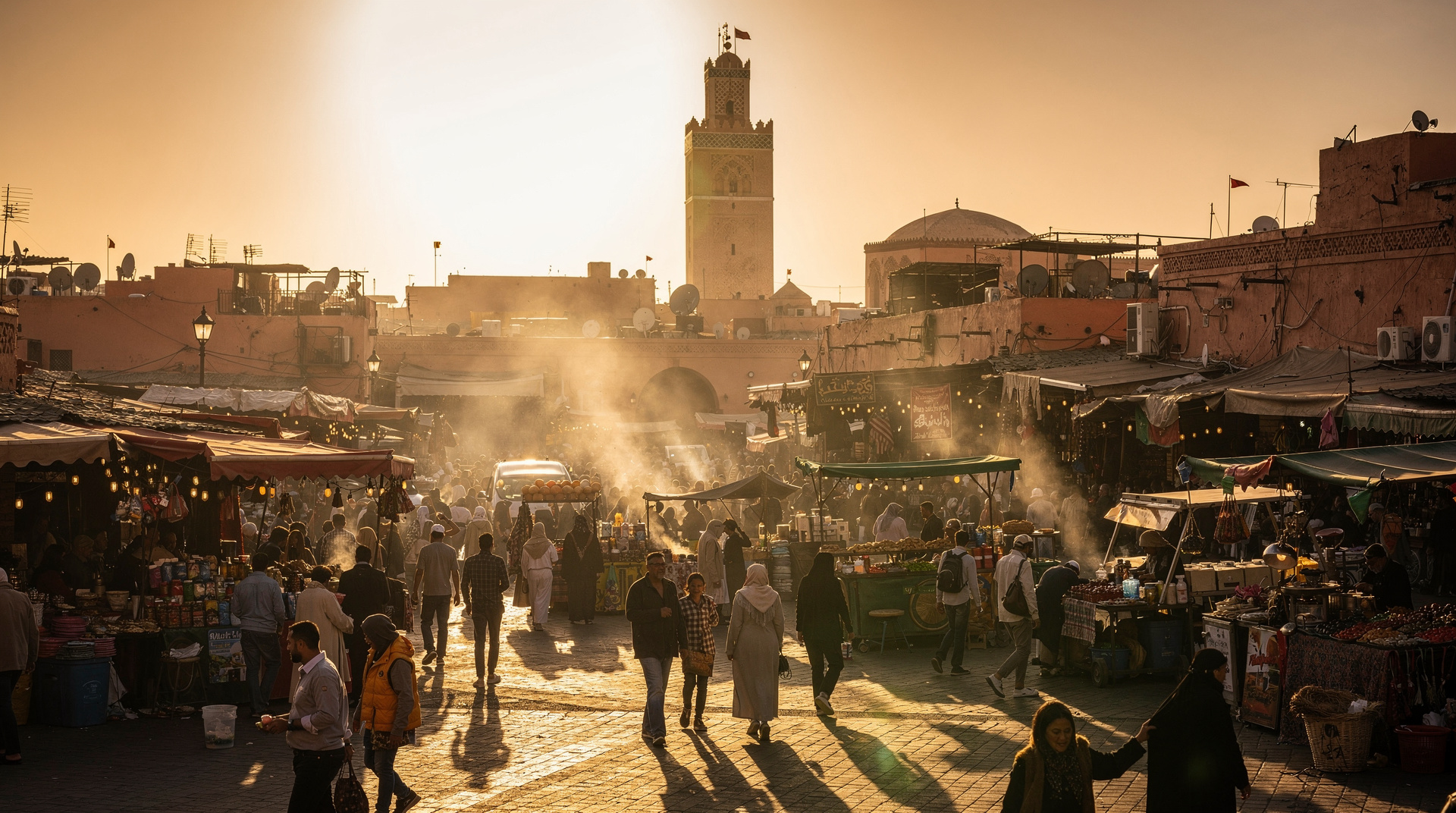
The main square is the city’s heartbeat. In daylight it hosts orange juice sellers, a few musicians, and the famous Gnawa musicians who play hypnotic trance rhythms with iron castanets. By sunset it is an entirely different animal — grills, smoke, acrobats, storytellers, and 50 competing restaurants that will fight for your custom.
Walk north from the square into the souks. The Souk Semmarine is the main artery; side alleys lead to specialist markets: the lamp souk, the carpet souk, the slipper souk (babouches in every colour imaginable). Bargain without guilt and walk away if you need to.
Evening: dinner in the medina
Eat at Djemaa el-Fna tonight — grilled kefta, harira soup, bread. Budget €6–10 per person. Or go upscale: Dar Moha on Rue Dar el Bacha does exceptional Moroccan cuisine in a 1930s riad for around €40–60 per person. Both are valid choices on different nights.
Where to stay: Riad Jardin Secret or Riad BE Marrakech (mid: €90–140/night); Royal Mansour (ultra-luxury: €600+)
Budget estimate today: €70–150
Book in advance: Your riad; tomorrow’s palace tour; confirm the 3-day Sahara tour departure details
Day 2: Palaces, Majorelle — then the desert road begins
Morning: Bahia Palace + Majorelle Garden
Start early at Bahia Palace (opens 09:00, entry €2) in the southern medina. The decorated ceilings and courtyard mosaics are finest in the morning light. Then the Saadian Tombs next door: a walled necropolis with intricate stucco work, discovered from the air in 1917 after being sealed for centuries.
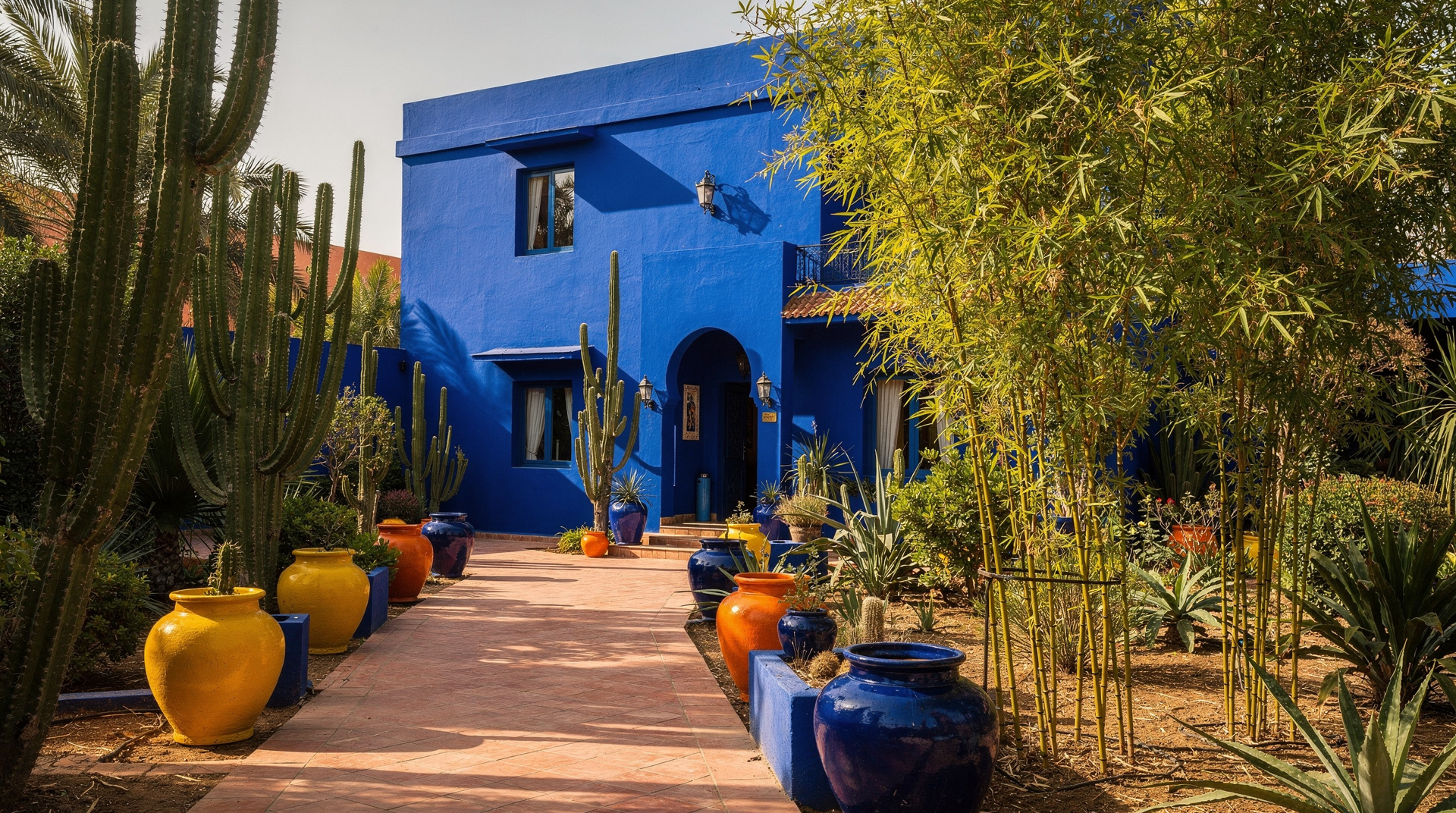
After a medina coffee, take a petit taxi (€3) to the Ville Nouvelle for Majorelle Garden. Book your Majorelle Garden entry ticket online to skip the queue. The YSL Museum next door (€12 extra) is worth an hour if design history interests you. The cobalt blue buildings against green palms photograph differently at every angle and every time of day.
Afternoon: prepare for departure
The 3-day Sahara tour picks you up the next morning at 07:00. Use this afternoon to: stock up on snacks (a corner shop near your riad), withdraw cash (ATMs in Merzouga are unreliable), and pack a day bag with what you need for 3 nights away. Leave extra luggage at your riad — they will hold it.
Book the 3-day Sahara desert trip from Marrakech to Merzouga if you have not already — this handles Days 3 and 4 entirely, covering transport, Aït Benhaddou, Todra Gorge, camp accommodation, camel ride, and return.
Where to stay: Same riad as Day 1
Budget estimate today: €80–150 including meals, entry fees, Majorelle
Day 3: The drive south — Tizi n’Tichka, Aït Benhaddou, Ouarzazate
07:00 pickup — 10 hours total today
The Marrakech-to-Merzouga drive is 550 km and 10 hours with stops. Your guide picks you up at the riad door. The van heads immediately south into the Atlas foothills, climbing toward the Tizi n’Tichka pass at 2260 metres.
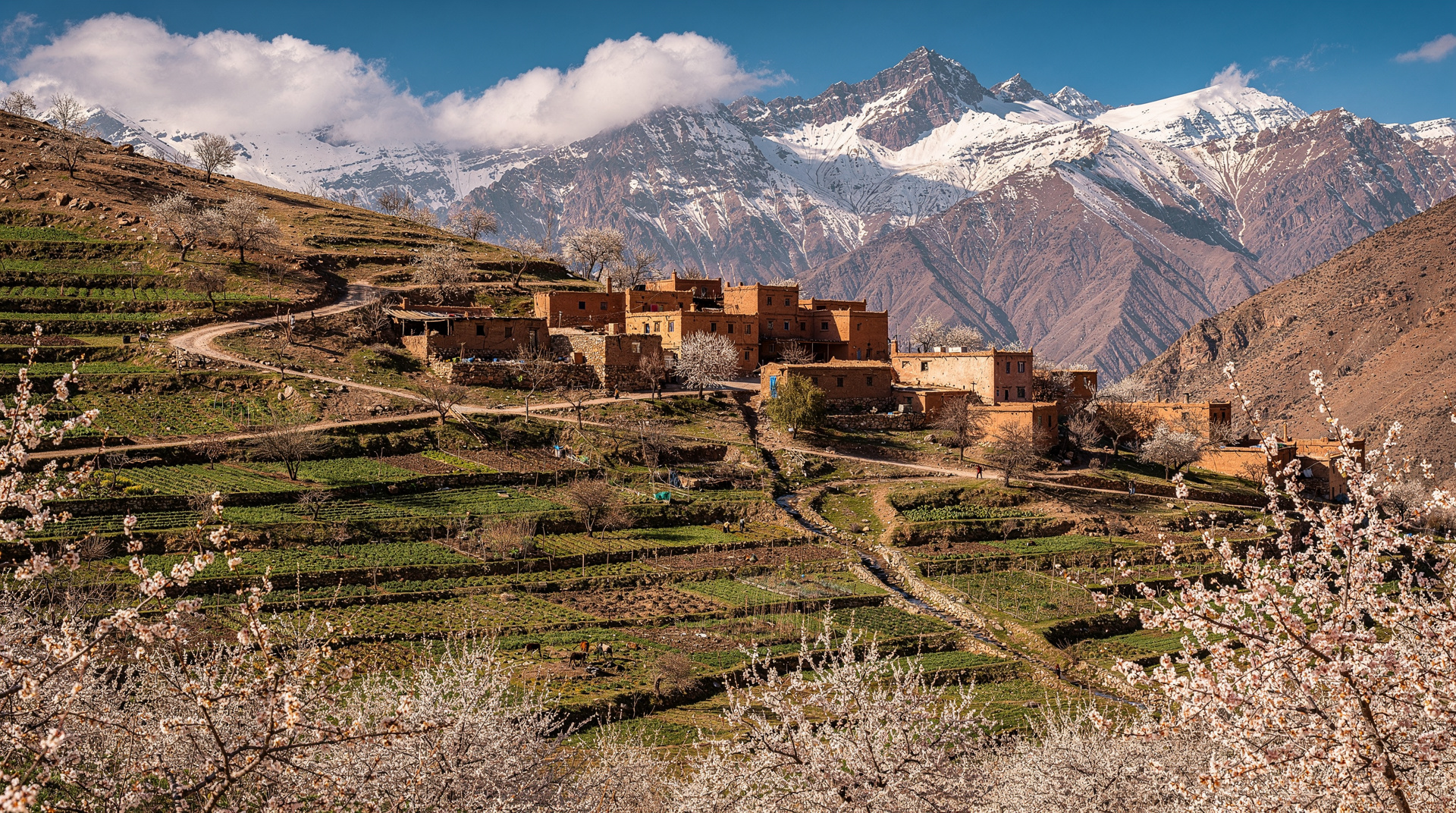
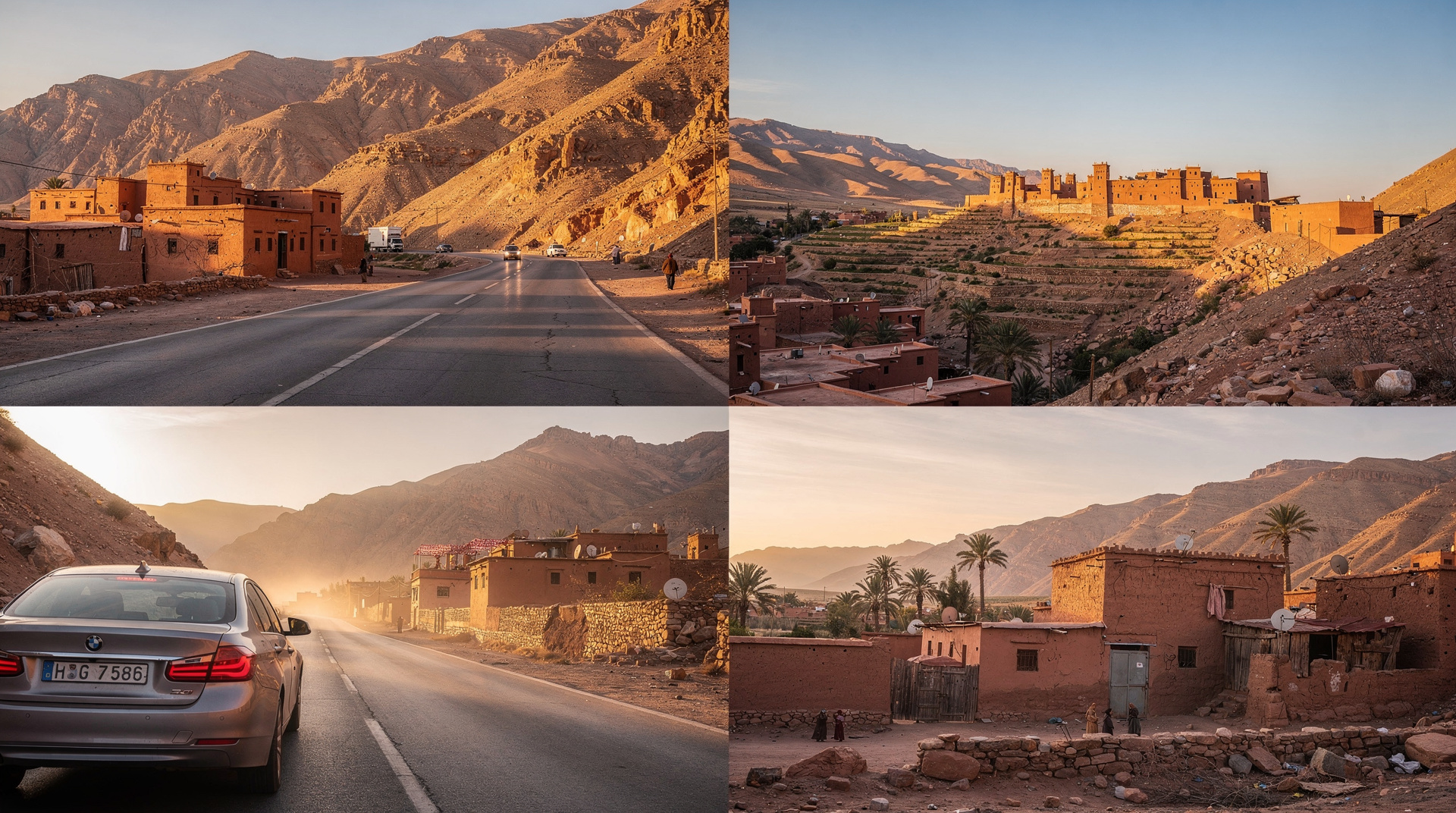
The pass road is spectacular: hairpin bends, sheer drops, Berber villages clinging to ridgelines, and the occasional waterfall if there has been recent rain. Stop at the pass viewpoint (2 minutes, worth it). The descent south is into a different Morocco — drier, redder, emptier.
Midday: Aït Benhaddou
The UNESCO ksar of Aït Benhaddou is a fortified mud-brick city that has stood here for 400 years and filmed here for 50 — Gladiator, Game of Thrones, Babel, The Last Temptation of Christ. Cross the river and walk up through the towers. Entry €3. A village guide adds genuine context for €10.
Lunch at a riverside restaurant (€8–15 per person) with the ksar wall as your backdrop. Order the salad plate that arrives before the tagine — seven different cold Moroccan salads, each different, each good.
Afternoon: Ouarzazate and east
Ouarzazate is a service town rather than a destination. Your tour will usually pause for fuel and coffee, possibly a look at the Kasbah Taourirt (free entry to the courtyard). Then east through the Dades Valley: palm oasis ribbons, earthen kasbahs, rose farms (the Roses Valley around Kelaa M’Gouna is famous for rose water and jam).
Reach Tinghir and the lower Todra Gorge area for the night. Some tours stop here; others push on to Erfoud.
Where to stay: Guesthouse in the Todra Gorge area (included in tour package)
Budget estimate today: Included in tour
Day 4: Todra Gorge at dawn + Merzouga dunes at dusk
Dawn: inside the gorge
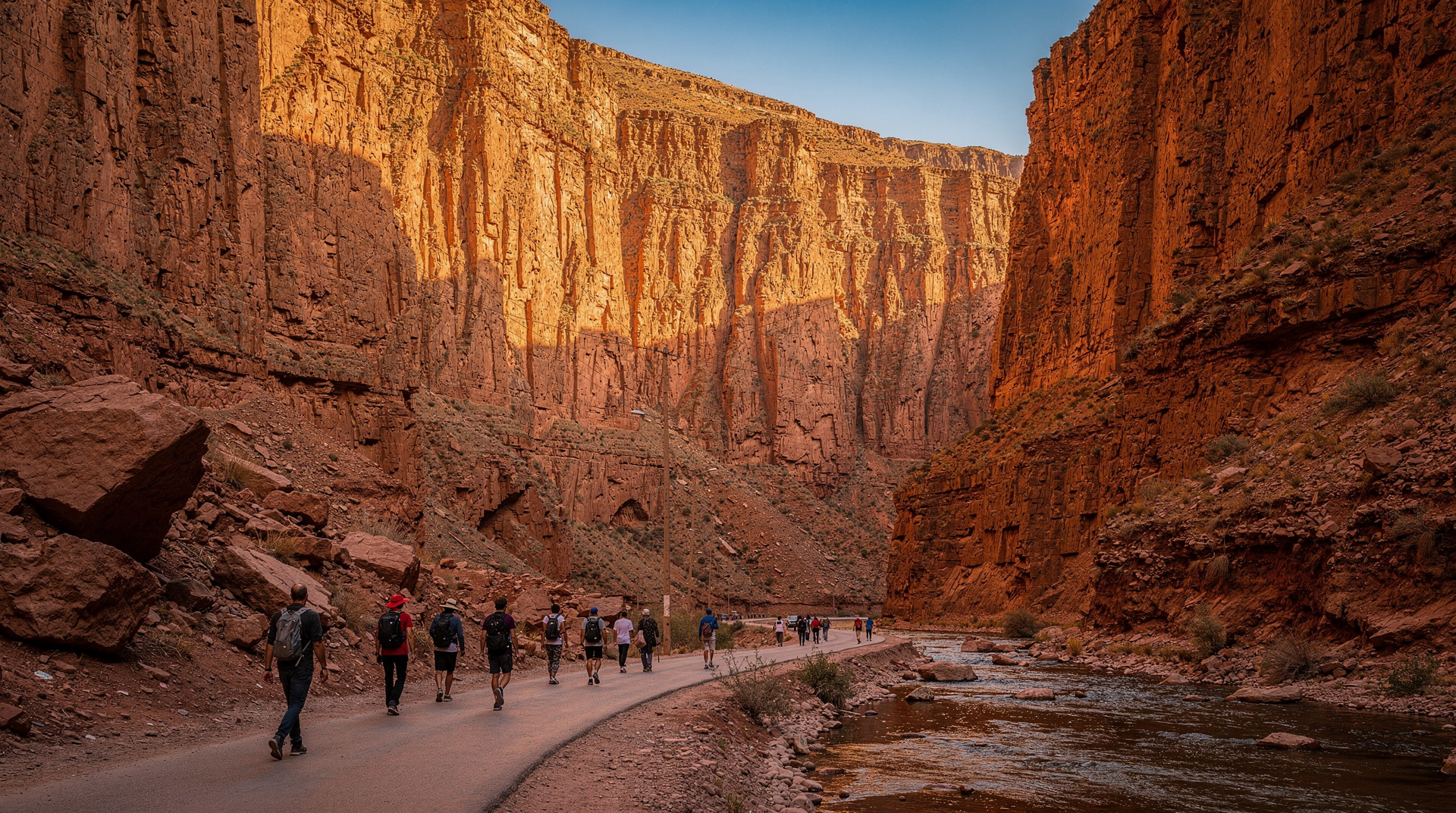
Be in the Todra Gorge before 08:00. The light enters the 300-metre walls at different angles depending on season — in winter it barely reaches the ground; in summer it floods the canyon at midday. In either case, the scale silences most people. A cold river runs through year-round. Walk the 600-metre dramatic section, then walk back. It takes 20 minutes and stays in your mind for years.
Drive to Merzouga (4 hours)
Through Erfoud and Rissani, through dust-coloured towns and date-palm oases, and then the landscape simply changes: flat black gravel hammada in every direction, horizon to horizon. Then the dunes appear. The Erg Chebbi sand sea rises 150 metres above the flat plain without preamble or transition. There is no other way to describe seeing it for the first time: it looks like a mistake, and then it looks inevitable.
Sunset camel ride into the dunes
Pickup at 17:00. Camel riding is a skill that takes about 10 minutes to acquire — hang on during the lurch up from sitting, lean back on the descent, and let the camel’s rhythm set your pace. The ride to the dune camp takes 45–60 minutes. Climb to the nearest dune summit for sunset: the Sahara at 18:30 in autumn or spring goes pink, then orange, then purple.
Book your Merzouga overnight camp with camel ride here if you are doing the desert leg independently.
Night: Berber music and stars
Dinner in the main tent (tagine, flatbread, Berber tea). After dinner, a camp musician plays the guembri and hits a tin drum that you feel in your chest. By 22:00 the temperature has dropped 15°C from the afternoon high. The Milky Way is visible without any optical aid on a moonless night. This is why you came.
Where to stay: Sahara Luxury Camp (upscale, included in premium tour) or Merzouga Luxury Desert Camps
Budget estimate today: Included in tour
Day 5: Sunrise + long return to Marrakech
05:30: dune sunrise
This is not optional. The walk up the main dune crest takes 25–30 minutes of calves-burning effort through soft sand. At the top, the sun rises in the east (over Algeria), the shadow of the dune sweeps west across the plain, and the temperature moves from cold to warm in the span of five minutes. You will not regret the early alarm.
Breakfast back at camp, then the long drive north begins. The return takes 9–10 hours with stops. It is a real day in a vehicle. The landscape on the return is slightly different — some tours take the Dades Gorge rather than the Todra. Lunch in Ouarzazate or at Aït Benhaddou again. Arrive back in Marrakech between 18:00 and 20:00.
Evening: recovery
You are back in Marrakech with sand in places you did not expect. The riad will have your luggage waiting. Order dinner on the rooftop if possible. A hammam session tonight or tomorrow morning is highly recommended — Les Bains de Marrakech does a 90-minute scrub and massage for €45–55 and it genuinely resets the body.
Where to stay: Original Marrakech riad or a different one
Budget estimate today: €30–60 for meals and extras; tour package included
Day 6: Transfer to Essaouira — the Atlantic coast
Morning: hammam + medina
If you did not do the hammam last night, do it this morning before 10:00. Then one final walk through the medina with sharper eyes than Day 1 — you will notice things you missed. The Mellah (Jewish quarter) near the Bahia Palace has a different architectural rhythm from the rest of the medina, with wrought iron balconies instead of blank walls.
Midday: transfer to Essaouira (2h30)
The CTM bus or a shared grand taxi runs Marrakech to Essaouira in 2–3 hours on a well-paved road through the Haouz plain and argan forest. Grand taxi from Bab Doukkala bus station: €8 per person; private transfer: €40–60.
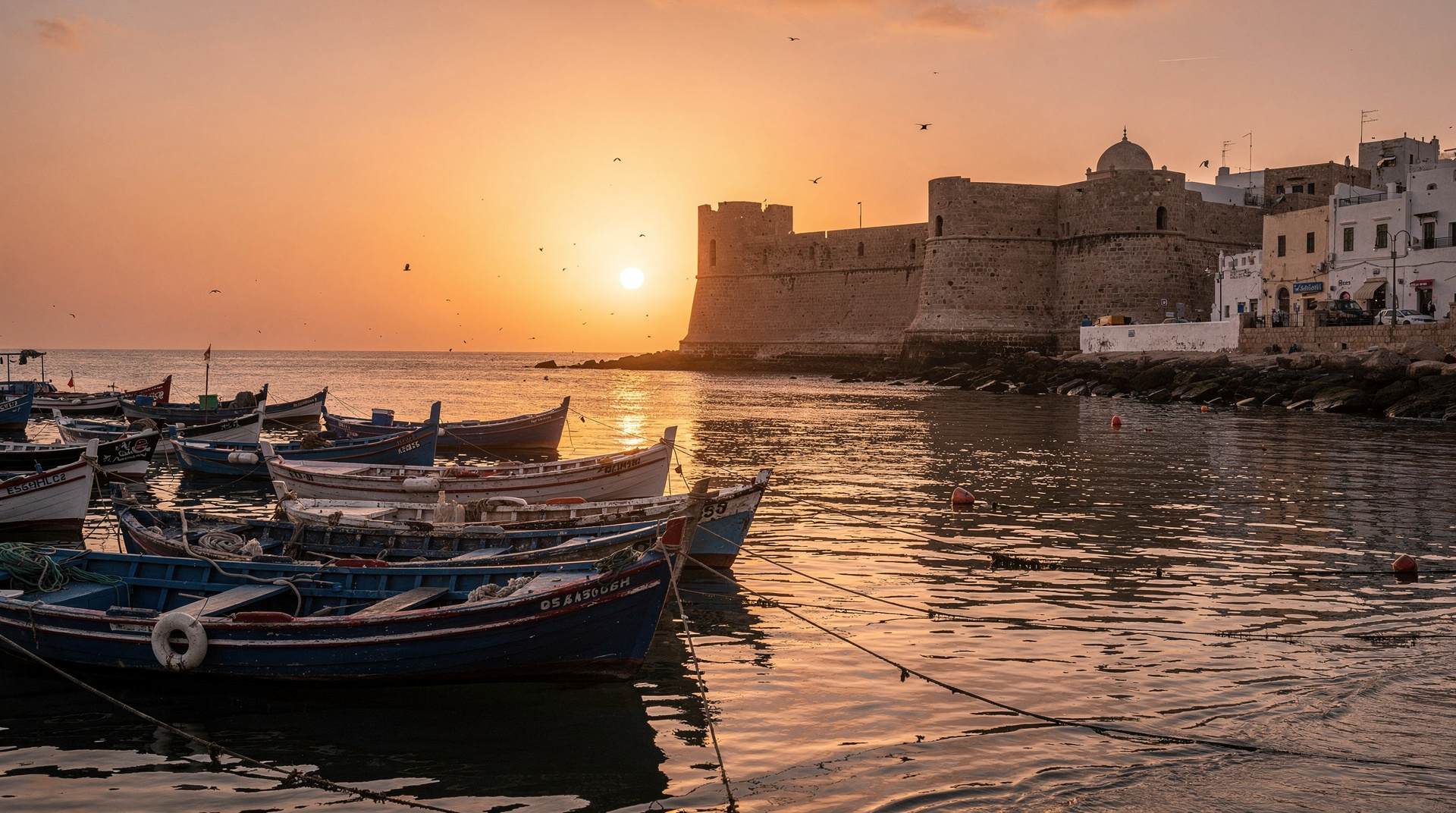
Essaouira hits differently from Marrakech. The medina is whitewashed instead of ochre, the winds are constant (this is a kite-surfing hotspot), the air smells of salt and sardines, and the pace is roughly half that of Marrakech. The ramparts along the Atlantic are some of the most beautiful fortified walls in North Africa.
Afternoon: Essaouira medina
Walk the ramparts above the Atlantic. Walk the blue-and-white alleys of the medina. Visit the Skala de la Ville fortification (free entry, great Atlantic views). The wood marquetry workshops here are famous — Thuya wood inlay work is sold everywhere and the quality is genuinely high. A well-made box runs €20–50; a large decorative piece €100+.
For a guided introduction, book the Essaouira medina half-day guided walking tour — a good local guide knows which workshops are family-run and which are tourist traps.
Evening: sardines and wine
Essaouira has the best seafood restaurants in Morocco at the most honest prices. The harbour-front fish stalls grill whatever was caught this morning for €5–8 per plate. The restaurants up the Rue du Port (Elizir, Restaurant Lalla Mira) serve the same fish with wine or Moroccan rosé. Essaouira is more relaxed about alcohol than inland Morocco — outdoor seating, sea wind, a cold Casablanca beer: these things are possible here.
Where to stay: Heure Bleue Palais (upscale boutique: €150–250); Riad Baladin (mid: €70–110); Villa Quieta (charming, €80–120)
Budget estimate today: €80–150 including transfer, meals, and accommodation
Day 7: Essaouira — final morning + return to Marrakech
Morning: beach and market
Essaouira’s beach extends 5 km south from the medina. Walk it in the morning (the wind picks up by noon). The weekly souk on Thursday morning is one of the most authentic markets in the region if your timing aligns. The spice market in the medina sells argan oil at more honest prices than Marrakech tourist shops.
A day trip from Marrakech to Essaouira is also possible — if someone in your group wanted a different experience: the Essaouira day trip from Marrakech works if you want a taste without the overnight.
Midday: return to Marrakech
Grand taxi or bus back to Marrakech (2h30). If your flight is in the evening, you have time for a final medina loop and last-minute shopping. If flying in the morning, Marrakech has some reasonable airport hotels (Eden Airport Hotel, Hotel Atlas Asni) that make early departure manageable.
Where to stay: Marrakech riad or airport hotel
Budget estimate today: €60–100
Total trip cost estimate
| Item | Budget (pp) | Mid-range (pp) |
|---|---|---|
| Accommodation (7 nights) | €200 | €450 |
| 3-day Sahara tour | €180 | €300 |
| Essaouira transfer (x2) | €16 | €60 |
| Food and drink (7 days) | €120 | €250 |
| Entry fees, hammam, activities | €60 | €100 |
| Local transport | €30 | €50 |
| Total (flights excluded) | €606 | €1210 |
What to skip if you only have 6 days
Remove the Essaouira overnight and convert Day 6 into a day trip from Marrakech (2h30 drive each way, 4 hours in Essaouira). You lose the sunset light, the evening seafood, and the relaxed pace — but you keep the destination ticked. Alternatively, extend Essaouira to 2 nights and skip Majorelle in Marrakech on Day 2.
Route map description
Starting from Marrakech airport, the route goes south over the Atlas mountains via the Tizi n’Tichka pass (2260m), descending to Ouarzazate and the Draa Valley. It continues east through the Dades Valley, north to Tinghir and the Todra Gorge, then southeast across the Ziz Valley to Merzouga and the Erg Chebbi dunes. The return retraces north through Ouarzazate and back over the Atlas to Marrakech. A separate leg then goes west to Essaouira on the Atlantic coast.
Key logistics
Booking the desert tour: Book 2–4 weeks ahead in shoulder season (October–November, March–April). The cheap shared tours fill fast. If you want your own vehicle and guide, budget €350–450 per person for a fully private 3-day experience.
Essaouira transfer options: The CTM bus from Marrakech Bab Ghmat station is the cheapest (€6, 2h45). Grand taxi from Bab Doukkala costs €8 per seat (quicker, more flexible). Private transfer runs €40–60 one-way but makes sense if there are 3+ people sharing.
Currency: Moroccan dirham (MAD). 1 EUR ≈ 10.8 MAD. Carry cash — particularly for taxis, souks, and desert camps where card machines are uncommon or unreliable.
For more detail on each destination, explore our Marrakech guide, Merzouga guide, and Essaouira guide. For a longer trip that adds Fes and the imperial cities, see our 10-day Morocco itinerary.
Why 7 days beats 5 days for most first-timers
The extra two days over the 5-day itinerary do not just add Essaouira — they change the rhythm of the whole trip. On the 5-day version, you drive to the Sahara, sleep one night, and drive straight back into departure prep. On this itinerary, Day 5 is a genuine recovery day in Marrakech (hammam, easy pace) before the coast, which means you never do two exhausting things back to back. If you have the extra two days available, this is consistently the itinerary first-time visitors say they wish they had booked, rather than the 5-day compressed version.
5 days vs. 7 days vs. 10 days: what changes
| Itinerary | Sahara | Coast | Pace |
|---|---|---|---|
| 5 days | Yes, 1 night, no recovery day | No | Tight |
| 7 days (this one) | Yes, 1 night, with recovery day after | Yes, Essaouira 2 nights | Comfortable |
| 10 days | Yes | Yes | Adds Fes and the imperial cities |
Frequently asked questions about 7 Days in Morocco
Is 7 days enough to see the Sahara, Marrakech, and the coast without rushing? Yes — this is the itinerary where the pace genuinely works: three nights in Marrakech (including a recovery day after the desert), two nights covering the Sahara loop, and two nights in Essaouira. Compressing the same route into 5 days (see the 5-day itinerary) removes the recovery day and makes the whole trip more tiring.
Should I do Essaouira as an overnight or a day trip on a 7-day itinerary? Overnight if at all possible. The 2h30–3 hour transfer each way means a day trip leaves only a few hours in the town, and you miss the ramparts at sunset and the harbour seafood dinner, which are two of the best experiences on the whole route. Only convert it to a day trip (see “What to skip if you only have 6 days” above) if you are genuinely down to 6 days.