3 Days in Morocco
Overview of this 3-day Morocco itinerary
Three days in Morocco sounds short — and it is. But it is long enough to feel the city, smell the souks, eat the tagine, and wake up once to complete silence in the Agafay desert. This itinerary is built around the Marrakech medina plus one night in the Agafay stony desert, 40 minutes from the city. It works without a rental car, which is a relief because driving in Marrakech is chaos you do not need on a short trip.
This plan is honest about what three days cannot do. You will not see the Sahara — that takes five days minimum. You will not see Fes, Essaouira, or the Atlas in any meaningful way. What you will do is arrive exhausted from a flight, surrender to the medina’s logic on day one, go deeper on day two, and then decompress under stars on day three before your return flight.
Route at a glance: Marrakech medina (2 nights) → Agafay desert (1 night) → Marrakech airport
Best season: October to April. Summer (June–August) in Marrakech is punishing — 40°C in the medina with zero shade relief. Spring and autumn are ideal. Winter nights in Agafay can drop to 5°C; pack a layer.
Total estimated cost (per person, mid-range, flights excluded): €380–520
At a glance
| Where | Marrakech medina (2 nights) + Agafay desert (1 night) |
| Cost (pp, mid-range, flights excluded) | around €380–520 |
| Time needed | 3 days / 2 nights minimum, workable with late-evening flights on both ends |
| Getting there | fly into Menara Airport (RAK); petit taxi to the medina, around €4–6 |
| Getting around | on foot in the medina; petit taxi to Gueliz; private transfer for Agafay (no public transport) |
| Best time | October–April; avoid June–August if you can |
Day 1: Arrival + Medina first impressions
Morning / arrival
Most European flights land at Menara Airport (RAK) in the morning. A petit taxi to the medina costs €4–6 (agree the fare before you get in — always). Do not use the Uber-style app Careem until you are away from the airport; official taxis at the airport are fine but slightly pricier.
Check in to your riad. The medina has no addresses in any conventional sense — your riad will send you a WhatsApp pin and a voice note explaining the last 200 metres on foot. Follow it. It sounds complicated; it takes five minutes. Riad Yasmine and Riad BE Marrakech are solid mid-range picks with rooftop pools that will save your life in summer.
Afternoon: Djemaa el-Fna and the souks
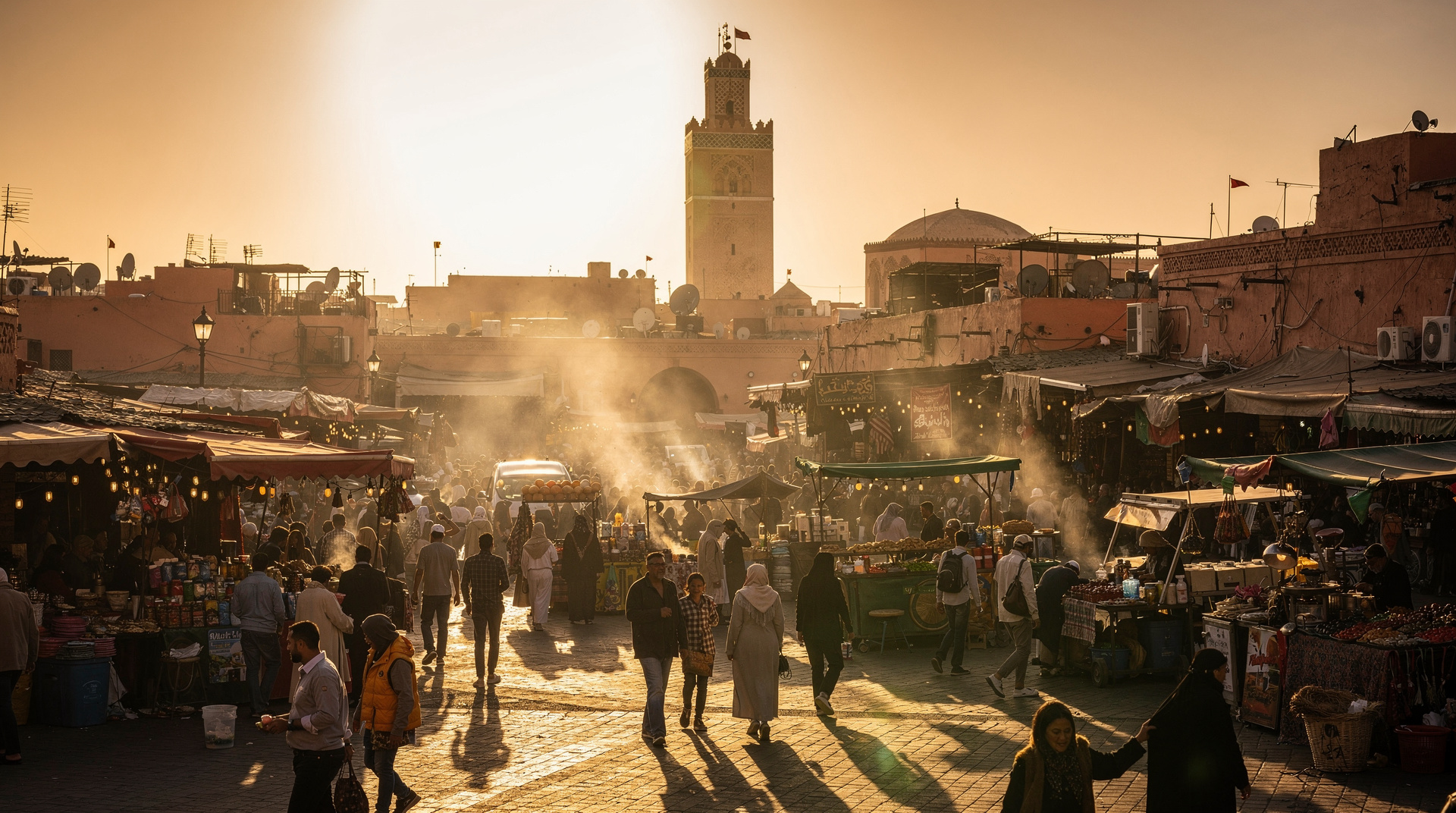
Drop your bags and walk. The Djemaa el-Fna square is a 15-minute walk from most riads in the northern medina. In daylight it hosts orange juice stalls (€0.50 per glass), snake charmers (photograph at your own risk; they will charge you), and henna artists who are more persistent than you are prepared for. The real action starts after sunset.
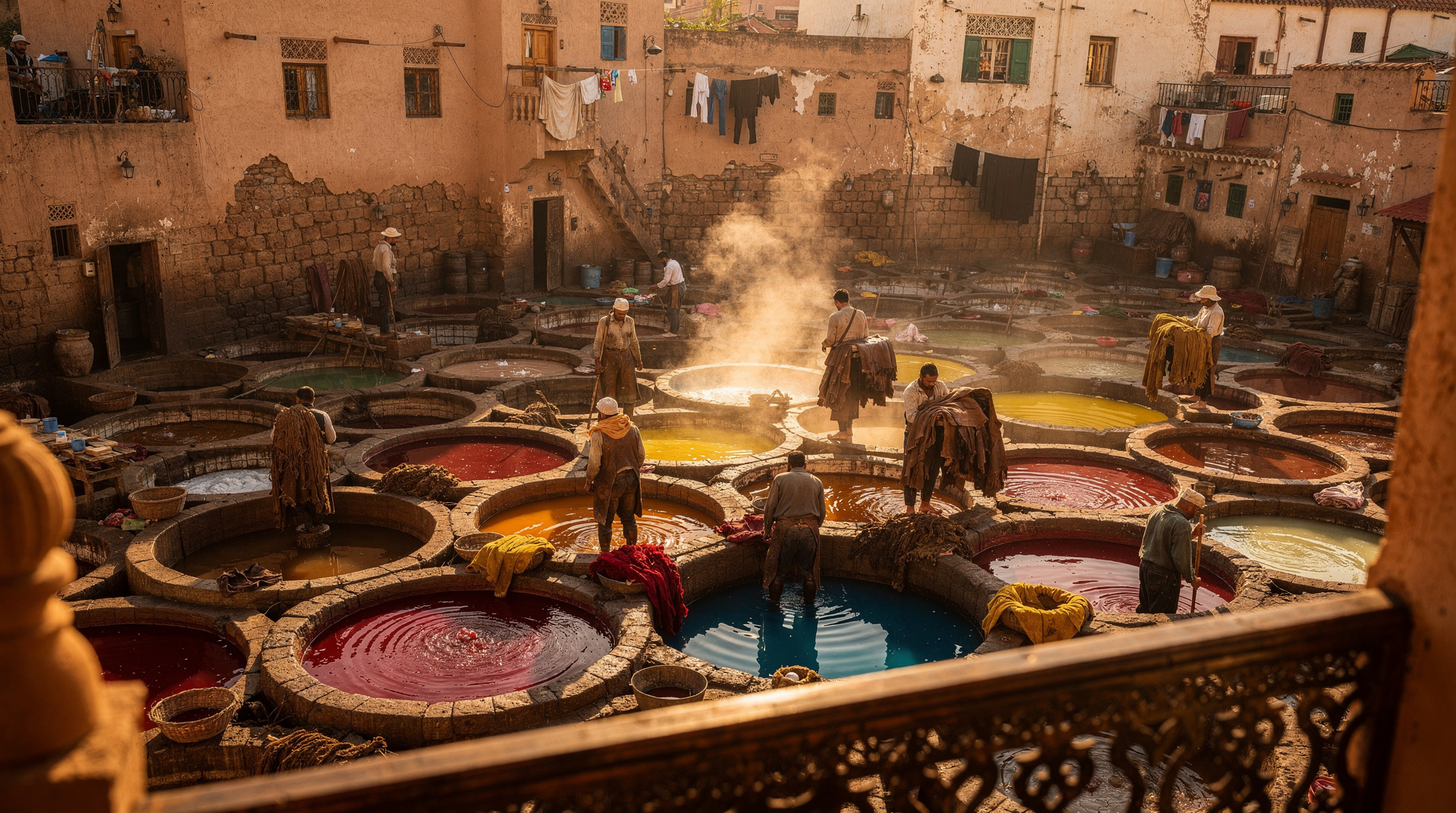
Head into the souks behind the square: the Souk Semmarine leads north and fractures into a dozen specialist markets. Leatherwork, spices, ceramics, carpets, lanterns. Walk without a destination. Budget: souks take €0–200 depending on self-control. Important note: the first price in any negotiation is not the real price. Start at 40% of what is asked and work from there.
Book your Marrakech medina and palace walking tour for tomorrow morning — private options are worth the extra cost on a short trip.
Evening: Djemaa el-Fna after dark
Return to the square at 19:00. The smoke from a hundred grill stalls rises in a single column. Stall holders shout, wave laminated menus, and physically steer you toward their benches. It is entirely fine to eat at stall 1 or stall 50 — the food is similar. A full dinner with bread and mint tea: €6–10. Eat the merguez sausage. Drink the harira soup.
Where to stay: Riad Yasmine or Riad BE Marrakech (mid: €80–130/night); La Sultana Marrakech (boutique luxury: €300+/night)
Budget estimate today: €60–120 including meals, taxis, drinks
Book in advance: Your riad; the Day 2 palace tour
Day 2: Palaces, gardens, hammam
Morning: Bahia Palace + El Badi
These two palaces sit within a 10-minute walk of each other in the southern medina. Bahia Palace was built for a 19th-century grand vizier and his four wives. The interior courtyards, cedar ceilings, and zellij tiling are extraordinary and mostly uncrowded before 10:00. Entry: €2.
El Badi Palace is a ruin — deliberately ruined by a later sultan who stripped the gold, marble, and onyx and carted it to Meknes. What remains is an enormous courtyard with storks nesting on every remaining wall. Entry: €2. Storks are free.
Your private Marrakech medina and palaces tour will cover both of these plus the Saadian Tombs (a 16th-century necropolis that was literally walled up and forgotten for 200 years, rediscovered in 1917).
Afternoon: Majorelle Garden
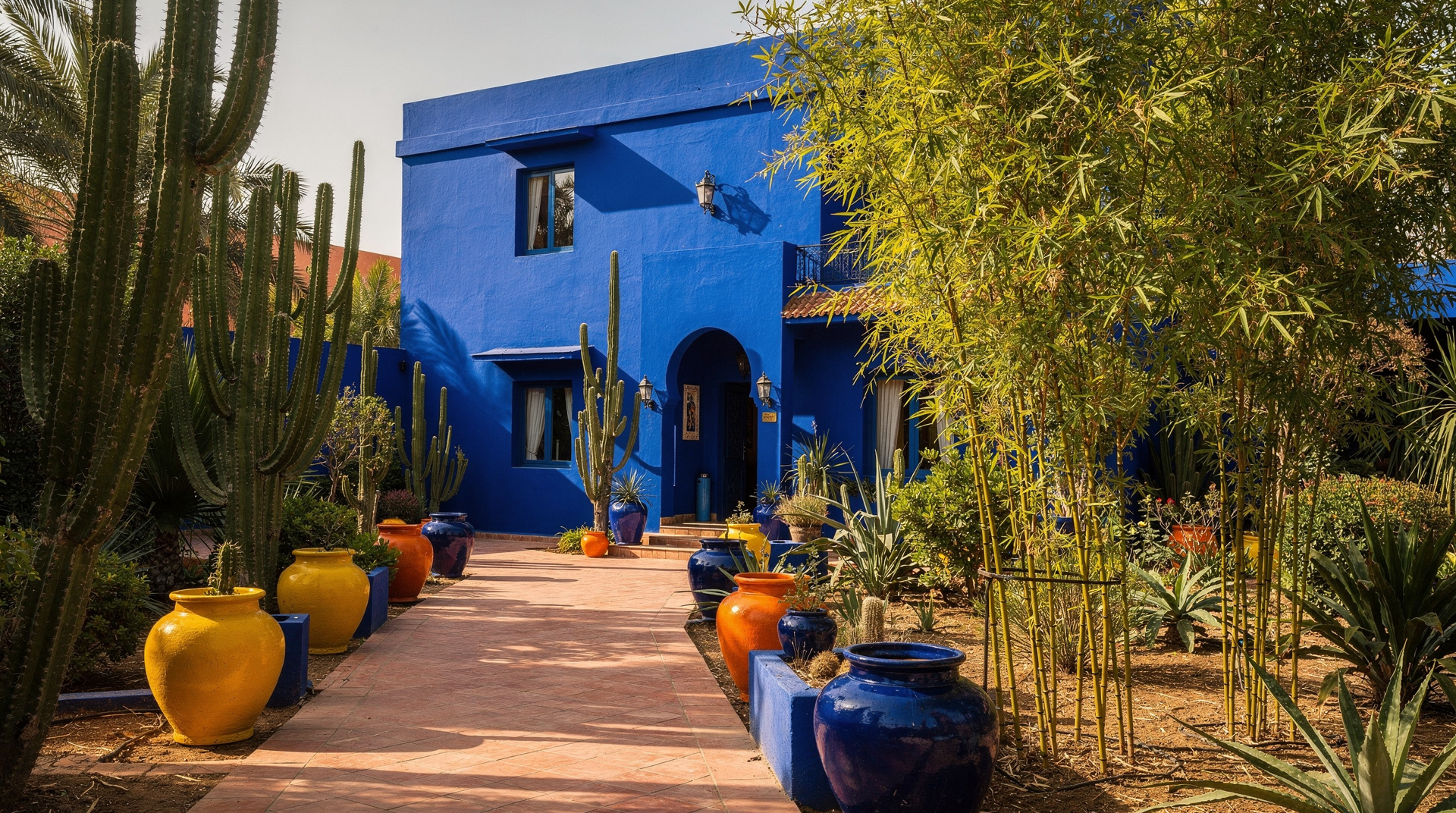
Take a petit taxi (€3) to the Ville Nouvelle for the Majorelle Garden — the cobalt-blue botanical garden bought and saved by Yves Saint Laurent in the 1980s. It is expensive (€18 entry), it is crowded, and it is worth it. The YSL Museum next door adds €12 more if fashion is your thing. Book tickets online; the queue for walk-ins is long.
Book your Majorelle Garden + Berber Museum entry here to skip the ticket line.
After the garden, the Gueliz neighbourhood (Ville Nouvelle) has the best coffee in Marrakech — try Cafe 16 or any of the European-style bakeries on Mohammed V Avenue. This is also where you find supermarkets if you need supplies for the desert tomorrow.
Evening: Hammam
A traditional hammam is not optional on a short Morocco trip — it is the reset button. Les Bains de Marrakech in the southern medina is popular with visitors and genuinely good. An hour-long scrub-and-massage session runs €35–50. Book same-day.
Dinner tonight: move away from the Djemaa el-Fna crowds and eat at one of the riad restaurants in the medina. Dar Zitoun or Dar Moha serve traditional Moroccan cuisine in courtyard settings. Budget: €25–40 per person with wine.
Where to stay: Same riad as night one
Budget estimate today: €100–180 including meals, entry fees, hammam, taxis
Book in advance: Majorelle tickets; hammam reservation
Day 3: Agafay desert — sunset, stars, silence
Morning: medina at its quietest
The medina before 8:00 belongs to locals: bread deliveries, schoolchildren, women buying vegetables at the Mellah market. Walk without an agenda. Get a msemen (Moroccan flatbread) from a street stall for €0.30. Drink coffee standing up.
Afternoon: transfer to Agafay
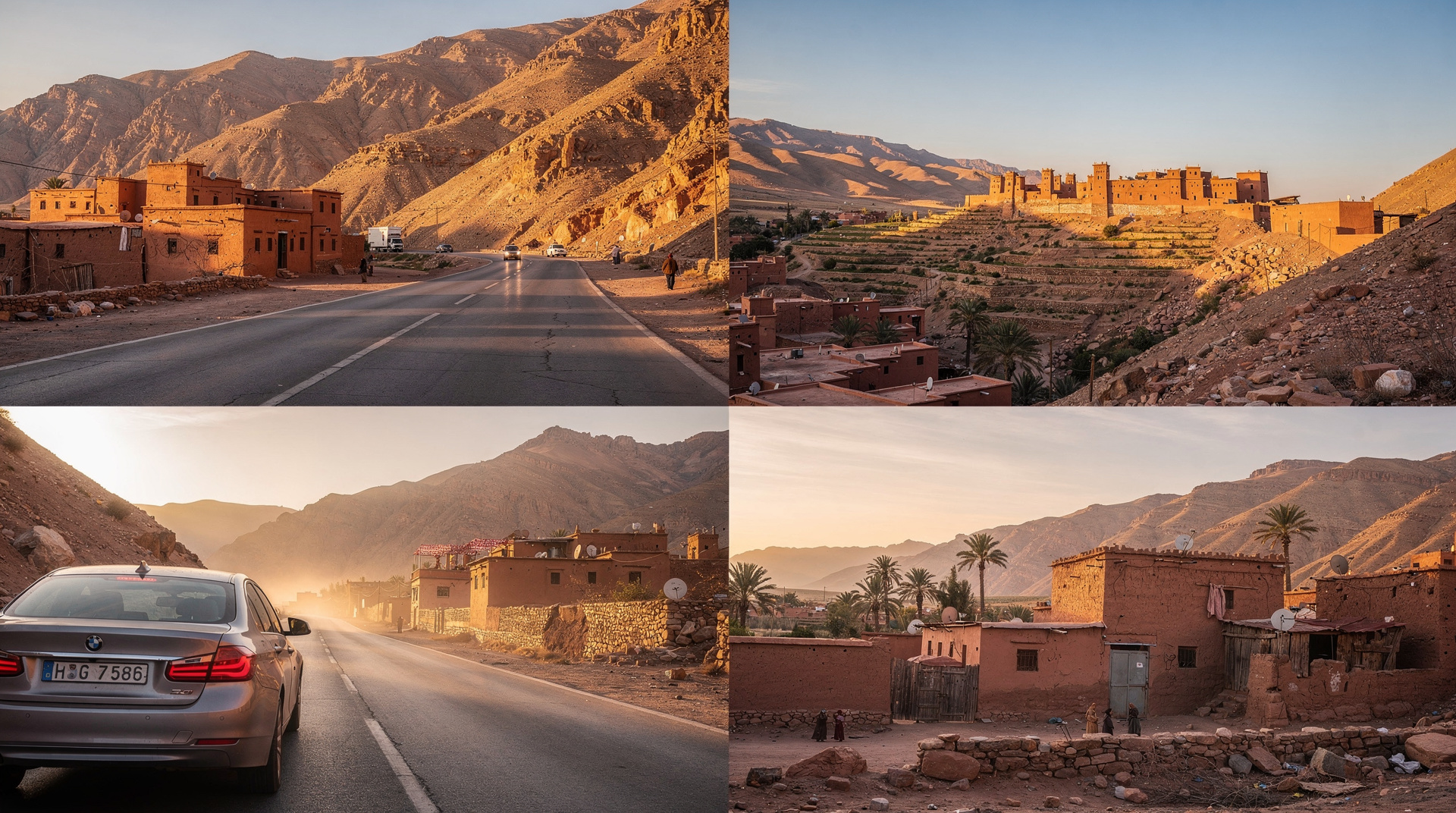
Your Agafay camp or tour operator will collect you from your riad around 15:00–16:00. The Agafay is a stony semi-arid plateau (not sand dunes — those are 10 hours south) about 40 km from Marrakech. The landscape is barren, lunar, with the High Atlas mountains as a backdrop. In good weather, Toubkal (North Africa’s highest peak at 4167m) is visible from camp.
Book the Agafay desert dinner with camel ride and sunset — this is the single most impactful experience you can add to a short Marrakech trip. The camel ride is short (20–30 minutes), the sunset over the Atlas is legitimately spectacular, and dinner in a Berber tent by firelight is the romantic payoff.
Two camps worth knowing: Scarabeo Camp (upscale, glamping, €200–350/night for the tent) and Inara Camp (mid-range, €120–180). Both include transfers from Marrakech.
Evening / night: Agafay
No phone signal worth mentioning. No traffic noise. Stars are intense once the moon sets. Temperature drops 10–15°C from daytime after sundown. Bring a light jacket even in summer; a proper layer in spring and autumn.
Day 4 morning (bonus): Most camps return you to Marrakech by 9:00–10:00, which is workable for afternoon flights home.
Where to stay: Scarabeo Camp or Inara Camp (included in most Agafay packages)
Budget estimate today: €120–250 including transfers and camp package
Book in advance: Agafay camp — especially in October, November, March, April (these sell out weeks ahead)
Total trip cost estimate
| Item | Budget (pp) | Mid-range (pp) |
|---|---|---|
| Accommodation (2 nights riad + 1 night camp) | €120 | €280 |
| Food and drink (3 days) | €60 | €120 |
| Agafay package | €80 | €150 |
| Entry fees + hammam | €40 | €60 |
| Local transport | €20 | €30 |
| Total (flights excluded) | €320 | €640 |
What to skip if you only have 2 days
If you arrive late on day one and leave midday on day three, something has to go. Cut the Agafay overnight and replace it with a half-day Ourika Valley excursion instead — cheaper, no overnight commitment, still gives you the Atlas backdrop. The hammam can also be shortened to a 30-minute express session (€15) at a local hammam rather than a tourist spa.
Route map description
This itinerary barely leaves the city. Menara Airport sits 4 km southwest of the medina. Everything in the medina is within a 20-minute walk. The Agafay departure point is 40 km southwest on the P2017 road toward Lalla Takerkoust lake. The camp transfers you back to the medina or directly to the airport the next morning.
Practical tips
Getting around without a car: Petit taxis (small red taxis) cover all medina-to-Gueliz routes for €2–5. For Agafay, you need a private transfer or a guided excursion — no public transport option exists. Do not attempt to use the Djemaa el-Fna square as a taxi rank — it is pedestrian-only. Walk to any of the gates of the medina (Bab Doukkala, Bab Nkob, Bab er-Robb) to find taxis.
Connectivity: Get a Maroc Telecom SIM at the airport (€10 for 10GB). Works everywhere in Marrakech and covers most of the main roads. Signal is thin in Agafay — which is entirely the point of going there. The Maroc Telecom SIM is significantly better value than roaming on a European plan.
Currency: Morocco runs on the Moroccan dirham (MAD). 1 EUR is approximately 10.8 MAD. The best exchange rates in Marrakech are at the BMCE and Attijariwafa Bank ATMs in the Gueliz neighbourhood. Airport exchange desks offer poor rates; withdraw from an ATM once you are in the city. Most riad accommodation accepts card payment, but the souks, street food, hammams, and taxis are cash-only. Bring small notes — getting change for a 200 MAD note from a street stall is a minor negotiation in itself.
Bargaining etiquette: Smile, never show anger, accept tea if offered, walk away slowly if the price is wrong. Walking away is the most effective negotiating tool. The first price offered in any souk negotiation is typically 2–3 times what the seller expects to receive. Starting at 40% of the asking price and meeting somewhere in the middle is standard practice, not aggressive. That said: some items have standard market prices (the €0.50 orange juice, the €0.30 msemen flatbread) that are not negotiated. Know the difference.
Riad booking tip: Book direct with the riad by email or WhatsApp — they are often 15–20% cheaper than Booking.com and you get better service because they are not paying the commission. Most riads in Marrakech have WhatsApp numbers posted on their website. A direct booking message gets a personal response, usually within a few hours.
What to pack for 3 days: Light layers (mornings and evenings can be cool even in summer; Agafay nights are cold in spring and autumn), a hat for the medina sun, comfortable shoes you do not mind getting dusty, a small daypack for the souks (backpack straps in the narrow lanes can knock merchandise off shelves — carry it in front), and a scarf or light wrap for women entering medersa spaces. Swimwear if your riad has a pool — most mid-range riads do, and it is the best €30 upgrade decision you will make.
When to visit vs. when to avoid: October, November, March, and April are the ideal months. December through February is manageable but Agafay nights can drop below 5°C. July and August in Marrakech are brutal — 40°C with no shade in the medina lanes. If you must travel in summer, stay in a riad with air conditioning and a pool, move slowly, and do all outdoor activities before 11:00 and after 17:00.
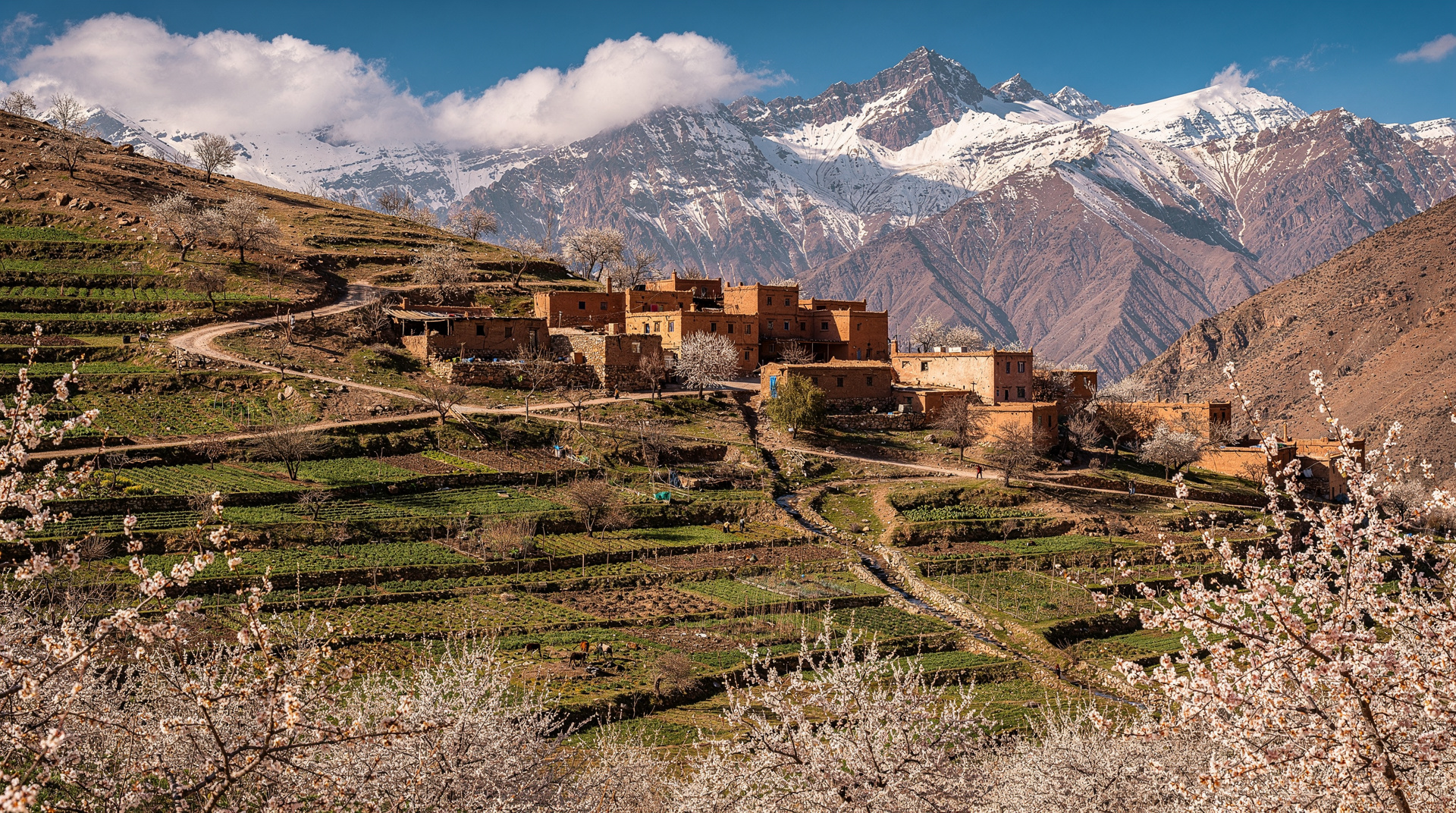
Day trip additions for bonus time: If you have an extra morning or your flight is late evening on Day 3, the Ourika Valley is 35 km south of Marrakech and one of the most accessible Atlas excursions. A grand taxi from Bab er-Robb bus station costs €2 per seat to the valley market town of Aït Ourir; from there local transport continues into the valley. Alternatively, the Berber village and Atlas mountains day trip covers this exact territory with a guide included.
A half-day trip to the Ménara olive gardens (15 minutes from the medina, free entry to the grounds) is a genuinely peaceful alternative to another afternoon in the souks — a 12th-century irrigation basin surrounded by 100,000 olive trees, with Toubkal and the Atlas peaks visible on clear days. Book the Berber village and Atlas mountains day trip if you want a guided half-day in the foothills without the commitment of a full Atlas excursion.
Tipping culture: Not mandatory, but appreciated and locally significant. Riad staff who bring your luggage: €1–2. Hammam staff: €3–5 on top of the session price. Restaurant servers: 10% of the bill. Guides: €5–10 per person per half-day. Porters who help with luggage near the medina gates: €1–2. Having a supply of 10 MAD coins (approximately €0.90) simplifies this considerably.
Food safety: Marrakech street food is generally safe but some common-sense rules apply. Eat food that is cooked in front of you and served hot. The Djemaa el-Fna grill stalls are among the safest street food options in the city — high volume, constant turnover, cooked to order. Avoid pre-made salads left out in heat. Bottled water everywhere; tap water in Morocco is chlorinated and technically safe but tastes unpleasant.
The Marrakech experience vs. the tourist traps
Three days in Marrakech means you will encounter the full spectrum: genuine local culture alongside experiences designed primarily for visitors, and everything in between. Some useful distinctions:
Genuine: neighbourhood hammams, the food at the Mellah market, Gnawa musicians performing at street corners for themselves not for cameras, the morning bread deliveries, the Berber medicine stalls in the Rahba Kedima square.
Designed for visitors (but still enjoyable): the Djemaa el-Fna grill stalls, the tourist-facing carpet cooperatives, the guided medina walks, the riad dinners. There is nothing wrong with any of these — the food is good, the riads are beautiful, the walks are educational. Just go in knowing what they are.
Genuinely to avoid: anyone who “just happens” to offer to show you the way to a major landmark and then leads you to their cousin’s carpet shop. This is a Marrakech institution that has operated for decades. Politely say you know the way and keep walking.
For more detail on the city, read our full Marrakech destination guide before you go. For a more complete picture of the souks and souq shopping, our Marrakech shopping guide covers what is worth buying and where. If you want to extend this into five days with a proper Sahara detour, see our 5-day Morocco itinerary.
Is 3 days actually enough for Marrakech?
Three days gets you the medina, the palaces, the gardens, and one desert night — but it is a curated slice, not a full picture of Morocco. If your only goal is a long weekend break with a genuine change of scenery, it works well and does not feel rushed if you keep the itinerary above and resist adding a fourth destination.
Where it falls short is anywhere requiring real travel time: the Atlas Mountains beyond Agafay’s foothills, the Sahara desert proper (10+ hours south), and Essaouira or Fes are all off the table on this timeframe. If any of those matter to you more than a second Marrakech night, the 4-day itinerary or 5-day itinerary fit better.
3 days vs. 4 days vs. 5 days: what changes
| Itinerary | What you add | What you still miss |
|---|---|---|
| 3 days (this one) | Marrakech medina + 1 Agafay night | Sahara, Atlas trekking, second city |
| 4 days | A day trip (Essaouira or Atlas) or extra medina depth | Sahara dunes, multi-city loop |
| 5 days | A real Sahara detour via Ouarzazate | Slow pace, second imperial city |
Where this itinerary is tight (and where it has slack)
The tightest point is Day 2: palaces in the morning, Majorelle in the afternoon, hammam in the evening is a full day on foot in medina heat, and skipping breakfast leisure to make the palace tour on time is common. If you would rather slow down, drop El Badi Palace (Bahia alone covers the same architectural ground) and add that hour to the Majorelle visit instead. Day 3 has the most slack — the morning in the medina before the Agafay transfer is genuinely unstructured, and it is the best time to circle back to any souk stall you regretted walking past on Day 1.
Frequently asked questions about 3 Days in Morocco
Is 3 days in Morocco worth it, or should I wait for more time? It is worth it if Marrakech itself is the draw — the medina, palaces, gardens, and one desert night make a complete short trip. If you are specifically chasing the Sahara or a multi-city loop, three days will feel like a teaser; the 5-day itinerary is the shorter option that still reaches the desert properly.
Can I fit in Essaouira or the Atlas Mountains on a 3-day trip? Not without cutting something else. Essaouira is a 2.5-hour drive each way, which effectively eats a full day; the same is true for a proper Atlas trek. If either matters to you, the 4-day itinerary is built to add exactly one of those as a day trip without changing the rest of this plan.