14 Days in Morocco
Overview of this 14-day Morocco itinerary
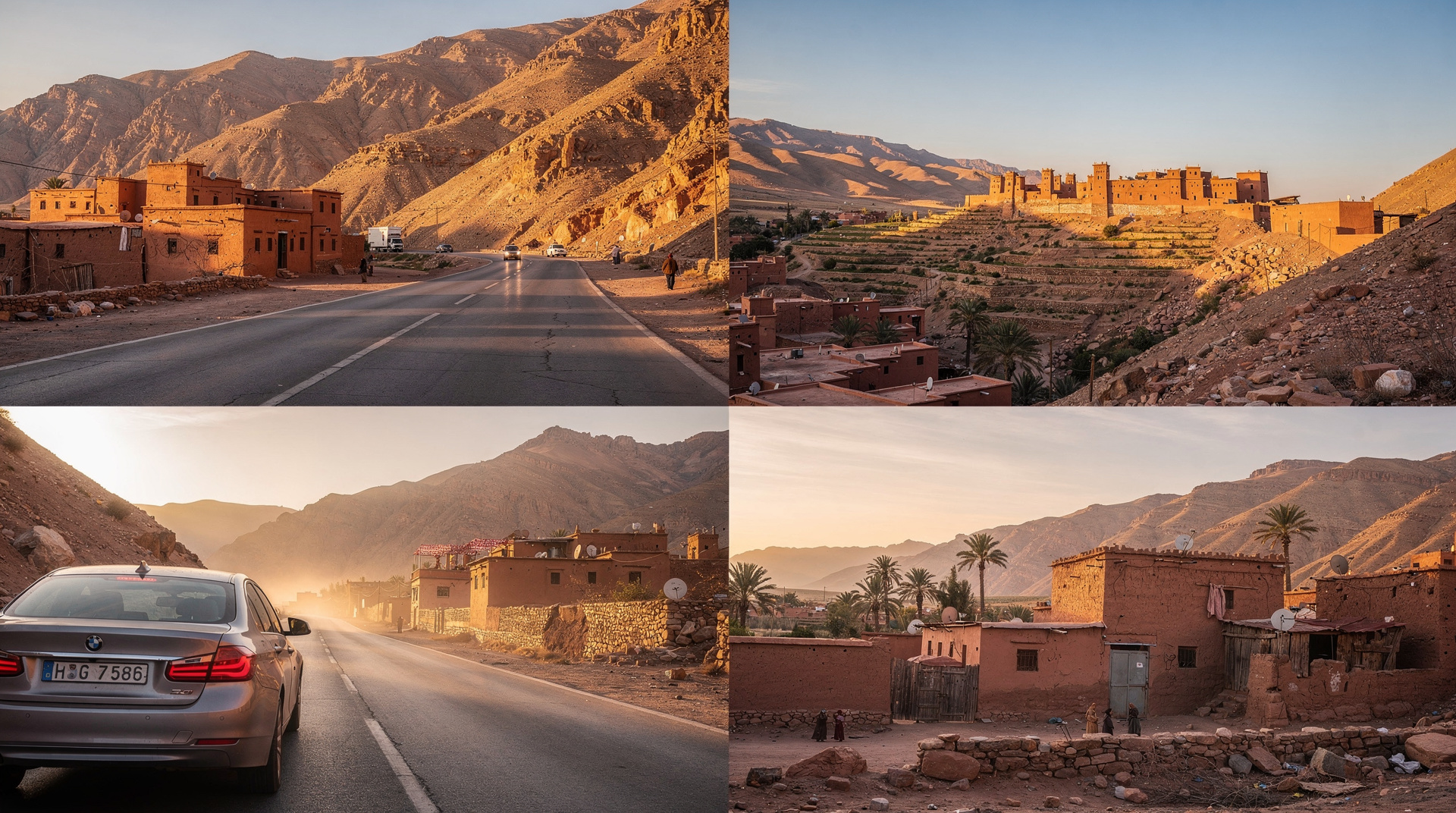
Two weeks is long enough to do Morocco without feeling like you are ticking boxes. You can spend three nights in Marrakech and actually absorb the medina rather than rushing it. You can have a quiet afternoon in Essaouira with nothing scheduled. You can sit in a Fes riad courtyard and read a book. This is the itinerary for people who want to travel through Morocco rather than survive it.
The structure: three days in Marrakech (with an Agafay night and an Essaouira day trip), four days for the Sahara loop south, three days in Fes and the north (Chefchaouen if timing works), and a final descent via Rabat and Casablanca back to the airport. The routing ends in Casablanca rather than returning to Marrakech — which makes sense because almost all international flights from northwest Morocco go through Casablanca or Marrakech anyway.
This itinerary works best with a rental car for some legs. The south (Days 5–9) benefits enormously from having your own vehicle rather than being locked into a guided tour’s schedule. The north (Days 10–13) can be done by train and shared taxi.
Route at a glance: Marrakech (3 nights) → Essaouira (2 nights) → Marrakech → Agafay (1 night) → Aït Benhaddou → Todra Gorge → Merzouga (2 nights) → Fes (3 nights) → Chefchaouen (1 night) → Rabat (1 night) → Casablanca (fly home)
Best season: October–November or March–April. The route covers coast, mountains, and desert — the shoulder months give the best conditions across all three.
Total estimated cost (per person, mid-range, flights excluded): €1600–2400
Trip snapshot
| Route | Marrakech → Essaouira → Agafay → Sahara loop → Fes → Chefchaouen → Rabat → Casablanca |
| Cost (pp, flights excluded) | around €1200–2430 for 14 days |
| Getting there | fly into Marrakech Menara, fly out of Casablanca Mohammed V |
| Transport style | rental car for the south (Days 5–9), train and shared taxi for the north |
| Best time | October–November or March–April — the route covers coast, mountains and desert |
| Book well ahead | your Marrakech and Fes riads, and the rental car if collecting in high season |
Days 1–3: Marrakech — three nights to do it properly
Day 1: arrival and medina
Arrive at Menara Airport. Petit taxi to the medina: €4–6. Three nights in Marrakech means you can actually settle in. Pick a good riad and commit to it — the experience of returning to the same courtyard after each day’s adventures compounds over three nights in a way that a single night cannot.
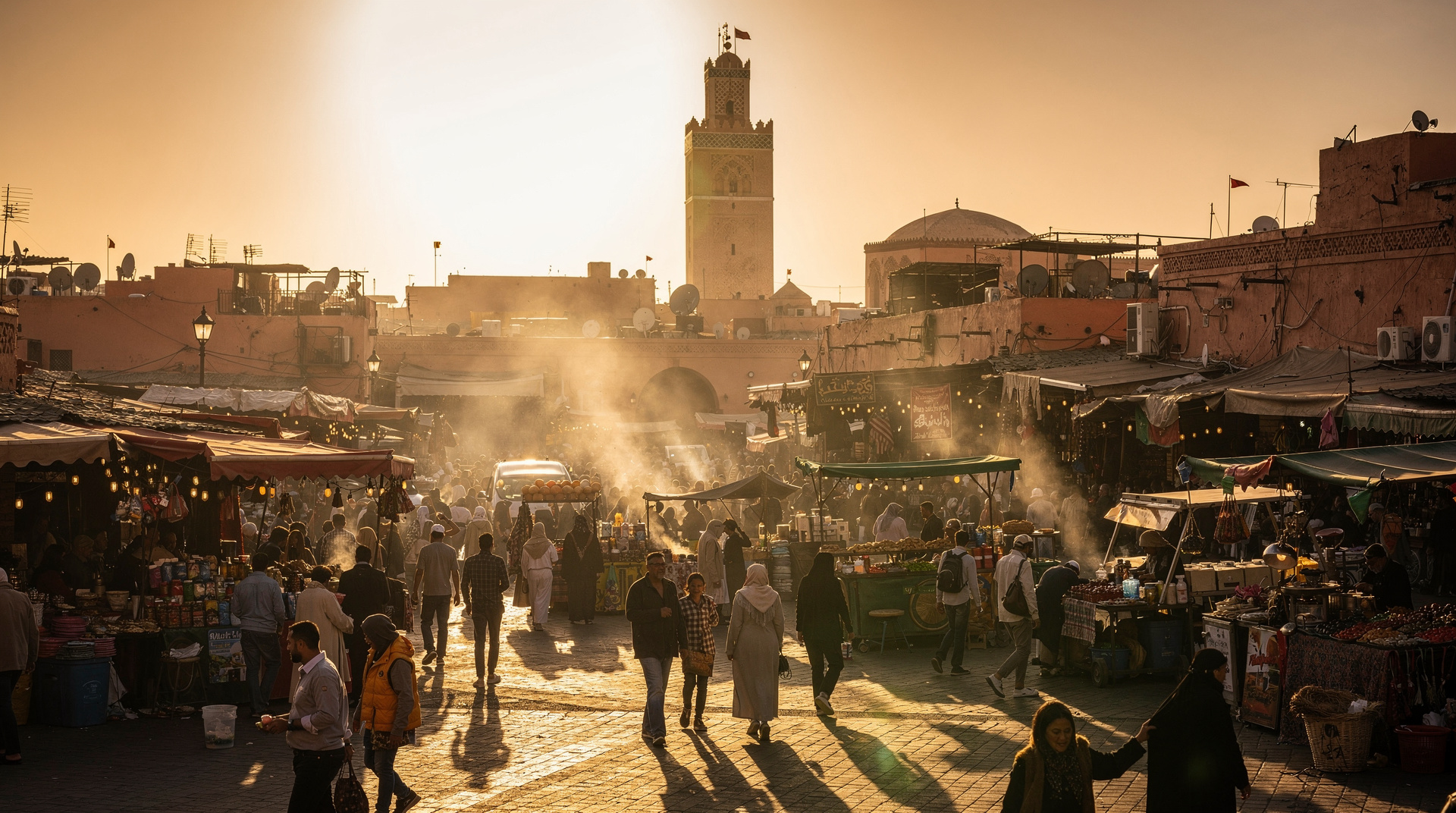
Evening on Day 1: Djemaa el-Fna. Eat at the stalls, drink the orange juice, let the square’s rhythm take over.
Day 2: the imperial circuit
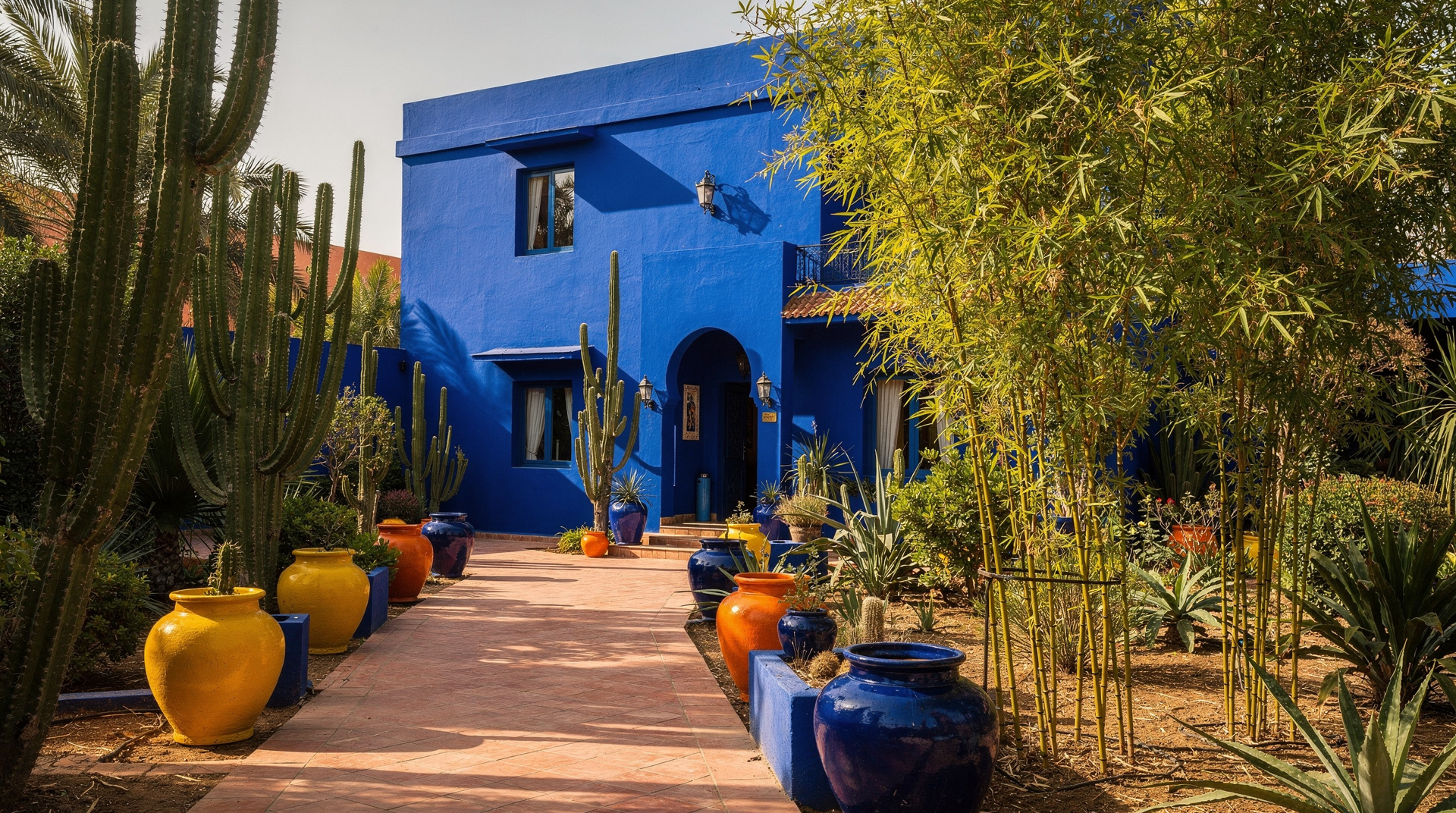
Full day of the medina’s historical layer. The Bahia Palace (9th-century foundations, 19th-century decoration) and the Saadian Tombs (sealed for 200 years) in the morning. The Mellah — the old Jewish quarter with distinctive iron balcony facades — in the midday. Lunch at one of the Mellah restaurants. Majorelle Garden in the afternoon: book Majorelle Garden and Berber Museum entry tickets online to avoid the queue. Evening hammam at Les Bains de Marrakech: 90 minutes, €45–55, essential.
Book the private Marrakech medina and palaces tour for a morning that moves beyond photographs into genuine understanding of the city’s history.
Day 3: Atlas day trip
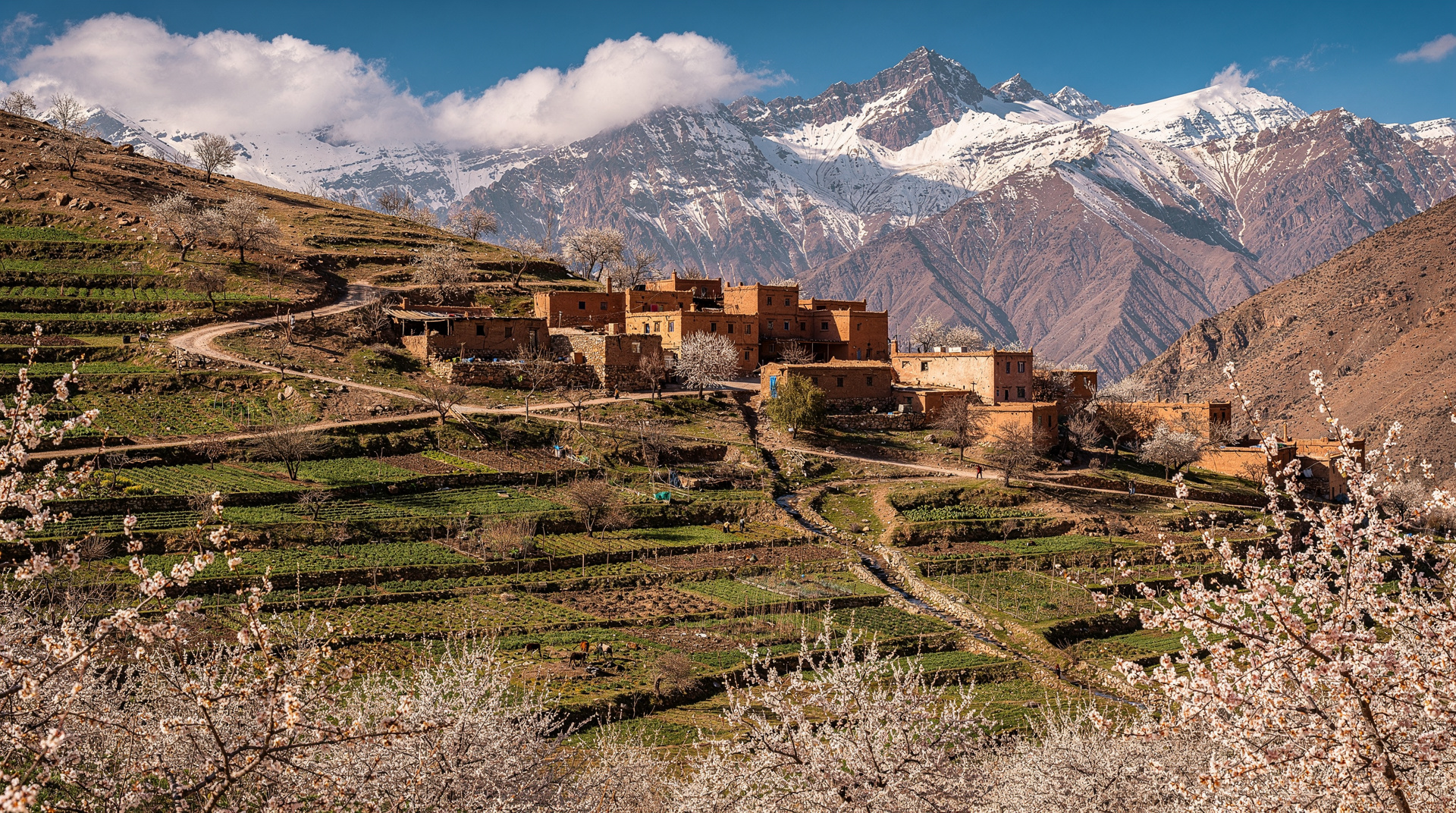
With three nights in Marrakech, you can add a High Atlas excursion that shorter itineraries cannot fit. The Ourika Valley is 35 km south — a river valley climbing into the Atlas foothills with a market village and a Berber women’s cooperative. Book the Ourika Valley day trip from Marrakech with lunch — the valley lunch involves fresh trout from the river and Berber bread baked in a clay oven.
Alternatively: the Ouzoud Waterfalls (2.5 hours northwest of Marrakech) are the highest waterfalls in North Africa at 110 metres, surrounded by olive trees and inhabited by Barbary macaques who steal lunches with serene confidence. The Ouzoud Waterfalls guided hike and boat trip includes the boat ride at the base — do not skip it.
Where to stay: Riad Jardin Secret or Riad BE Marrakech (mid: €90–140); La Mamounia (legendary luxury: €500–1200/night)
Budget estimate (3 days): €350–650 including accommodation, meals, activities, entry fees
Days 4–5: Essaouira — two nights on the Atlantic
Day 4: transfer and explore
Grand taxi from Bab Doukkala bus station to Essaouira: €8 per seat (2h30). Or private transfer: €45–60.
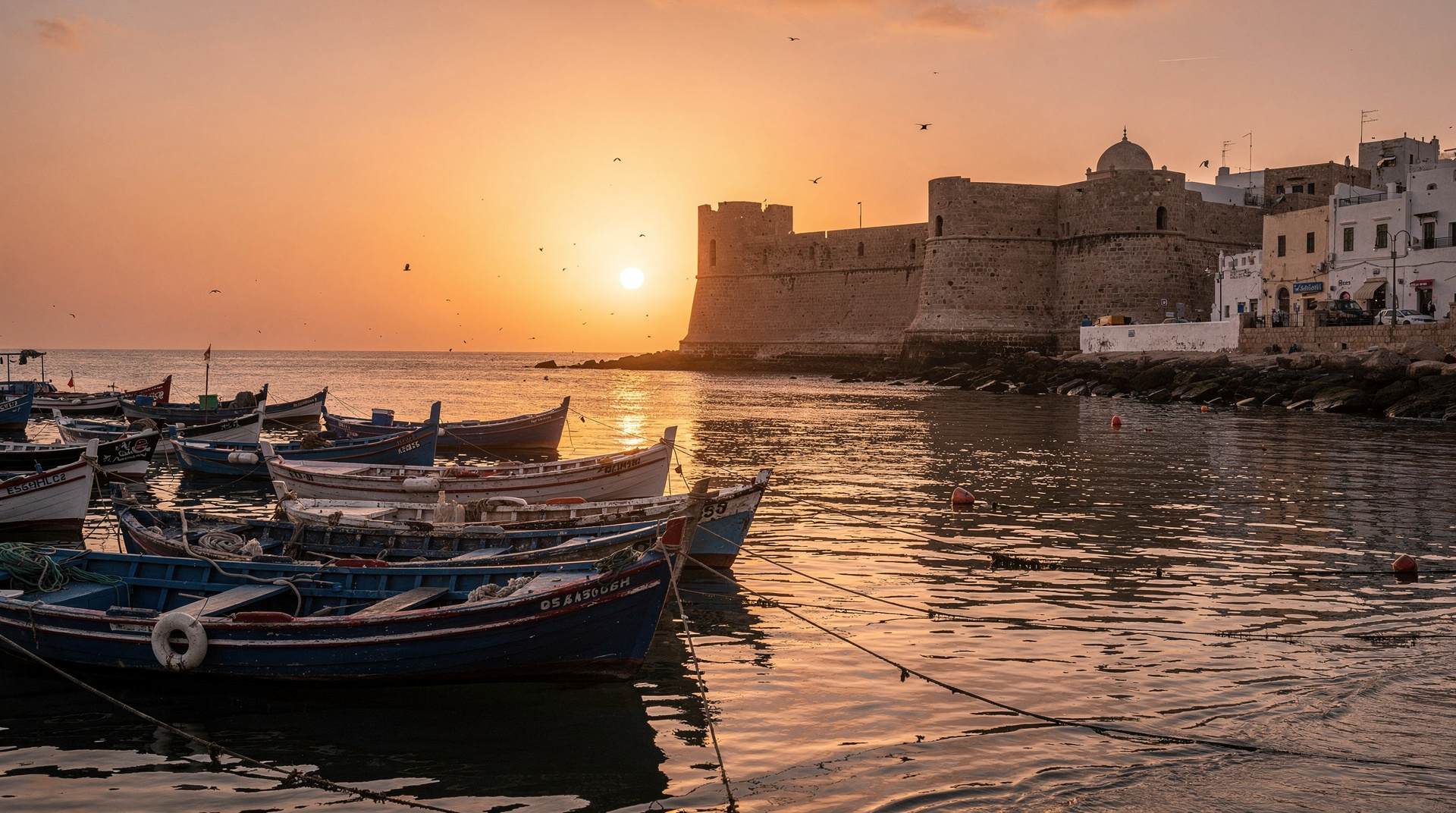
Essaouira is a deliberate tonal shift. The ochre medina gives way to whitewashed walls. The heat of the inland plateau gives way to constant Atlantic wind (this is why kite-surfers come here from across Europe). The pace is different — more leisurely, more Andalusian in its DNA (the city was rebuilt by a Portuguese engineer in the 18th century on the ruins of an older port).
Afternoon: walk the ramparts above the Atlantic. The sea fortifications look out over crashing waves and flocks of seagulls competing with the wind. Visit the Skala de la Ville bastion at sunset.
Day 5: Essaouira deep dive
Morning at the harbour fish market: buy what you want, hand it to a grill stall, eat it 10 minutes later with bread and chermoula sauce for €4–6. Then the wood marquetry workshops: Thuya wood, native to this part of Morocco, is worked into extraordinarily detailed inlay pieces (boxes, picture frames, chess boards). Family-run workshops near the Skala du Port give tours and sell direct.
The beach extends 5 km south. Rent a horse (€20 for an hour along the sand) or a kite-surfing lesson if the wind is right (always right: Essaouira gets 300 windy days per year). Evening: seafood dinner at Elizir or La Table by Madada (book ahead: €35–55 per person). Open a bottle of Moroccan rosé from the Meknes region — perfectly chilled, underrated.
Where to stay: Heure Bleue Palais (upscale: €150–230); Riad Baladin (mid: €70–110)
Budget estimate (2 days): €280–480
Day 6: Agafay desert night — between Essaouira and the south
Return to Marrakech + Agafay
Grand taxi or bus back to Marrakech (2h30), arriving by midday. Transfer to the Agafay desert (40 km southwest of Marrakech) for one night. The Agafay is a stony plateau — not sand dunes, those are 10 hours south — but it is the Sahara’s dry, silent cousin. The High Atlas provides the dramatic backdrop; on clear days the Toubkal summit (4167m, North Africa’s highest) is visible.
The Agafay desert dinner with sunset camel ride is the right way to spend this evening: camel at dusk, dinner in a Berber tent by firelight, the absence of city noise as the temperature drops to something genuinely cold. Stars here are brilliant — less dramatic than Merzouga but still remarkable.
Where to stay: Scarabeo Camp (upscale glamping: €200–350); Inara Camp (mid: €120–180)
Budget estimate today: €120–250 (camp package typically includes transfer and dinner)
Days 7–9: The Sahara — self-drive or guided tour
Day 7: Tizi n’Tichka + Aït Benhaddou + Ouarzazate
Leave Marrakech (or your Agafay camp) by 07:00. South over the Tizi n’Tichka pass (2260m) — with your own car, you can stop wherever you want rather than at designated pull-offs. The descent to Ouarzazate takes 3 hours from the pass.
At Aït Benhaddou: the UNESCO ksar across the Draa river, used in dozens of films. Walk up through the towers (entry: €3). Lunch at a riverside restaurant. Continue east through the Dades Valley — with a car, you can detour up the Dades Gorge proper, a canyon that the standard tour vans do not always visit. The “monkey’s fingers” rock formations at the upper gorge require a 4x4 in wet conditions but are accessible by standard car in dry weather.
Night in the Dades Gorge or continuing to Tinghir.
Day 8: Todra Gorge + Merzouga
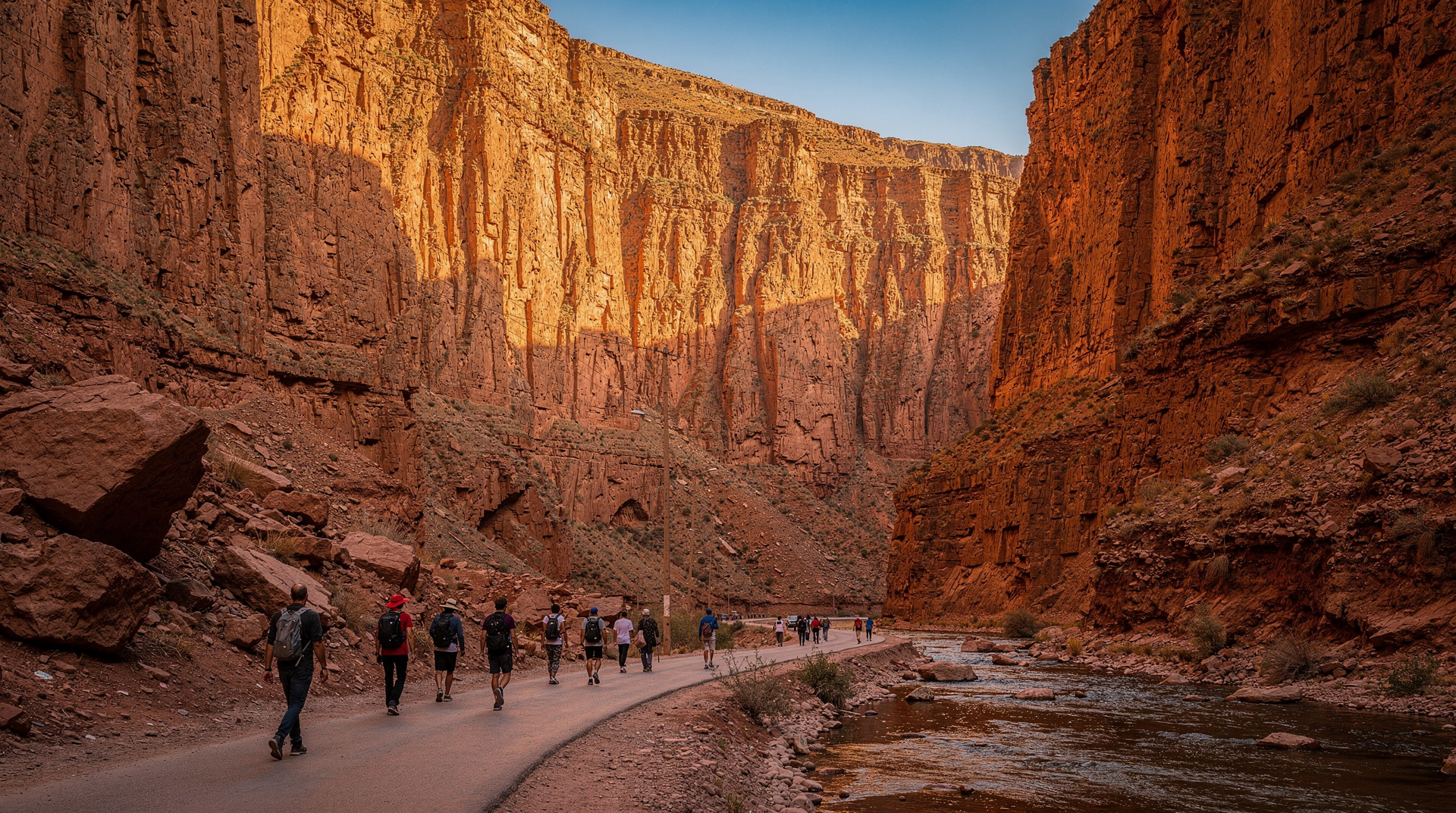
Dawn in the Todra Gorge: the 300-metre walls, the narrow river, the climbers preparing for routes on the limestone face. Then 4 hours east to Merzouga.
With your own car, you park at the dune edge and join a camel-ride or 4x4 excursion into the dunes independently. The camel ride operators on the road just before Merzouga village are comparable in price to what the camp includes. Alternatively, book direct with Sahara Luxury Camp or Merzouga Luxury Desert Camps in advance — both have parking and their own camel operations.
Day 9: Sunrise + rest day in the dunes
The great advantage of two nights in Merzouga: you have an entire day in and around the dunes between the two sunrises. Activities available locally: sandboarding down the dune faces (rent boards from village shops for €5), quad biking on the hammada plain (€30 for 1 hour), visiting the small Gnawa musician communities in Khamlia village (7 km from Merzouga; the music here is the real thing, performed for themselves not for tourists), and an excursion to the salt lake at Iriqui by 4x4.
An extra night in the desert is the single best addition a longer trip allows. Day-trippers see Merzouga for 16 hours; you get 40 hours and the desert reveals itself differently over time.
Where to stay: Sahara Luxury Camp (2 nights, included if pre-booked)
Budget estimate (3 days): Rental car (€40–60/day) + fuel (€80 round trip south) + accommodation (€150–300) + desert activities (€40–80) = €450–800 total
Days 10–12: Fes — three days in the medieval medina
Day 10: drive Merzouga to Fes (8 hours)
The drive from Merzouga to Fes is 500 km through the Ziz Valley, the Midelt region, and the Middle Atlas cedar plateau. It is a full day’s drive. The Middle Atlas is unexpectedly green — cedar forests, monkey sightings (Barbary macaques at Col du Zad), the Swiss-looking ski resort of Ifrane. Arrive Fes in the evening.
Alternatively, book the Marrakech-to-Fes via Merzouga guided tour if you prefer not to self-drive the full Sahara loop.
Day 11: Fes el-Bali
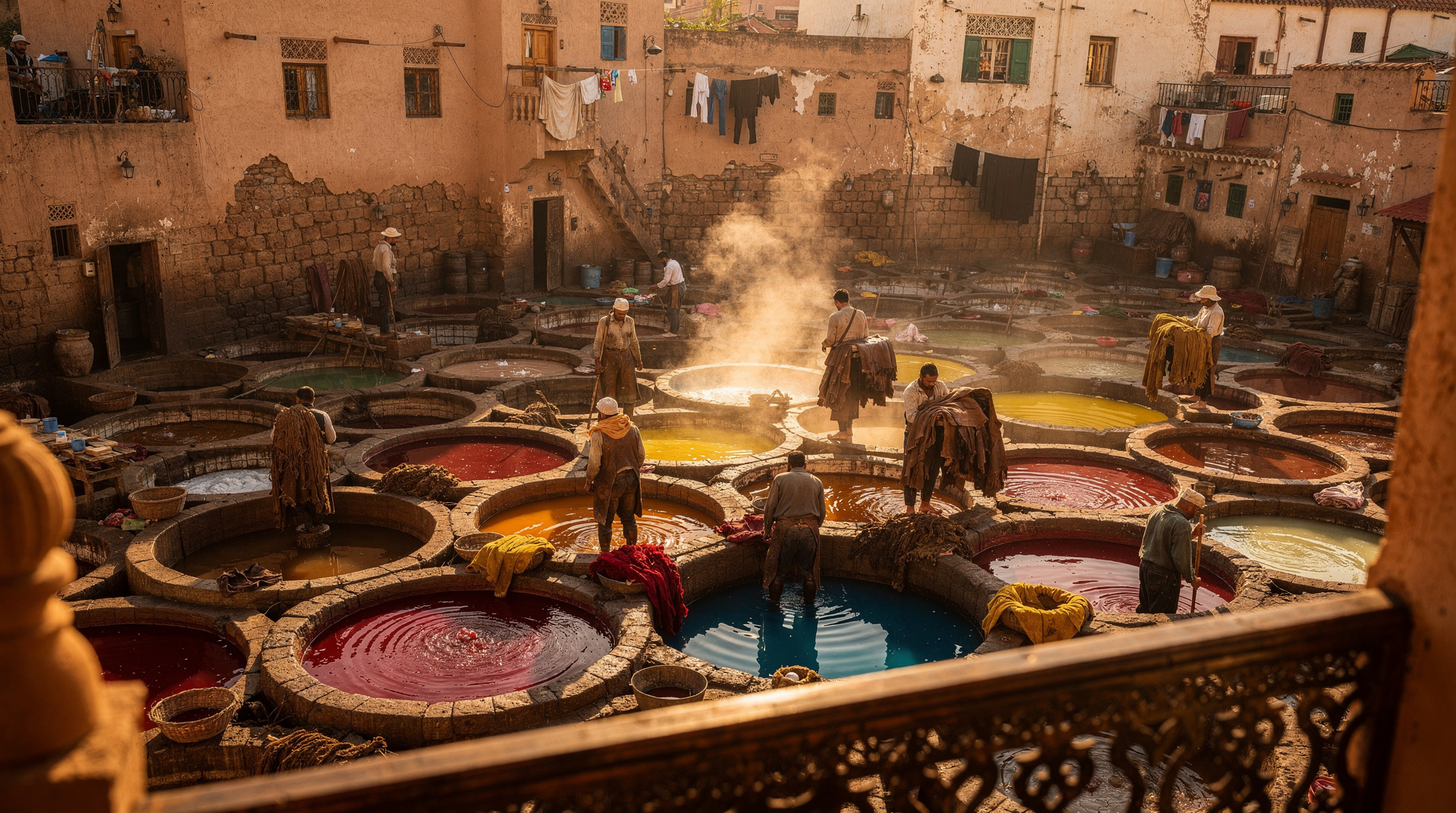
Fes has the largest intact medieval medina in the world. Over 9000 named lanes. A city of theological schools, tanneries, fountains, and fortified gates unchanged in their fundamentals since the 9th century. Book the Fes full-day cultural tour for this day — the medina genuinely requires a guide to navigate and interpret.
Key sites: the Chouara Tanneries (dye vats visible from leather shop terraces), Bou Inania Medersa (best example of Marinid architecture in Morocco), the Nejjarine Fountain and adjacent wood museum, and Bab Bou Jeloud (the blue gate that marks the medina entrance).
Day 12: Meknes, Volubilis, or Chefchaouen
Two options for this day.
Option A (history): Meknes and Volubilis. The Meknes and Volubilis day trip from Fes covers both in one manageable day. Meknes’s Bab Mansour gate and the Heri es-Souani granaries are imperial Morocco at its most theatrical. Volubilis’s in-situ Roman mosaics from the 2nd century AD are among the best-preserved in Africa.
Option B (scenery): Chefchaouen. The blue city is 4 hours from Fes. Chefchaouen is unambiguously beautiful — blue-washed lanes, hanging geraniums, a mountain valley backdrop — and it photographs extraordinarily well. The old medina is small and compact, the hiking is excellent, and the pace is the slowest in Morocco. With 14 days, staying overnight in Chefchaouen is possible and highly recommended.
Where to stay: Riad Fes (upscale: €150–250); Dar Bensouda (mid: €80–130)
Budget estimate (3 days): €350–650 including accommodation, meals, day trips
Day 13: Fes to Rabat — the capital
Train to Rabat (2h30)
ONCF train: Fes to Rabat. Comfortable first class: €8. Rabat is the administrative capital and one of Morocco’s four UNESCO-listed medinas. It is also the quietest and most pleasant of the imperial cities for actually spending time: no aggressive touts, navigable traffic, a beautiful ocean cliff walk above the Atlantic.
Afternoon: the Kasbah of the Udayas (a 12th-century fortified quarter with a stunning Andalusian garden, now occupied by artists and academics), the Hassan Tower and its adjacent Mausoleum of Mohammed V, and the Chellah necropolis (Roman ruins and medieval tombs, now home to a stork colony).
Evening: Rabat’s Agdal neighbourhood has good modern restaurants. Dinarjat in the medina serves traditional Moroccan cuisine in a formal setting for €40–60 per person.
Where to stay: Dar El Batoul (boutique: €100–160); Hotel Terminus Rabat (mid: €70–100)
Budget estimate today: €80–140
Day 14: Casablanca — Hassan II Mosque + departure
Train to Casablanca (45 minutes by Al Boraq)
High-speed Al Boraq train: Rabat Agdal to Casablanca Voyageurs in 45 minutes (€8, book in advance). Casablanca Mohammed V Airport (CMN) serves most international routes. If you have a morning flight, take the train the night before and stay near the airport (Ibis Casablanca Aereoport is reliable, €60–80).
If you have an afternoon or evening flight, Casablanca’s Hassan II Mosque is a must for the final morning. This 20th-century mosque on a promontory above the Atlantic is one of the most architecturally ambitious religious buildings completed anywhere in the world in the last 50 years. The minaret at 210 metres is the world’s tallest. The interior (open to non-Muslims on guided tours at specific times) seats 25,000 people and has a retractable roof.
Check times and book tickets at the entrance on arrival. Tours run approximately every 30 minutes in English and French.
Airport
Mohammed V Airport to Casablanca city: the ONCF train runs directly to the airport from Casablanca Port and Casa Voyageurs stations. Journey: 30–40 minutes, €5. Allow 2.5 hours before your flight.
Budget estimate today: €60–120
Total trip cost estimate
| Item | Budget (pp) | Mid-range (pp) |
|---|---|---|
| Accommodation (14 nights) | €450 | €1100 |
| Rental car (7 days) + fuel | €350 | €500 |
| Food and drink (14 days) | €200 | €450 |
| Tours, entry fees, activities | €150 | €300 |
| Train and bus fares | €50 | €80 |
| Total (flights excluded) | €1200 | €2430 |
What to skip if you need to trim to 12 days
Cut one of the two Essaouira days (convert to a day trip from Marrakech instead) and cut the Agafay night (or fold it into the Marrakech stay and skip the overnight). You lose two of the gentler, more atmospheric experiences but keep all the landmark sites. Alternatively, cut Rabat and go directly from Fes to Casablanca (one hour by train) if your flight departs the morning after Day 12.
Route map description
Starting at Marrakech airport, the route goes west to Essaouira on the Atlantic coast (2h30), returns east to Marrakech, then briefly south to the Agafay desert plateau (40 km). From Marrakech the main southern loop begins: over the Tizi n’Tichka pass (2260m), through Ouarzazate, east through the Dades Valley, north to the Todra Gorge, then southeast to Merzouga and the Erg Chebbi dunes. From the Sahara the route heads north through the Ziz Valley and Middle Atlas to Fes. Day trips from Fes cover Meknes and Volubilis (northwest) or Chefchaouen (north). The final leg goes southwest by train: Fes to Rabat (2h30), then Rabat to Casablanca (45 min) for the international departure.
Car rental advice
A rental car transforms the south Morocco experience. Book a small 4-door from Marrakech for the southern loop (Days 7–9) and drop it in Fes. Fes is a designated drop-off point for most major rental companies (Avis, Hertz, Sixt — all have Fes airport desks). Cross-city drop-off fees apply (€40–80 one-way) but are worth it.
Insurance: Take the full coverage package. Roads in southern Morocco are generally good, but the occasional loose rock, pothole, or wandering goat makes the extra €15/day excellent value.
Driving the Tizi n’Tichka pass: Hairpin bends, occasional slow truck convoys, and sheer drops. Drive carefully, especially in the first rain after a dry period when oil deposits make the road surface slick. In January–February, check road conditions before departure — the pass is occasionally closed by snow.
Explore our destination guides for Marrakech, Essaouira, Merzouga, Fes, Chefchaouen, and Rabat. For the imperial cities circuit in depth, see our dedicated imperial cities itinerary.
Comparing this route to the alternatives
Fourteen days sits between the compact 10-day itinerary and the full 21-day road trip. If you are torn between 10 and 14 days, our Morocco 10 vs 14 days guide breaks down exactly what the extra four days buy you — mainly Essaouira, Agafay, and a proper two nights in the desert instead of one. If you would rather spend those extra days in the north than the coast, the northern Morocco itinerary reallocates the time toward Chefchaouen, Tangier, and Tetouan instead.
Family travellers: this route works with children from around age 6 up, though the long driving days (Days 7–10) are the hardest part to manage. Our family Morocco itinerary and Morocco with kids guide have pacing adjustments if you are travelling with younger children.
Honeymooners: several of this itinerary’s stops (Agafay, Essaouira, the desert camp) work well for a honeymoon as written. If you want a more deliberately romantic version with upgraded accommodation throughout, see the honeymoon Morocco itinerary.
Frequently asked questions about 14 Days in Morocco
Is a rental car necessary for this 14-day itinerary? Not strictly, but it is strongly recommended for Days 5–9 (the southern loop), where it gives you control over stops at the Dades Gorge and Aït Benhaddou that guided vans skip. The northern half (Days 10–14) works fine by train and shared taxi if you would rather not drive the whole trip.
Can this itinerary be done in the opposite direction? Yes — starting in Casablanca and ending in Marrakech works just as well logistically, and can be cheaper if your flights route that way. The order in this guide (Marrakech to Casablanca) is chosen because most travellers’ flights favour arriving in Marrakech.