Morocco Visa and Entry Requirements
Do I need a visa to visit Morocco?
Citizens of the US, UK, EU countries, Canada, Australia, and many others get 90 days visa-free on arrival as of 2026. No pre-arranged visa is needed — you receive a stamp at the port of entry. Your passport must be valid for at least 6 months beyond your intended stay.
What you actually need to enter Morocco
Morocco’s visa system is straightforward for most Western travellers: you don’t need one. Citizens of around 60+ countries receive automatic visa-free entry for 90 days, granted as a stamp at any official port of entry — international airport, land border, or sea port.
This guide covers which nationalities qualify, what the stamp actually means, the rules around extensions and re-entry, and the practical entry process.
| At a glance | |
|---|---|
| Who needs a visa | Most Western nationalities: no visa, 90 days free on arrival |
| Cost | Free for visa-exempt nationalities; visa fee for others typically around 30-80 EUR equivalent |
| Passport rule | Valid at least 6 months beyond your planned departure from Morocco |
| Getting the stamp | Automatic at any official port of entry — airport, land border, or sea port |
| Best time to double-check | A few weeks before departure, since exemption lists can change |
Visa-free countries: the main ones
As of 2026, citizens of the following countries do not need a pre-arranged visa and receive 90 days on arrival:
- United States — 90 days
- United Kingdom — 90 days
- All EU member states — 90 days
- Canada — 90 days
- Australia — 90 days
- New Zealand — 90 days
- Japan — 90 days
- South Korea — 90 days
- Brazil — 90 days
- Argentina — 90 days
- UAE — 90 days
- Saudi Arabia — 90 days
Most Schengen-area countries and most Western Hemisphere nations are included. The list is extensive — if your nationality isn’t listed here, check with the Moroccan embassy in your country for current requirements, as these change.
How the 90-day entry stamp works
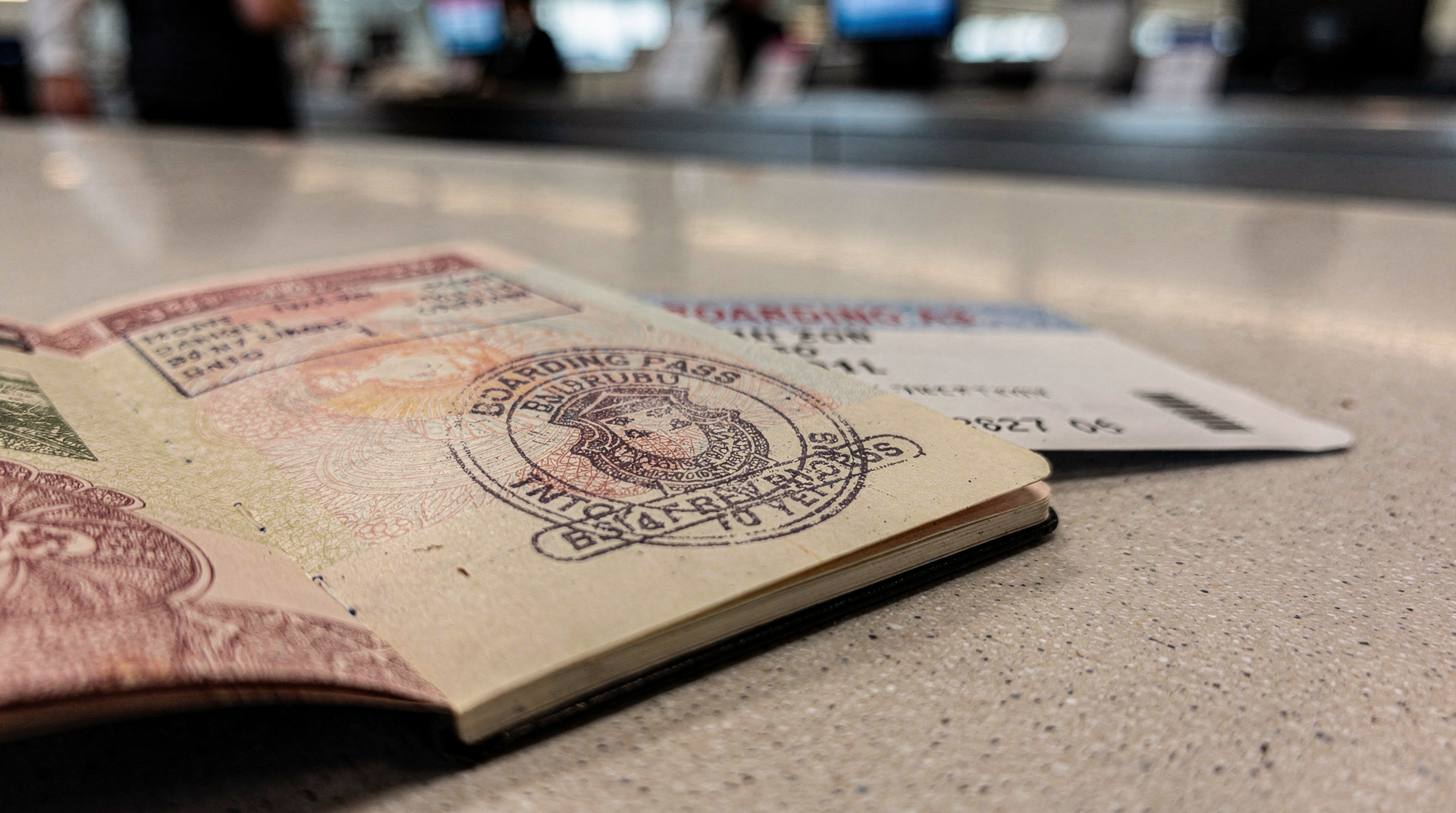
The 90-day entry is not a visa — it’s a stay permit granted by the border police (DGSN) officer at the port of entry. You receive a stamp in your passport showing your entry date.
Key rules:
- The 90 days begins on your arrival date, not from when you first plan to use the time
- The allowance is 90 days within a 180-day period (not simply 90 days from entry)
- There is no prior registration or pre-approval required
- You will be asked basic questions: reason for visit (tourism), accommodation address in Morocco, onward travel plans
What to have ready at the border:
- Passport (valid for minimum 6 months beyond your planned departure)
- Return or onward ticket (technically required; in practice rarely asked for flights, more commonly checked at land borders)
- Accommodation address (your first hotel/riad address is sufficient)
Passport validity requirements
Your passport must be valid for at least 6 months beyond your intended departure from Morocco. This is strictly enforced — airlines will deny boarding if your passport doesn’t meet this requirement, and Moroccan border police apply the same rule.
If your passport expires within 6 months of when you plan to leave Morocco, renew it before you travel. Processing times for passport renewals vary significantly by country — check your national passport office’s current wait times several months ahead.
Entry by land: the border crossings
Morocco shares land borders with:
Spain: The Spanish enclaves of Ceuta and Melilla on the Moroccan coast. Both are common entry points for travellers taking ferries from Spain to Morocco and then crossing overland. EU rules apply within the enclaves; Moroccan immigration is at the boundary.
Mauritania: The Guerguerat crossing at Morocco’s southern tip (Western Sahara territory). Used primarily by overlanders doing the Africa route. This crossing involves Western Saharan territory, which has a complex political status — understand the context before using it.
Algeria: The border with Algeria has been closed since 1994 and remains so as of 2026.
At land borders: Documentation checks are more thorough than at airports. Return tickets, proof of accommodation, and sufficient funds (not always checked but technically required) are more likely to be verified. Keep accommodation booking confirmations accessible.
Common entry questions and edge cases
Israeli passport holders
Morocco normalised diplomatic relations with Israel in 2020. Israeli passport holders have been able to enter Morocco since then, initially with some restrictions that have since eased. As of 2026, Israeli citizens can enter Morocco, though the situation should be confirmed close to travel as diplomatic conditions can affect entry in complex ways.
Dual nationals
If you hold dual nationality, use the passport that gets you the best entry terms. Morocco does not require you to use a specific nationality’s passport for entry.
Previous travel to Israel
Morocco does not refuse entry based on Israeli stamps in your passport, unlike some other MENA destinations.
Children travelling
Children travelling with one parent (or without parents) may be required to show documentation proving the absent parent’s consent, particularly at land borders. Rules vary by nationality of the child. Check with your country’s foreign ministry for current requirements.
Overstaying
Overstaying the 90-day limit is taken seriously. Fines, deportation, and multi-year entry bans are all possible consequences. If you need more time, the correct approach is to exit and re-enter (crossing to Spain/Ceuta and returning is used for this purpose by long-term visitors, though Morocco has been known to question people who pattern-use this approach) or to apply for a residency permit (carte de séjour) if you plan to stay longer term.
Entry card
Many travellers are given an entry card to fill out on arrival (on the plane or at the border). Fields include:
- Full name (as on passport)
- Date and place of birth
- Nationality
- Passport number
- Arrival flight/transport
- Address in Morocco (first hotel is fine)
- Profession
- Purpose of visit
- Planned departure date
Keep the duplicate copy you receive — technically you should surrender it on exit, though this is inconsistently enforced at airports.
Health requirements
As of 2026, Morocco has no specific vaccination requirements for entry from Europe, North America, Australia, or most other standard tourist origins. The yellow fever vaccination certificate is required only if you’re arriving from a yellow fever endemic country.
Recommended vaccinations for Morocco (standard travel medicine advice, not Moroccan government requirements):
- Hepatitis A (food and water transmission)
- Typhoid (for travellers eating at local restaurants — precautionary)
- Up-to-date routine vaccinations
Check your own government’s travel health advisory for current recommendations.
Travel insurance and entry
Morocco does not require proof of travel insurance for entry. That said, travel insurance is strongly recommended — Moroccan public hospitals vary in quality, private clinics expect upfront payment, and medical evacuation is expensive without coverage. See the Morocco budget guide for typical insurance costs.
What to know when you exit
Moroccan customs restricts taking Moroccan Dirham out of the country. The dirham is a closed currency — it cannot be legally exported in any significant quantity. Convert remaining MAD back to your home currency at the airport or border before you leave; most airports have exchange counters in the departure area. Rates at departure counters are typically worse than in the city — exchange just what you need.
Keep your receipt from when you exchanged money in Morocco (some counters issue them, some don’t) — technically required for reconversion though rarely asked for in practice.
## Airports and main entry points
Most international visitors enter Morocco through one of four airports:
Casablanca Mohammed V International Airport (CMN): Morocco’s largest hub. Handles the most intercontinental traffic. Connected to the city centre by train (Casa Voyageurs, roughly 30 minutes). Immigration lines can be long on high-traffic arrival windows — allow 45-60 minutes after landing.
Marrakech Menara Airport (RAK): The most convenient entry point for travellers heading directly to Marrakech or south. Smaller than Casablanca but increasingly well-connected to European cities. Official taxi rank outside arrivals; rate to the city centre is fixed at around 70-100 MAD. For a stress-free first arrival, a private Marrakech Menara airport transfer to your hotel removes the taxi negotiation entirely.
Agadir Al Massira Airport (AGA): Primary entry for coastal south Morocco; particularly popular with package holiday arrivals from Europe.
Fes-Saïss Airport (FEZ): Growing connections to European cities. Convenient for a northern Morocco itinerary starting in Fes.
Entry by sea: Ferries from Spain (Algeciras to Tangier Med, or Tarifa to Tangier town) are an alternative for travellers doing a Spain-Morocco combination. The Tangier Med ferry port is 45km from Tangier city — factor in the transfer. EU citizens on ferries still go through full Moroccan immigration; the 90-day stamp applies the same way.
Practical planning links
For the full trip planning structure including timing, itinerary, and what to know before you go, the Morocco trip planning guide covers pre-trip preparation in detail. Once you’ve landed, a guided Marrakech medina tour on day one is the best way to orient yourself before exploring independently. For understanding Morocco’s costs before you decide how much cash to bring, the Morocco budget guide gives the full breakdown.
The is Morocco safe guide covers safety context including solo travel and the realities of scams and petty crime — useful reading alongside visa prep. The Morocco budget guide explains the currency system and how to access MAD on arrival. The best time to visit guide helps align your travel window with the best conditions. The 25 rookie mistakes guide covers practical entry and early-trip errors to avoid.
What nationalities need a visa in advance
The list of countries requiring a pre-arranged visa from a Moroccan embassy is long and includes many African, Middle Eastern, and Asian nations not on the visa-free list. If your nationality is not on the visa-free list above, check the Moroccan Ministry of Foreign Affairs website or the Moroccan embassy in your country for current requirements.
Visa application for those who need one typically involves:
- Completed application form
- Passport photos
- Hotel reservation or invitation letter
- Bank statements (typically 3 months)
- Return flight booking
- Proof of accommodation
- Fee (varies by nationality, typically 30-80 EUR equivalent)
Processing times vary significantly by embassy — allow at least 10-15 working days and check current embassy wait times early in your planning.
Registering with your embassy
For longer trips or periods of political uncertainty, registering with your country’s embassy in Morocco is a sensible precaution. Most countries offer this as a free online service:
- US citizens: STEP program (Smart Traveler Enrollment Program) at step.state.gov
- UK citizens: FCDO travel registration at gov.uk
- Canadian citizens: Registration of Canadians Abroad at travel.gc.ca
- Australian citizens: Smartraveller registration at smartraveller.gov.au
Registration means your embassy can contact you in case of national emergency, civil unrest, or natural disaster — and is useful if your passport is lost or stolen.
Lost or stolen passport in Morocco
If your passport is lost or stolen:
- Report to the nearest police station and get a crime reference number (réquisition)
- Contact your country’s embassy or consulate in Rabat or Casablanca
- Emergency travel documents (emergency passports) can be issued at most embassies within 1-3 working days for a fee
Major embassies in Morocco:
- US Embassy: Rabat (main); Consulate Casablanca
- UK Embassy: Rabat
- Canadian Embassy: Rabat
- Australian Embassy: Morocco is covered by the Australian Embassy in Paris, France — contact them directly
Frequently asked questions about Morocco visas
Can I extend my 90-day stay in Morocco?
There’s no straightforward tourist visa extension process in Morocco. The options are: leave the country and re-enter (resetting the 90-day clock, though this is subject to border officer discretion and pattern-use raises questions), or apply for a residency permit if you have grounds (work, study, family). Don’t overstay — the penalties are real.
Do I need a return ticket to enter Morocco?
Technically yes, though enforcement varies. At major airports (Marrakech, Casablanca), the question is rarely asked if your documents are in order. At land borders and with some airlines, a return or onward ticket is checked more rigorously. It’s worth having one booked even if you plan to change it later.
Can I enter Morocco on an emergency/temporary passport?
Generally yes for countries where temporary passports are issued with the same validity as full passports. Some border officers are less familiar with emergency passport formats — bring any supporting documentation your government provides and be prepared for additional questions.
Is there a fee for the 90-day entry stamp?
No. Entry to Morocco is free for visa-exempt nationalities. There is no landing card fee, entry tax, or stamp charge. If anyone at the airport asks for money for “immigration processing,” this is not an official fee.
Can I work in Morocco on the 90-day tourist entry?
No. The 90-day stamp is for tourism only. Working (including remote work for foreign employers) exists in a grey area legally — Morocco doesn’t have a specific digital nomad visa, and enforcement of tourist status rules around remote work is inconsistent, but officially tourist entry does not permit paid work.
What happens at Moroccan immigration?
For most tourists: a 2-5 minute process. Officer checks your passport, may ask your purpose of visit and accommodation address, stamps your passport, and you proceed to baggage claim. Peak arrival times at Marrakech and Casablanca can mean longer queues — particularly off international long-haul flights that arrive simultaneously.
Do I need to show proof of funds when entering Morocco?
It’s rarely checked at airports for standard tourist entries, but border officers technically have the right to ask. At land borders it’s more likely to come up. Having a bank card, some cash, and a return ticket ready covers most scenarios — you don’t need to carry printed bank statements.
Getting your paperwork right before you fly
The visa-free stamp removes most of the friction, but the two things that actually cause problems at the airport are passport validity and a missing onward ticket — both are avoidable with a five-minute check before booking flights. Airlines check passport validity at check-in, before you even reach Morocco, so a passport that’s borderline valid can get you denied boarding at your home airport rather than at the Moroccan border.
If you’re combining Morocco with other countries, the Morocco Spain Portugal itinerary and the Morocco Canary Islands itinerary both involve additional border crossings worth planning around this same passport-validity rule.