21 Days in Morocco
Why three weeks is the right amount of time
Morocco at three weeks stops being a highlights reel and becomes a real experience of the country. You move when you want to, stay longer in places that hold you, and have enough days that a rest day does not feel like waste. The 10-day visitors see the famous places. The 21-day visitors understand the spaces between them.
This itinerary is a full counter-clockwise loop that starts and ends in Marrakech: south to the Sahara, north to the imperial cities, west to the Atlantic coast, and back. It works best with a rental car from Day 3 onward — the south is genuinely difficult without one, and driving Morocco yourself is one of the best ways to travel the country. If you prefer not to drive, this loop can be adapted with a mix of private drivers and trains.
Who this is for: Travellers with 3 full weeks who want to cover Morocco comprehensively. Some experience of road-trip travel helps. A tolerance for long driving days (8–10 hours) in the south is required on 3–4 days of the trip.
Budget expectation (per person, flights and car excluded): €1400–2200 mid-range. The main variables are accommodation level (riads vs. guesthouses) and how many day trips and activities you book.
Pace: moderately active. You will move accommodation roughly every 2 nights on average. Some destinations get 3 nights (Fes, Marrakech return). The itinerary has built-in breathing room on Days 8, 15, and 19.
Trip snapshot
| Route | Marrakech → Sahara (Aït Benhaddou, Todra, Merzouga) → Fes → Chefchaouen → Tangier → Rabat → Essaouira → Marrakech |
| Cost (pp, flights and car excluded) | around €1260–3940 for 21 days depending on comfort level |
| Getting there | fly into and out of Marrakech Menara — a closed loop |
| Transport style | rental car from Day 3 onward; adaptable to private driver + train |
| Best time | October–November or March–April; avoid July–August in the south |
| Book well ahead | Merzouga desert camp and the rental car (Fes drop-off dates fill fast) |
At a glance
| Days | Route | Highlights | Nights |
|---|---|---|---|
| 1–3 | Marrakech | Medina, souks, palaces, hammam | Marrakech (3) |
| 4–5 | Tizi n’Tichka → Aït Benhaddou → Ouarzazate | Atlas pass, UNESCO ksar, film studios | Ouarzazate (1), Aït Benhaddou (1) |
| 6–7 | Dades Valley → Todra Gorge | Palm oases, gorge at dawn | Todra area (2) |
| 8–9 | Merzouga | Erg Chebbi dunes, camel trek, sunrise | Merzouga (2) |
| 10–11 | Ziz Valley → Fes | Middle Atlas, arrival in Fes | Fes (2 — first night) |
| 11–13 | Fes | Medina, tanneries, Meknes day trip | Fes (3 total) |
| 14 | Chefchaouen | Blue city arrival | Chefchaouen (1) |
| 15 | Chefchaouen | Medina and Akchour hike | Chefchaouen (1) |
| 16 | Tangier | Northern tip, Hercules Caves | Tangier (1) |
| 17 | Tangier → Asilah → Rabat | Atlantic coast south | Rabat (1) |
| 18 | Casablanca → Essaouira | Hassan II Mosque, coast drive | Essaouira (1) |
| 19–20 | Essaouira | Ramparts, beach, medina | Essaouira (2) |
| 21 | Agadir → Marrakech | Return via Agadir or direct | — |
Day-by-day narrative
Days 1–3: Marrakech — the red city base
Day 1: arrival
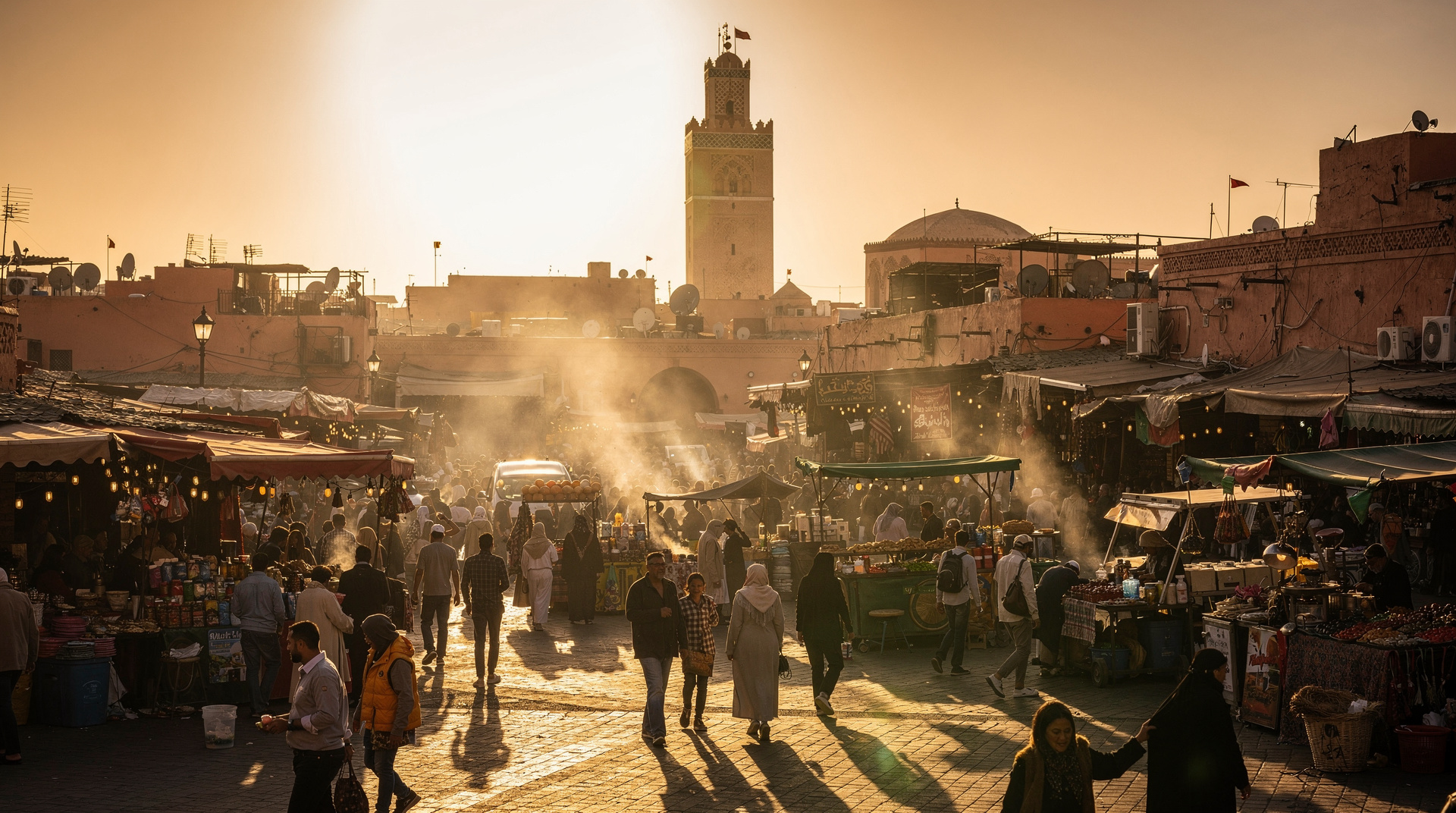
Menara Airport petit taxi to the medina: €5–8. Three nights in Marrakech is the right amount to do the city without rushing. Check in to your riad, spend the first afternoon letting the medina wash over you. Djemaa el-Fna at dusk, the grill stalls, the Gnawa musicians. Eat at the square tonight — merguez, harira, brochettes, €6–10. Early night.
Day 2: palaces and gardens
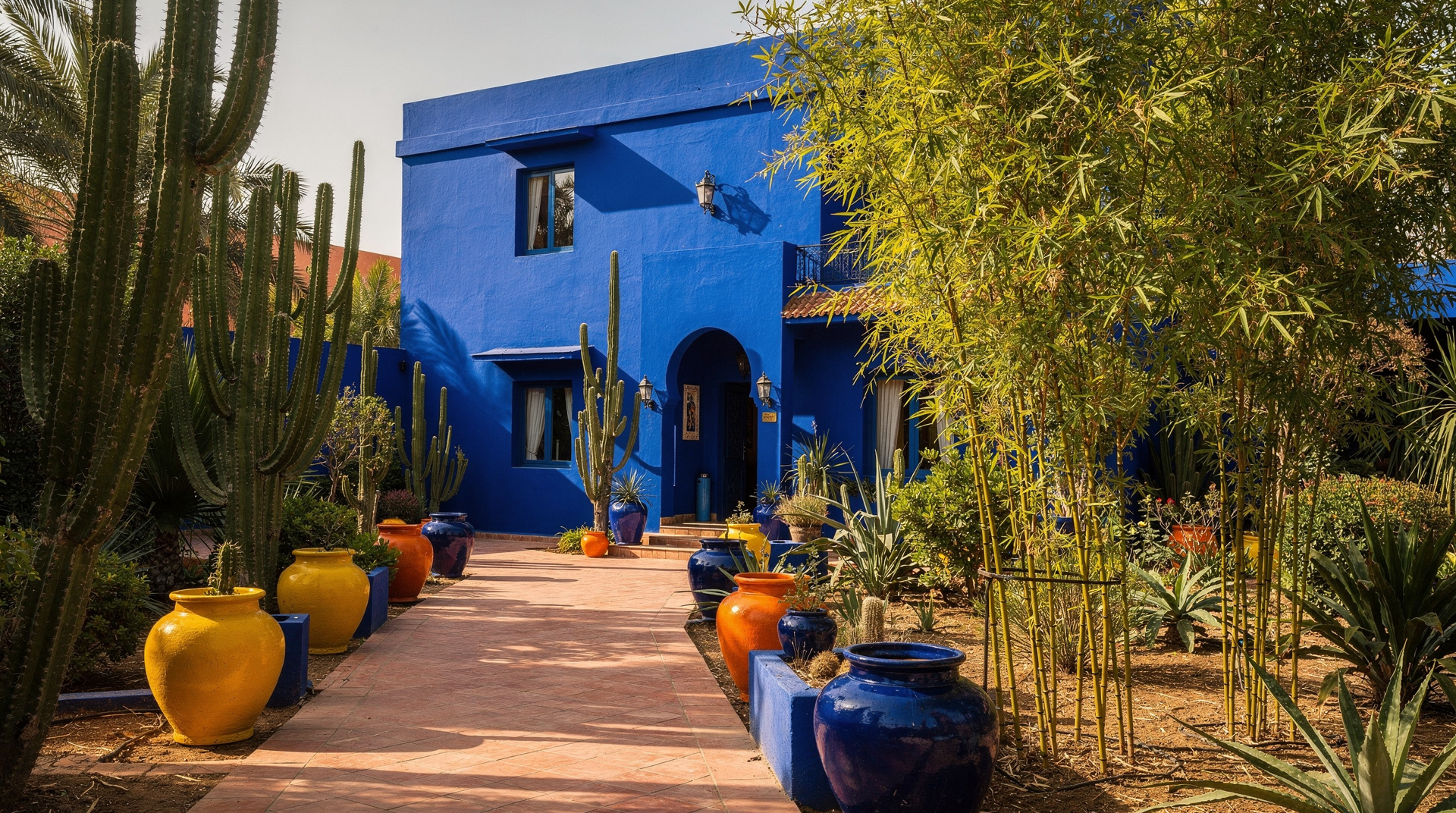
Bahia Palace at 09:00 (entry €2) followed by the Saadian Tombs (entry €3). Then petit taxi to Majorelle Garden — book in advance to skip queues. The Berber Museum in the cobalt blue studio building is one of the best Amazigh collections in the country. In the afternoon: the hammam. Les Bains de Marrakech for 90 minutes of scrub and massage: €45–55.
Book the private Marrakech medina, palaces, and tombs tour for today — with 21 days ahead, the historical context a guide provides on Day 2 pays dividends throughout the trip.
Day 3: souks and day-trip
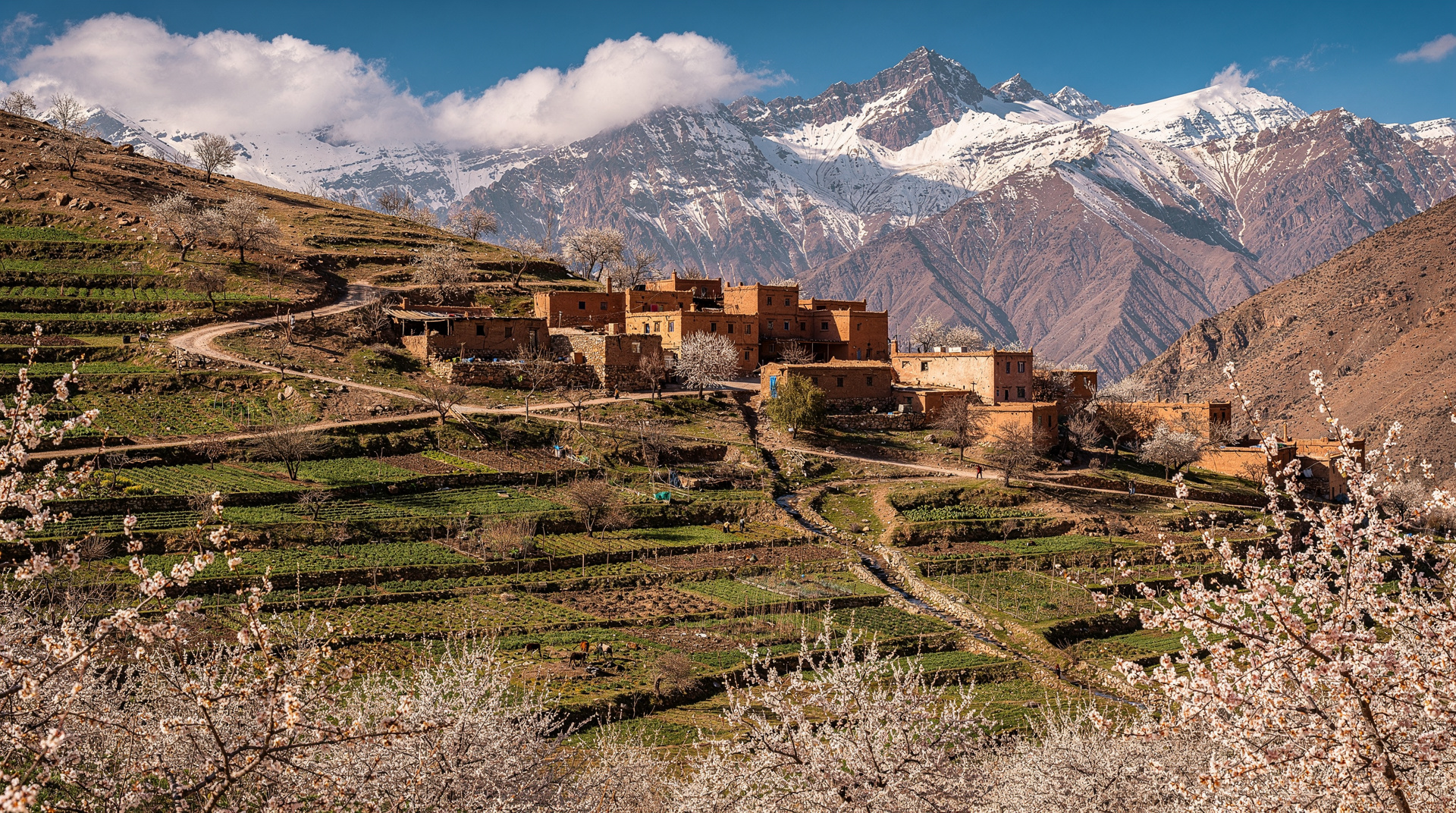
The Ourika Valley is 30 km from Marrakech into the Atlas foothills — a lovely half-day that gives your first proper feel for Berber village Morocco. Return by lunch and use the afternoon to collect your rental car. Most car rental companies have offices near the airport or in the Ville Nouvelle; collecting in the afternoon on Day 3 means you drive out early on Day 4 without the hassle of an airport collection on Day 1.
Withdraw cash at an ATM in Marrakech before leaving — ATM availability becomes patchy in the deep south.
Where to sleep: Riad Jardin Secret or Riad BE Marrakech (mid: €90–140/night)
Day 4: The road south — Tizi n’Tichka and Aït Benhaddou
The drive (4 hours to Aït Benhaddou)
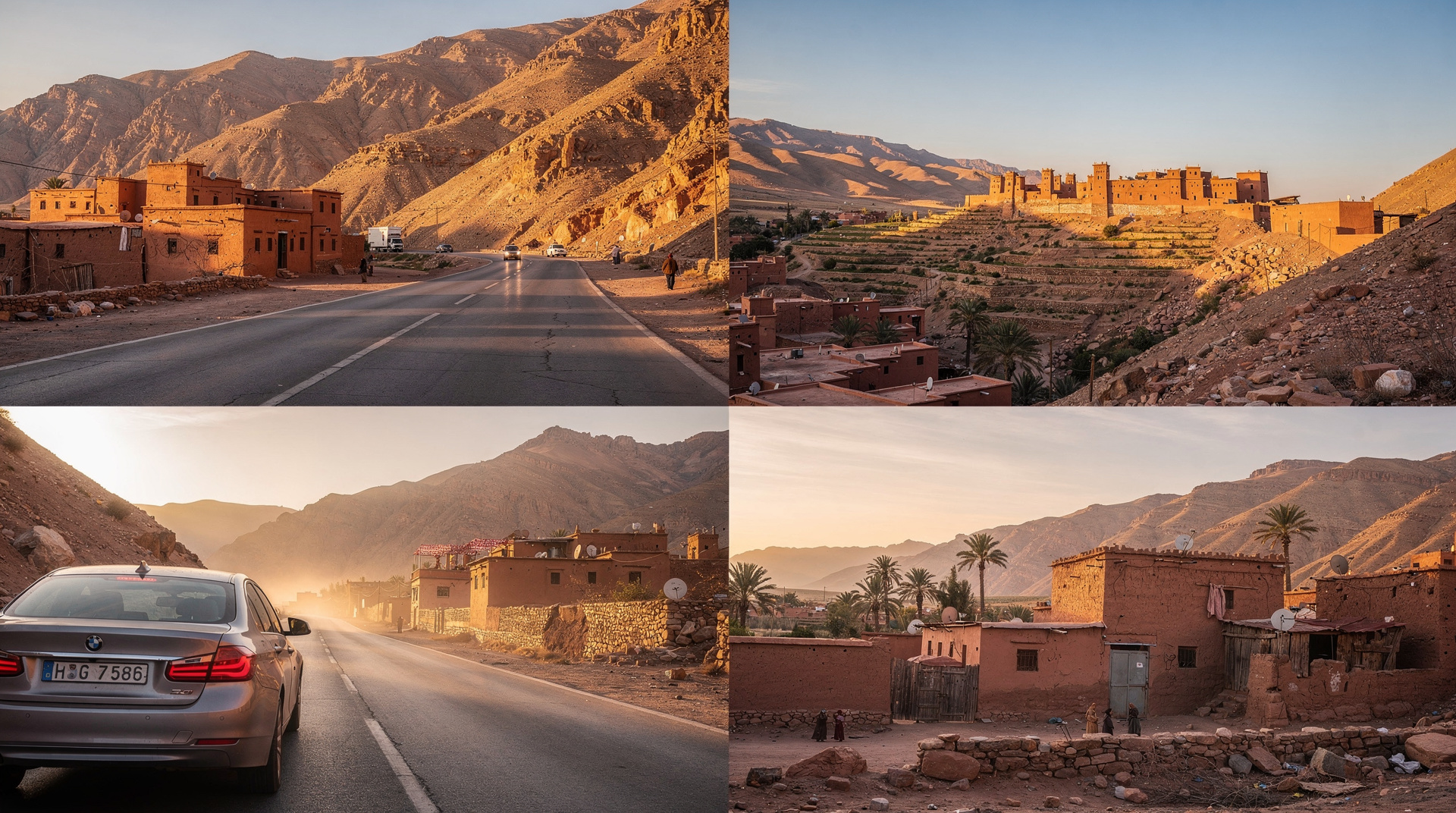
Leave Marrakech at 07:00. The N9 heads immediately south into the Atlas foothills, climbing through Berber villages to the Tizi n’Tichka pass at 2260 metres — the highest paved road pass in North Africa. The summit views on a clear morning are extraordinary: the High Atlas ridge west and east, the Haouz plain below, and to the south the pre-Saharan plateau already taking on its reddish tone.
The descent south is into a different Morocco: drier, wider, emptier, ochre and umber. The road passes through the Glaoui kasbah of Telouet (a detour well worth 90 minutes if you have it — an abandoned pasha’s palace with extraordinary painted ceilings slowly returning to the earth) before reaching Aït Benhaddou.
Aït Benhaddou
The UNESCO ksar of Aït Benhaddou is a fortified earthen city on a low hill above the Draa River that has been filmed continuously since the 1960s: Gladiator, Lawrence of Arabia, Game of Thrones, Babel, Jesus of Nazareth. Cross the river and walk up through the towers. The inhabited lower sections give way to increasingly empty upper kasbahs, and the view from the summit tower looks across the river to the new village and the Anti-Atlas beyond. Entry: €3.
Stay the night in Aït Benhaddou village for the sunrise light on the ksar — it glows copper at 07:00 in a way that the midday tourists miss entirely.
Where to sleep: Dar Mouna (in the ksar itself, mid: €60–90); Riad Caravane (view of the ksar, mid: €70–100)
Day 5: Ouarzazate — film city and onwards
Morning: Ouarzazate
Ouarzazate (30 km from Aït Benhaddou) is the gateway to the south and Morocco’s Hollywood — Atlas Film Studios here is the largest film studio in Africa. Even a 90-minute tour of the studio sets is surprisingly interesting: the standing sets from major films are remarkable in person. Entry to a guided studio tour: €8–12.
The Kasbah Taourirt in the city centre is a 19th-century Glaoui kasbah of substantial size, free to enter in the courtyard section. After Ouarzazate, the road east begins the Draa Valley section — one of the most beautiful drives in Morocco.
Afternoon: into the Dades Valley
East on the N10 through Skoura (where the rose palm groves begin) and Kelaa M’Gouna (the Roses Valley, centre of Morocco’s rose water industry — roadside farms sell genuine rose products). Push east to the Dades Valley area for the night. The earthen kasbahs appear at intervals along the valley, some inhabited, many partially ruined but still photogenic.
Where to sleep: Kasbah Tizarouine in the Dades Valley (mid: €50–80); Dar Ahlam near Skoura (luxury: €300+)
Days 6–7: Todra Gorge — the canyon
Dawn in the gorge (Day 6)
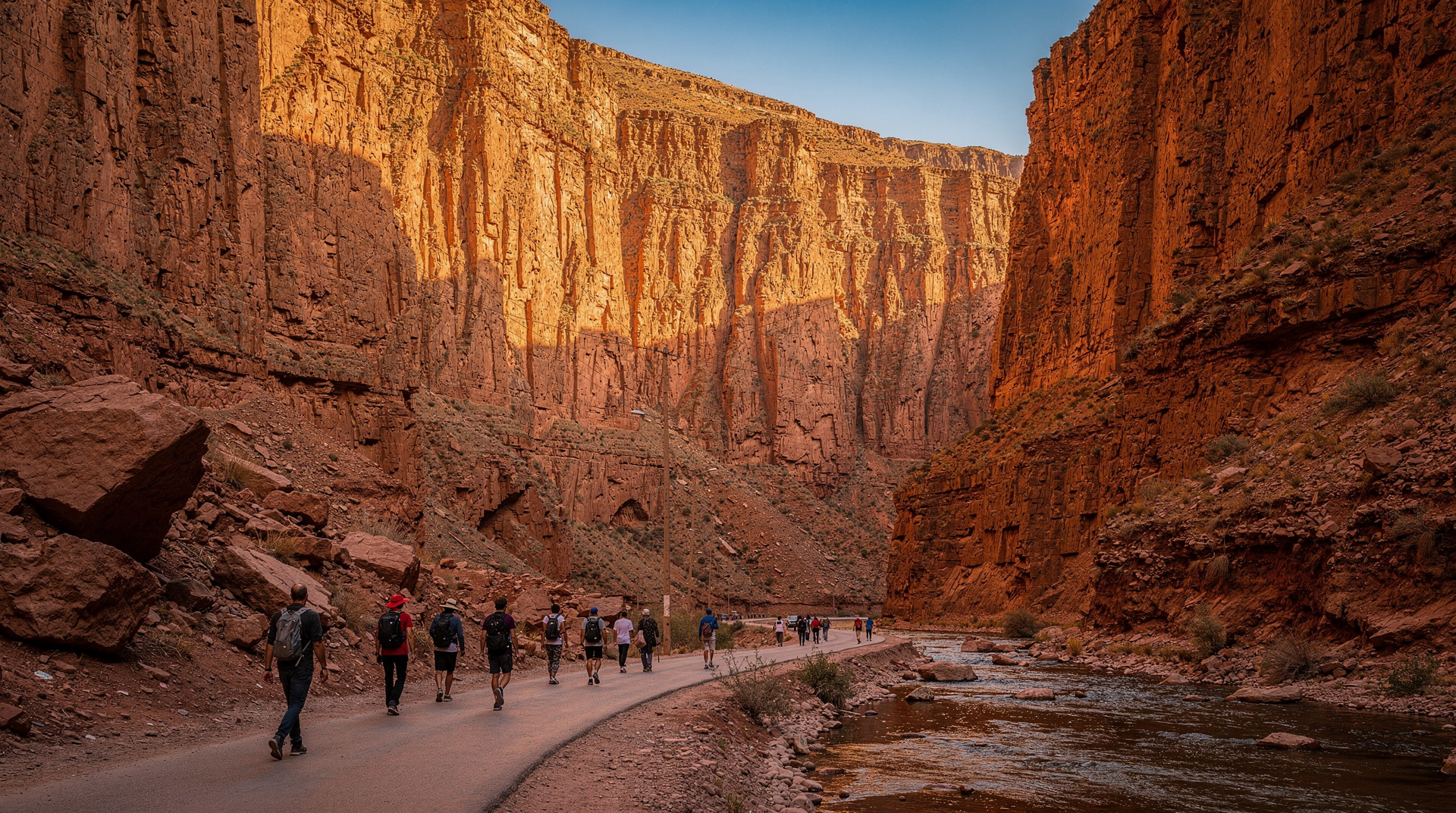
Be at the Todra Gorge before 08:00. The canyon walls rise 300 metres on either side of a cold river with a gap of 10 metres at the narrowest point. In spring the light floods the canyon; in winter it barely touches the bottom. Walk the 600-metre dramatic section before the tour coaches from Ouarzazate arrive.
Spend Day 6 based at the gorge: the lower section has good cafes and guesthouses right beside the river. Walk further into the upper gorge in the afternoon (quieter, less developed, wilder). The hiking paths above the gorge rim offer an entirely different perspective on the canyon.
Day 7: Gorge to Merzouga
Leave the gorge mid-morning heading southeast through Erfoud and Rissani. The landscape transitions from the rocky gorge country through date-palm oases and then, suddenly, to the black gravel hammada of the pre-Saharan plain. Then the dunes appear without warning or transition: Erg Chebbi, the largest sand sea in Morocco at 150 metres high.
Where to sleep (Days 6–7): La Vallee des Oiseaux guesthouse at Todra (budget: €25–40); Camping Ourti (budget tent option); then Merzouga desert camp on Day 7
Days 8–9: Merzouga — the Sahara
Day 8: the dunes
Park at the edge of the dunes at 17:00 for the camel ride into the dune camp. The ride takes 45–60 minutes. The camp is inside the dunes — complete darkness, no light pollution, the Milky Way in full on a moonless night. Dinner in the main Berber tent (tagine, flatbread, mint tea), guembri music, sleeping under the stars or in a tent.
Book the Merzouga luxury desert camp with camel ride and dinner for the premium experience, or take a standard camp included in most tour packages.
Day 9: sunrise and second day
05:30 alarm. Climb the main dune before sunrise (25–30 minutes of effort through soft sand). The view at the top — the dune shadow sweeping west, the sun coming up over Algeria — justifies the early alarm without qualification.
Use Day 9 for the Merzouga village itself, a quad-bike ride over the dunes, or sandboarding. The village of Khamlia nearby has a community of Gnawa musicians (descended from sub-Saharan African slaves brought to the desert centuries ago) who perform traditional music in the afternoons. This is a genuinely different musical tradition from the Marrakech street performers.
Where to sleep: Sahara Luxury Camp (premium, €150–200/night all-inclusive); Chez Julia (budget, €30–50 with meals)
Days 10–13: North to Fes
Day 10: Ziz Valley drive
The Ziz Valley road north from Erfoud is one of the most beautiful desert drives in Morocco — the Ziz gorges and then the widening valley of date palms for 150 km. The town of Er Rachidia marks the transition from desert to the southern Middle Atlas. Push north through Midelt (an underrated stop for lunch — the famous mutton tagine and apple orchards of this mountain town) into the cedar forests.
Day 11: Middle Atlas and arrival in Fes
The route through Azrou and its Barbary macaque forest is worth a stop. You will be offered photo opportunities with macaques by roadside handlers — the animals are stressed by this practice; the forest walk itself (where macaques appear naturally) is better. Ifrane appears incongruously: a Swiss-looking ski resort town built during the French protectorate, with chalet-style houses and a stone lion sculpture. Continue to Fes by early afternoon.
Days 12–13: Fes el-Bali
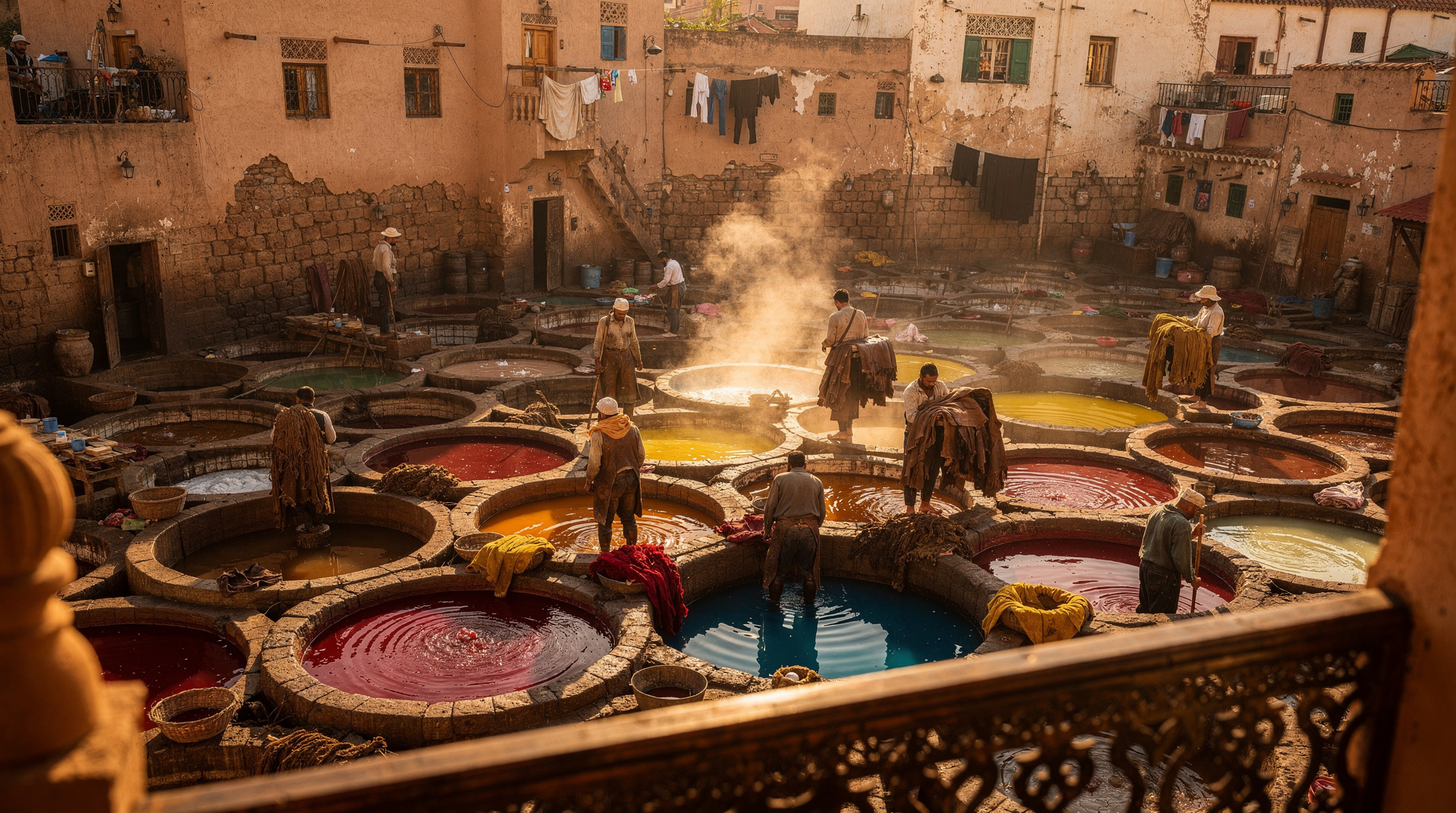
Two full days in Fes is the minimum for the medina. The Chouara Tanneries, Bou Inania Medersa, Qarawiyyin mosque quarter, the Andalusian quarter across the river, Merenid Tombs viewpoint. Book the Fes full-day cultural tour for Day 12 to establish your bearings with a licensed guide. Day 13 can be the Meknes and Volubilis day trip — both are 45 minutes from Fes and the Roman site at Volubilis has extraordinary in-situ mosaics.
Where to sleep (Fes): Riad Fes (upscale: €150–250); Dar Bensouda (mid: €80–130); Palais Amani (boutique luxury: €200–400)
See our Fes destination guide and the imperial cities itinerary for deeper planning in the city.
Days 14–15: Chefchaouen — the blue city
Day 14: drive from Fes to Chefchaouen (4 hours)
The mountain road north from Fes via Taounate and the Rif foothills delivers you to Chefchaouen in the mid-afternoon. The city is built in a steep ravine of the Rif Mountains, all blue-washed walls and terracotta rooftiles. Park outside the medina walls (cars cannot enter) and walk up through the Bab el-Ain gate into the blue labyrinth.
Chefchaouen is small enough to understand in 10 minutes but beautiful enough to wander in for 2 days. The main square, Place Outa el-Hammam, has the red-walled kasbah on one side and cafe terraces on the other. The souks here sell the distinctive woollen jalabas and blankets of the Rif, which are different from the Marrakech versions.
Day 15: Akchour hike
The Akchour Waterfalls are 20 km from Chefchaouen by taxi. The hike through the Oued Farda gorge to the main waterfall and the natural bridge above it takes 4–5 hours round trip. The water is cold and clear, the gorge walls are dramatic, and the crowds are far thinner than anything in Marrakech or Fes. This is the outdoor highlight of the northern Morocco circuit.
Where to sleep: Dar Meziana (mid: €60–90); Hotel Lina Ryad (mid: €50–80); Riad Cherifa (charming: €70–100)
Our Chefchaouen destination guide has full detail on the blue city.
Day 16: Tangier — the northern gateway
Drive from Chefchaouen to Tangier (2.5 hours)
Tangier is a city that has been constantly misrepresented — as a den of debauchery (the 1950s international zone era), as a gateway and nothing else. In reality it is Morocco’s most international city, the port where Africa faces Europe across 14 km of water, and a place with genuine cultural depth: Bowles, Burroughs, Matisse, and Delacroix all passed through.
The kasbah quarter overlooks the Strait of Gibraltar and is one of the most atmospheric in northern Morocco. Hercules Caves, 14 km west of the city, are a bizarre and beautiful sea cave where, according to legend, Hercules rested after separating Europe from Africa. Cap Spartel lighthouse at the confluence of the Atlantic and Mediterranean is the northwestern tip of Africa.
Where to sleep: El Minzah Hotel (historic, upscale: €120–180); Dar Nour (boutique riad: €90–130)
Day 17: Atlantic coast south — Asilah and Rabat
Morning: Asilah
Asilah is 40 km south of Tangier and looks nothing like it. A whitewashed Portuguese-era port city with painted murals on the medina walls (repainted annually during the August arts festival) and a beach that stretches for kilometres south of town. Allow 2 hours.
Afternoon: continue south to Rabat
Rabat is Morocco’s capital and most underappreciated city. The Kasbah of the Udayas above the Bou Regreg river is Moorish Andalusian architecture at its finest — whitewashed alleys, Andalusian garden, Atlantic cliffs. The Hassan Tower and Mausoleum of Mohammed V are 10 minutes away.
Where to sleep: Dar El Batoul (boutique: €100–160); Hotel Balima (Art Deco: €70–100)
Day 18: Casablanca and the road to Essaouira
Morning: Hassan II Mosque
The Al Boraq high-speed train from Rabat to Casablanca takes 45 minutes if you prefer to leave the car parked; or drive (1 hour). The Hassan II Mosque is the non-negotiable stop in Casablanca — the world’s tallest minaret at 210 metres, built over the Atlantic on a glass floor, with a retractable roof. Non-Muslim guided tours run every 30 minutes: €14, 90 minutes. Do not skip this.
Afternoon drive to Essaouira (3.5 hours)
From Casablanca south to Essaouira via El Jadida and the coastal road. El Jadida has a Portuguese-era cistern (one of the strangest architectural spaces in Morocco — a vaulted underground pool with light entering through a hole in the ceiling that casts rippling reflections on the arches). The drive down the Atlantic coast through Oualidia (known for its oysters — stop for a dozen on the terrace) is genuinely beautiful.
Days 19–20: Essaouira — recovery and coast
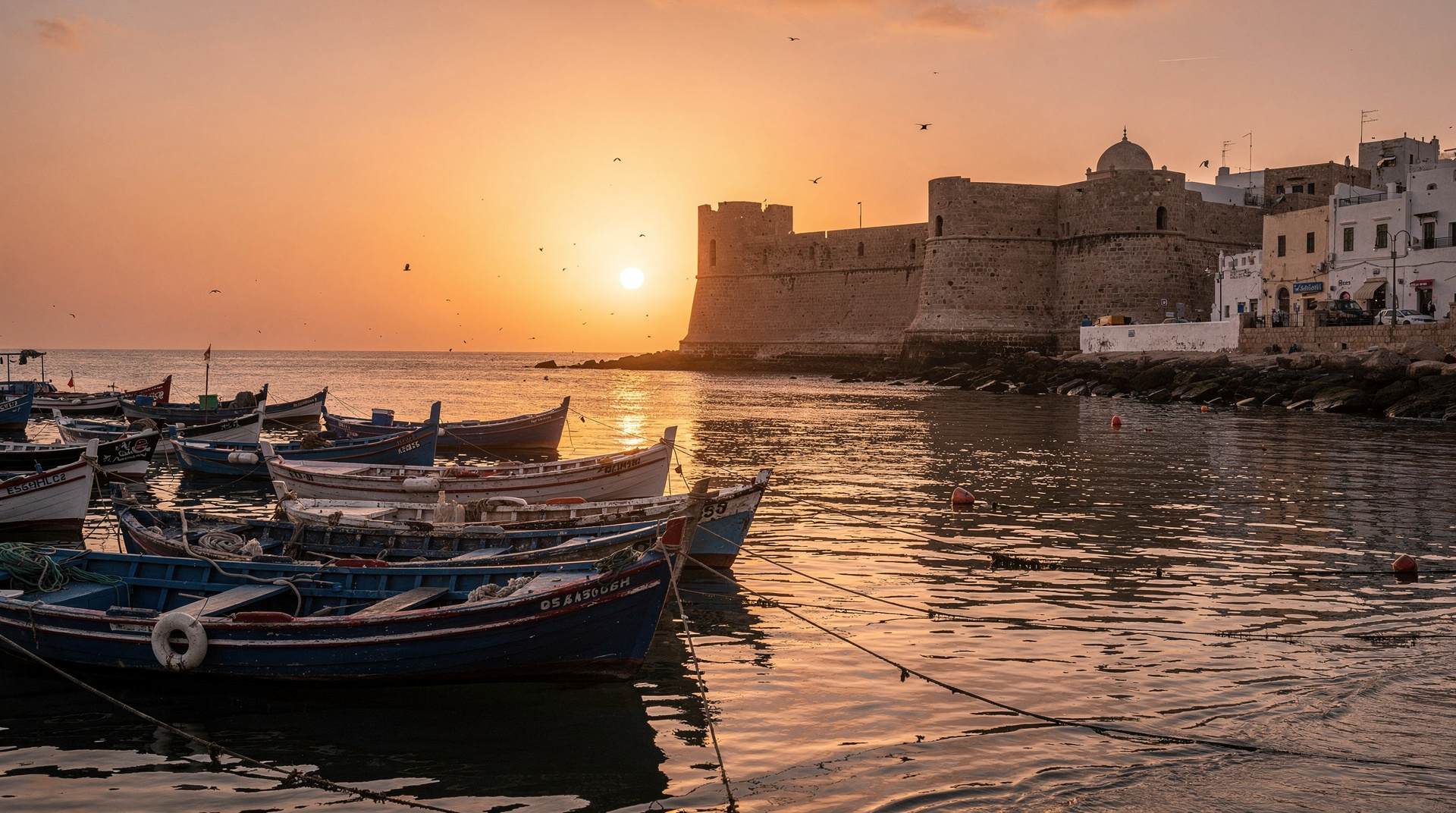
Two nights in Essaouira is the restorative core of the final week. Walk the Skala de la Ville ramparts at sunrise. Eat grilled sardines at the harbour stalls for lunch. Browse the Thuya wood workshops. Take a horse ride along the beach if the mood strikes.
Day 20 is a rest day built into the itinerary deliberately. Use it as you choose — surfing lesson, longer beach walk, hammam, a cooking class, or simply sitting on a riad terrace reading. This is not wasted time. After 18 days of movement, a slow day is what the body needs.
Where to sleep: Heure Bleue Palais (upscale: €150–220); Riad Baladin (mid: €70–110)
See our Essaouira destination guide and the Atlantic coast itinerary for more ideas on the coast.
Day 21: Return to Marrakech
The drive back (3 hours via Agadir or 2h30 direct)
The direct road from Essaouira to Marrakech goes back through the argan forest and the Haouz plain — familiar landscape by now. If you have a late flight, consider routing via Agadir (30 minutes south of Essaouira) to add the Agadir Souk el Had market to the morning and then drive north to Marrakech via a different route through the Souss-Massa plain.
Return the rental car to the airport or city centre depot. Allow extra time for this — car rental return desks at Marrakech Menara can have queues.
Transport logistics
Rental car: Essential for Days 4–21 (or Days 4–19, returning it before Essaouira if you prefer). A small 4x2 is sufficient for all roads on this itinerary — the Tizi n’Tichka and the Dades Valley are paved. Budget €30–60/day for a reliable car from a reputable company (Europcar, Avis, or local agencies). Get comprehensive insurance.
Driving times to know:
- Marrakech → Aït Benhaddou: 4 hours (180 km)
- Aït Benhaddou → Todra Gorge: 4.5 hours (200 km)
- Todra Gorge → Merzouga: 3.5 hours (160 km)
- Merzouga → Fes: 7–8 hours (370 km)
- Fes → Chefchaouen: 4 hours (200 km)
- Chefchaouen → Tangier: 2.5 hours (120 km)
- Tangier → Rabat: 3 hours (350 km via A1 motorway)
- Casablanca → Essaouira: 3.5 hours (300 km)
- Essaouira → Marrakech: 2.5 hours (190 km)
Fuel: Available in all cities and major towns. Carry a small backup can in the deep south between Todra and Merzouga — stations can be 80 km apart.
Navigation: Google Maps works well in Morocco with a data SIM. Buy a Maroc Telecom or Orange SIM at the airport: 20 GB for €8–10, valid 30 days. Download offline map tiles before driving south where signal is patchy.
Budget estimate
| Item | Budget (pp) | Mid-range (pp) | Comfort (pp) |
|---|---|---|---|
| Accommodation (21 nights) | €400 | €950 | €1800 |
| Car rental (18 days, split 2 people) | €270 | €400 | €600 |
| Fuel (approx 3500 km) | €120 | €120 | €120 |
| Food and drink (21 days) | €300 | €560 | €900 |
| Entry fees, tours, activities | €120 | €220 | €400 |
| Local transport | €50 | €80 | €120 |
| Total (flights excluded) | €1260 | €2330 | €3940 |
What to pack for 3 weeks
Documents: Driving licence (international driving permit not required for most EU/UK passports — check your nationality); vehicle hire agreement; insurance documents; riad confirmations.
Clothing: Layers are essential — the temperature range across 21 days and multiple climates is significant. Desert nights drop to 5–10°C in autumn and spring. Essaouira wind requires a windproof layer in any season. Medina etiquette requires covered shoulders and knees.
Practical: First-aid kit including blister treatment (the medina cobblestones are hard on feet); cash in dirhams; a universal European adaptor; portable battery bank; reusable water bottle (filtered water is available in riads; buying plastic bottles is avoidable).
Best time of year
October–November: The best single window for this full itinerary. The Sahara is warm but not brutal (25–30°C days, 10°C nights). The Atlas pass is open. The north (Chefchaouen, Tangier) is warm and uncrowded.
March–April: Excellent alternative. The spring wildflowers in the Atlas and the Rif are extraordinary. Some rain possible in the north. The Sahara starts getting hotter in April.
Avoid July–August: The Sahara exceeds 45°C in high summer. The south is genuinely unpleasant for car travel. The north is fine but accommodation prices peak.
Common mistakes on a 21-day trip
Underestimating driving times in the south: The mountain roads between Marrakech and Merzouga are scenic but slow. Allow more time than Google Maps suggests — add 30–40% for stops, photo pauses, and the realities of driving in Morocco.
Over-scheduling Fes: Three nights in Fes feels like a lot until you arrive. The medina needs time; trying to do it in a single full day leaves you exhausted and underinformed.
Skipping the rest day: Day 20 in Essaouira is not optional if you want to arrive home not shattered. Three weeks of daily movement without a pause accumulates.
Forgetting to book Merzouga camp in advance: The good luxury camps near Erg Chebbi fill weeks in advance in October and November.
How to extend or shorten
To shorten to 14 days: Remove Tangier and Asilah (combine into a half-day), skip the Rabat overnight, reduce Essaouira to 1 night, and cut the Akchour hike day. See our grand south road trip itinerary for a focused 14-day southern loop.
To extend to 30 days: See our 1-month Morocco itinerary which adds Dakhla, Sidi Ifni, and deeper time in each destination with a public transport approach.
Northern-only variation: For a trip focused on the north (Fes, Chefchaouen, Tangier, Tetouan, Meknes), see our northern Morocco itinerary — 8 days that cover the Rif and the imperial north thoroughly.
Who this loop suits, and who it does not
Three weeks with a rental car is a specific kind of trip: it rewards travellers who genuinely like driving and who want to set their own pace at every stop, from the Dades Gorge detours to the Todra Gorge hiking paths. If that is not you, the guided version of the same broad route — the Marrakech-to-Fes desert tour plus separate coastal and northern legs — removes the driving but adds fixed scheduling. Our self-drive Morocco itinerary has more general advice on driving conditions, tolls, and fuel stops if this is your first Morocco road trip.
Photographers: the light at Aït Benhaddou, the Todra Gorge, and Chefchaouen on this route is exceptional, and three weeks gives you the luxury of returning to a location at a better hour if the first attempt did not work. See our photography Morocco itinerary for a route built specifically around golden-hour timing at the best locations.
If you would rather not drive the whole loop yourself: the with driver Morocco itinerary covers a comparable route with a private driver handling all the navigation, at a higher daily cost but without the fatigue of 3500 km of driving.
Frequently asked questions about 21 Days in Morocco
Do I need an international driving permit to rent a car in Morocco? Most EU, UK, US, and Canadian licence holders do not need one for tourist rentals, but requirements vary by nationality and rental company. Confirm with your specific rental agency before travelling, and carry your home licence alongside any permit.
Is 21 days too long if this is my first trip to Morocco? Not if you enjoy travel for its own sake — but if you are unsure whether you want a full road trip, our 14-day itinerary is the lower-risk way to sample most of the same regions before committing to three weeks on a return visit.