1 Month in Morocco
Slow travel in Morocco: what one month actually gets you
A month in Morocco is not a highlight reel — it is an immersion. You have enough time to stay somewhere you love for an extra two days without anxiety. You have enough time to get lost in Fes and not feel robbed of your itinerary. You have enough time for the journey between places to become part of the trip rather than just the transition.
This 30-day itinerary uses public transport throughout: trains (ONCF), long-distance buses (CTM and Supratours), shared grand taxis, and local petits taxis. No rental car. This is partly a budget choice (public transport is dramatically cheaper) and partly a philosophical one: you see Morocco differently from a train window or a bus station than you do from behind a steering wheel.
Who this is for: Remote workers, sabbatical travellers, gap-year travellers, and anyone who has always wanted to spend real time in one country rather than ticking boxes. Prior Morocco experience is useful but not required.
Budget expectation (per person, flights excluded): €1100–1800 for 30 days, or €35–60 per day mid-range. Budget travellers can do €25–35/day staying in hostels and eating local.
Pace: deliberately slow. Some destinations get 4–5 nights. Transit days are real days, not lost days.
Trip snapshot
| Route | Marrakech → Essaouira → Agadir → Atlas → South → Sahara → Fes → Chefchaouen → Tangier |
| Cost (pp, flights excluded) | around €1170–2430 for 30 days |
| Getting there | fly into Marrakech Menara (RAK); depart Tangier or Casablanca |
| Transport style | trains (ONCF), CTM/Supratours buses, shared grand taxis — no rental car |
| Best time | October–April; avoid the Sahara in June–September |
| Visa | most EU/UK/US/Canada passports get 90 days visa-free on arrival — check your nationality before booking |
At a glance
| Days | Location | Key activities | Transport to next |
|---|---|---|---|
| 1–4 | Marrakech | Medina, souks, palaces, Atlas day trip | CTM bus → Essaouira |
| 5–8 | Essaouira | Ramparts, beach, surfing, argan valley | CTM → Agadir |
| 9–11 | Agadir + Taghazout | Beach, surf, Paradise Valley | Supratours → Marrakech |
| 12–14 | Atlas Mountains / Imlil | Trek, Berber villages | Grand taxi → Ouarzazate |
| 15–17 | Aït Benhaddou + Ouarzazate | Ksar, film studios, Draa Valley | Shared taxi → Zagora |
| 18–19 | Zagora + Draa Valley | Desert gateway, palmery | Shared taxi → Merzouga |
| 20–22 | Merzouga | Erg Chebbi dunes, camel trek, music | CTM → Fes |
| 23–26 | Fes | Full medina immersion, Meknes | Train → Chefchaouen |
| 27–28 | Chefchaouen | Blue city, Akchour hike | Bus → Tangier |
| 29 | Tangier | Kasbah, Cape Spartel, strait views | — |
| 30 | Depart | — | — |
Optional extension: Dakhla (3 days from Agadir by overnight bus) can replace or extend the Agadir section.
Day-by-day narrative
Days 1–4: Marrakech — four days in the red city
Day 1: arrival and orientation
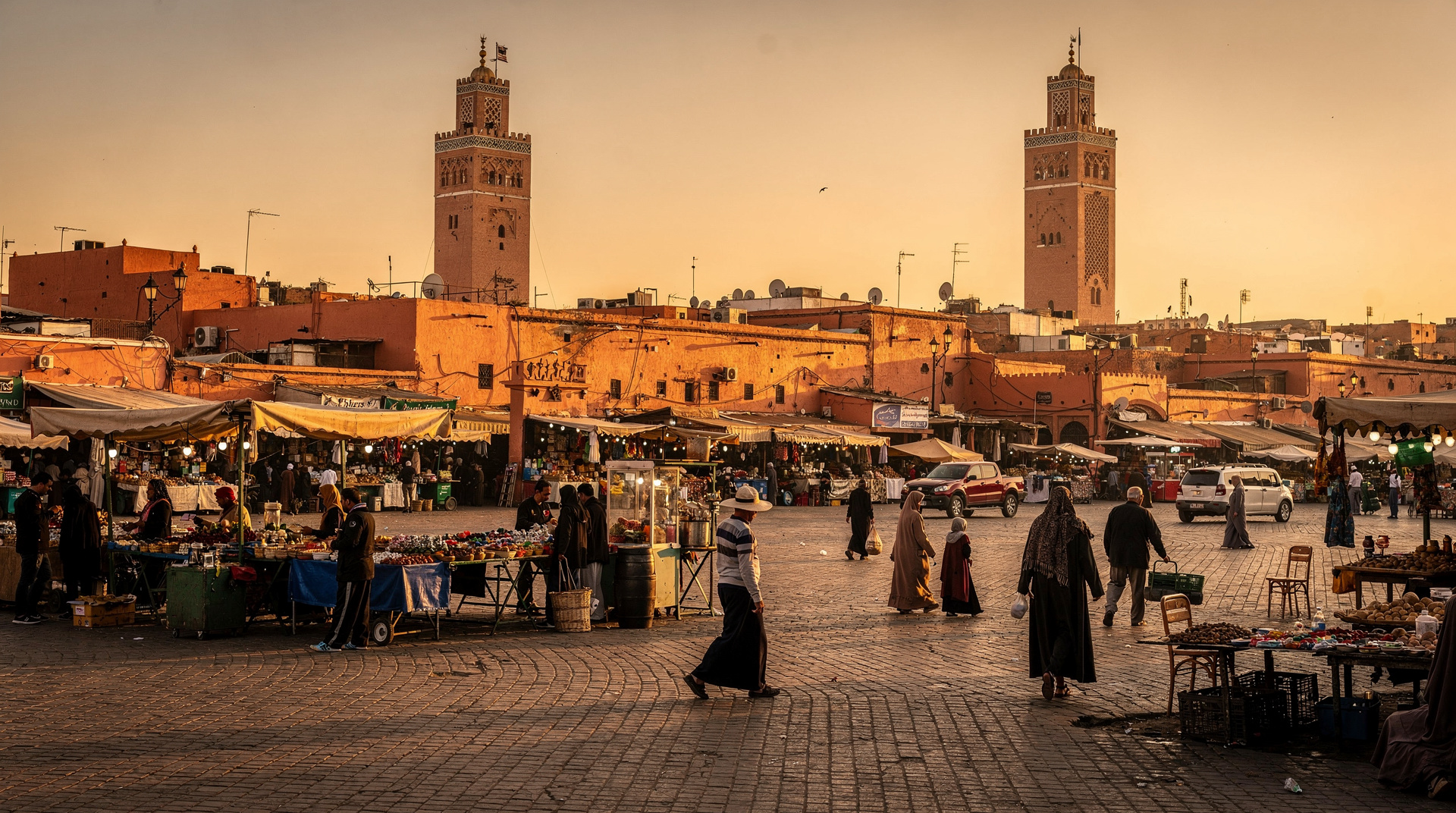
Four nights in Marrakech is the right amount for a 30-day trip — more than the week-long tourist but less than the resident. Check in to your riad and spend Day 1 the way all Marrakech days should begin: slowly. The medina in the early evening from the Djemaa el-Fna square, the grill stalls after dark, the mint tea on your riad rooftop. Let the city come to you.
Day 2: palaces and gardens
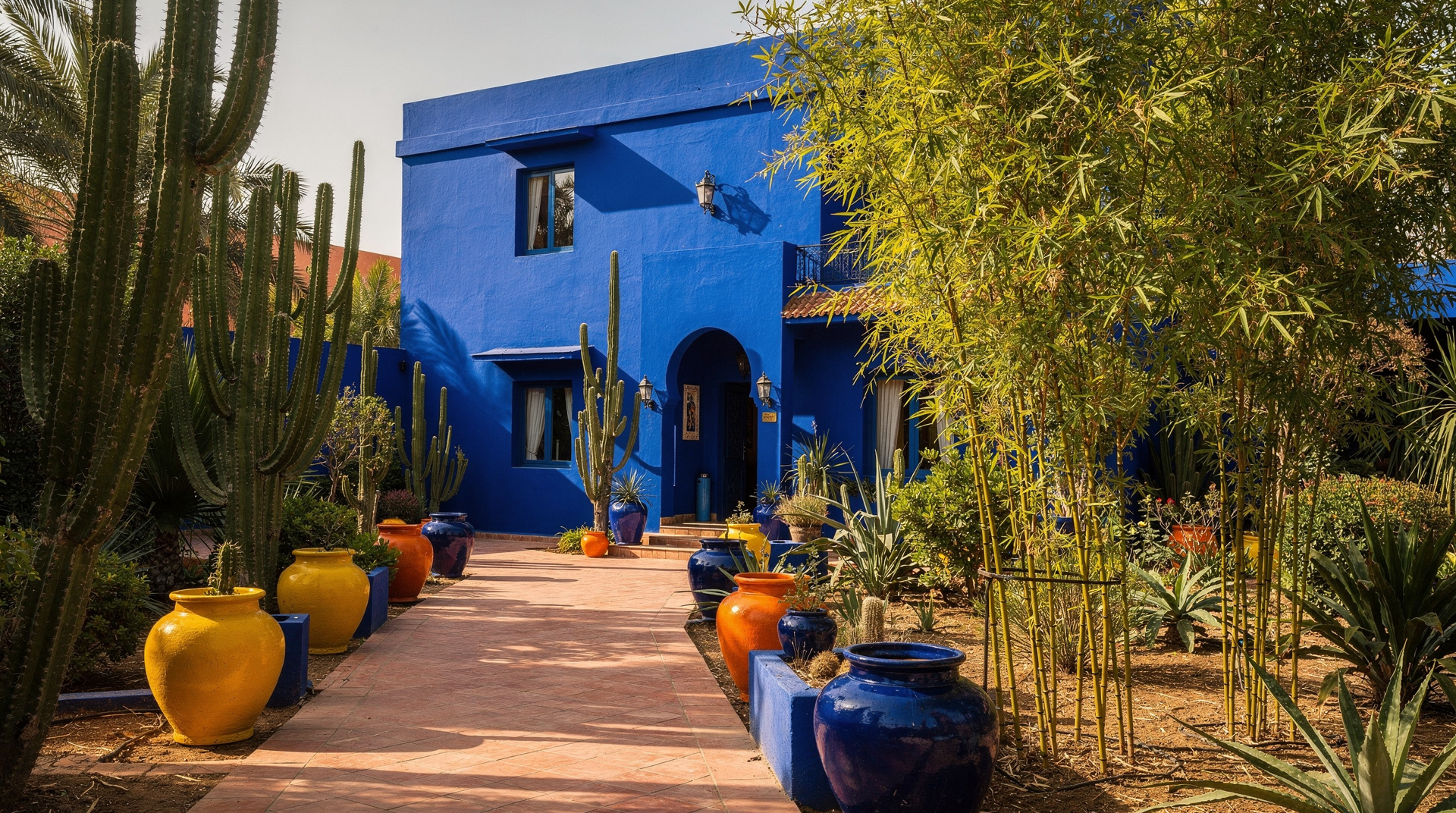
Bahia Palace (09:00, entry €2), Saadian Tombs (€3), Majorelle Garden with the Berber Museum (book in advance). Afternoon hammam — Les Bains de Marrakech (€45–55) or a neighbourhood hammam for €5. Dinner at Nomad or Dar Moha for a proper Moroccan meal.
Day 3: the Atlas foothills
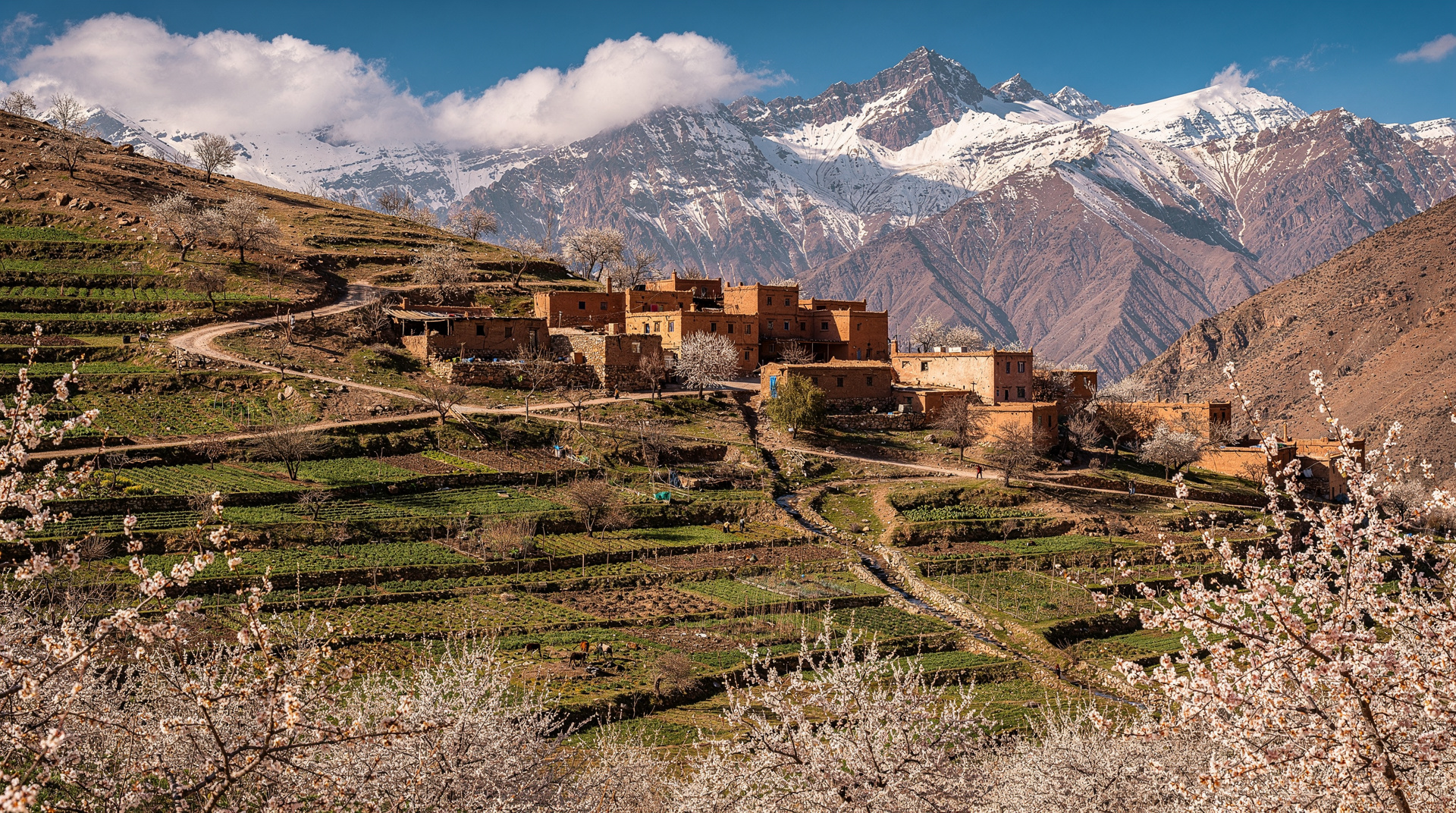
A shared grand taxi to Imlil in the Atlas (€5 per person, 1 hour) gives your first proper encounter with the mountains. Walk the mule track from Imlil to the village of Aroumd (2 hours return), have lunch at a Berber guesthouse (tagine, €6–8), return in the afternoon. The Atlas Mountains loom over Marrakech but few visitors make the short trip up into them. On a clear day from the Imlil plateau at 1740 metres, Jebel Toubkal — the highest peak in North Africa at 4167 metres — is visible north.
Day 4: souk deep dive and departure prep
A full morning in the souks without an agenda: the spice souk, the ceramics quarter, the lamp souk. Buy argan oil, saffron, and ras el hanout for home at honest prices. Afternoon: withdraw enough cash for the Essaouira leg (the ATMs there work but the queues can be long on weekends). Pack light — a month of public transport means every extra kilogram matters.
Where to sleep: Riad Yasmine or Maison Elixir (mid: €70–110/night); Les Jardins de la Koutoubia (upscale: €180+)
Days 5–8: Essaouira — four days on the Atlantic
Getting there: CTM bus from Marrakech Bab Doukkala station (€6, 2h45). Supratours also runs this route. Book the day before.
Day 5: arrival and ramparts
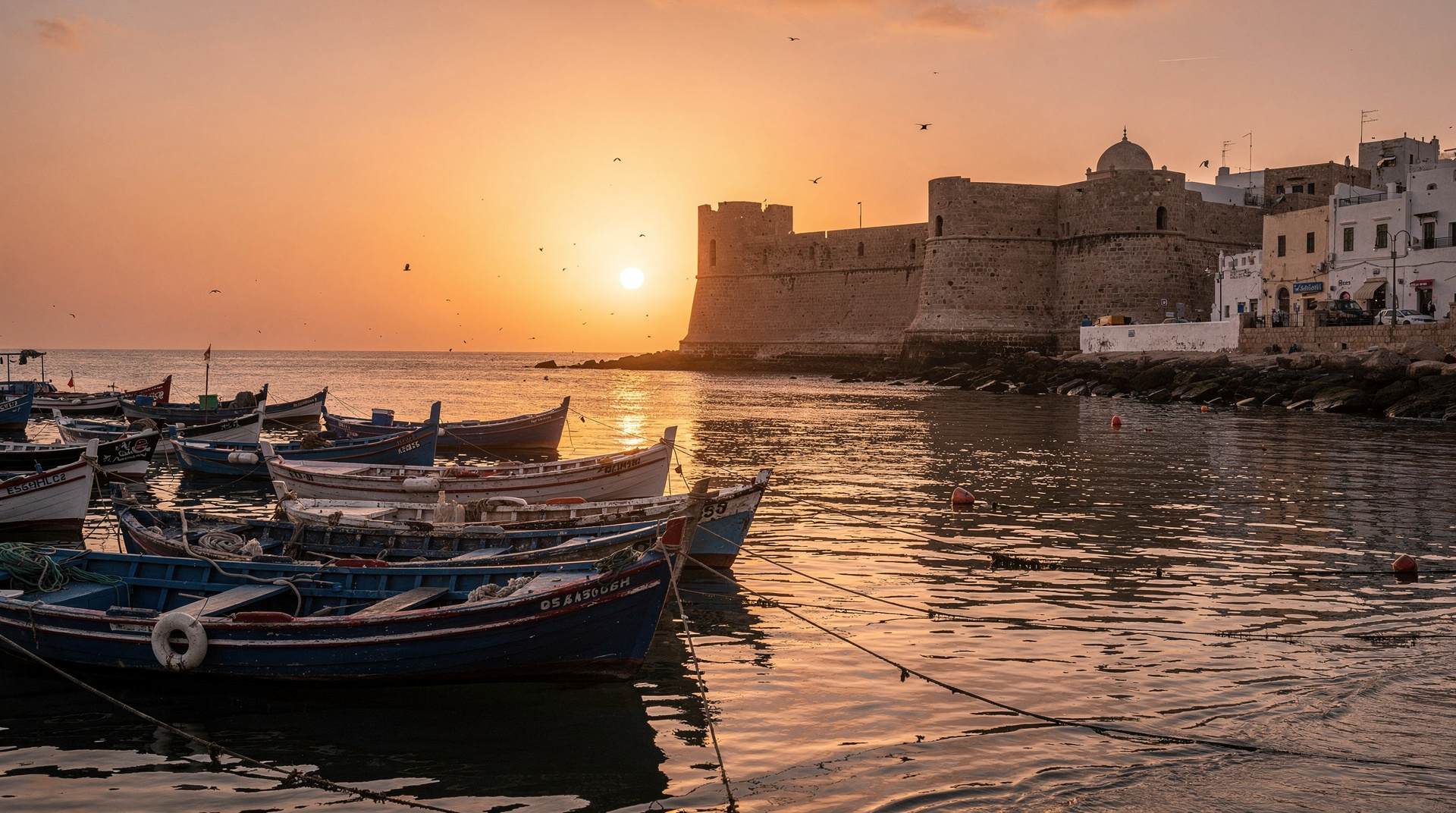
The contrast with Marrakech is immediate. Whitewashed instead of ochre. Salt air instead of cumin. Wind instead of silence. Walk the Skala de la Ville ramparts on the Atlantic side immediately — the cannon are Portuguese originals and the view of the ocean and the medina roofline is best in the late afternoon light. Dinner at the harbour fish stalls: grilled sardines, €5–8.
Day 6: medina and crafts
The Thuya wood marquetry workshops are a genuine Essaouira craft tradition. Watch the craftsmen work before you consider buying. The Gnawa music tradition of Essaouira is distinct from the Marrakech street version — look for the Gnawa music festivals (usually June) or ask your riad host where authentic performances happen in the evenings.
Day 7: surf or horse
The beach extends 5 km south of the medina. Surf lessons are available at the northern end for beginners (€35–50 for 2 hours including board and wetsuit). A horse ride along the beach at a canter into the Atlantic wind is one of the more memorable experiences in coastal Morocco. Book through Riad al Madina or the beach horse operators directly.
Day 8: argan valley and departure
The argan cooperatives in the villages between Essaouira and Agadir produce genuine cold-pressed argan oil. A local bus or grand taxi can take you to a cooperative for a 90-minute visit and oil tasting before you continue south to Agadir.
Where to sleep: Riad Baladin (mid: €70–110); Heure Bleue Palais (upscale: €150–220)
Days 9–11: Agadir and Taghazout
Getting there: CTM bus from Essaouira to Agadir (€8, 2.5 hours).
Agadir is Morocco’s beach resort — rebuilt entirely after the 1960 earthquake, so architecturally undistinguished but practically comfortable. The beach is 9 km of Atlantic sand with calm swimming conditions (unlike Essaouira, which is windier). The bay view from the Kasbah ruins above the city is the best in the region.
Taghazout (12 km north): Morocco’s surfing centre has transformed from a hippy backpacker stop to a yoga-and-surf retreat destination in the last decade. Even without surfing, the village is a pleasant base for beach days and the cliff walks between coves.
Paradise Valley day trip: The valley 30 km from Agadir in the Atlas foothills has rock pools, waterfalls, and palm groves. A grand taxi from Agadir (€8 return, 45 minutes) makes it an easy half-day. The pools are cold but swimmable and genuinely beautiful.
Dakhla option (3 days): If you have a spare 3 days and want to go to the edge of sub-Saharan Africa, an overnight CTM bus from Agadir to Dakhla (12 hours south, €30) reaches the Saharan Atlantic lagoon destination that is Morocco’s kite-surfing capital. Dakhla is extraordinary — a turquoise lagoon inside a desert peninsula — and genuinely off the well-worn tourist circuit. Return the same way or fly back (Royal Air Maroc has connections to Casablanca).
Where to sleep (Agadir): Hotel Petite Suède (budget: €30–50); Riad Villa Blanche (upscale: €120–180)
Days 12–14: Atlas Mountains and Imlil
Getting there: Supratours or CTM bus back to Marrakech (2.5 hours), then shared grand taxi to Imlil (1 hour, €5).
A 30-day trip creates space for a proper mountain experience that week-long visitors skip. Two nights in Imlil is enough for a day hike to a refuge, a village walk in the higher valleys, and a morning of genuine mountain silence.
Day 12: Imlil arrival and acclimatisation walk
Imlil is at 1740 metres. The walk to the village of Aroumd and back (2 hours) passes through walnut orchards and Berber hamlets. Stay at a Berber guesthouse — Douar Samra or Kasbah du Toubkal (the latter more upscale at €80–120/night). Dinner is a communal affair in the guest kitchen: harira, bread, tagine, fruit.
Day 13: higher valleys
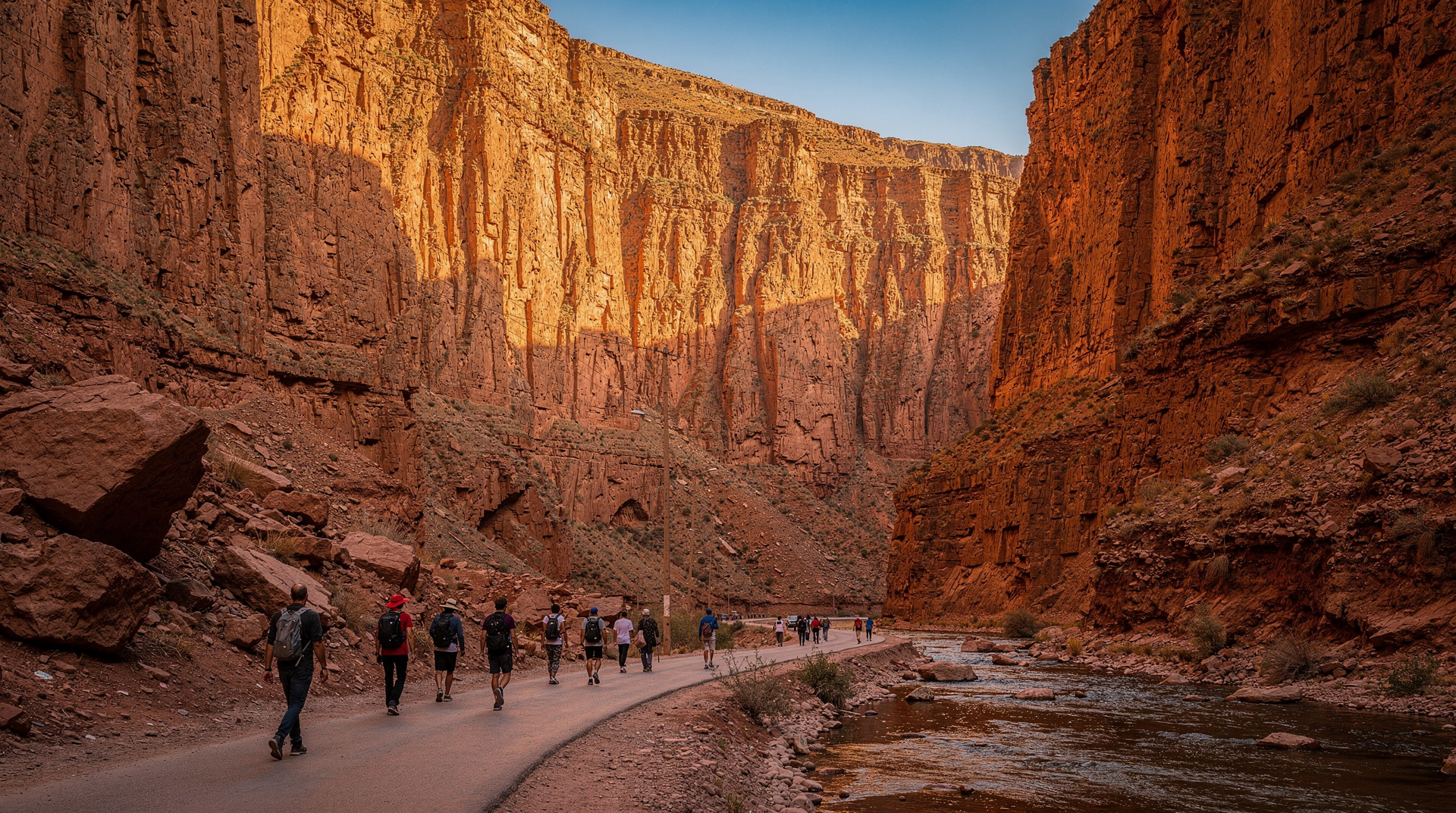
Hire a local guide (€40–60 for the day, obligatory above certain altitudes) for the walk up toward the Toubkal refuge at 3207 metres, or take the more moderate path through Sidi Chamharouch to the shrine and back. The landscape above 2500 metres shifts dramatically — bare rock, snow patches in winter and spring, complete silence.
Day 14: return south to Ouarzazate
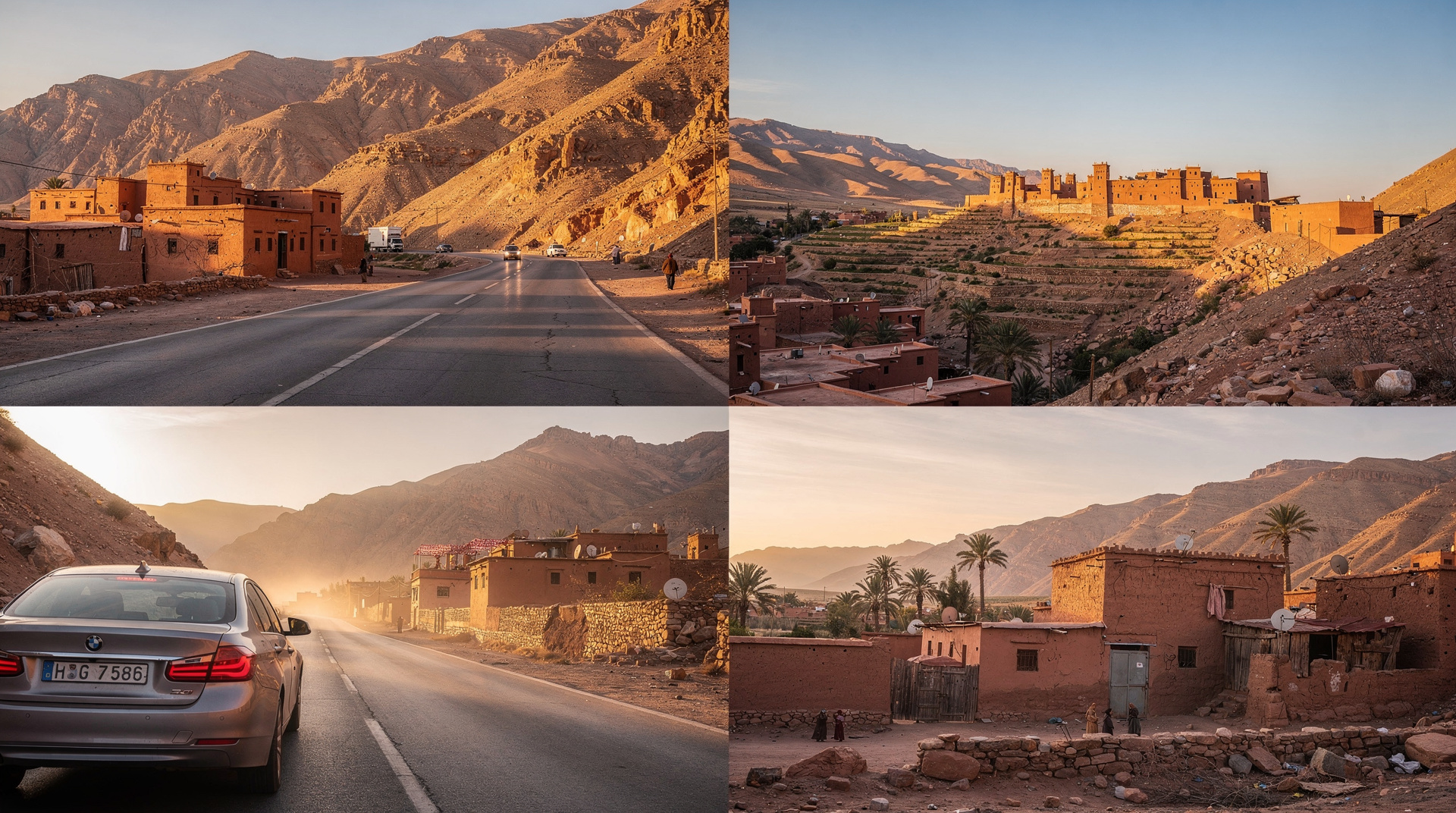
Grand taxi from Imlil to Marrakech (€5), then CTM bus or shared taxi south over the Tizi n’Tichka pass to Ouarzazate (3 hours, €10–15). The pass at 2260 metres is Morocco’s highest paved road. The descent to Ouarzazate is into a different world: ochre, dry, pre-Saharan.
Where to sleep (Imlil): Kasbah du Toubkal (upscale: €80–120); local guesthouses (budget: €20–35)
Our Atlas Mountains guide has full hiking detail.
Days 15–17: Aït Benhaddou, Ouarzazate, Draa Valley
Day 15: Aït Benhaddou
The UNESCO ksar is 30 km from Ouarzazate by grand taxi (€5). Walk up through the earthen towers in the morning light. The inhabited lower sections give way to empty upper kasbahs. The view from the summit looks across the Draa River to the Anti-Atlas. Stay the night at a guesthouse inside or facing the ksar — the sunrise colours it copper at 07:00 and the midday tourists have not yet arrived.
Day 16: Ouarzazate film studios and east
Atlas Film Studios tour in the morning (€8–12, 90 minutes). The standing sets from Gladiator, Game of Thrones, and other major productions are genuinely remarkable. Then east through the Draa Valley — shared grand taxi or local bus toward Agdz and the Draa palmery.
Day 17: Zagora and the deep palmery
Zagora is the gateway to M’Hamid and the pre-Saharan south. The Draa Valley from Agdz to Zagora is one of the most sustained palm-oasis landscapes in Morocco — 150 km of palmery. The famous sign at Zagora reads “Tombouctou — 52 jours” (52 days by camel to Timbuktu). The desert begins here in a real sense. Stay 2 nights and take a short camel walk into the dunes south of town on Day 17 evening.
Where to sleep (Zagora): Riad Dar Sofian (mid: €50–80); Kasbah Sirocco (budget: €30–50)
Days 18–22: Merzouga — the Sahara
Getting there: Shared grand taxi from Zagora to Merzouga (5–6 hours via M’Hamid direction or via Rissani, approx €15–20 per seat).
Days 18–19: dunes and camps
The camel ride into Erg Chebbi at 17:00, overnight camp in the dunes, sunrise at 05:30 from the main dune summit. This is the centrepiece of the southern Morocco experience and nothing in advance prepares you adequately for the scale of the dune field or the completeness of the silence.
Day 20: recovery and exploration
The Merzouga village, the Gnawa musicians of Khamlia, a quad bike or sandboarding session over the dunes. The Merzouga lake (Dayet Srij) attracts flamingos in winter and spring — a surreal sight 500 metres from a Saharan dune field.
Book your Merzouga overnight desert camp with camel ride well in advance — the good camps fill fast in October and November.
Getting to Fes: CTM bus or private transport from Merzouga to Fes (7–8 hours, €20–25 by bus). The Ziz Valley and Middle Atlas cedar forest section of this drive is the best part.
Days 23–26: Fes — full immersion
Four nights in Fes is the definitive experience of the Moroccan medina. The first day is disorientation. The second is partial navigation. The third is beginning to read the city. The fourth is something close to understanding.
Day 23: Arrive, check in, walk the main artery (Talaa Kebira) from Bab Bou Jeloud south. Do not try to reach the tanneries today. Get lost. Find your way back. Eat at a neighbourhood restaurant.
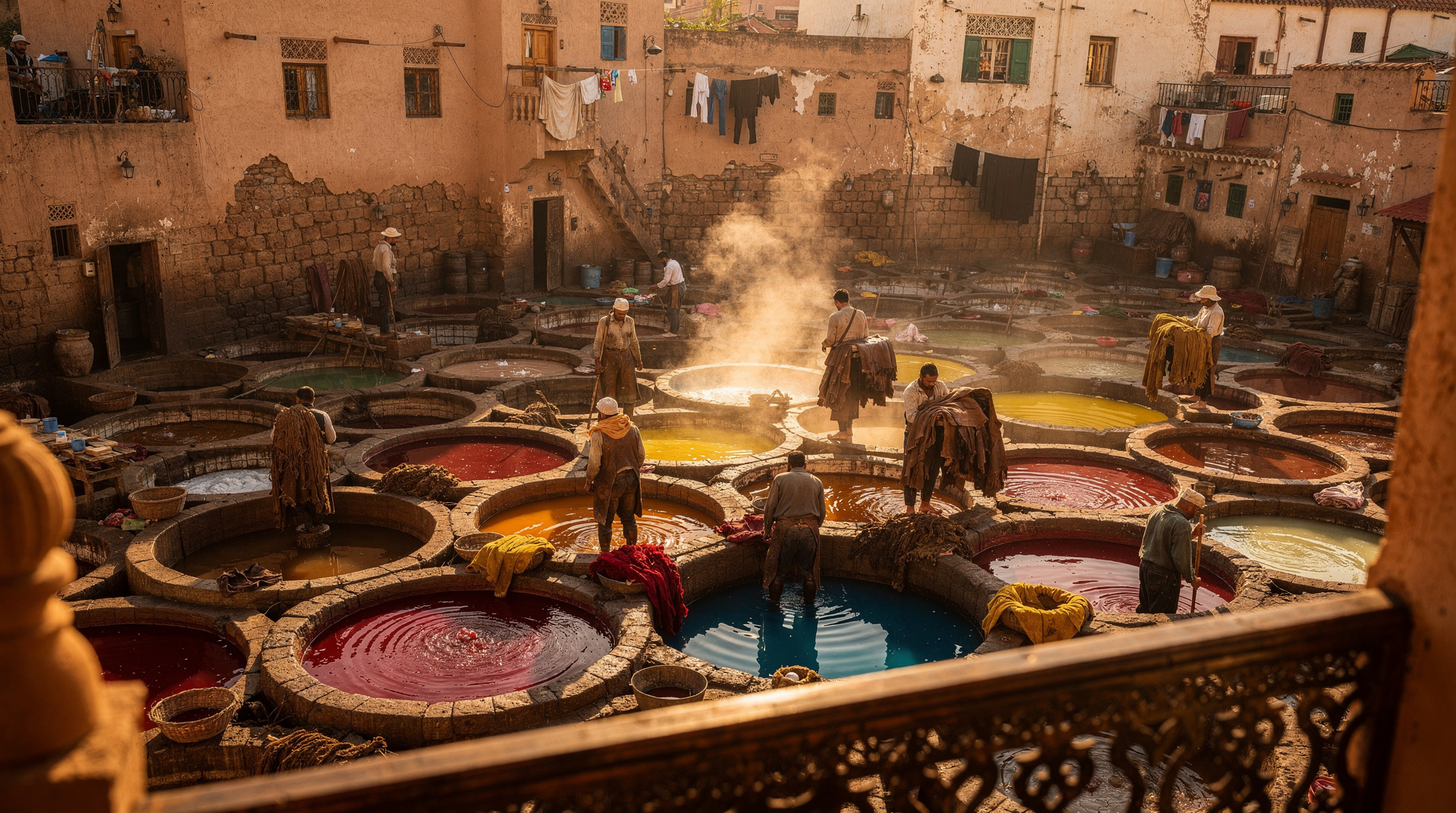
Day 24: Full-day cultural tour with a licensed guide. The Chouara Tanneries, Bou Inania Medersa, Qarawiyyin mosque quarter, Andalusian quarter. This is the day the guide earns their fee. Book the Fes full-day cultural tour in advance.
Day 25: Meknes and Volubilis day trip from Fes (train 45 minutes each way, grand taxi to Volubilis €15 return). The Roman city’s in-situ mosaics are among the best in Africa. The Bab Mansour gate in Meknes is the finest ornamental gateway in the Maghreb.
Day 26: Fes el-Andalus quarter, Merenid Tombs viewpoint (best at 09:00), Dar Batha Museum, cooking class in the evening.
Where to sleep: Dar Bensouda (mid: €80–130); Riad Fes (upscale: €150–250)
See our Fes destination guide for full neighbourhood and restaurant detail.
Days 27–28: Chefchaouen
Getting there: CTM bus from Fes to Chefchaouen (4 hours, €12). Or change at Ouezzane.
Chefchaouen in the Rif Mountains is the most photographed city in Morocco — the blue-washed medina alleys, the terracotta rooftiles, the mountains behind. It earns every photograph. Two nights gives you the evening light (which is extraordinary), the morning cool before tourists arrive, and the Akchour hike.
Day 27: Arrive, walk the medina alleys, sit on the main square (Place Outa el-Hammam) with mint tea, shoot the blue alley at Ras el Maa spring in the late afternoon, eat at a restaurant with a terrace view of the mosque.
Day 28: Grand taxi to Akchour (20 km, €4), hike to the main waterfall and natural bridge (4–5 hours round trip), return in the afternoon for a rest.
Where to sleep: Dar Meziana (mid: €60–90); Hotel Lina Ryad (mid: €50–80)
Day 29: Tangier
Getting there: CTM bus from Chefchaouen to Tangier (3 hours, €8).
Tangier is worth more than one day — it is genuinely fascinating with more depth than its transit-city reputation suggests. The kasbah quarter, the Legzira cliff walks, the Hercules Caves at sunset. But in the context of a 30-day itinerary at the end, one day is what the schedule allows. Make it count.
Bab el-Assa and the kasbah: The kasbah museum occupies a former sultan’s palace with a terrace view across the Strait of Gibraltar to Spain — on a clear day the distance is startling. The Petit Socco below the kasbah is the old expatriate café quarter: Bowles wrote here, Burroughs scored here, Matisse painted here.
Where to sleep: El Minzah Hotel (historic: €120–180); Dar Nour (boutique: €90–130)
Day 30: Departure from Tangier or Casablanca
Option A: Fly from Tangier Ibn Battouta Airport — Ryanair and other low-cost carriers serve European destinations directly. 30 minutes from the city centre by taxi.
Option B: Al Boraq to Casablanca — The high-speed train from Tangier takes 2 hours to Casablanca (€18–25, book in advance). Casablanca Mohammed V Airport has more long-haul routes.
Transport logistics (public transport guide)
Trains (ONCF): The backbone of the network. Reliable, comfortable, inexpensive. Book online at oncf-voyage.ma. Key routes: Marrakech–Casablanca (2h30, Al Boraq), Casablanca–Tangier (2h, Al Boraq), Fes–Meknes (45min), Fes–Rabat (2h30). First class is marginally more expensive and significantly more comfortable.
CTM and Supratours buses: Cover routes not served by train. Comfortable coaches with air conditioning and luggage storage. CTM is the most reliable long-distance operator. Supratours is the ONCF bus subsidiary that connects to train-adjacent routes (Marrakech–Essaouira, Marrakech–Agadir, Merzouga–Fes).
Grand taxis: Shared long-distance taxis (usually a Peugeot 504 or Mercedes 220) that run fixed routes between towns. They fill with 6 passengers and leave when full. Prices are fixed and low (Marrakech–Imlil: €5, Ouarzazate–Aït Benhaddou: €5). Ask your riad or any local for the departure point for your destination.
City transport: Petit taxis within cities (€2–5, agree price before), local buses (€0.40–1), walking (for medinas — nothing else works anyway).
Budget estimate
| Item | Budget (pp, 30 days) | Mid-range (pp, 30 days) |
|---|---|---|
| Accommodation (30 nights) | €450 | €1050 |
| Inter-city transport (trains + buses) | €120 | €180 |
| Food and drink (30 days) | €360 | €700 |
| Activities, entry fees, day trips | €100 | €250 |
| Local transport (taxis, city buses) | €80 | €130 |
| Miscellaneous | €60 | €120 |
| Total (flights excluded) | €1170 | €2430 |
That is €39/day at budget level or €81/day mid-range — highly affordable for a month of travel.
What to pack for 30 days
The cardinal rule: Pack lighter than you think you need to. One month on public transport means every kilogram is carried by you through stations, up riad staircases, and on shared taxis. A 40-litre backpack is enough. A 70-litre bag is a mistake you will regret by Day 5.
Clothing: 3–4 bottoms (including one that qualifies as trousers for medinas), 5–6 tops, one light jacket, one windproof layer for Essaouira and the Atlas, one warm layer for desert nights. Shoes: comfortable walking shoes (primary), sandals (secondary), nothing else.
Tech: Laptop if working remotely (most riads and cafes have WiFi); unlocked smartphone with local SIM; download offline maps before each major leg.
Health: Standard travel vaccinations up to date; stomach settling tablets (the change of diet causes discomfort in the first week for most people); sun protection for southern and coastal stages.
Best time of year for slow travel
October–April: The reliable window. October brings post-summer clarity to the south, October–November is perfect for the Sahara. November–February is cold in the Atlas and the north but mild everywhere else. March–April is the most beautiful time — spring wildflowers in the Rif and Middle Atlas, green valleys in the south.
May: Transitional. Starting to heat up in the south and in Fes and Marrakech. Still excellent in the north.
June–September: Only if you are deliberately seeking heat or surfing the summer wind in Essaouira. The Sahara in July is genuinely dangerous (45°C+).
How to extend this trip further
Beyond 30 days, Morocco offers: the far south (Guelmim, Assa, Tata — genuinely off-circuit desert travel); the Middle Atlas more deeply (Ifrane, Azrou, Khenifra); the eastern Morocco region around Figuig (a border oasis that few tourists reach); or simply more time in the places you loved most.
The northern Morocco itinerary and the grand south road trip both explore sections of this route in more depth if you want to return to a particular region. Our Morocco by train itinerary covers the public transport logic of the rail network specifically.
Money, connectivity, and staying comfortable over 30 days
Morocco is a cash-heavy, closed-currency economy — you cannot buy dirhams before arrival, and you should not try. Withdraw from ATMs at each major stop rather than carrying a month’s cash from Marrakech; our Moroccan currency and money guide covers fees, denominations, and where cards are actually accepted. For a trip this long, a local data SIM matters more than usual: pick it up on Day 1 and see our best eSIM for Morocco guide if you would rather avoid a physical SIM swap altogether. Riads and cafes have WiFi almost everywhere, but the mountain and desert stretches (Imlil, Merzouga) are patchy by design.
Laundry: A month of a 40-litre backpack means laundry every 6–8 days. Riads will do it for €5–10 a load; ask on arrival rather than your last night, since some need 24 hours.
Safety on a long solo trip: Morocco is generally safe for independent travel, including for solo women, but the pace of touts and hassle in medina areas is real and wears differently over 30 days than over 10. Our is Morocco safe guide has practical, unsensational detail worth reading before you go, and pairs well with the Morocco packing list for what to actually bring on a trip this length.
If the Sahara timing worries you: the classic worry on a slow public-transport trip is arriving in Merzouga during a heat spike or a cold snap. Our month-by-month guide to Morocco in October and Morocco in November — the two months this itinerary is built around — breaks down exactly what to expect region by region.
FAQ
Is one month too long for a first trip to Morocco? Not if you like slow travel. It is more than most first-timers need — the 10-day itinerary or 14-day itinerary cover the highlights more efficiently — but a month lets you add regions (Dakhla, deep Atlas, the far south) that shorter trips never reach, without ever feeling rushed.
Can I do this itinerary without any French or Arabic? Yes. English is widely spoken in riads, tourist-facing restaurants, and by CTM staff on major routes. It gets thinner in small-town bus stations and rural grand taxi stands, where basic French or pointing at a written destination name goes a long way. It is not a barrier to doing this trip solo.