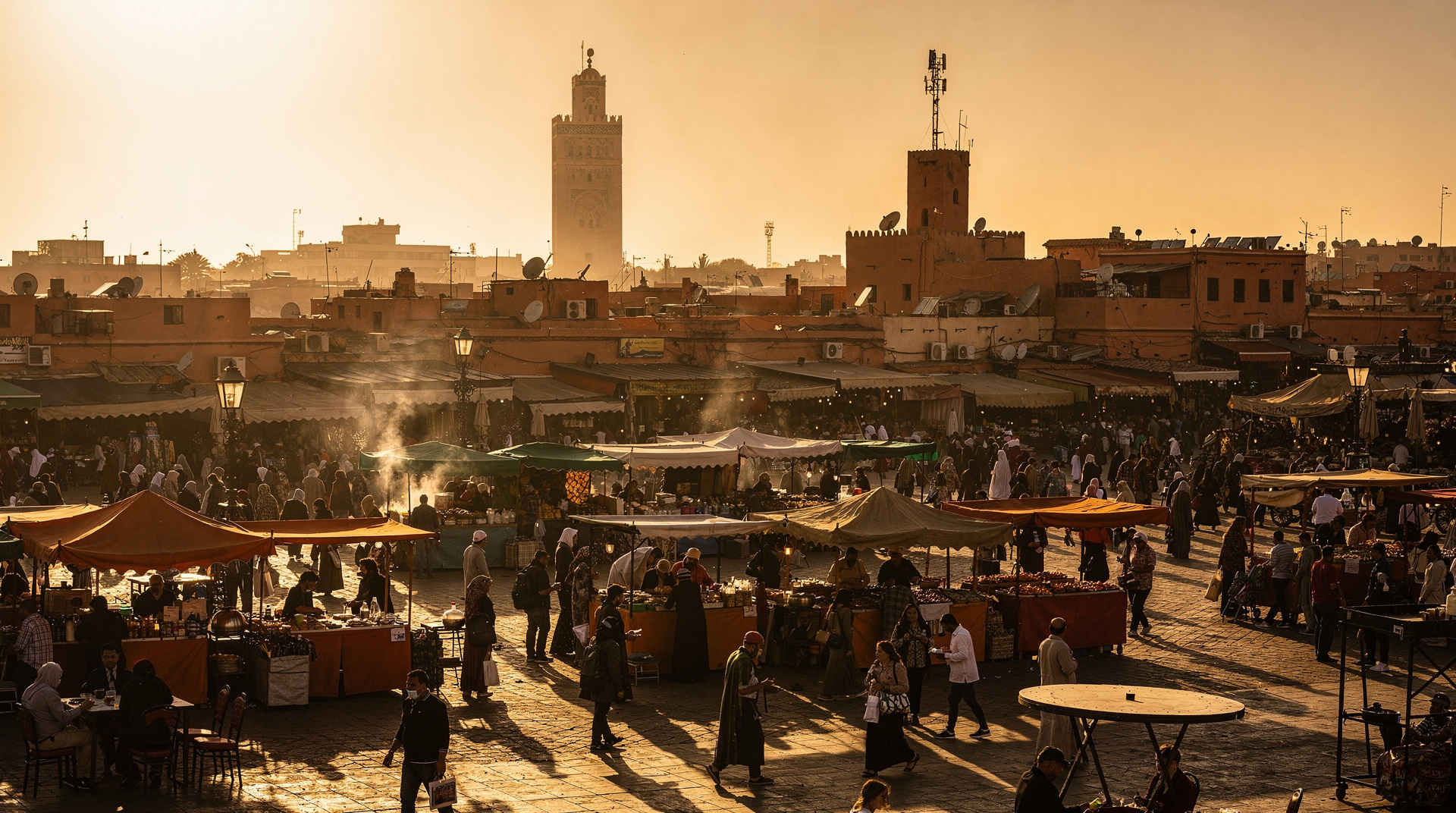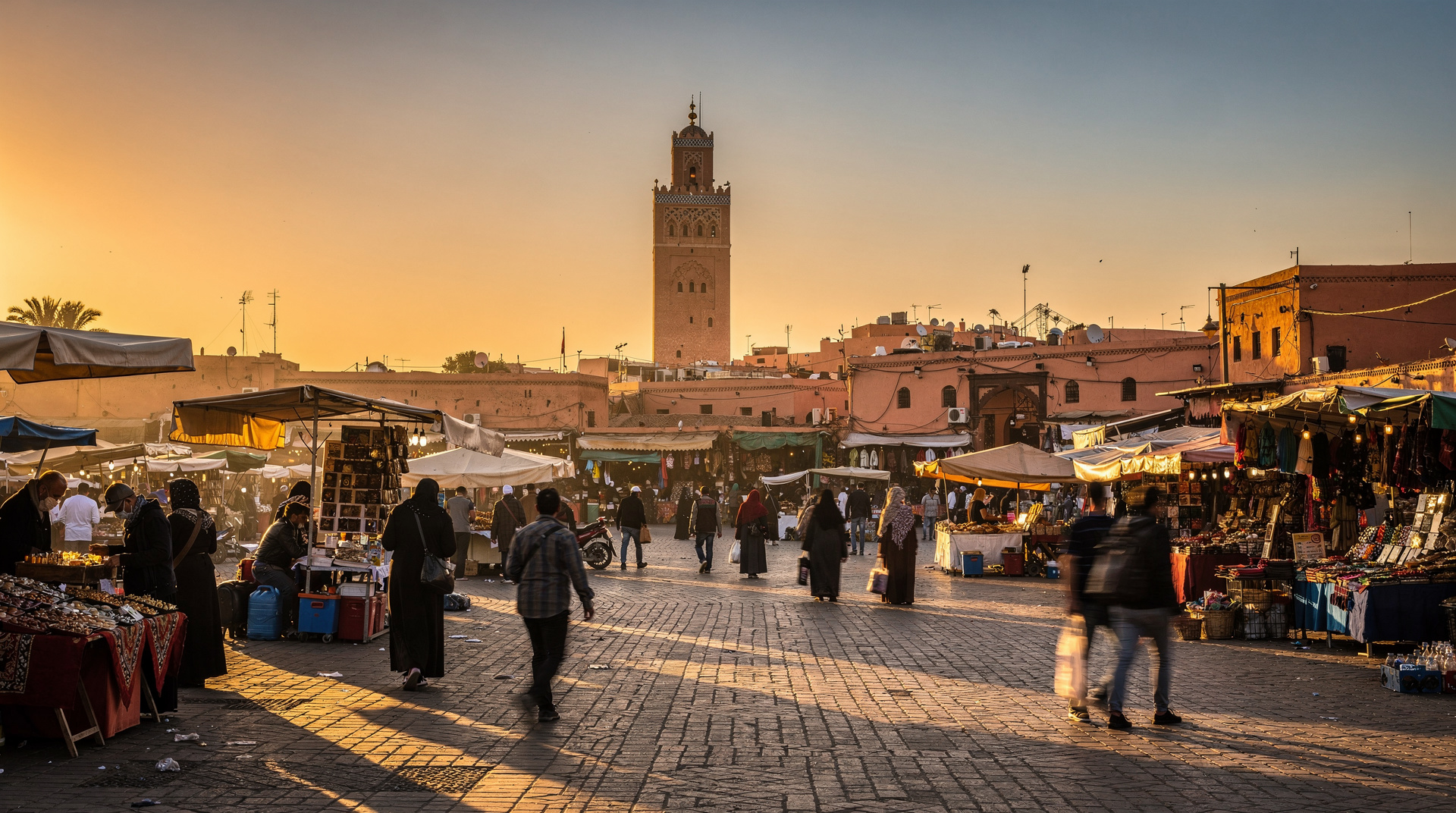
Imlil vs Ourika: Which Atlas Trek from Marrakech?
Imlil or Ourika for an Atlas trip from Marrakech?
Pick Imlil if you want serious trekking (Toubkal summit, multi-day, Berber villages); pick Ourika for an easier waterfall + cooking-class day trip with kids or non-trekkers. Both are 1h15-1h45 from Marrakech. Imlil = adventure, Ourika = accessible-scenic.
The two-minute answer — read this first
Imlil and Ourika are the two most popular Atlas day trips from Marrakech, separated by 25 km of mountain road. They feel like different planets.
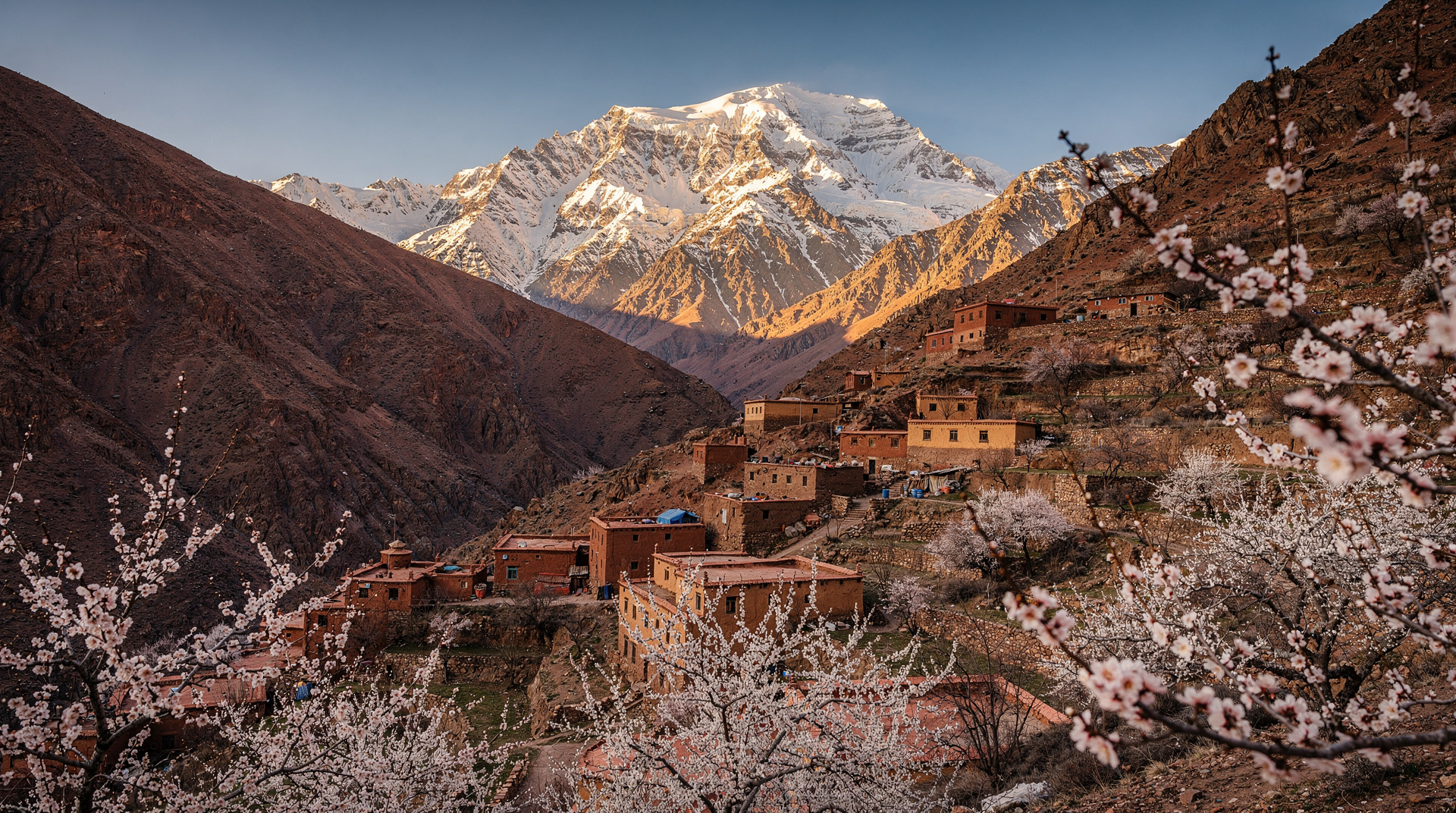
Imlil (1,740m) is a working trekking base village. It sits at the foot of Jebel Toubkal (4,167m), North Africa’s highest peak. Almost everyone who goes there is either doing a proper hike, attempting the summit, or visiting Berber highland villages on mule trails. The landscape is dramatic, the culture is more intact, and the altitude is real. If you want to feel like you’re properly in the Atlas Mountains — lungs working, boots on scree, tea with a family in Aremd — Imlil is your valley.
Ourika Valley (750m–1,500m) is greener, gentler, and much more commercialised. The road follows a river through a succession of Berber villages and tourist restaurants before arriving at Setti Fatma, where a short waterfall hike ends at a photogenic cascade. The Ourika experience is not dishonest — the landscape really is beautiful — but it attracts coachloads of day-trippers and has developed accordingly. If you are travelling with children, non-hikers, or people who want scenery plus a nice lunch rather than a physical challenge, Ourika delivers that well.
The honest summary: Imlil for trekkers and adventure-seekers; Ourika for scenic, accessible, family-appropriate day trips. Both are worth doing if you have time. If you must choose one, your physical ambitions and group composition are the deciding factor — not the scenery, which is exceptional in both cases.
| At a glance | Imlil | Ourika Valley |
|---|---|---|
| Where | Atlas Mountains, 65 km from Marrakech | Atlas foothills, 60 km from Marrakech |
| Cost (group tour) | Around 250-400 MAD/person | Around 200-350 MAD/person |
| Time needed | Full day, or overnight for real value | Full day is standard |
| Getting there | Self-drive, grand taxi via Asni, or organised tour | Self-drive, direct grand taxi, or organised tour |
| Best time | April-June, September-October | March-May, September-October |
Side-by-side comparison
| Factor | Imlil | Ourika Valley |
|---|---|---|
| Altitude (arrival point) | 1,740m | 750–1,500m (Setti Fatma) |
| Drive from Marrakech | 1h30–1h45 (65 km via Asni) | 1h15–1h30 (60 km via S513) |
| Road quality | Good paved road to Imlil | Good paved road to Setti Fatma |
| Physical difficulty | Moderate to high (if hiking) | Low to moderate (waterfall hike) |
| Best for | Trekking, summit attempts, village culture | Families, waterfalls, foodie day trips |
| Day trip or overnight | Both — overnight adds real value | Day trip is standard |
| Crowds | Moderate (serious trekkers, smaller groups) | High in summer, very high on weekends |
| Toubkal summit access | Yes — this is base camp | No |
| Cooking classes nearby | Limited | Yes — several valley restaurants offer them |
| Accommodation quality | Auberge Neltner (refuge), Kasbah du Toubkal (excellent), village guesthouses | Tourist restaurants; limited good stays |
| Season for best visit | April–June, September–October | Year-round; avoid summer weekends |
| Typical day-trip price (group tour) | 250–400 MAD / 25–40 EUR | 200–350 MAD / 20–35 EUR |
| Private driver cost | 800–1,200 MAD for two | 700–1,000 MAD for two |
Imlil in depth
Where is it and why it matters
Imlil sits in the Mizane Valley, 65 km from Marrakech via the town of Asni. The approach road climbs steadily through walnut groves and terraced barley fields before arriving in a village that feels genuinely alpine. There are mules tied outside guesthouses, guides comparing notes by the Bureau des Guides, and a constant quiet movement of porters, trekkers, and local Amazigh people going about mountain life. It doesn’t feel staged in the way that some Moroccan “Berber experiences” do.
The key fact about Imlil is geographic: it is the official departure point for all Jebel Toubkal summit attempts. The standard route climbs from Imlil (1,740m) to the Refuge du Toubkal (3,207m) in four hours, then to the summit (4,167m) in three hours more. This trekking infrastructure — licensed guides, mule porters, mountain huts, gear rental — is what gives Imlil its character. It’s a town organised around altitude.
What to do on a day trip to Imlil
Even without attempting Toubkal, a full day in Imlil offers:
Aremd village hike: The most rewarding short walk from Imlil, taking 45–90 minutes return. Aremd (1,900m) sits on a rocky promontory above the Mizane river confluence. The village has no road — access is on foot or by mule. The earthen kasbahs, the terraced gardens, and the panorama of the Toubkal massif from the ridge above the village are the best photographs you’ll take in the Atlas on a day trip.
Bureau des Guides and Neltner valley walk: From the Bureau des Guides, a well-marked trail follows the Ait Mizane river south toward the Toubkal Refuge. Even walking 2–3 km along this trail (too far to reach the Refuge in a day trip) delivers proper high-Atlas scenery: boulder fields, juniper scrub, and the summit pyramid above. Turn back after 90 minutes and you’ve had a real mountain morning.
Imlil village and market: Monday is market day in Asni, 15 km below Imlil — worth timing your visit if the date aligns. The village itself has cooperative shops selling handwoven Amazigh textiles, local honey, and trekking supplies.
Kasbah du Toubkal lunch: This restored kasbah on the hillside above Imlil accepts walk-in lunch guests. It’s run by a Berber-owned collective and sources food locally — a tajine here with Atlas views is one of the better meals you’ll eat in Morocco outside a major city riad. Budget 150–250 MAD per person for a set lunch.
Toubkal summit option
The Toubkal summit (4,167m) is the dominant reason serious trekkers come to Imlil. It is the highest point in North Africa and a genuinely achievable objective for fit, non-technical trekkers.
Standard summit schedule (2 days from Imlil):
- Day 1: Imlil → Toubkal Refuge (3,207m), 4–5 hours, 1,467m gain. Sleep at the refuge.
- Day 2: Refuge → Summit (4,167m) → back to Imlil, 8–10 hours total.
The hike requires no technical equipment in summer (June–September). In winter and spring (October–May), snow and ice conditions require crampons and ice-axe experience — this is a serious alpine environment, not a scramble. The full logistics are covered in the Toubkal summit guide and Toubkal trek guide.
The High Atlas Mountains day trip with lunch from Marrakech covers the Imlil area and is well-suited for travellers who want a guided introduction to this valley without organising everything independently.
Where to stay if overnighting in Imlil
Kasbah du Toubkal is the benchmark Atlas Mountain lodge. Rooms from 800–1,400 MAD/night. The roof terrace has the best views in the village, the food is excellent, and the management is genuinely committed to the community. Book well ahead in spring and October.
Auberge Neltner / Village guesthouses: Multiple family-run guesthouses in Imlil and in Aremd village offer beds for 200–350 MAD/night. Meals are usually included or available. Basic but clean.
Toubkal Refuge (CAF refuge): If you’re summiting Toubkal, the Club Alpin Français refuge at 3,207m is the standard sleeping option — dormitory-style, 150–200 MAD/night. The refuge has a simple kitchen, blankets, and a communal dining area. The night sky from the terrace at 3,200m is spectacular.
Ourika Valley in depth
What makes Ourika compelling
The Ourika Valley runs south from Marrakech for 60 km, following the Ourika river through a corridor of dramatic cliffs and lush cultivation. The first 40 km are relatively ordinary — a busy valley road with roadside stalls selling herbs, argan products, and guided tours. The last 20 km, from the village of Aghbalou to Setti Fatma, is where the valley opens up and the landscape becomes genuinely beautiful: river-carved gorge, terraced fields bright green in spring, and the waterfall cascade that makes the valley famous.
What Ourika does well:
- The Setti Fatma waterfall hike is accessible to almost any fitness level (see below)
- The riverside restaurants in Setti Fatma are genuinely pleasant — a rare thing in Moroccan tourist infrastructure
- Weekend Berber market in Aghbalou, traditional pottery cooperatives, and an argan oil cooperative at km 20 are worth brief stops
- Cooking class options in the valley are the best near Marrakech
Setti Fatma and the 7 waterfalls
Setti Fatma village (1,500m) at the valley head has become the day-tripper hub. The waterfalls above the village are the main event — a cascade system that descends through a series of rocky steps above the last village.
The hike to the first falls is 30–45 minutes from Setti Fatma. The path climbs 150m on loose stone — not difficult, but not flat. Guide yourself with “cascades” signs or hire a local guide (20–40 MAD) at the trailhead. The first falls are beautiful; the second and third are better; reaching all seven requires a full 3–4 hour effort and real footwear. Most day-trippers do the first two or three.
Be honest about what you’ll find: in July and August, the lower waterfalls are significantly reduced — the Ourika river is at its lowest. The best waterfall flow is April–June after snowmelt and in September–October after any autumn rainfall. In deep summer on a weekend, Setti Fatma can feel genuinely overcrowded, with vendors and guides competing loudly at the trailhead.
What’s overrated in Ourika
The argan oil cooperatives. There are three or four along the valley road that any group tour will stop at. They are not dishonest — the women are demonstrating real argan processing — but the “cooperative experience” at km 15–25 has become thoroughly rehearsed tourist infrastructure. One stop is worthwhile; being taken to three is a waste of your morning. If your tour guide is suggesting multiple cooperative stops, reroute the conversation toward more time at Setti Fatma.
The cheap valley restaurants at km 30–45 are also worth avoiding. These roadside spots serve adequate tajines but the best eating is clearly at Setti Fatma itself, at the riverside terrace restaurants where you can sit above the water.
Ourika cooking class option
Several valley restaurants between Aghbalou and Setti Fatma offer half-day cooking experiences: market visit, cooking instruction, and lunch for 350–500 MAD per person. This is the most distinctive thing Ourika offers that Imlil doesn’t — a genuine food-culture experience combining Berber cuisine, local ingredients, and the valley setting. If your group has a foodie, this is the Ourika format to book.
The Ourika Valley day trip with lunch from Marrakech is the standard group format — good value for a single day, covers the valley and the Setti Fatma waterfall hike.
For a more private and flexible experience, the Ourika Valley private day trip from Marrakech allows you to set your own pace, skip the obligatory cooperative stops, and spend more time at the waterfalls.
Getting there: grand taxi, private transfer, or group tour
Grand taxi from Marrakech
Imlil: Take a grand taxi from Bab Rob to Asni (35–50 MAD per seat, 45 min). From Asni, hire a local taxi or minibus to Imlil (20–30 MAD per seat, 20 min). Total one-way: 55–80 MAD per person, 1h15 door-to-door if connections are quick.
Ourika: Grand taxis run from Bab Rob and the Gare Routière to Setti Fatma direct (50–70 MAD per seat, 1h30). The most convenient option for budget travellers.
Private driver or rental car
For Imlil, a private driver makes the Asni–Imlil section easier (the road is fine for standard vehicles but navigating Asni on foot is chaotic). Budget 700–1,200 MAD for a full day with a driver who waits.
For Ourika, a rented car is straightforward — the P2017 is well-maintained and signed all the way to Setti Fatma. Petrol from Marrakech to Setti Fatma and back is approximately 80–100 MAD.
Organised day tours (group and private)
The Berber village and Atlas Mountains day trip from Marrakech covers both the Asni-Imlil area and the surrounding Berber villages with a local guide. This is the best single option for visitors who want both valley culture and mountain scenery in one efficient day.
For the 3 Valleys circuit combining both Ourika and Imlil on one long day, the Atlas Mountains 3 Valleys and waterfalls day trip is the standard format — though this covers both valleys briefly rather than either one deeply.
Best month for each
Imlil month by month
Best: April–June and September–October. Spring brings the valley into flower, snowmelt cascades off the Toubkal massif, and the trekking trails are at their most beautiful. October is the most stable weather window before winter snow.
Good: November (before significant snowfall), March (still cold but increasingly snow-free on lower trails).
Avoid for trekking: January–February (deep snow at altitude, Toubkal requires full winter gear and alpine experience). July–August (hot in the lower valley, summit is crowded and dusty).
Imlil in winter: Still worthwhile as a village visit and a lower-trail walk. The snow-covered Toubkal massif from the village is beautiful. But any serious hiking above 2,500m requires proper winter equipment.
Ourika month by month
Best: March–May (greenest, most water in the falls, wildflowers above Setti Fatma) and September–October (cooler, less crowded, post-harvest colours).
Good: November–February (quiet, genuinely cold at Setti Fatma but atmospheric). The valley has a small winter magic when mist hangs in the upper gorge.
Avoid: July–August weekends. The valley road from Marrakech to Setti Fatma fills with private cars and coaches. The waterfalls are at their weakest. The riverside restaurants are overwhelmed. If you must visit in summer, go early on a weekday.
Ourika in winter: Underrated. The valley crowds disappear entirely, the river is fuller, and the terraced fields still hold green from late-season growth. Bring warm layers — Setti Fatma at 1,500m in January hits 5–8°C.
Specific use cases
With kids
Ourika: The better call for families. The waterfall hike to the first falls is manageable for children of 6+. The riverside restaurants have space to run around. The drive is shorter and flatter. The valley landscape holds children’s attention well.
Imlil: Doable with older children (10+) who hike regularly. The Aremd village walk is achievable for fit kids. Younger children or those not used to mountain walking will struggle with the terrain and altitude.
Photography
Imlil: Wins on dramatic mountain portraiture — the Toubkal massif behind the kasbahs, the mule paths into Aremd, the summit-bound trekkers at the trailhead. The light in the Mizane Valley is best in the two hours after sunrise.
Ourika: Wins on waterfall and valley-floor photography — the cascades, the terraced gorge above Setti Fatma, and the arched bridges over the river. The soft, diffused light of an overcast spring morning makes the greens extraordinary.
Solo female travellers
Both are safe for solo female travellers with standard precautions. Imlil is better in this sense — the trekking community creates a purposeful, mixed-nationality atmosphere. Guided tours are clearly the most comfortable format for either destination; see the solo travel Morocco guide for full context.
Foodie travellers
Ourika wins. The valley cooking class format is excellent. Combine a morning market visit in Aghbalou, a 3-hour cooking session with a local family, and a waterfall walk before lunch. Nothing equivalent exists in Imlil.
Realistic one-day itinerary — Imlil
7:00 am — Depart Marrakech. Private driver or join organised tour.
8:30 am — Arrive Imlil (1,740m). Check in at Bureau des Guides if you want a local guide (strongly recommended, 300–400 MAD/day for an official Imlil guide).
9:00–11:30 am — Hike to Aremd village and return. 3–4 km, 250m gain, 2–2.5 hours. The path crosses a bridge over the Ait Mizane and climbs to the village on the opposite ridge. Views of the Toubkal massif are clear from the ridge above Aremd.
12:00–1:00 pm — Lunch at Kasbah du Toubkal or one of the village guesthouses. Tagine and mint tea with mountain backdrop.
1:30–3:00 pm — Walk south on the Toubkal trail along the Ait Mizane river. You won’t reach the Refuge in this time, but 2 km of the trail gives genuine high-Atlas scenery without commitment.
3:00–3:30 pm — Browse village cooperative stalls (honey, walnuts, handwoven textiles). Buy local honey — the Atlas mountain honey sold in Imlil is genuine and exceptional.
3:45 pm — Depart Imlil. Back in Marrakech by 5:30 pm.
Total walking: 5–7 km, 350–400m elevation gain. Suitable for anyone with moderate fitness and decent footwear.
Realistic one-day itinerary — Ourika
8:00 am — Depart Marrakech. The later start works because Ourika is 15 min closer.
9:15 am — Stop at argan cooperative at km 22. One stop is enough — 20 minutes, buy argan oil if you want it, then move on.
10:00 am — Aghbalou village. Browse the weekend market (Sundays and Mondays are best) or continue directly to Setti Fatma if markets aren’t your thing.
10:45 am — Arrive Setti Fatma (1,500m). Park or drop off at the main village trailhead.
11:00 am–1:00 pm — Waterfall hike. Aim for the second or third waterfall — 90 minutes of easy-to-moderate hiking that delivers the best photography and the most satisfying payoff. Hire a local guide at the trailhead for 30–50 MAD if you want company and context.
1:15–2:15 pm — Lunch at a riverside terrace restaurant. The row of restaurants immediately above the Ourika river in Setti Fatma are all roughly equivalent. Choose based on the terrace view. Budget 80–120 MAD per person for tagine and tea.
2:30 pm — Depart Setti Fatma. Back in Marrakech by 4:00 pm — the early return frees your evening.
Total walking: 3–5 km, 200m elevation gain to the third fall. Very accessible for all fitness levels.
Extending to 2–3 days
Imlil extended
2 days: Add the Toubkal Refuge overnight (Day 1: Imlil to Refuge, 1,467m gain; Day 2: summit attempt + return to Imlil). This is the standard summit trip and one of Morocco’s best multi-day experiences. See the Toubkal trek guide for the full logistics.
3 days: Imlil → Refuge → Summit → Imlil → overnight at Kasbah du Toubkal → Aremd and neighbouring villages on the final day. The third day allows a proper exploration of the villages and valleys around Imlil without the summit pressure.
Atlas multi-day trek: The Atlas mountains region guide covers the M’Goun traverse (4–6 days), the Azzadene Valley circuit, and guided multi-day routes that use Imlil as the hub.
Ourika extended
The honest answer is that Ourika doesn’t reward a second night the way Imlil does. The valley is beautiful but limited in hiking terrain at the tourist end.
Better 2-day extension: Use an Ourika overnight as the base for a morning visit to Oukaimeden (25 km from Setti Fatma via the upper valley road) on day two. The combination of Ourika valley, Setti Fatma waterfalls, and Oukaimeden panorama gives genuine altitude progression without the full commitment of Imlil trekking.
Or: Combine Ourika with the Atlas eco-lodges guide — several excellent ecolodges in the upper Ourika Valley offer immersive stays that are the best version of the valley experience.
For a full atlas mountains day trip from Marrakech itinerary combining both valleys, see that guide’s 3 Valleys format.
Frequently asked questions about Imlil vs Ourika
Can you do both Imlil and Ourika in one day?
Technically yes, barely. The 3 Valleys circuit covers both, plus Oukaimeden, in a long 10–11 hour day. But you see each place briefly — 1 hour in Imlil and 1.5 hours at Setti Fatma doesn’t do either justice. The 3 Valleys is a valid format if you want atlas variety, but don’t expect to hike properly in either. If time is truly short, choose one and go deep rather than both shallow.
Is Imlil with kids too hard?
For children under 8, Imlil is borderline. The altitude (1,740m) is noticeable for sea-level-dwelling children, the village terrain is uneven, and the only good walks involve real climbing. For children 10+ who hike regularly, the Aremd walk is an excellent adventure. For younger children or those not used to hiking, Ourika is a much better choice — the waterfall hike is shorter, lower, and far more forgiving.
Is Ourika worth visiting in winter?
Yes — and it’s underrated in December–February. The crowds disappear, the valley has a quiet authenticity that’s harder to find in peak season, and the light in winter is often better for photography. The Setti Fatma waterfall has more volume in winter than in summer. Bring warm layers: the valley floor can be 12°C, but Setti Fatma at 1,500m drops to 4–6°C in January. The riverside restaurants remain open.
What’s the cheapest way to see both valleys?
Grand taxi to Ourika first (50–70 MAD from Bab Rob to Setti Fatma), spend the morning there, return to Marrakech in the afternoon. Next day (or two days later), grand taxi from Bab Rob to Asni (35–50 MAD), local taxi to Imlil (20–30 MAD). Total cost: under 200 MAD (20 EUR) for both valley day trips. The grand taxi option is slower and less flexible but genuinely the cheapest format — no tour markup.
Which is better in spring or autumn?
Both seasons are excellent for both valleys, with minor differences. Spring (March–May): Ourika wins slightly — the valley is at maximum green, the waterfalls are full from snowmelt, and wildflowers above Setti Fatma are extraordinary. Imlil in spring is also excellent, but the trails are often muddy from snowmelt through April. Autumn (September–October): Imlil wins — the post-summer stability makes summit attempts most reliable, the trekking trails are dry, and the light is golden. Ourika in autumn is beautiful but the waterfalls are at their seasonal low after summer. For both valleys, avoid the July–August weekend crowds.
Do I need a guide in Imlil?
For the Aremd village walk and the lower Toubkal trail, an official Imlil guide is strongly recommended but not mandatory. The paths are marked, but a guide adds cultural context, arranges the best lunch stops, and knows the mountain conditions. For the Toubkal summit, an official licensed guide is required by Moroccan regulations — you cannot attempt the summit without one. The Imlil day trip guide covers guide logistics in full.
What each day actually costs, door to door
Tour pricing pages rarely show the full picture. Here’s a realistic breakdown for a couple doing each trip independently rather than on a fixed-price group tour.
Imlil, self-organised: Grand taxi Marrakech-Asni-Imlil (55-80 MAD per person each way) plus an optional Bureau des Guides hire for the Aremd walk (200-400 MAD for the day, shared across the group) plus lunch at Kasbah du Toubkal or a village cafe (50-250 MAD per person depending on where you eat). A frugal couple can do the day for under 400 MAD total; adding the Kasbah lunch and a guide pushes it toward 900-1,200 MAD.
Ourika, self-organised: Direct grand taxi Marrakech-Setti Fatma (50-70 MAD per person each way) plus an optional waterfall guide (20-50 MAD) plus riverside lunch (80-120 MAD per person). A couple can do the full day, guide included, for 300-500 MAD — genuinely the cheaper of the two once you factor in Imlil’s two-stage taxi connection and higher lunch prices.
What pushes the price up in either case: a private driver instead of a grand taxi (700-1,200 MAD for the day) buys convenience and flexibility — no waiting for shared taxis to fill, no coordinating the Asni-Imlil connection — but roughly triples the cost versus public transport.
Packing differently for each valley
The gear list is not interchangeable, and this is where visitors most often get caught out. For Imlil: proper trail shoes or boots (non-negotiable on the Aremd path), a warm mid-layer even in spring and autumn, at least 2 litres of water per person, and sun protection for the exposed upper trail sections. For Ourika: normal walking shoes are usually sufficient for the first waterfall or two, though anyone continuing toward the higher falls benefits from the same trail-shoe standard as Imlil. Both valleys warrant a swimsuit if you want to wade near the Setti Fatma pools or the Ait Mizane river crossings near Imlil — the water is cold year-round but a genuine relief in summer.
Group dynamics: what actually goes wrong
Most disappointment with either trip traces back to mismatched expectations within a group rather than the valley itself. On Imlil day trips, the recurring failure mode is a mixed-fitness group where the fittest members want to push toward Sidi Chamarouch while others are struggling on the Aremd approach — decide the target distance before you start, not on the trail.
On Ourika trips, the recurring complaint is boredom with the argan cooperative stops that group tours pad the itinerary with; if you’re booking a private or self-driven version, explicitly ask to skip beyond the first cooperative and spend the saved time at Setti Fatma instead. In both valleys, a driver or guide who understands you want less commentary and more walking time will adjust — but only if you say so before departure, not once you’re already at the first stop.
If neither quite fits
Both valleys assume you want a single-valley day trip from Marrakech. If you’re travelling on from Fes instead, the Middle Atlas offers a genuinely different mountain experience — cedar forest, Barbary macaques, and the alpine-looking town of Ifrane — covered in the Ifrane and Azrou day trip guide. It’s not a substitute for either Imlil or Ourika (different range, different city base), but it’s worth knowing about if your itinerary includes both Marrakech and Fes.
For travellers weighing whether to do any Atlas day trip against a full desert excursion, the Atlas vs Sahara comparison guide frames that bigger decision.
Internal planning links
The Ourika Valley day trip guide covers Setti Fatma logistics in full detail. The Imlil day trip guide maps the village walks and transport options from Marrakech. For the full Toubkal summit logistics, see the Toubkal summit guide. If the goal is a multi-day mountain circuit, the Toubkal trek guide covers the standard 2-day format and longer extensions. For the best mountain stays in both valleys, the Atlas eco-lodges guide is the place to start.
Both valleys sit within the broader Atlas Mountains region. The Ourika Valley destination page and the Imlil destination page have the on-the-ground detail for each place. For the bigger decision of how to fit both valleys into a Morocco trip, see the atlas mountains day trip from Marrakech guide.