Ramadan 2027 in Morocco: Dates, Travel Impact & What to Expect
When is Ramadan 2027 in Morocco?
Ramadan 2027 in Morocco runs from approximately Monday February 8 to Monday March 8, 2027 (dates depend on moon sighting). Eid al-Fitr falls March 9-11. Expect altered restaurant hours, no alcohol service in many places, slower tours during the day — but lively evenings.
Ramadan 2027 in Morocco: exact dates and what they mean for your trip
At a glance
| Dates | Around February 8 - March 8, 2027 (moon-sighting dependent) |
| Eid al-Fitr | Around March 9-11, 2027 |
| Daytime impact | Reduced restaurant hours, quieter souks, no local alcohol service |
| Evening impact | Lively medinas, communal iftar atmosphere, restaurants open late |
| Best time to book transport | Well ahead of the Eid period, when trains sell out |
Ramadan 2027 falls entirely within Morocco’s cool-to-mild late-winter window. The fasting month is expected to begin on Monday, February 8, 2027, and end on Monday, March 8, 2027 — subject to the official moon sighting declared by Morocco’s Ministry of Habous and Islamic Affairs, which can shift the start by one day.
That gives you a fasting period of roughly 29 or 30 days. Eid al-Fitr, the three-day celebration marking the end of Ramadan, falls approximately March 9–11, 2027.
A few important caveats before you plan: Morocco does not use a pre-calculated Gregorian calendar for religious observances. The start of Ramadan is officially announced the evening of the 29th day of Sha’ban, based on direct moon sighting. Most years the announced date aligns with international Islamic calendar projections, but travellers should allow a one-day buffer when booking anything time-sensitive around the opening or closing days.
For context, Ramadan 2027 is earlier in the year than recent editions (Ramadan 2025 was in March–April; 2026 shifted to late February–March; 2027 slides further back into early February). In early to mid-February, sunset in Marrakech falls around 6:20–6:35 pm, moving to roughly 6:45 pm by early March as the clocks have not yet changed. This is good news for visitors: iftar — the meal that breaks the fast — happens at a civilised evening hour, not at 4 pm as it can during summer Ramadans.
Pair this guide with our Morocco in February and Morocco in March pages for full seasonal context, and read our static Ramadan travel Morocco overview for broader background that applies every year.
The daily rhythm during Ramadan
Understanding the Muslim fasting day is essential before you set your itinerary expectations.
Suhoor is the pre-dawn meal eaten before the Fajr (morning) prayer. In February–March, Fajr in Morocco is around 5:15–5:30 am. Suhoor is a private, domestic affair — you will not notice it as a traveller unless you wake very early near a residential neighbourhood.
The fasting day runs from Fajr through to sunset. Muslim Moroccans abstain from food, water, smoking, and sexual relations during daylight hours. Visibly, this manifests as quieter souks in the morning, slower service, staff who may be tired or irritable by mid-afternoon, and many small cafés closed or only serving take-away to non-Muslim tourists in some regions.
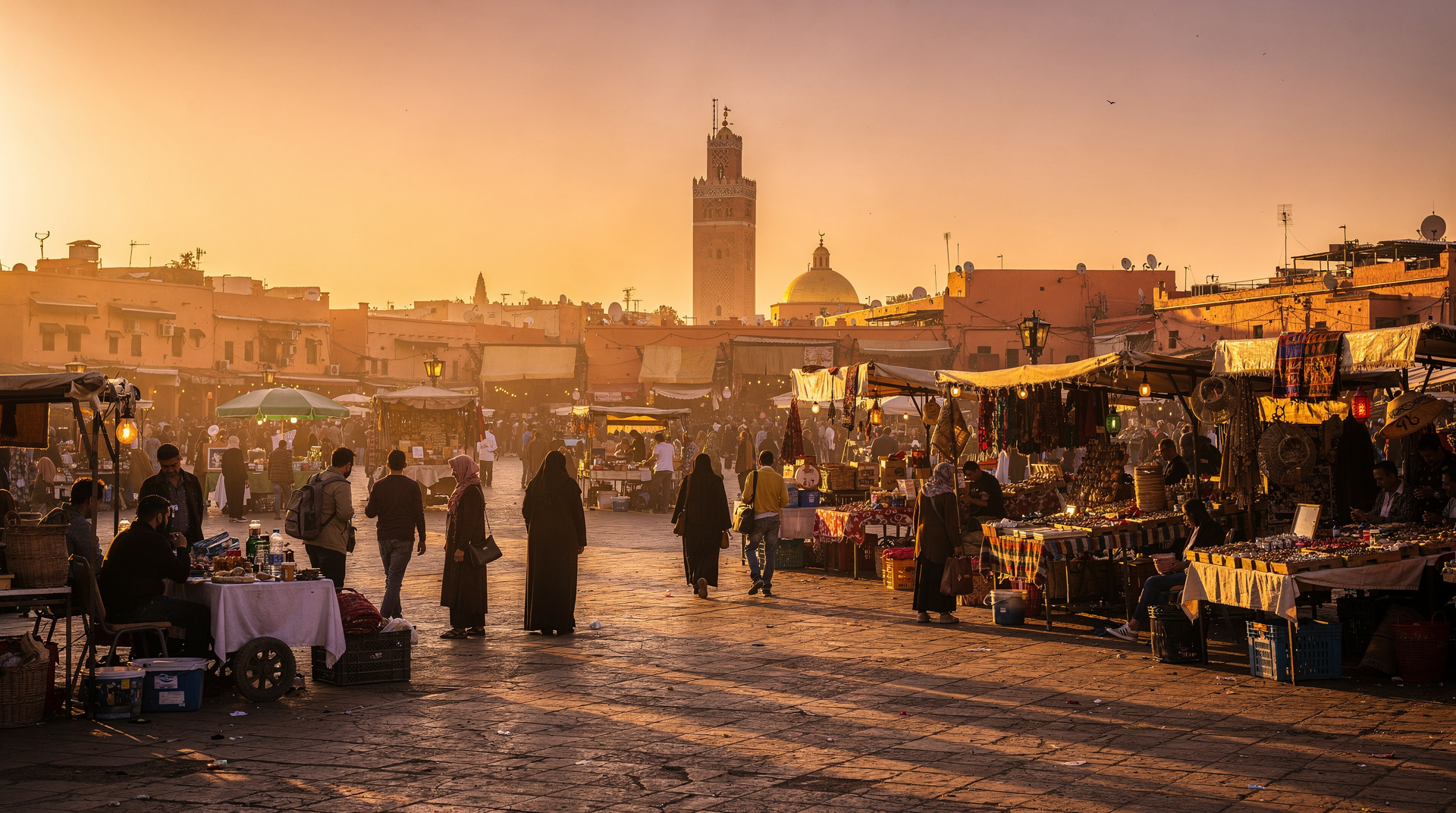
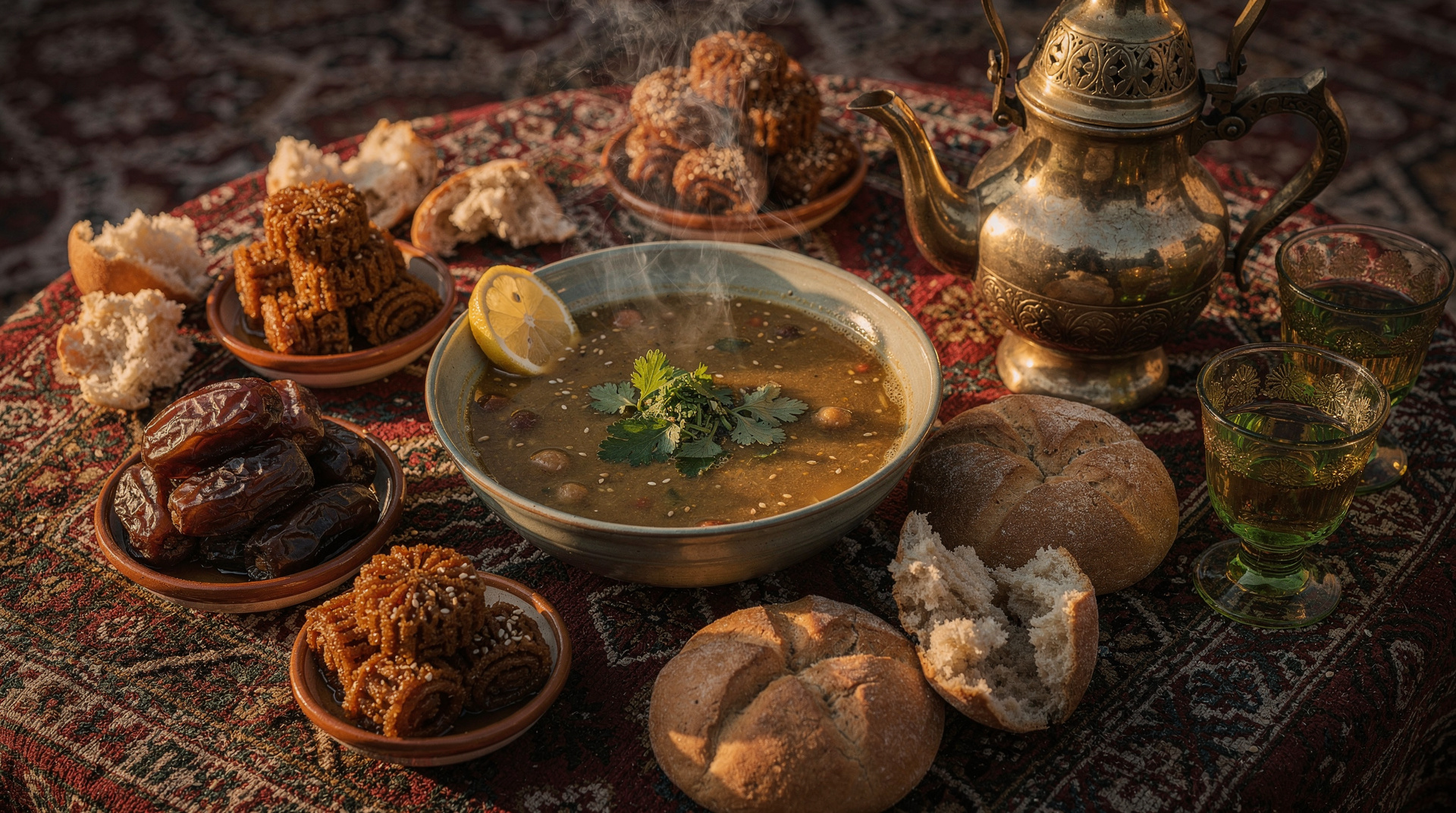
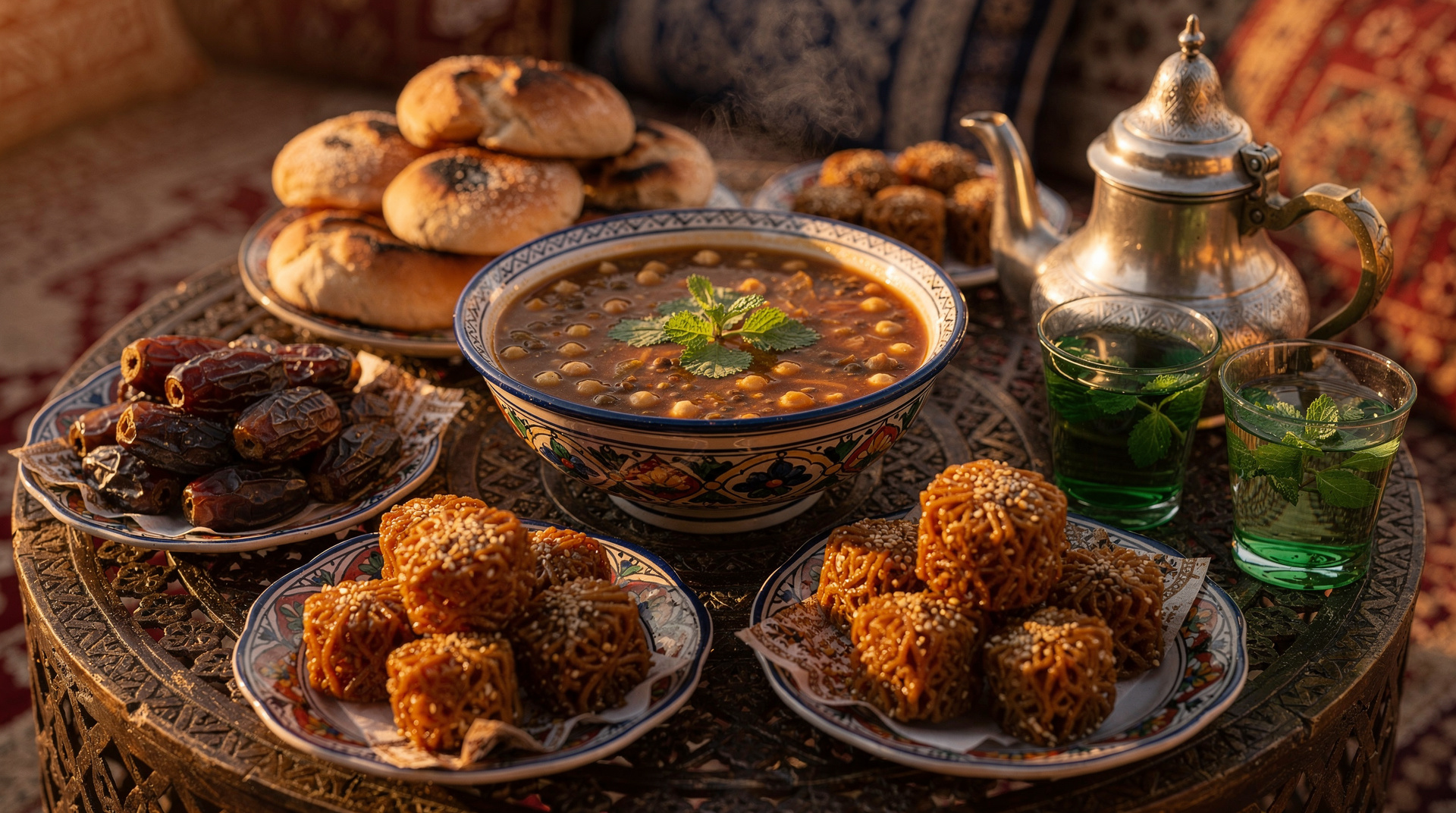
Iftar — breaking the fast at sunset — is the centrepiece of Ramadan in Morocco. The scene is unmistakeable: streets empty almost completely in the 15 minutes before sunset, then the call to prayer sounds and the city erupts in communal life. Families eat harira soup, dates, shabakia (honey-fried pastry), beghrir crepes, and hard-boiled eggs before moving to a fuller meal. Medinas and plazas fill up again within 30 minutes of iftar, and the evening is arguably the most atmospheric time to be in Morocco all year.
Tarawih are the special evening prayers performed after the night prayer (Isha). They last 1–2 hours at most mosques and explain why streets, particularly in medinas, stay busy until midnight or later. This is when street musicians play, tea is poured, and the medina souk is open for business.
What changes for travellers during Ramadan 2027
Restaurants and food access
This is the primary friction point. Most local restaurants in medinas close during the day, or scale back severely. Tourist-area restaurants — particularly those in riads catering to foreign guests — continue to serve lunch, sometimes discreetly, with covered windows or in interior courtyards. In major tourist centres like Marrakech, Fes, and Essaouira, finding lunch is doable but requires some planning.
Practical rule: your riad or hotel will serve breakfast and often provide picnic lunches on request. Outside your accommodation, plan to carry snacks or eat early. By late afternoon (3–5 pm), food options are genuinely scarce in traditional neighbourhoods.
After iftar, everything reverses. Restaurants stay open late — often until 1 or 2 am — and the menus are at their most authentic. If you can eat dinner late, you will eat better during Ramadan than almost any other time of year.
Alcohol
Alcohol in Morocco is already restricted to licensed hotels, Western-facing bars, and some tourist restaurants year-round. During Ramadan, many establishments that normally serve alcohol quietly suspend it — either out of respect for the month or due to informal local pressure. International hotels (Marriott, Novotel, boutique riads with wine licences) generally continue to serve alcohol to guests. Rooftop bars in Marrakech’s Gueliz district tend to stay open.
The honest summary: if alcohol is important to your trip, it is available in the right venues, but access is narrower during Ramadan than at other times of year. Beer at a local café? Very unlikely. Wine with dinner at a licensed tourist restaurant? Usually fine.
Transport and logistics
Trains and intercity buses run normal schedules throughout Ramadan. CTM and Supratours coaches are unaffected. Petits taxis continue to operate, though some drivers may decline trips in the last hour before iftar — a cultural norm, not an official policy.
The Eid al-Fitr period (March 9–11, 2027) is different: intercity transport becomes extremely congested as Moroccans travel home for the holiday. Book trains between Marrakech, Casablanca, Fes, and Rabat well in advance if you are travelling during these dates.
Mosque visits and religious sites
Non-Muslims cannot enter active mosques in Morocco (with the exception of the Hassan II Mosque in Casablanca). This applies year-round. During Ramadan, activity around mosques increases significantly — the five daily prayers draw larger crowds than usual, and tarawih prayers add a further two hours of evening congregation. Respect the perimeter, stay quiet near mosques at prayer times, and do not photograph worshippers without consent.
Sightseeing pace
Museums and official heritage sites (Bahia Palace, Saadian Tombs, Chellah, etc.) remain open on regular hours. The main change is the staff energy level: guides may be fasting, and afternoon tours can feel slower. Schedule demanding cultural visits for the morning (9–11:30 am) when energy is highest.
Why some travellers love Ramadan in Morocco
Experienced Morocco visitors often rate Ramadan as one of the best periods to travel, and the reasons are concrete.
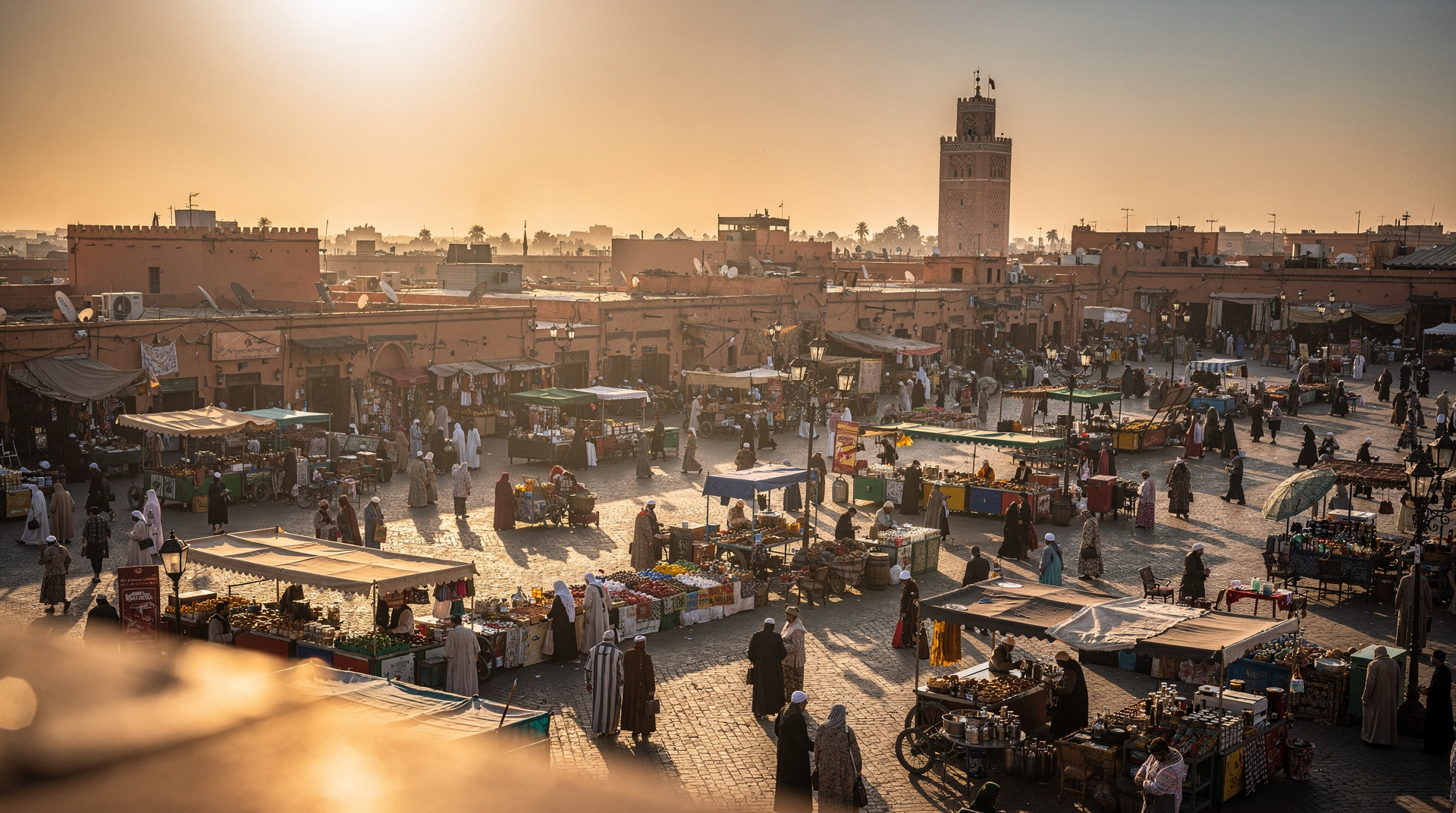
Atmospheric evenings. The medina after iftar is incomparable. Jemaa el-Fnaa in Marrakech transforms into a massive open-air communal dining table. The Fes el-Bali medina glows with fairy lights and lanterns. Chefchaouen’s blue streets fill with families in djellabas. The ambiance is genuine, not curated for tourists.
Authentic cultural access. During Ramadan, Moroccan hospitality reaches a peak. Strangers invite solo travellers to share iftar. Riad owners often arrange a communal breaking-of-fast for guests. Food tours and cooking classes that run after sunset offer a direct window into Moroccan domestic life.
Fewer crowds in the middle of the day. Major sights like the Majorelle Garden or the tanneries in Fes see thinner crowds in the late morning. Lines are shorter.
Lower prices. February–March is already a shoulder-to-low season in Morocco. Ramadan reduces domestic tourism further. Riad prices in Fes during this period can be 20–40% below high-season rates. Sahara desert tours are similarly underpriced.
For a seasonal perspective, see our best time to visit Morocco guide which places Ramadan in the full annual picture.
Why other travellers struggle
Honesty matters here. Ramadan is not the ideal trip for everyone.
Daytime food access is genuinely limited. If you are travelling with young children, have dietary restrictions, or simply need to eat lunch at noon, Ramadan adds friction. Grocery stores remain open, and large tourist hotels never stop serving food — but spontaneous street eating disappears.
Service is slower. A fasting shop owner who has not had water since 5 am is not operating at peak hospitality by 4 pm. This is human, understandable, and unavoidable.
Cooking classes and food tours before sunset are a write-off. If the activity you most want to do in Morocco is a morning food market tour with tastings, Ramadan is the wrong month. Reschedule these to after sunset, or adjust your expectations.
Eid travel chaos. If your trip overlaps with Eid al-Fitr (March 9–11, 2027), expect disruption: closed banks and government offices, packed transportation, and many tourist-facing businesses operating on skeleton staff for 1–3 days.
See our Morocco currency and money guide for tips on carrying cash during Eid when ATMs and exchanges may be temporarily disrupted.
Region-by-region impact
Marrakech
Morocco’s most tourist-forward city handles Ramadan the most smoothly for international visitors. Gueliz (the new town) has cafés and restaurants that serve tourists all day. The medina closes down at lunch but explodes at night. Jemaa el-Fnaa after iftar is worth flying to Morocco just to see: smoke from grills, crowds at open-air restaurants, storytellers, and musicians. It is the single best place to be on any evening during Ramadan. See our Marrakech destination guide for logistics.
Fes
Fes has the most devout and traditional Ramadan atmosphere of Morocco’s major cities. The medina during the day is quieter than usual — some craft workshops reduce hours. After iftar, Fes el-Bali is extraordinary: the winding lanes fill, every riad lights up, and the air smells of cumin and charcoal. The tanneries are best visited in the morning (arrive by 10 am). Daytime restaurant access is tighter here than in Marrakech. Our Fes destination guide covers where to stay and how to navigate the medina. See also our Ramadan food guide for specific dishes to seek out.
Coastal towns (Essaouira, Agadir, Taghazout)
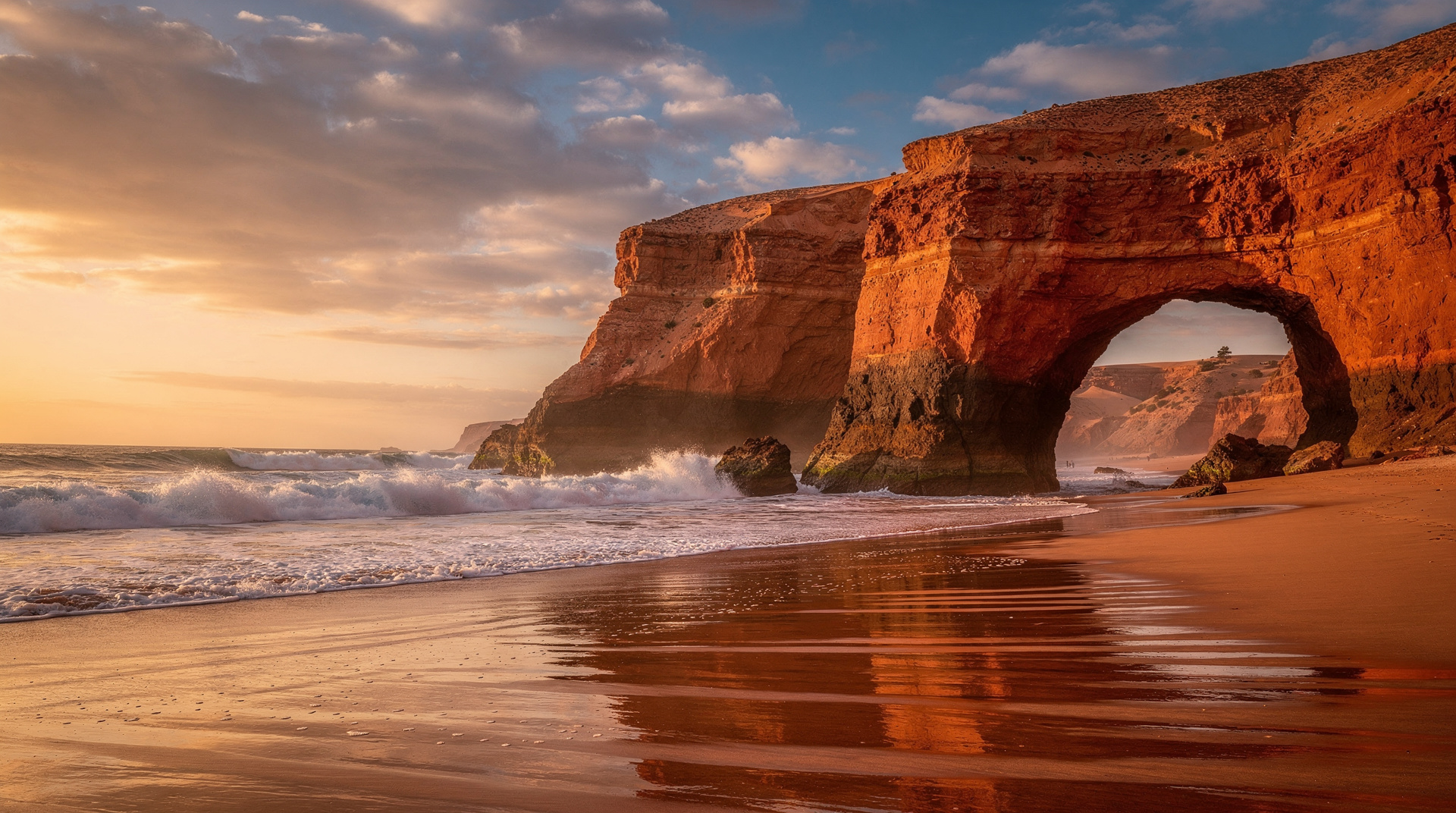
Coastal resort towns are more relaxed during Ramadan, partly because they attract more secular-minded domestic tourists and partly because Agadir in particular has a large tourist infrastructure built around Western visitors. Essaouira’s medina shows a similar pattern to Fes in microcosm. Taghazout surf camps are unaffected — they operate independently of local restaurant hours.
Sahara desert (Merzouga, Zagora)
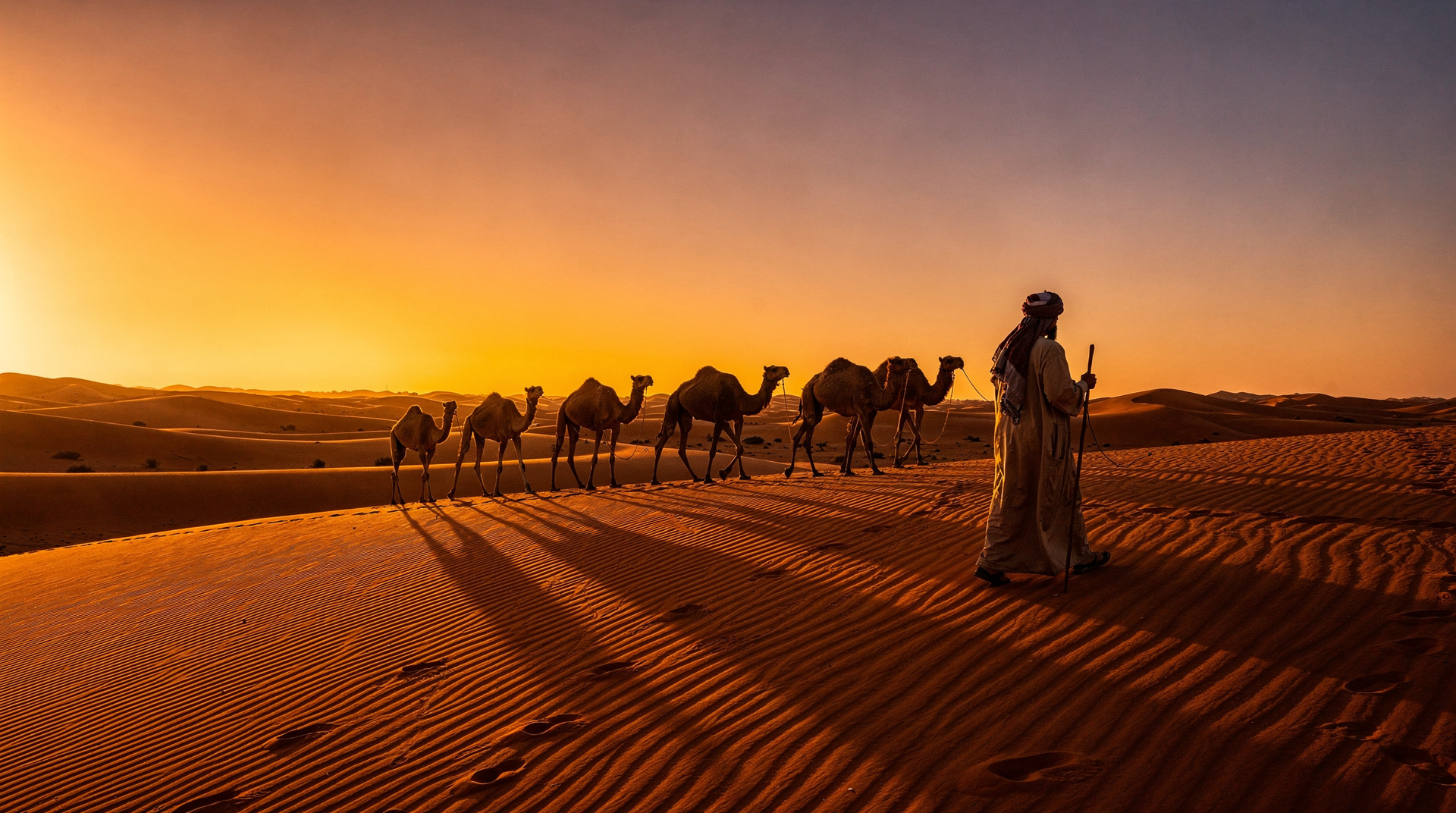
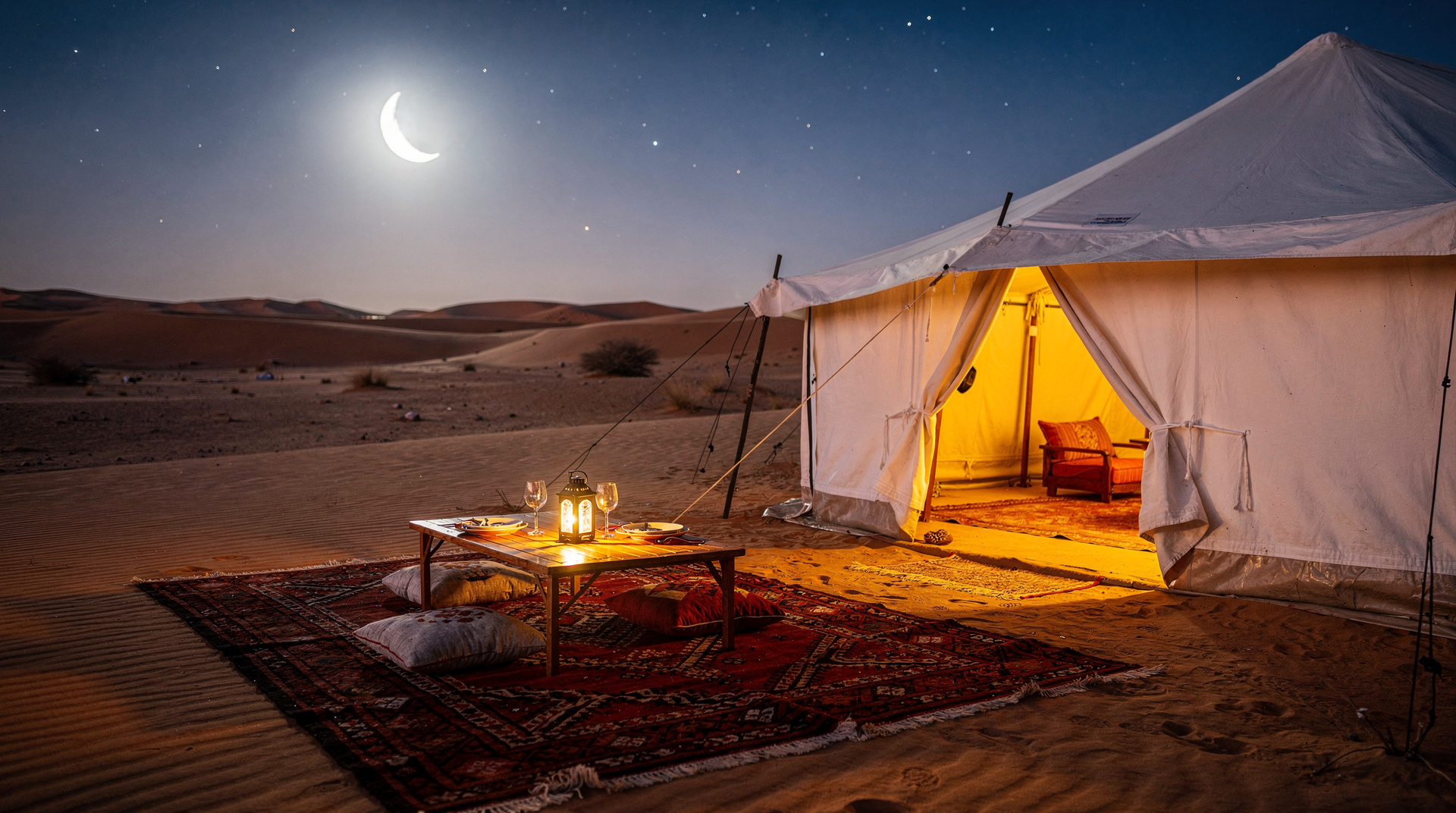
Desert tours are essentially unaffected by Ramadan. Berber camp operators and guides continue to offer camel treks, overnight camps, and 4WD excursions on normal schedules. The camel trek at sunset carries extra poignancy during Ramadan — you arrive at camp just as iftar begins, sharing dates and harira with your guide around the fire. Timing is everything and it works beautifully.
What’s open and what’s closed during the day
Open as normal: hotels, riads, supermarkets, pharmacies, banks, official museums and heritage sites, transport, tour operators, and most tourist-area restaurants in Marrakech’s Gueliz.
Open with reduced service: local restaurants in medinas (some serve takeaway to tourists), cafés (mint tea available in tourist-facing spots, but patchy), craft shops (may close early afternoon).
Closed or heavily reduced: local street food stalls (everything reopens at iftar), traditional hammams (most open from mid-afternoon, some all day in tourist areas), many small workshops and artisan studios mid-afternoon.
The practical rule: plan your heaviest activities for the morning (8 am–noon), take a quiet break from 1–4 pm (this is also the best time for a riad pool, a nap, or reading), and come alive again after 6 pm when the city does the same.
Tours that work brilliantly during Ramadan
Evening medina walks are the standout Ramadan activity. The streets are animated, locals are out, and the sensory experience is richer than at any other time of year. Marrakech’s night food tour — running after sunset through Jemaa el-Fnaa — is perfectly calibrated for Ramadan timing:
Marrakech Night Food Tour — Dinner in Jemaa el-Fnaa (GetYourGuide)For something more structured, this street food by night tour covers multiple Marrakech neighbourhoods and works exceptionally well timed to depart just after iftar:
Marrakech Street Food Tour by Night (GetYourGuide)Fes cooking class and riad dinner. A cooking class that culminates in a riad dinner is transformed during Ramadan — your host may offer a semi-iftar format, and the dishes you prepare are the same ones served to Moroccan families at sunset:
Fes Cooking Class and Dinner in a Traditional Riad (GetYourGuide)Sahara desert tours are the most Ramadan-proof activity in Morocco. Desert camps operate on their own schedule, sunset camel treks time naturally with iftar, and the sky over Erg Chebbi is no less spectacular during Ramadan than any other month. A 3-day trip from Marrakech to Merzouga covers the deep desert with meals and accommodation included:
3-Day Sahara Desert Trip from Marrakech to Merzouga (GetYourGuide)Hot air balloons (early morning, before heat and fatigue set in for fasting guides) work well in the first two weeks of Ramadan. Hammam experiences scheduled for late afternoon are comfortable — staff are alert at reopening and the steam room empties faster. Surfing at Taghazout is entirely unaffected.
Tours and activities to reconsider during Ramadan
Morning market food tours with tastings. These exist in Marrakech and Fes and depend entirely on stall operators being open and willing to offer samples. Most are unavailable until iftar. The same logic applies to any food experience designed around the day’s fresh market traffic.
Rushed half-day cultural tours packed with sites. When guides are fasting and the afternoon heat compounds dehydration, a 5-site half-day tour in the 3–6 pm slot is uncomfortable for everyone. Prioritise fewer sites with more time at each.
Any activity requiring many local collaborators mid-afternoon. Photography workshops, small-group souk discovery tours, and artisan workshop visits that depend on local participation can disappoint between 2 and 5 pm. Rebook these for morning or evening slots.
Nightclub-centric entertainment. Marrakech’s nightlife scene (rooftop bars, clubs) operates at reduced capacity during Ramadan. This is not the month for a party-focused itinerary.
Eid al-Fitr 2027 — what to expect when Ramadan ends
Eid al-Fitr 2027 falls approximately March 9–11, 2027. The first day (March 9) is the most significant: Eid prayers begin just after sunrise, families dress in new clothes (often traditional djellabas and caftans), and streets fill with greetings. The scene at the medina gates in Marrakech and Fes on Eid morning — streams of people in their finest dress, the smell of pastilla and msemen — is genuinely moving.
For travellers, the practical Eid notes are:
- Banks, government offices, and post offices are closed March 9–11.
- Many small shops and local restaurants in medinas close on the first day of Eid and reduce hours on days two and three.
- Intercity transport is overwhelmed. Trains between Casablanca, Marrakech, and Fes sell out days in advance. Book early.
- Tourist-facing operations (riads, guided tours, desert camps) remain open. Tour operators in major cities plan for the Eid period.
- Prices for accommodation briefly spike around Eid as domestic tourism surges.
The general advice: if you want to witness the genuine joy of Eid morning, stay an extra night. If you want to travel across Morocco that day, budget extra time and book transport well in advance.
Booking strategy: should you visit during Ramadan, avoid it, or plan around it?
Visit during Ramadan if: you are interested in Moroccan culture and want to see the country at its most authentic; you prefer lower prices and thinner daytime tourist crowds; you plan to spend your evenings in medinas rather than restaurants and bars; or your itinerary includes the Sahara, where Ramadan barely registers.
Consider avoiding Ramadan if: your trip is primarily food and drink-focused; you have young children who need reliable midday meals and snacks on demand; you are visiting on a tight itinerary where every hour is planned and daytime service disruptions will cascade; or you specifically want active nightlife.
Plan around Ramadan if: you have flexibility on dates. The weeks immediately before Ramadan (late January 2027) and immediately after Eid (from March 12) offer the best of both worlds — winter light, lower prices, and a Morocco fully operational. The week after Eid is particularly good: the warm communal glow of the holiday lingers, the decorations are still up, and the tourist infrastructure is back at full capacity.
Whichever window you choose, February–March 2027 is climatically excellent for Morocco. Read our Morocco in February and Morocco in March guides for weather, packing, and regional conditions.
Travelling with family or solo during Ramadan 2027
Family trips need a bit more planning around Ramadan. Young children who need reliable midday meals will do best based in Marrakech’s Gueliz or a large international hotel where breakfast and lunch service continue as normal — see the family travel Morocco guide for wider planning notes. Solo travellers, meanwhile, often find Ramadan evenings especially welcoming: shared iftar invitations and communal medina life make solo dinners rare rather than awkward. The solo female travel Morocco guide covers additional context for evening medina walks during the fasting month.
Essaouira deserves a specific mention here: its smaller, more relaxed medina handles Ramadan gently, with a similar evening transformation to Fes but on a smaller, easier-to-navigate scale. See the Essaouira destination guide for logistics if you’re weighing it against Marrakech or Fes as a Ramadan base.
Frequently asked questions about Ramadan 2027 in Morocco
What are the exact dates of Ramadan 2027 in Morocco?
Ramadan 2027 is expected to begin on Monday, February 8, 2027, and end on Monday, March 8, 2027. The official start is confirmed by moon sighting and may shift by one day. Eid al-Fitr falls approximately March 9–11, 2027.
Can I drink alcohol in Morocco during Ramadan 2027?
Alcohol is available during Ramadan in licensed international hotels, upscale riads with wine licences, and some tourist-facing restaurants — the same venues where it is available year-round. Local cafés, medina restaurants, and most Moroccan-owned establishments will not serve alcohol during Ramadan. Access is narrower than usual but not zero. See our full alcohol in Morocco guide for licensed venue types and what to expect.
Are tours still running during Ramadan 2027?
Yes. The vast majority of guided tours, desert excursions, cooking classes (evening), medina walks, hot air balloons, and day trips run on normal schedules during Ramadan. Tour guides who are Muslim may be fasting, which can slow the afternoon pace slightly. Sahara desert tours are completely unaffected. The main exception is daytime food market tours, which lose much of their purpose when stalls are closed.
What is the best city to visit in Morocco during Ramadan?
Marrakech offers the best visitor infrastructure for a Ramadan trip: tourist restaurants remain open for lunch in Gueliz, the evening atmosphere on Jemaa el-Fnaa is unrivalled, and the city is experienced in hosting international visitors year-round. Fes offers the most intensely traditional Ramadan atmosphere for those who want cultural immersion. Essaouira is the calmest and most relaxed option. The Sahara region is unaffected.
Are hotels and riads open as normal during Ramadan?
Yes. All hotels, riads, and guesthouses operate as normal throughout Ramadan. Breakfast service is uninterrupted. Many riads will offer a communal iftar experience for guests in the evening — this is one of the unexpected highlights of staying in a traditional riad during the holy month. Reception, housekeeping, and all guest services continue normally.
Are flights and accommodation cheaper during Ramadan 2027?
February–March is already shoulder season in Morocco, and Ramadan suppresses domestic tourism further, which means riad and hotel prices in cities like Fes and Chefchaouen can be 20–35% below high-season rates. Flights from Europe are generally cheaper in late February than in April or school holidays. This is one of the underrated financial arguments for a Ramadan visit.
What time is iftar (sunset) during Ramadan 2027 in Morocco?
Iftar times shift daily as Ramadan progresses through late winter into early spring. Approximate sunset times for key Moroccan cities during Ramadan 2027: in early February (start of Ramadan), sunset falls around 6:20 pm in Marrakech and Fes. By mid-February, around 6:35 pm. By early March (the final week of Ramadan), around 6:45 pm. Morocco does not observe daylight saving time until the last Sunday of March, so the clock does not change during Ramadan 2027. These times are the exact moment of iftar — plan your evening itinerary around them.
Is Ramadan 2027 a good time for a family trip to Morocco?
It depends on the ages and flexibility of your children. Families based in international hotels or Marrakech’s Gueliz district, where lunch service continues normally, tend to manage well. Families relying on spontaneous street food or expecting normal midday restaurant hours in medinas will find it harder. See the family travel Morocco guide for more detail on planning around the fasting month.