Best Time to Visit Morocco for Couples & Honeymoons
When is the best time for a Morocco honeymoon?
Late March to early May and September to early November are the sweet spots — pleasant weather across all regions (riads, Atlas, Sahara), fewer crowds than peak winter, and lower riad prices than December-February. Avoid Ramadan if you want lively evenings and unrestricted dining.
Why Morocco is unlike any other honeymoon destination
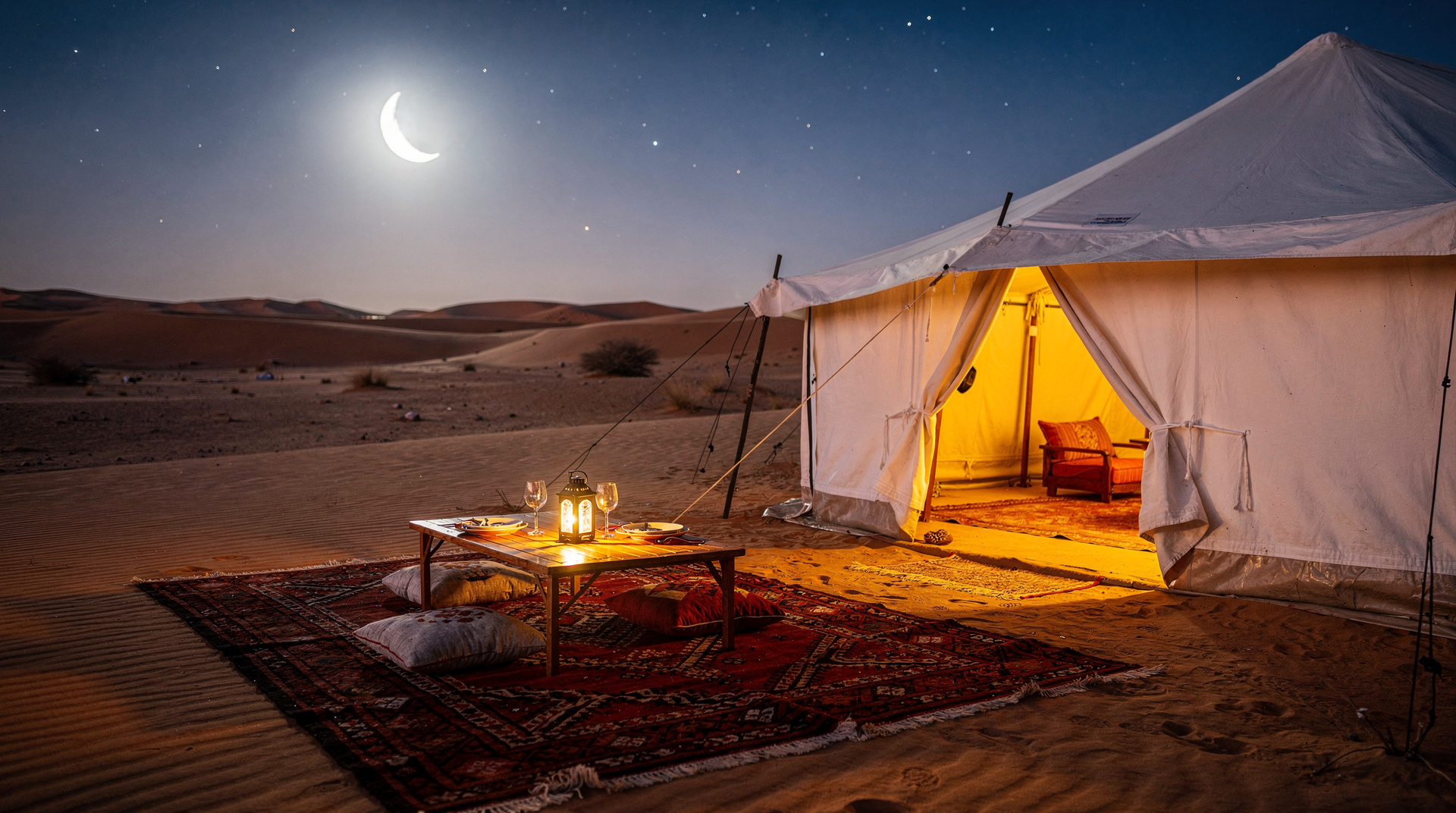
Honeymoons in Morocco are not about beach loungers and swim-up bars. They are about arriving at dusk to a candlelit riad in Marrakech, the smell of orange blossom drifting through a tiled courtyard. They are about lying in a luxury desert camp at Erg Chebbi, watching the Milky Way uninterrupted by any city glow. They are about a shared hammam followed by an argan-oil massage and, afterward, mint tea brought to your room on a brass tray.
What makes Morocco different — and what makes timing so important — is the sheer range of environments a couple can experience in one trip. You can start in a medina riad, cross the High Atlas on a scenic mountain road, sleep in the Sahara desert, and end on the Atlantic coast in Essaouira, all within ten days. Each environment has its own ideal season, and they do not always match. This guide untangles that complexity.
See our full Morocco honeymoon itinerary for a day-by-day route that visits all four landscapes in two weeks.
At a glance
| Best months | Late March-early May and September-early November |
| Cost | Around €130-320/night for a quality riad, depending on season |
| Time needed | 10-14 days to cover riad, Atlas, Sahara and coast comfortably |
| Getting there | Fly into Marrakech or Casablanca; the classic route runs Marrakech to Sahara to coast |
| Avoid | Ramadan if you want lively evenings and unrestricted dining |
For the full comparison of hotel-style luxury versus riad-style intimacy across your trip, the luxury vs budget Morocco guide and the riad vs hotel Morocco guide are both useful before you start booking.
Season by season: what couples actually experience
Spring (mid-March to late May)
Spring is the single best season for a Morocco honeymoon, particularly the window between late March and early May.
Weather: Marrakech sits at 22–28°C. The Atlas Mountains are snow-capped but the passes are open. Essaouira is mild at 18–22°C with manageable wind. Merzouga and the Sahara are warm (25–32°C) but not brutal — nights are still cool enough for blankets in the desert camp.
Crowds: Lower than the Christmas-January peak. The medinas are busy at weekends but walkable on weekdays.
Prices: Riad rates sit 15–25% below their December-February peak. A top riad in Marrakech that charges 350–450 EUR per night in January can be found at 270–350 EUR in April.
Romance factor: The Ourika Valley and Agdal Garden are in bloom. Jacaranda trees line the roads around Marrakech. Almond blossom in the Atlas is gone by April but roses in the Dades Valley (the “Valley of Roses”) peak in early May — one of Morocco’s most photogenic spectacles.
Ramadan caveat: Ramadan falls in spring in some years (see section below). In 2027 it begins around February 8. In 2028, around January 28. Check the lunar calendar for your year before booking.
A hot-air balloon over Marrakech at sunrise — with Berber breakfast and transfer included is at its most dramatic in spring, when the Atlas is still snow-dusted and the light is crystalline. Book at least two weeks ahead; good operators fill up fast in April.
Summer (June to August)
Summer is not the ideal season for a Morocco honeymoon, and the reasons are practical rather than poetic.
Weather: Marrakech regularly hits 38–42°C in July and August. The medinas are stifling even in the morning. The Sahara is actively hostile for romantic desert camps — daytime temperatures exceed 45°C and sleeping in a tent, even a “luxury” one, becomes uncomfortable. The Atlas mountain road to Ouarzazate is hot and dusty.
Where summer works: The Atlantic coast is the exception. Essaouira, sitting directly on the Atlantic trade winds, rarely exceeds 26°C even in August. Agadir and Taghazout are popular summer beach destinations. Couples who want a simpler sun-and-sea honeymoon may find July or August perfectly workable if they base themselves on the coast and avoid heading inland.
Prices: Summer is low season in Marrakech and the Sahara, so inland riad prices drop significantly — sometimes 30–40% off peak. Deals exist, but the heat is the cost.
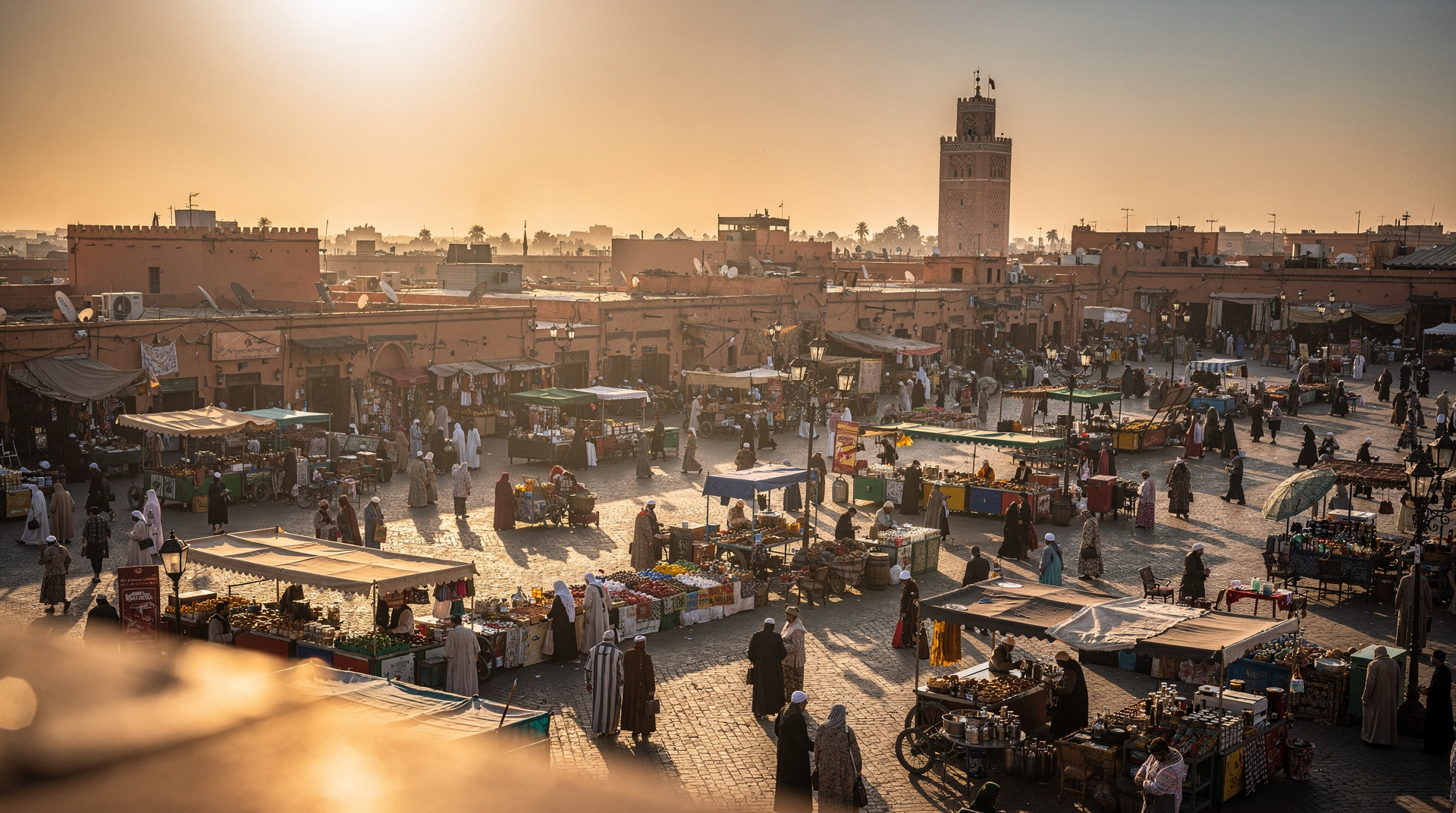
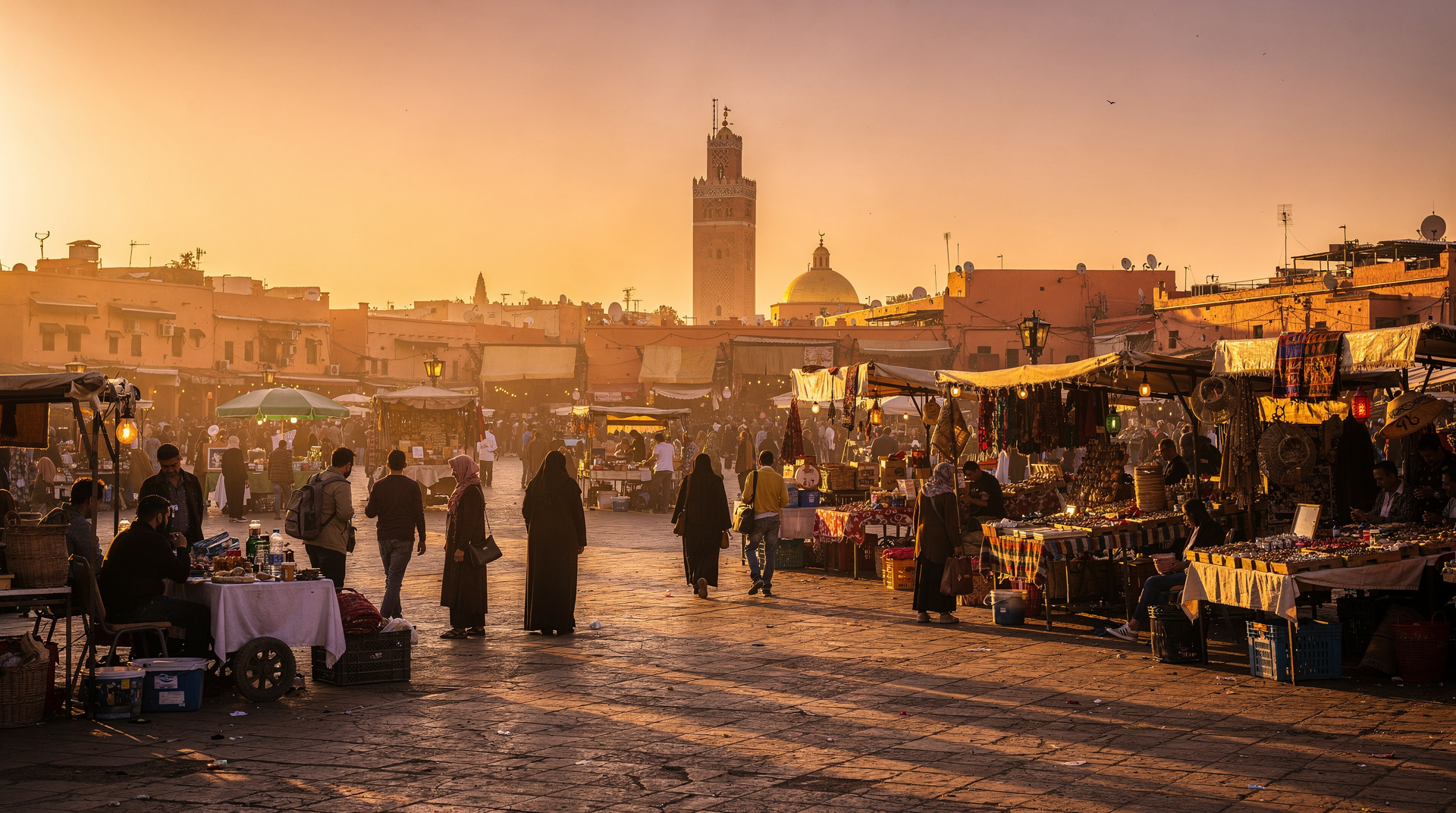
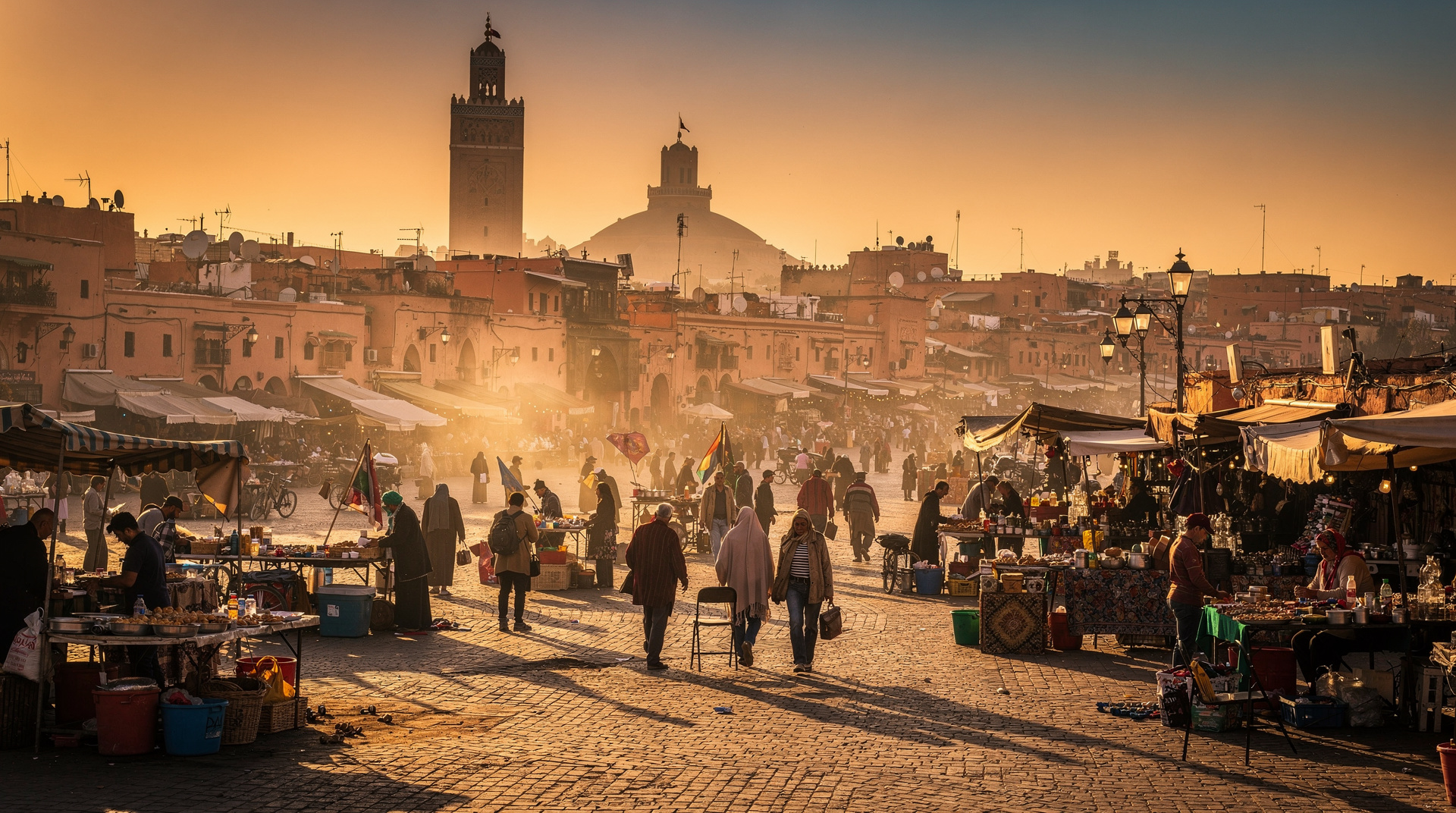
Advice: If you must travel in summer, schedule Marrakech for early morning only (before 10:00), retreat to your riad pool from 11:00 to 17:00, and plan evening activities only. The Jemaa el-Fna is actually lively in summer evenings. But for the full Morocco experience — including the Sahara — summer is the hardest season to work with.
Autumn (September to early November)
Autumn rivals spring as the best honeymoon season, and the third week of October is arguably the single finest week of the year for a Morocco trip.
Weather: Temperatures in Marrakech fall back to 26–32°C in September, reaching a comfortable 22–27°C by October. The Sahara cools rapidly after mid-September — overnight temperatures at Merzouga drop to 15–18°C, perfect for sleeping under canvas. Rain is rare until November.
Crowds: The post-summer lull means the medinas are quieter than spring. Tour groups are smaller. Riads offer good availability even without booking three months ahead.
Prices: Shoulder season rates in September and early October are genuinely low — the best combination of good weather and fair prices in the whole calendar. Mid-October sees prices begin to rise as the pre-Christmas wave approaches.
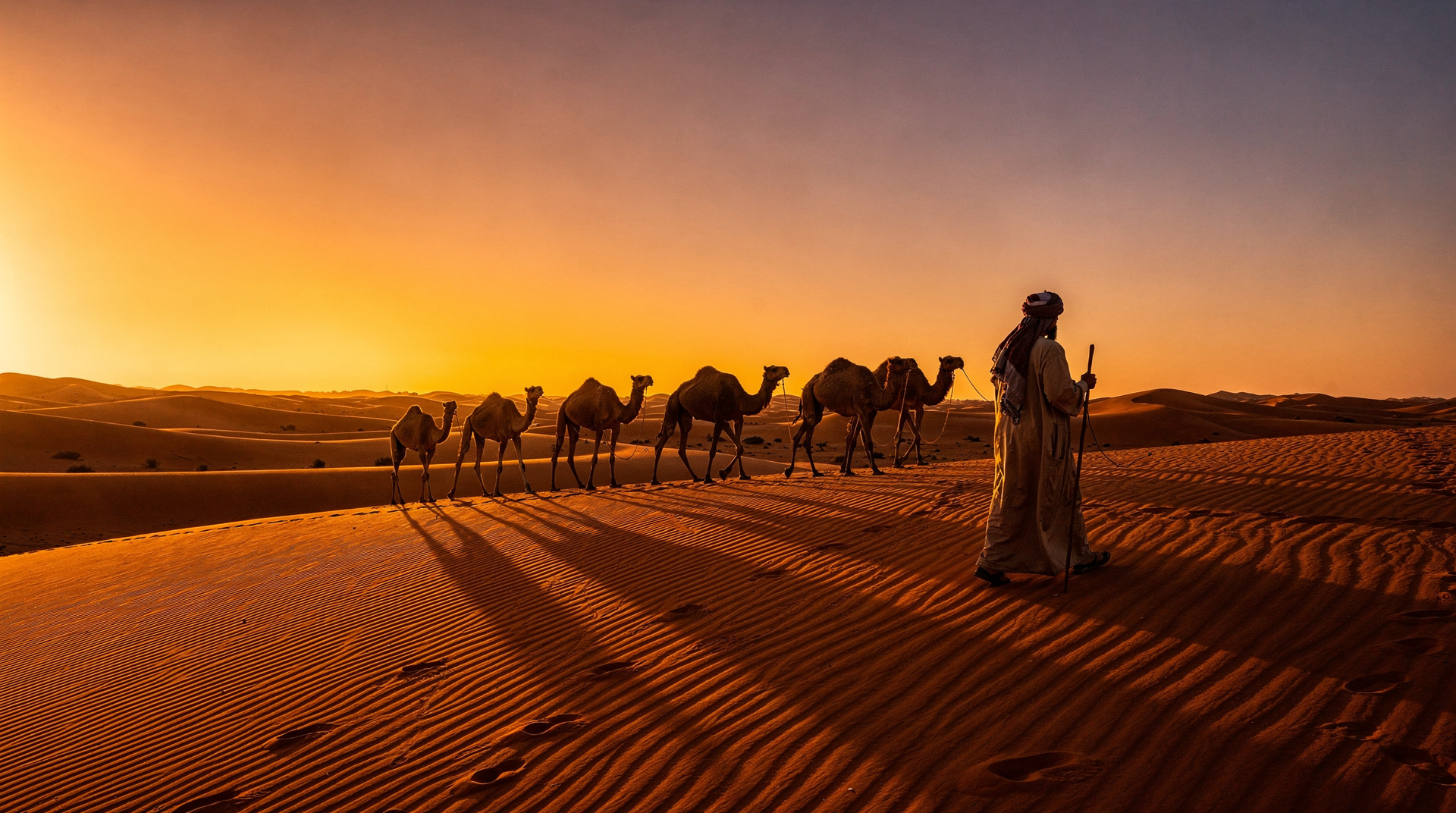
Romance factor: The light in autumn Morocco has an amber quality that photographers prize. Sunsets over Erg Chebbi sand dunes in October are extraordinary — the low angle of the sun catches every ripple in the sand. A
luxury desert camp at Merzouga with camel ride and dinner is at its most spectacular in the third week of October, before the cooler December nights set in.
Winter (late November to early March)
Winter is high season — and high price — but it is genuinely beautiful.
Weather: Marrakech in December and January averages 18–22°C during the day and 6–10°C at night. The Atlas Mountains receive snow from December, creating a dramatic backdrop. The Sahara is cold at night (3–8°C) but sunny and clear during the day — pack down sleeping bags for any desert camp stay.
Crowds: Christmas and New Year are the absolute peak. Between 20 December and 5 January, popular riads are fully booked months in advance and prices hit their annual maximum.
Prices: December riads in Marrakech can run 400–600 EUR per night for top properties. A luxury desert camp near Merzouga costs 200–350 EUR per person per night over Christmas.
Best value window: Late January to mid-February is a quiet, underrated sweet spot. Ramadan has not yet started (in most years through 2026), crowds are thin, prices soften 20–25% from the Christmas peak, and the Atlas snow is still photogenic.
For a comprehensive look at how each month plays out, see our full guide to the best time to visit Morocco.
Month-by-month romance guide
January — Cold nights, thin crowds, low prices. Good for couples who want the Sahara experience without summer heat. Romance score: 7/10. Caveat: nights in the desert camp require serious warm layers.
February — Similar to January but Atlas skiing at Oukaimeden is possible for adventurous couples. Almond blossoms appear in the Souss Valley near Agadir. Romance score: 7/10.
March — Weather warming fast. Spring flowers begin in the Atlas foothills. If Ramadan falls in March, evening activity is restricted (see below). Romance score: 8/10 (without Ramadan), 5/10 (with Ramadan).
April — Peak spring. Rose season begins in the Dades Valley. Hot-air balloon mornings are magical. Riad gardens are lush. Romance score: 9/10.
May — Rose Festival in Kelaat M’Gouna (usually first or second week of May). Temperatures rising sharply by late May. Book the Sahara for early May, not late. Romance score: 8/10.
June — Heat building in inland areas. Essaouira remains pleasant. Romance score: 5/10 for Marrakech/Sahara; 7/10 for coast.
July — Hottest month. Marrakech and Sahara are difficult. Best: coastal Atlantic destinations. Romance score: 4/10 inland; 7/10 coast.
August — As July. European summer crowds hit the Atlantic coast. Romance score: 4/10 inland; 6/10 coast.
September — Rapid improvement after the 15th. Crowds drop. Sahara becomes viable again by late September. Romance score: 7/10 early; 9/10 late.
October — The third week of October is the single best week of the year for a Morocco honeymoon. Perfect temperatures everywhere. Low crowds. Spectacular desert light. Romance score: 10/10.
November — Early November is excellent. Rain risk increases after mid-November. Mountain passes may become tricky from late November. Romance score: 8/10 (before 15th); 6/10 (after 15th).
December — Beautiful but expensive. Christmas week requires booking 4–6 months ahead. Romance score: 9/10 for ambience; 6/10 for value.
Ramadan and honeymoon trips
Ramadan is not automatically a bad time to visit Morocco, but couples need to understand what it changes.
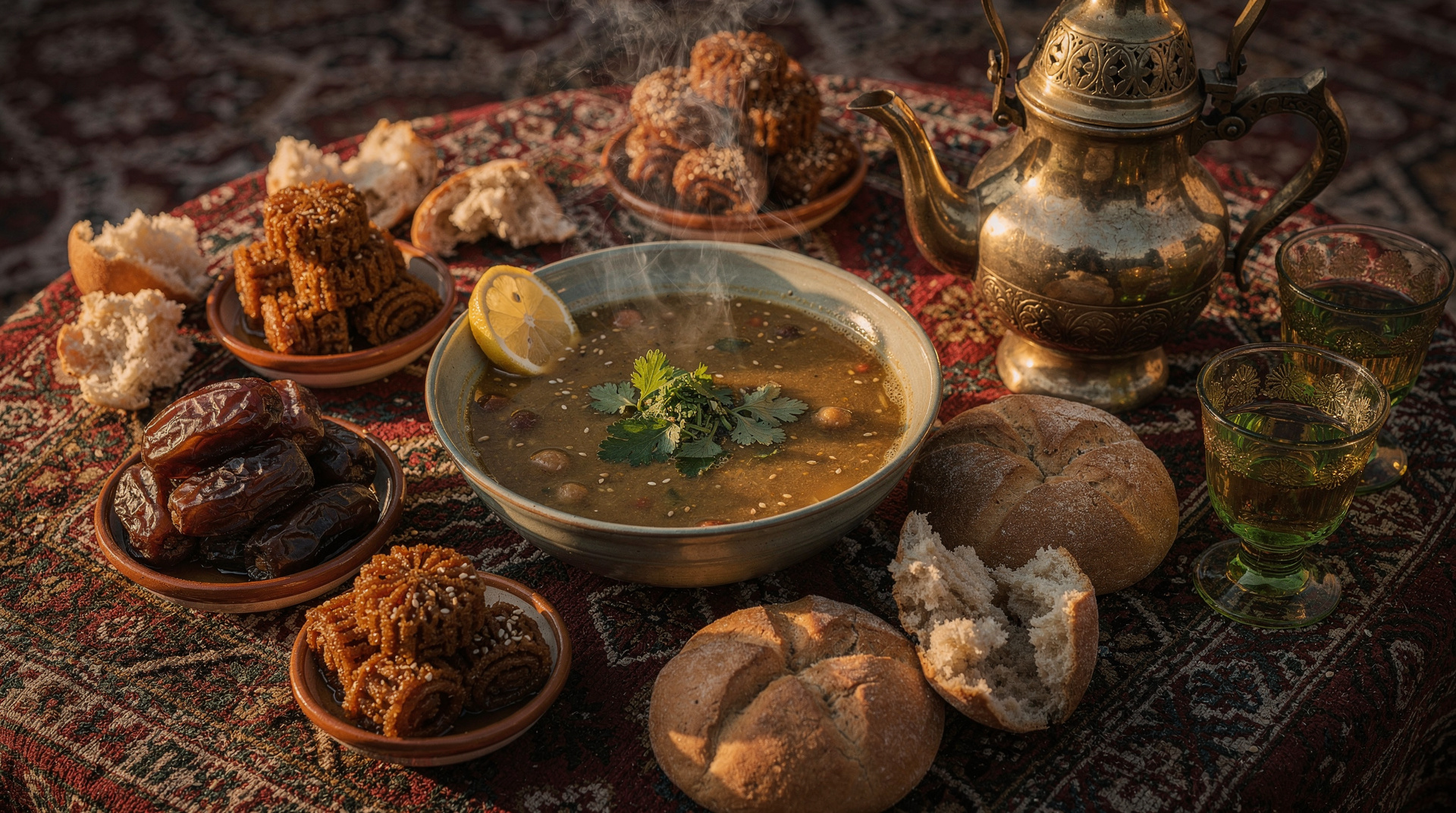
What changes: Restaurants and cafes close during daylight hours. Street food — normally a major evening activity — disappears until iftar (sunset). The Jemaa el-Fna is quieter in the late morning and afternoon. Alcohol is harder to find in medina restaurants (riads with licensed bars are the exception). Local guides and drivers may be fasting and therefore lower energy in the afternoon.
What gets better: Iftar and the hour after it are genuinely magical. Moroccan families share elaborate meals, the streets come alive at dusk, and the sense of communal celebration is moving. The third night of Ramadan (Laylat al-Qadr) and the Eid celebrations at the end are extraordinary experiences if you are comfortable with crowds.
Practical verdict for honeymooners: If your priority is relaxed evenings, restaurant dinners, and freely available wine with your sunset at a rooftop bar, avoid Ramadan. If you are curious travellers who want cultural immersion and are happy to adapt your schedule (late breakfasts, midday riad time, late dinners), Ramadan can be memorable.
2026 dates: Ramadan in 2026 runs approximately 17 February to 18 March. 2027: approximately 8 February to 8 March. 2028: approximately 28 January to 25 February.
For a full guide to navigating Morocco during the holy month, read our dedicated Ramadan travel guide.
Peak season vs shoulder: what couples actually pay
Riad prices in Morocco vary significantly by season. Here is what couples can realistically expect for a double room in a quality riad (4-star equivalent, private courtyard or rooftop terrace, breakfast included):
Marrakech (quality riad, per night, double room)
- Christmas peak (20 Dec–5 Jan): 350–600 EUR
- Winter peak (Jan–Feb): 250–400 EUR
- Spring shoulder (Mar–May): 200–320 EUR
- Summer low (Jun–Aug): 130–220 EUR
- Autumn shoulder (Sep–Oct): 160–280 EUR
- November shoulder: 180–300 EUR
In dirhams: the range runs roughly 1 400–6 000 MAD per night for a quality property.
Desert camp (Merzouga luxury camp, per person per night, full board)
- Christmas peak: 220–350 EUR
- Spring/Autumn shoulder: 140–220 EUR
- Summer low: 100–160 EUR (if camps are open — many close July–August)
The difference between a Christmas honeymoon and an October honeymoon at the same quality level can easily be 800–1 500 EUR for a 10-day trip. That saving funds two extra nights in the desert or a splurge on a private cooking class and spa day.
For curated stays in every budget tier, see our guide to the best Morocco honeymoon hotels and riads.
Region-specific timing for couples
Marrakech
The medina city is excellent from October through May. October and April are the peak of what Marrakech does best: warm days, cool evenings, and a functioning evening social life. Avoid July and August unless your riad has a deep pool and air conditioning.
Our full guide to the best riads in Marrakech covers properties with private terraces, plunge pools, and hammam suites that suit honeymoon stays.
A private hammam and massage session is one of the most romantic experiences in Marrakech regardless of season — it is climate-controlled and timeless. A 3-hour traditional hammam with massage and hotel transfer is available year-round and a non-negotiable entry on any romantic Marrakech itinerary.
For hammam culture and etiquette before you book, our hammam etiquette guide has everything you need.
Essaouira coast
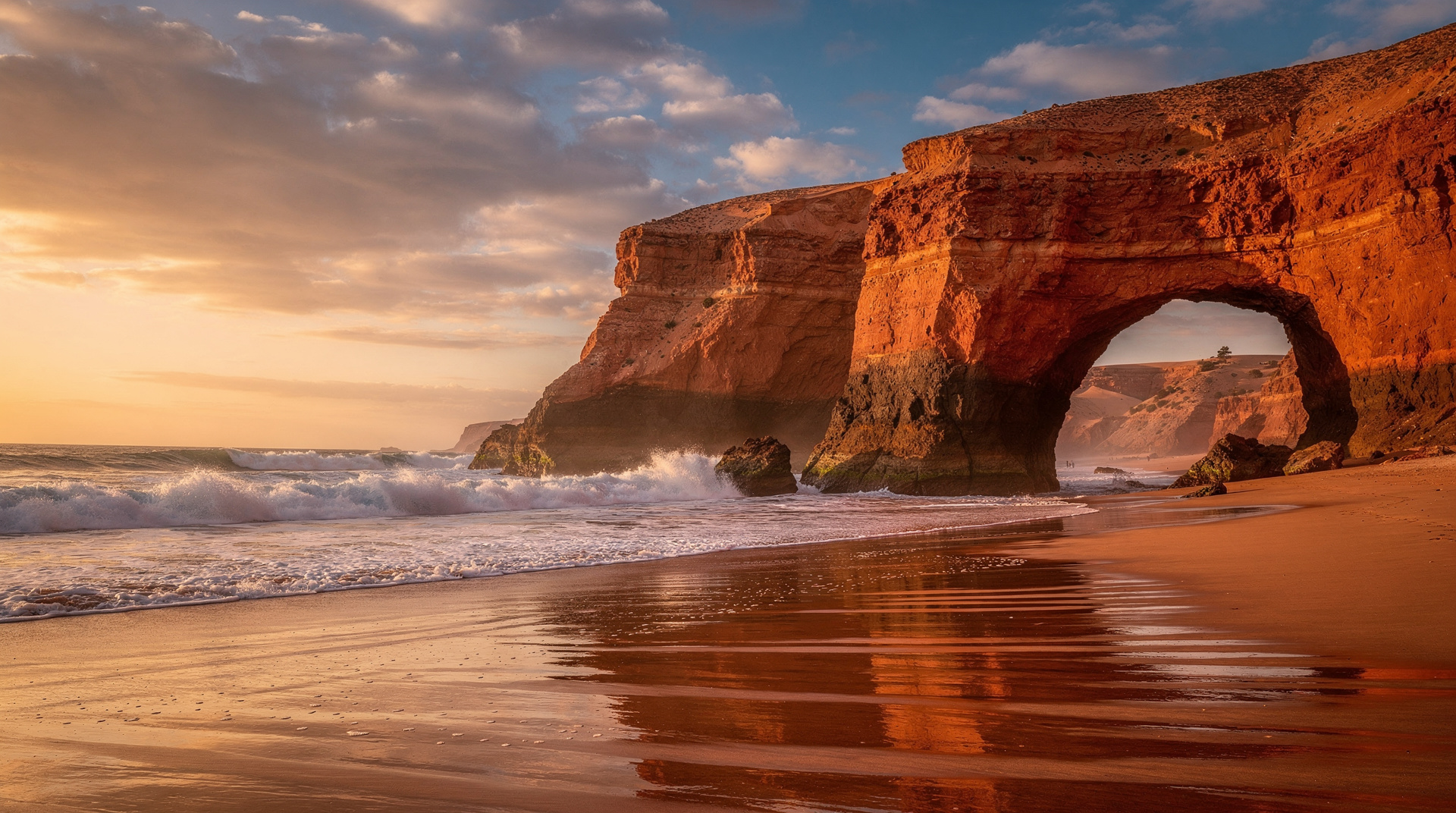
Essaouira is windy — that is its defining characteristic. The wind (the Alizé trade wind) peaks in summer, which is why the town attracts kitesurfers in July but is less ideal for couples seeking calm beach days. The best window for romantic walks on Essaouira’s long beach is October through December and March through May — the wind softens, the light turns golden, and the town is quieter.
A day trip from Marrakech by private car (2.5 hours each way) is the easiest way to include Essaouira without changing your base. Private day tour to Essaouira from Marrakech allows you to set your own pace, stop for seafood lunch at the port, and return at dusk.
Sahara desert (Merzouga / Erg Chebbi)
The Sahara is not for summer. The optimal windows are:
- October to mid-November: Best overall. Warm days (28–33°C), cool nights (12–18°C). Perfect for sleeping outdoors.
- March to early May: Second best. Warmer nights than autumn but beautiful dune colours.
- December to February: Cold nights (3–10°C) but spectacular clear skies. The Milky Way is stunning in January. Bring serious warm layers for the luxury camp.
Our dedicated guide to luxury desert camps in Morocco covers the best operators at Merzouga and Zagora, with price ranges and honeymoon packages.
The destination page for Merzouga and Erg Chebbi has practical logistics: how to get there from Marrakech (10 hours by road), the best dune-side camps, and sunrise camel trek timings.
Atlas Mountains
The Atlas is accessible year-round on main roads, but the mountain character changes dramatically by season. Snow closes high passes (notably Tizi n’Tichka at 2 260 m) in January-February some years. Spring (April-May) is ideal — the lower valleys are green and the snow line sits picturesquely above 2 500 m. Autumn is equally good. Summer is pleasant at altitude even when Marrakech is stifling.
Best honeymoon experiences by season
Hot-air balloon over Marrakech (all year, best in spring and autumn)
The flight departs at dawn, before the city wakes. You float above the pink-walled medina, over palm groves and crumbling kasbahs, with the Atlas Mountains as a backdrop. The flight takes 60–90 minutes and ends with a Berber breakfast in the countryside.
Best months: April and October for clearest light and most comfortable temperatures at altitude.
Hot-air balloon over Marrakech with Atlas Mountain views and Berber breakfast — transfers included, couples frequently book a private basket upgrade.
See our full guide to the hot-air balloon experience in Marrakech for what to expect and how to choose an operator.
Luxury desert camp stay (best October–November and March–May)
A night at a well-run luxury camp at Merzouga is one of the most romantic experiences in Morocco. The best camps have private ensuite tents with proper beds, solar power, and fire pits between tents. Dinner is served under the stars — Moroccan tagine, harira, msemen. The camel ride to and from the camp at sunset is a rite of passage.
The key logistical note: the drive from Marrakech to Merzouga is 10 hours (or a 1-hour flight to Errachidia followed by a 1-hour drive). Most honeymoon itineraries break the drive over two days, stopping at Aït Benhaddou and Ouarzazate.
Private hammam and spa (year-round, any season)
A couples hammam session — steam room, kessa exfoliation, ghassoul clay mask, argan oil massage — takes about two hours and is genuinely bonding. Quality varies enormously. The best Marrakech hammams dedicated to tourists are professionally run, hygienic, and use authentic products. Avoid hammams that upsell aggressively at the door.
Private cooking class (best April, October, and any time outside summer)
A private couples cooking class — typically three hours, market visit included, lunch or dinner at the end — is one of the most underrated honeymoon experiences in Morocco. You leave with recipes, full stomachs, and memories that outlast any tour. The best classes in Marrakech are at established riads and cooking schools.
Moroccan cooking workshop at La Maison Arabe — one of Marrakech’s most respected culinary schools.
Frequently asked questions about Best Time to Visit Morocco for Couples & Honeymoons
Is December a good month for a Morocco honeymoon?
December is beautiful in Morocco — dry, sunny, and atmospheric. The medinas are decorated, riad courtyards are strewn with blankets and fire pits, and the Atlas Mountains are snow-dusted by Christmas. The catch is price and crowds. The two weeks around Christmas and New Year are the most expensive and busiest of the year. If you travel in December, aim for the first two weeks (1–15 December) before the peak hits — you get the winter atmosphere at 20–30% lower prices.
Should couples avoid summer in Morocco?
For anyone planning a classic Morocco itinerary — Marrakech, Atlas, Sahara, desert camp — yes, avoid July and August. The heat makes the medina uncomfortable, the Sahara unsuitable for outdoor stays, and the mountain driving hot and dusty. The exception is the Atlantic coast: Essaouira, Agadir, and Taghazout remain pleasant through summer thanks to ocean winds and rarely exceed 26°C. A beach-focused honeymoon on the Atlantic coast in July is perfectly workable.
What is the best month for a Sahara honeymoon?
The third week of October. The dunes at Erg Chebbi catch the late afternoon light at a low angle, creating long shadows and deeply saturated orange-gold colours. Temperatures are ideal — warm enough for a desert dinner without a heavy coat, cool enough for comfortable sleep in the camp tent. The second-best window is late March to early April. Avoid December–January unless you bring very warm layers; Sahara nights can drop to 3°C in January.
Is Ramadan a bad time for a honeymoon in Morocco?
It depends on your priorities. Ramadan is not dangerous or unwelcoming — Moroccan hospitality does not stop during the holy month. What changes: daytime food and drink access is restricted, the medinas are quieter in the afternoon, and the festive street-food evening culture disappears until iftar. For couples who want romantic evening restaurant dinners and wine with sunset, Ramadan is genuinely limiting. For curious couples willing to adapt their rhythm — sleeping late, enjoying the riad pool in the afternoon, then going out after iftar to experience the celebratory atmosphere — it can be memorable. If in doubt, avoid it and book for April or October instead.
What is the cheapest month for a Morocco honeymoon?
August is technically the cheapest month for inland accommodation — Marrakech riads drop 35–45% from their peak. But the heat makes it a difficult trade-off. The best value honeymoon month combining good weather with low prices is September (after the 15th) or early February (before Ramadan). September in particular offers near-ideal weather in the Sahara, the first hints of autumn colour in the Atlas, and riad prices 25–30% below the spring peak.
How far in advance should couples book a Morocco honeymoon?
For travel in December–January or over Easter: book the riad 4–5 months ahead and the luxury desert camp 2–3 months ahead. For spring or autumn shoulder season: 6–8 weeks is usually sufficient, though the best riads and smallest camps fill up. For summer: availability is rarely a problem except on the Atlantic coast in August, which draws European holidaymakers. Always confirm your desert camp booking by email and ask for a written confirmation — some smaller operators are informal.
What should we pack for a Morocco honeymoon?
It depends heavily on which season and which regions you’re combining — a trip that touches riad, mountains, desert and coast in one week needs layers for four different climates. The Morocco packing list guide breaks this down by region and season, and is worth checking against your specific itinerary before you pack.
Practical extras couples often forget
Tipping adds up across a honeymoon with multiple guides, drivers, and riad staff — budget for it rather than treating it as an afterthought. The tipping in Morocco guide has specific per-service guidance so you’re not calculating it on the spot.
Coastal add-on: If your honeymoon route includes the Atlantic coast, Essaouira is the natural pairing with Marrakech — walkable ramparts, seafood, and a completely different pace from the medina and the desert.