Traveling Morocco During Ramadan: Complete Guide
Is it OK to travel Morocco during Ramadan?
Yes, but with adjustments. Daytime eating requires discretion — eat inside restaurants or your riad, not on the street. Many local restaurants close until iftar. Tourist restaurants and hotels stay open. The iftar atmosphere after sunset is extraordinary. Budget extra time as service slows. Don't avoid Ramadan Morocco — but understand what you're walking into.
Ramadan in Morocco: what it actually means for your trip
Ramadan is the holiest month in Islam. For Morocco’s Muslim-majority population, it involves total fasting (no food, water, or smoking) from dawn to sunset for 29-30 days. The country’s rhythms change substantially: daytime quiets down, evenings come alive, and the communal atmosphere after iftar (the sunset meal that breaks the fast) is unlike anything in Morocco at other times of year.
For tourists, Ramadan is neither the disaster some accounts suggest nor entirely business-as-usual. It requires adjustment, awareness, and some flexibility. Most travellers who experience Ramadan Morocco describe it as a genuinely special time — if they came prepared.
At a glance
| 2026 dates | February 19 – March 19 (Eid al-Fitr on March 20) |
| 2027 dates | Expected around February 8 – March 8 or 9 (forecast, not yet announced) |
| Daytime impact | Local cafés/restaurants mostly close; tourist restaurants and riads stay open |
| Best time of day | After sunset — streets, food stalls, and family life come alive |
| Booking lead time | Book riads early — Ramadan overlaps shoulder/high season in both years |
| Sites and tours | Run normally; the Sahara and guided tours are unaffected |
Ramadan dates: 2026 and 2027
Ramadan follows the lunar calendar and moves roughly 10-11 days earlier each year.
Ramadan 2026: February 19 – March 19, 2026 (Eid al-Fitr approximately March 20)
Ramadan 2027: expected around February 8 – March 8 or 9, 2027 (Eid al-Fitr expected around March 9 or 10)
These are approximate — the exact start and end depend on moon sighting confirmation, which is official once announced. The dates above are the best-available projections for planning purposes.
Season context: Both 2026 and 2027 Ramadan falls in February-March — Morocco’s late winter/early spring. Temperatures are mild and pleasant (15-22°C in Marrakech). This is actually one of the better times to be in Morocco weather-wise, which partly offsets the Ramadan adjustments required.
What changes during Ramadan
Daytime hours (dawn to iftar)
Food and drink: The vast majority of Moroccans fast completely — no food, no water, no cigarettes — from the Fajr call to prayer (before dawn) until Maghrib (sunset/iftar). This is observed very widely and publicly.
Eating and drinking in public: Eating, drinking, and smoking in public during daytime is illegal in Morocco during Ramadan (Article 222 of the Penal Code). Tourists are rarely prosecuted, but the social context is real — eating openly in front of fasting Moroccans is genuinely disrespectful and will generate negative reactions.
What tourists can do:
- Eat and drink inside your riad, hotel room, or a closed restaurant (out of public view)
- Tourist-facing restaurants in Marrakech, Agadir, and coastal cities generally remain open for tourists during the day but often close their street-facing access or pull curtains
- Hotel restaurants always remain open
- The golden rule: eat inside, not on the street
Local restaurant closures: The majority of local-facing cafes and restaurants close completely during the day and reopen around iftar. Your usual neighbourhood lunch spot likely won’t serve until sunset. Budget for this — eating during Ramadan daytime requires planning.
Working hours
Government offices, banks, and many businesses operate on shorter hours during Ramadan — typically finishing 2-3 hours earlier than usual. Don’t schedule anything important for late afternoon on Ramadan days.
Souvenir shops and market stallholders in tourist areas often keep adjusted hours — some open later and stay open much later into the evening than usual. The rhythm of commerce shifts.
Traffic and transport
The hour before iftar is chaotic. Everyone wants to be home (or at the iftar table) before the Maghrib call to prayer. Taxi availability drops sharply, traffic intensifies, and tempers can be short. Plan to be settled somewhere comfortable by 30-45 minutes before sunset.
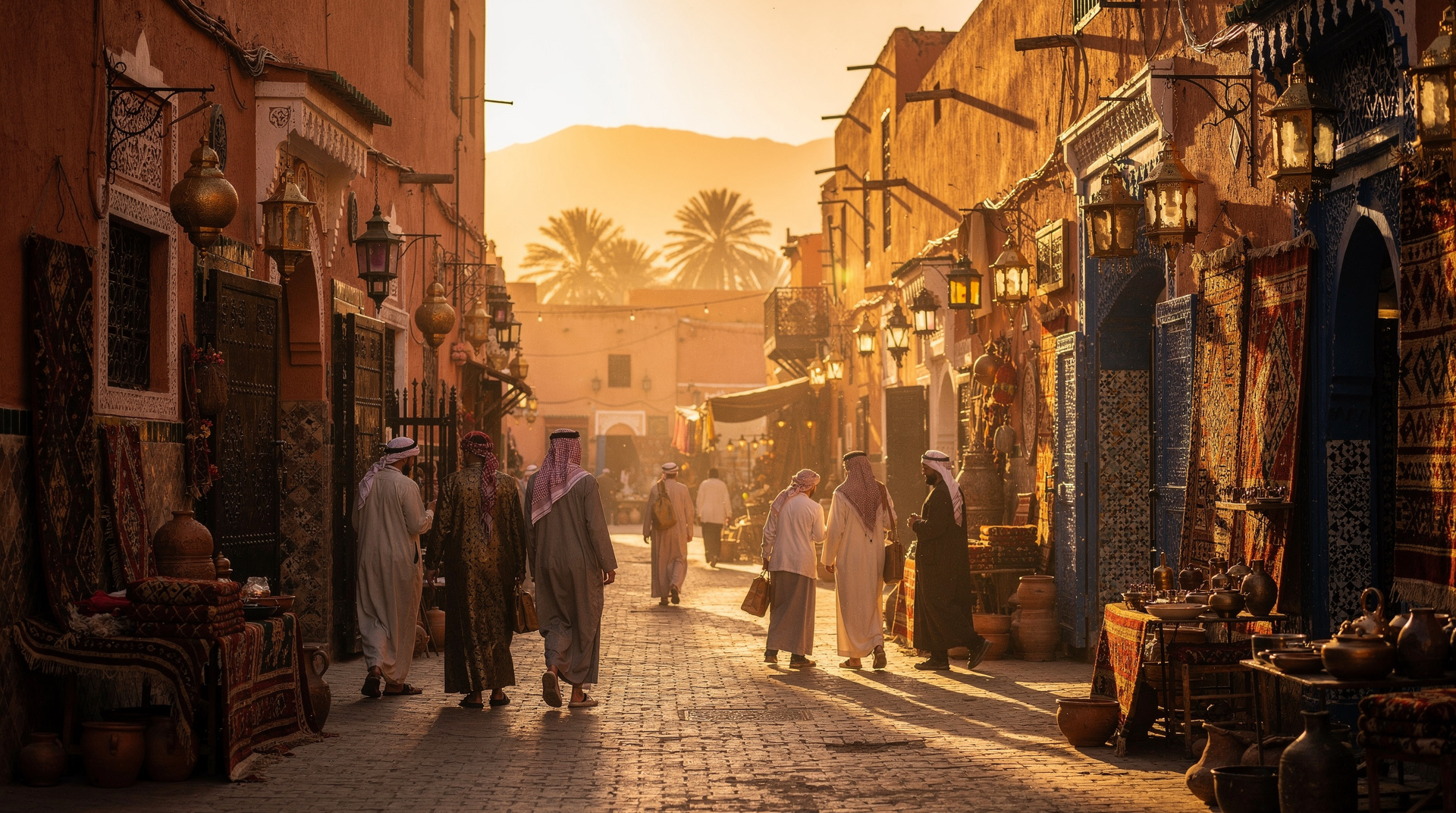
After iftar: the city comes alive. Streets fill, shops reopen, families are out, the atmosphere is festive and communal. This is the best time to experience Moroccan public life during Ramadan.
What doesn’t change during Ramadan
- Hotels and riads remain fully operational — breakfast, lunch, dinner, room service
- Tourist restaurants in Marrakech, Casablanca, Agadir, and Essaouira remain open (though some close the street-facing front)
- Tour operators and guided tours run normally
- ONCF trains and CTM buses run on normal schedules
- Most tourist sites (Majorelle Garden, Bahia Palace, Fes medersas) remain open
- The Sahara and desert camp experiences are unaffected
The iftar experience: Morocco’s best-kept travel secret
Iftar is the sunset meal that breaks the fast. It’s one of the most special experiences in Moroccan travel — deeply communal, warm, and generous.
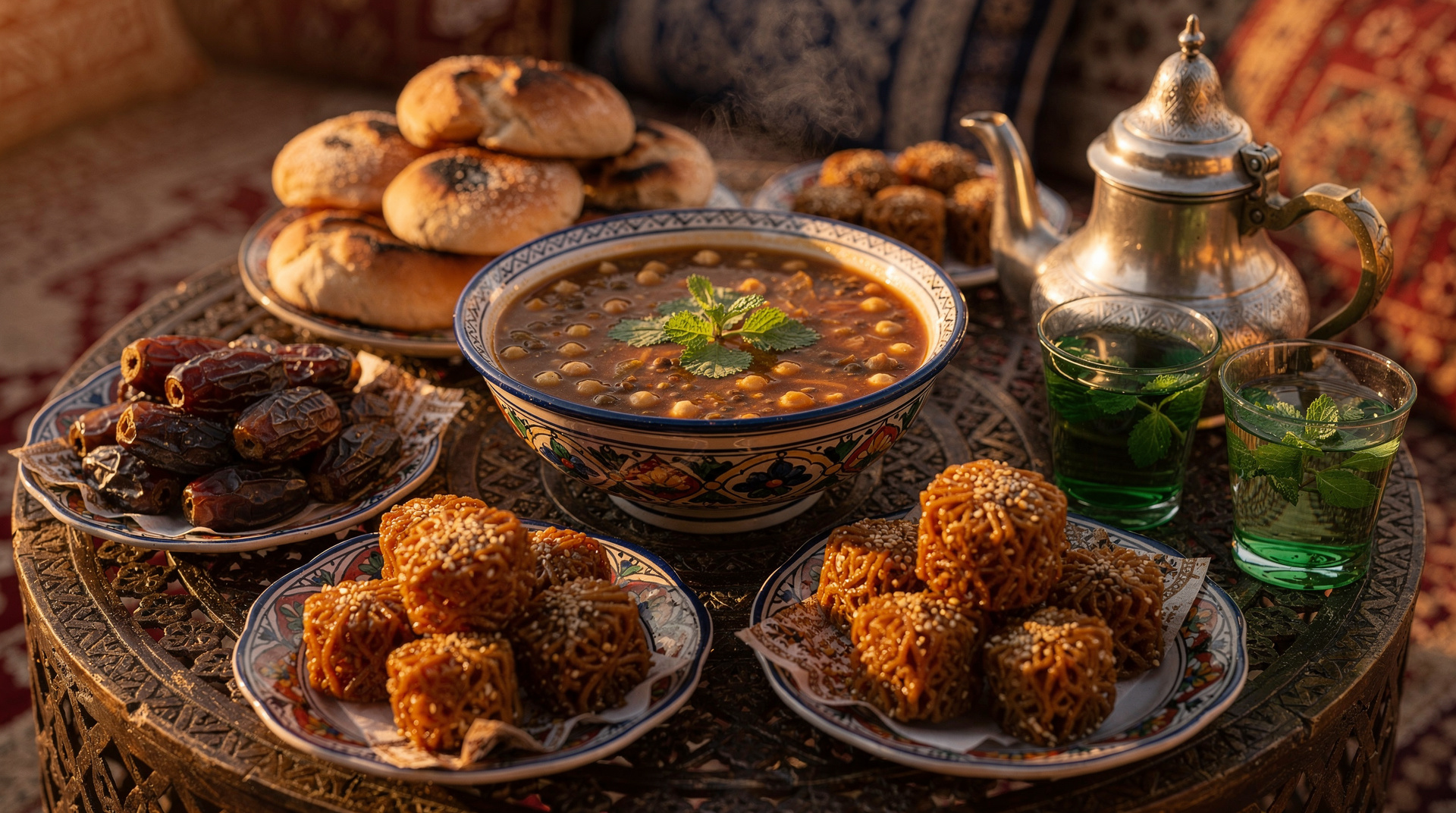
The traditional iftar spread includes:
- Harira — a rich tomato, lentil, and lamb soup (sometimes chickpea-based), thickened with lemon and egg. This is the centrepiece of every Moroccan iftar.
- Chebakia — honey-soaked sesame pastries, traditionally eaten with harira at iftar
- Dates — the Prophet’s tradition is to break the fast first with dates and water
- Sellou (or sfouf) — a roasted flour, almond, and sesame sweet
- Fresh juice and sweet drinks (almond milk, avocado smoothies)
- A larger meal usually follows harira — tagines, couscous, pastilla
How to experience iftar as a tourist:
Many riads offer a traditional iftar dinner for their guests during Ramadan — ask when booking. This is the easiest way to participate.
Some restaurants in medinas and family-run guesthouses invite guests to share iftar. If you’re invited by a Moroccan family or local contact to share iftar — accept. It’s one of the genuine hospitality highlights of any Morocco trip.
Djemaa el-Fna in Marrakech becomes extraordinary after iftar. The food stalls open, the square fills with families, and the atmosphere is completely different from the hustle of regular evenings.
Dress and behaviour during Ramadan
The general modesty guidelines apply more emphatically during Ramadan. Details are in the what to wear in Morocco guide, but the Ramadan-specific additions:
- Dress more conservatively than the standard medina baseline during daylight hours
- No eating, drinking, or smoking in public view during fasting hours
- Keep PDA (public displays of affection) minimal — more so than at other times of year
- If you’re a smoker, be mindful of where and when you smoke (not near people who are fasting)
These aren’t legal requirements for tourists in most cases, but they’re basic respect for the context you’re in. Morocco is one of the countries where the gap between “what’s technically allowed” and “what’s respectful” is meaningful.
Ramadan and specific destinations
Marrakech
Marrakech’s tourist infrastructure means Ramadan is manageable and the city remains very much open for tourism. Hotel restaurants, licensed tourist restaurants, and the main attractions all function. The Djemaa el-Fna has a different energy — more local families, less hustling, more authentic atmosphere in the evening.
The cooking classes, hammam experiences, and guided tours run normally. A Moroccan cooking class with market visit is a wonderful way to learn about iftar food traditions from a local chef during Ramadan.
Fes
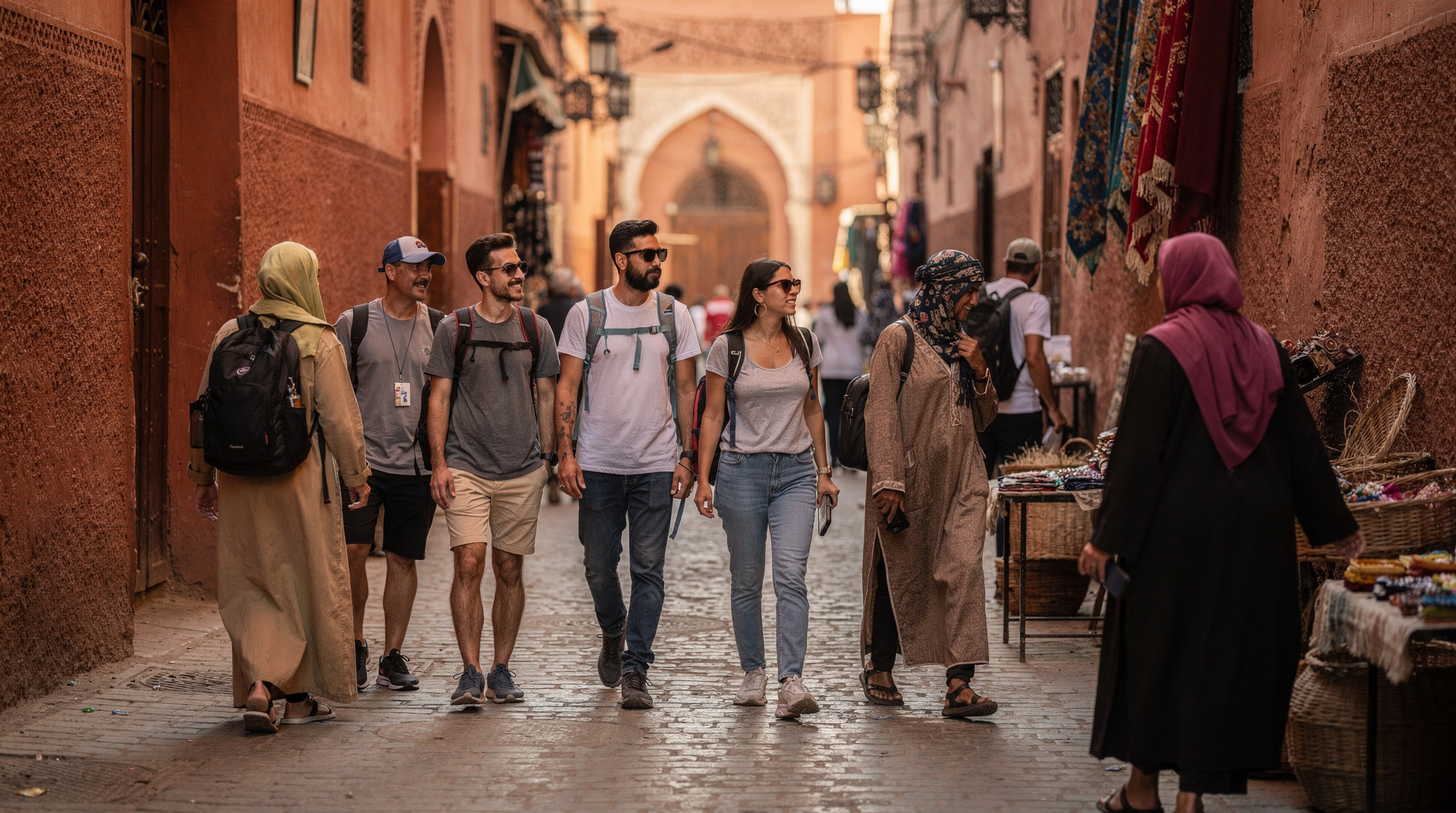
Fes is the most religiously traditional of Morocco’s major cities and Ramadan is taken very seriously here. Daytime in the medina is notably quiet. Many restaurants close until iftar. A licensed guide for the Fes medina is especially valuable during Ramadan — they can navigate you to what’s open and explain the Ramadan context as you walk. A full-day cultural tour of Fes with a licensed guide is particularly worth booking during Ramadan.
Fes evenings during Ramadan are extraordinary — the evening atmosphere in the medina, with families out after iftar, is unlike any other time of year.
Chefchaouen
Chefchaouen during Ramadan is quiet and beautiful. The small medina has an intimate iftar atmosphere. Very few tourist restaurants; expect to rely on your accommodation for daytime meals.
Casablanca and Agadir
Morocco’s more Westernised cities where tourist infrastructure means Ramadan is least disruptive for visitors. Casablanca’s restaurant scene largely continues with adjusted hours. Agadir’s beach resort areas operate almost normally.
The Sahara
Desert tours run during Ramadan. The drivers and guides who work the tours may be fasting, which means no food or drink during desert drives. They are entirely professional about this, but worth being aware of — don’t eat prominently in the vehicle, and plan your own meals at camp stops.
Practical tips for Ramadan travel
Book accommodation early. Ramadan in 2026 and 2027 falls during Morocco’s shoulder/high season. Riads in Marrakech and Fes fill up.
Ask your riad for iftar arrangement. Most riads during Ramadan will either provide iftar for guests or can direct you to the best local restaurant option.
Carry water in your bag. You can drink inside or discreetly, but you can’t stand on a medina street and sip from a bottle. A water bottle in your daypack, drunk in private contexts, keeps you hydrated without being publicly visible.
Don’t be surprised by slower service. Staff who are fasting are dealing with a physically demanding month. Small delays and slightly lower energy are normal and deserve patience rather than complaint.
The last 10 days of Ramadan are especially significant. Laylat al-Qadr (the Night of Power), usually observed in the last 10 days, brings particularly intense prayer schedules and community activity in mosques. This is a wonderful time to experience medina life if you’re respectful of the context.
Eid al-Fitr (the festival ending Ramadan): If your trip overlaps with Eid, the first 1-2 days see widespread closures — many businesses shut, transport schedules change, and the country is in full celebration mode. Factor this into your planning. It’s a wonderful day to witness but a terrible day to be trying to get things done.
Should you avoid Ramadan in Morocco?
No, and here’s why: the travellers who have the best Morocco experiences during Ramadan are those who go in understanding the context, embrace the evening atmosphere, and treat it as a feature rather than an inconvenience.
The iftar energy, the communal warmth of Moroccan families in public spaces after sunset, the extraordinary harira and sweets — these are experiences that simply don’t exist at other times of year.
The travellers who have difficult Ramadan experiences are those who expected standard Morocco and found unexpected closures, and who felt inconvenienced by a month of religious significance.
Manage expectations, plan for the morning and evening shifts in rhythm, and Ramadan Morocco can be among the most memorable travel experiences on offer.
Related guides
For seasonal planning: the best time to visit Morocco guide places Ramadan in context with other seasonal considerations. For dress expectations: the what to wear in Morocco guide covers Ramadan dress specifically. For food culture: the vegetarian and vegan Morocco guide notes that Ramadan iftar includes several excellent vegetarian options.
The Morocco budget guide includes notes on how Ramadan timing affects tour pricing and availability.
For the exact confirmed 2027 dates as they’re announced, plus a longer discussion of how the shifting lunar calendar affects trip timing year to year, see the Ramadan 2027 Morocco dates and travel guide. And for the food side of the month in more depth — what’s actually on the iftar table, city-by-city differences, and how to be invited to a family iftar — the Ramadan food guide is the companion piece to this one.
Ramadan versus other Morocco travel seasons
Ramadan isn’t a separate “season” in the climate sense — it’s a religious-calendar overlay on whichever season it falls in. In 2026 and 2027 it lands in Morocco’s mild late-winter/early-spring window, which already compares favourably to the summer heat covered in the Morocco in July guide and Morocco in August guide. The practical trade-off is daytime rhythm (shops, cafés, transport) versus climate and crowd levels — for most travellers arriving in February or March, Ramadan is a manageable overlay on an otherwise excellent-weather trip, not a reason to change dates.
Packing and logistics notes specific to Ramadan
Beyond the dress code covered above, a few practical additions: carry snacks for long intercity journeys if you’re not fasting, since roadside stops may have limited daytime food options outside of major towns. Trains and buses run on normal schedules (see the getting around guide for the wider transport picture), but stations can be busiest in the hour before iftar as everyone rushes to be settled. If your itinerary includes a private driver, they may be fasting themselves — the private tour vs self-drive guide is worth reading beforehand so you know what to expect from a fasting guide’s pace and energy through a long day.
Frequently asked questions about Traveling Morocco During Ramadan
Do I need to fast if I’m not Muslim?
No. Non-Muslim visitors are not expected to fast. You can eat and drink as normal — the requirement is discretion (eating indoors, not on the street) rather than abstinence.
Is it harder to find flights or good riad rates during Ramadan?
Rates aren’t usually higher for Ramadan itself, but since 2026 and 2027 Ramadan falls in what’s otherwise a popular shoulder-season window, availability at the best riads can be tight. Booking a few weeks ahead is the safer approach rather than waiting for a Ramadan-specific price shift.