Morocco in August
Is August a good time to visit Morocco?
August is Morocco's hottest month — Marrakech regularly hits 42°C, the Sahara reaches 48°C+. But the Atlantic coast, Chefchaouen, and the Middle Atlas are genuinely pleasant. If your trip centres on these areas and you avoid the south, August works. Avoid the Sahara and Marrakech midday entirely.
August in Morocco: the heat reality
No sugarcoating: August is Morocco’s most challenging month for travel. Marrakech regularly exceeds 42°C. Merzouga can hit 48–50°C during afternoon hours. The Aït Benhaddou kasbah in direct August sun is an oven. Driving in a non-air-conditioned vehicle is dangerous. The medinas of Marrakech and Fes trap heat in their narrow covered streets from 10am to 7pm.
And yet, thousands of travellers visit Morocco in August every year — and many have excellent trips. The key is geography. The Atlantic coast from Agadir to Essaouira and Asilah sits at 25–28°C, cooled by the Alizé trade winds. Chefchaouen in the Rif is comfortable at 32°C. The Middle Atlas — Ifrane, Azrou, Khénifra — is positively cool at altitude.
August also marks peak Moroccan domestic tourism. The Atlantic beaches fill with Moroccan families on school holiday. Agadir, Asilah, Moulay Bousselham, and the beaches north of Rabat are at maximum occupancy. This is Morocco at its most locally authentic coastal moment — not a tourist Morocco, but a Moroccan Morocco on vacation.
| Where | Coast (Essaouira, Agadir, Taghazout), Chefchaouen, Middle Atlas |
| Weather | Coast 25–28°C; inland cities 38–43°C; Sahara 48°C+ |
| Crowds | Coast at max capacity (domestic + European); inland lighter |
| Cost | Coastal accommodation at annual peak; inland riads mid-range |
| Best time within August | Early morning (before 10am) and evenings for inland cities |
Regional comparison at a glance
| Region | August temp | Verdict |
|---|---|---|
| Atlantic coast (Essaouira/Agadir/Taghazout) | 25–28°C | Best August choice — book well ahead |
| Chefchaouen & Rif | 30–33°C | Manageable, busy, great evenings |
| Middle Atlas (Ifrane/Azrou) | 20–25°C | Genuine cool escape at altitude |
| Marrakech / Fes | 38–43°C | Doable with a siesta-city strategy only |
| Sahara (Merzouga) | 48°C+ | Avoid — see the Sahara tour guide for better months |
Weather in August by region
Marrakech
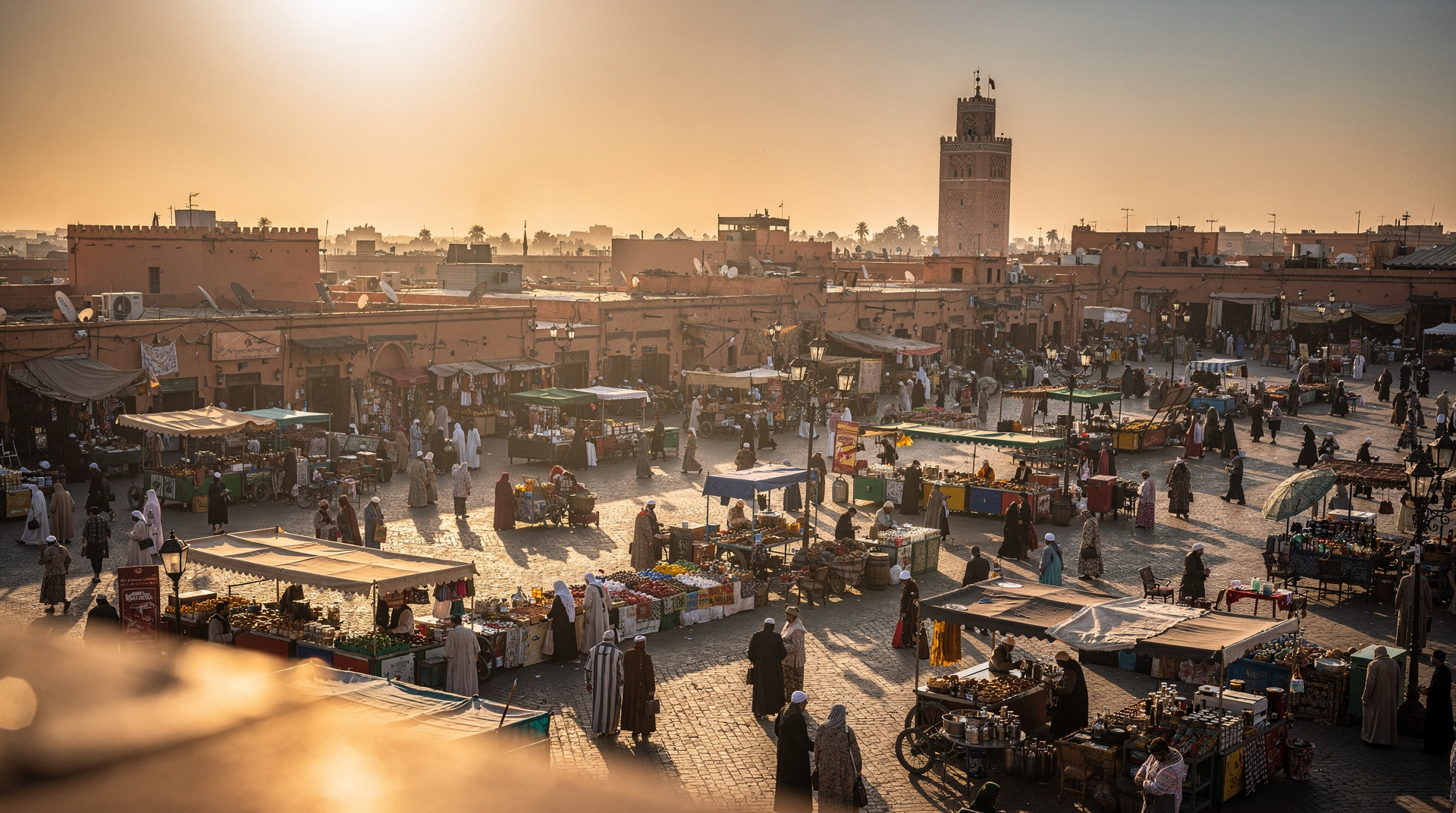
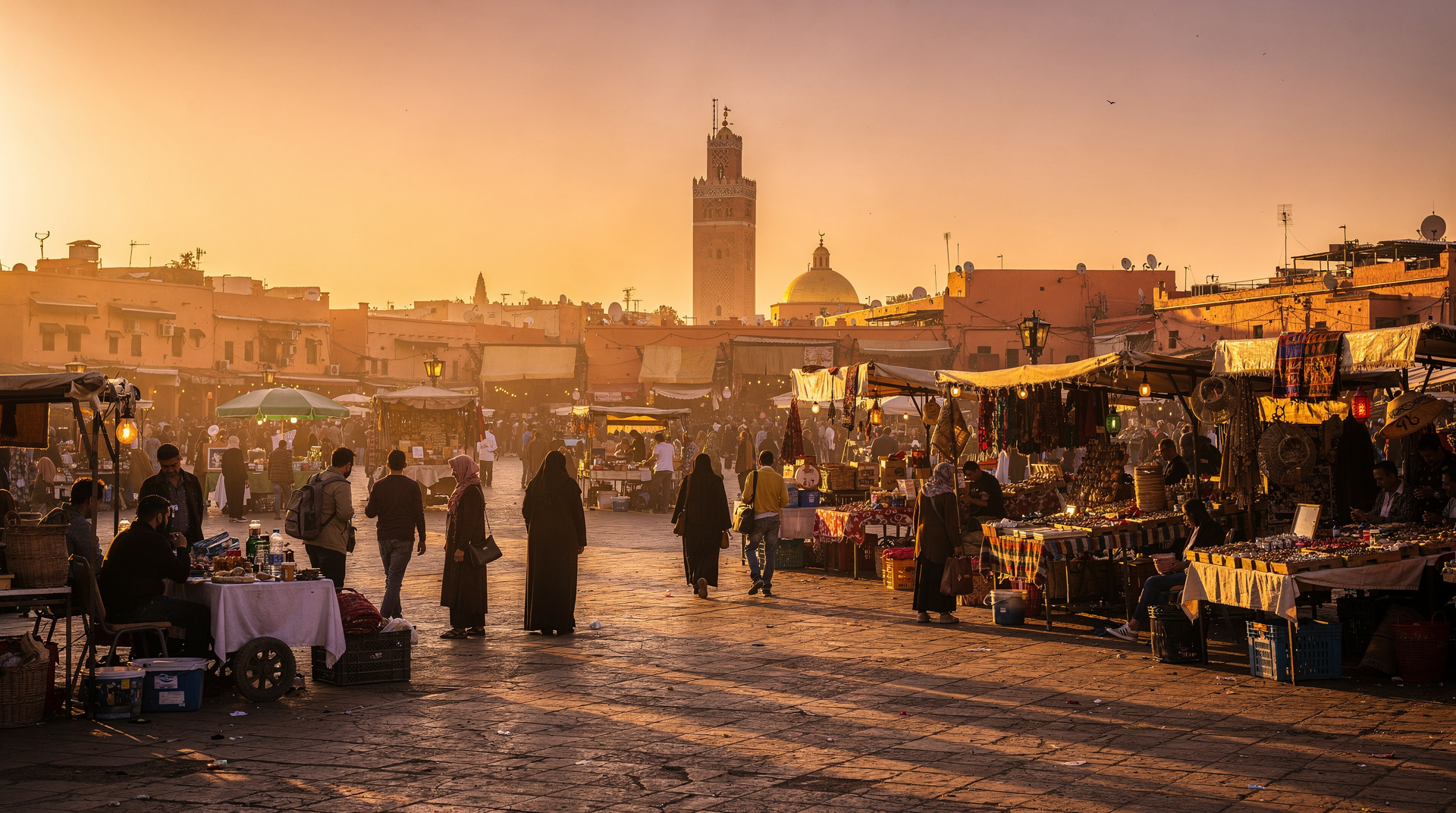
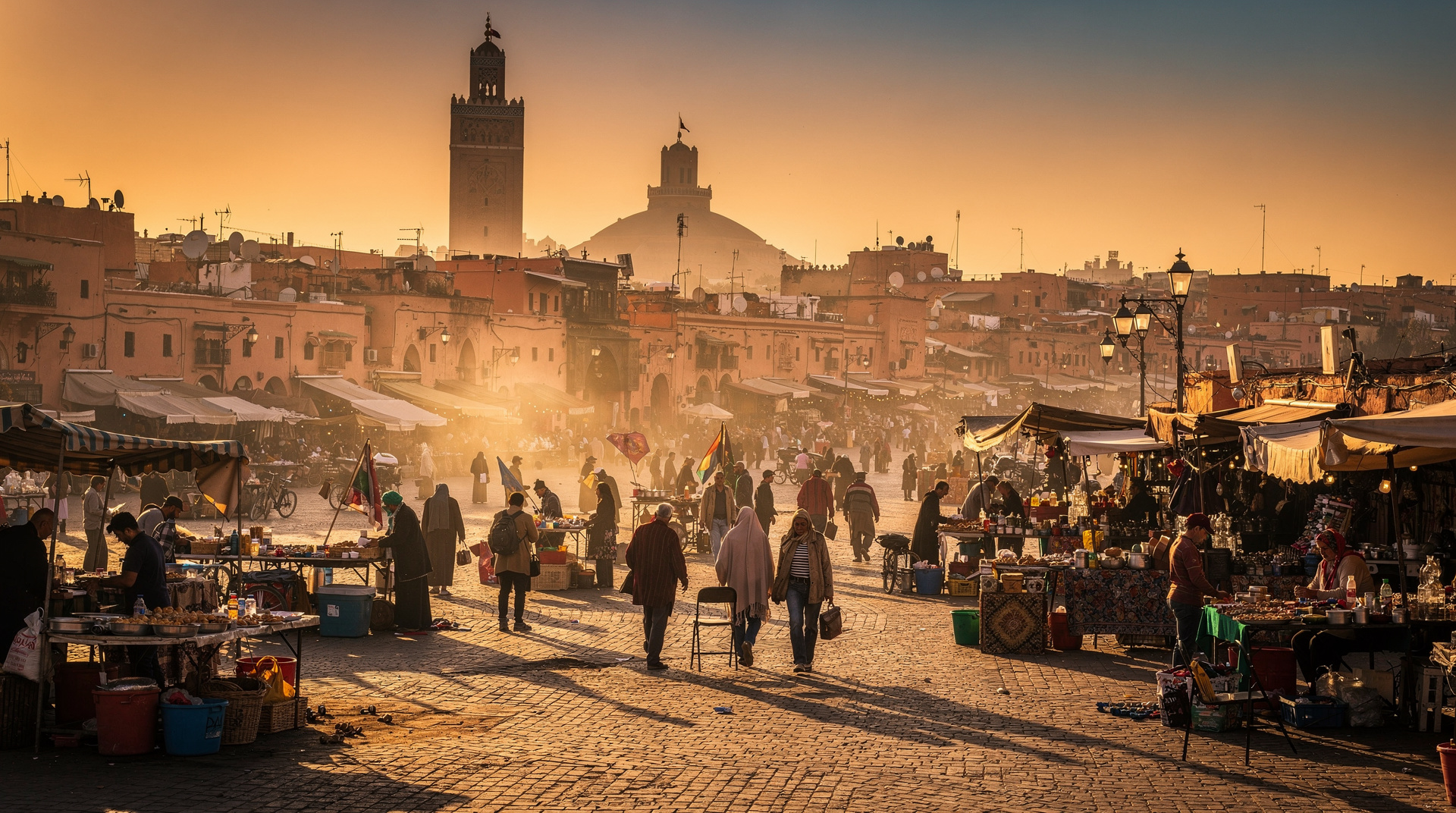
The hottest month. Daytime highs of 40–43°C are the norm; peaks to 46°C occur. The medina is genuinely uncomfortable from 10am to 7pm. The only viable approach to August Marrakech is to treat it like a siesta city: up at 7am, out of the sun by 10am, riad pool and hammam until 5pm, evening streets from 7pm onward. This approach works and Marrakech evenings in August are brilliant — the Jemaa el-Fna at 9pm is one of the finest experiences in travel.
Fes
Similar to Marrakech. 38–42°C days with the medina’s narrow streets offering shade but also heat trapping. Early morning (8–10am) is when the tanneries, Bou Inania Madrasa, and Al-Attarine souk are bearable and less crowded. Fes in August has more local character than in spring — the tannery workers, the bread bakers, the spice merchants — because tourist groups are fewer.
Chefchaouen and the Rif
August is Chefchaouen’s busiest month — both Moroccan domestic tourists and European visitors converge on the blue city. Despite the crowds, temperatures at 30–33°C are manageable. Evenings at 20–22°C are excellent for the cafes and rooftop restaurants that characterise Chefchaouen’s social scene.
Atlas Mountains
The high Atlas offers escape from the lowland heat. Above 2,000m, temperatures in August sit at 20–25°C. The Toubkal summit is accessible (no snow issues, but afternoon storms are the concern). The Aït Bougmez Valley in the central Atlas provides spectacular mountain scenery and genuine cool at altitude. August is busy on the main Toubkal trekking routes.
Sahara (Merzouga / Erg Chebbi)
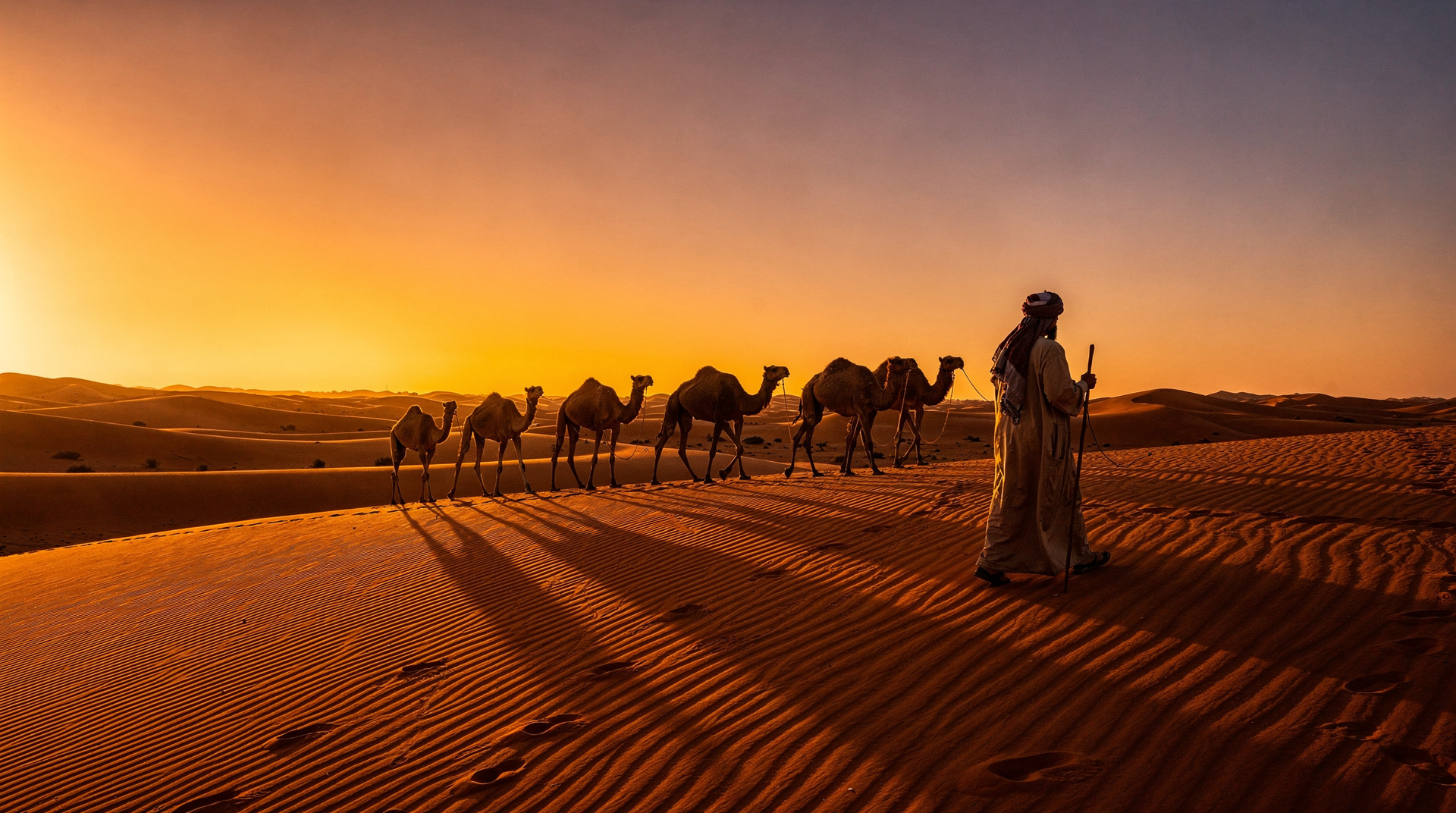
Avoid if possible. Merzouga in August routinely reaches 48°C with sand surface temperatures exceeding 65°C. Camels are rested during the afternoon hours. Even with air-conditioned transport and luxury climate-controlled camps, the August Sahara is a special kind of uncomfortable. If you absolutely must go — perhaps passing through on a trans-Morocco drive — early morning (5–8am) is the only outdoor window that’s tolerable.
Atlantic Coast (Essaouira / Agadir)
August is peak coast season. Essaouira at 25–27°C, reliably windy, is packed but genuinely pleasant. The wind that makes summer Essaouira famous (the Alizé trade winds blow consistently June–August) keeps temperatures from feeling excessive. Agadir at 26–28°C is excellent for beach holidays. Water temperatures peak at 23–24°C. Book accommodation on the coast well ahead — August is the hardest month to find last-minute coastal rooms.
Crowds and prices in August
Atlantic coast: Maximum capacity. Moroccan school holidays combine with European summer to create peak demand. Agadir in August is booked out weeks or months ahead. Essaouira is similarly full. Coastal accommodation prices hit annual highs in August.
Marrakech: Counterintuitively less packed with tourists than spring. The heat deters European spring visitors; August Marrakech is a mix of heat-tolerant international tourists, Moroccan domestic visitors, and Gulf travellers who find the temperatures acceptable by regional standards. Riad prices are lower than April but higher than November.
The north and Chefchaouen: Peak for domestic Moroccan tourism. Chefchaouen, Tetouan, Martil, and the northern beaches fill with Moroccan families. Chefchaouen accommodation in particular should be booked ahead for August.
Key considerations in August
Ramadan in August
Ramadan shifts approximately 11 days earlier each year. In 2026, Ramadan falls February–March. In 2027, February to early March. By the mid-2030s, Ramadan will fall in summer months again (as it did in the 2010s). For 2026 and 2027 travel planning, August is outside Ramadan. Confirm the Ramadan calendar before booking for trips 3+ years out.
Moroccan school holidays
August is the heart of Moroccan school holidays. This drives significant domestic migration to the Atlantic coast. Atlantic coastal towns are at their busiest and most lively; the inland cities are comparatively quiet as urban Moroccans head to the beach.
Best things to do in Morocco in August
Atlantic coast from Agadir to Essaouira
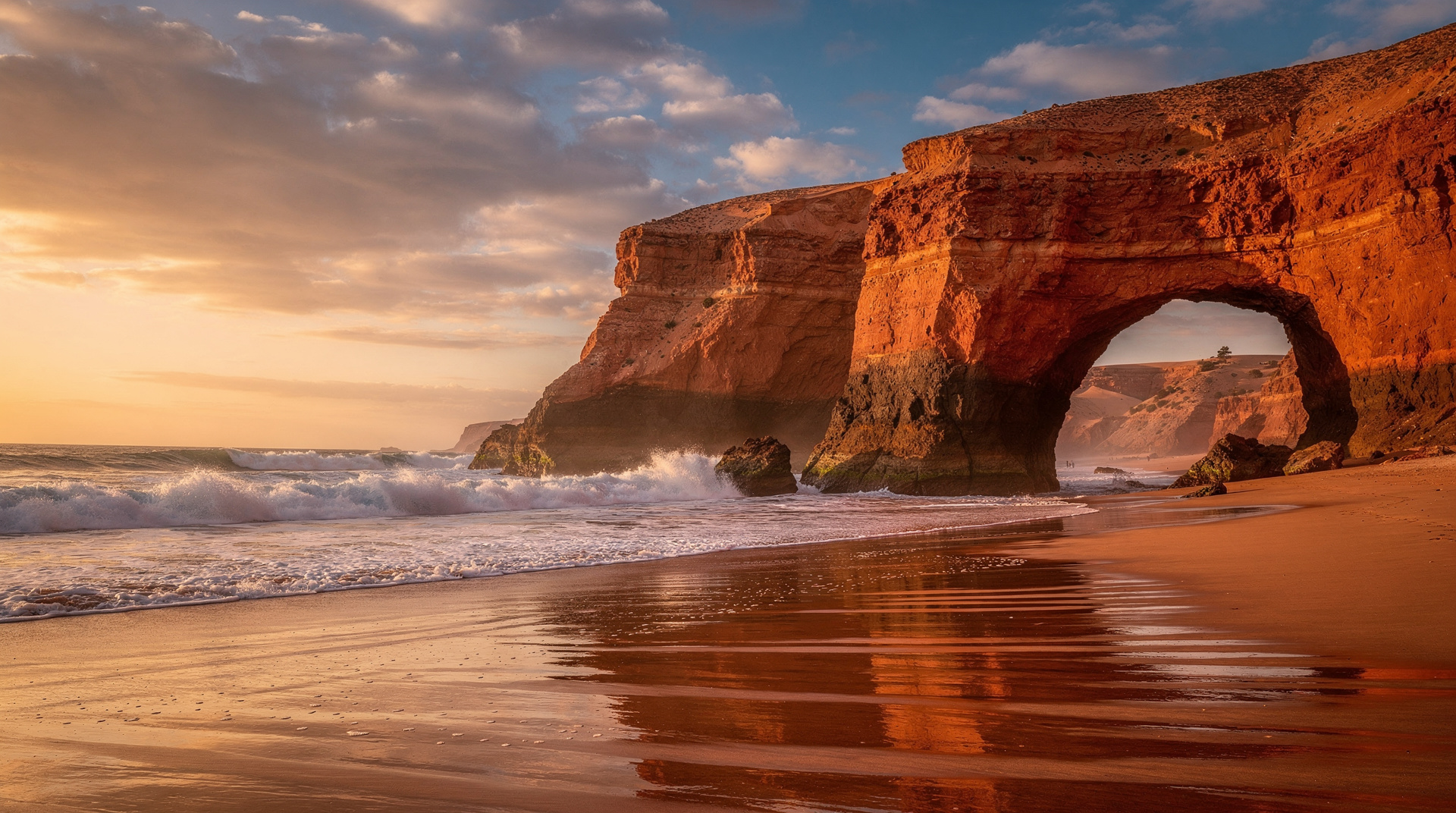
The two-day coastal route from Agadir north to Essaouira covers some of Morocco’s finest coast: the Legzira beach with its natural arches (between Sidi Ifni and Tiznit), Taghazout surf village, and the medina and fishing port of Essaouira. In August, every stop along this route is at peak Atlantic mood — warm water, consistent wind, lively beach culture.
Essaouira day trip from Agadir — covers the coast road and Essaouira medina in a full day.
Surf camp at Taghazout
August at Taghazout near Agadir means warm water (23°C), consistent beginner waves, and the busiest social scene of the year at the surf camps. Multi-day packages that combine accommodation, lessons, and equipment are the standard format. The point breaks at Taghazout are less consistent in August than winter (the big swells don’t arrive until October), but beach break and some point breaks still work.
Taghazout surf lesson for beginners — board, wetsuit, and instruction on the most accessible waves near Agadir.
Chefchaouen evening culture
Chefchaouen in August evenings — the blue medina cooling down from 6pm, rooftop restaurants filling with Moroccan families, the scent of tagine from a hundred windows — is one of Morocco’s summer highlights. The daytime is busy and hot; the evenings are extraordinary.
Chefchaouen blue city private walking tour — schedule for 8–10am or 6–8pm to avoid peak August heat.
Early morning Marrakech medina
7am in Marrakech in August is genuinely magical. The souks are waking, shopkeepers setting out displays, bread coming out of communal ovens. The cool morning window before 10am in August Marrakech is worth taking seriously — it’s how locals and informed travellers navigate the summer city.
Mountain escape to the Middle Atlas
Ifrane (1,665m) and the surrounding Middle Atlas cedar forests are a practical escape from the lowland heat. A 2–3 day detour from Fes into the Middle Atlas — Ifrane, Azrou, the Barbary macaque forests, the mountain lake at Aguelmam Aziza — gives genuine altitude cooling. This route is popular with Moroccan families seeking mountain escape and has good accommodation options.
What to pack for August in Morocco
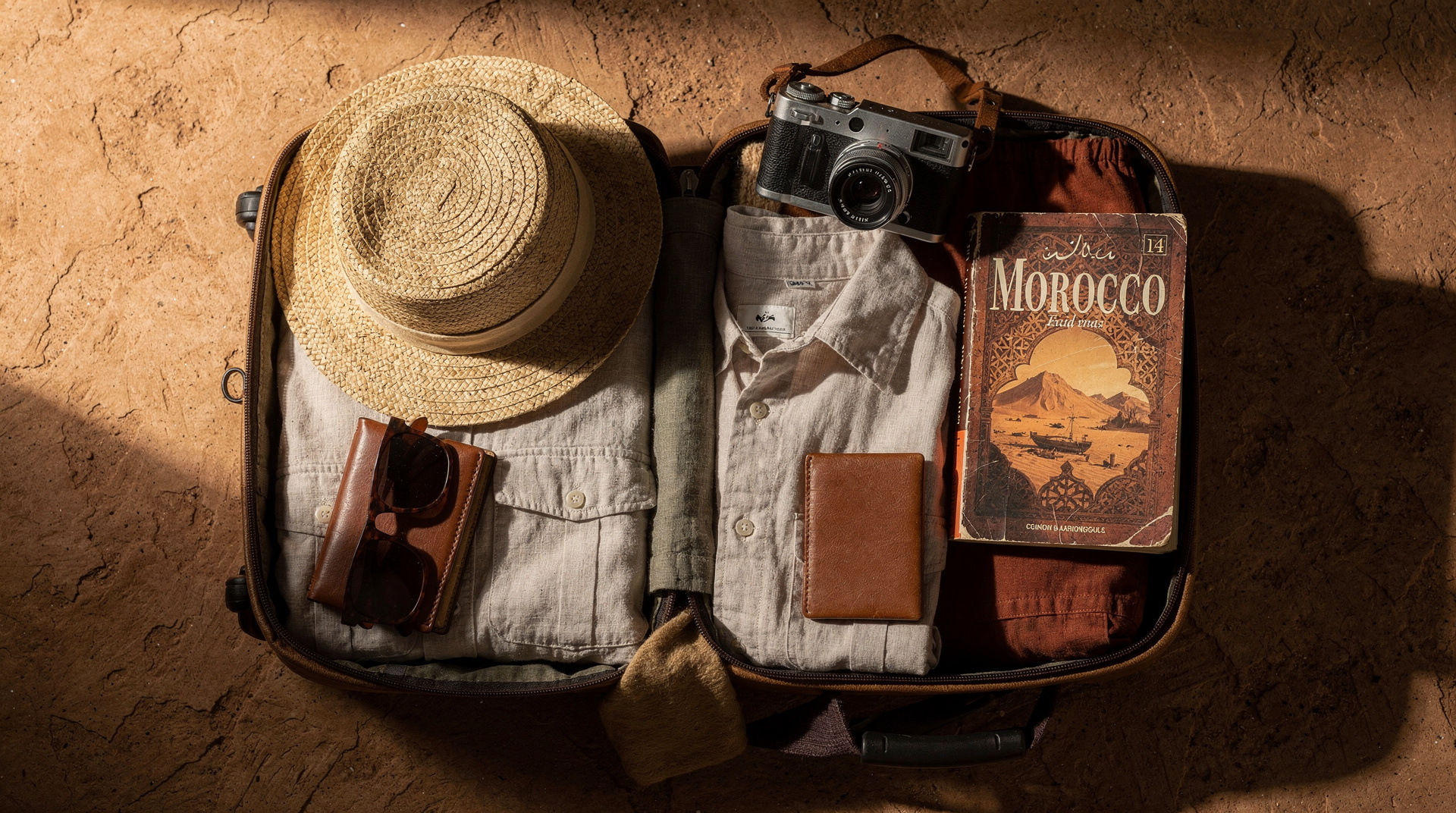
Strict heat-management packing:
- Extremely lightweight clothing — natural fibres only; anything synthetic becomes unbearable
- SPF 50+ sunscreen — reapply every 90 minutes; UV index in August in Marrakech hits 11-12
- Wide-brim sun hat — the single most important item for August Morocco
- Multiple changes of clothing — sweating in August medinas is real; pack more than you think you need
- Hydration supplies — 3 litres of water per day minimum outdoors; electrolyte tablets are useful
- Swimwear — coast, riad pools, and mountain rivers
- Light layer for Atlantic coast evenings — the Essaouira wind can make evenings feel cool even in August
- Modest covers for medinas — light linen djellaba-style coverups sold cheaply in the souks work well
Sample itineraries for August
7-day coast-focused itinerary: Fly into Casablanca or Agadir, Essaouira for 2 nights (medina, wind sports), Agadir for 2 nights (beach), Taghazout for surf. This itinerary barely encounters serious heat. See the 7-day Morocco itinerary.
10-day north-focused itinerary: Fly into Tangier or Casablanca, Chefchaouen for 2 nights, Fes for 2 nights (early morning medina), Middle Atlas for 1 night escape, Marrakech for 2 nights (evening-focused), Essaouira for 2 nights. The 10-day Morocco itinerary covers routing.
Summer family coast: Agadir resort for 7 nights with day trips to Paradise Valley and Essaouira. August Agadir is full-service beach holiday infrastructure and the most family-friendly August option.
August in Morocco: who should go, who should not
August works for:
- Beach holiday seekers — the Atlantic coast is at its warmest and most energetic
- Surfers — Taghazout and Essaouira are excellent
- Travellers focused on northern Morocco — Chefchaouen, Fes mornings, and the Rif
- Those who genuinely enjoy heat and run cold at home
- Moroccan-diaspora and Gulf visitors comfortable with high temperatures
August is strongly discouraged for:
- Anyone planning the Sahara desert experience
- Travellers who want to walk medinas all day
- Families with young children in inland areas
- Heat-sensitive travellers anywhere south of Fes
The best time to visit Morocco guide compares August against the shoulder seasons and explains the regional logic. The first-time visitors guide has a specific summer section on avoiding rookie August planning errors.
Frequently asked questions about Morocco in August
Is Marrakech bearable in August?
Yes, with a strategy: be out and about 7–10am, retreat to a pool or air-conditioned riad through the heat of the day, and return to the streets from 6–7pm onward. Marrakech evenings in August — Jemaa el-Fna at 9pm especially — are genuinely excellent.
Is it safe to visit the Sahara in August?
It’s not recommended. Daytime temperatures at Merzouga routinely reach 48–50°C with sand surface temperatures over 65°C, which is a real heat-safety risk, not just discomfort. If a desert trip matters to your itinerary, plan it for October–April instead — see the Sahara tour booking guide for timing advice.