25 Mistakes First-Time Visitors Make in Morocco
What should first-time visitors to Morocco know?
The biggest surprises for first-timers are the medina navigation difficulty, the persistence of unsolicited guides, the dirham being a closed currency (can't buy it before you arrive), and the physical reality of desert tours — long drives, cold nights, and basic camp facilities unless you've specifically booked luxury. Research before arrival dramatically improves the experience.
What experienced Morocco travellers wish they’d known on their first trip
Morocco rewards travellers who arrive informed and punishes those who don’t. Not harshly — Morocco is not a dangerous destination — but the gap between a frustrating first experience and an excellent one usually comes down to a handful of avoidable mistakes.
These 25 points come from what consistently trips up first-time visitors.
At a glance
| Biggest surprise | Medina navigation and unsolicited “guides” |
| Currency | Dirham (MAD) — closed currency, get it on arrival |
| Best first-time length | Around 8-10 days for 2-3 destinations |
| Guide needed? | Recommended for Fes medina, optional elsewhere |
| Cash vs card | Cash-based in medinas/souks/taxis, card fine in hotels |
Logistics and planning mistakes
1. Underestimating driving distances in the south
Marrakech to Merzouga looks like a reasonable distance on a map. It’s 10 hours of driving. Marrakech to Zagora is 7 hours. Fes to Merzouga is 8 hours. People regularly book a “Sahara trip” and don’t realise how much of the experience is spent in transit. Budget at minimum 3 days for Merzouga from Marrakech; anything less is a transit exercise, not a desert experience.
2. Booking a desert tour without confirming the camp name
“A luxury camp near Merzouga” is not a specification. The difference between a luxury camp (private bathroom, real beds, quality food) and a standard tent (shared squat toilets, mattress on floor, basic tagine) is 150-200 EUR per person per night. Get the camp name in writing before you pay. See the how to book a Sahara tour guide for the full booking checklist.
3. Not accounting for Ramadan
Ramadan significantly changes daily rhythms in Morocco — restaurants close during daylight, street food disappears, medina pace shifts. In 2026, Ramadan runs approximately February 19 to March 19. Not a reason to cancel a trip, but you need to plan around it. Read the best time to visit Morocco guide for the full Ramadan section.
4. Flying home the same day as the desert return
Most Sahara tours return to Marrakech between 8-10pm on the final day. Booking an evening flight gives you zero margin. Flights get delayed, traffic happens, tyres get flat on mountain roads. Build a full buffer day after the desert return before any flight.
5. Not downloading offline maps
Phone signal exists in Morocco’s cities and main tourist routes but disappears in medina alleys, mountain passes, and desert areas. Download your cities and regions on Google Maps (or Maps.me) before you leave WiFi. It’s free and eliminates 80% of medina navigation stress.
6. Assuming ATMs are everywhere in the desert
Merzouga village has one ATM. It sometimes runs out of cash. The desert camps are entirely cash-based for extras. Withdraw sufficient MAD before leaving any major city.
Money mistakes
7. Trying to buy Moroccan Dirham before arrival
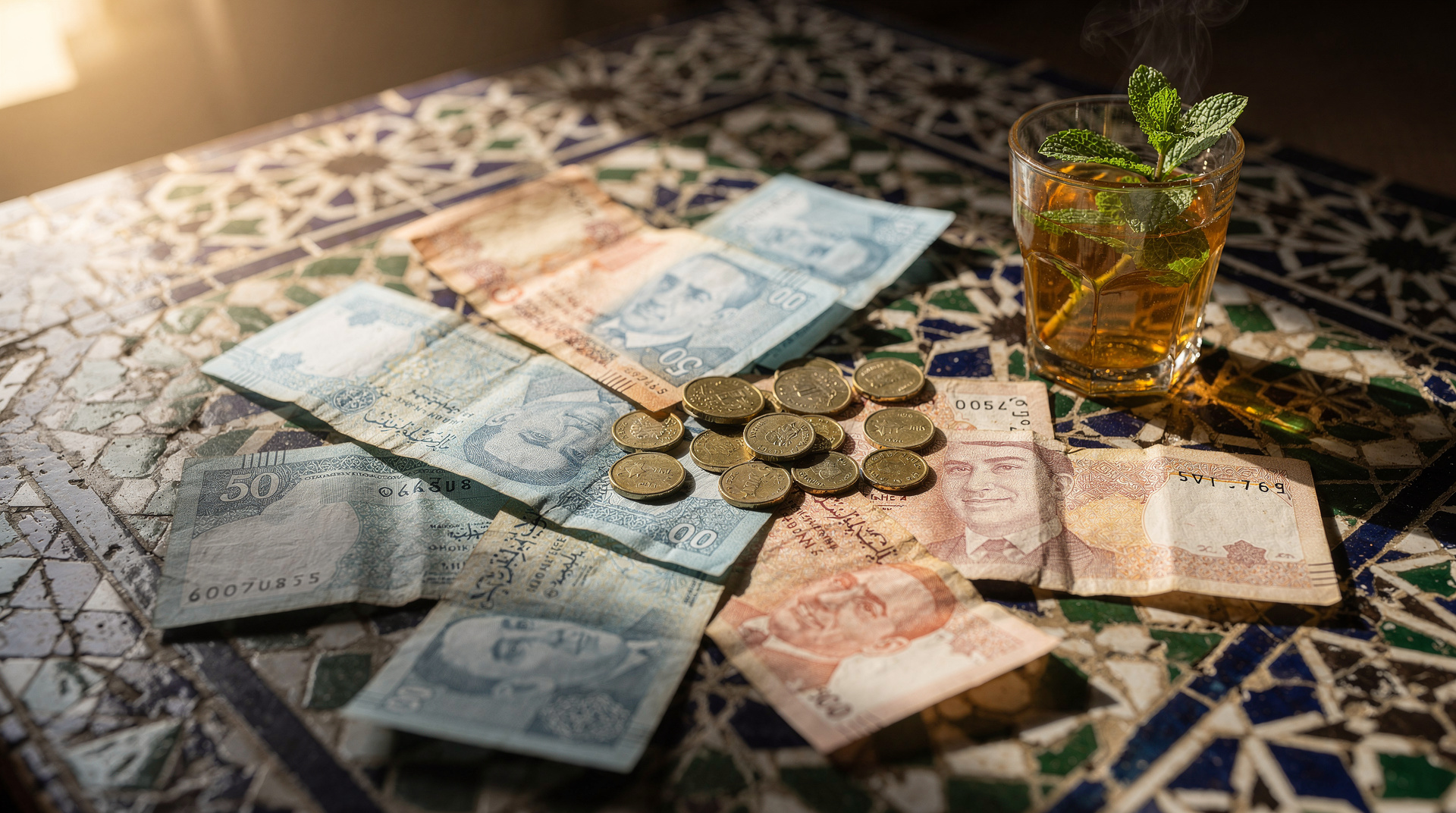
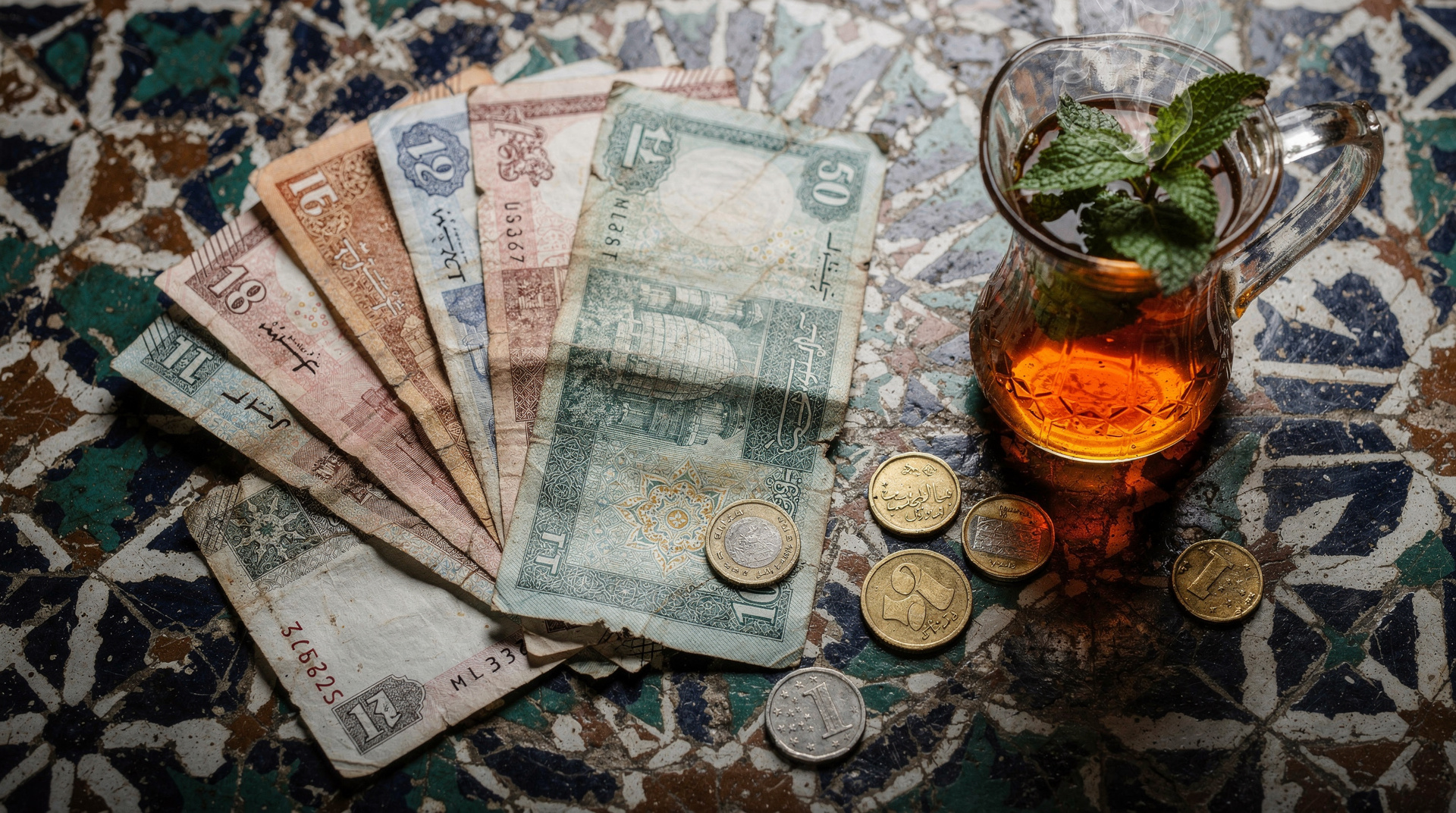
The dirham is a closed currency — it cannot legally be purchased outside Morocco. Don’t waste time looking for it. Get MAD at the airport on arrival or from city ATMs. Exchange rate at the airport is reasonable; city exchange offices (offering “no commission”) often have less transparent rates.
8. Using the Djemaa el-Fna exchange stalls
The money changers around Marrakech’s main square use slight-of-hand counting tricks to short-change tourists. Use bank ATMs or licensed exchange offices (Wafachange, BMCE) inside bank branches instead.
9. Not carrying small bills
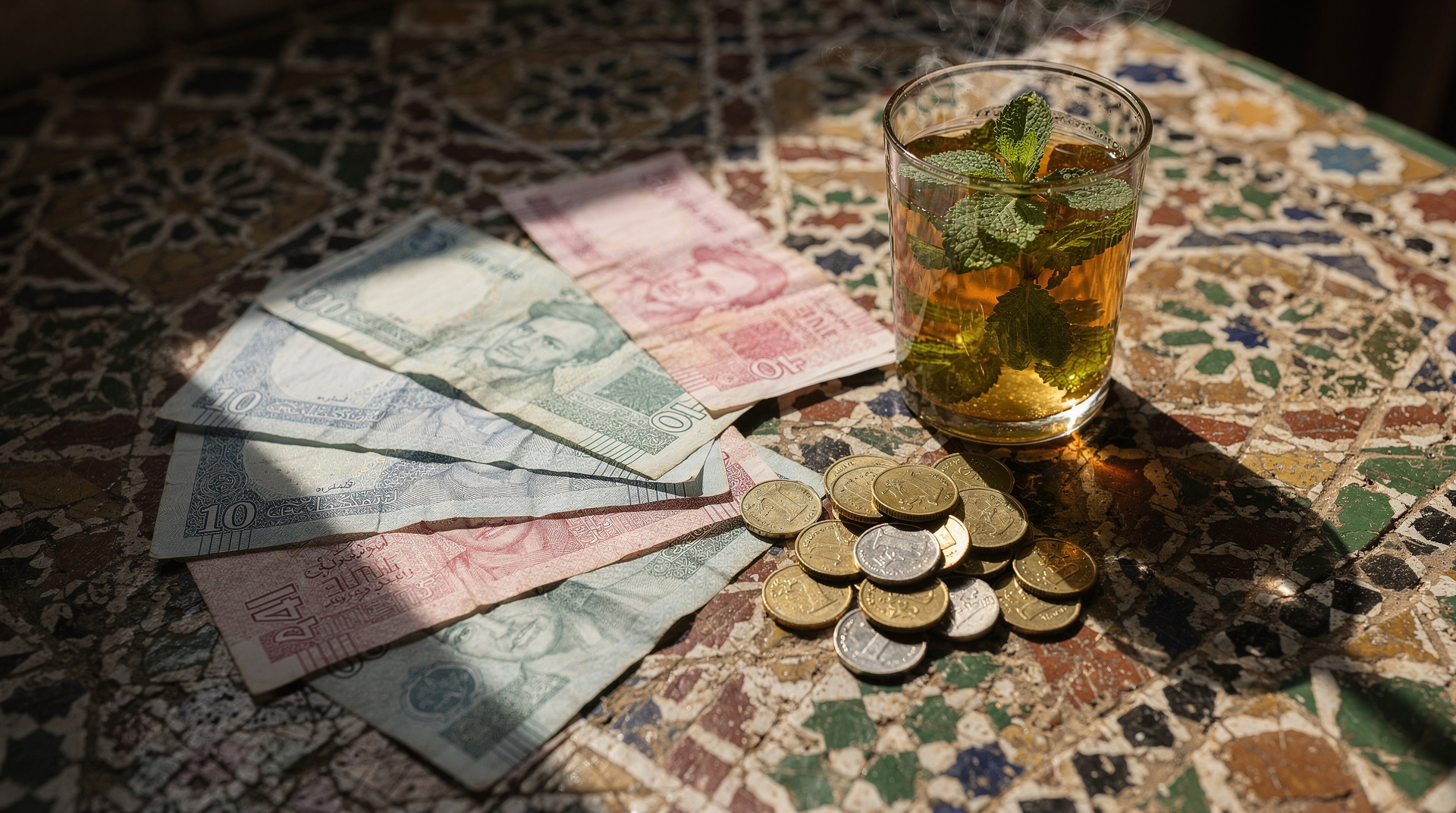
A 200 MAD note for a 15 MAD petit taxi ride is a problem — drivers genuinely often don’t have change, or claim not to. Keep 10, 20, and 50 MAD notes specifically for taxis, tips, and small purchases.
10. Not budgeting for tipping
Tipping is expected across most service interactions: 10-20% at restaurants, 100-150 MAD per day for tour guides/drivers, 10-20 MAD for hammam staff, small amounts for anyone who provides genuine assistance. First-timers who don’t know this arrive with the wrong cash amounts.
Medina and city mistakes
11. Following anyone who volunteers directions without being asked
This is the single most reliable way to end up in a carpet shop. Volunteer “helpers” in tourist medinas are almost always commission-earning guides. Decline politely and firmly, every time.
12. Accepting anything pressed into your hands
Bracelets, flowers, herbs at the spice market, henna applications — taking anything handed to you by a vendor creates a social obligation that vendors then monetise aggressively. “La, shukran” (no, thank you) and keep moving.
A guided first-morning orientation helps enormously. In Marrakech, a private Marrakech medina palaces and tombs tour covers the key sites with a licensed guide, which removes navigation stress on day one. For Fes, a Fes full-day cultural tour is the most reliable way to make sense of the world’s largest living medieval medina on your first visit.
13. Photographing people without asking
Morocco’s people are striking and the medinas are photogenic. But photographing people without permission is considered rude and in tourist contexts will result in demands for payment. Ask (gesture your camera, make eye contact, ask “photo?”) — many people say yes happily.
14. Shopping on day one
Your first hour in the medina is when your price reference is at its most calibrated for tourist-level pricing. Wait until you’ve been in Morocco for at least a day, watched some transactions, and have a sense of what things cost before making any significant purchases. You’ll negotiate from a much better position on day 3 than day 1.
15. Not understanding the negotiation system
Fixed prices exist in modern Moroccan shops and supermarkets. In the traditional souks, initial asking price is a negotiation starting point — typically 3-5x the realistic final price. Saying yes to the first price is not a moral act, it’s leaving money on the table. Offering 30-40% of the first price and working up is the standard approach. The first-time visitors section of the safety guide covers this in more detail.
16. Spending all your time in Djemaa el-Fna
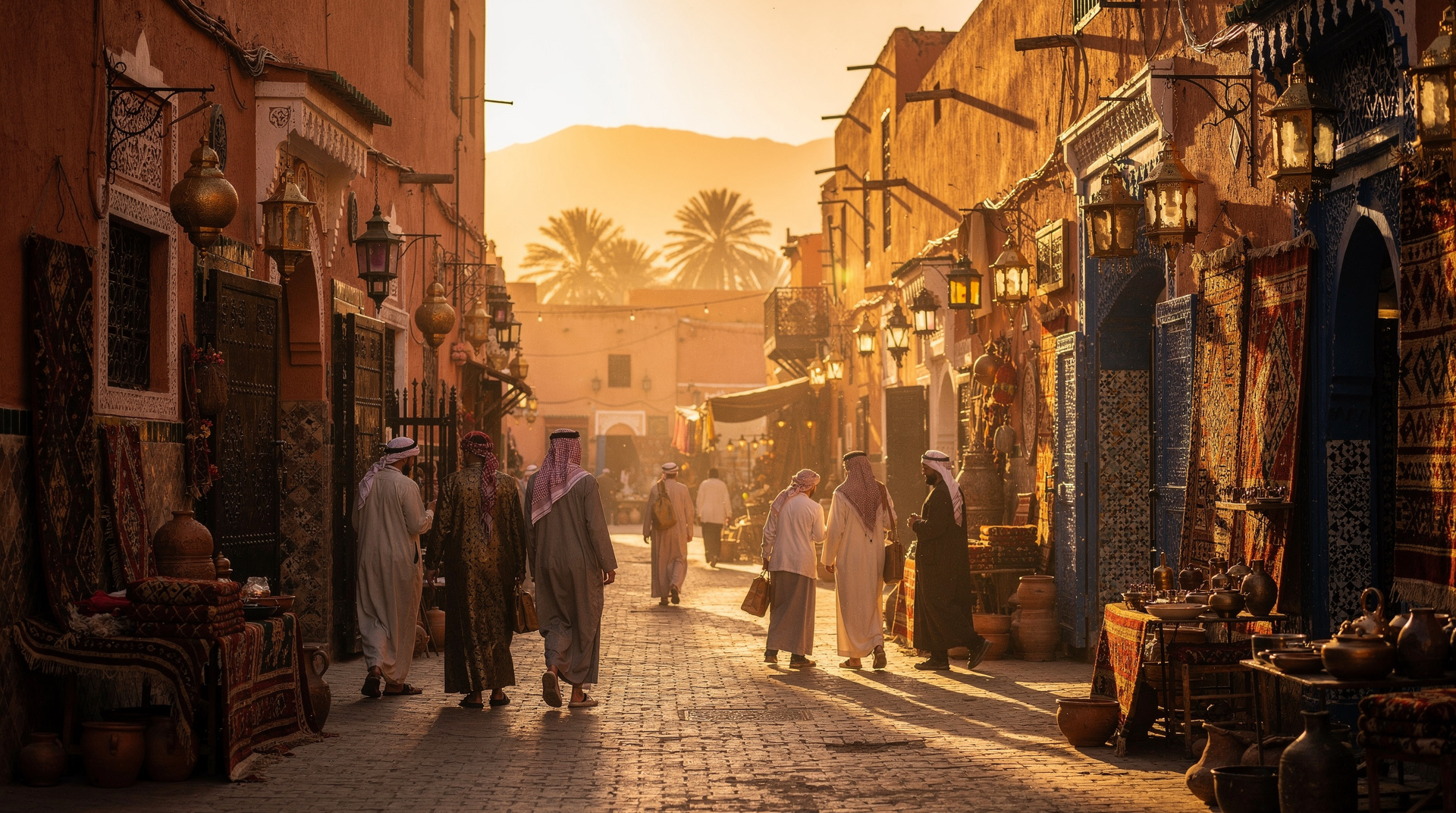
The main square is a spectacle worth experiencing, but it’s the most tourist-concentrated, most aggressively monetised spot in Morocco. The real medina experience is in the residential quarters, the small neighbourhood squares, and the souks in the hours before tourist rush. Spend one evening at the square, then explore elsewhere.
Desert-specific mistakes
17. Packing for summer when visiting the desert in winter
December, January, and February nights in Merzouga drop to near 0°C. People arrive for the “Sahara” in light clothing expecting warmth and spend a miserable night. The temperature swing from 20°C afternoon to near-freezing night is real and quick. Pack layers regardless of month.
18. Wearing flip-flops for dune climbing
Sand dunes are steep and the sand is fine. Flip-flops either fill with sand immediately or slip off. You need closed shoes with some ankle support for climbing dune ridges effectively. Leave the flip-flops for the camp.
19. Not booking the better camp category if budget allows
The standard tent at a budget camp (mattress on a mat, shared squat toilet, basic dinner) is a genuine experience but not comfortable by most travellers’ standards. The upgrade to a proper camp (real bed, private toilet, actual shower, better food) costs an extra 80-150 EUR per person total for the trip. That’s a significant quality-of-experience improvement for a moderate cost.
20. Going to the Sahara in August
Merzouga in August regularly hits 45-48°C. The sand holds heat through the night. Sunrise camel rides start at 5:30am when it’s already 35°C. It’s survivable but it’s not pleasant. See the best time to visit guide for the optimal desert timing.
Cultural mistakes
21. Ignoring dress codes at religious sites
Shorts and bare shoulders are not acceptable inside mosques, mausoleums, and some medersas. Most sites have coverings available to borrow but it’s better to carry a light scarf or long shirt. Non-Muslims cannot enter most Moroccan mosques in any case — know before approaching.
22. Drinking alcohol conspicuously in public areas
Alcohol is available in Morocco but not consumed publicly in traditional neighbourhoods. Drink at your hotel bar, a licensed restaurant, or a venue specifically set up for it — not walking through the medina with a can of beer.
23. Underestimating the hospitality culture
When a Moroccan invites you for tea, it’s rarely purely commercial (though sometimes it is in tourist areas). The hospitality culture is genuine and it’s considered rude to flatly refuse without reason. You don’t have to buy a carpet, but sitting for tea and conversation and then declining to buy something at the end is generally acceptable if done politely.
Transport and navigation mistakes
24. Taking unofficial taxis
Unofficial taxis (unlicensed vehicles offering rides) exist particularly around airports and tourist areas. They charge unregulated prices and offer no recourse. Use the official petit taxi rank at airports (metered, fixed zone rates) or have your hotel arrange transfers.
25. Underestimating the Fes medina
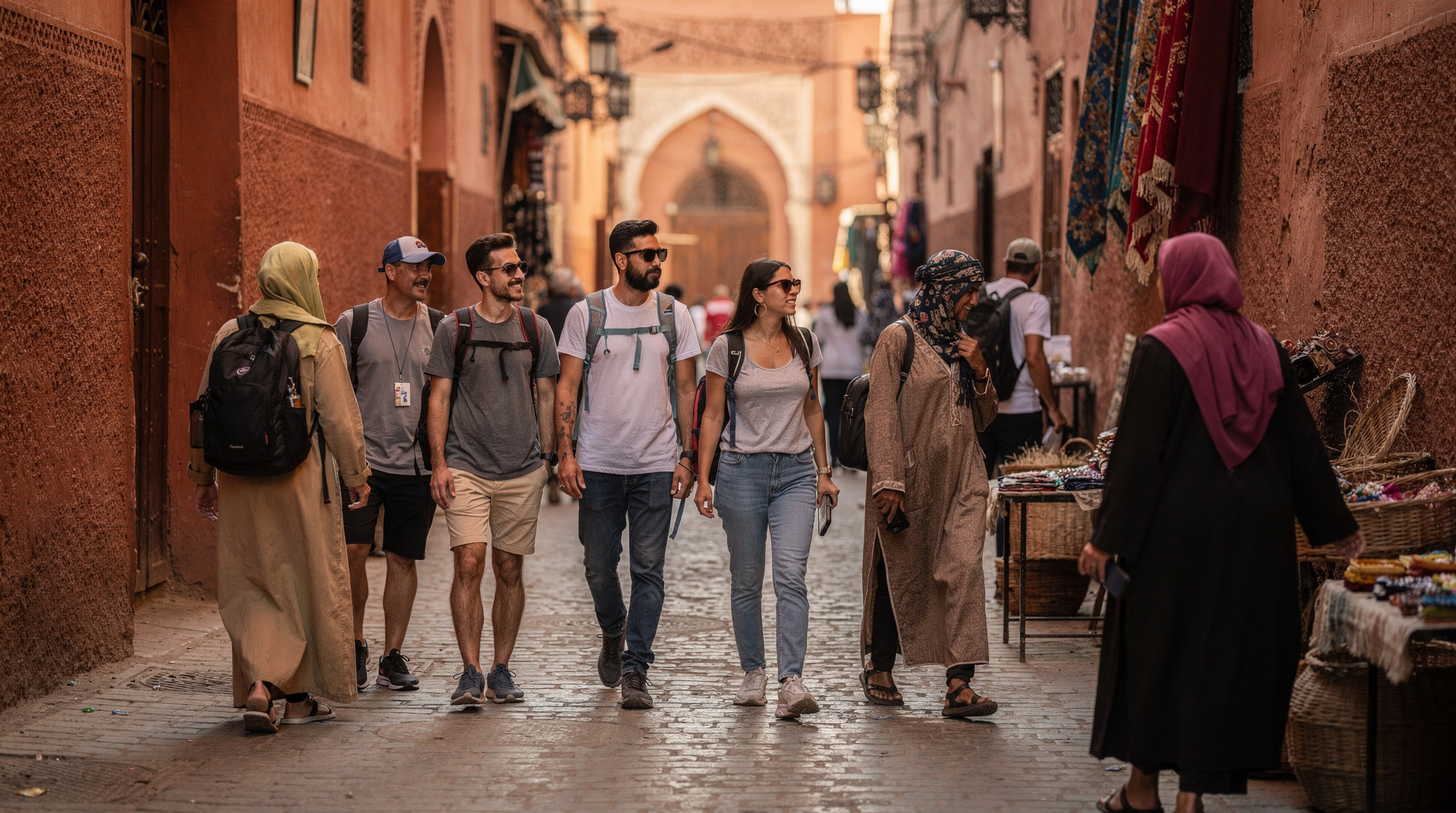
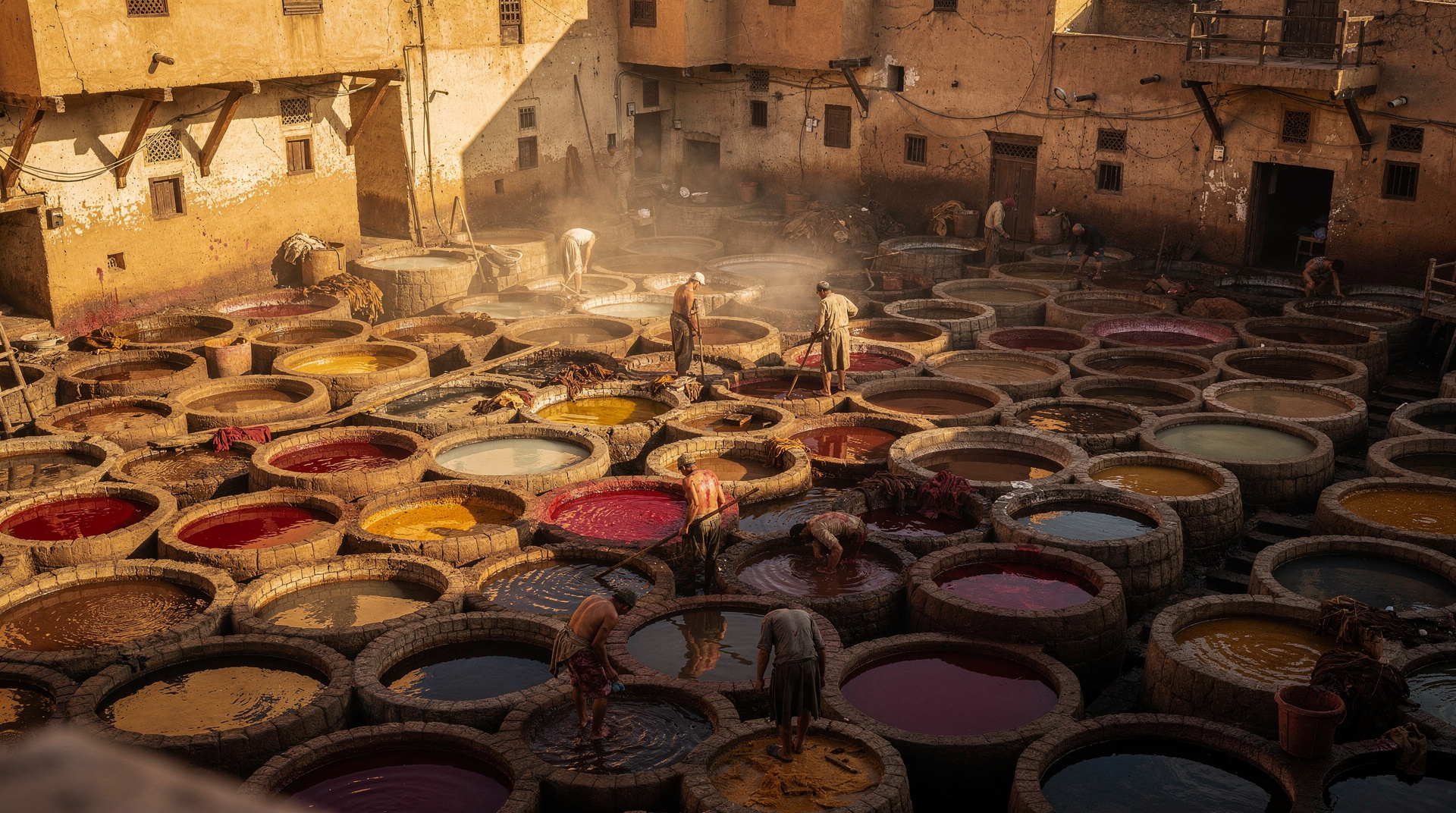
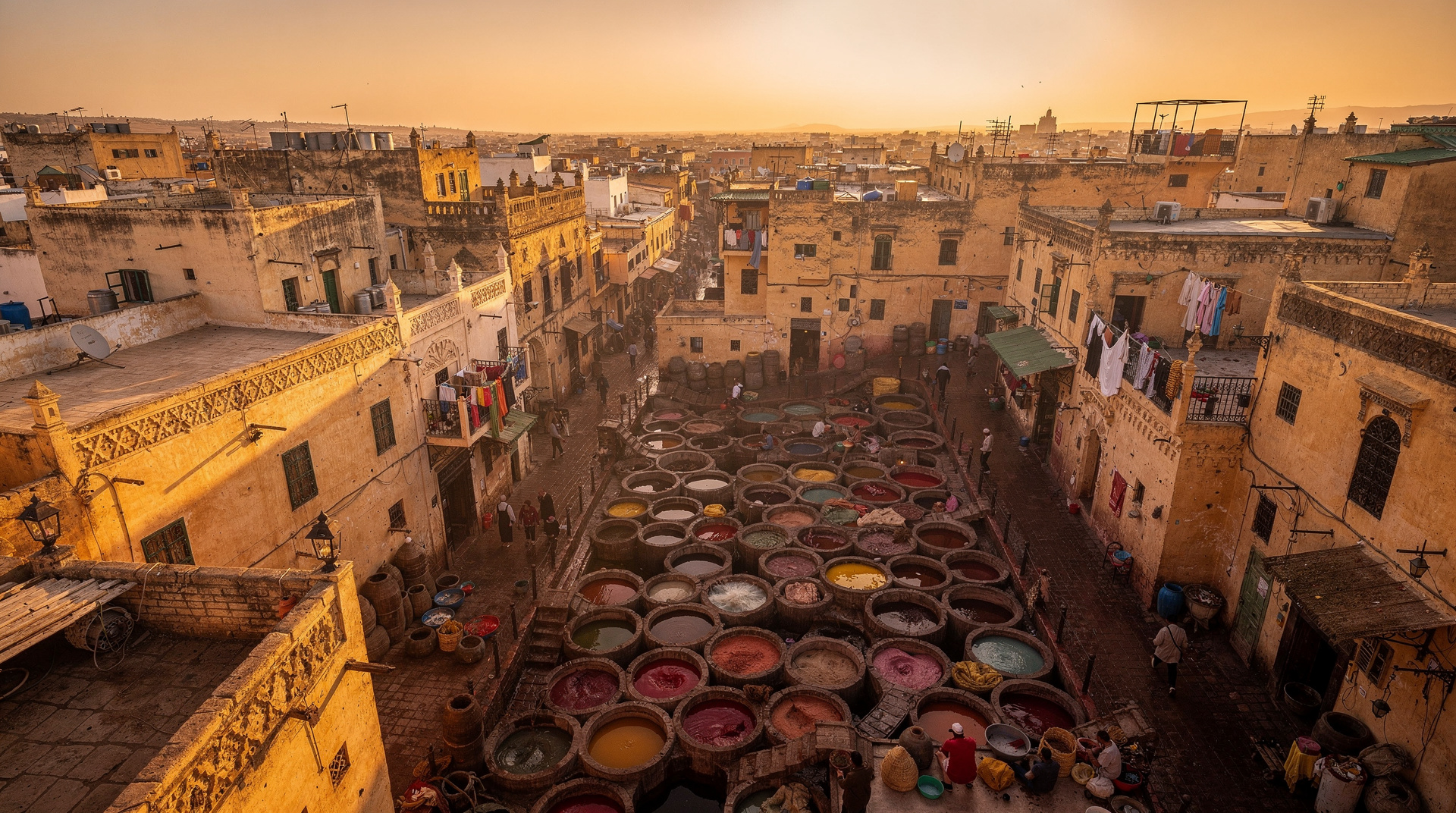
Fes el-Bali is widely considered the world’s largest living medieval medina. It has 9,000+ alleys. People get genuinely, comprehensively lost — not “fun exploration” lost but “I’ve been walking for 2 hours and I don’t know where I am” lost. Budget for a licensed guide for your first day and let your riad explain the key orientation points before you explore alone. See the getting around Morocco guide for context on navigating Moroccan cities.
A quick pre-departure checklist
Before you leave:
- MAD cannot be bought before arrival — don’t look for it
- Download offline maps for your cities
- Confirm desert camp name in writing (if relevant)
- Check Ramadan dates against your travel dates
- Pack layers for the desert regardless of season
- Separate a small amount of cash for tipping from the start
Frequently asked questions from first-time Morocco visitors
How much Moroccan Arabic (Darija) do I need?
Essentially none for basic tourist activities. English works in tourist medinas, Marrakech, and Fes. French is the secondary colonial language and very widely spoken — useful in smaller cities and with taxi drivers. Learning basic greetings (salam aleikum, la shukran, shukran) will be received warmly.
Should I hire a licensed guide for my first day?
In Fes, yes — genuinely useful. In Marrakech, a half-day guided introduction helps but the city is more navigable independently. In Chefchaouen and smaller medinas, a guide is optional but the context they add to historical sites is valuable.
Is haggling required in Morocco?
In the traditional souks, yes — fixed prices are unusual and negotiation is expected. In modern shops, supermarkets, and mall-type retail, prices are fixed. In tourist-facing restaurants and riads, prices are fixed. The confusion comes because the souks and medina shops operate on a different system from everything else.
What’s the biggest single safety tip for first-timers?
Trust your accommodation’s staff over strangers encountered in the medina. Your riad manager knows the area, can give you genuine route advice, book legitimate transportation, and tell you which vendors are fair and which are not. Start there before taking advice from anyone who approaches you on the street.
Can I use my credit card everywhere?
At hotels, organised tours, and many restaurants in cities, yes. In the medinas, souks, taxis, and smaller establishments, cash only. Budget Morocco is a significantly cash-based economy; arrive with access to sufficient MAD and carry cash daily.
Is Morocco suitable for children?
Generally yes. Moroccan culture is very family-oriented and children are welcomed warmly. The main challenges: long drives (particularly desert tours), heat management in summer, and the physical intensity of medina navigation with young children. Plan more rest time than you would without children and choose accommodation with space to decompress.
What to do differently after your first Morocco trip
First Morocco trips tend to be heavy on Marrakech and light on everything else. Repeat visitors consistently report the following improvements on a second trip:
Spend more time in Fes. Most first-timers give Fes 1-2 nights and leave wishing they’d stayed longer. Three nights in Fes with a guide for the first day and independent exploration for the rest is the right allocation.
Go slower in the Sahara. Four days at Merzouga instead of the standard overnight produces a completely different experience — time for a full-day camel trek, a 4WD excursion to remote erg areas, a proper rest day, and the satisfaction of watching how the dunes change across multiple sunsets and sunrises.
Explore the south beyond the Sahara. The Draa Valley, the Souss-Massa National Park, the Rif coastline east of Al Hoceima — significant parts of Morocco that first-timers rarely reach.
Stay in smaller riads. The large, well-marketed riads in tourist media are not always the best places to stay. The best experiences often come from smaller, owner-run riads with 4-6 rooms that don’t need heavy marketing because their returning guests are enough.
Go during Ramadan deliberately. Once you understand how Ramadan works, visiting during it becomes interesting rather than inconvenient — the iftar atmosphere, the evening energy, the sense of being in Morocco when it’s genuinely itself rather than tourist-facing.
Common misunderstandings about Morocco
“Morocco is like the Middle East.” Morocco is North African and Maghrebi — linguistically, culturally, and geographically distinct from the Arabian Peninsula or the Levant. Darija (Moroccan Arabic) is so heavily influenced by Amazigh (Berber), French, and Spanish that Arabic speakers from Egypt or Lebanon often struggle to understand it. The culture and daily life are their own thing.
“You need a guide everywhere.” Guides are genuinely useful in Fes medina and at major archaeological sites. They’re not necessary for Marrakech city movement, the Atlas roads, or coastal towns. The tendency to assume you need a guide is partly an artifact of how the industry markets itself.
“Bargaining is required at every transaction.” Fixed prices apply in modern shops, supermarkets, taxis with meters, riads, and restaurants. Negotiation applies in the souks and medina craft shops. Knowing the difference saves time and confusion.
“Morocco is dangerous for solo women.” More nuanced than either extreme — read the Morocco safety guide for the full picture. Many thousands of solo women travel Morocco every year with positive experiences. The friction is real in specific contexts; the danger is greatly overstated compared to the actual statistical risk. For solo women specifically, the solo female travel Morocco guide covers the practical detail this general guide doesn’t.
How first-timer mistakes differ by trip style
A first-timer travelling independently makes different mistakes than one on an organised tour. Independent travellers most often underestimate driving distances (mistake #1) and the medina navigation difficulty; tour travellers more often overpay because they haven’t budgeted for tipping (mistake #10) or don’t know what’s included versus extra. If you’re still deciding how to structure your trip, the private tour vs self-drive Morocco guide and the luxury vs budget Morocco guide both address this before you book anything.