Best riads in Marrakech: medina, Kasbah and beyond
Which riads in Marrakech are actually worth the price?
For the medina, Riad Kniza and Riad El Fenn lead on design and service. For the Kasbah, Les Bains de Marrakech and Dar Anika are excellent mid-range picks. Expect €120-350/night for quality. Budget under €80/night is possible but requires careful selection — see this guide for honest picks at each tier.
How to choose a riad in Marrakech without getting burned
Marrakech has over 500 riads available to book. The range in quality is enormous — from genuinely exceptional courtyard properties with attentive service to guesthouses that photograph well and disappoint in person. The word “riad” technically means any house built around a central courtyard, which means the label covers everything from five-room boutique hotels with plunge pools to dark apartments with a potted plant in the middle.
This guide is honest about what you actually get at each price point, which neighborhoods suit which kinds of travellers, and which specific properties are worth booking in 2026.
At a glance
| Where | Northern medina, Kasbah, Riad Zitoun corridor, or Ville Nouvelle |
| Cost | Around €50-100/night budget, €100-220 mid-range, €220-450 premium |
| Time needed | 3-4 nights minimum to justify the base |
| Getting there | Taxi/porter to the nearest accessible lane, then a 5-15 minute walk with your bags |
| Best time to book | 6-8 weeks ahead for October, November, March, April |
If you’re comparing cities rather than neighborhoods, the best riads in Fes guide and best riads in Essaouira guide use the same honest, tier-by-tier approach for those medinas — useful if your trip covers more than Marrakech. And if a riad’s price tier still feels steep, the budget hostels Morocco guide covers dorm-and-private-room hybrids in converted riads from around €10/night.
Understanding Marrakech’s main riad neighborhoods
Before picking a property, the neighborhood question matters more than most booking platforms suggest.
The northern medina (Bab Doukkala to Mouassine)
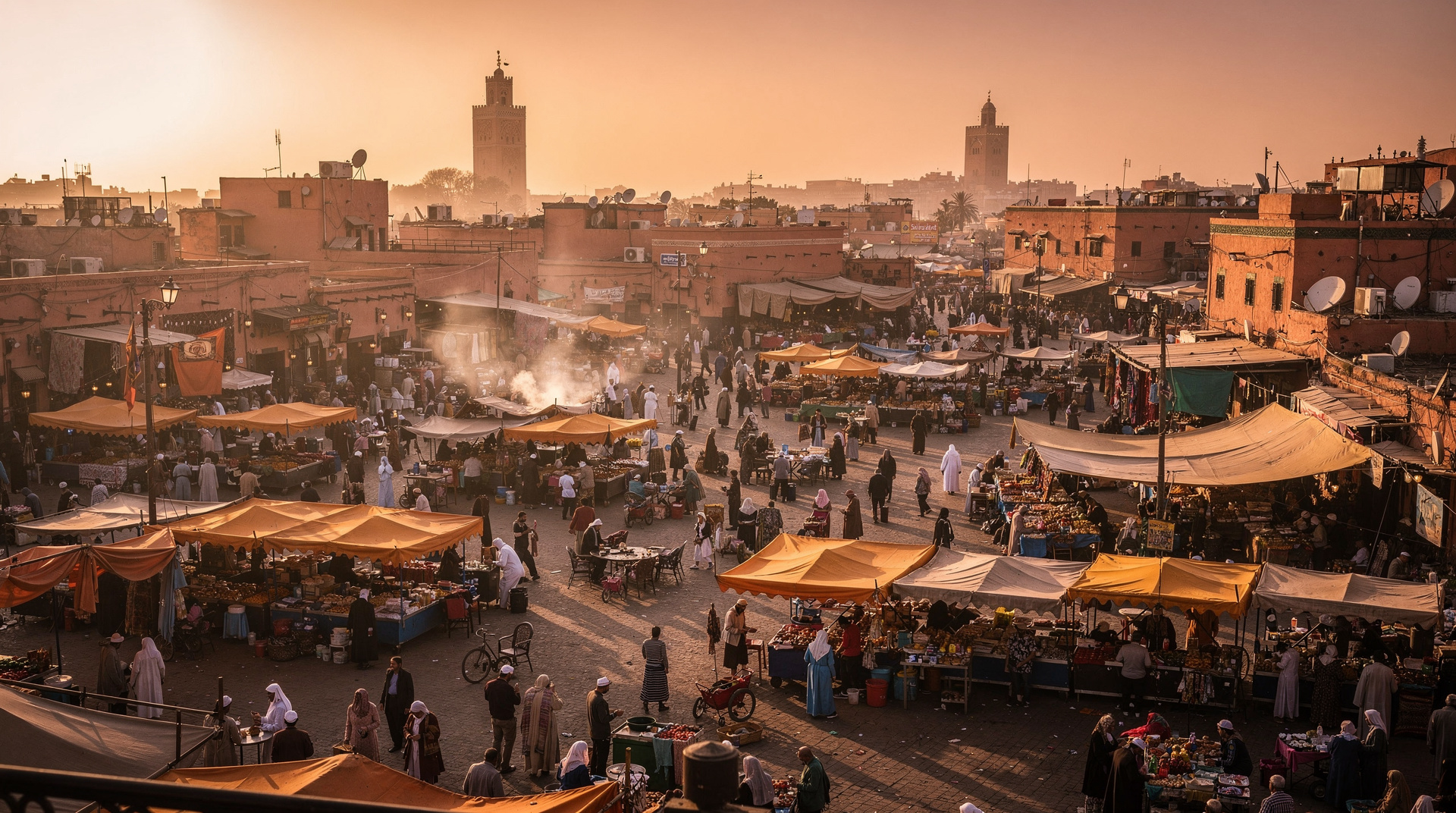
The densest concentration of riads in Marrakech. Streets are narrow, navigation is genuinely difficult (plan on getting lost your first evening), and the ambient noise — calls to prayer, hammering from workshops, scooters — is part of the experience. If you want total silence, this is not the right zone.
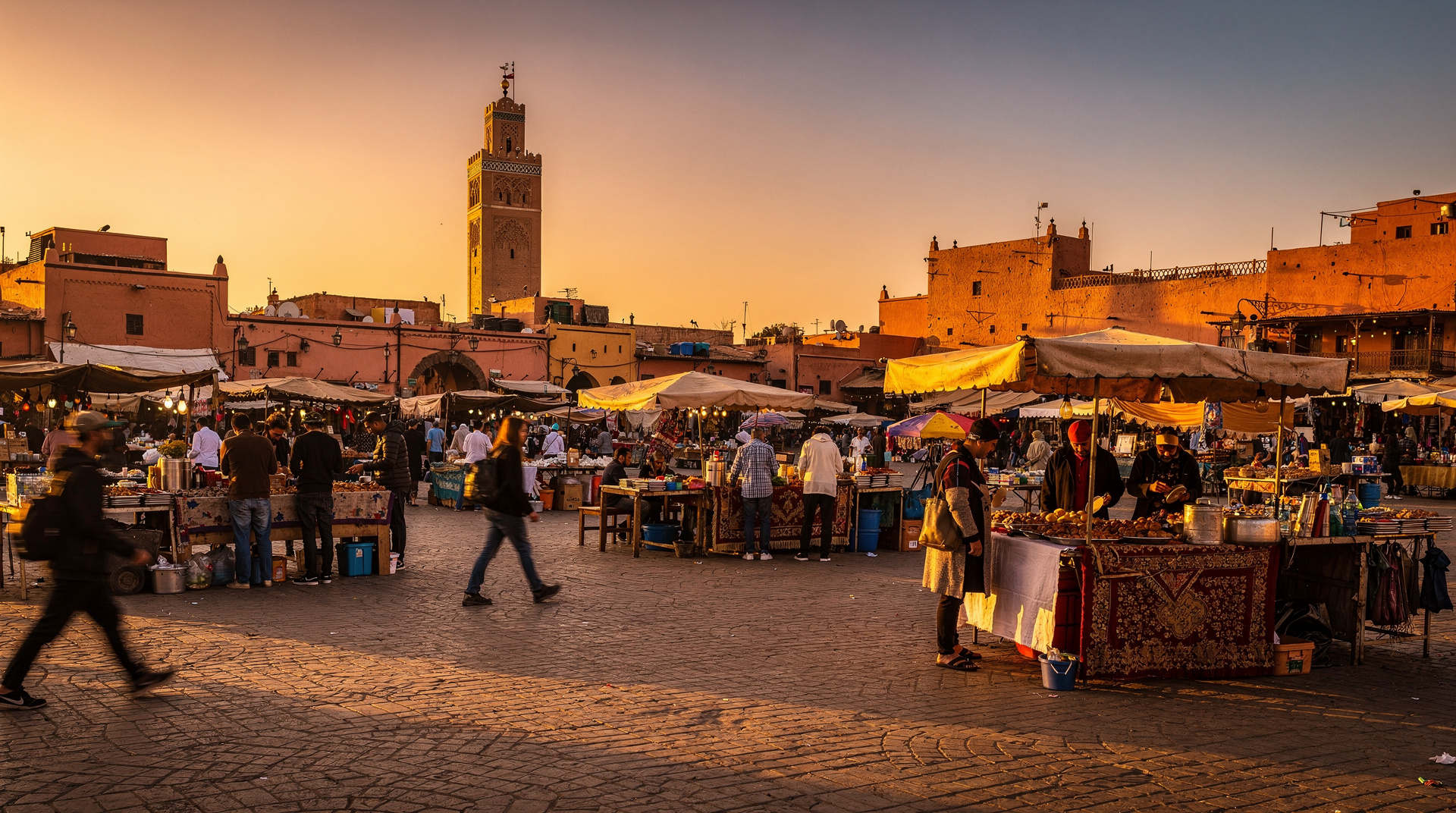
What the northern medina delivers: proximity to the souks, Mouassine fountain, and the best artisan workshops. You can walk to the Koutoubia Mosque in 15 minutes. The character here is the densest and most authentic.
Best for: First-time visitors who want full medina immersion; couples who want walkability to souks and restaurants.
The Kasbah and southern medina
Quieter than the northern medina, slightly easier to navigate, and closer to the Saadian Tombs and Bahia Palace. Properties here tend to be larger on average, with more garden space. The Kasbah has seen significant riad renovation in the past decade and now has some of the city’s best mid-range options.
Best for: Travellers wanting medina access without the full sensory overload; families; those planning visits to the southern palaces.
Riad Zitoun el Kedim and the palace district
A specific corridor between Jemaa el-Fna and the Bahia Palace. Dense with riads, many of which converted from larger historic properties. The area has good restaurant access and is close to the mellah (Jewish quarter).
Best for: Travellers who want central location with short distances to both Jemaa el-Fna and the palace circuit.
Ville Nouvelle (Hivernage and Guéliz)
Technically not riads in the traditional sense — but several properties in Guéliz and Hivernage use courtyard architecture and riad-style design while offering quieter streets, easier taxi access, and proximity to the newer restaurant scene. These are not medina properties; trade authenticity for convenience.
Best for: Business travellers; those with mobility limitations; anyone whose primary interest is Marrakech’s contemporary food and art scene.
Top riads by price tier
Premium tier (€220–450/night)
Riad El Fenn One of the most celebrated properties in Marrakech. Owned by Vanessa Branson, El Fenn combines 34 suites and rooms across multiple interconnected houses in the northern medina. The rooftop pool, the library with its curated book collection, and the quality of the food service distinguish it from competitors at this price point. No two rooms are the same — check the specific room type carefully, as some standard rooms are small.
Standout: Art collection, rooftop pool with Atlas views, excellent restaurant Limitation: Popular with media and fashion travellers — can feel like a scene during fashion weeks
Riad Kniza A smaller, more intimate property (11 rooms) near Bab Doukkala. Former home of a Marrakech antiques dealer, and the furnishing quality shows — genuine period pieces, not reproductions. The courtyard is one of the most photogenic in the medina. Service is consistently attentive.
Standout: Authentic antique furnishing, quiet location, personal service Limitation: Rooms vary significantly in size; confirm dimensions before booking
La Sultana 17 rooms in a renovated palace in the Kasbah district. Hammam on site, rooftop pool with Saadian Tombs view, and one of the better hotel restaurants in Marrakech. More hotel-like in operation than a traditional riad guesthouse — better for travellers who want amenities, less ideal for those seeking an intimate family-home atmosphere.
Standout: Spa, pool, location near Saadian Tombs Limitation: Scale makes it feel corporate compared to smaller properties
Mid-range tier (€100–220/night)
Riad Yasmine Famous for its Instagram pool (green water, white tiles, orange trees), Riad Yasmine delivers on the photograph but also holds up in person. 14 rooms, northern medina location, good breakfast. The pool books up fast for photos — if you’re not staying here, you’re paying a fee for pool access.
Standout: The pool, genuinely good breakfast, central location Limitation: Very popular — can feel busy during peak months
Dar Anika One of the best-value properties in Marrakech at this price tier. 10 rooms in the Kasbah district, family-managed, with a rooftop terrace that serves proper Moroccan dinner. The cooking here is better than most hotel restaurants in the city. Rooms are well-maintained without being over-designed.
Standout: Food quality, price-to-value ratio, friendly management Limitation: No pool; smaller courtyard than premium competitors
Riad Farnatchi A well-established northern medina property with 9 suites, a small plunge pool, and a reputation for attentive service. Rooms are spacious by medina standards. The riad has operated for over 15 years with consistent reviews — longevity that matters in a city with high operator turnover.
Standout: Suite size, service consistency, location Limitation: Some suites have darker natural light due to courtyard orientation
Riad BE Marrakech Design-forward property in the northern medina, with 10 rooms and a contemporary aesthetic that sits alongside rather than imitating traditional Moroccan design. Popular with design-conscious European travellers. Breakfast is excellent.
Standout: Design, breakfast, rooftop Limitation: Contemporary feel may disappoint those seeking traditional Moroccan atmosphere
Budget tier (€50–100/night)
Riad Dar Eliane A reliable budget option in the medina, 8 rooms, consistently good reviews for breakfast and cleanliness. Not the most photogenic property but well-managed and genuinely good value for the location.
Riad Zolah Small (6 rooms), near Mouassine, family-managed. The courtyard is genuine even if the rooms are modest. Good for solo travellers and couples who want medina character without the premium.
Riad Aguaviva Reliable southern medina option. Rooftop terrace with city views, 10 rooms. Breakfast is included and covers the basics well. The neighbourhood is quieter than the northern medina.
Neighborhood comparison table
| Neighborhood | Noise level | Walkability | Price range | Best for |
|---|---|---|---|---|
| Northern medina | High | Excellent | €80–450/night | Souk access, authenticity |
| Kasbah / southern medina | Moderate | Good | €90–350/night | Palaces, quieter stay |
| Riad Zitoun corridor | Moderate | Excellent | €70–280/night | Central, Jemaa el-Fna access |
| Ville Nouvelle | Low | Good | €90–300/night | Restaurants, taxis, quiet |
What booking platforms don’t tell you
Room orientation matters. A riad courtyard gets direct sun at midday — but the rooms around it may be dark. South-facing rooms on upper floors get the most natural light. Request this when booking and confirm it directly with the riad.
Noise carries differently in courtyards. Open-plan courtyard architecture means sound from the common area (breakfast, other guests arriving late) travels to rooms. If you’re a light sleeper, ask which rooms are furthest from the main courtyard or have the most acoustic separation.
Street access is a genuine issue. Almost every medina riad requires a 5-15 minute walk from the nearest vehicle-accessible point. If you’re arriving with heavy luggage or have mobility considerations, ask specifically about luggage porterage and the walking distance from the nearest taxi drop-off.
Breakfast quality varies enormously. Most riads advertise breakfast included — but the quality ranges from a spread of pastries, fresh juice, eggs, amlou (almond-argan dip), and msemen flatbreads (excellent) to a plate of bread and plastic jam packets (poor). Check recent reviews specifically mentioning breakfast.
Booking tips for Marrakech riads
Book directly with the property where possible. Booking.com and similar platforms charge riads significant commission (15-25%), and smaller properties sometimes offer better room allocation and upgraded service to direct bookers. Email the riad after booking through a platform to introduce yourself — this often results in better room assignment.
High season (October, November, March, April) requires booking 6-8 weeks in advance for the best properties at the right price. Last-minute availability in peak season usually means less desirable rooms.
Ramadan changes the atmosphere significantly — check the dates. During Ramadan, breakfast service may be adjusted, rooftop bar service stops entirely (where it exists), and the medina rhythm changes. For some travellers this is a highlight; for others it’s disorienting.
Before your visit, a Marrakech cooking class is an excellent way to understand the food culture you’ll eat your way through during your stay. For a full introduction to how riads compare to international hotels, the riad vs hotel Morocco guide covers the key differences honestly. The Airbnb vs riad Marrakech comparison is worth reading if you’re considering apartment options.
For hammams — which your riad will almost certainly recommend — the traditional hammams Morocco guide and hammam etiquette guide explain what to expect. The luxury spas Marrakech guide covers spa options at the premium end.
A guided medina and palace tour is useful on your first full day — it helps orient you to the layout before you start navigating independently, and covers Bahia Palace and Ben Youssef Madrasa in context.
For guests interested in combining their riad stay with a hammam experience, this traditional Moroccan hammam and spa session in the medina is well-reviewed and handles the logistics for first-time visitors.
Frequently asked questions about Marrakech riads
What’s the difference between a riad and a dar?
Both are courtyard houses. Technically, a riad has a garden (often with a central fountain and orange trees), while a dar is a courtyard without greenery. In practice, the terms are used interchangeably in Marrakech, and marketing has further blurred the distinction. When evaluating a property, focus on the actual courtyard size and configuration rather than the label.
Are riads safe for solo female travellers?
Generally yes. Most riad staff are professional, and the properties themselves are secure. The medina streets require confidence navigating, particularly at night — the guesthouses in this guide are in areas where solo travellers walk comfortably. The more isolated lanes in the far northern medina require more awareness after 10pm.
Can I book a riad for one night?
Most riads accept one-night bookings, though some impose minimum stays of 2-3 nights during peak season. If you’re transiting through Marrakech for a single night (arriving from a flight, departing early), a riad is perfectly viable — just understand that you’ll experience limited common areas and may not get the full courtyard breakfast spread on a short stay.
Do riads have air conditioning?
The better properties in this guide have air conditioning in rooms. Budget riads sometimes have fans only. This matters significantly June-August when Marrakech temperatures exceed 38°C regularly. Always confirm AC before booking if you’re visiting in summer.
What’s the best riad neighborhood for families?
The Kasbah and southern medina are generally better for families — wider lanes, slightly less chaotic navigation, and properties with larger courtyards. Kid-friendly riads Marrakech has dedicated coverage of family-suitable properties, including which riads have enclosed plunge pools and shallower water configurations suitable for children.
How much should I tip at a riad?
Service charges are rarely included in riad rates. A standard tip is 20-30 MAD (€2-3) per bag for luggage porterage, and 50-100 MAD (€5-10) total for breakfast staff over a 3-night stay. For particularly attentive service — staff who help with dinner reservations, tour bookings, or problem-solving — tipping generously (100-200 MAD total over a stay) is appropriate and meaningful for small family-run properties.
How do I find the riad after landing?
Every riad should provide a GPS pin or what3words location. The physical address in Moroccan medinas is often useless for navigation. Ask the riad to share their pin before you arrive. Most properties also offer airport transfer services (typically €15-25 for a private transfer to the medina edge) — worth considering for a first visit when you don’t know the city.
Is it better to book a riad or an Airbnb apartment in Marrakech?
Depends on what you want. A riad gives you managed service, breakfast, and a courtyard — closer to a small boutique hotel. An Airbnb apartment gives you a kitchen, more space, and often a better price for groups of 3-4, but no staff and no breakfast. The Airbnb vs riad Marrakech comparison breaks down the trade-offs by group size and budget in detail.
How a riad stay fits into a Marrakech itinerary
A riad is the base, not the experience itself. Plan to spend 3-4 nights minimum to use your riad properly — arrive, settle, explore the medina on foot, return for the afternoon quiet, head out for evening food. A one-night stay means you check in tired, sleep, check out before breakfast has finished.
For itinerary context, the 7-day Morocco itinerary allocates 3 nights in Marrakech as a starting base. The luxury Morocco itinerary covers the pairing of top-end Marrakech riads with desert camps and coastal properties.
If you’re visiting with children, Morocco with kids covers the specific logistics of riad stays with families, including which areas are stroller-navigable (few) and which have accessible ground-floor rooms.
A Moroccan cooking workshop at La Maison Arabe pairs particularly well with a riad stay in the northern medina — the school is a short walk from most properties in this guide and gives you a direct understanding of the food your riad is serving.
Daily rhythm in a Marrakech riad: what to expect
Understanding the typical day structure helps calibrate expectations and itinerary planning.
Morning: Most riads serve breakfast from 8:00-10:00am. This is the best meal of the day at quality properties — fresh orange juice (Marrakech’s Sidi Aissa orange variety is exceptional), msemen or baghrir flatbreads, amlou (almond, argan oil, and honey paste), hard-boiled eggs, olives and olive oil, yoghurt, and occasionally chebakia (sesame pastries). Eating on the courtyard at 8:30am, before the city gets loud, is the quintessential riad morning.
Late morning: The medina is best from 9:00-11:30am before tour groups arrive in force. Head out early to the souks — the leather souk and spice market in particular are less crowded before 10:00am. The Koutoubia Mosque area is always navigable but the route through the Mellah (Jewish quarter) to Bahia Palace is genuinely pleasant early.
Afternoon: Return to the riad for the 1-4pm lull. Quality riads have shaded courtyard seating and — at premium properties — a pool. This is not wasted time; the medina at 2pm in summer is exhausting and many shops close anyway. Riad time in the afternoon is part of the rhythm, not dead time.
Evening: Marrakech restaurants fill from 8pm. Reserve in advance at the popular spots (Le Jardin, Nomad, Terrasse des Epices for casual Moroccan; La Maison Arabe and Dar Yacout for formal). Return to your riad between midnight and 1am — later than this, medina navigation gets quieter but also genuinely darker.
The riad breakfast: what separates good from exceptional
Breakfast is where riads genuinely compete. The best riad breakfast in Marrakech is a genuinely extraordinary spread; the worst is a plate of stale bread and a thermos of weak coffee.
Indicators of a good riad breakfast:
- Fresh-squeezed orange juice (pressed that morning, not carton)
- Msemen cooked to order (not pre-made and kept warm)
- Amlou made in-house (you can tell — it’s thick and fragrant; the bottled version is thinner)
- Eggs prepared to request rather than pre-boiled en masse
- Local honey rather than packet servings
Riads with the best-reviewed breakfasts in 2026 (from the list above):
- Riad El Fenn: Extensive spread, multiple options, quality sourcing
- Riad Kniza: Family-recipe pastries alongside the standard spread
- Dar Anika: The best value-to-quality breakfast in the Kasbah tier — fresh bread from the local communal oven
Marrakech riad vs hotel: the honest comparison
The riad format has genuine advantages over conventional hotel accommodation — and genuine limitations.
Riad advantages:
- Location inside the medina, walkable to all major sights
- Character and authenticity of historic building
- Smaller scale means more personal service
- The courtyard experience — open sky, orange trees, fountain sound — is unique
Riad limitations:
- Navigation to the property is genuinely difficult on a first visit
- Medina noise (motorcycles, calls to prayer, workshop sounds) is constant
- No parking — you arrive by foot from the nearest accessible lane
- Pool is often a small plunge pool rather than a swimming pool
- WiFi speed can be poor due to thick historic walls
For families travelling with children, the limitations multiply — luggage handling on narrow cobbled lanes with children and strollers is challenging. The Morocco with kids guide addresses family riad options specifically, including which properties have ground-floor accessible rooms and enclosed pool areas.
Wellness at your Marrakech riad
Many riads either have an in-house hammam or can arrange access to local hammams for guests. The riad wellness experiences guide covers the specific properties with the best spa setups. The traditional hammams guide explains the difference between a hotel hammam and a neighbourhood public hammam — both are worth experiencing for different reasons.
Rhassoul clay and argan oil are the two Moroccan beauty ingredients your riad will likely offer in bathroom products or treatments. The rhassoul and argan beauty rituals guide explains what these products actually do and how to use them effectively — useful context before your hammam session.
For the best spa options beyond your riad, the luxury spas Marrakech guide covers the top independent and hotel spa options in the city, from the accessible to the exceptional.
First riad stay? A few things worth knowing beforehand
First-time visitors to Marrakech tend to underestimate two things: how disorienting medina navigation is at first, and how much a riad’s own staff can help. Tell the property your arrival time and flight details in advance — most will arrange a porter to meet you at the nearest accessible drop-off point, which removes the single most stressful part of a first medina arrival. The broader first-time visitors guide covers the other rookie mistakes worth avoiding before you land, and is Morocco safe addresses the general safety questions that come up before a first trip.
Bargaining doesn’t apply to riad rates — prices are fixed, unlike souk shopping. If you want to practice negotiating before you need it for real in the souks, the bargaining in Morocco guide is worth reading the evening you arrive.