Alcohol in Morocco: Laws, Availability & Where to Drink
Can you drink alcohol in Morocco?
Yes, alcohol is legal for non-Muslims in Morocco and available in licensed establishments, international hotels, and specific supermarket sections. It's not available everywhere — medina restaurants rarely serve it, and during Ramadan sales to Muslims are prohibited. Drink discreetly in public. Expect higher prices than food.
Alcohol in Morocco: more nuanced than either extreme
Morocco occupies an interesting middle ground: alcohol is legal and available, but it exists in a Muslim-majority country with genuine social complexity around drinking. The result is an alcohol landscape that’s available for those who want it but requires knowing where to look — and being thoughtful about context.
This is not a country where you’ll find a bar on every corner, and the medinas of Marrakech and Fes have very few licensed establishments. But international hotels, licensed restaurants, and specific supermarket sections provide access for those who want it.
| At a glance | |
|---|---|
| Legal status | Legal for non-Muslims; alcohol sales to Muslims prohibited by law |
| Where to buy | Carrefour/Marjane alcohol sections, specialist shops, hotel bars |
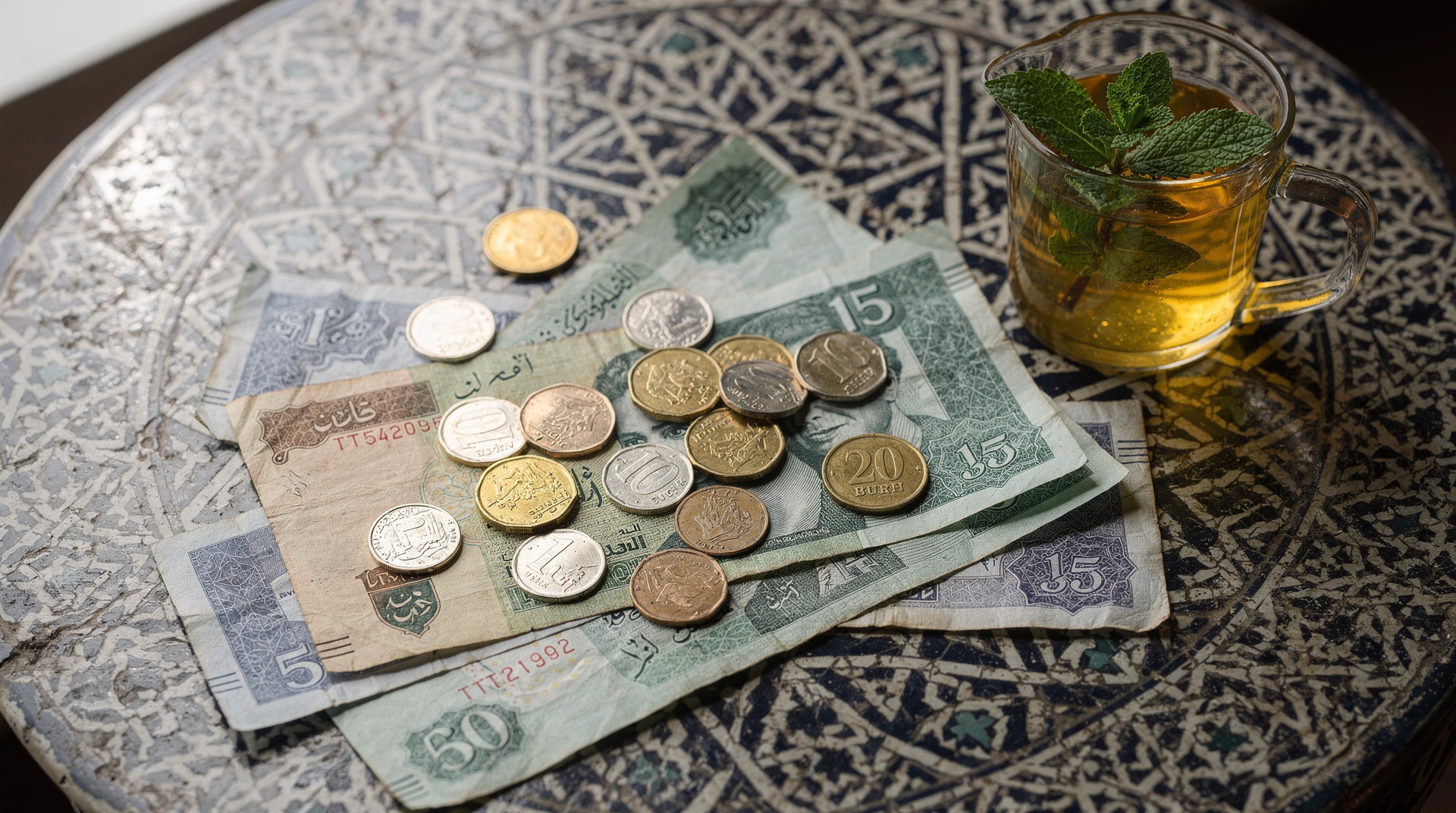
| Cost | Around 12-18 MAD for a supermarket beer; 35-80 MAD in a bar or restaurant |
| Easiest cities | Casablanca and Agadir; hardest is Fes medina and Chefchaouen |
| Ramadan | Sales to Muslims stop entirely; supermarket sections often close or reduce hours |
The legal framework
Alcohol in Morocco is legal for non-Muslims. The law is somewhat more complex in the details:
- Non-Muslims may purchase and consume alcohol legally in licensed establishments and from licensed retailers
- Moroccan Muslims are theoretically prohibited from purchasing or consuming alcohol under Article 1 of the Dahir of 1967, though enforcement in private contexts is minimal
- During Ramadan, sales of alcohol to Muslims are explicitly prohibited, and many establishments reduce their alcohol service or close their alcohol sections entirely
- Public intoxication is an offense — visibly drunk behaviour in public spaces, particularly conservative areas, can lead to police attention
- Drinking in public (streets, parks, non-licensed outdoor areas) is not appropriate and can attract negative attention from locals and occasionally from police
In practice, this means: drink inside licensed establishments or your accommodation. Don’t carry open bottles through the medina. Don’t be visibly drunk in conservative public spaces.
Where to buy alcohol
Supermarkets
The major supermarket chains stock alcohol in a dedicated section that’s typically separated from the main shopping area — sometimes behind a partition or in a separate room. The section may be marked to make it clear it’s for non-Muslim customers.
Chains with reliable alcohol sections:
- Carrefour (major cities): Beer, wine, and spirits. Good selection, reasonable prices.
- Marjane (many cities): Similar to Carrefour. The go-to for stocking up before desert drives or self-catering stays.
- Acima (urban areas): Smaller selection but available.
- Label’Vie (urban areas): Similar range.
During Ramadan: Alcohol sections in supermarkets are often closed or their hours significantly reduced during the holy month. This varies by store and city — don’t count on supermarket alcohol during Ramadan without checking first.
What’s available: Local Moroccan beers (Flag Spéciale, Casablanca, Stork), imported beers, Moroccan wines (particularly from the Meknes region), spirits. Prices are significantly lower than at restaurants or hotel bars.
Specialist alcohol shops
In some neighbourhoods of Casablanca, Rabat, and Marrakech’s Gueliz new city, there are specialist drinks shops selling a wider range of spirits, craft beers, and imported wines. These tend to be in ville nouvelle areas rather than medinas.
From your hotel or riad
Most international hotels have in-room minibars or bars. Better riads in Marrakech and Fes often have a license to serve alcohol in their courtyard or rooftop area.
Where to drink: licensed restaurants and bars
International hotels
The most reliable and universally available alcohol context. Every 4 and 5-star international hotel has a bar and serves alcohol in its restaurants. Hotel bars tend to be more expensive than supermarket prices but the selection is reliable.
Licensed restaurants in tourist areas
In Marrakech’s Gueliz new city and in the high-end riad restaurant scene, alcohol service is available. The Gueliz neighbourhood has wine bars, rooftop bars, and restaurants with full wine lists.
In the medinas: very few restaurants are licensed. Traditional Moroccan restaurants in the medina typically do not serve alcohol. Some international-facing restaurants in the tourist section of Marrakech’s medina do have licenses, but it’s the exception rather than the rule.
Fes: Even fewer licensed restaurants in the medina than Marrakech. For a drink in Fes, the hotel bar is often the most reliable option.
Casablanca: Has a well-developed bar and restaurant scene with broad alcohol availability. The city’s cosmopolitan character makes it the easiest place in Morocco to find a bar without special effort. Food-focused visitors will appreciate the Casablanca central market food tour with tastings and lunch — a half-day exploration of the city’s drinking and eating culture, including licensed venues.
Essaouira: A few licensed restaurants serve wine; the relaxed Atlantic coast atmosphere makes this somewhat more casual than the imperial cities.
Agadir: As a beach resort city, Agadir has the most accessible alcohol scene outside Casablanca — hotel bars, beach bars, and resort restaurants all serve alcohol freely.
Chefchaouen: Limited. The blue city’s medina has very few licensed establishments. A hotel bar is usually the only option.
Moroccan wine: a genuine surprise
Many travellers don’t know that Morocco produces wine. The wine tradition dates to the Phoenician period, was expanded under French protectorate influence (1912-1956), and continues today despite the predominantly Muslim population.
The Meknes wine region
Meknes, in northern Morocco near the Middle Atlas, is the heart of Moroccan wine production. The altitude (550m+), significant day-night temperature variation, and ancient volcanic soils produce distinctive wines. Key producers:
Celliers de Meknès (the dominant producer, brands include Médaillon, Château Roslane, and Initiale): Widely distributed, quality ranges from entry-level to genuinely ambitious. Their premium labels have won international awards.
Domaine de la Zouina: Produces more boutique volumes with international winemakers involved. Worth seeking out if you’re interested in Moroccan fine wine.
Ferme Blanche / Domaines Thalvin: Another significant producer in the Meknes region.
What to expect from Moroccan wine
Morocco’s grape varieties include international grapes (Syrah, Grenache, Cabernet Sauvignon, Merlot for reds; Chardonnay, Sauvignon Blanc for whites) adapted to the local climate. The reds tend toward ripe, full-bodied styles suited to the Mediterranean-influenced climate. Rosé is well-made and widely available.
Prices:
- Entry-level Moroccan wine at a supermarket: 50-80 MAD
- Mid-range Moroccan wine (Médaillon, Château Roslane): 100-200 MAD at a supermarket
- Restaurant markup: roughly 2-3x the retail price
Visiting wine estates
Some producers near Meknes offer estate visits and tastings, though this is less developed as a tourist activity than in France or Spain. If you’re in Meknes or passing through on the Fes-to-Marrakech route, it’s worth researching current offerings.
Moroccan beer
Flag Spéciale is the dominant local beer — a light lager brewed by Casablanca-based Brasseries du Maroc. It’s widely available, reliably consistent, and best cold. Not a complex beer but perfectly appropriate for hot medina days.
Casablanca beer is the other major local brand — slightly different recipe, similar style.
Stork is a third local brand.
Imported beers are available in hotels and some bars — Heineken, Corona, and similar international brands appear on many bar menus.
Craft beer: Very limited. Casablanca has a small craft beer scene; elsewhere, the choice is local lager or imported international brands.
Beer prices:
- Supermarket (33cl can): 12-18 MAD
- Restaurant or bar: 35-60 MAD
- Hotel bar: 50-80 MAD
Spirits and cocktails
International spirits (whisky, rum, vodka, gin) are available in major hotels, Casablanca bars, and specialist shops. Local spirit production is minimal — Morocco doesn’t have a significant domestic spirit tradition.
Mahia: A traditional Moroccan spirit made from figs, historically produced by Jewish communities in Morocco (Mahia is a Judeo-Moroccan tradition). You may encounter it in specialist contexts, though mass commercial production is limited.
Cocktail culture: Emerging in Casablanca, Marrakech’s Gueliz, and Agadir’s hotel scene. Rooftop bars in Marrakech’s new city have developed proper cocktail programs. For an evening that combines street food, atmosphere, and Marrakech’s licensed venues without the planning overhead, the Marrakech night street food tour — 3 hours with a local guide through Djemaa el-Fna and the surrounding alleys is one of the best ways to experience the city’s food and drink scene after dark.
Drinking during Ramadan
Ramadan brings specific changes to alcohol availability:
- Supermarket alcohol sections: Often closed or with reduced hours during Ramadan
- Some bars and licensed restaurants: May close or reduce service during Ramadan
- Hotels: Continue to serve alcohol to guests, usually with some discretion about public areas
During Ramadan, drinking in your hotel room or in an internal hotel bar is fine. Being visibly drunk in any public space during Ramadan — when the vast majority of Moroccan Muslims are fasting — is particularly inappropriate.
For full Ramadan context, the Ramadan travel guide covers all the practical adjustments for travelling during the holy month.
Social context around drinking
Alcohol consumption is visible and normal in Morocco’s tourist, expatriate, and Westernised urban contexts. At the same time:
- Don’t drink in the medina streets
- Don’t carry visible open bottles through conservative areas
- Be aware that in more traditional environments (rural areas, conservative neighbourhoods, Fes medina), visible alcohol is inappropriate
- Don’t offer alcohol to Moroccan Muslims unless they explicitly initiate the conversation about it
The vast majority of Moroccan social interactions you’ll have as a tourist don’t involve alcohol at all. This is not a country where drinking is a social bonding activity in the same way it might be in Europe — nor is it one where you’ll be shamed for having a glass of wine with dinner at your riad.
Price summary
| Context | Beer | House wine (glass) | Spirits |
|---|---|---|---|
| Supermarket | 12-18 MAD | 50-80 MAD (bottle) | 200-400 MAD (bottle) |
| Licensed restaurant | 35-60 MAD | 80-130 MAD | 80-150 MAD (measure) |
| Hotel bar | 50-80 MAD | 100-180 MAD | 100-200 MAD (measure) |
| Upscale restaurant | 60-80 MAD | 130-200 MAD | 150-250 MAD (measure) |
Alcohol is significantly more expensive relative to food than in European markets. A meal that costs 150 MAD can be accompanied by wine that costs more than the food. Budget for this separately if drinking is part of your trip plan.
Alternatives to alcohol
Morocco has an extraordinary non-alcoholic drinks culture:
Mint tea (atay): The national drink. Strong gunpowder green tea brewed with fresh mint and generous sugar, poured from height to create a froth. Served everywhere, with everyone, as hospitality. Refusing tea is a meaningful social statement — drinking it is almost always the right call.
Fresh-squeezed orange juice: Marrakech is famous for its orange juice stalls around Djemaa el-Fna — 4-7 MAD for a glass squeezed in front of you.
Avocado smoothies (avocado milk): Thick blended avocado with milk and honey, widely available. A Moroccan cafe staple.
Almond milk: Fresh almond milk, sometimes with orange blossom water. Found at traditional juice stalls.
These are not consolation prizes for those who don’t drink. They’re genuinely excellent and experiencing them is part of understanding Moroccan food culture. The vegetarian and vegan Morocco guide has more on Morocco’s food and drinks culture.
Bringing your own alcohol into Morocco
Duty-free allowances at Moroccan airports let arriving travellers bring in a limited quantity of alcohol (typically one bottle of spirits and one of wine per adult, though allowances are occasionally revised — check current limits with your airline before travelling). This is a reasonable option if you have a specific spirit preference that’s hard to find locally, or if you’re heading somewhere with genuinely limited access, like Chefchaouen or a multi-day stretch of the Atlas Mountains. It’s not worth the hassle for a bottle of wine you could buy at any Carrefour once you arrive.
Alcohol on desert and mountain trips
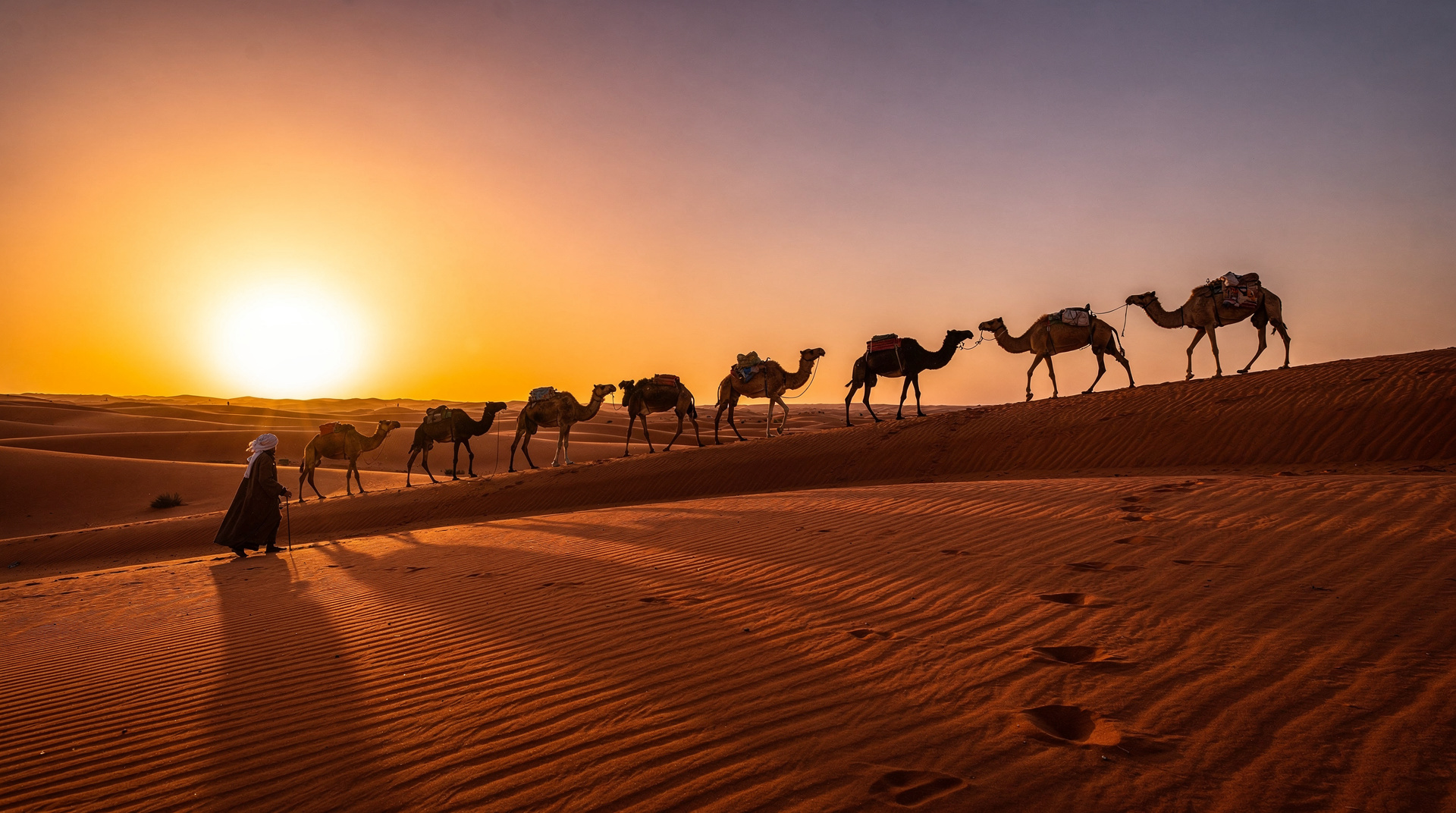
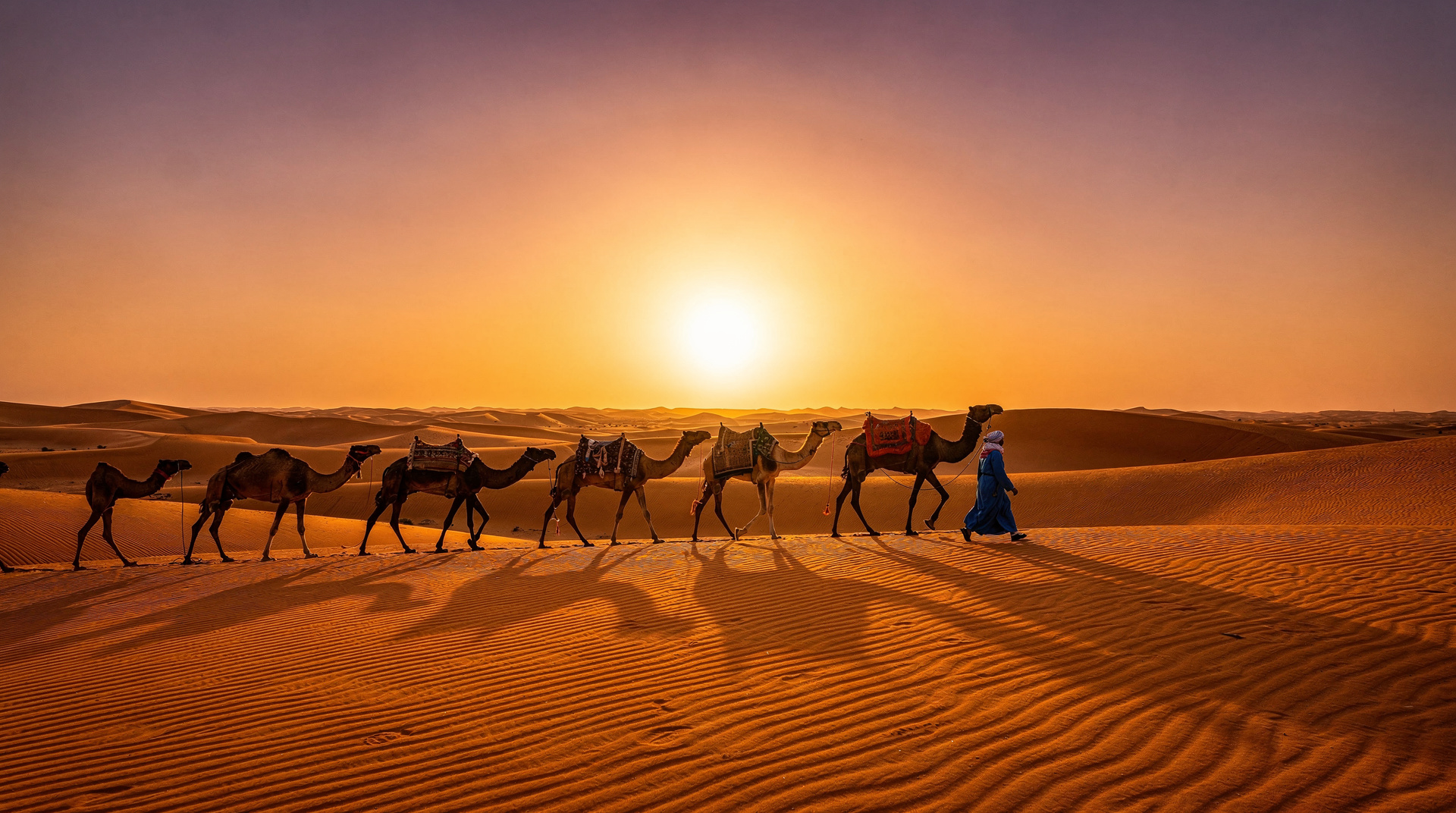
If your itinerary includes a Sahara tour from Marrakech or a stay at a luxury desert camp, don’t expect alcohol at the camp unless the operator has specifically confirmed it — many desert camps, particularly smaller or more traditional ones, don’t serve alcohol at all, partly for licensing reasons and partly out of respect for local Berber communities. If a drink with dinner under the stars matters to you, ask your tour operator directly before booking, or buy a bottle in Marrakech to bring along (checked with the camp first). The same applies to riads in villages during a multi-day Atlas trek — assume no alcohol unless told otherwise.
Related planning guides
For the full cost picture: the Morocco budget guide notes alcohol as a separate budget line. For Ramadan timing: the Ramadan travel guide covers Ramadan alcohol availability specifically. For what to pack: the Morocco packing list notes that bringing your own from a duty-free is an option for specific spirits preferences. If Casablanca’s bar scene is part of your plan, the Casablanca destination guide has more on the city’s nightlife beyond the food tour mentioned above.
Frequently asked questions about Alcohol in Morocco
Can tourists bring their own alcohol into a riad?
Usually yes, for personal consumption in your room, though it’s polite to ask your riad host first — some riads have a license and would rather sell you a drink from their own bar, and a few conservative family-run guesthouses prefer guests not bring alcohol into shared courtyard spaces. If in doubt, ask when you book.
Is it disrespectful to drink alcohol in Morocco?
Not inherently — drinking in licensed venues, hotels, and your own accommodation is normal and unremarkable. What reads as disrespectful is drinking visibly in public streets, being loudly drunk in conservative neighbourhoods, or offering alcohol to a Moroccan Muslim who hasn’t raised the subject themselves. Context and discretion, not abstinence, are what’s expected.