Ramadan food guide: what to eat in Morocco during the holy month
What food is eaten during Ramadan in Morocco?
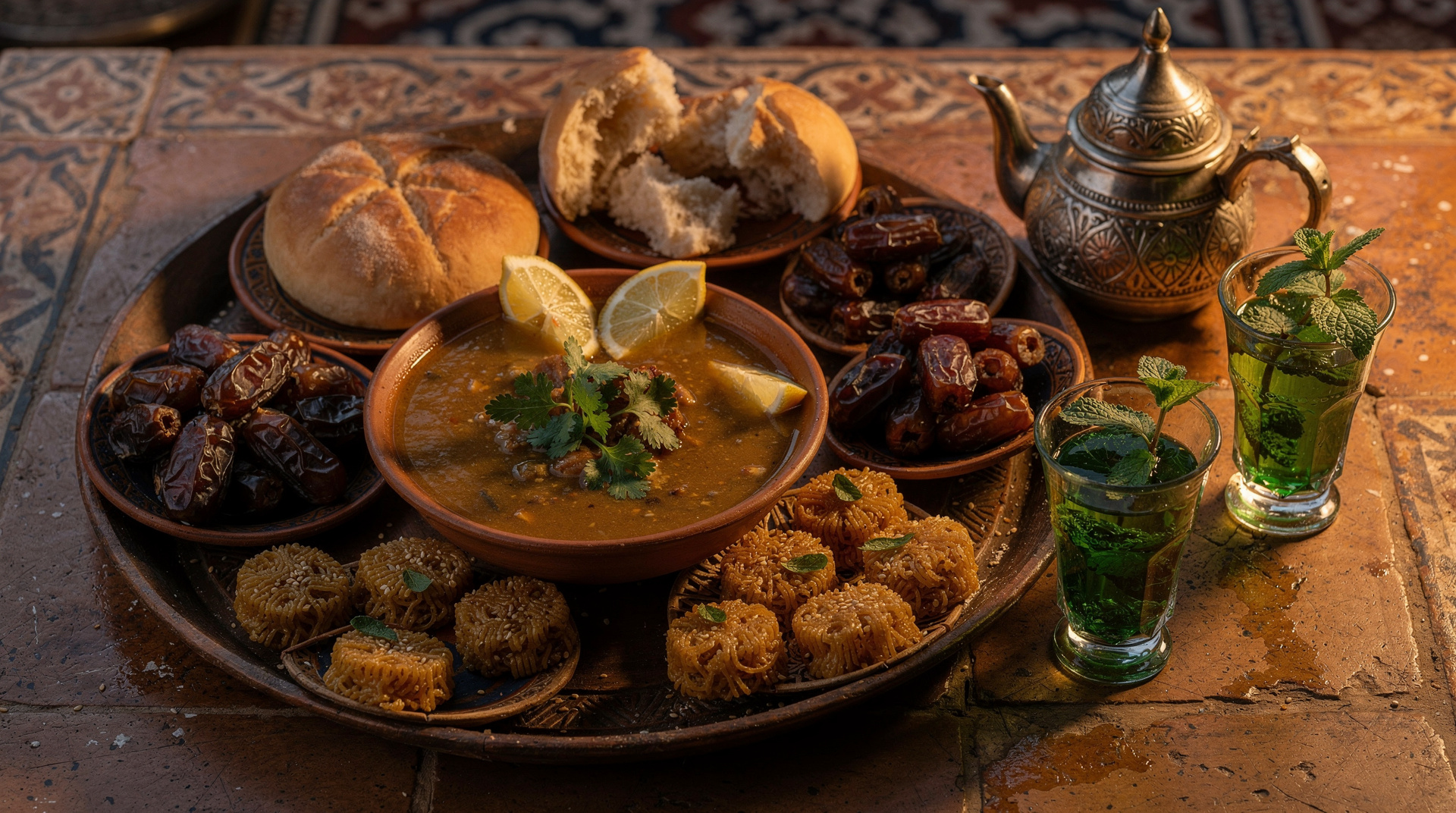
Iftar (breaking the fast at sunset) in Morocco begins with dates, water, and harira soup. This is followed by milk with chebakia (sesame honey pastries), hard-boiled eggs, msemen, and larger dishes later in the evening. Suhoor (the pre-dawn meal) is substantial — harira again, eggs, bread, and tea. The food tradition during Ramadan is distinctive and worth experiencing as a visitor.
Ramadan in Morocco: fasting and feasting
Morocco’s Ramadan is one of the most food-intensive months of the Moroccan calendar — which might seem paradoxical for a month of fasting. The reality is that Ramadan in Morocco transforms the entire food culture: daytime eating largely stops (for observant Muslims), but the sunset iftar meal and the late-night suhoor together constitute some of the most elaborate eating of the year.
For visitors, Ramadan presents a distinct set of food experiences. The harira at sunset, the smell of chebakia pastries frying in every neighbourhood, the collective moment of breaking the fast at the cannon shot or call to prayer — these are among the most culturally meaningful food experiences Morocco offers, and they’re only available during this month.
This guide covers what to expect, what to eat, and how to navigate restaurants and food availability as a non-fasting visitor during Ramadan.
At a glance
| When | Ramadan dates shift yearly — see the Ramadan travel guide for 2026/2027 dates |
| Key dish | Harira (soup) with dates, then chebakia and milk |
| Iftar menu cost | Around 150-300 MAD per person at riads/tourist restaurants |
| Street food window | Roughly 30-45 minutes after sunset through 2-3am |
| Daytime food access | Limited — most local cafés close; tourist restaurants and riads still serve |
| Best cities to experience it | Fes (most traditional), Marrakech (Jemaa el-Fnaa at night) |
The Ramadan food schedule
Iftar: breaking the fast at sunset
The moment of iftar — the breaking of the fast at sunset — is the most important moment of the Ramadan food day. The exact timing changes daily as sunset advances or retreats through the month. Most Moroccans end the day gathered at the family table, waiting for the call to prayer (or, in some cities, a cannon fired at sunset to signal the break).
The iftar sequence in Morocco:
First: dates and water. Three dates, eaten in the tradition of the Prophet Muhammad. Water or leben (buttermilk) follows.
Second: harira. The tomato, lentil, and chickpea soup — thick, spiced, slightly tangy from lemon — is the anchor of the Moroccan iftar. Every family has a large pot started hours before sunset. The smell of harira cooking fills medina streets from 3pm onwards during Ramadan.
Third: chebakia and milk. Chebakia (sesame and honey fried pastries — flower-shaped dough, deep-fried, coated in warm honey, and dusted with sesame seeds) is eaten alongside a glass of cold milk (leben). The combination is specifically Moroccan Ramadan — the sweet-fatty chebakia with cold milk counteracts the hunger of the day.
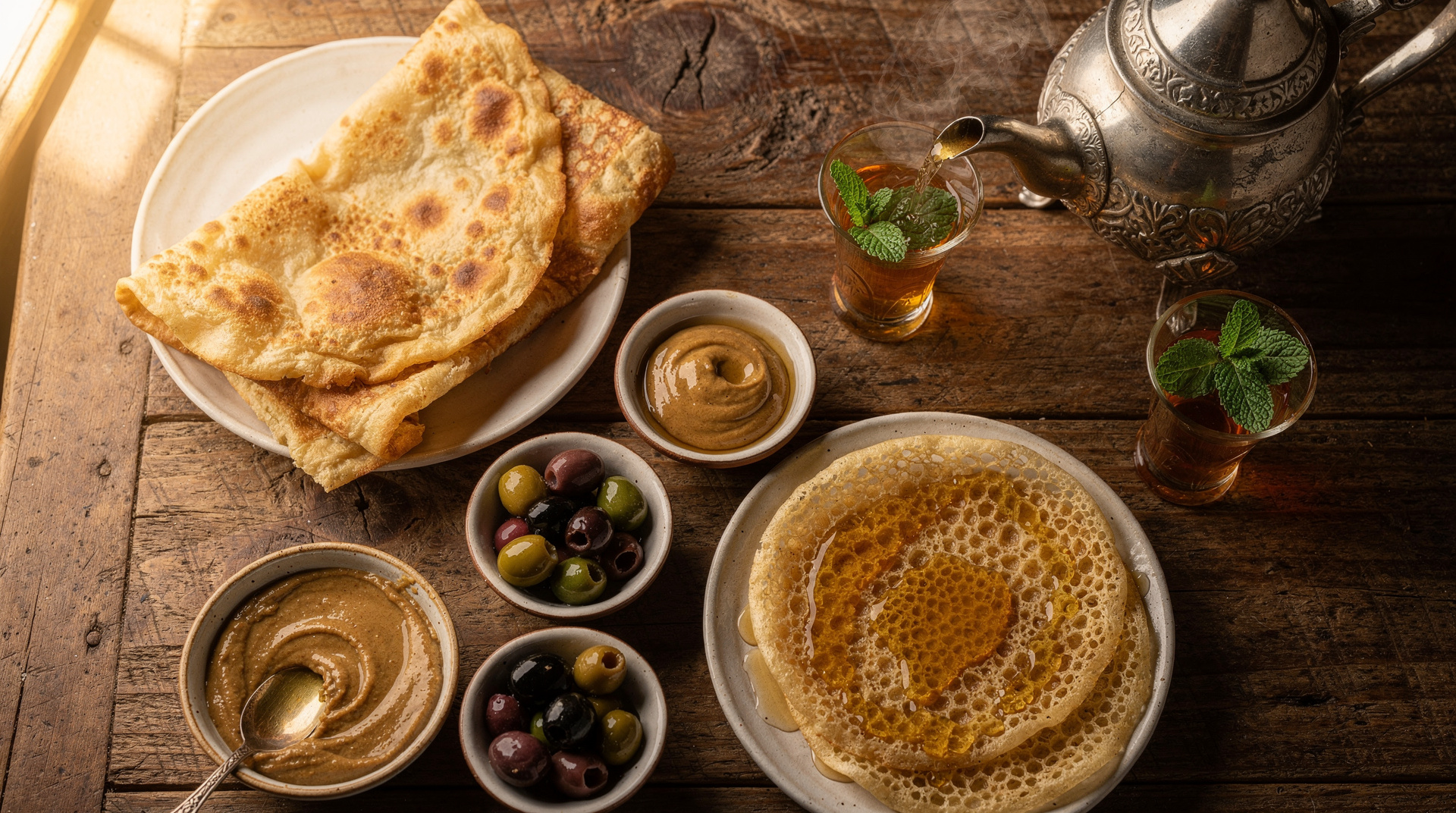
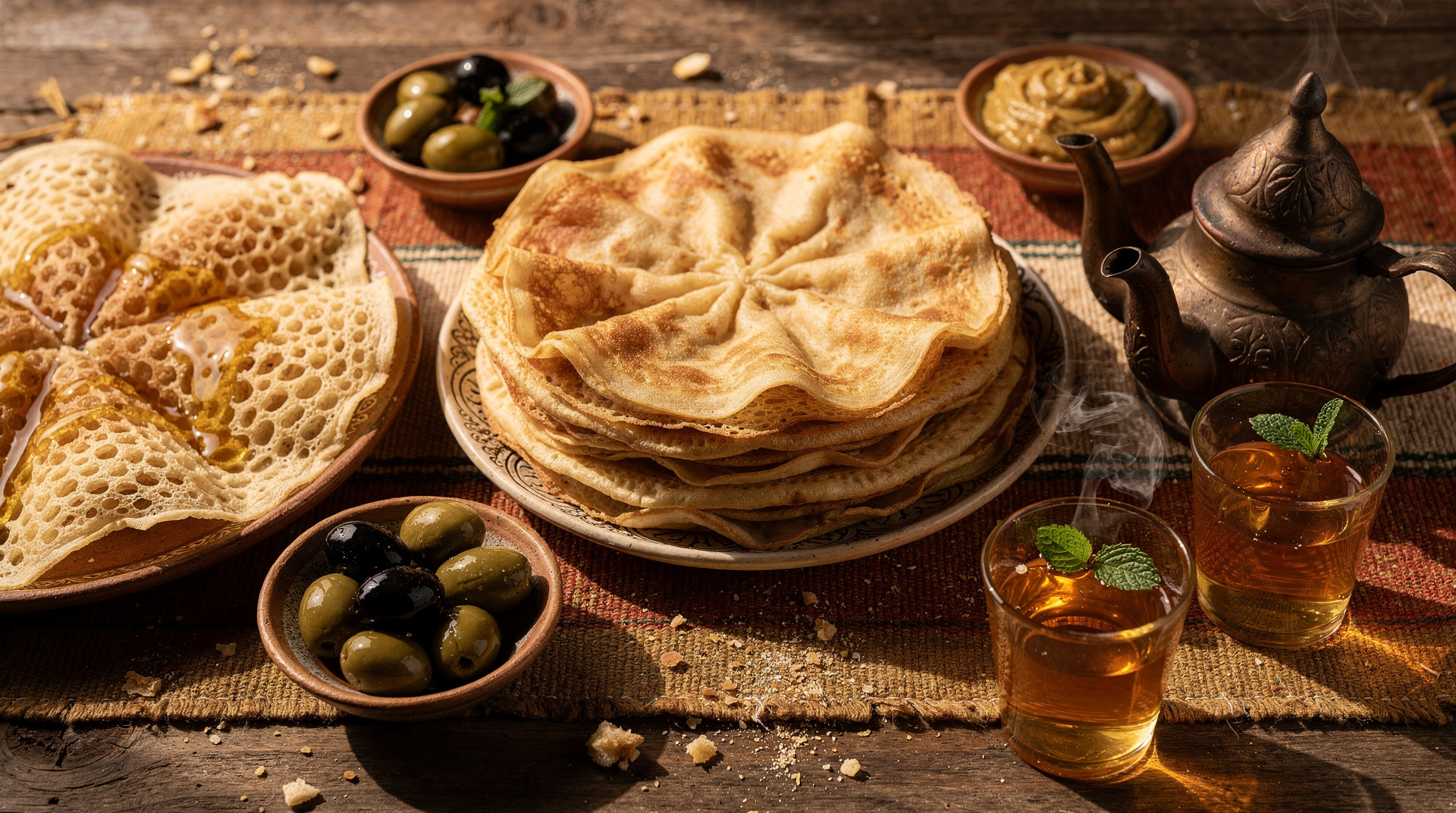
Fourth: eggs and bread. Hard-boiled eggs, msemen, harcha, or khobz follow the soup and sweets. This is the substantial “first round” of the iftar before the larger meal later in the evening.
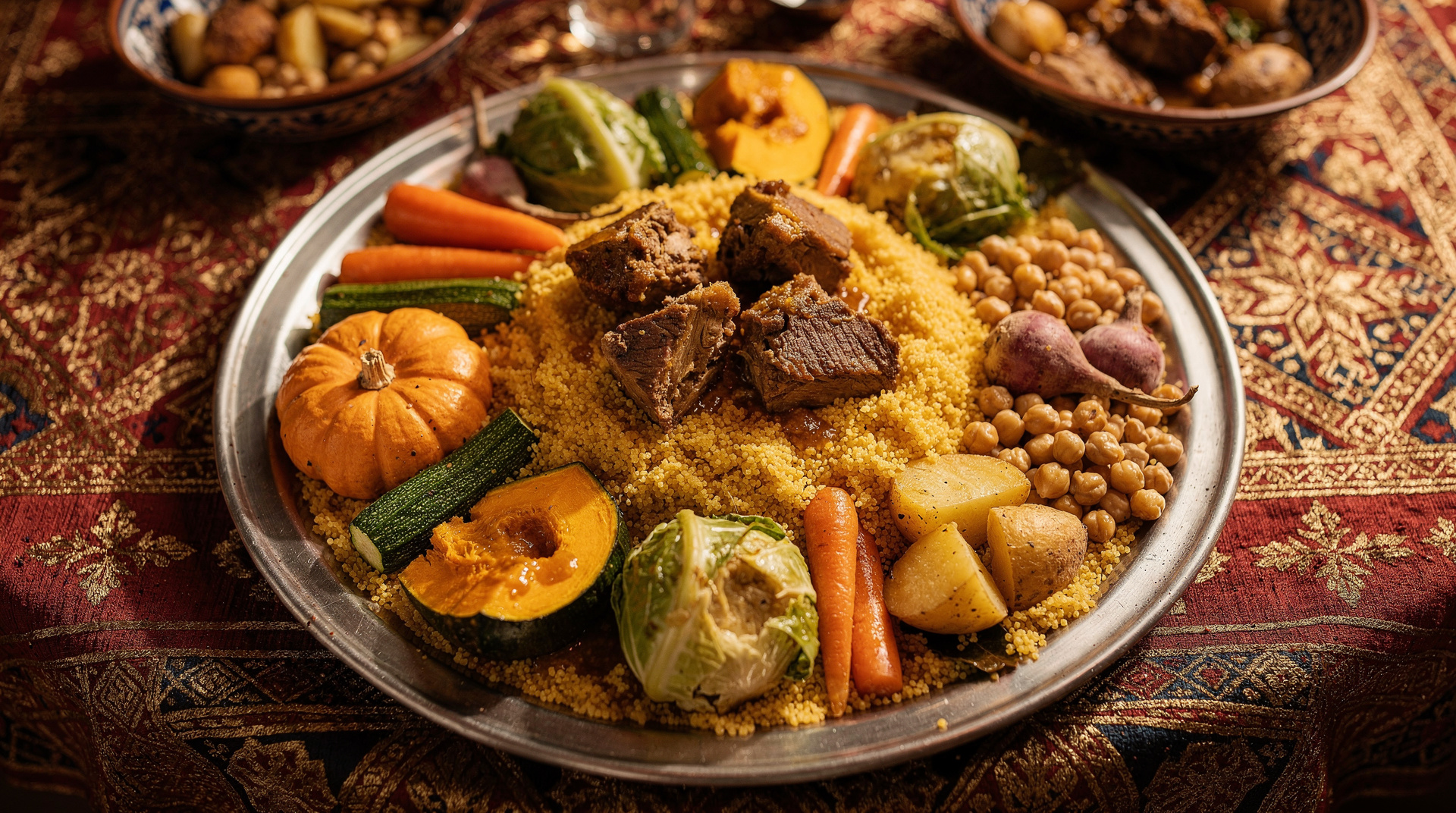
Later in the evening: the main meal. After prayers and rest, the main evening meal is typically a larger dish — tagine, couscous, or mechoui — eaten at 9-10pm. This is often the most elaborate meal of the day and can involve multiple courses at family gatherings.
Harira: Morocco’s Ramadan essential
Harira is technically a year-round soup — it’s eaten at weddings, at street stalls, and as a daily meal. But during Ramadan, it becomes the central dish of the entire month. Every Moroccan family makes harira every day. Commercial harira producers (selling pre-made or semi-prepared versions) do significant business in the week before Ramadan.
What makes Ramadan harira different: The proportion of ingredients is typically richer — more chickpeas, more lentils, more tomatoes, more herbs. This is the meal that must sustain a family after a day of fasting, so it’s made with extra body. Many families add small pasta (vermicelli) or flour dumplings (sfenzjiya) to the Ramadan version.
The spice blend: Coriander, flat-leaf parsley, ginger, turmeric, cinnamon, and white pepper in most versions. A squeeze of fresh lemon in the bowl is the finishing touch. Each family has a slight variation.
For visitors: Harira at iftar in Morocco is available at restaurants that maintain a Ramadan schedule and at street stalls that specifically operate for iftar. If you’re staying at a riad, the host will almost certainly offer a iftar spread at sunset — it’s one of the most genuine hospitality traditions in the country.
Chebakia: the Ramadan pastry
Chebakia is the pastry that defines Moroccan Ramadan. Made from a spiced dough of flour, aniseed, sesame seeds, saffron, orange blossom water, and vinegar, it’s formed into a distinctive flower or rose shape, deep-fried in oil, then immediately submerged in warm honey and rolled in sesame seeds.
The result is a dense, intensely sweet, honey-sticky pastry with a crispy exterior and a slightly chewy interior. The spice combination — aniseed, sesame, saffron — is specific and unmistakeable.
Making chebakia: It’s a social activity. In the weeks before Ramadan, groups of women gather in family homes to make enormous batches — enough for the full month. The shaping takes skill (the flour ribbon is wound into the flower shape with specific folds) and is done by hand. Large stainless steel bowls of chebakia appear in every household for the month.
Buying chebakia: During Ramadan, chebakia is sold at every pastry shop, at street stalls, and at medina vendors. Prices: 80-150 MAD per kilogram. At street stalls, individual pieces sell for 3-8 MAD.
Outside Ramadan: Chebakia exists but is less common. Some pastry shops carry it year-round; at weddings and celebrations it appears. But the genuine tradition is tied to Ramadan.
Shebakia versus chebakia
The same pastry, different spellings. “Chebakia” is the standard Moroccan Arabic transliteration; “shebakia” is a French transliteration. Both refer to the same Ramadan honey pastry. You’ll see both spellings on restaurant menus and souvenir packaging.
Other Ramadan foods
Sellou (sfouf)
Sellou (also called zmita or sfouf depending on region) is a dense, non-cooked sweet made from roasted flour, toasted sesame, fried almonds, honey, and butter — blended into a thick paste or crumbled into a powder. It’s eaten in small quantities at suhoor (the pre-dawn meal) because it’s extremely high in calories and fat — sustained energy for a day of fasting.
It’s not technically a cooked dish — it’s assembled. But making it is a significant production: the flour must be roasted to a specific golden-brown, the almonds fried perfectly, the sesame toasted. At good Moroccan pastry shops, sellou is available year-round, but Ramadan is its primary season.
Briouates
The small triangular or cylindrical pastry parcels appear in greater quantity during Ramadan. Filled with kefta and egg, or cheese and herbs, or almonds and honey (sweet version), briouates are fried and eaten as part of the iftar spread. They’re present at other times of year but Ramadan concentrates them.
Mhalbiya (muhallebi)
Mhalbiya is a milk pudding dessert — rice flour (or cornstarch) thickened with milk, sweetened with sugar, flavoured with orange blossom water and rose water, and sometimes sprinkled with cinnamon or pistachios. It’s served cold as a light dessert at the end of the main evening meal during Ramadan. Pale, delicate, and very easy to eat after a full iftar. Similar to panna cotta in texture but without the dairy richness.
Harcha and msemen at suhoor
The pre-dawn suhoor meal is the last food before a day of fasting. Moroccan suhoor leans on the bread traditions — msemen with butter and honey, harcha with cheese, khobz with olive oil. The goal is food that provides slow energy release through the day. Harira appears again at suhoor in many households. A full suhoor spread mirrors the riad breakfast, eaten at 3-4am before the fajr prayer signals the beginning of the fast.
Travelling during Ramadan: food logistics for visitors
What’s open and when
This is the most practical question for non-fasting visitors. The short answer: during daylight hours, less food is available and fewer restaurants operate; after sunset, the city comes alive and food is everywhere.
Restaurants: Tourist-facing restaurants in Marrakech, Fes, Casablanca, and Chefchaouen generally remain open during the day for non-Muslim visitors, though they may keep curtains drawn and maintain a lower profile out of respect. Local restaurants and cafés typically close during daylight hours.
Street food: Essentially unavailable in the daytime — vendors observe the fast. After iftar, street food explodes — harira stalls, msemen vendors, chebakia sellers, and late-night sandwich and kefta stands operate well past midnight.
Riad breakfasts: Continue as normal for non-fasting guests, usually served in a private indoor space rather than the open courtyard.
Cafés: Tourist-district cafés (Guéliz in Marrakech, the Ville Nouvelle in Rabat, Casablanca’s central districts) maintain daytime hours for visitors.
Respecting the fast
The basic principle is visibility: don’t eat, drink, or smoke in public during daylight hours in Ramadan. Carrying a water bottle and drinking from it on a crowded medina street is considered disrespectful. Eat in your riad, in tourist restaurants, or in hotel dining rooms. Buy food and eat it privately.
This is not a legal requirement for visitors but a genuine courtesy. Moroccans who observe the fast are doing something they consider sacred; making the temptation visible in public is culturally tone-deaf.
The advantages of travelling during Ramadan
Paradoxically, Ramadan is one of the best times to experience Morocco:
- Crowds are lower during peak tourist months
- The medinas feel different at night — the communal iftar energy, the family gatherings on doorsteps, the evening market atmosphere
- The cultural experience is deeper — food sharing, hospitality, and invitation to iftar from a host family are genuine possibilities
- Ramadan night food is excellent — the post-iftar street food and restaurant scene runs until 2-3am
See the full Ramadan travel guide for the logistics beyond food — visiting sites, transport, and timing.
Iftar at a Moroccan family’s table
Being invited to break the fast with a Moroccan family is one of the most genuine hospitality experiences Morocco offers. If your riad owner or a local contact invites you to share iftar, accept without hesitation.
What to bring: Dates, chebakia, or a quality sweet — these are the traditional iftar gifts. A box of high-quality dates (200-400 MAD at a good shop) is always appropriate.
What to do: Arrive before the call to prayer. Sit where directed. When the call comes, follow the family’s lead — dates first, then water, then harira. Don’t rush, don’t eat conspicuously before the signal, and eat appreciatively and slowly.
What to say: “Ramadan Mubarak” (Blessed Ramadan) or “Ramadan Kareem” (Generous Ramadan) are appropriate greetings. After the iftar: “Salaha Allah aleina wa aleikum” (May God accept from us and from you).
Ramadan food and the broader Moroccan food culture
The foods of Ramadan — harira, chebakia, sellou, msemen — connect directly to the everyday Moroccan food tradition, but their Ramadan versions are more elaborate and their context more charged with meaning. Understanding the tagine tradition and the Moroccan bread culture gives the necessary background to understand why these specific foods dominate during the holy month.
For the broader picture of food culture in Morocco’s cities, the street food guide for Fes and the Moroccan breakfast guide provide the context that makes Ramadan food intelligible. The mint tea ritual that runs through both suhoor and the post-iftar socialising is its own guide.
Ramadan food by city: what changes where
The Ramadan food experience is not identical across Morocco. Each city has its own emphasis:
Marrakech
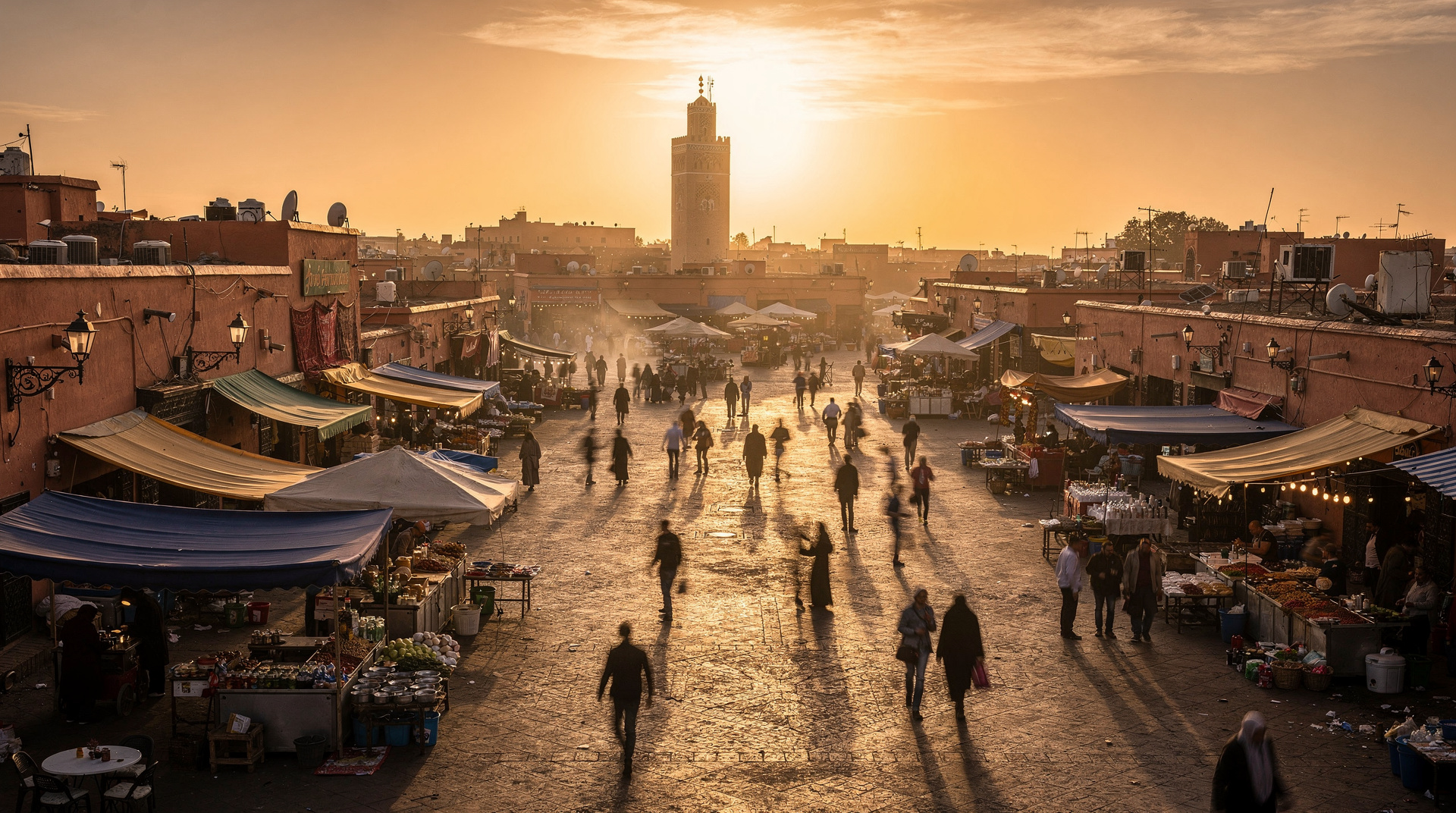
Jemaa el-Fnaa transforms most dramatically during Ramadan. The square — normally filled with performers, snake charmers, and food stalls catering to tourists — shifts at sunset into a different mode: local families gathering, harira stalls at full capacity, chebakia sellers doing the business of the entire year. The night food scene runs until 3-4am. Outside Ramadan, the best way to experience the square’s food culture is on a night food tour and dinner at Jemaa el-Fna with a local guide.
The riad culture of Marrakech means visitors staying in riads are most likely to be included in a family-style iftar — many riad owners serve guests at the communal iftar table during Ramadan as a hospitality tradition.
Fes
Fes is considered by many Moroccans to be the most authentically observed Ramadan city in the country. The medina empties noticeably during the day (even more than usual), the muezzin’s call for iftar echoes off the ancient stone walls with particular effect, and the post-iftar street food scene in the areas near the Kairaouine Mosque has a centuries-old character that Marrakech’s more tourist-facing scene lacks. Year-round, a Fes cooking class and old medina visit brings you into the domestic food culture that Ramadan intensifies.
The Ramadan harira in Fes is considered by food specialists to be the most complex version — the Fassi tradition of elaborate spice blends applies even to the everyday soup.
Casablanca and Rabat
The modern cities observe Ramadan without the medina atmosphere of Fes and Marrakech. Restaurants in the Ville Nouvelle districts often maintain day-service for non-fasting visitors. The iftar in Casablanca is more domestic than the medina experience — families eating at home rather than community gathering on medina streets.
Coastal cities (Essaouira, Agadir)
The Ramadan food tradition holds but with less intensity of atmosphere than the inland cities. Essaouira’s evening port area has a good Ramadan street food scene at sunset. Tourist infrastructure in Agadir means more restaurants remain open during daylight hours.
Harira: the definitive recipe structure
For visitors who want to understand what goes into the harira they’re eating, the recipe structure:
The base: Fresh tomatoes (or canned in winter), onions, coriander, flat-leaf parsley, celery leaves — blended or finely chopped and sweated in olive oil.
The legumes: Chickpeas (soaked overnight and pre-cooked, or canned), green or red lentils, sometimes dried fava beans.
The spice blend: Fresh ginger (grated), turmeric, white pepper, cinnamon, black pepper. Not chilli — harira is not spicy. Salt to taste.
The thickener (tadouira): A mixture of flour and water whisked together and added near the end of cooking to give the soup its characteristic slightly thick, smooth texture. This is what distinguishes harira from a basic vegetable soup.
The finish: Lemon juice added directly before serving. Fresh coriander and parsley stirred through. A drizzle of olive oil over the bowl. Some cooks add small pasta (vermicelli) or flour dumplings in the final stage.
The timing: A properly made harira takes 2-3 hours. The legumes need to be fully tender, the flavours need to meld, and the thickening needs time to develop. Quick harira (under 30 minutes) is a lesser product.
Chebakia: making versus buying
The best chebakia is homemade — the shaping requires practice, the frying temperature matters (too hot and they darken before cooking through; too cool and they absorb oil), and the honey coating must be warm enough to adhere properly. Moroccan women who produce excellent chebakia have usually been making them since childhood.
At pastry shops during Ramadan: 80-150 MAD per kilogram. At street stalls selling individual pieces: 3-8 MAD each.
What to look for in a good chebakia: The shape is consistent — the flour ribbon is wound into a specific flower form, not roughly dropped into a ring. The colour is deep golden to amber — pale indicates undercooking, very dark indicates oil that was too hot. The honey coating is even and slightly sticky, not pooled or absent. The sesame seeds are distributed across the surface.
The spice blend in the dough: Aniseed, sesame seeds, saffron, cinnamon, orange blossom water, and a small amount of vinegar — this combination is what gives chebakia its distinctive taste that distinguishes it from simple fried pastry.
What restaurants serve during Ramadan
Tourist-facing restaurants in major cities adapt their service for Ramadan in specific ways:
Iftar menus: Many riad restaurants offer a fixed-price Ramadan iftar menu that follows the traditional sequence — dates and water, harira, chebakia and milk, followed by a main course. These run 150-300 MAD per person and provide the most complete iftar experience for visitors.
Suhoor menus: Some restaurants near the tourist areas of Marrakech and Fes offer late-night suhoor service (1-3am) — a lighter meal of bread, eggs, and tea. Less common but available.
Day service: Tourist-district restaurants generally remain open during daylight hours for non-fasting visitors. Expect reduced staff (servers who observe the fast may be noticeably lower-energy in the final hours before iftar — this is normal and expected). Don’t comment on it.
Respecting the kitchen: Even at restaurants open during the day in Ramadan, understand that the kitchen staff may be fasting. Be patient with service timing, don’t complain about slow service, and be appreciative when food arrives.
Learning to cook Ramadan dishes yourself
For visitors who want to take the harira-and-chebakia experience home, hands-on classes are the best route — most riad hosts can point you toward a family-run option, and the dedicated cooking classes in Marrakech guide and cooking classes in Fes guide cover what to expect from a half-day session, including whether Ramadan-specific dishes are offered outside the fasting month. Some instructors will happily walk through the chebakia folding technique even in July, though the honey-and-frying stage is genuinely easier to learn in a cool kitchen than a hot summer one.
Where to stay for the best iftar experience
Riad breakfasts and iftar spreads are two different services, but the same hospitality instinct drives both. Riads that take their breakfast seriously — the kind covered in the best riads in Marrakech guide and the best riads in Fes guide — are generally the same properties that lay on a proper iftar table for guests during Ramadan. Ask when booking; not every riad automatically includes it, and some charge a modest supplement for the fixed iftar menu.
Frequently asked questions about Ramadan food guide
Can non-Muslim visitors eat during the day in Ramadan?
Yes, but discreetly. Eating inside your riad, a hotel restaurant, or a tourist-facing restaurant that stays open is fine. Eating or drinking visibly on the street during daylight hours is considered disrespectful (and, technically, restricted by law for public consumption) — it’s not about you being excluded from food, it’s about not making the fast harder to observe for people around you.
Is Ramadan food spicy?
No. Harira and most of the classic Ramadan dishes — chebakia, sellou, mhalbiya — are aromatic and warmly spiced (ginger, cinnamon, saffron, aniseed) rather than chilli-hot. Morocco’s everyday cuisine generally is not spicy in the chilli sense; the heat comes from harissa served on the side, added at the diner’s discretion.