Moroccan Dirham: Money, ATMs & Currency Guide
What currency does Morocco use and where's the best place to exchange money?
Morocco uses the Dirham (MAD), a closed currency you cannot buy outside the country. Use ATMs from BMCE or Attijariwafa for the best rates — better than airport exchange booths. Cards work at hotels and tourist restaurants; cash is essential for markets, taxis, and tips.
The Moroccan Dirham: what you need to know before you land
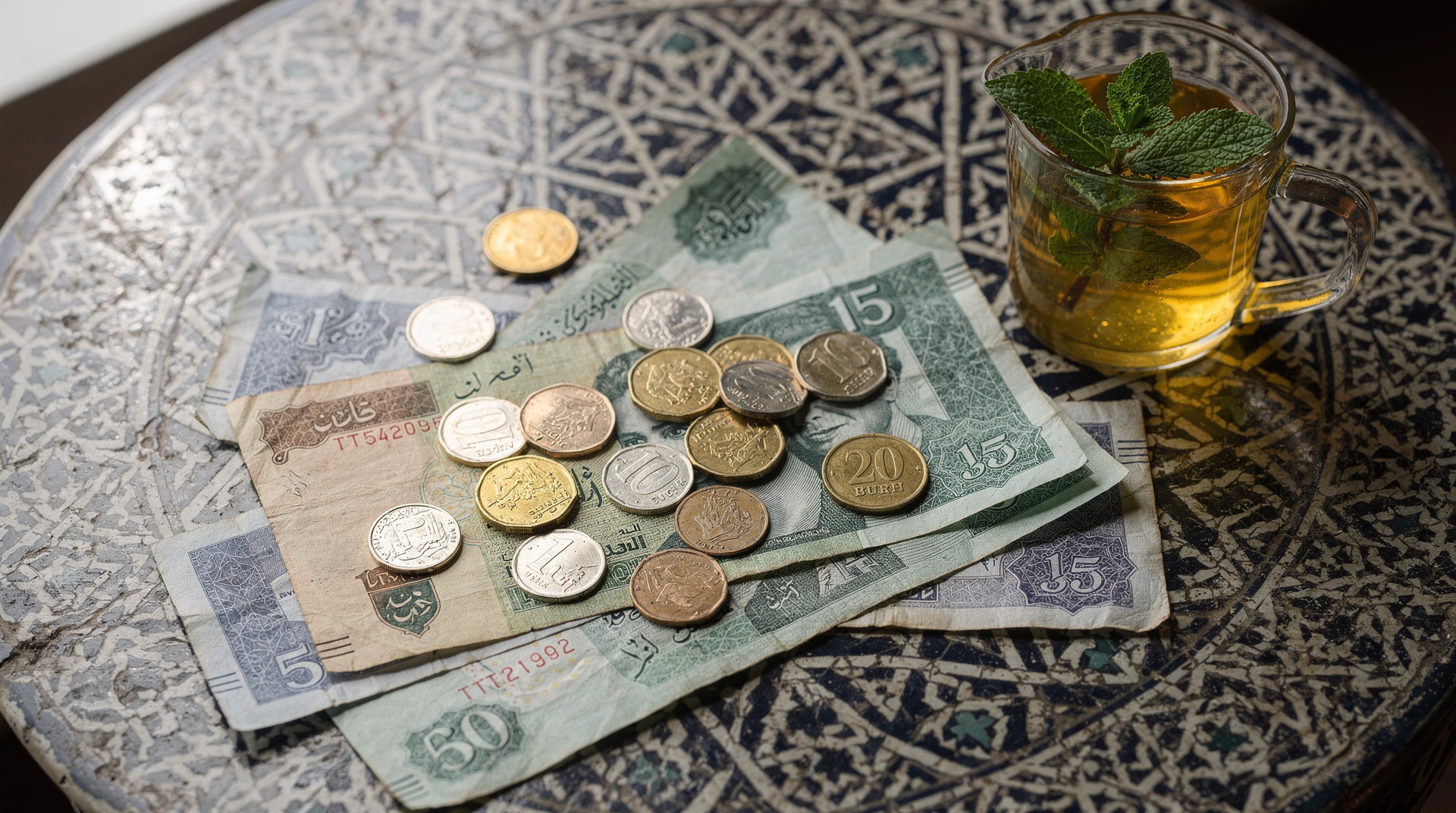
The Moroccan Dirham (MAD) is a closed currency — it’s not traded on international markets and you cannot buy it outside Morocco in any meaningful quantity. This means one thing practically: arrive with a plan to get MAD inside the country, and don’t expect to stock up at home before departure.
The good news: ATMs are plentiful in Moroccan cities, exchange rates are reasonably fair through official channels, and the country operates on cash in ways that are easy to manage once you know the system.
At a glance
| Currency | Moroccan Dirham (MAD) — closed currency, buy it inside the country |
| Best source of cash | ATMs (BMCE/Bank of Africa, Attijariwafa, Banque Populaire) |
| Typical ATM fee | Around 20-30 MAD flat per withdrawal, plus your home bank’s foreign fee |
| Card acceptance | Hotels, riads, larger restaurants and supermarkets yes; souks, taxis, tips are cash-only |
| Daily cash budget (mid-range) | Roughly 300-600 MAD per person for markets, taxis, tips, and small purchases |
Current exchange rates
Approximate rates in 2026:
- 1 EUR = roughly 10.8-11.2 MAD
- 1 USD = roughly 10.0-10.4 MAD
- 1 GBP = roughly 12.8-13.2 MAD
- 1 CHF = roughly 11.5-12.0 MAD
These fluctuate with currency markets. Check xe.com before departure and use it as your reference benchmark when evaluating exchange offers on the ground.
Useful mental shortcut: 100 MAD is approximately 9-10 EUR. This makes quick price assessment easier in markets and restaurants.
ATMs: the best option for most travellers
ATMs are the most convenient and usually the best-rate way to access dirhams. Most major Moroccan bank ATMs accept international Visa, Mastercard, and occasionally Amex.
Which banks to use
BMCE Bank (now Bank of Africa) and Attijariwafa Bank are the two most reliable for international cards. Their ATMs are widespread in cities and tourist areas and tend to offer rates close to the mid-market rate with a reasonable flat fee.
Banque Populaire is also widely available and generally reliable.
Currency exchange booths inside ATM lobbies: Some locations try to get you to choose “dynamic currency conversion” — accepting the exchange in your home currency rather than MAD. Always decline this. Choose “charge in MAD” — the rate your home bank offers will almost always be better than what the ATM proposes.
ATM fees
Expect two layers of fees:
- Moroccan bank fee: Typically 20-30 MAD flat per withdrawal regardless of amount
- Your home bank’s foreign transaction fee: Varies by bank; some charge 0%, some charge 2-3%
Strategy: Withdraw larger amounts less frequently. Taking out 1,000 MAD twice costs more in fees than taking out 2,000 MAD once. For a one-week trip, 3,000-5,000 MAD is a reasonable cash budget for most travel styles (excluding large tour payments, which can usually be made by card to tour operators — for example, the private airport transfer from Marrakech Menara is a sensible first booking to pay by card, so you arrive with time to find a good ATM rather than scrambling for cash at the airport exchange booth).
ATM security basics
Use ATMs in daylight when possible. ATMs inside bank branches are preferable to standalone street machines. Cover your PIN. If an ATM retains your card (rare but it happens), call your bank’s international number immediately — Moroccan banks can usually sort card releases within 24-48 hours, but you’ll want to freeze the card from your end.
Airport exchange: use sparingly
Every Moroccan airport has exchange bureaux in arrivals. The rates are worse than ATM rates — typically 3-5% below mid-market — but the convenience is real.
Recommendation: Exchange a small amount at the airport to cover the taxi from arrivals and any immediate needs (20-40 EUR/USD is enough). Get the rest from an ATM in the city.
The Marrakech and Casablanca airports also have ATMs in the arrivals hall — use these rather than the exchange booths if your card is working.
Exchange offices in cities: when they’re worth it
City-based exchange bureaux (marked “Change” or “Bureau de Change”) can offer better rates than airports, though still usually slightly below ATM mid-market rates.
When exchange booths make sense:
- If your home bank charges very high foreign transaction fees (3%+), the booth rate differential may be smaller than the fee saving
- For changing unused MAD back to euros at trip end (you can re-exchange at official bureaux — keep your original exchange receipts)
- In Marrakech and Fes, the official exchange windows in the medina are legitimate; the freelance “best rate!” approaches from individuals are not
Never change money with unofficial street changers. The “good rate” offered is always a setup — counterfeit notes, short-counting, or both.
Cash vs card: the practical breakdown
Morocco is a cash-heavy society in many contexts but increasingly card-capable in tourist-facing businesses.
Pay by card when possible:
- Hotels and riads (most accept Visa/Mastercard for the main booking)
- Organised tour operators and activity companies
- Better restaurants in tourist areas
- Large supermarkets (Carrefour, Marjane, Acima)
- Some museum and site entries
Cash only (or cash strongly preferred):
- All medina souk transactions
- Street food stalls and small restaurants
- Petit and grand taxis
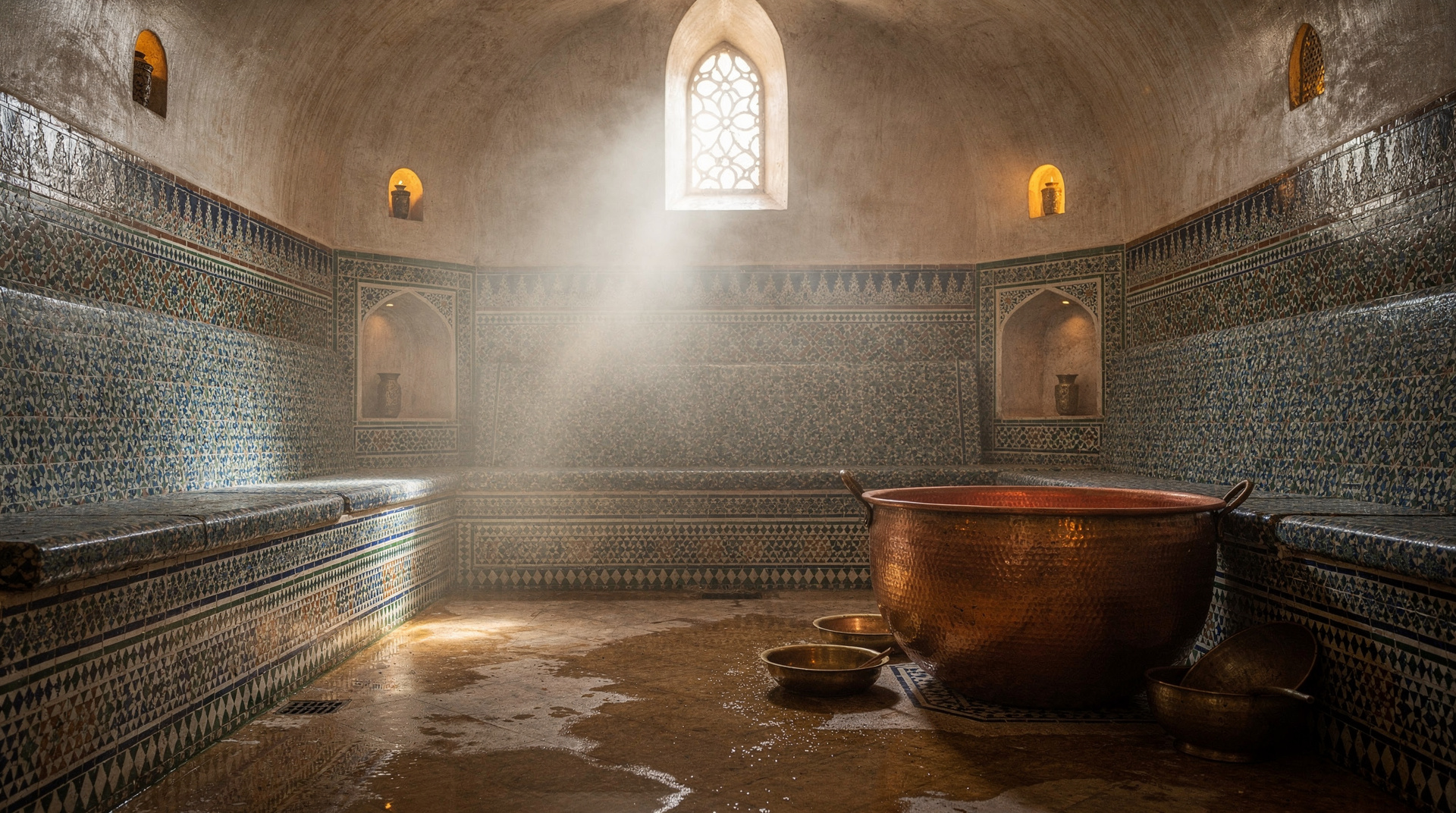
- Hammams (local neighbourhood ones)
- Tips (always cash)
- Small guesthouses and traditional accommodation
- Any market negotiation
- Water, snacks, street purchases
Card practicalities: When a restaurant or hotel says they accept card, check for a working machine before ordering. Machine “failures” at bill time are not unusual in medina restaurants — always have enough cash to cover any meal you order.
The closed-currency rule: leaving Morocco
You cannot take large amounts of dirhams out of Morocco. The official limit is around 1,000 MAD in currency (rules can change; check current regulations). If you have leftover MAD, spend it, exchange it back at an airport bureau de change (you’ll need original exchange receipts), or accept the small loss.
Don’t try to take significant amounts of dirham out — it will be confiscated at the border.
Tipping: the amounts that make sense
Tipping is standard and expected in Morocco across most service contexts. This isn’t an optional Western custom imposed on a local economy — Moroccan service industry wages are structured with tips expected as part of income.
Restaurants
- Tourist restaurants: 10% is standard and appropriate. Round up to the nearest clean amount.
- Local restaurants: Round up a few MAD on bills under 50 MAD. 5-10 MAD on a 40 MAD lunch is appreciated.
- Upscale restaurants: 10-15% is appropriate. Service charge is sometimes included in higher-end establishments — check the bill.
Taxis
- Petit taxi: Round up to the nearest 5 MAD. On a 22 MAD fare, giving 25 MAD is appropriate.
- Grand taxi: For longer routes, rounding up 5-10% is normal.
- Private transfers and drivers: 50-100 MAD for a half-day, 100-150 MAD for a full day. More for excellent service or long desert routes.
Hotels and riads
- Porter carrying bags: 10-20 MAD per bag
- Housekeeping: 20-30 MAD per day, left in the room or given directly. 50-100 MAD for a multi-night stay at checkout.
- Concierge/desk staff who sort problems: 20-50 MAD depending on the effort involved
Tour guides and drivers
- Licensed guide, half-day: 50-100 MAD minimum. More for excellent service.
- Licensed guide, full day: 100-200 MAD
- Driver-guide on multi-day tour: 150-200 MAD per day is appropriate from each person in the group
- Note: the commission-based relationship between unofficial guides and shops means your tip to an unofficial guide may partly fund a system you don’t want to participate in. Use licensed guides where possible.
Other services
- Hammam attendant: 10-20 MAD at local hammam; 50+ MAD at riad spa
- Parking attendant (gardien): 5-10 MAD when you return to your car
- Someone who genuinely helps you find your riad: 10-20 MAD
Carry small bills. Having a supply of 10 and 20 MAD notes specifically for tipping and small purchases is essential. Getting change for a 200 MAD note at a small cafe is awkward; having exact amounts ready makes everything smoother.
For a complete tipping reference, the dedicated tipping in Morocco guide covers all contexts and amounts.
Emergency money situations
Morocco has good international banking connectivity, but things can go wrong.
Card declined or lost:
- Western Union and MoneyGram both operate in Morocco through Banque Populaire branches and some post offices (La Poste Maroc) — usable for emergency transfers
- Your home bank’s international helpline can arrange card replacement delivery, though this takes several days
- Some riads and hotels will accept a cash transfer from a friend’s PayPal/Wise and give you equivalent dirhams — ask discreetly at a trusted accommodation
Card eaten by ATM:
- Contact your bank immediately to freeze the card
- Go to the bank branch that owns the ATM with your passport — they can sometimes retrieve the card same day, otherwise within 24-48 hours
Running low on cash on a long desert route:
- Merzouga has ATMs (Banque Populaire branch), but they are sometimes out of cash on busy weekends. Withdraw in Erfoud or Rissani if ATMs there look operational
- M’Hamid el Ghizlane has very limited ATM infrastructure — carry sufficient cash if heading to the far south
- Zagora has functioning bank branches
Wise/Revolut cards: These multi-currency cards have lower or zero foreign transaction fees and often excellent exchange rates. They work in Moroccan ATMs. A Wise card as a backup to your main debit card is a genuinely useful travel tool for Morocco.
Understanding Moroccan price psychology
Morocco has a dual-price reality in many contexts: a local price and a tourist price. This isn’t dishonest — it’s an accepted part of how the economy works in souk contexts. Understanding it helps you manage money more intelligently.
Fixed-price contexts:
- Supermarkets and chain stores: what’s on the label is what you pay
- Most restaurants (check the menu is the same as what’s charged)
- Transport tickets bought at official windows
- Museum and site entrance fees
Negotiated-price contexts:
- All craft markets and souks
- Grand taxi fares (per-seat is fixed by route but the tourist rate offered is often above this)
- Some guesthouse walk-in rates
- Unofficial “guide” services
For the souk negotiation guide, see bargaining in Morocco. For an honest breakdown of what things cost across the country, the Morocco budget guide covers daily spending at every travel style.
Tours are one of the expense categories where card payment is standard — and pre-booking via a platform like GYG means the price is fixed in advance; the Marrakech half-day guided tour with Koutoubia Mosque is a useful first morning activity where you’re orienting to the medina and don’t yet want to manage pricing negotiations.
Money security in medinas
Moroccan medinas are busy, crowded, and designed with narrow lanes — good conditions for pickpockets.
Practical precautions:
- Use a money belt or hidden pocket for your passport, cards, and large amounts of cash
- Keep a day’s spending cash accessible in a front pocket separately from everything else
- Don’t take your wallet out in the middle of a busy lane
- In particularly crowded sections (Marrakech’s main souk artery, Djemaa el-Fna crowds), hold your bag in front of you
- Don’t leave valuables visible in cars — break-ins at scenic stops exist, though they’re not common
Frequently asked questions about Moroccan Dirham
Can I pay in euros in Morocco?
Some tourist-facing businesses in Marrakech and other major cities will accept euros — but their exchange rates are unfavourable. Always pay in MAD wherever possible. Paying 20 EUR for something that should cost 200 MAD (roughly correct) sounds fine, but the rate offered is often 9 MAD per euro rather than the real 11 MAD rate.
Is there a maximum amount I can withdraw from a Moroccan ATM?
Most Moroccan ATMs cap individual withdrawals at 2,000-4,000 MAD per transaction. You can make multiple withdrawals but incur the flat fee each time. Check your home bank’s daily withdrawal limit too — some are set low by default and can be temporarily raised before travel.
Do I need to declare money at customs?
Cash amounts above 100,000 MAD (approximately 9,000 EUR) must be declared on entry. Most travellers are nowhere near this threshold.
Can I exchange money at the Moroccan border crossings?
Limited exchange is possible at some border crossings (notably the Ceuta crossing), but rates are poor. Use ATMs at the nearest city instead.
How much should I budget in cash for a Sahara desert trip specifically?
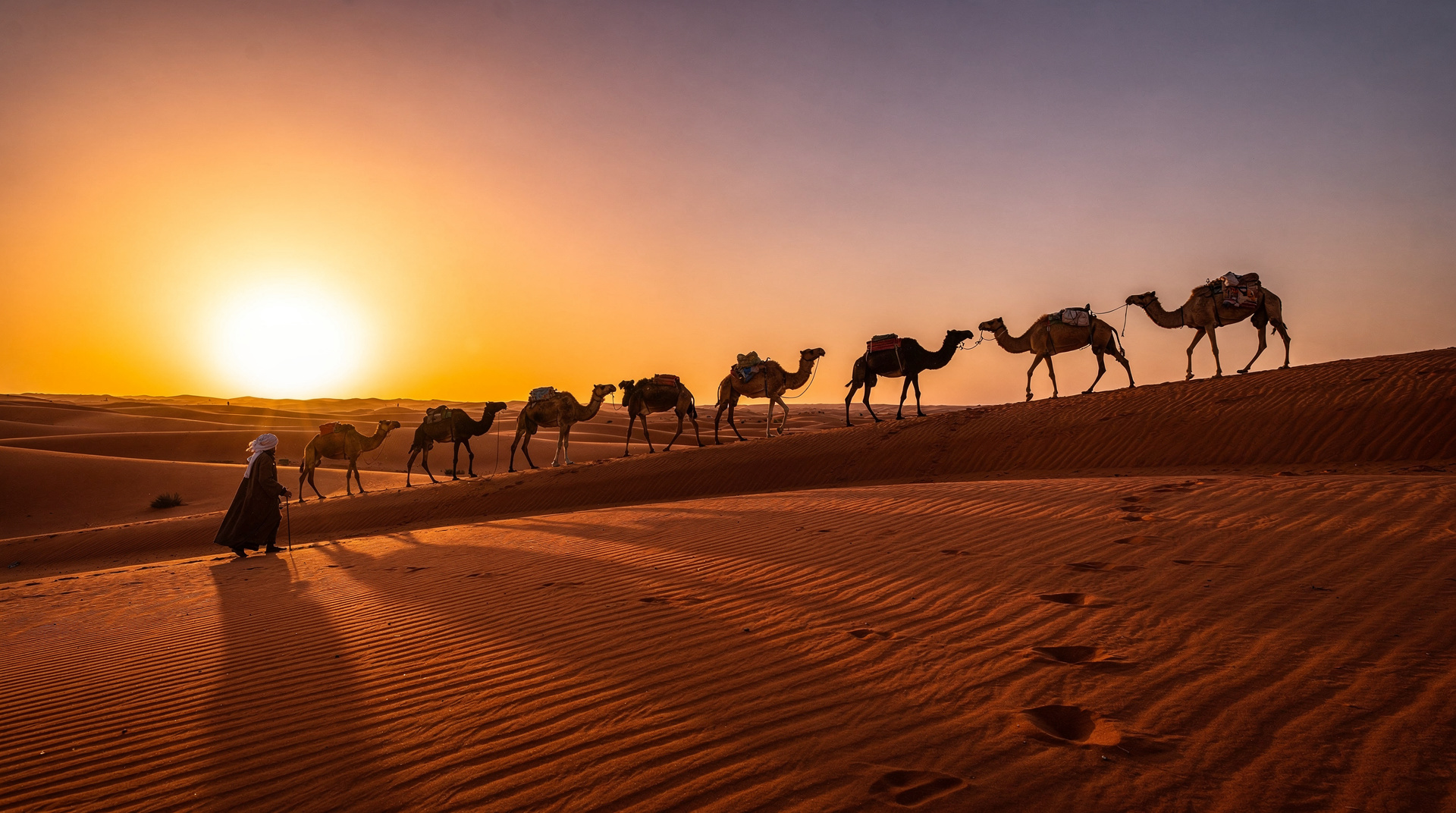
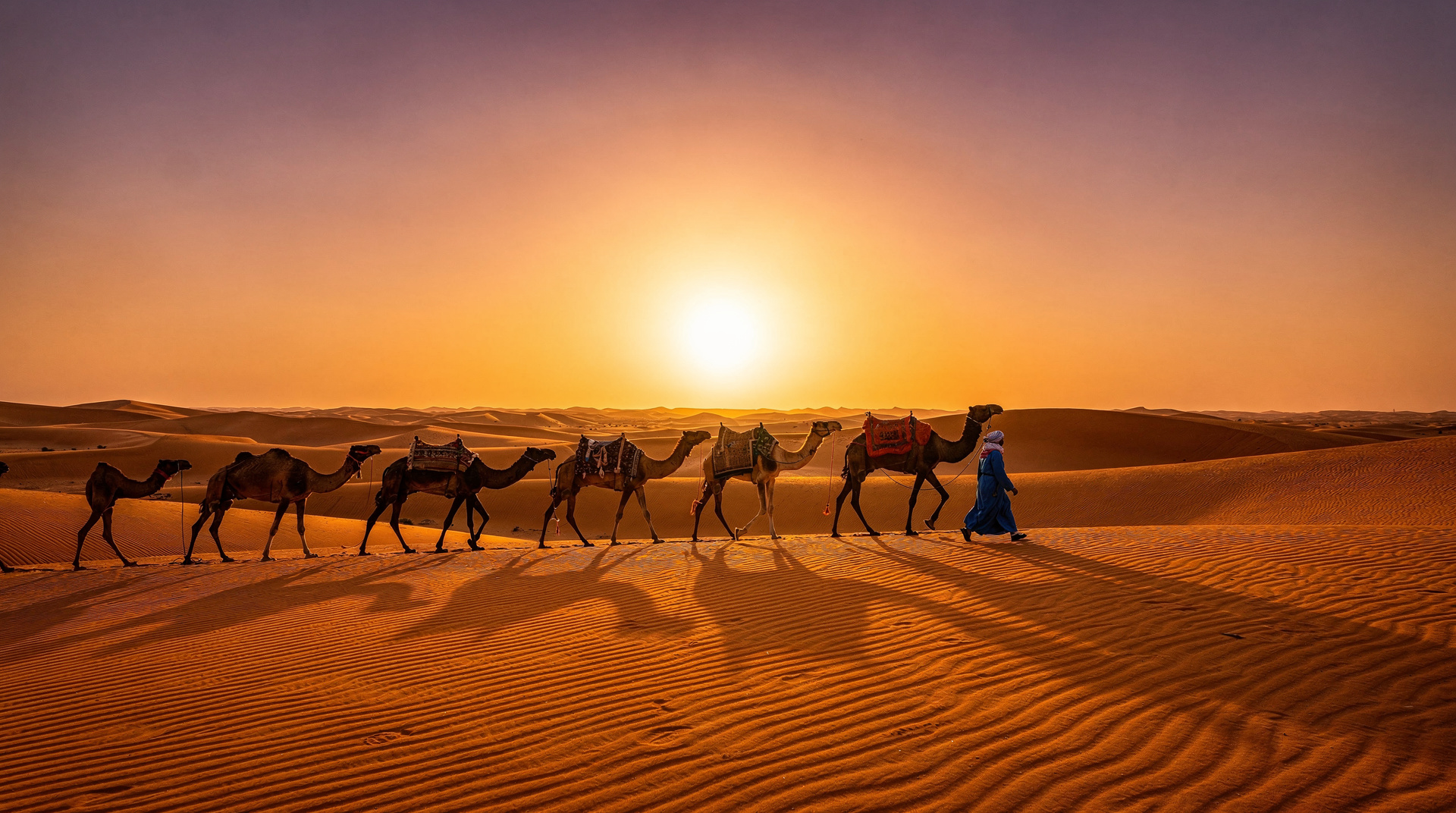
Beyond what you’ve paid a tour operator, budget 300-600 MAD per person for the trip’s extras — bottled water, snacks, tips for the camel handler and camp staff, and any souvenirs at desert-town stops like Merzouga or Rissani. ATMs at Merzouga can run out of cash on busy weekends, so withdraw before you leave Marrakech, Ouarzazate, or Erfoud rather than relying on the last stretch.
Managing money across a full trip
Cash needs shift by destination. In the medinas of Marrakech and Fes, expect frequent small cash transactions — the Marrakech souks guide and Fes souks guide both cover typical price ranges that help you judge whether an ATM withdrawal will cover a shopping session.
On multi-day circuits into the Sahara desert or the Atlas mountains, ATM access thins out fast — plan your last reliable withdrawal in a larger town before heading into rural or desert stretches. If your trip includes both a short 7-10 day circuit and a longer 14-day version, the Morocco 7 vs 10 days and Morocco 10 vs 14 days guides both factor in how the extra days affect your total cash budget.