Marrakech in 24 Hours from a Casablanca Cruise
Can you do Marrakech in 24 hours from Casablanca?
Yes — Casablanca to Marrakech is 2h15 by Al Boraq high-speed train one way (€20-35). With a 20-22h port stop you have ~12 hours on the ground in Marrakech: medina, souks, Bahia palace, dinner on Jemaa el-Fnaa. Book a private transfer or guided tour to skip queues and logistics.
The best shore excursion from Casablanca — and it is not in Casablanca
Most cruise itineraries give you a full day or overnight in Casablanca. The city is modern and worth a quick look, but the honest answer is this: Marrakech is 2h15 away by high-speed train and delivers everything a first-time visitor to Morocco actually wants — a living medieval medina, a souk you could get lost in for hours, rose-pink palaces, and the controlled chaos of Jemaa el-Fnaa at dusk. If your ship is in port for 20 hours or more, skipping Casablanca entirely for Marrakech is not just possible, it is the single best use of your time.
This guide covers the train logistics, a realistic hour-by-hour itinerary, and the GYG-bookable tours that take the stress out of navigation so you spend your precious hours actually experiencing Morocco instead of decoding bus maps.
At a glance
| Where | Marrakech, 2h15 by Al Boraq train from Casablanca’s Casa-Voyageurs station |
| Cost | Around €45-55/person independently (train, taxis, entries) with a guided half-day tour adding roughly €20-30 |
| Time needed | A 20-22 hour port stop gives roughly 10-12 hours on the ground in Marrakech |
| Getting there | Petit taxi from port to Casa-Voyageurs, then Al Boraq train; or a private door-to-door day tour |
| Best time | Any season works, but plan palace visits for morning and avoid the 13:00-16:00 heat May-September |
Why Marrakech beats a Casablanca-only day
Casablanca is Morocco’s economic engine and worth at least a morning — particularly the Hassan II Mosque, the finest piece of religious architecture in North Africa. But by midday you have seen the main sights and the city feels more like a business hub than a travel destination.
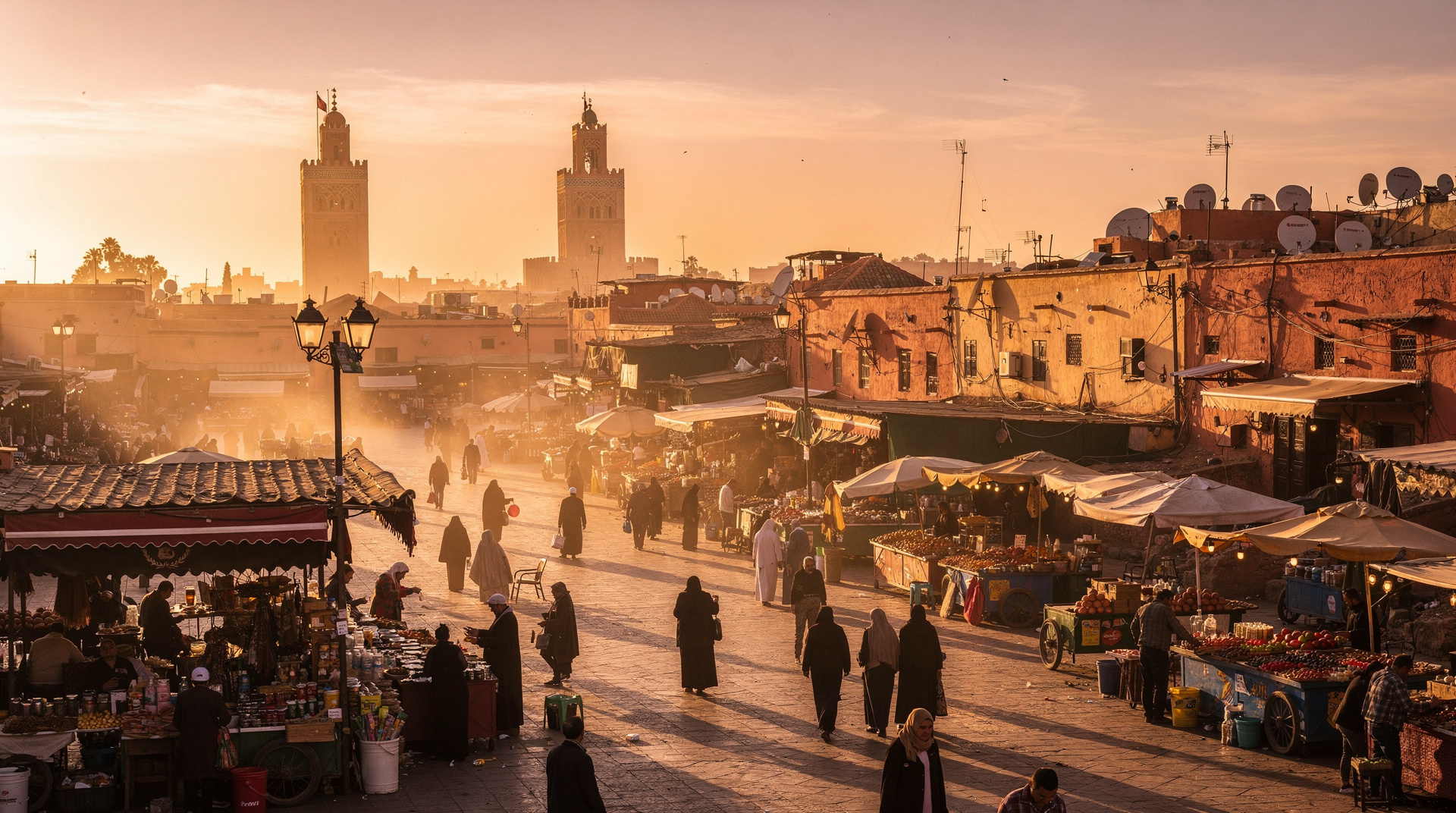
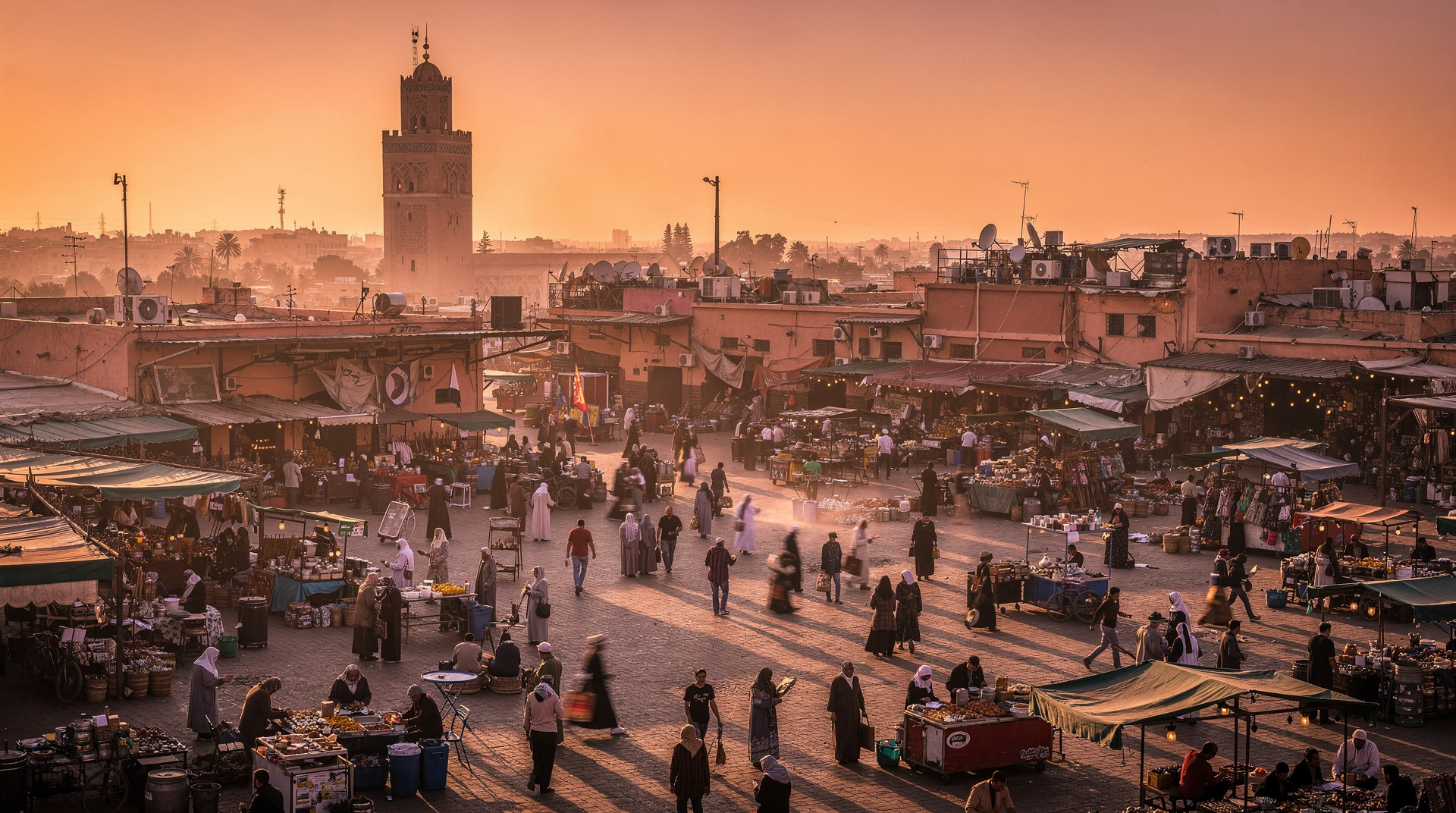
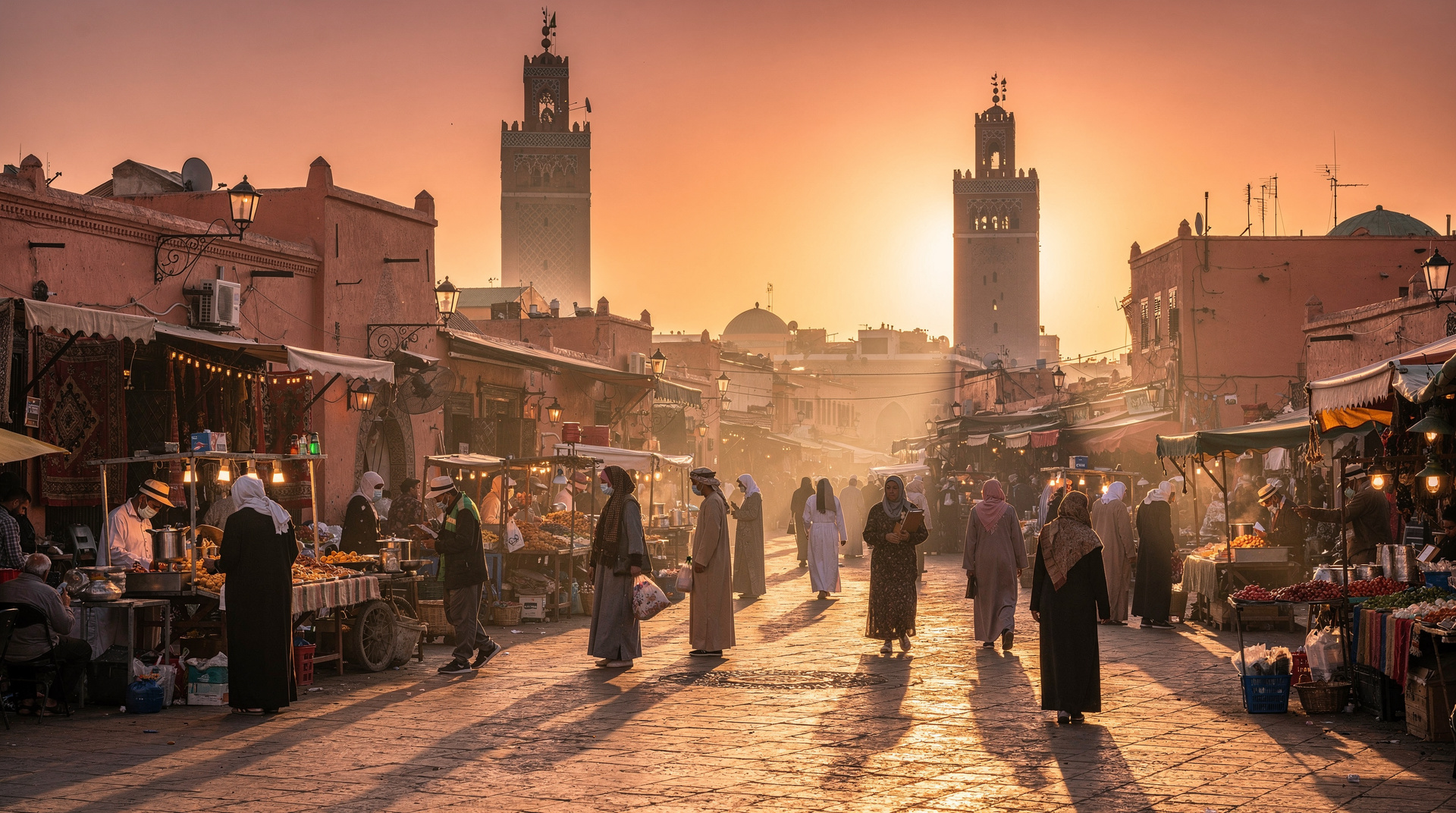
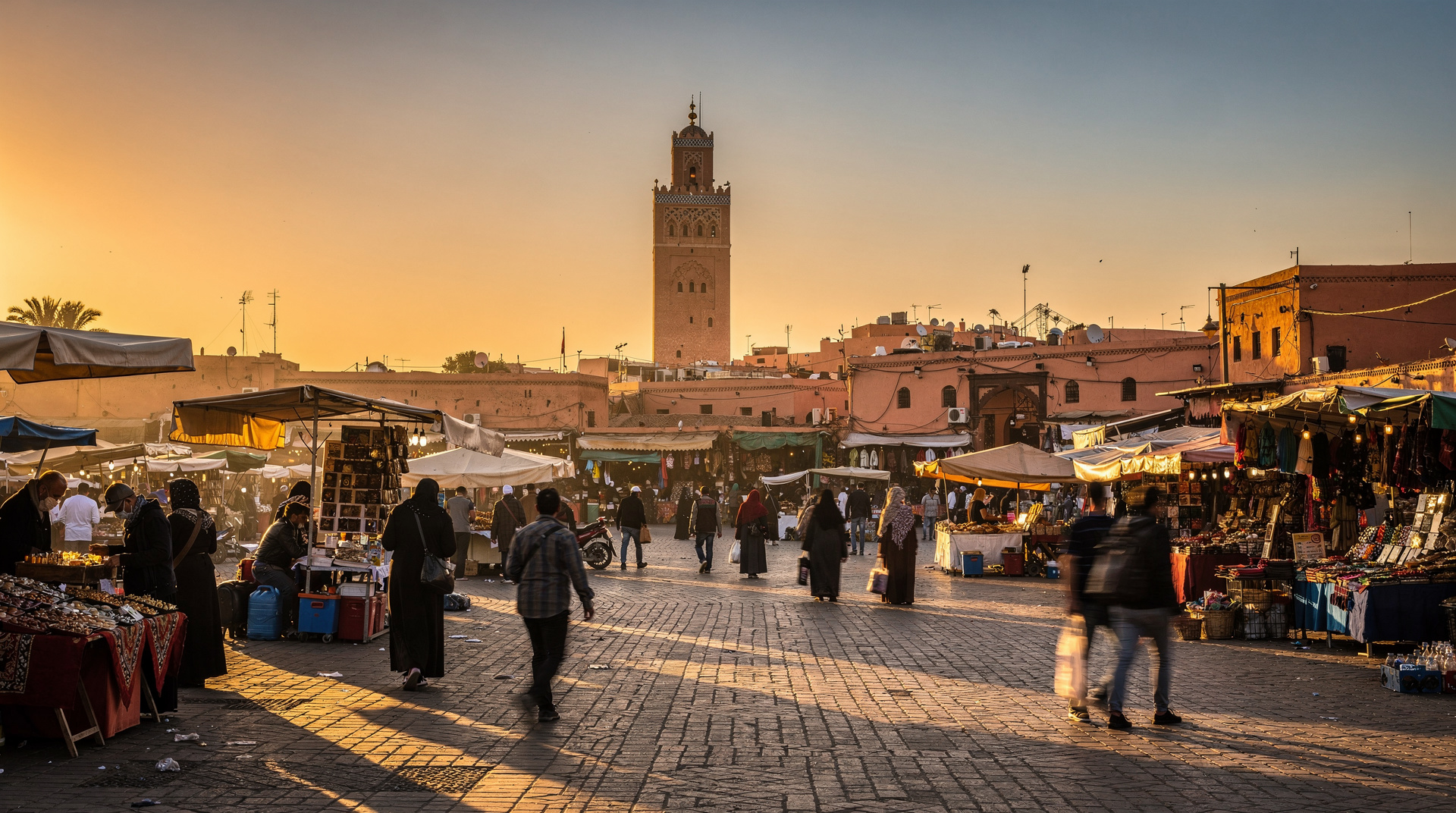
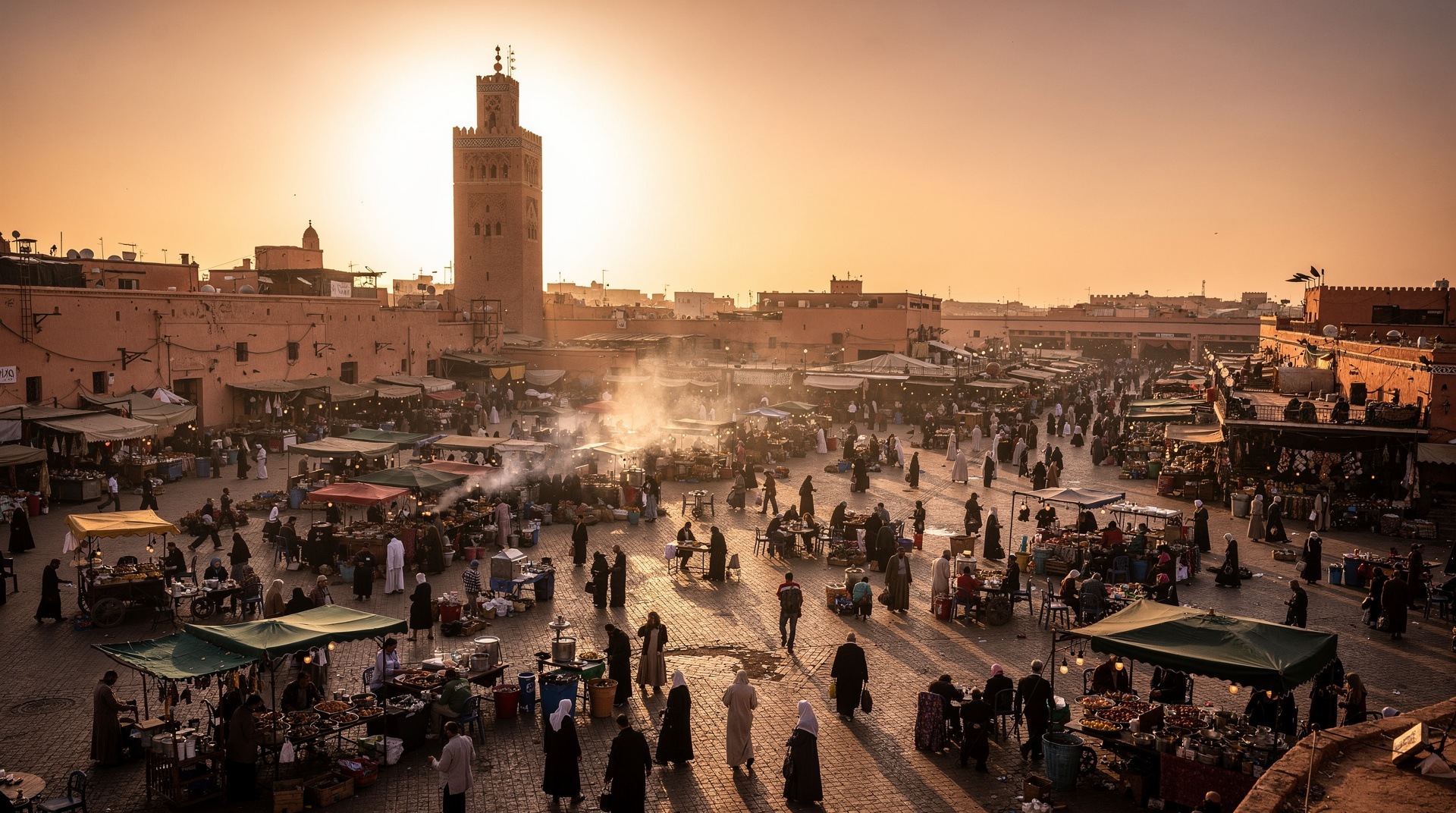
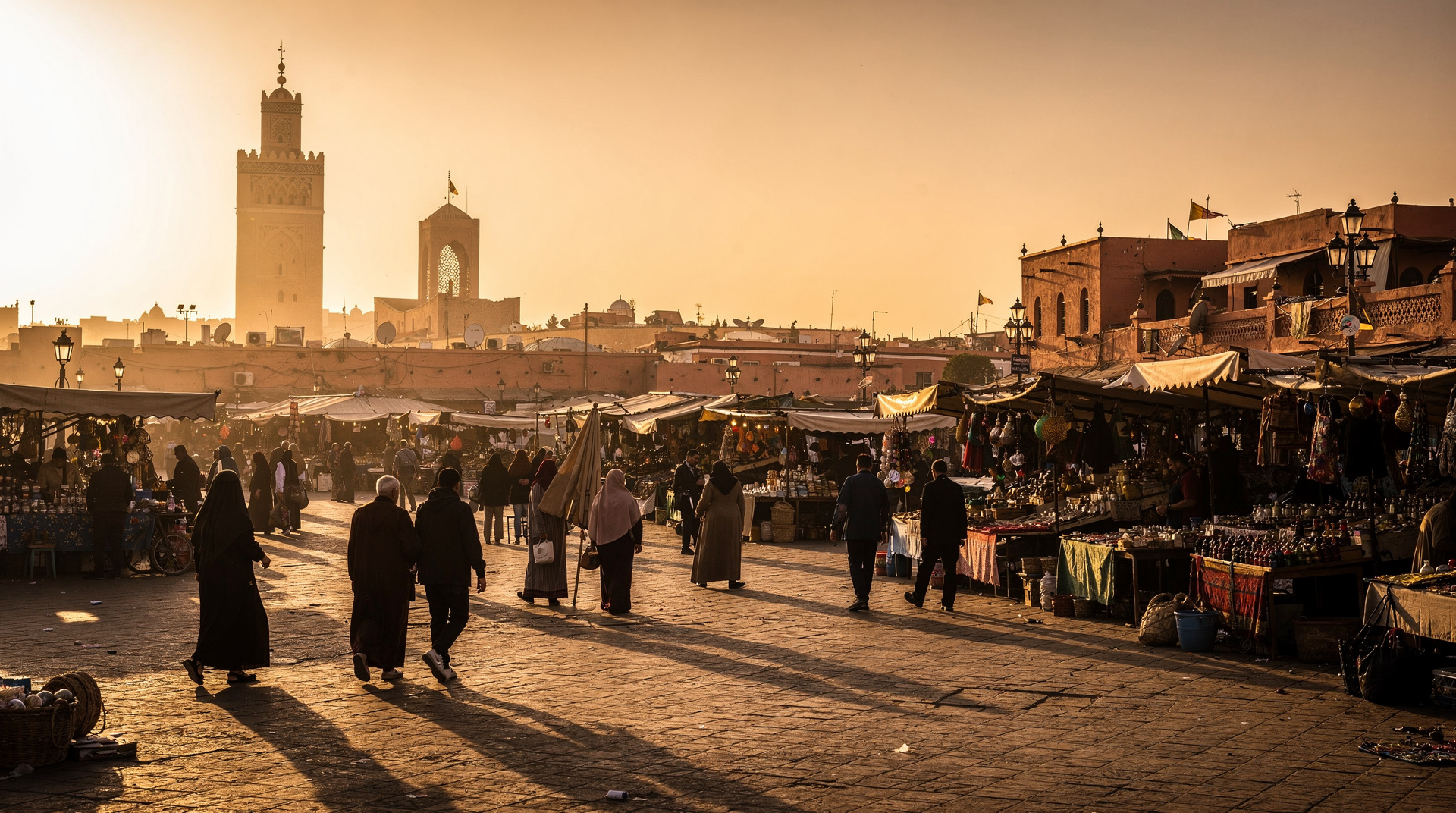
Marrakech, by contrast, rewards every hour you give it. The medina dates to the 11th century. Narrow derbs (alleys) connect dyers, spice merchants, leather tanneries, and lantern workshops. The Bahia Palace shows you a 19th-century vizier’s ambition frozen in carved cedarwood and mosaic tile. Jemaa el-Fnaa — the main square — transforms from a daytime market of orange-juice stalls and henna artists into a night carnival of storytellers, snake charmers, and open-air food stalls by 6 pm. For cruise passengers who have never been to Morocco, Marrakech is the concentrated essence of what they imagined.
The full Marrakech vs Casablanca comparison is worth reading before you decide, but for a shore excursion the verdict is usually the same: go to Marrakech, grab a coffee in Casablanca on the way out.
Cruise logistics: port to city to Marrakech
Getting from Casablanca port to the train station
The cruise terminal at the Port of Casablanca is about 4–6 km from Casa-Voyageurs station (also called Casablanca Voyageurs), the main intercity terminus. Options:
- Petit taxi: 40–60 MAD (€4–6), 15–25 minutes depending on traffic. Flag one outside the port gate or ask port staff.
- Grand taxi (shared): slightly cheaper but slower for a single traveller.
- Private transfer pre-booked via GYG: the most comfortable option if you have a group of 2–4 people. A Casablanca private transfer runs from roughly €25–45 for the vehicle.
Allow 45 minutes from ship to train — including the walk/taxi and any ticket-buying.
Al Boraq: the high-speed train
The Al Boraq (LGV) connects Casa-Voyageurs to Marrakech in exactly 2h15 at up to 320 km/h. This is Morocco’s flagship infrastructure and genuinely fast, air-conditioned, and comfortable.
- Frequency: roughly every 60–90 minutes from around 06:30 to 21:00.
- Ticket price: 1st class €30–35, 2nd class €20–25. Book at the ONCF ticket desk at the station or via the ONCF website/app (oncf-e-ticket.ma). Cash (MAD) or card accepted at the station.
- Return ticket: buy both legs at once to avoid queuing on arrival in Marrakech or on your return in a hurry.
- Marrakech station: Marrakech Gare (the medina entrance is a 20-minute walk, or 5 minutes by petit taxi, ~20 MAD).
Private day trip from the port
If train logistics feel like too much to manage alone — especially with a port curfew to respect — a fully inclusive Casablanca-to-Marrakech private day tour takes every variable off the table. Your driver picks you up at the port, handles all transfers, and gets you back before sail-away. See the GYG options in the “Best tours” section below.
Critical: know your sail-away time
Ask the shore excursions desk or check your daily programme for the all-aboard time — typically 30–60 minutes before departure. Build in a 60-minute buffer to account for port security re-entry. If your ship sails at 22:00, plan to be back at the port gate by 20:30 at the latest. That means your last train from Marrakech should leave no later than 18:00–18:15.
The realistic 24-hour itinerary
This schedule assumes a ship arriving in Casablanca around 08:00 and sailing at 22:00, giving you roughly 14 hours total port time and about 10–11 hours on the ground in Marrakech. Adjust the start time to your own schedule.
07:45 — Off the ship, petit taxi to Casa-Voyageurs
Clear the gangway early. The first passengers ashore get the taxis, the shorter queues at the station, and the most time in Marrakech. Aim to be at the station by 08:30.
08:45 — Al Boraq to Marrakech
The 08:45 train arrives in Marrakech at approximately 11:00. Buy a return ticket for the 17:30 or 18:00 departure to be safe.
11:15 — Arrive Marrakech, taxi to the medina
Grab a petit taxi outside the station. Agree on a price (30–40 MAD) to Jemaa el-Fnaa or Djemaa el-Fna square. The ride takes 5–10 minutes.
11:30 — Jemaa el-Fnaa and your bearings
Start at the square itself. At this hour it is mostly orange-juice vendors and the first wave of tourists — chaotic but manageable. Get your bearings. The souks are to the north, Bahia Palace is to the southeast, the Koutoubia Mosque is directly west.
A quick orange juice here costs 5–10 MAD and is freshly squeezed on the spot. It is one of Morocco’s great small pleasures.
11:45 to 14:00 — Souks and medina
Head into the souks. The main arteries fan out from the north end of Jemaa el-Fnaa. Wander through the spice market (Rahba Kedima), the leather souks, the dyers’ quarter. If you want a structured experience rather than going it alone, a guided medina and Bahia Palace tour (3–4 hours, from €25 per person) covers all the key sites with a licensed guide who knows the shortcuts.
The full Marrakech souks guide explains the layout and what to bargain for — worth a quick read the night before.
14:00 to 15:30 — Bahia Palace and Saadian Tombs
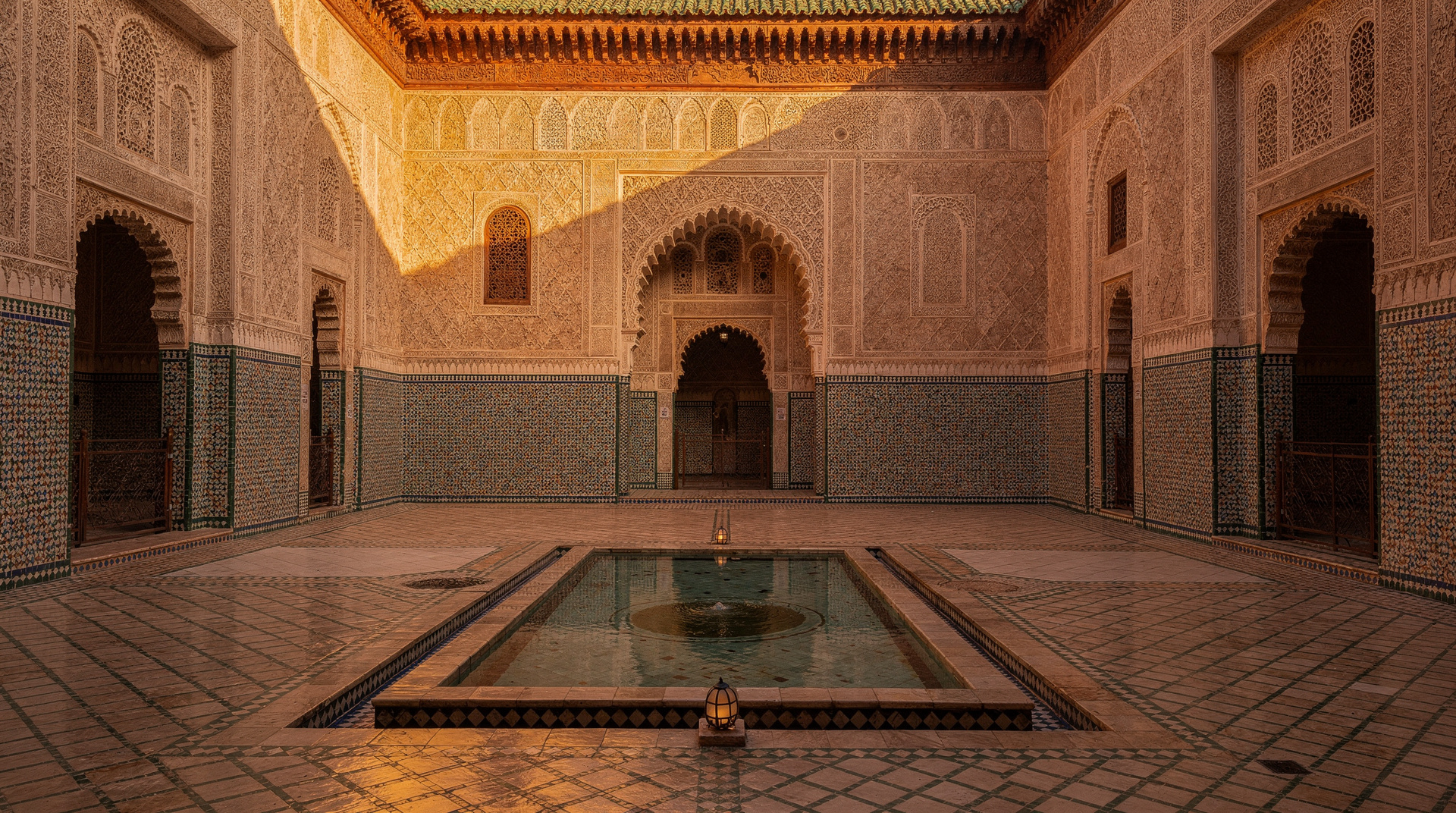
Bahia Palace (admission ~70 MAD / €7) is a 10-minute walk southeast of Jemaa el-Fnaa. Arrive by 14:00 to beat the mid-afternoon tour groups. The courtyard gardens, painted ceilings, and tiled reception rooms are genuinely jaw-dropping and take about 45 minutes to see properly.
The Saadian Tombs are a 5-minute walk from Bahia. Admission is ~70 MAD / €7. The gilded mausoleum of Ahmed el-Mansour is one of the finest examples of Saadian decorative work in Morocco and takes about 20 minutes.
If you pre-booked a Saadian Tombs, Bahia Palace, souk and medina tour (from €30, ~4 hours), your guide handles the sequencing and entry tickets.
15:30 to 16:30 — Majorelle Garden (optional)
If you have energy and time, Majorelle Garden is 15 minutes by taxi from the medina (20–25 MAD). The YSL-restored cobalt-blue villa and cactus garden are stunning and relatively calm in the late afternoon. Admission is 150 MAD / €15 for the garden; the Berber Museum inside is an additional 50 MAD. Skip if your time is tight — the medina and palaces are more authentically Moroccan.
16:30 to 18:00 — Back to Jemaa el-Fnaa for dinner
The square comes alive around 17:00. The food stalls set up in the centre of the plaza — numbered stalls selling harira soup, grilled merguez, brochettes, couscous tagines, and fresh snail broth. Budget 100–150 MAD / €10–15 per person for a full meal. Point at what looks good; prices are fixed at most stalls (stall number on your receipt prevents overcharging).
This is also the moment to buy a last souvenir — the stalls around the perimeter sell argan oil, leather goods, Berber jewellery, and babouche slippers. Bargaining is expected; open at half the asking price.
18:00 — Last train back
Walk or taxi to Marrakech station (allow 20 minutes from the square). The 18:00 Al Boraq arrives in Casablanca at approximately 20:15. Take a petit taxi to the port (15–20 minutes, 40–60 MAD). You are back at the gangway by 21:00 — a full hour before a 22:00 sail-away.
Must-see highlights in this window
Jemaa el-Fnaa at dusk: the single most cinematic 30 minutes in Morocco. Even if you have only visited for the afternoon, time your departure so you witness the square’s transformation.
Souks north of the square: do not try to map-read, just wander and surface back at the square using the Koutoubia Mosque as a compass point (it is always visible above the roofline to the west).
Bahia Palace: the best-preserved palace in Marrakech and the clearest window into pre-colonial Moroccan court life. Never skip it on a short visit.
Saadian Tombs: compact, beautiful, and usually combined with Bahia Palace. 20 minutes well spent.
Ben Youssef Madrasa (if included on a guided tour): a 14th-century Quranic school with the most intricate tilework and carved plaster in the medina. Worth the detour if your tour covers it.
What to skip with limited time
Atlas Mountains day trip: Imlil is 1h30 from Marrakech by car. Adding it to a Casablanca cruise day turns a pleasant excursion into an exhausting scramble. Save the Atlas Mountains for a dedicated trip.
Sahara or desert camps: the Sahara from Marrakech is a minimum 10-hour drive each way. This is entirely off the table for a port day. Anyone suggesting otherwise is either selling you something or has never done the drive.
Essaouira as an add-on: Essaouira is 2h45 from Marrakech by road. Physically possible from Casablanca on a very long port day, but you would see neither city properly. Choose one.
Ouarzazate and Aït Benhaddou: 3.5 hours from Marrakech. Not viable.
Best transfer and tour options
Option 1: train + independent medina walk
Best for: experienced travellers comfortable with navigation, travellers who want maximum flexibility.
Cost per person: ~€45–55 (train return + taxis + entry fees).
Pros: cheapest, most flexible pace. Cons: no guide context on what you are looking at, risk of losing time to a wrong turn.
Option 2: train + half-day guided medina tour in Marrakech
Best for: first-timers who want the narrative and skip-the-queue efficiency.
A Marrakech guided medina history and culture tour (from €20, ~3 hours) slots neatly into the mid-morning window after you arrive by train. Your guide meets you at the Koutoubia Mosque or your riad, handles the palace entries, and drops you back at the square for your own lunch and souvenir time.
Option 3: private Casablanca–Marrakech day trip including port pickup
Best for: groups of 2–6 people, passengers who want zero logistics stress, families with children.
A private driver collects you at the port gate, drives to Marrakech (2h–2h30 by motorway), guides you through the highlights, and returns you to the port before sail-away. You set the pace and skip the train entirely.
The Casablanca city tour with Hassan II Mosque can be combined with a Marrakech transfer by arranging with your driver directly — useful if you want to tick off Casablanca’s main sight (the mosque, from €20 with entry ticket) in the first 2 hours before catching the train.
Practical tips
Currency
The dirham (MAD) is Morocco’s currency and is not freely convertible, meaning you cannot get dirhams outside Morocco. Change at the port bureau de change or at an ATM in Casablanca before departure. Rate: approximately €1 = 10.8–11 MAD (2026). Marrakech’s souk vendors will take euros at a poor rate; dirhams always get you a better deal.
Dress code
Marrakech is an active, conservative Muslim city. For women: shoulders and knees covered is strongly recommended in the medina and near mosques — a light scarf in your bag solves everything. For men: shorts are fine but long trousers are more comfortable and attract less attention. Both: avoid sleeveless tops in religious sites.
Safety
Marrakech is safe for cruise passengers. The main risk is the aggressive faux-guide situation — someone offers to help you navigate, leads you to a cousin’s shop, and then demands payment. The fix: say “la shukran” (no thank you) firmly and keep walking. Booked tours eliminate this entirely. See the first-time Morocco guide for a fuller breakdown of common scams and how to avoid them.
Solo travellers
Entirely doable. Women travelling alone should be prepared for unsolicited attention in the medina — not threatening, but persistent. Walking with purpose, wearing modest clothing, and keeping earbuds in when you do not want to be engaged are effective strategies. Joining a small-group guided tour removes most of this friction.
Avoiding the midday heat
From May to September, Marrakech temperatures regularly hit 35–40°C between 13:00 and 16:00. Plan your palace visits for mid-morning, take a shaded lunch break, and save the souks for late afternoon when temperatures drop and the light is better for photos.
What to buy
The best souvenirs for cruise passengers (i.e. things that travel well and are genuinely Moroccan): argan oil products from a certified cooperative, Berber silver jewellery, hand-woven scarves, small leather pouches, and cumin or ras el hanout spice blends in sealed bags. Avoid “antiques” — almost all are reproductions. See the bargaining guide for price anchors.
What to pack for the day
Light day bag, sunscreen, comfortable walking shoes (the medina is cobblestones and uneven paving, not suitable for heels), a scarf (multipurpose), cash in MAD, phone charged and with a local eSIM or roaming plan. The Morocco packing list has the complete rundown.
Frequently asked questions about Marrakech in 24 Hours from a Casablanca Cruise
How early should I leave the port?
For a full day in Marrakech, aim to be off the ship by 07:30–08:00. The first Al Boraq departure is around 06:30; a realistic target is the 08:00–08:30 train, arriving in Marrakech at ~10:45. Earlier departure = more time in the medina and a less rushed return.
Can I do it independently or should I book a tour?
Both work. Independent is cheaper and more flexible — train tickets are easy to buy, taxis are plentiful, and the main sites are clearly signposted. However, a guided tour makes better use of limited time (no wrong turns, no queue at palace entrances), provides context you would otherwise miss, and removes the anxiety of missing the ship. For a first visit to Morocco on a tight schedule, a tour is the better value even if it costs €20–30 more.
Which cruise lines stop in Casablanca?
Most major lines include Casablanca on Western Mediterranean and Transatlantic itineraries. Regular callers include MSC Cruises, Costa, Norwegian Cruise Line, Princess Cruises, Royal Caribbean, Regent Seven Seas, and Silversea. Casablanca also appears on West Africa itineraries operated by Cunard and Fred Olsen. Check your cruise line’s shore excursion brochure — many now list a Marrakech option, though independent arrangements via GYG are almost always cheaper.
Is Marrakech safe for cruise passengers?
Yes. Marrakech received millions of tourists in 2025 and is accustomed to first-time international visitors. The medina can feel disorienting, but petty crime is low and violent crime against tourists is extremely rare. The main nuisance is persistent souvenir sellers and unsolicited offers of “help” — both easily deflected. Stick to the main tourist routes (Jemaa el-Fnaa, the main souk lanes, Bahia Palace), travel in daylight, and keep valuables in a front pocket or zipped bag. Read the first-timer safety section for specifics.
What is the cheapest way to get from Casablanca to Marrakech?
The Al Boraq 2nd class ticket at €20–25 each way is the cheapest comfortable option. Shared grand taxis exist but are slower (3–3.5 hours), less comfortable, and only marginally cheaper once you account for time lost. Coaches (CTM, Supratours) are even cheaper (€10) but take 3.5–4 hours each way — not viable on a port day. Budget travellers see the Morocco on a budget guide for transport trade-offs.
Can I see Casablanca AND Marrakech on the same port day?
Technically yes, if your ship is in port for 22+ hours. A practical schedule: arrive in Casablanca early, take a taxi to the Hassan II Mosque for a 2-hour visit (€10–20 with guided tour), grab a coffee at a cafe in the Corniche, then catch the 11:00 or 11:30 Al Boraq to Marrakech for the afternoon and evening. Return by 18:00 train, arriving in Casablanca around 20:15. You will not see Casablanca in depth, but you will have experienced both cities. The full day-trip guide from Casablanca has more options if you have multiple port days.
What if the ship is only in Casablanca for 10–12 hours?
Marrakech becomes very tight and not recommended. A round trip takes 4.5 hours of travel alone; add 3+ hours in the medina and a safety buffer for the return and you are at the absolute limit of a 12-hour port day with no margin for delays. In this case, spend the day in Casablanca: the Hassan II Mosque guided tour, the Corniche, the Art Deco quartier around Boulevard Mohammed V, and the Central Market food tour are a full and satisfying day. See the Casablanca destination guide for the best-of programme.
Fitting Marrakech into a longer Morocco trip
If your cruise includes multiple Moroccan ports — Casablanca, Tangier, Agadir — you may have the opportunity to build a more complete Morocco picture rather than cramming everything into one shore day. A 7-day land extension before or after the cruise unlocks multi-day excursions from Marrakech including Fes via the imperial cities route, Essaouira for Atlantic seafood and wind sports, and the slow road through the Atlas to the Sahara. The getting around Morocco guide covers trains, shared taxis, and private transfers across all the main routes.
For passengers planning to return for a longer stay, the first-time visitors guide is the right starting point.