Marrakech souks guide: navigating the medina's markets
How do you navigate the Marrakech souks without getting lost or ripped off?
Download an offline map before entering, aim to arrive before 10am or after 4pm, and start bargaining at around 40% of the opening price. A half-day guided tour for your first visit will orient you faster than any map.
At a glance
| Where | North of Jemaa el-Fnaa, spanning roughly 600 hectares of the medina |
| Cost | Free to wander; budget around 300-800 MAD for a half-day shopping session |
| Time needed | Half a day minimum; a full day rewards more exploration |
| Getting there | Walk in from Jemaa el-Fnaa via Souk Semmarine |
| Best time | 8:30-10:30am or 4:30-6:30pm; avoid Friday late morning and weekend midday |
Inside the world’s most disorienting marketplace
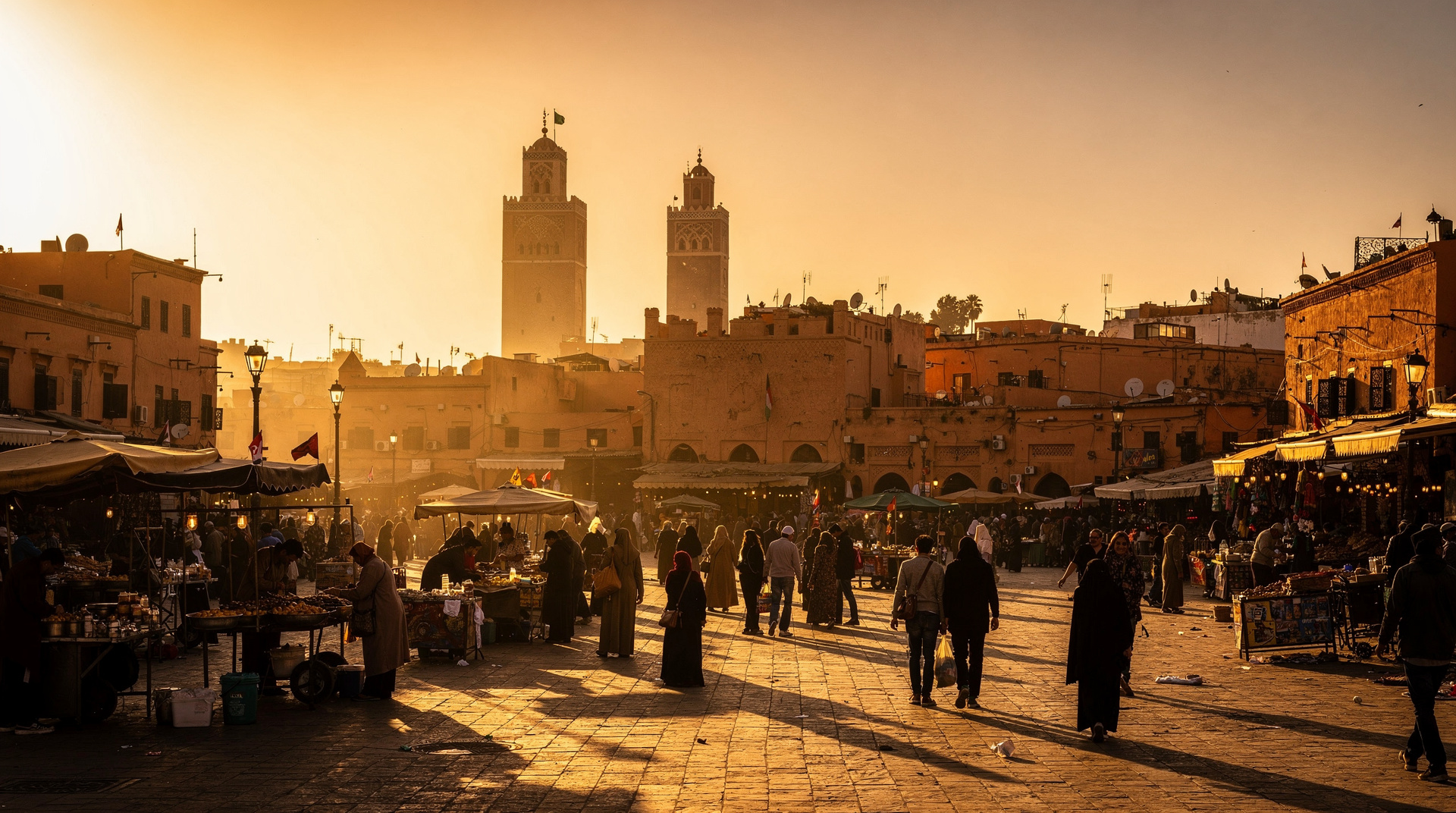
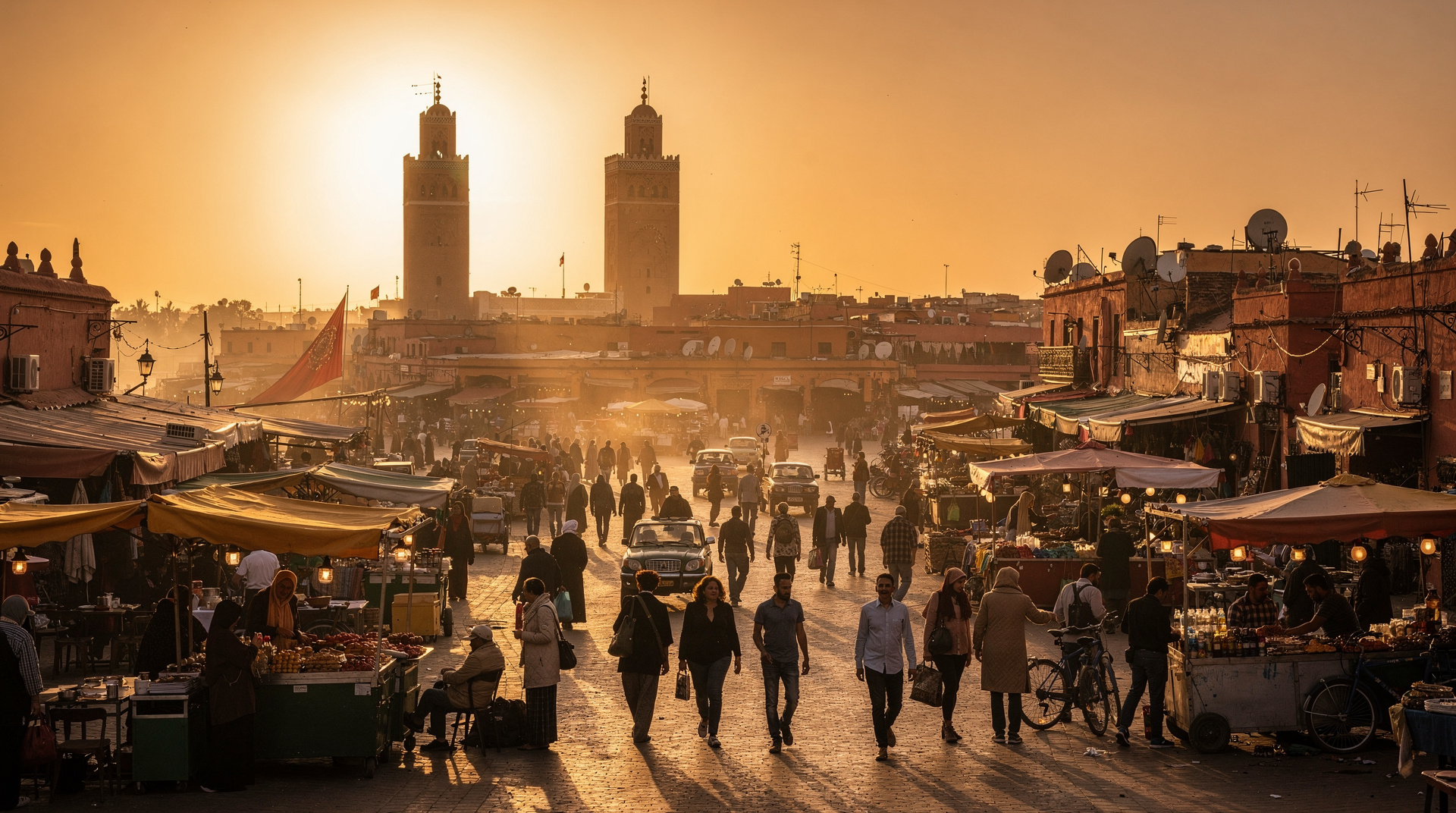
North of Jemaa el-Fnaa, the Marrakech medina opens into one of the great bazaar complexes of the Islamic world. More than 9,000 alleyways branch, merge, dead-end, and double back across 600 hectares of living city. The souks are not a heritage attraction with opening hours and a ticket desk — they are a working commercial district where tanners, coppersmiths, weavers, and spice merchants have traded from the same addresses for centuries.
For first-time visitors, this density produces equal measures of wonder and confusion. It is genuinely easy to walk in circles for 20 minutes believing you are making progress. It is also genuinely possible to spend three hours in the souks and emerge having bought nothing, seen everything, and felt absolutely no pressure to do otherwise. The difference largely comes down to knowing where you are, what you’re looking at, and how to move with rather than against the medina’s logic.
This guide covers the specialist quarters, what each sells, honest price benchmarks for common items, and how bargaining actually works — including when it’s socially expected and when it isn’t.
The specialist quarters: a rough map
The souks are loosely organised by trade, a system that dates to the medieval Islamic city model where merchants of the same craft clustered together. The organisation has blurred over centuries, but the core quarters remain recognisable.
Souk Semmarine
The main entry souk for visitors arriving from Jemaa el-Fnaa, Souk Semmarine is the broadest and most tourist-facing of the markets. Covered by a wooden trellis roof that filters the light into warm slats, it sells clothing, djellabas, scarves, and affordable mass-produced crafts. Prices here are negotiable but also inflated for tourist traffic. Consider Semmarine a useful orientation corridor rather than the best place to actually buy.
Souk Smata (Babouche souk)
Turn off Semmarine to the right and you find Souk Smata, the slipper market. Hundreds of pairs of babouches — the traditional Moroccan leather slippers with turned-up toes — line the walls in every colour the dyers have produced. Genuine leather babouches (check the sole — real leather is soft and slightly rough; synthetic is uniformly smooth and shiny) run 80–150 MAD for standard styles, 200–350 MAD for embroidered or higher-quality versions. Men’s styles are simpler; women’s styles come in extraordinary colour combinations.
Souk Haddadine (blacksmiths’ quarter)
Away from the main tourist routes, toward the northern medina near Bab Debbagh, the sound of hammering on metal announces the blacksmiths’ quarter. Artisans here produce lanterns, locks, decorative grilles, and hardware using methods unchanged for generations. Prices are substantially lower than in tourist-facing shops, but you need to know what you want — these workshops are not set up for browsing.
Souk Sebbaghine (dyers’ quarter)
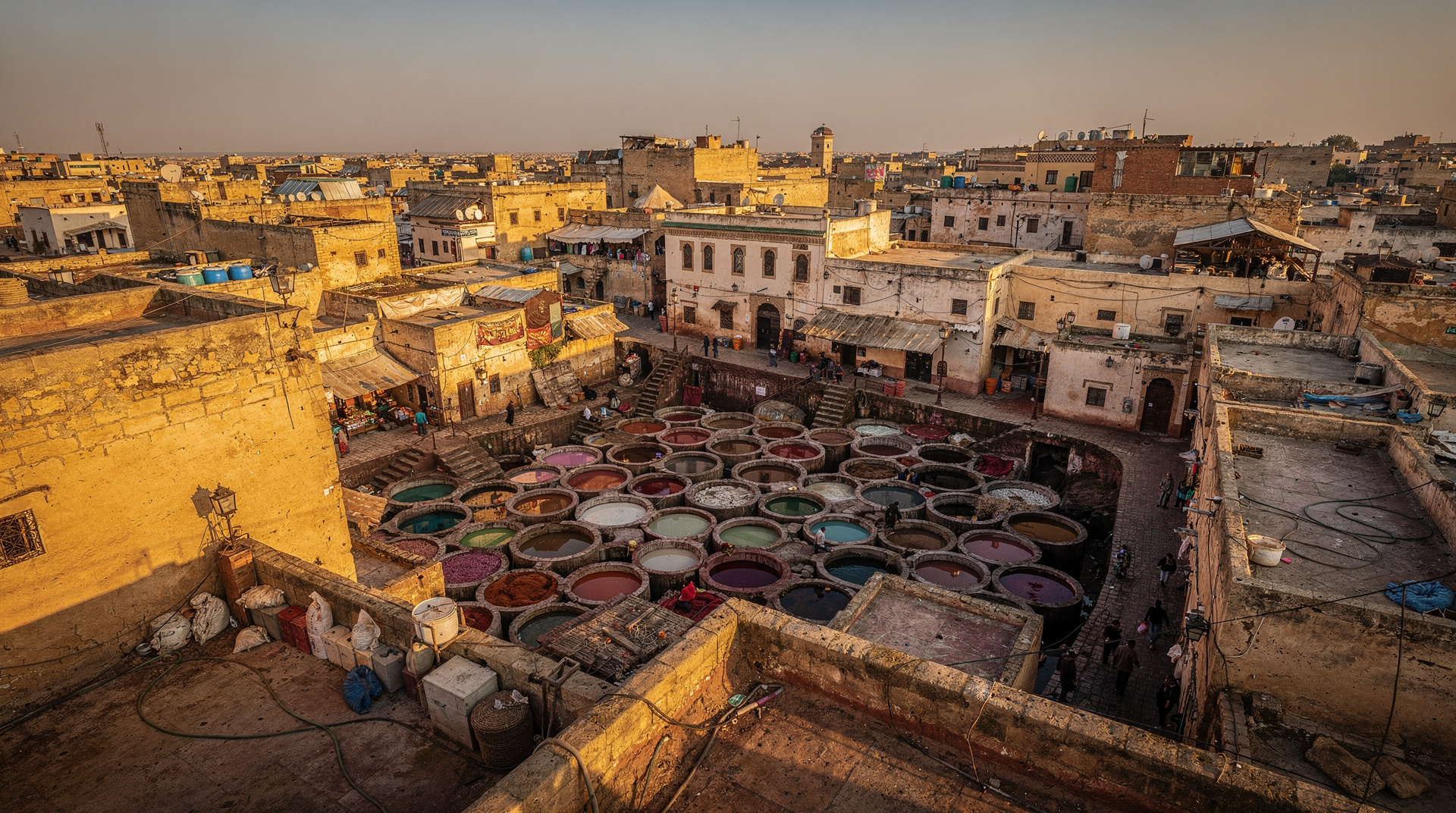
One of the medina’s most photographed sights: hanks of freshly dyed wool hanging from overhead lines above a sunlit alley, dripping colour. The dyers work with natural and chemical dyes, producing the deep reds, blues, and saffron yellows you see throughout Moroccan textiles. You cannot buy wool directly from the dyers, but the visual is extraordinary. Located near the intersection of the northern souks — ask for the “souk des teinturiers.”
Souk Cherratin (leatherworkers’ quarter)
Leather goods — bags, belts, wallets, poufs — cluster in Souk Cherratin. Quality ranges from tourist-grade souvenir items to well-constructed goods made from genuine tanned leather. Inspect stitching carefully: machine stitching is uniform; hand stitching varies slightly in spacing. For poufs, press the leather — good quality is supple; inferior product is stiff and crinkly.
Rahba Kedima (spice square)
This small open square sells medicinal herbs, spices, dried chameleons (for traditional medicine), and Ras el Hanout — the Moroccan spice blend that varies by vendor and contains anywhere from 12 to 30 ingredients. Buying spices here at tourist prices costs more than a supermarket but less than a specialty food shop at home. A decent 100g bag of Ras el Hanout: 40–70 MAD. The “pharmacies” selling aphrodisiacs and cures for various ailments are theatre — decline with a smile.
Mouassine quarter (copper, silver, and lanterns)
The Mouassine neighbourhood, west of the main souk axis, is Marrakech’s lantern district. Hundreds of copper and silver lanterns hang from doorways and overhead hooks, producing kaleidoscopic light patterns when lit. This is covered in detail in the Marrakech lanterns guide. Mouassine also contains some of the city’s best concept stores and artisan boutiques — Fixed-price shops like Khalid Art Gallery and Moro offer quality crafts without bargaining.
When to visit the souks
Best time: 8:30–10:30am. The stalls are just opening, deliveries are being made, and the tourist volume is low. The atmosphere is purposeful and energetic without the midday crush.
Second-best time: 4:30–6:30pm. The light in the covered alleys turns golden, the temperature drops, and shopkeepers are ready to negotiate rather than waiting for the next customer. Evening in the souks before dinner is one of Marrakech’s best experiences.
Avoid: 11am–2pm on weekends in high season. The combination of tour groups, school groups, and general midday compression makes the main arteries nearly impassable.
Friday: The souks partially close in the early afternoon for Friday prayers and fully reopen around 3pm. Don’t plan your main souk day for Friday morning if you want full access.
How bargaining works — and what people don’t tell you
Bargaining in the Marrakech souks is not optional in traditional market stalls — it is the established commercial protocol. A shopkeeper who quotes a price is opening a negotiation, not naming a final sale price. What surprises many visitors is that this is not adversarial; it is social. A good negotiation involves tea, genuine interest in the goods, and a conclusion that both sides accept.
The mechanics:
- Express genuine interest before asking the price. Picking something up and immediately asking “how much?” signals inexperience and raises the opening price.
- When the shopkeeper quotes a price, pause, then offer approximately 40% of that figure.
- The shopkeeper will counter (typically somewhere between their opening price and yours). You counter again. The deal usually closes somewhere between 50–65% of the original asking price.
- If the shopkeeper says “last price” or “fixed price” early, they may be serious, or they may be testing you. A simple “thank you, I’ll think about it” as you walk toward the door will frequently prompt a real final offer.
- Once you agree on a price, you are committed. Walking away after a handshake is considered poor form and creates unnecessary friction.
What you should not bargain for: Fixed-price cooperative shops (they exist and are clearly marked), restaurants, pharmacies, and transport.
Honest price benchmarks (2026):
- Leather pouf, medium: 300–500 MAD
- Argan oil, 100ml food grade: 80–120 MAD
- Babouches, basic leather: 80–150 MAD
- Pashmina/wool scarf: 100–200 MAD
- Berber silver ring: 50–150 MAD
- Ceramic tagine (display): 150–300 MAD
- Cedar wood box, small: 60–120 MAD
These are reasonable paid prices — not rock bottom, not tourist prices. Anyone quoting 3–5x these figures is starting very high.
Guide vs solo: the honest verdict
The most common advice for Marrakech souk visitors is to hire a guide. The most common complaint from Marrakech souk visitors is that their guide took them to commission shops. Both things are true simultaneously.
Solo advantages: You move at your own pace. You stop for as long as you want. No one is steering you toward a brother-in-law’s carpet shop.
Solo disadvantages: Without a basic orientation, the first hour is often wasted getting genuinely lost. The map on your phone works moderately well — the medina is increasingly mapped on Google and Maps.me — but the alleys are narrow enough that GPS drift means you may be 50m from where the phone thinks you are.
Guided tour advantages: A genuine licensed guide covers 10x more interesting context than a solo wander. The history of each quarter, the craftspeople you’d otherwise walk past, and the cultural significance of what you’re seeing add enormously to the experience.
Book a guided Marrakech medina history and culture tourThe commission problem: Guides working on commission from shops receive 20–40% of whatever you spend — an incentive that warps the tour experience. Use GetYourGuide or a riad referral for vetted guides paid by the hour, not by your purchases.
For a first visit, a half-morning guided tour followed by free afternoon solo exploration is the ideal approach: you learn the geography with a guide, then explore at your own pace.
Book a private Marrakech walking tour (3 hours)What’s genuinely worth buying
Yes:
- Leather babouches (light, compact, authentically Moroccan, widely available in genuine leather)
- Ras el Hanout and saffron (bring them home in your checked luggage, sealed)
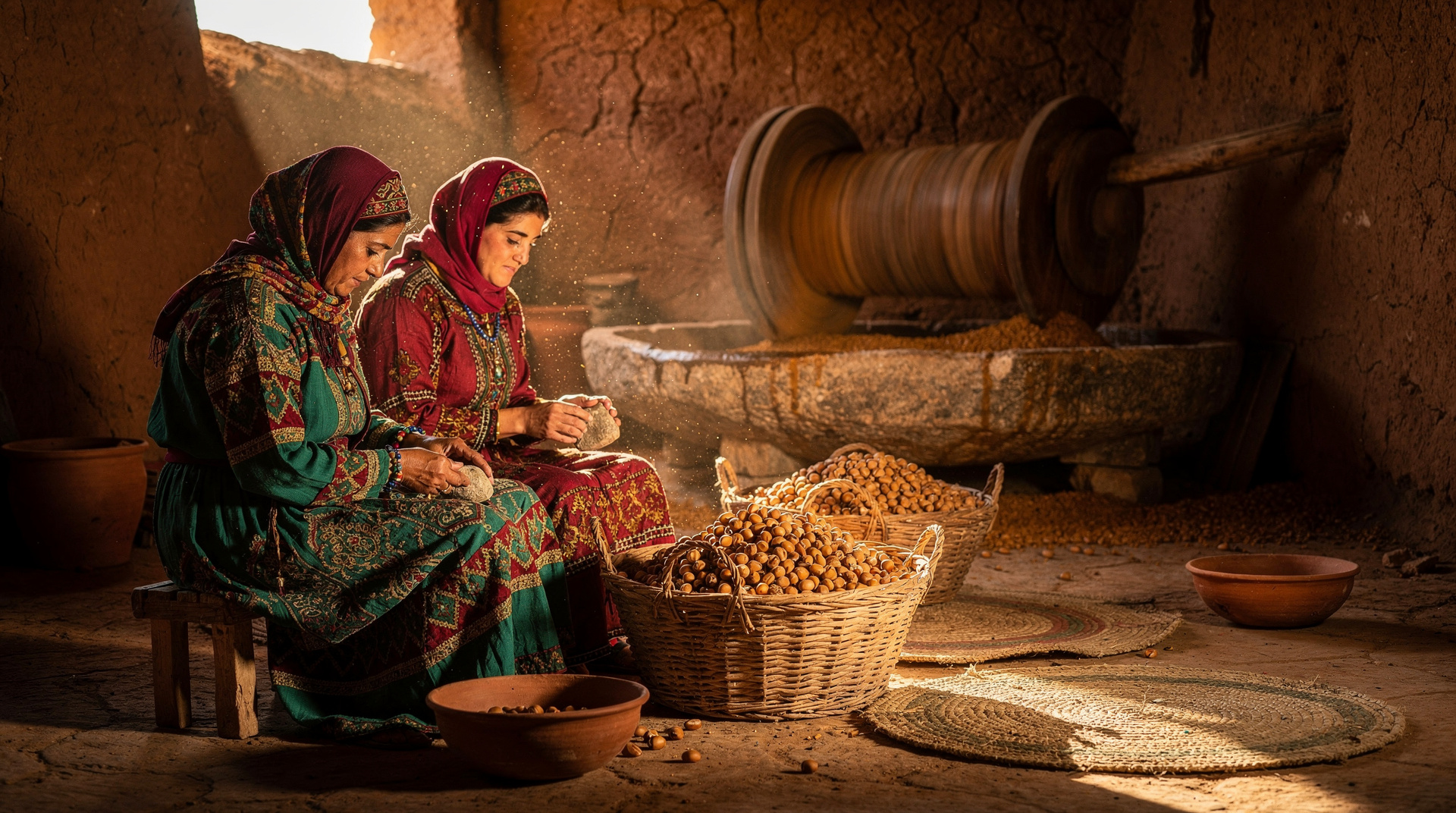
- Argan oil — genuine cold-pressed food grade, from a cooperative shop or a merchant who can explain the process
- Handmade ceramics (the blue and white Fes-style pieces, or the earthy Safi ware — avoid mass-produced items with machine-perfect symmetry)
- Leather goods from Cherratin if you take time to check quality
- Small brass or copper items from Haddadine (lanterns, incense burners) — they travel well
Approach with caution:
- “Berber rugs” on the main souk route — most are machine-made or blended synthetic. See the Berber rugs buying guide for how to distinguish genuine pieces.
- Antiques and “ancient” artefacts — export of genuine antiques requires documentation that small souk stalls rarely provide
- Fossils — often real but frequently overpriced; the Erfoud fossil market is better value
The shops that aren’t souvenir traps
Several fixed-price concept shops in and around the medina offer genuine quality without bargaining:
Ministero del Gusto (22 Derb Azzouz, Mouassine) — Eccentric, high-quality antiques, textiles, and curiosities. Pricey but legitimate.
Atelier Moro (Mouassine neighbourhood) — Contemporary Moroccan design, fixed prices, quality ceramics and textiles.
33 Rue Majorelle (Guéliz) — Sophisticated Moroccan craftsmanship, notably silver jewellery and leather bags. Near Jardin Majorelle.
Ensemble Artisanal (outside Bab Nkob) — Government-run cooperative with fixed prices for all craft categories. Useful as a price benchmark even if you plan to buy in the souks.
Scams and pressures to know about
The “free directions” guide: A person who offers unprompted help navigating to a specific landmark will often deliver you to a cousin’s carpet shop first. Politely decline, or know your destination before you enter.
The Henna hand: Women near Jemaa el-Fnaa offer to paint your hand with henna “for free” — then demand 100–200 MAD once it’s applied. If you want henna, agree the price and design explicitly before sitting down.
The false shop closing: “My shop closes in 10 minutes, I’ll give you a special price.” Moroccan souk shops do not close in 10 minutes. This is pressure to prevent you from comparison shopping.
The commission restaurant: Guides occasionally recommend restaurants where they receive a kickback. Your riad’s breakfast staff, who live locally, are a more reliable source of restaurant recommendations.
Practical tips
Navigation: Save an offline copy of the medina in Maps.me before entering. The app’s walking directions are surprisingly accurate in the souks. Google Maps also works but is slower to update.
Bag and cash: Carry only what you need — small backpack or crossbody bag, city amount of cash (300–500 MAD for a half-day shopping session), phone in a front pocket. Pickpocketing is rare but not unknown in the most crowded sections.
Dress: Conservative clothing (covered shoulders and knees) is respectful and also reduces the volume of harassment from souk touts. Not mandatory, but it makes the experience smoother.
Language: “La shukran” (no thank you) in Darija stops most persistent approaches. “Bshal?” (how much?) and “ghali bezef” (too expensive) will get you further in negotiations than any English phrase.
Hydration: The medina in summer (July–August) can exceed 40°C. Carry water. The fresh orange juice stalls on Jemaa el-Fnaa serve 4 MAD glasses — drink one before you go in.
How the souks fit into a Marrakech itinerary
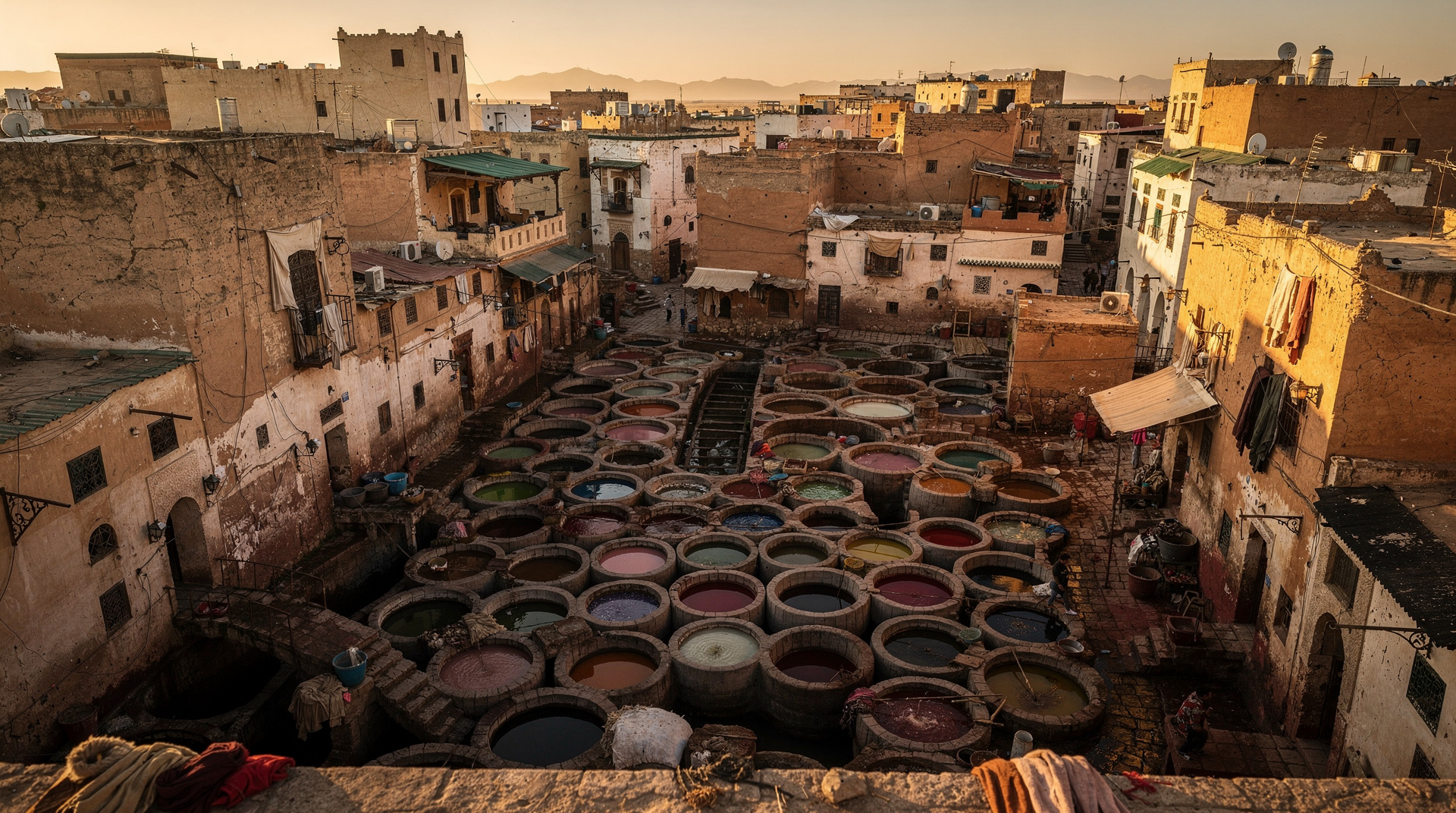
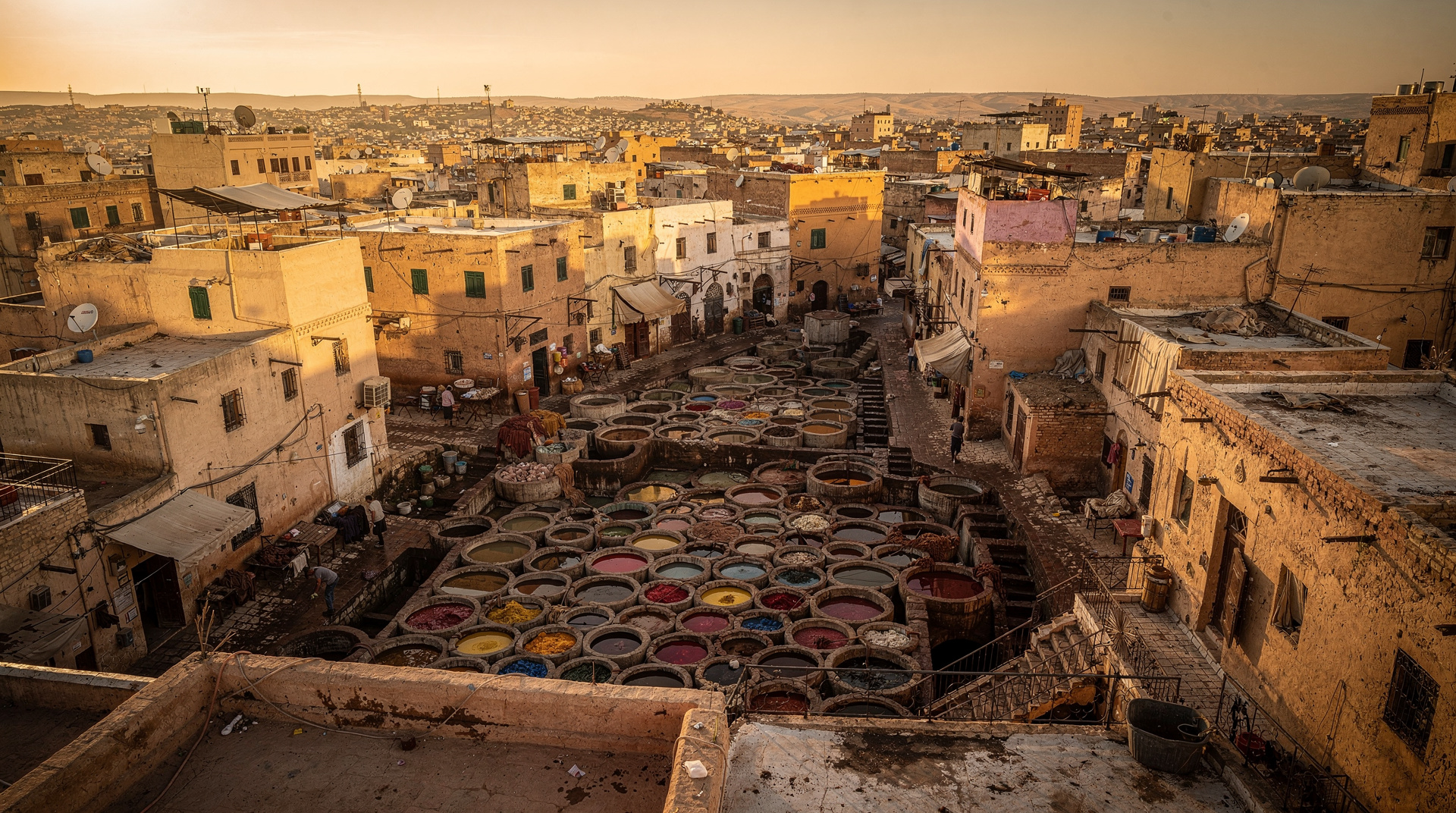
Most visitors allocate a half-day to the souks. In practice, the medina rewards longer engagement: the souks are one layer on top of the palaces, mosques, tanneries, and architectural details that make the whole area worth exploring.
A practical structure: combine a souk morning with the Ben Youssef Madrasa (north of the souks, entry 70 MAD), then lunch at a rooftop terrace restaurant, then Bahia Palace in the afternoon. This covers the three great reasons to be in the medina without feeling rushed.
For day trips, the Fes souks guide covers a very different souk experience — older, less tourist-facing, and in some ways more impressive. The artisan cooperatives guide explains where to buy directly from producers with fixed prices and social impact.
For the full Marrakech picture, the Marrakech destination guide covers getting there, where to stay, and how to structure 3–4 days in the city.
Pairing the souks with food, spices and craft
The souks are easier to enjoy when you build in pauses. A glass of mint tea offered during a negotiation is part of the rhythm, and the mint tea ritual guide explains what is expected of you when it arrives. If you want to understand what you are smelling in Rahba Kedima before you buy, the Moroccan spices guide walks through the main blends and how to judge freshness. For lunch between two rounds of shopping, the Marrakech street food guide helps you eat well without drifting into the most tourist-oriented restaurants.
Negotiating gets easier with practice, and the bargaining in Morocco guide goes deeper on tactics that apply well beyond Marrakech. Since the souks are also where most scams cluster, skim the scams to avoid in Morocco before your first walk. Staying inside the medina makes early starts much simpler, so the best riads in Marrakech is a sensible next read when you are still choosing where to sleep. If shopping is a major goal of the trip, the photography etiquette guide is also worth a look: many craftspeople and stallholders prefer to be asked before you point a camera at them.
Shipping large purchases home
Anyone buying a rug, a large piece of furniture, or several ceramic pieces faces the same question: carry it or ship it. Most established shops in Cherratin, Mouassine, and the fixed-price cooperatives can arrange shipping, typically via a third-party freight service they work with regularly — expect to pay separately for packing and freight, on top of the item price, and to wait several weeks for delivery. Get a written quote before agreeing to a purchase price if shipping is part of the plan, and photograph the item before it’s packed. For smaller items (babouches, spices, scarves, a Berber silver ring), checked luggage is simpler and cheaper than shipping.
Frequently asked questions about Marrakech souks guide
Is it rude to bargain in Marrakech souks?
No — it is expected. Not bargaining in a traditional souk stall is the equivalent of accepting the first offer from a car salesman. Start at 40% of the asking price and negotiate from there. The only exception is clearly marked fixed-price shops.
Can I visit the souks without a guide?
Yes. A downloaded offline map, an early morning start, and a general sense of direction are enough to navigate independently. A guided first visit makes the experience richer but is not essential.
How much cash should I bring to the souks?
Budget 300–800 MAD (€30–80) for a half-day shopping session if you intend to buy. Bring more if you’re looking at larger items like rugs or leather goods. ATMs are available near Jemaa el-Fnaa but not inside the deep souk alleys.
What are the main souks in Marrakech?
Souk Semmarine (textiles), Souk Smata (babouches), Souk Cherratin (leather), Souk Haddadine (metalwork), Souk Sebbaghine (dyers), and Rahba Kedima (spices) are the main specialist markets. The Mouassine area covers copper lanterns and contemporary crafts.
Can I ship a purchase home from the souks?
Yes, for larger items. Established shops in Cherratin, Mouassine, and the fixed-price cooperatives can typically arrange freight shipping for rugs, furniture, and ceramics, usually at extra cost on top of the item price and with delivery taking several weeks. Get a written quote before finalising a purchase price if you plan to ship rather than carry.
Is it safe to use a credit card in the souks?
Cash is standard and expected in the traditional souk stalls; card acceptance is patchy and mostly limited to the fixed-price boutiques (Atelier Moro, 33 Rue Majorelle, Ensemble Artisanal). Carry enough MAD for your planned shopping and treat card acceptance as a bonus rather than a plan.