Bargaining in Morocco: How to Negotiate in the Souks
How do you bargain in Moroccan souks?
Start at 30-40% of the asking price and work up. Expect to settle at 45-60% of the opening offer on most craft items. Take your time, be friendly but non-committal, and use the walk-away tactic if stuck. Never bargain for something you don't want to buy. For small items under 50 MAD, brief negotiation or polite refusal is sufficient.
Bargaining in Morocco: a skill, not a sport
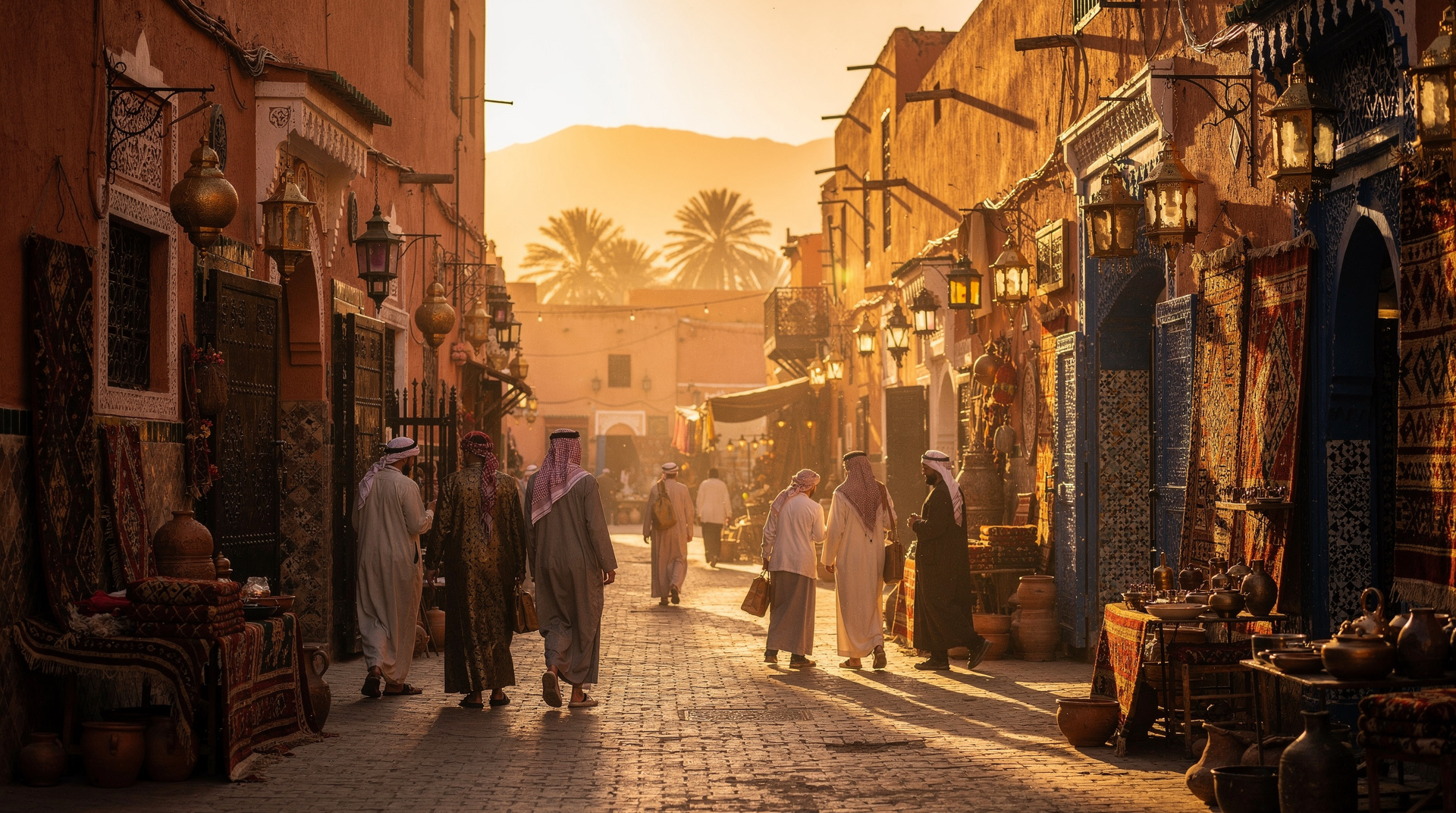
Bargaining in Moroccan souks is not optional — it’s the established pricing system for craft goods, handmade items, and tourist-facing merchandise. The opening price is never the real price. Understanding this isn’t cynicism; it’s understanding how the market works.
But bargaining in Morocco is also not the adversarial battle that some travellers approach it as. Done well, it’s a pleasant social interaction — a conversation with a degree of theatre on both sides, ending in a mutually acceptable agreement. Most Moroccan vendors are experienced, good-humoured about the process, and will respect a confident negotiator even if they don’t always show it.
This guide explains the mechanics, gives realistic price ranges for common items, and covers the situations where bargaining is not appropriate.
| At a glance | |
|---|---|
| Where | Marrakech, Fes, Essaouira, Chefchaouen medina souks — any craft/tourist-facing stall |
| Typical opening markup | Around 2-5x the realistic settlement price |
| Time needed | 5-15 minutes for most items; longer for rugs |
| Best approach | Calm, friendly, patient — walk away if stuck |
| Cash needed | Dirhams (MAD) — souks are largely cash-only |
How the souk pricing system works
The medina souk operates on a dual-price reality: there is a price a vendor will accept, and there’s a price they open with. The gap between the two varies by item, vendor, your apparent confidence, and how busy the souk is.
Markup on initial asking prices:
- Rugs and large textiles: 3-5x the realistic sale price
- Leather goods (bags, belts, babouche slippers): 2-4x
- Silver and metalwork: 2-3x
- Ceramics and pottery: 2-3x
- Spices (tourist-facing stalls): 2-3x
- Argan oil products (souvenir shops): 2-4x
- Smaller items (keychains, small ornaments): 2-3x
These are generalisations — experienced vendors with premium-looking goods may set lower markups, and specifically tourist-trap stalls may push higher. The consistent principle: the first price is always inflated.
The bargaining process step by step
Step 1: Show genuine interest without enthusiasm
Browse, ask what something costs, and respond to the price with mild surprise — not outrage, just mild surprise. “Hmm” or “that’s a lot” works. Your body language should say “I might be interested if the price were sensible.”
Don’t say “that’s a great piece!” or touch the item repeatedly — this signals enthusiasm that weakens your position.
Step 2: Make your opening offer
Start at 30-40% of the asking price for most items. This sounds aggressive but is the norm.
If a vendor opens at 600 MAD for a leather bag, counter at 200-250 MAD. If they open at 1,500 MAD for a small rug, counter at 500-600 MAD.
Make this offer calmly and pleasantly, as if it’s a reasonable suggestion. Don’t be apologetic about it.
Step 3: Negotiate toward the middle
The vendor will counter. You counter back. The typical path is several rounds of small concessions on each side, narrowing toward the settlement price.
Useful tactics during negotiation:
Silence: After you make an offer, be comfortable with silence. The vendor will often fill it.
Move slowly: Urgency works against you. Taking your time signals that you’re not desperate to close and can walk away easily.
“What’s your best price?” — A useful question that often gets a significant drop from the opening position. Ask it early and use the response as your new benchmark.
Focus on the total, not the discount: “I’ll give you 400 MAD” is cleaner than “give me a 40% discount.” Concrete numbers close deals.
Step 4: The walk-away tactic
If you’ve been negotiating for a while and are stuck at a price that doesn’t feel right, thank the vendor politely and start to leave. Say “merci beaucoup” and actually leave. In perhaps 60% of cases, the vendor will call you back with a significantly better offer as you move away.
This works because it proves you’re not emotionally committed to the item and will genuinely walk away. If they don’t call you back, you’ve found the real floor.
Critical rule: Only use the walk-away if you’re genuinely willing to not buy the item. Walking away and then coming back without a better offer being made destroys your negotiating position.
Step 5: Closing the deal
When you’ve reached a price you’re comfortable with, settle it and move on. Don’t try to push for more small concessions after agreeing on a number — this is considered bad form and creates unnecessary friction.
Realistic price ranges by item category
These are settlement prices (not opening prices) that a confident negotiator should achieve in 2026. Prices vary by city, quality, and vendor.
Carpets and rugs
Moroccan rugs are among the best craft purchases in the country but require the most attention.
- Small Berber rug (60x90cm, simple design): 200-400 MAD
- Medium rug (120x180cm, basic): 500-1,200 MAD
- Large quality Berber rug (2x3m): 1,500-4,000 MAD
- Antique or premium Beni Ourain (genuine): 3,000-15,000+ MAD
Opening prices for large rugs often start at 5,000-10,000 MAD and the vendor expects to negotiate substantially. Don’t let the theatre of “let me show you how it’s made” and “this is one of a kind” unsettle your approach. Ask to see several rugs, let them stack up, and make one offer on your chosen piece.
Rug quality note: “Berber” and “handmade” claims are not always accurate. Genuine hand-knotted rugs have irregular backs and slight pattern variations. Machine-made rugs have perfectly regular backs. If it matters to you, look carefully at the back of the rug.
Leather goods
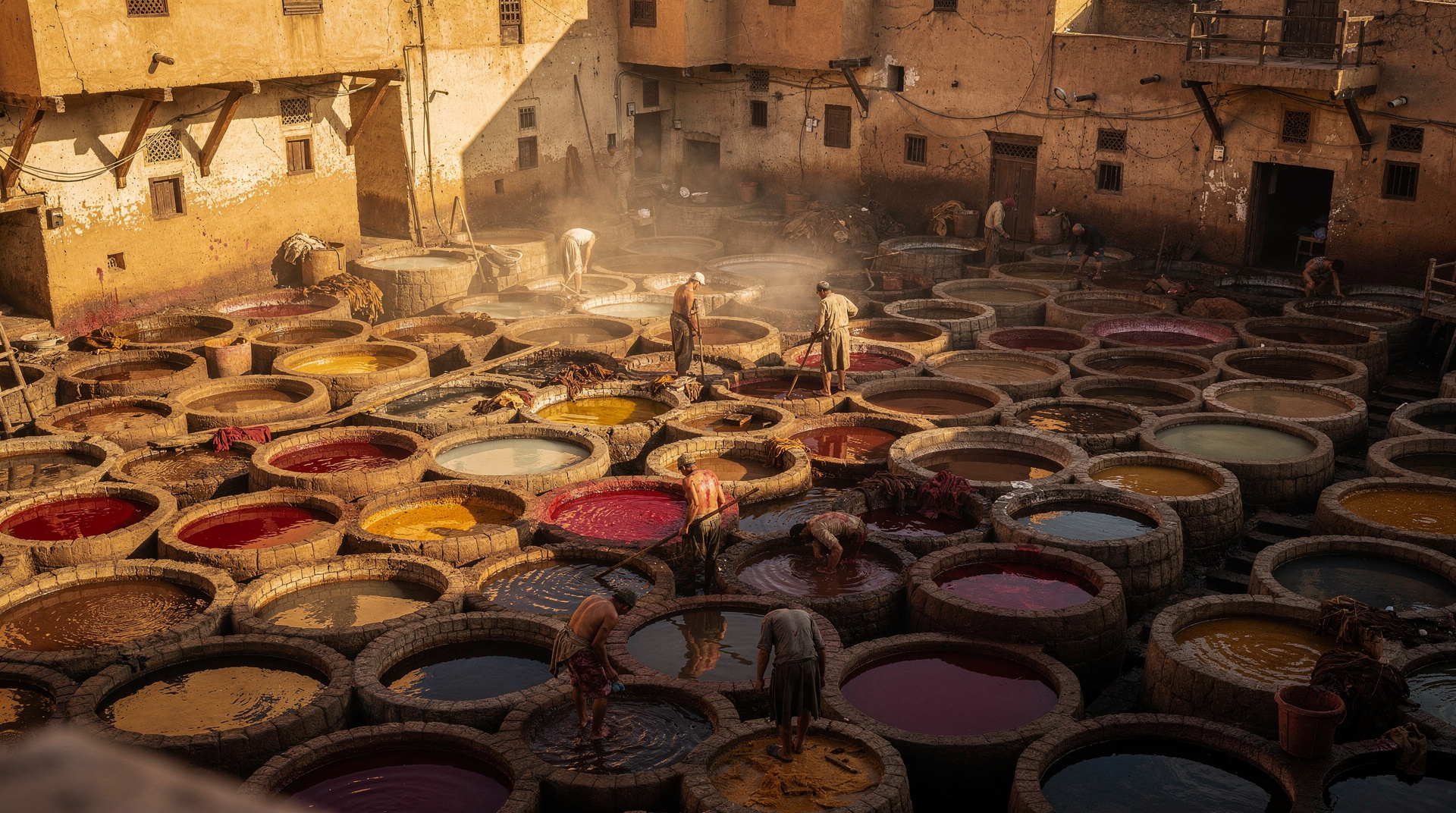
Marrakech and Fes are famous for leather. The Fes tanneries supply much of the city’s leatherwork.
- Leather babouche slippers (per pair): 50-150 MAD
- Small leather pouch or wallet: 80-200 MAD
- Leather daypack or tote bag: 200-500 MAD
- Quality leather shoulder bag or handbag: 300-800 MAD
- Large leather travel bag: 500-1,500 MAD
Quality warning: Cheap babouche at 30-40 MAD opening prices are often plastic-reinforced faux leather. The genuine article uses real leather throughout and costs more. Run your thumb along the sole — real leather has a distinct texture.
Metalwork and lanterns
Moroccan brass and copper lanterns are distinctive and practical souvenirs.
- Small copper or brass tea glass holders (set of 6): 80-180 MAD
- Medium brass lantern: 100-250 MAD
- Large decorative lantern (hanging type): 200-500 MAD
- Set of 3 lanterns (small/medium): 200-400 MAD for the set
Ceramics and pottery
Blue-painted Fes ceramics and colourful Marrakech-style pottery are popular purchases.
- Ceramic bowl, small: 30-60 MAD
- Decorative plate, medium: 60-150 MAD
- Tajine (cooking pot, genuine heavy clay): 100-250 MAD
- Decorative ceramic tile set (25 small tiles): 100-200 MAD
Fes ceramics note: The blue and white pottery at the Fes pottery cooperatives is priced at the cooperative; the same designs in the medina souks start higher but negotiate down to similar levels.
Spices
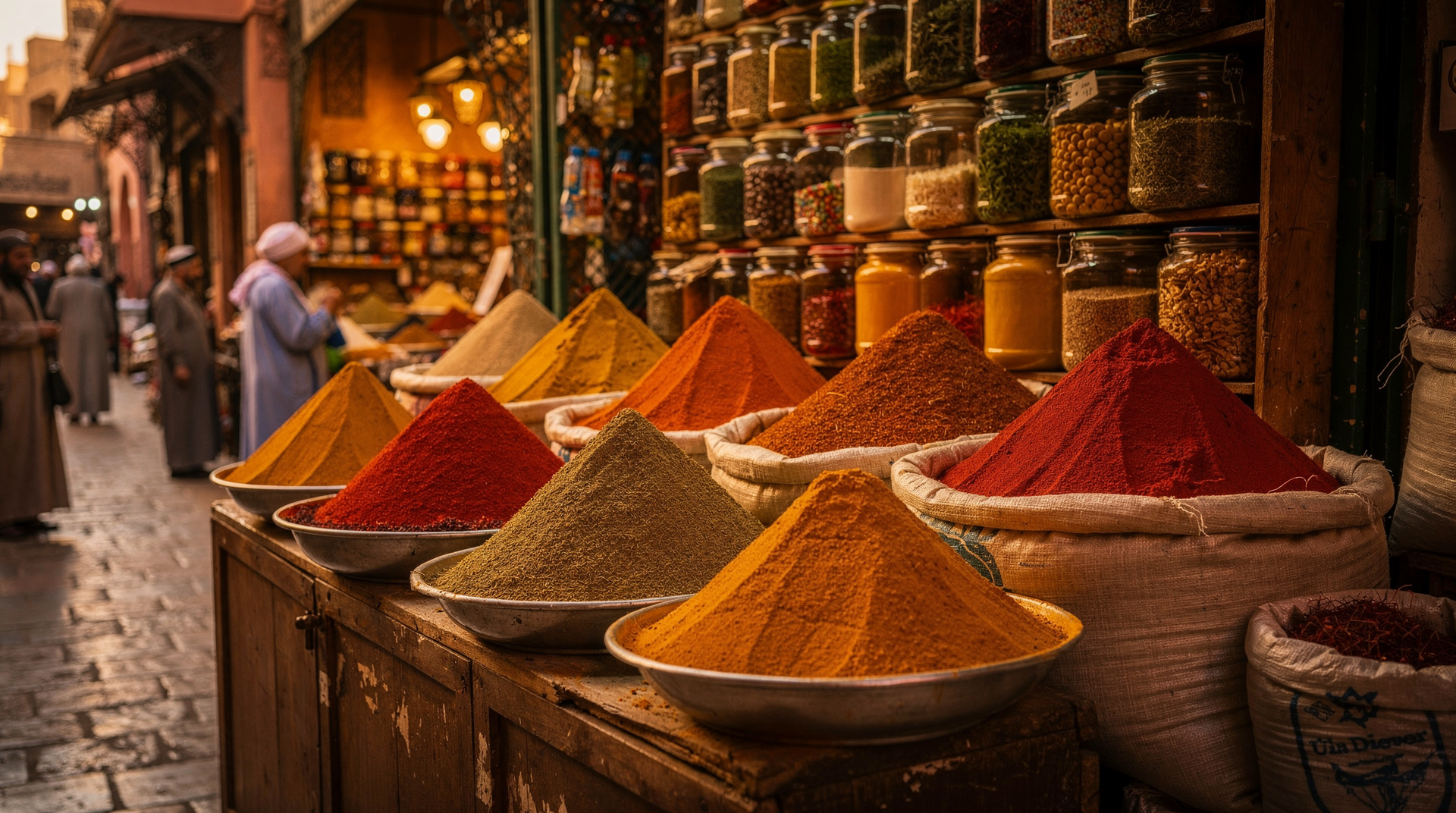
The tourist spice stalls in medina markets are visually impressive but prices are inflated. Buy spices at a souk, not from the elaborate display stands aimed specifically at tourists.
- Ras el hanout (100g): 20-50 MAD
- Saffron (1g): 15-30 MAD (quality saffron, not adulterated)
- Cumin, paprika, coriander (100g each): 10-20 MAD each
- Mixed spice selection (tourist pack): 100-200 MAD for a pre-packaged set
Saffron caution: Cheap “saffron” (under 10 MAD/gram) is almost always adulterated or fake. Real Moroccan saffron from Taliouine is among the world’s best but costs accordingly. If it’s suspiciously cheap, it’s not real saffron.
Argan oil
Morocco produces genuine argan oil, but the argan oil sold in tourist shops often diluted or mislabelled.
- Pure culinary argan oil (100ml): 80-150 MAD
- Pure cosmetic argan oil (60ml): 60-120 MAD
- Amlou (argan paste with almonds and honey, 250g): 80-150 MAD
Buy argan oil from women’s cooperatives rather than souvenir shops — the cooperatives sell genuine product at fair prices, and the money goes directly to the women who produce it.
When NOT to bargain
Supermarkets and chain stores: Fixed prices. Carrefour, Marjane, and Acima have price tags — you pay what the label says.
Restaurants: The menu price is the price. Don’t try to bargain over your food bill.
Train and bus tickets: Official ONCF and CTM pricing is fixed. No negotiation at the ticket window.
Museum and site entrance fees: Official government pricing.
Fixed-price shops: Some craft cooperatives and official government artisan shops operate on fixed prices. These are often marked as such and the prices are usually fair.
Small amounts under 20 MAD: Bargaining for a 20 MAD bottle of water down to 15 MAD is petty and not worth the friction. Save your energy for significant purchases.
Commission shops: the major warning
Many guides in Marrakech, Fes, and other tourist cities steer clients into specific shops where they receive a significant commission (often 30-50% of whatever you spend). The guide’s interest is in you spending money, not in you finding the best product at a fair price.
Signs you’re in a commission shop:
- Your guide “just happens” to take you there as part of the tour
- The welcome is unusually effusive — tea immediately, sitting you down before showing products
- Prices are not negotiable or are only minimally negotiable
- You feel social pressure not to leave without buying
You are never obligated to buy anything from these shops. “La, shukran” works here as everywhere.
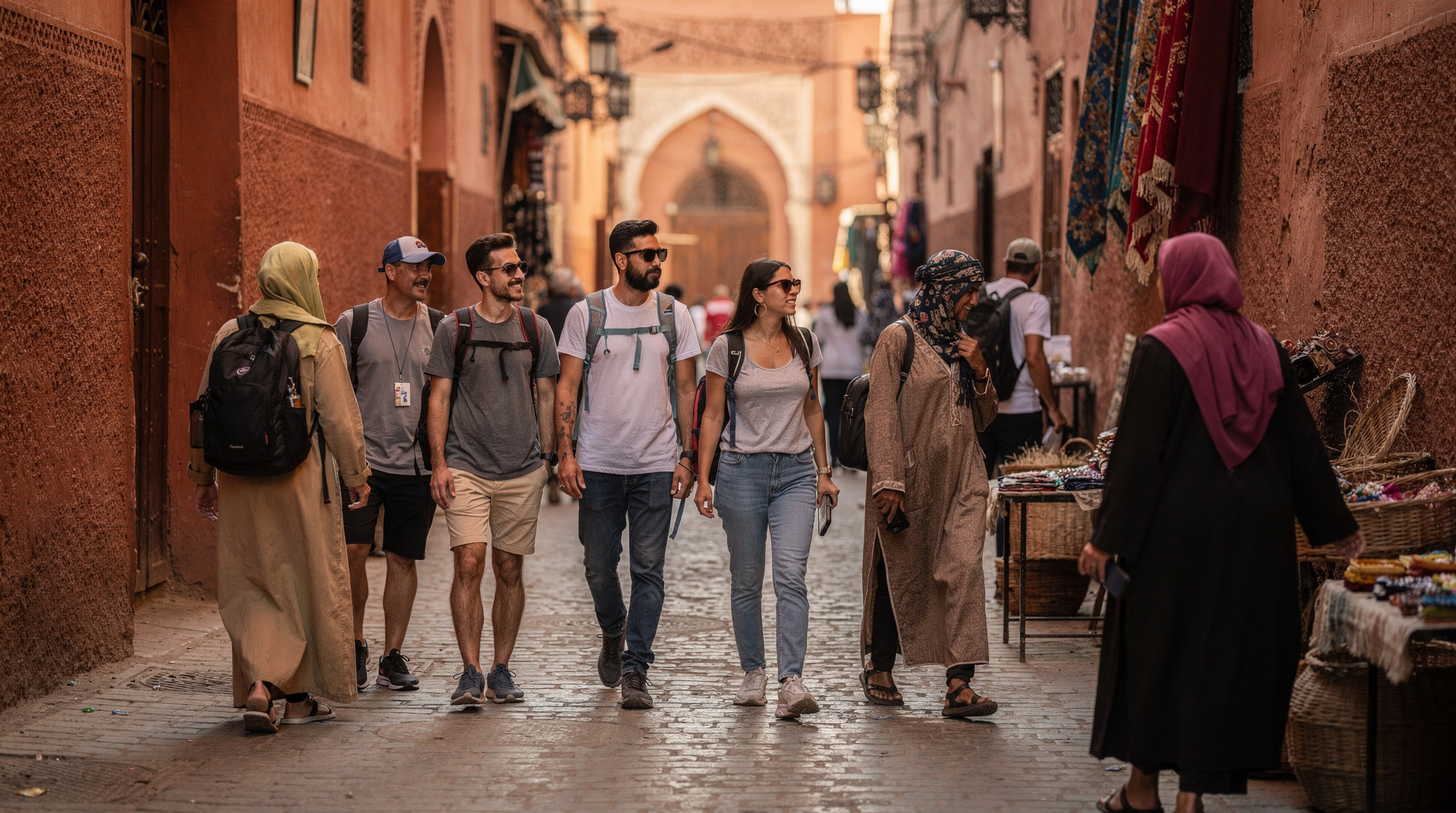
For licensed guide services that avoid this dynamic, pre-booked tours through reputable operators are much more reliable. The Marrakech medina, souks and Saadian Tombs guided tour — 4 hours with a licensed guide who navigates the commission-shop dynamic on your behalf, from €20pp is the most practical way to do the souks on a first visit without the redirect pressure. The scams guide covers the commission shop redirect scam in more detail.
The cooperative alternative
Government-recognised artisan cooperatives in Morocco sell handmade goods at fixed, fair prices. The quality is verified and the producer gets a larger share of the sale price.
Notable cooperatives:
- Women’s argan oil cooperatives on the Agadir-Essaouira road (stop on the drive)
- Pottery cooperatives at Safi and Fes
- Carpet cooperatives in various atlas and medina locations
The prices at cooperatives are not the cheapest available — you can negotiate lower in the souk. But you get quality assurance and no commission intermediary. Worth knowing about for high-value purchases.
Bargaining etiquette: what not to do
Don’t open a bargain you don’t intend to close. If you don’t want to buy something, don’t start negotiating. Opening a negotiation creates an implicit commitment to buy if an acceptable price is reached. Walking away from a fair price you’ve solicited is poor form.
Don’t be rude or dismissive. The negotiation is a transaction between people. “This is garbage, I won’t pay more than 50 MAD” is not a valid tactic — it creates friction and won’t get you a better price.
Don’t bargain as entertainment. Some tourists treat souk bargaining as sport and negotiate just for the experience with no intention of buying. This wastes vendors’ time and is generally considered poor behaviour.
Don’t accept something handed to you unless you’re buying. Once an item is in your hands, the social pressure to pay for it intensifies. The free gift that becomes a demand — spices, bracelets, henna — is a specific variant of this problem. See the scams guide.
Useful Darija phrases for the souk
A handful of words go further than any tactic. “Bshhal?” (how much?) opens the conversation. “Ghali bezaf” (too expensive) signals your position without rudeness. “Chwiya” (a little) is useful for asking a small further discount politely. “La, shukran” (no, thank you) is the universal, always-acceptable exit line if you’re not interested — vendors respect it immediately and it ends unwanted pressure without friction. None of this replaces French or English, both of which work fine in tourist-facing souks, but using even two or three Darija words changes the tone of the interaction in your favour.
Currency and payment practicalities
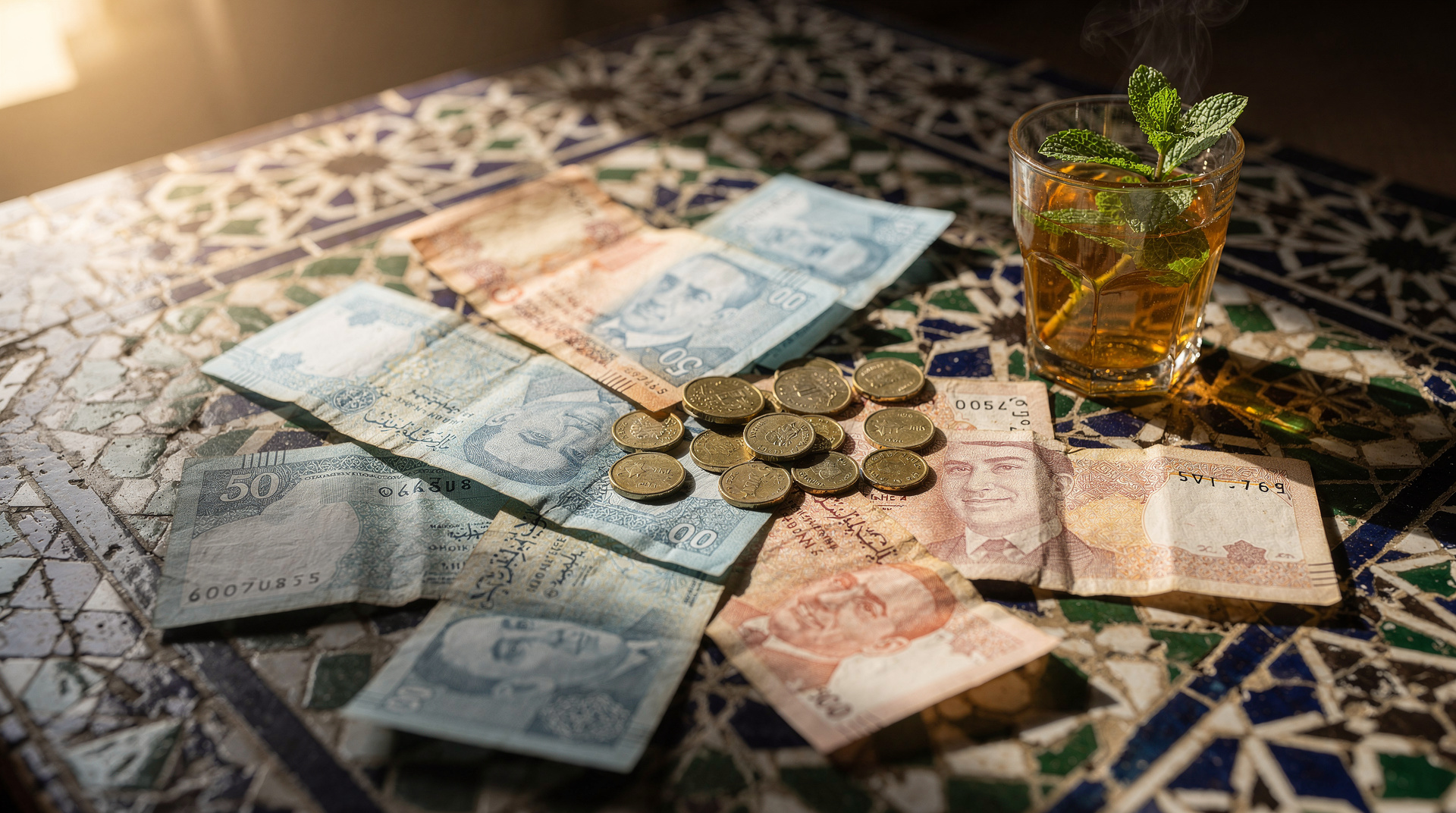
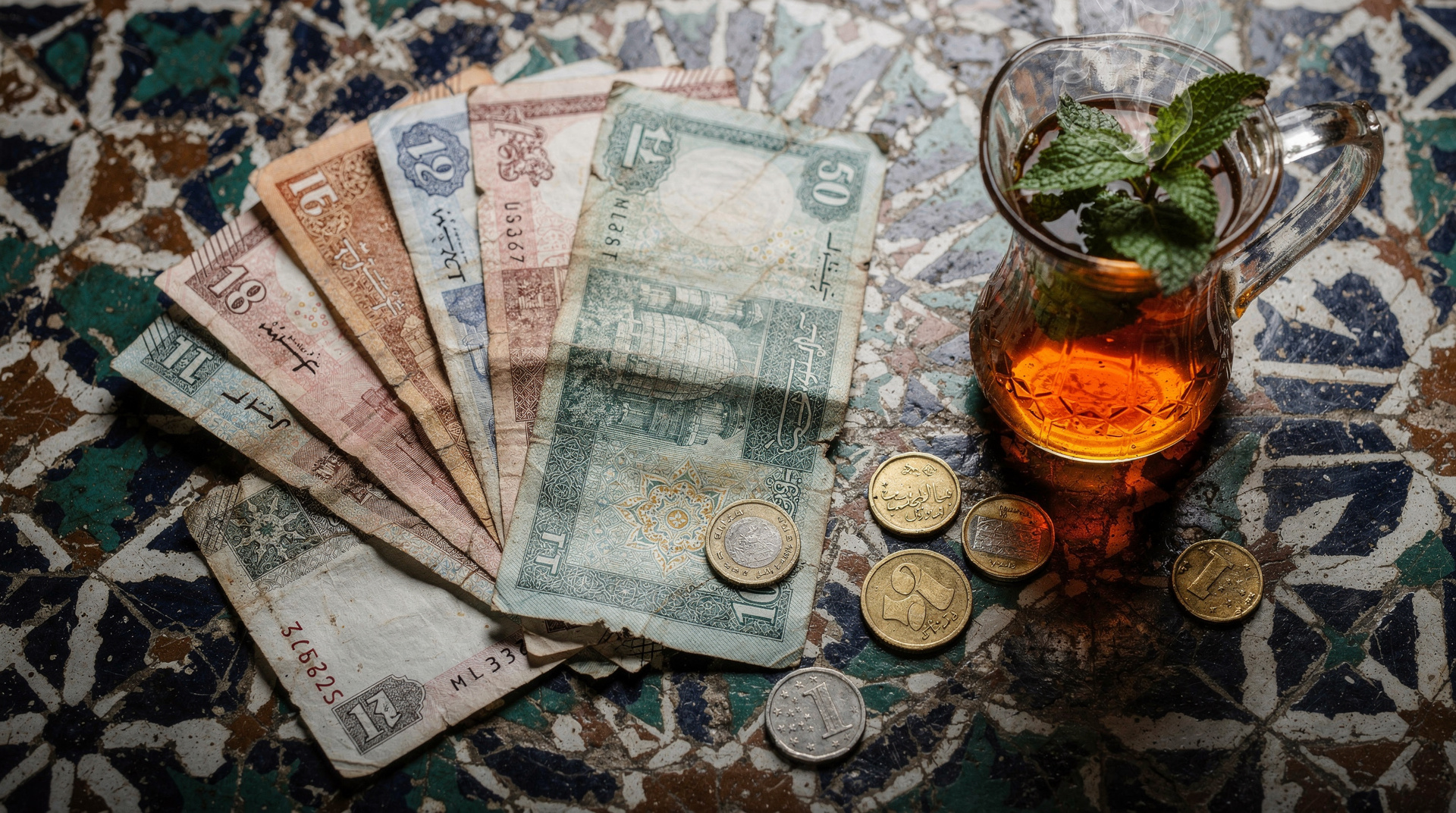
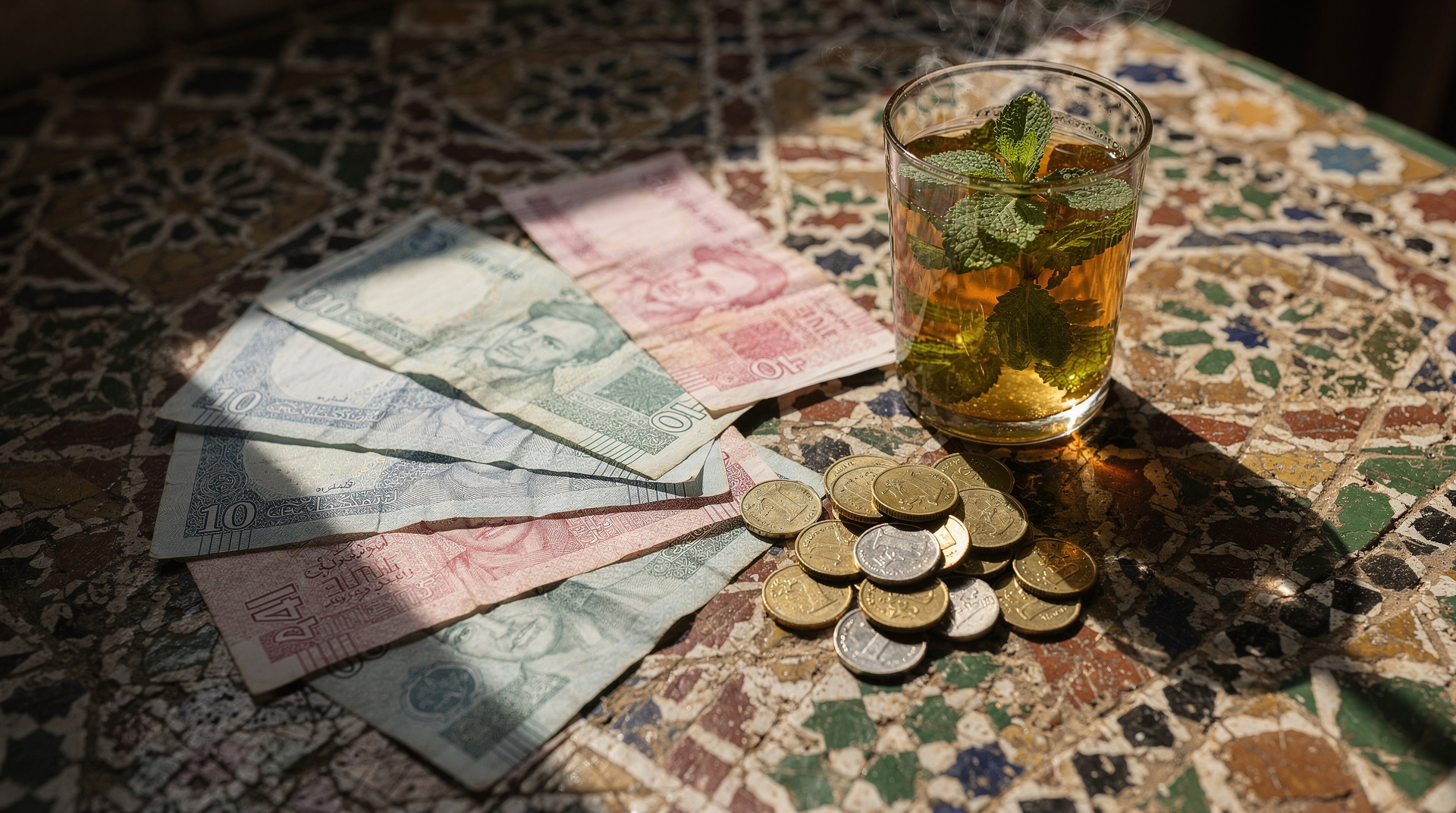
Bargaining happens in Moroccan dirham (MAD) — Morocco is a closed-currency country, so you’ll need cash obtained inside the country (ATMs are widely available in cities). Carrying a mix of note sizes matters: producing a 200 MAD note for a 60 MAD item after negotiating hard undercuts your position, since it signals you weren’t taking the negotiation seriously. Small and medium notes make closing deals smoother. See the Morocco currency and money guide for exchange logistics and ATM tips before you start shopping.
Connecting to other shopping guides
For the full souvenir and shopping picture, see the scams guide which covers commission redirects and misleading vendor tactics in detail. Travellers heading to Fes after Marrakech should note that the Fes medina, tannery and souk guided tour — half-day with a licensed guide, from €22pp covers the leather quarter with a guide who understands the tannery “cooperative” redirect and keeps it honest.
The Morocco budget guide includes shopping as a significant variable cost. The photography etiquette guide is relevant in souk contexts where photographing products or vendors requires tact.
Where to practise before the big purchases
Not every souk asks the same of you. The Marrakech souks guide and the Fes souks guide describe how each medina is laid out, which helps you compare stalls before committing to one. If you want to warm up on lower-stakes items, browse a few stalls first, ask prices without making offers, and use what you learn as your benchmark.
Specific categories reward some extra reading. The leather goods guide for Fes explains what to look for in a bag or pair of slippers, the Berber rugs guide goes deeper on knots, backs and patterns, and the Moroccan spices guide helps you tell a fair spice stall from a showy one. Arriving with a little product knowledge changes how vendors treat you from the first exchange.
If you are travelling in Chefchaouen, the Chefchaouen shopping guide covers what to buy there and how the mood of bargaining differs from the larger medinas. Whatever the city, keep the same approach: stay friendly, stay patient, and remember that a fair price is one both sides can live with.
Frequently asked questions about Bargaining in Morocco
Do I need to bargain in every shop?
No. Fixed-price shops, supermarkets, official cooperatives, and government-run artisan centres display real prices — bargaining there is unnecessary and can come across as odd. Bargaining applies specifically to souk stalls and independent craft vendors without visible price tags.
What if I get the price completely wrong and overpay?
It happens to almost every visitor at some point, and it’s not worth dwelling on. Even an “overpaid” souvenir at souk prices is usually still inexpensive by international standards. Use it as a benchmark for the next negotiation rather than a source of regret.