Best day trips from Casablanca: the complete guide
What are the best day trips from Casablanca?
The best day trips from Casablanca are Rabat (45 min by train, Morocco's elegant capital), El Jadida (1 hr, UNESCO Portuguese citadel on the Atlantic), Asilah (2 hr by train, whitewashed art town), and Marrakech (2.5 hr by train — better as an overnight). Chefchaouen is a long 4-hour drive but possible in two days.
Casablanca’s day trip geography
Casablanca is Morocco’s largest city and its commercial engine — and many visitors pass through primarily to transit toward Marrakech, Fes, or the coast. But the city’s position on Morocco’s Atlantic seaboard makes it a reasonable base for several worthwhile day trips, particularly for travellers who have a business reason to be in Casa or who are using the Mohammed V International Airport as an entry point.
The best day trips from Casablanca all radiate along two axes: north along the Atlantic coast toward Rabat and Asilah, and south toward El Jadida and the Doukkala Atlantic plain. Marrakech is accessible by the fast ONCF train in 2.5 hours, making it feasible as an ambitious day trip though better as an overnight.
At a glance
| Easiest trip | Rabat — around 45 min by train, city-centre to city-centre |
| Furthest realistic option | Marrakech — around 2h20 on the Al Boraq/ONCF fast train |
| Typical daily cost (transport + lunch + entries) | Around 150-350 MAD per person, depending on destination |
| Best time to go | Spring and autumn; avoid the worst of the July-August coastal crowds at El Jadida and Asilah |
| Getting around on arrival | Walkable on foot at each destination — no need for local taxis at Rabat, El Jadida or Asilah |
1. Rabat — Morocco’s elegant capital
Distance: 92 km north
Travel time: 45 minutes by train, 1 hour by car
Best for: History, architecture, royal city atmosphere
Rabat is the most culturally rewarding day trip from Casablanca and one of the most underrated cities in Morocco. As the administrative capital, it lacks the commercial frenzy of Casablanca or the tourist density of Marrakech and Fes — instead, it has a genuinely liveable quality with excellent restaurants, a well-maintained medina, and some of the country’s finest historic monuments.
Key sights in Rabat:
Hassan Tower and Mohammed V Mausoleum: The incomplete 12th-century minaret of Hassan mosque — intended to be the world’s tallest but abandoned at 44 metres — stands surrounded by the columns of the unfinished mosque in a field. Adjacent is the Mohammed V Mausoleum, one of Morocco’s finest examples of traditional Moroccan architecture and craftsmanship, housing the tombs of King Mohammed V and his sons. Free entry; the mausoleum interior is open to non-Muslims during visiting hours.
Kasbah of the Oudayas: A 12th-century Almohad kasbah overlooking the estuary of the Bou Regreg river. The blue-and-white painted streets inside the kasbah are reminiscent of Chefchaouen but entirely residential and local — not a tourist set. The Andalusian garden at the far end of the kasbah is excellent. The view across the estuary toward Salé from the ramparts is one of Rabat’s defining images.
Chellah: A walled necropolis outside the city walls, combining Roman ruins (the ancient city of Sala Colonia) with a medieval Merinid Islamic complex. White storks nest on the minaret from January to August. The combination of Roman columns, Islamic arches, and overgrown gardens is uniquely atmospheric.
Rabat medina: Smaller and more navigable than Fes, with a well-maintained souk and several excellent craft shops. The Mohammed V avenue through the new city has good café options.
Book the Casablanca to Rabat day tripBy train: The ONCF train from Casa-Voyageurs or Casa-Port to Rabat-Ville runs approximately every 30 minutes (journey: 45 min, cost: 55 MAD). This is the fastest, most comfortable, and cheapest option — no traffic, no parking, and the stations are central at both ends.
Duration on the ground: The five main sights (Hassan Tower, Mausoleum, Oudayas Kasbah, Chellah, medina) can be covered in 5–6 hours at a solid pace, making a full day trip comfortable without feeling rushed.
2. El Jadida — Atlantic citadel and Portuguese legacy
Distance: 99 km south
Travel time: 1 hour by car, 1.5 hours by bus
Best for: History, UNESCO architecture, uncrowded beaches
El Jadida is the Atlantic coast’s finest day trip destination — a UNESCO World Heritage Portuguese citadel of extraordinary architectural coherence, combined with a long Atlantic beach and a low-key Moroccan town that hasn’t been significantly developed for tourism.
The Portuguese Citadel (Cité Portugaise): Built by the Portuguese from 1513 onward, this compact walled city within El Jadida contains some of the finest Portuguese colonial architecture in North Africa. The central space is the remarkable Cistern — a vaulted subterranean water reservoir built in 1514, lit by a single oculus in the ceiling that creates extraordinary reflections on the shallow water film on the floor. Orson Welles filmed scenes from his Othello here in 1949. Entry: 10 MAD.
The streets of the citadel are quiet, largely residential (Moroccan families occupy the restored Portuguese houses), and genuinely beautiful — Gothic doorways, tile-covered walls, and the sea visible through the rampart gaps.
El Jadida beach: A long Atlantic beach stretches north from the citadel. Unlike the Agadir bay (sheltered) or Essaouira (very windy), the El Jadida beach is moderate and pleasant for walking, and in summer it attracts Moroccan families from Casablanca.
Mazagan Palace Hotel: El Jadida’s proximity to Casablanca has attracted a luxury resort — the Mazagan Beach and Golf Resort — on the beach north of town. Worth knowing if you want to combine a cultural visit with a beach lunch at a quality restaurant.
By car: The N1 south from Casablanca is a comfortable one-hour drive. Alternatively, the coastal R301 is slower but more scenic.
By bus: CTM from Casablanca to El Jadida runs several times daily (1.5 hr, around 55 MAD).
3. Asilah — whitewashed murals and Atlantic calm
Distance: 215 km north
Travel time: 2 hours by train, 2.5 hours by car
Best for: Arts, medina, Atlantic beach, photography
Asilah is a longer stretch from Casablanca than Rabat, but the town’s combination of Portuguese walls, murals, whitewashed medina, and Atlantic beach makes it well worth the journey. The ONCF train from Casablanca to Asilah involves a change at Sidi Slimane or Kénitra — allow 2–2.5 hours total.
The medina of Asilah is the most manageable in Morocco for visitors who find Fes or Marrakech overwhelming — compact, well-signed, and organically beautiful rather than aggressively commercial. The murals from the annual Asilah Arts Festival (held every August since 1978) cover walls throughout the old city, creating a layered public gallery of international and Moroccan contemporary art within a 15th-century Portuguese fortification.
The beach immediately south of the walls is clean, broad, and relatively uncrowded outside summer. Lunch at the harbour fish restaurants (grilled sardines and calamari at 80–120 MAD) is the standard programme.
Best time: Spring and autumn for the most pleasant conditions. August brings the arts festival — vibrant but crowded.
4. Chefchaouen — ambitious two-day option from Casablanca
Distance: 330 km north
Travel time: 4 hours by car, 5–6 hours by bus
Best for: Two-day extension, not a day trip
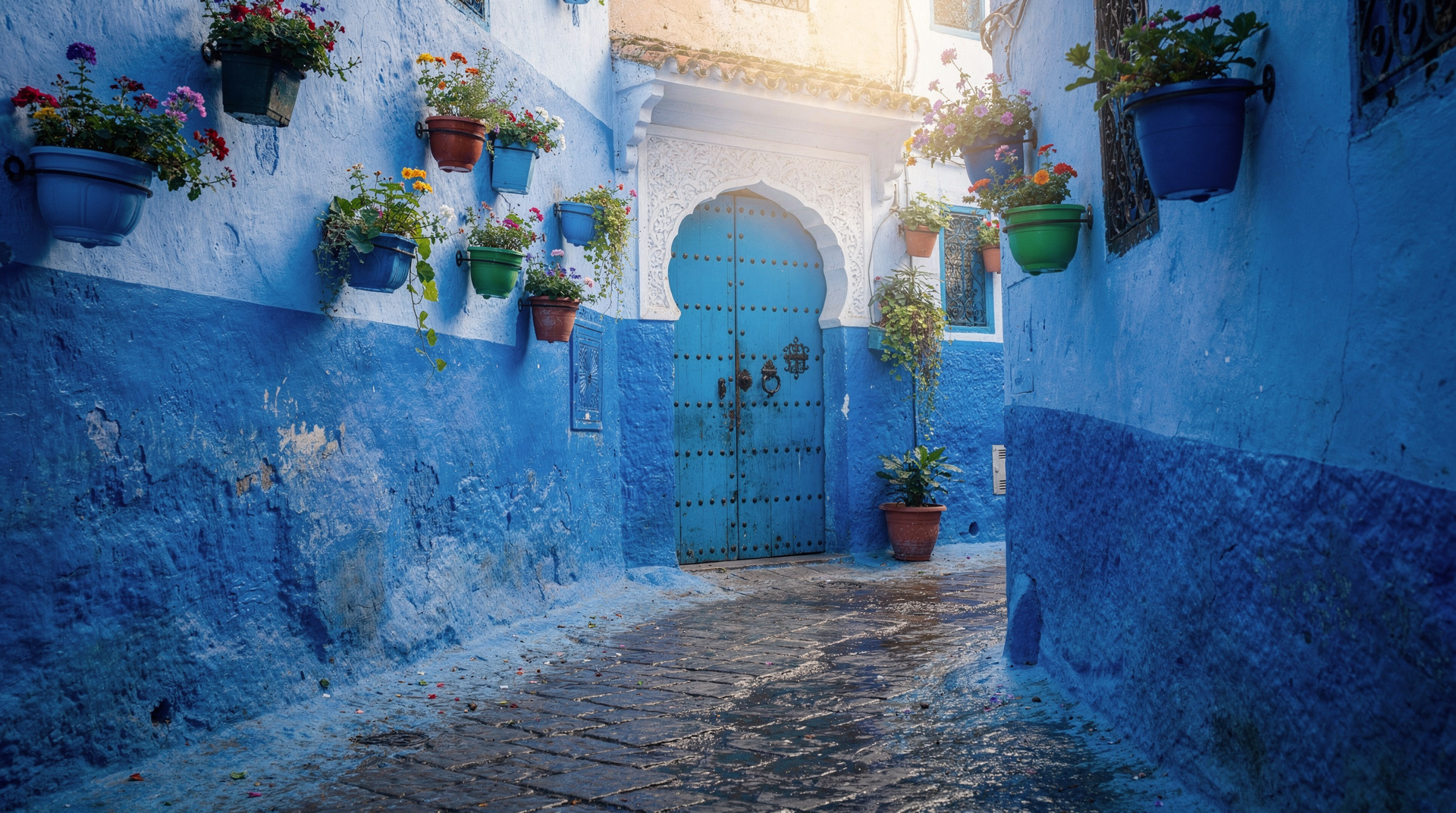
Chefchaouen from Casablanca is technically a day trip — the CTM bus runs and arrives in approximately 5.5 hours — but this results in less than 2 hours in the blue city before the return journey begins. Not recommended.
What works much better is a Casablanca-Chefchaouen-Casablanca two-day trip (overnight in Chefchaouen), giving time for early morning light in the medina and possibly a short hike above town.
See the Chefchaouen day trip from CasablancaIf a single day is truly all that’s available, the organised tour is the most efficient approach — the driving is done for you and the guide maximises the limited time on the ground. For a genuine Chefchaouen experience, however, build in at least one night.
5. Marrakech — the fast train option
Distance: 240 km south
Travel time: 2 hours 20 minutes on the Al Boraq / ONCF fast train
Best for: First Morocco visitors, ambitious day planners
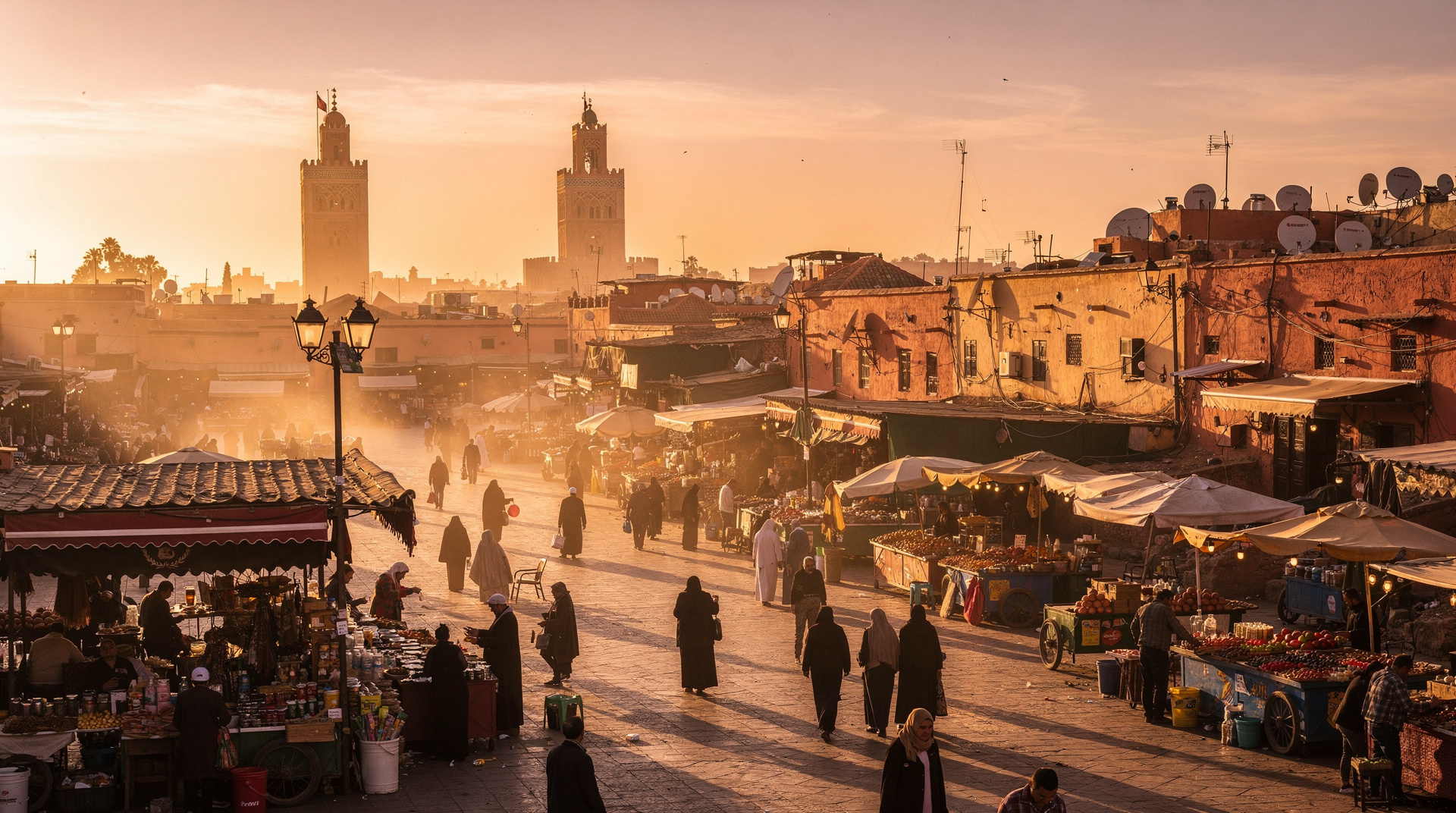
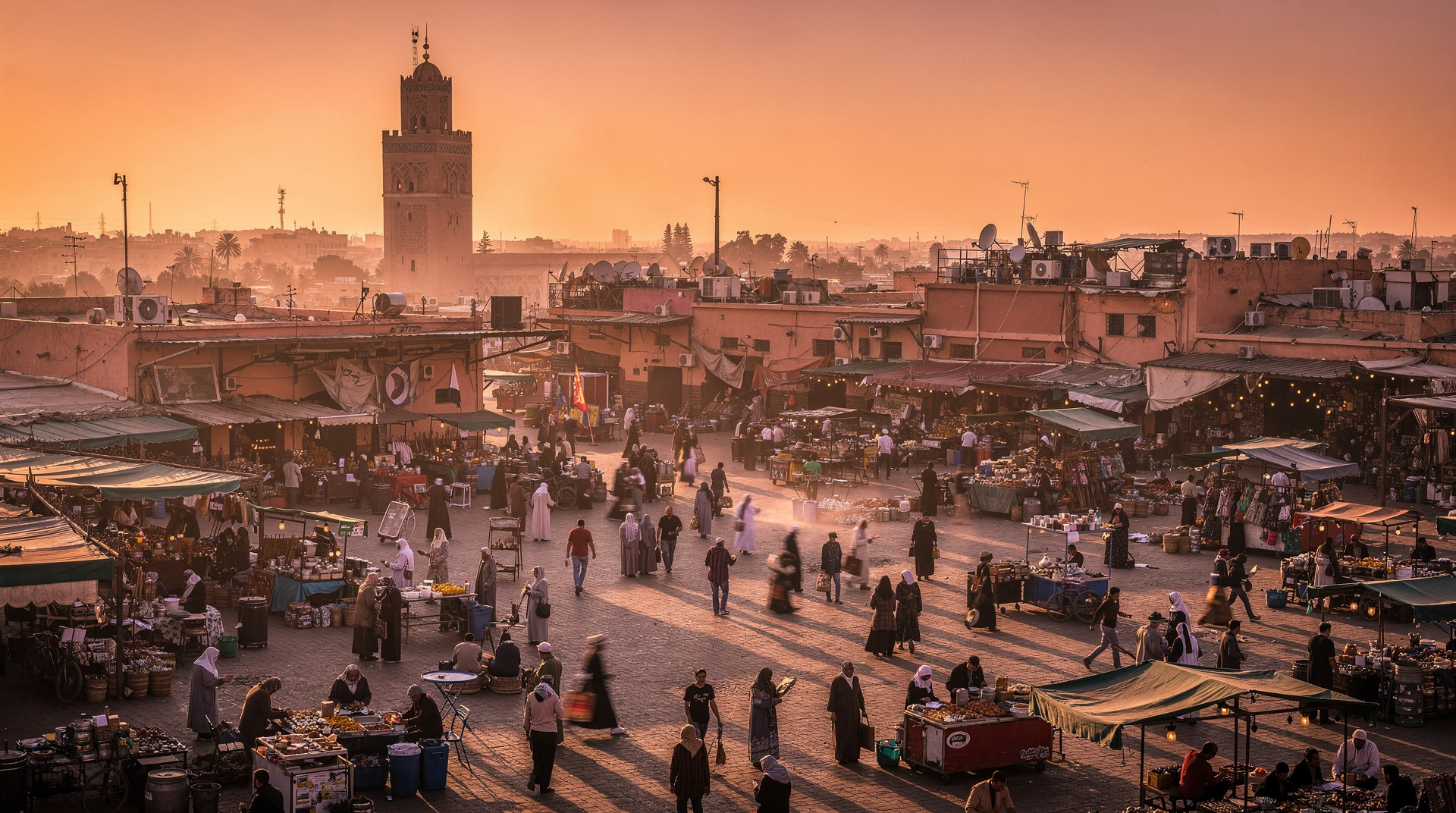
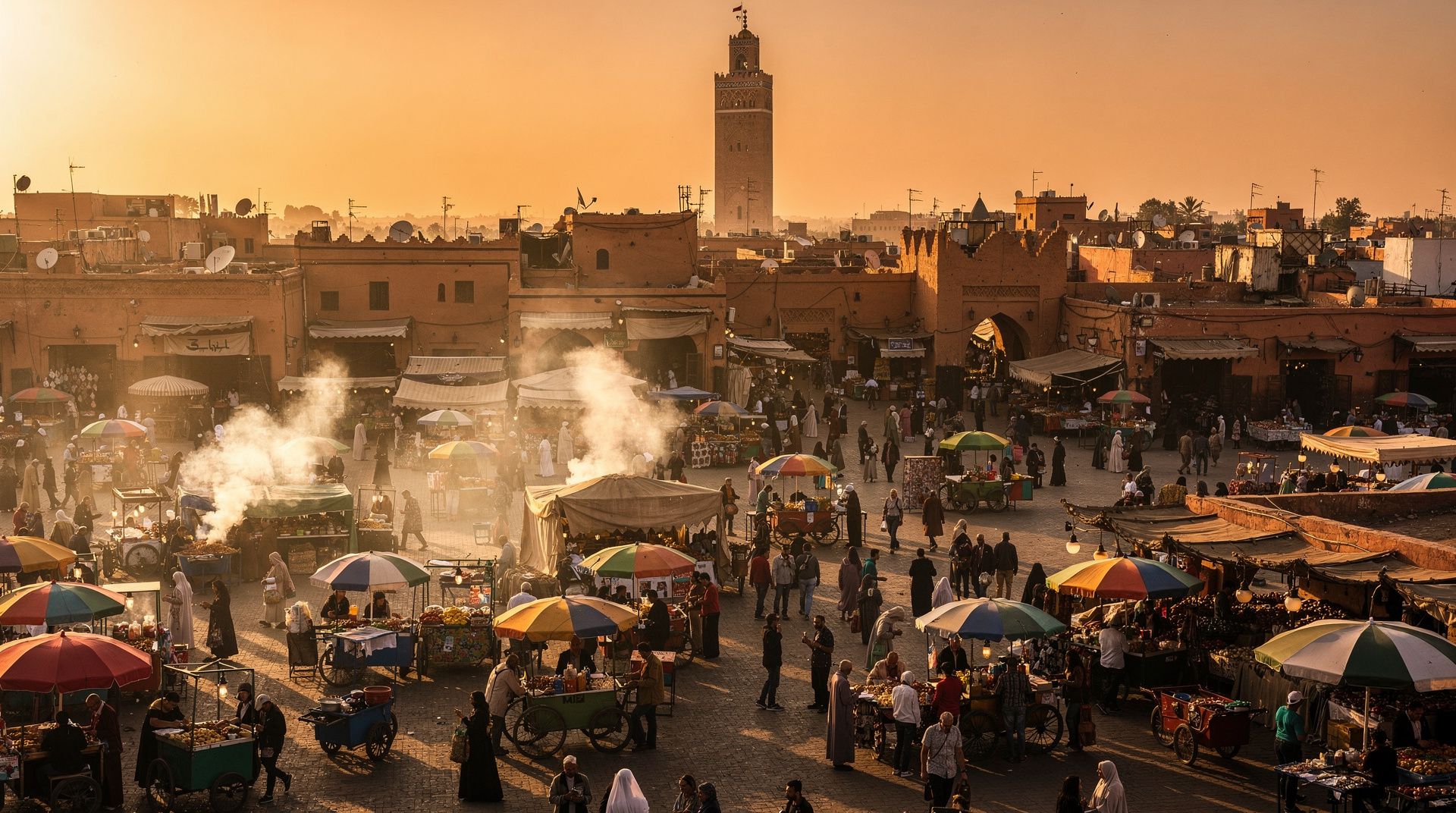
The ONCF high-speed connection between Casablanca and Marrakech (Casablanca Airport to Marrakech in 2 hr 20 min) makes Marrakech the fastest long-distance day trip from any Moroccan city. Departing from Casa on the early train (6:30–7 am), arriving in Marrakech by 9 am, and spending 7–8 hours in the medina before the 5 pm return train is a legitimate itinerary.
The practical question is whether 7 hours in Marrakech is satisfying or frustrating. Marrakech rewards slow exploration — the medina is not quickly navigable — and a first-time visitor will feel rushed. For a second or subsequent visit with specific goals (a souk, a cooking class, a specific restaurant), the day trip works well.
Casablanca combined with Marrakech: For visitors whose flights arrive and depart from Casablanca, combining 2 nights in Casa with the Marrakech day trip and 2 nights in another northern city creates a practical Morocco introduction.
Which day trip fits your time budget?
| Destination | Round-trip time | Best for | Verdict |
|---|---|---|---|
| Rabat | Around 1.5-2 hr total by train | First-timers, culture, architecture | Do this one first |
| El Jadida | Around 2-3 hr total | UNESCO citadel + a quiet beach | Underrated, worth the detour |
| Asilah | Around 4-5 hr total | Murals, art, Atlantic calm | Best combined with a Tangier extension |
| Chefchaouen (day trip) | Around 10-11 hr total | Not recommended as a single day | Stay overnight instead |
| Marrakech | Around 5 hr total (train only) | Repeat visitors with a specific goal | Only if you already know the medina |
Casablanca’s own day-use options
For visitors in Casablanca for business who have only a few hours, the city’s own sights are underrated:
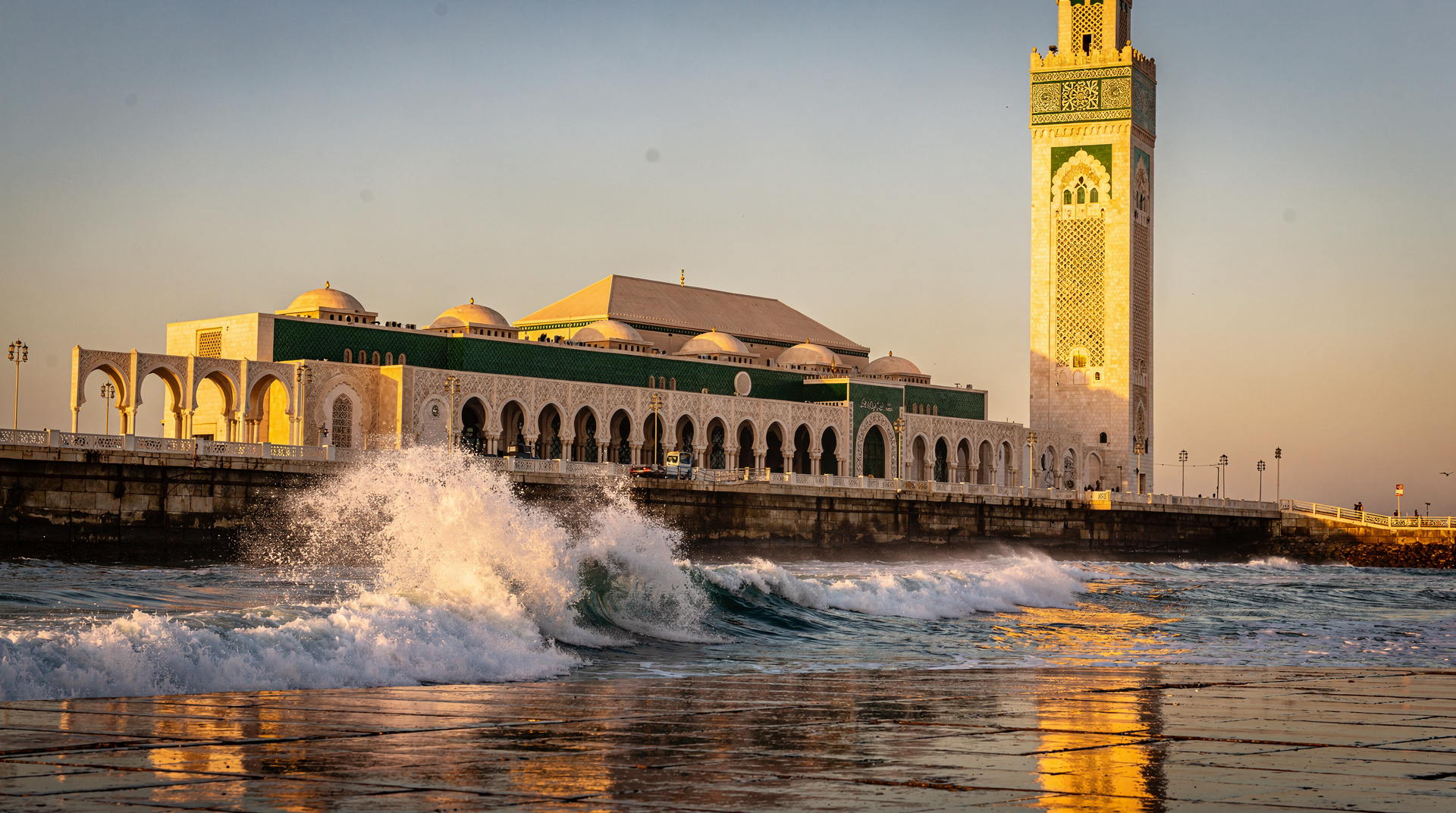
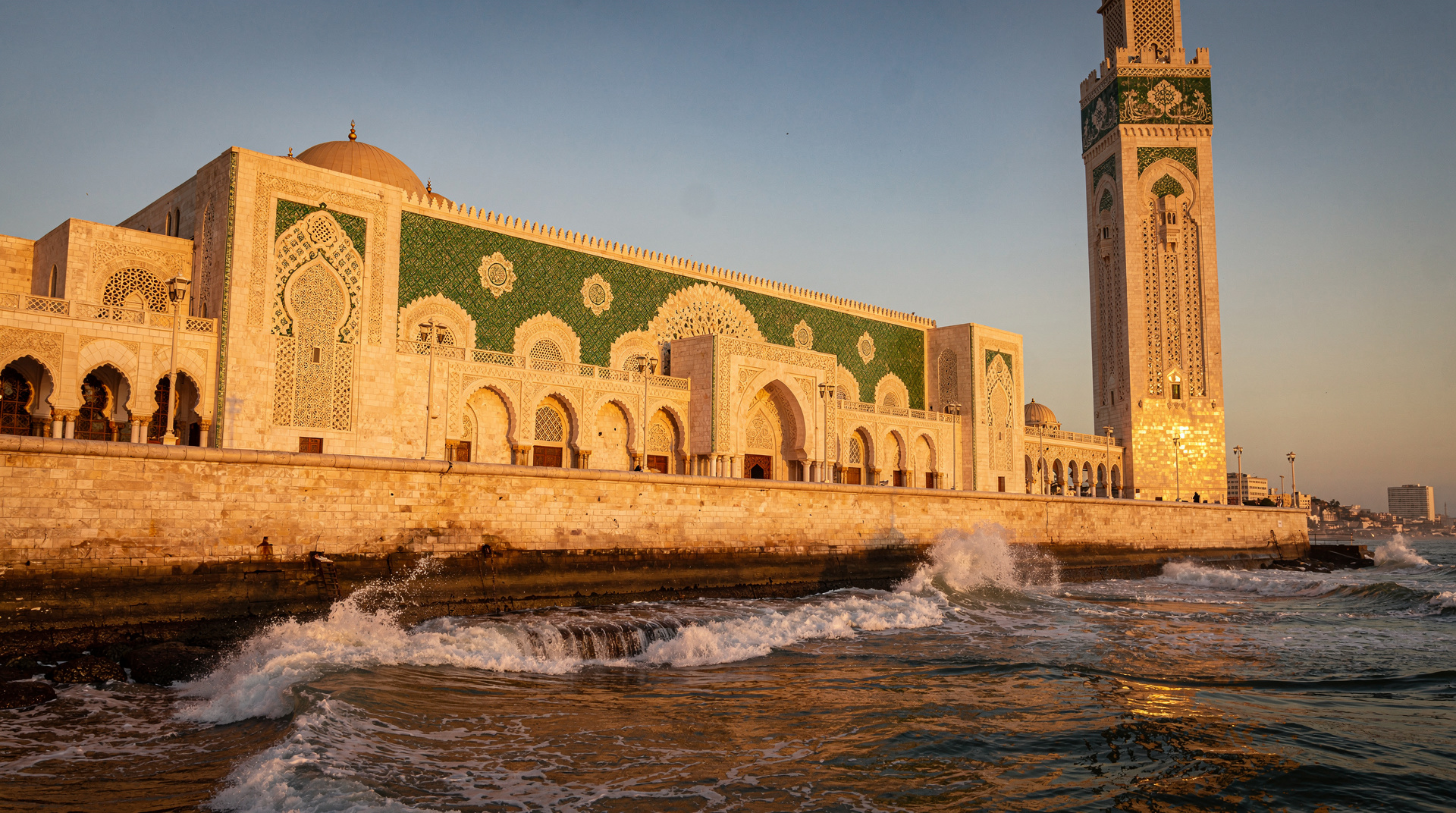
Hassan II Mosque: One of the world’s largest mosques and the only one in Morocco open to non-Muslims. The guided tour (120 MAD) covers the extraordinary interior — a prayer hall accommodating 25,000 worshippers under a retractable roof, with hand-crafted Moroccan tilework, carved cedar, and a glass floor over the Atlantic below.
Book the Hassan II Mosque guided tour with entry ticketCorniche and Ain Diab: The Atlantic corniche west of the city centre has excellent seafood restaurants and the Ain Diab beach area popular with Casablanca residents for evening walks.
Practical tips for day trips from Casablanca
Train vs car: For Rabat, the train is definitively better — faster than driving in traffic, cheaper, and city-centre to city-centre. For El Jadida and Asilah, a car gives more flexibility. For Marrakech, the fast train is faster than any other option including flying.
Casablanca traffic: The city has severe traffic congestion, particularly in the morning (7–9 am) and evening (5–8 pm) rush hours. Build generous extra time into any day trip that involves driving out of or back into Casablanca proper. The Casablanca Airport train connection (45 min from the airport to city centre) avoids the traffic entirely.
Mohammed V Airport as a base: If your arrival and departure flight is Casablanca, but you’re spending most of your Morocco time elsewhere, consider treating the airport area as a transit hub and booking day trips from there rather than paying for city-centre accommodation.
Food in Casablanca: The food scene in Casa is Morocco’s most international, with excellent French-influenced restaurants in the Gauthier neighbourhood. For day trips, El Jadida and Rabat both have good lunch options close to the main sights.
For the Rabat destination guide and the Chefchaouen destination guide, follow those links. For day trips from the country’s other major bases, see day trips from Marrakech, day trips from Fes, and day trips from Tangier.
Should you base yourself in Casablanca at all?
Most travellers building a full Morocco itinerary treat Casablanca as an arrival/departure point rather than a base — and the day trips above largely confirm why. Rabat is genuinely excellent and close enough that basing in Casablanca costs you little. But El Jadida, Asilah and especially Marrakech reward being visited from a closer base once your itinerary allows it. If your trip includes a few nights in Marrakech or the Marrakech region later on, save those sights for when you’re actually staying there rather than rushing them from Casa.
A realistic two-base alternative: Fly into Casablanca, spend your first night there, do the Rabat day trip, then move on to Marrakech or Fes for several nights rather than trying to squeeze every Atlantic-coast day trip into a short Casablanca stay. This avoids the packed-train, packed-day feeling that a Casablanca-only itinerary tends to produce.
Frequently asked questions about Best day trips from Casablanca
Is Casablanca worth basing yourself in for multiple day trips?
Only partially. Rabat is a strong, easy day trip from Casablanca and worth doing from there. El Jadida and Asilah are good but better enjoyed with more time than a rushed day allows. For Marrakech, Fes or Chefchaouen, you’re generally better off relocating rather than day-tripping from Casablanca.
Can you do Casablanca to Chefchaouen and back in one day?
Technically yes by CTM bus (around 5-6 hours each way), but it leaves under 2 hours in the blue city, which most visitors find unsatisfying. A two-day trip with one overnight in Chefchaouen is a far better use of the same travel time.