Morocco Packing List: What to Bring by Season and Destination
What should I pack for Morocco?
Core items: lightweight modest clothing (shoulders/knees covered for medinas), comfortable walking shoes, sun protection, a day bag with a secure zip, plug adapter (Type C/E/F, 220V), and cash in dirhams. For the Atlas add layers; for the Sahara add a dust buff/scarf and a warm layer for cold nights.
Packing for Morocco: three different destinations in one country
Morocco is deceptively varied. You might spend a morning sweating in a 38°C Marrakech medina, then shiver at altitude in the Atlas that afternoon, then watch the temperature drop to near-zero in the Sahara at night. A packing list that treats “Morocco” as a single climate zone will leave you underprepared for something.
This guide is organised by context — medina travel, mountain and Atlas, Sahara desert — with seasonal variations noted throughout.
At a glance
| Bag type | 40L backpack or cabin-size roller for most trips; checked luggage if adding Atlas trekking or Sahara camp gear |
| Non-negotiables | Closed walking shoes, modest medina layer, Type C/E/F adapter, high SPF sunscreen |
| Biggest regional swing | Sahara nights can be 20-30°C colder than the daytime high |
| Where gaps get filled | Souks in Marrakech and Fes sell scarves, kaftans and babouches cheaply |
| Season-specific detail | See the Morocco packing list: winter vs summer guide for a month-by-month breakdown |
Clothing: the honest framework
The modesty rule
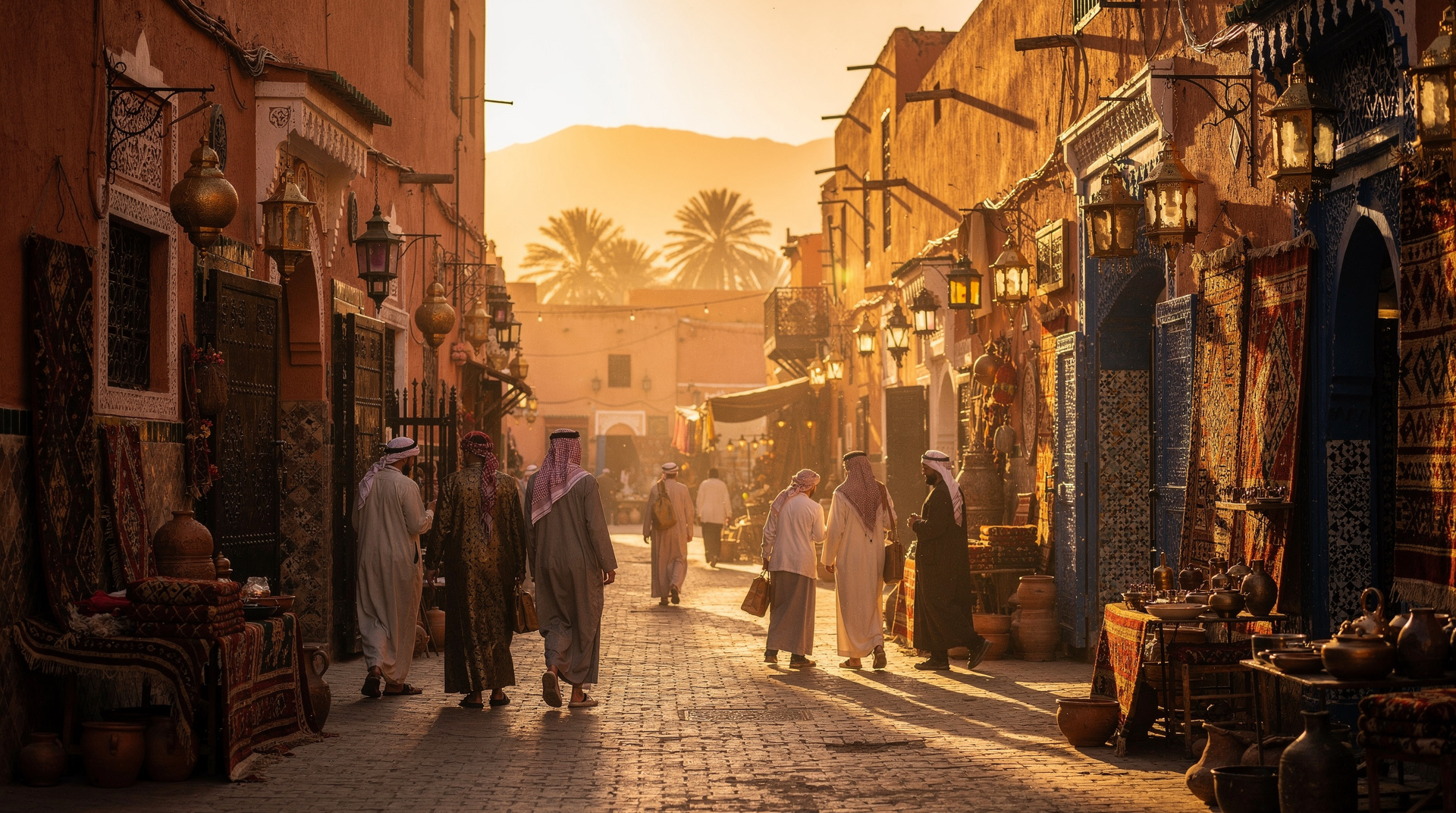
Morocco is a Muslim-majority country with social norms around dress in public spaces. Tourist compliance is not strictly required, but it meaningfully affects your experience: respectful dress reduces unwanted attention and makes interactions with local people warmer.
The practical standard:
- Shoulders covered in medinas (short sleeves are fine; tank tops and sleeveless tops attract attention)
- Knees covered in medinas and conservative areas (shorts are fine in beach resorts and the new city areas of Marrakech and Agadir)
- Chest covered — necklines that would be normal in Europe draw specific attention in medina contexts
For full context, see the what to wear in Morocco guide.
Clothing weights to choose
Morocco’s heat in summer (June-September) means you’ll want breathable, lightweight fabrics. Linen, technical travel fabrics, and cotton all work. Denim is too heavy in summer and slow to dry if caught in rain.
The core clothing list
Women
- 2-3 lightweight long-sleeved tops or shirts (linen, cotton, or technical fabric)
- 1-2 short-sleeved tops (for evenings in riad courtyards, beach areas, casual use)
- 2 pairs of lightweight trousers or convertible trousers with zip-off legs
- 1 midi-length skirt or maxi skirt (versatile for medinas and hammam contexts)
- 1 lightweight cardigan or thin jacket (for cool evenings and air-conditioned spaces)
- 1 versatile scarf or pashmina (covers shoulders in conservative areas, warmth at altitude, doubles as hammam wrap)
- Comfortable walking shoes — see footwear section
- Sandals or flip-flops (for riads, beach areas, hammam)
- Swimsuit (for riads with pools, beach destinations)
- 1 set of smart-casual clothing for nicer restaurants
- Underwear and socks for the trip duration (quick-dry versions useful)
Men
- 2-3 lightweight shirts (collared or otherwise)
- 2 pairs of lightweight trousers (for mosques, conservative areas, nicer restaurants)
- 1 pair of shorts (appropriate in beach areas, less so in medinas)
- 1 light jacket or fleece (evenings)
- Swimwear
- Walking shoes — see footwear section
- Sandals
Footwear: the most important decision
You will walk more in Morocco than you expect. Cobblestone medina streets, uneven ancient alleys, mountain paths, sand dunes — footwear makes or breaks a Morocco trip.
Medina walking: Comfortable, closed-toe walking shoes or trainers with good grip. Flip-flops and flat sandals are uncomfortable on Marrakech’s uneven medina surfaces and Fes’s steep lanes. You’ll walk 10-15km in a busy medina day.
Atlas Mountains: Proper hiking boots or trail shoes with ankle support for anything above a gentle walk. The paths around Imlil, the Toubkal approach, and the Ourika Valley require real grip. Day hikes can be done in good trail runners; multi-day Toubkal ascents need proper boots.
Sahara: Closed shoes that seal against sand for dune walking. A light pair you don’t mind filling with sand. Flip-flops for camp relaxation. Not the time for brand-new shoes.
Beach and resorts: Whatever you’d wear anywhere hot. Sandals and flip-flops are entirely appropriate in Agadir, Essaouira, and Taghazout.
Remove shoes at the entrance to mosques and many riads. Slip-on shoes simplify this.
Packing priorities by context
A quick comparison of what matters most in each setting, useful for deciding what to prioritise if you’re packing light.
| Context | Top priority | Second priority | Skip |
|---|---|---|---|
| Medina (Marrakech, Fes) | Closed grippy shoes | Modest cover (shoulders/knees) | Flip-flops for walking |
| Atlas Mountains | Layering system (base + mid + shell) | Ankle-support footwear | Cotton socks |
| Sahara | Warm layer for night | Dust buff/scarf | Open sandals for dune walking |
| Coast (Essaouira, Agadir) | Windproof layer | Sun protection | Heavy jackets |
Atlas Mountains packing additions
The High Atlas requires layering. Weather changes fast. A clear morning at 2,000m can become cold and overcast by midday.
Specific additions for Atlas travel:
- Fleece or mid-layer: Essential for any Atlas destination. Even in summer, evenings at altitude are cool.
- Waterproof outer layer: A lightweight packable rain jacket. The Atlas gets rain and occasional snow even outside winter.
- Hiking boots: If you’re planning anything beyond flat valley walks.
- Hiking socks: Wool or synthetic (not cotton — cotton blisters in wet conditions).
- Trekking poles (optional): Useful for Toubkal and sustained descents. Can sometimes be rented in Imlil.
- Warm hat and gloves: For Toubkal and winter Atlas travel specifically.
- Sun protection: UV levels at altitude are significantly higher than at sea level. Factor 50+ and reapply.
For trekking route information, the Atlas Mountains trekking guide covers what level of preparation each route requires.
Sahara desert packing additions
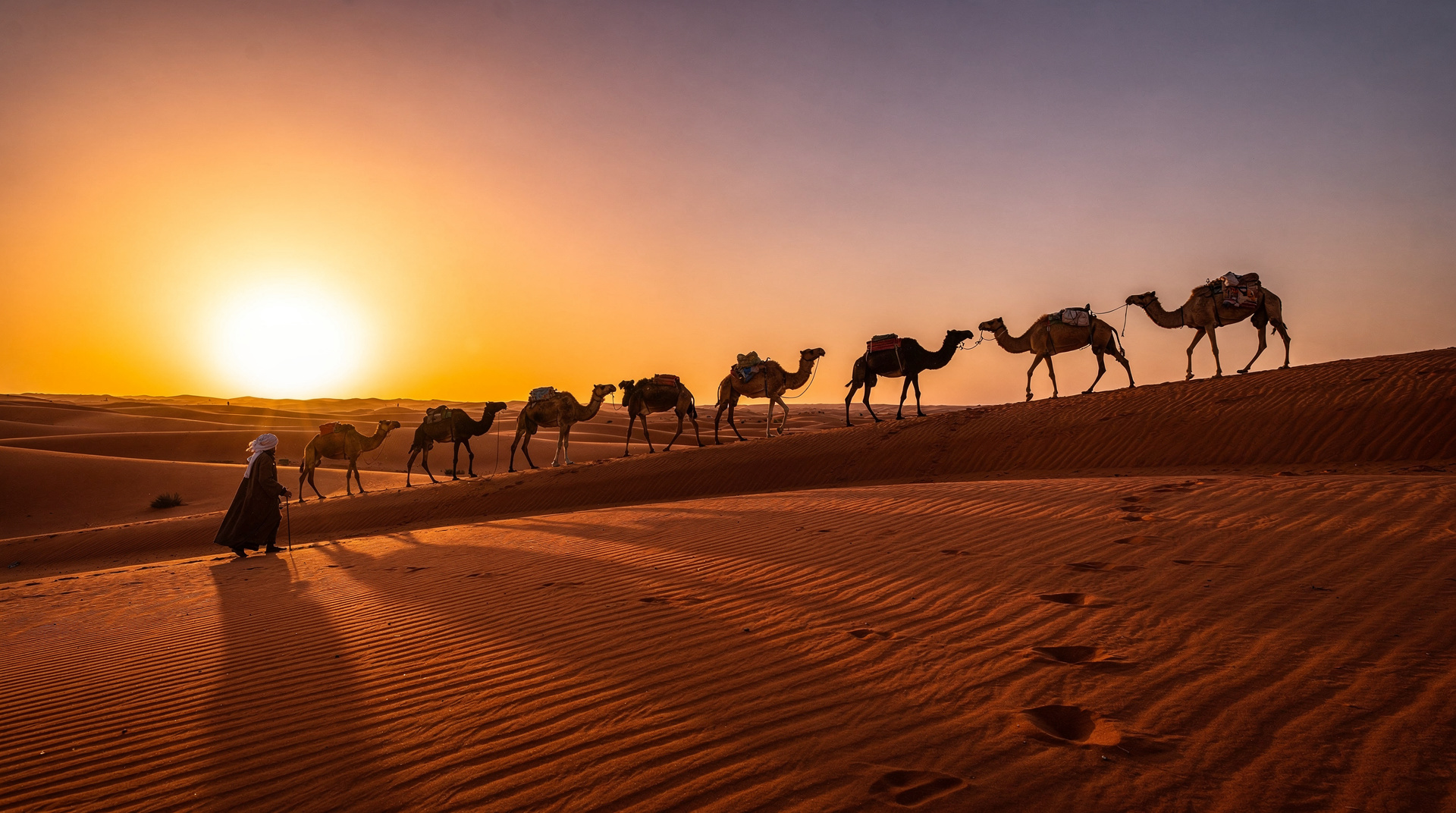
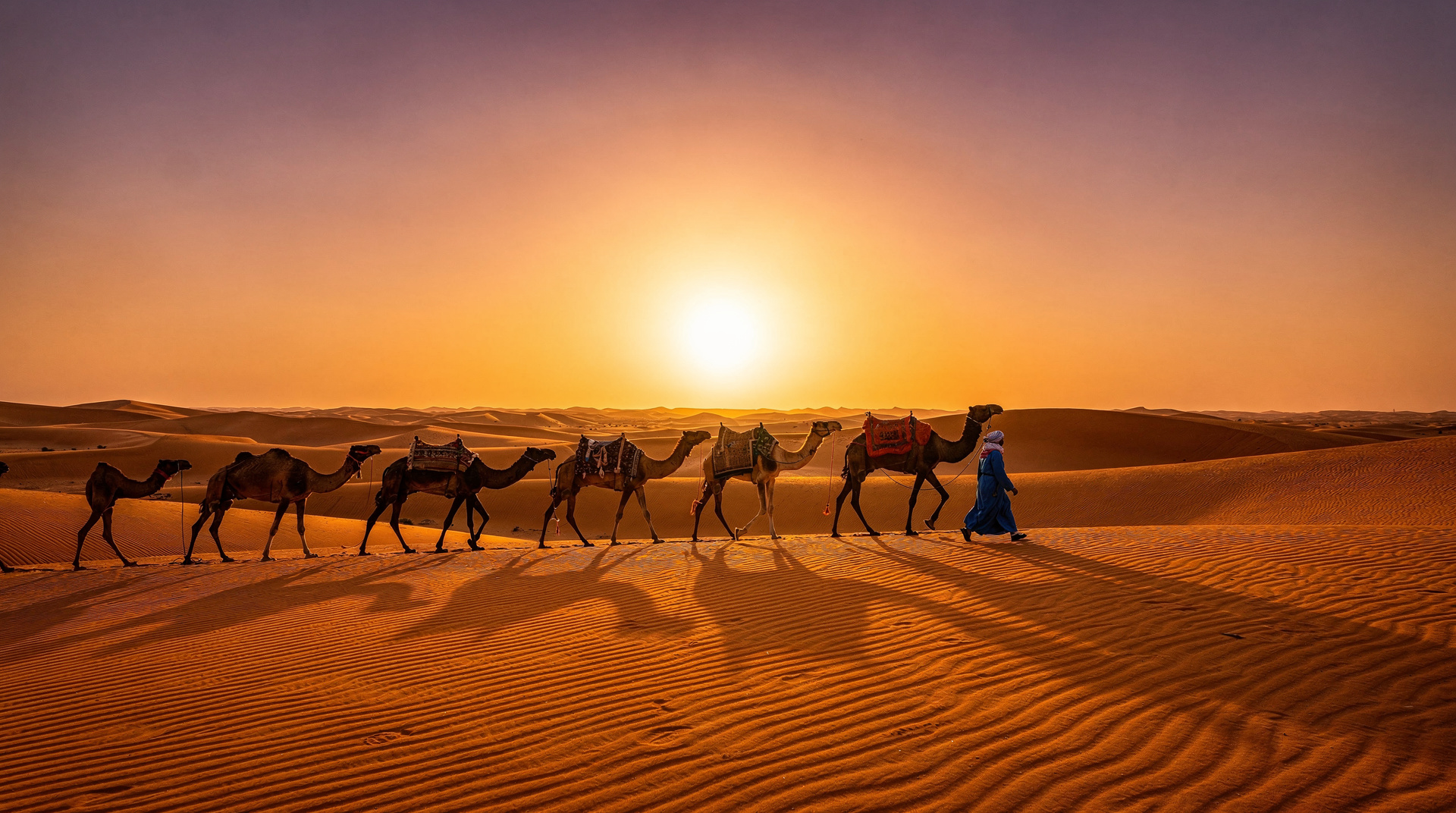
The Sahara presents opposite challenges at different times of day: blazing heat in the afternoon, surprisingly cold nights. The wind also carries very fine dust that gets into everything.
Specific additions for Sahara travel:
- Dust/sand buff or scarf: Arguably the single most useful Sahara item. A lightweight tube scarf worn around the neck can be pulled up to protect your nose and mouth during sandstorms or windy dune walks. Also useful on dusty piste roads.
- Warm layer for the night: Even in summer, desert nights drop to 10-15°C. In winter, below zero is possible. A fleece or down jacket is not optional.
- Closed shoes for dune walking: Sand gets into everything, but closed shoes prevent it from grinding against your feet during camel rides and dune climbs.
- Sunglasses with good side coverage: Wind-blown sand is harsh on eyes. Wraparound styles are better than fashion frames.
- High SPF sun protection: The desert reflects UV. 40-50 SPF minimum, applied regularly.
- Headscarf or sun hat: For shade during the peak heat hours (noon-3pm).
- Small headlamp or torch: Camp areas have limited lighting. A headlamp is essential for overnight camp stays.
- Lip balm with SPF: Desert air is dry and the sun is relentless. Lips crack quickly.
What desert camps typically provide: Bedding, basic meals, and sometimes water. Confirm what’s included when booking. Bring a water bottle to refill rather than relying on single-use plastic.
Electronics and power
Power adapter
Morocco uses Type C, E, and F plugs (the standard European two-round-pin format). The voltage is 220V/50Hz — the same as most of Europe.
- If you’re from Europe: You’re fine with your existing plugs.
- If you’re from the UK: Bring a UK-to-EU adapter (or a universal adapter).
- If you’re from the US/Canada: Bring a US-to-EU adapter AND check your device chargers support 100-240V input (most modern laptop chargers and phone chargers do — check the label).
- A universal travel adapter with USB ports is the simplest solution for mixed device charging.
Multi-port USB charger: Riads sometimes have limited plugs. A single adapter with 3-4 USB ports means one plug covers all your devices.
Other electronics
- Phone with offline maps downloaded: Non-negotiable. Google Maps Morocco offline, downloaded before departure.
- Power bank: Useful for long desert drives and day trips where charging isn’t available. A 10,000-20,000 mAh capacity covers most needs.
- Camera/mirrorless: Morocco is extraordinarily photogenic. Read the photography etiquette guide before pointing cameras at people.
- Earphones/headphones: Medina noise, bus journeys, and desert camp evenings all benefit.
For eSIM and local SIM advice, the best eSIM for Morocco guide covers all connectivity options.
Toiletries and health
What’s available in Morocco
Morocco has pharmacies in all cities and most towns, generally well-stocked with international brands and Moroccan generics. Carrefour and Marjane supermarkets carry most international toiletry brands.
What’s harder to find: Specific prescription medication (bring enough from home), familiar brand sunscreen at high SPF, and some specialty personal care products.
Recommended toiletries
- Sunscreen (Factor 40-50+) — bring from home, harder to source and more expensive locally
- Insect repellent — mosquitoes are present in warm months, particularly near water and in garden riads
- Hand sanitiser — useful at local restaurant experiences before eating street food
- Reusable water bottle — filter bottles (LifeStraw, GRAYL) mean you can refill from tap water safely, reducing plastic waste
- Basic pain relief (paracetamol, ibuprofen)
First aid essentials
Morocco’s urban pharmacies are good and pharmacists tend to be trained problem-solvers. But for remote travel (Atlas, Sahara), carry:
- Oral rehydration salts (ORS) — traveller’s diarrhoea affects a meaningful percentage of visitors; ORS is the fastest recovery tool
- Loperamide (Imodium) — for managing diarrhoea on travel days when stopping isn’t possible
- Antacids (Moroccan spices can be intense on unaccustomed stomachs)
- Antihistamines — for allergic reactions and as a general purpose tool
- Blister plasters — for medina walking days
- Broad-spectrum antibiotic (prescription) — for extended remote travel, ask your GP before departure
- Altitude medication (Diamox) — for Toubkal (4,167m) ascent specifically; requires a prescription
- Small wound dressing and antiseptic wipes
Altitude note: The Jebel Toubkal summit (4,167m) reaches altitudes where altitude sickness is genuinely possible. Acclimatise by spending a night in Imlil before ascending.
Documents and money
- Passport: Valid for at least 6 months beyond your travel dates
- Visa: Not required for EU/UK/US/Canadian/Australian citizens (90-day stamp on arrival in 2026)
- Travel insurance documents: Accessible on your phone and a printed copy
- Hotel/riad confirmation printouts: Useful if your phone dies at border control or airport
- Emergency contacts: Written on paper (not just stored on your phone)
- Small cash in MAD: The Morocco currency guide covers ATM and exchange strategy
What not to bother packing
Towels: All accommodation provides them. A travel towel is useful for budget hostels or beach days but not essential.
Guidebooks: Heavy and mostly available as apps. Rick Steves, Lonely Planet Morocco, and similar are good for research but rarely worth the luggage weight.
A hair dryer: Provided at all but the most basic guesthouses.
Morocco-specific medication you’ve seen recommended online: Normal pharmacy supplies from home cover standard travel medicine needs. Morocco pharmacies handle the rest.
Fancy clothes: Morocco’s nicer restaurants are smart-casual at most. You don’t need formal wear.
Packing by season
Spring (March-May) and Autumn (September-November)
The best seasons for Morocco generally. Pack:
- A mix of light clothing and one or two warm layers
- Packable rain jacket (spring particularly has occasional showers)
- Layers for the Atlas (can be genuinely cold in March)
Summer (June-August)
The hottest months. Marrakech and the south reach 38-42°C in July and August. Pack:
- Maximum breathable lightweight clothing
- Minimal heavy fabrics
- Sunscreen in quantity
- Extra water bottle capacity
- Note that the Atlas and north (Chefchaouen) are significantly cooler
Winter (December-February)
Marrakech and coastal areas are mild (15-20°C days). The Atlas gets snow. The Sahara nights are very cold.
- Pack proper warm layers for Atlas and Sahara nights
- Light jacket for daytime in cities
- Layering system more important than in any other season
For seasonal travel planning including Ramadan timing, the best time to visit Morocco guide and Ramadan travel guide are the reference points.
Once the packing is done, it’s worth having at least one experience pre-booked before you land — the Marrakech Menara private airport transfer removes first-arrival logistics entirely, and a 3-day Sahara tour to Merzouga is worth booking early since desert camps fill up in peak season.
Frequently asked questions about Morocco Packing List
Do I need different packing lists for winter and summer?
Yes, meaningfully. The core context items here (medina, Atlas, Sahara) stay constant, but the specific fabrics, layer count, and night-time warm gear change a great deal between seasons. The Morocco packing list: winter vs summer guide covers the season-by-season detail this page doesn’t.
How many days of clothes should I actually pack?
Most travellers overpack. For a 10-14 day trip, 4-5 days of clothing plus laundry (most riads and guesthouses offer it cheaply, or you can hand-wash quick-dry items) is enough. Pack for the most demanding single day — a Sahara overnight or an Atlas trek — and repeat everyday items.