Marrakech Bachelorette Weekend: 4-Day Hen Trip Guide
Is Marrakech good for a bachelorette weekend?
Excellent for hen weekends — direct flights from major European hubs, private riads from €60-150/night per person (sleeps 6-10), iconic shared experiences (hammam, cooking class, sunset camel ride in Agafay, rooftop dinner). Plan 3-4 days. Avoid Ramadan for evening drinks/parties.
Why Marrakech beats Lisbon, Mykonos, and Ibiza for a hen weekend
Let’s be honest: Lisbon is wonderful but it’s been done to death. Mykonos costs a fortune and peaks in August crowds. Ibiza is great if you want to spend four days in a queue for a club. Marrakech offers something none of them can match — the sensation of landing somewhere genuinely different, exotic, and photogenic, while remaining a short-haul flight from virtually every European city.
The numbers work out well for groups. A private riad sleeping eight to ten people costs the same as booking a block of hotel rooms in Santorini, except you get a tiled courtyard, a rooftop terrace, and a full-time staff who can arrange everything from hammam bookings to camel rides in the desert. The shared experiences — cooking class, medina walk, sunset at Agafay, traditional hammam — are designed for groups and feel genuinely memorable rather than just a day at a beach bar. And the shopping is exceptional: kaftans, handmade jewellery, leather bags, argan oil, and hammered lanterns that actually make it home in one piece.
A few things to understand before booking: Marrakech is a Muslim city and the medina is a working neighbourhood, not a resort. That means some basic cultural awareness goes a long way — covered shoulders and knees in the souks, keeping the loudest celebrations for the riad terrace rather than the street. None of this limits the fun; it just channels it into the right places.
At a glance
| Where | Marrakech medina, private riad accommodation for the group |
| Cost | Roughly €550-885/person mid-range for 4 days, €1,100-1,600 luxury |
| Time needed | 3-4 days is the sweet spot; less feels rushed for the group activities |
| Getting there | Direct flights from most major European hubs to Menara Airport (RAK) |
| Best time | March-May or September-November; avoid Ramadan and peak summer heat |
Best time to go
Ideal months: March to May, September to November. Temperatures are warm but not brutal — 22–28°C in spring, 25–30°C in autumn. October is the sweet spot: clear skies, no summer haze, comfortable evenings on rooftops.
Avoid July and August unless your group genuinely enjoys 40°C heat. Hammam sessions become less appealing when you’re already sweating. Outdoor dinners at Agafay feel punishing rather than magical.
Ramadan: approach with care. The date shifts each year (check the Islamic calendar). During Ramadan, many restaurants open late, most bars close or operate reduced hours, and alcohol is harder to find. The medina atmosphere is unique and beautiful, but it’s not the right backdrop for a celebration that involves evening cocktails and nightlife. If the dates overlap, reschedule.
December to February is cool (10–15°C at night), calm, and budget-friendly. The Agafay desert is atmospheric in winter light, and hammams feel absolutely perfect in the cold. It works well for groups that aren’t chasing warmth — just the experience.
Group accommodation: private riad vs splitting hotel rooms
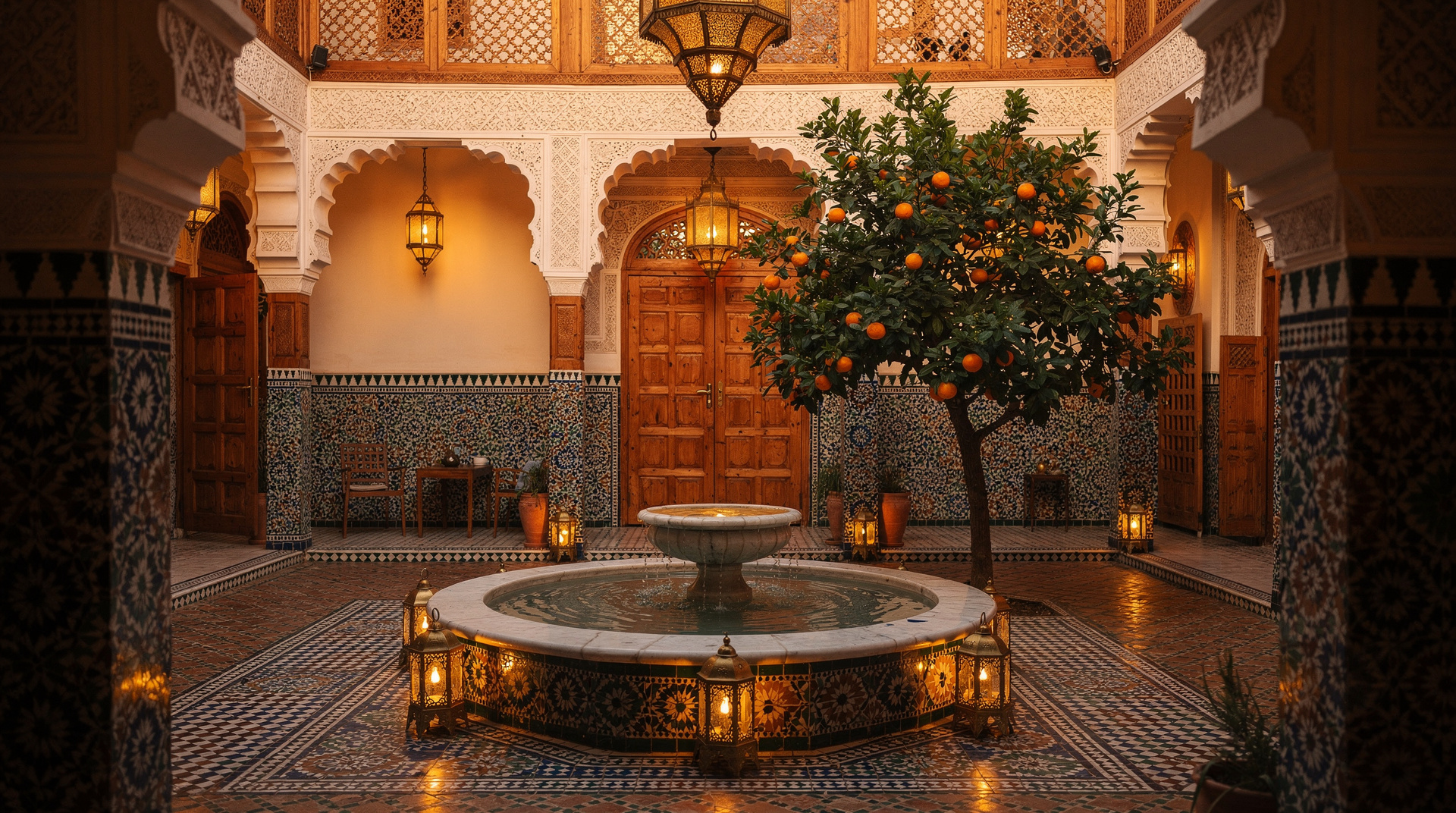
For a bachelorette group of 6–10 people, booking an entire private riad is far better than taking individual hotel rooms. You get a communal space — usually a tiled central courtyard with a fountain, a rooftop terrace for morning coffee and evening drinks, and often a small pool. The riad’s staff cook breakfast, can arrange evening meals, and handle logistics. There is no lobby with strangers watching you carry in sashes and decorations.
Mid-range tier (€800–1,400/night for the whole riad, sleeps 8–10): Riads like Riad Dar Zitoun, Riad Dar Attajmil, and Riad Jnane Iminane offer 4–5 rooms with traditional tilework, good air conditioning, and attentive service. That works out to €80–150 per person per night — competitive with three-star hotel rooms in most European cities.
Luxury tier (€1,500–3,000+/night, sleeps 8–12): Properties like Riad El Fenn, Riad Kniza, and Riad BE Marrakech have plunge pools, curated décor, rooftop bars, and concierge-level support. At this tier you are genuinely comparing favourably to a group villa in Ibiza or the Algarve, except you get a more interesting experience. Per-person cost for a luxury riad with 10 guests runs €150–300/night.
What to avoid: Any riad advertised as “sleeps 10” where the rooms are on four different floors with no communal space. The courtyard is the point. If the listing photos don’t show a proper central courtyard, look elsewhere. Also check the neighbourhood — the northern medina around Bab Doukkala and the Kasbah area near Bab Agnaou are both easier to navigate than the deep southern medina, especially for a large group arriving with luggage.
For a full overview of which specific riads are worth booking at each price point, see the best riads in Marrakech guide.
4-day plan
Day 1 — Arrival, orientation, rooftop dinner
Land at Menara Airport (RAK), clear customs, and get picked up in a private minivan. For a group of 8–10, a pre-booked private transfer is essential — taxis outside the airport are metered but small, and getting a large group into the medina in multiple vehicles adds confusion. Book in advance:
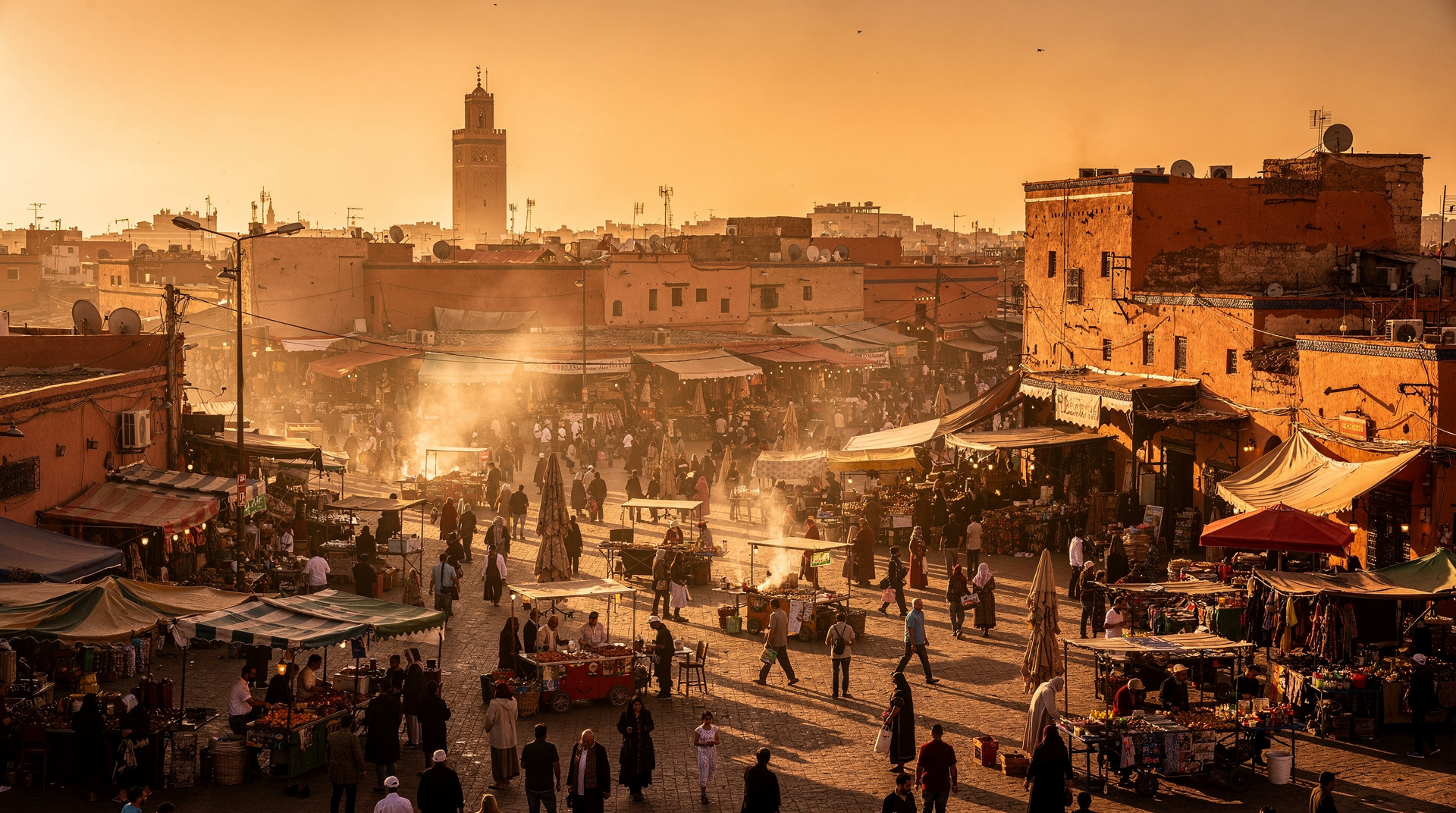
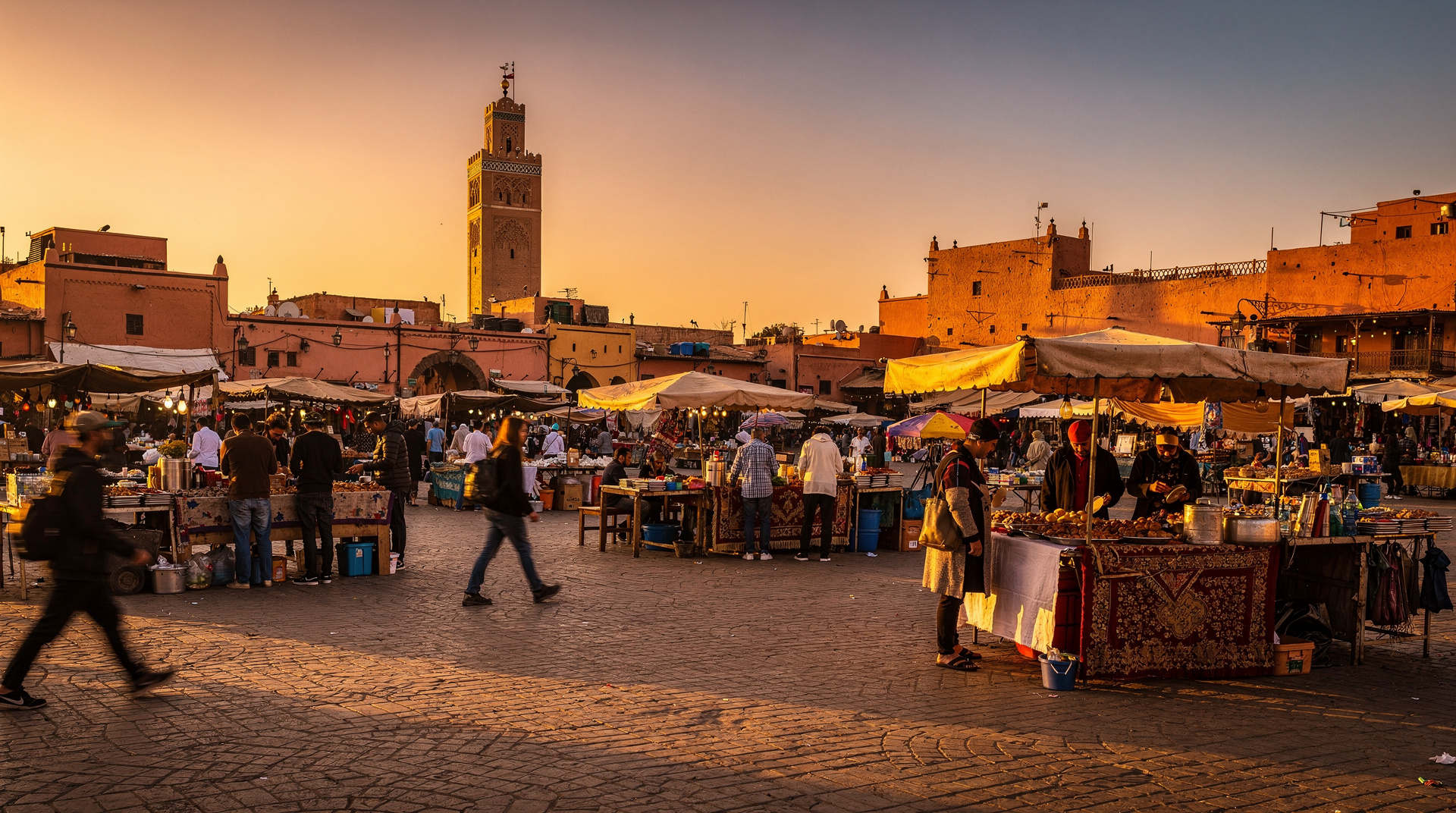
Private airport transfer → Marrakech medina riadCheck in, freshen up, and resist the urge to immediately dive into the souks — you’ll appreciate the medina far more with a guide the next morning than as jet-lagged first-timers at dusk. Instead, do the rooftop route on day one. Naranj, Nomad, and Café de France all have rooftop terraces overlooking Jemaa El-Fna square with views of the minaret. Café Kessabine on Rue des Ksour and the terrace at Le Jardin are both quieter and elegant. For a full group dinner with service and wine, La Famille (vegetarian, garden setting, no alcohol but excellent food) and Dar Yacout (classic Moroccan palace experience, pre-booking essential) are both within medina walking distance. Alcohol is available at Dar Yacout and at most riad restaurants.
Day 2 — Hammam morning, souks afternoon, cooking class evening
The traditional structure for this day is: hammam at 9 or 10am, souks in the afternoon heat, cooking class starting around 5pm.
The hammam should be pre-booked as a group block. Most hammams do private group slots. See the full hammam section below for which ones are worth it. After the hammam, you’ll be clean, relaxed, and in the mood to spend money — which makes the souks timing exactly right.
In the late afternoon, the group cooking class is the social highlight of the trip for most hen groups. Cooking classes in Marrakech run from casual market-and-cook sessions to full afternoon workshops at established schools. La Maison Arabe runs the most polished version — proper kitchen, proper instruction, the recipes actually work when you make them at home:
Moroccan cooking workshop at La Maison ArabeFor a slightly more intimate version that includes a market visit and has a slightly lower price point:
Traditional Moroccan cooking class with market visitBoth experiences last 3–4 hours and typically include the meal you cooked as dinner, so you end up fed and with bragging rights.
Day 3 — Agafay desert sunset + rooftop bar
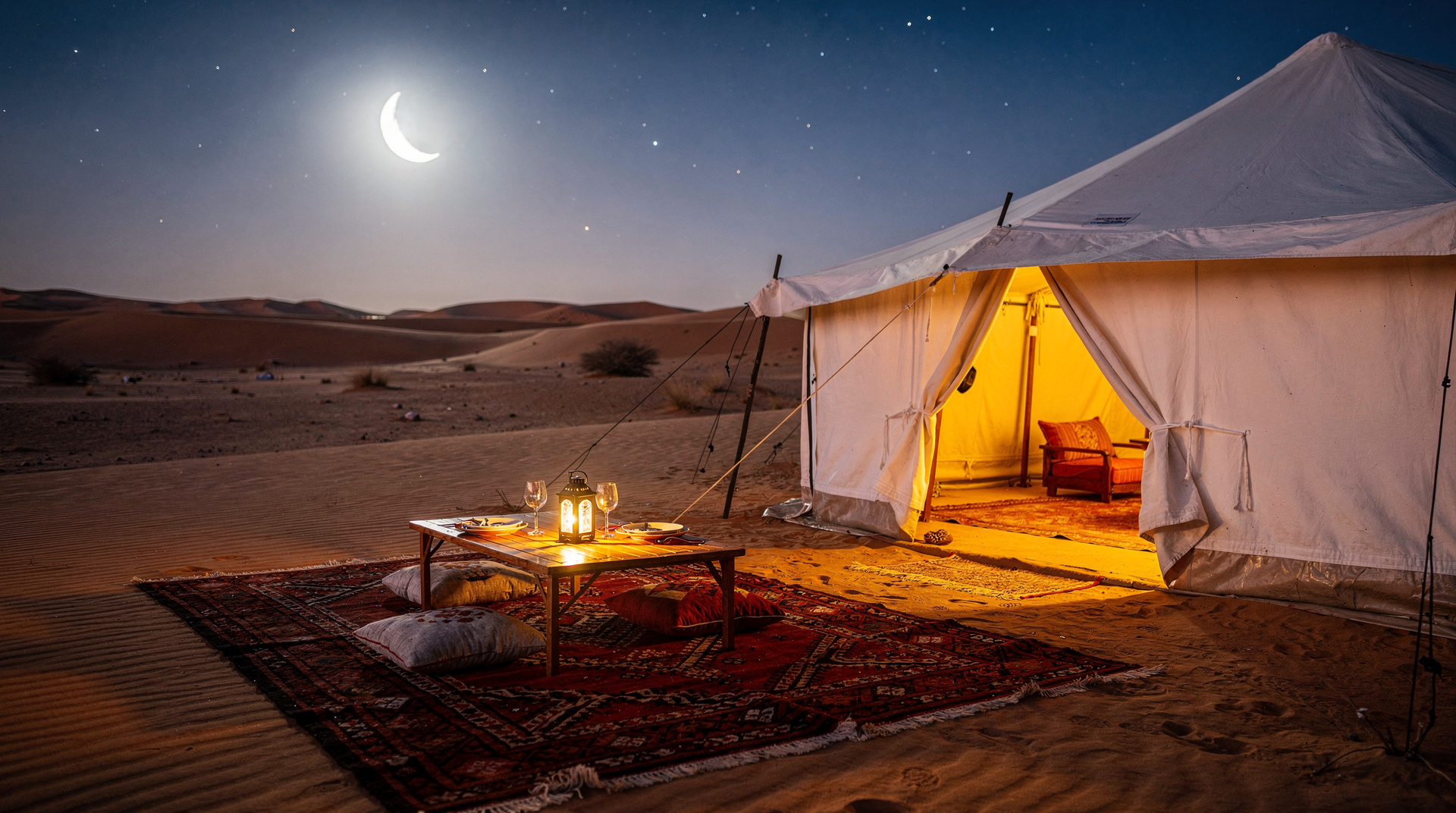
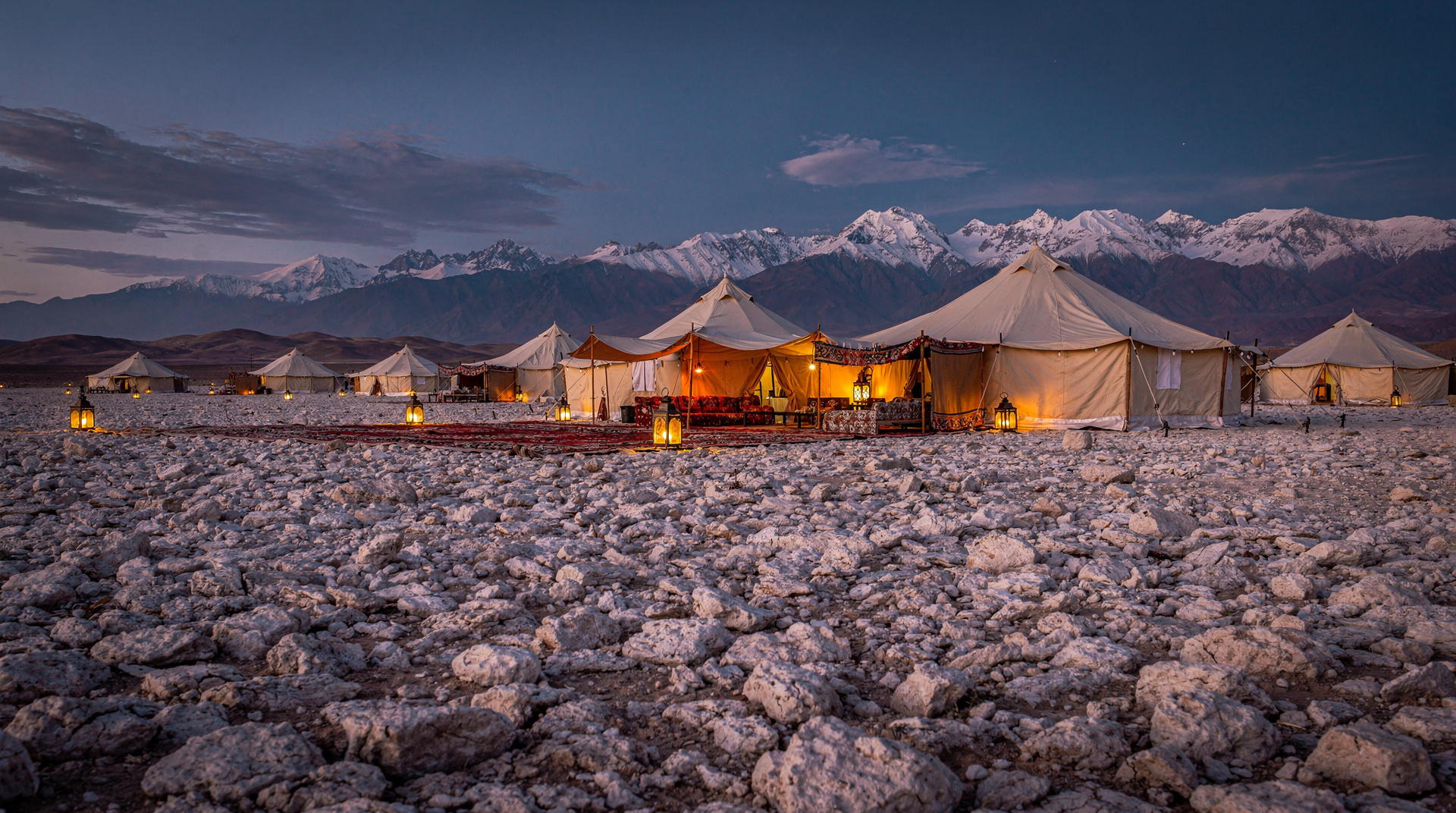
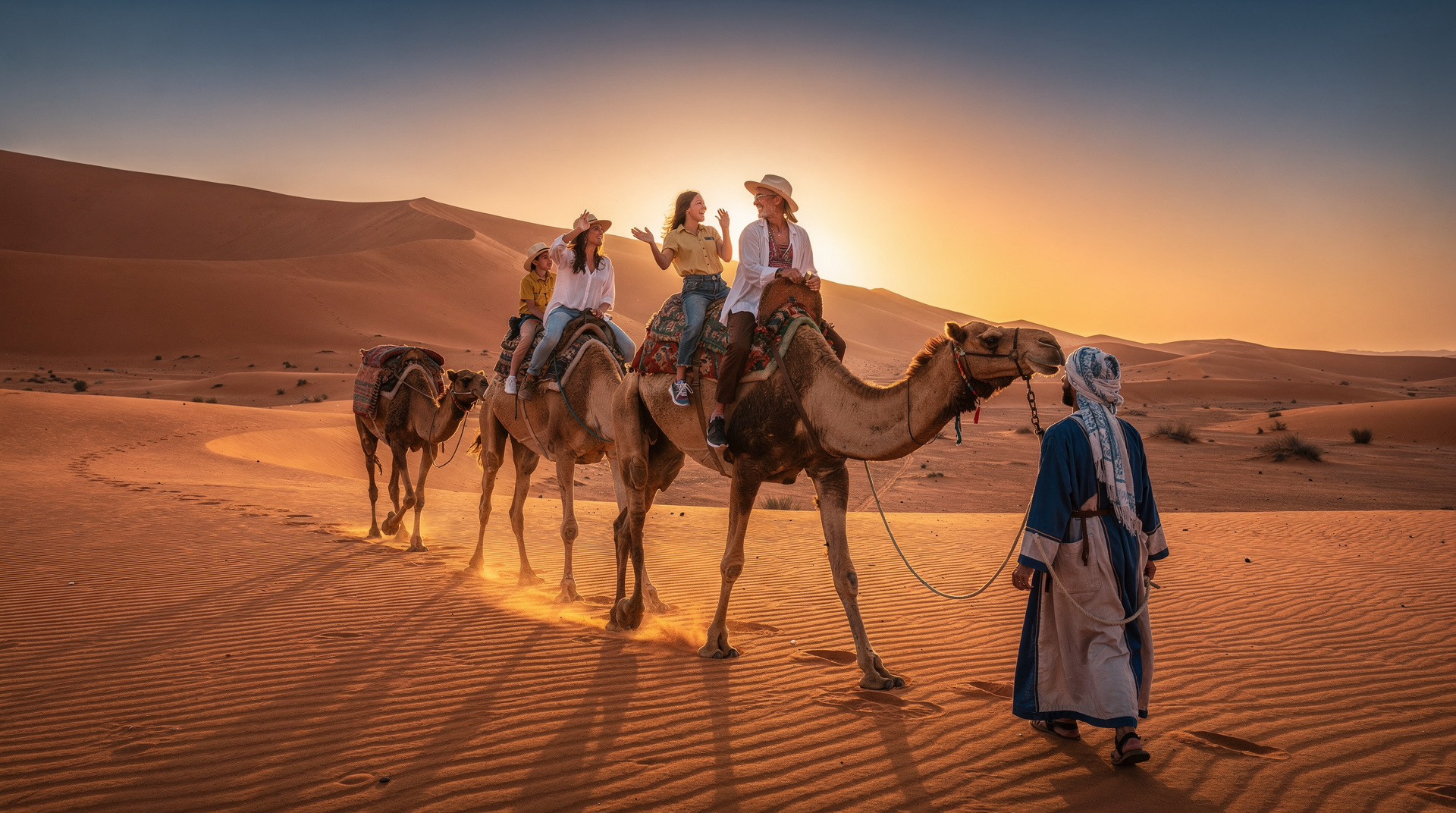
This is the day that generates the photos. Agafay is a rocky desert plateau 30km south of Marrakech — close enough for an easy afternoon excursion, dramatic enough to feel like a proper adventure. The combination of camel ride at golden hour and dinner under the stars with live Gnawa music is the most-photographed hen weekend experience in Morocco, and for good reason.
Book the sunset camel ride and dinner package as a group — most operators can accommodate 8–12 people on a private table:
Agafay desert: sunset camel ride + dinner under the starsFor groups that want more activity before the sunset, the quad and camel combination with dinner show covers more ground:
Agafay desert: quad bikes + camel ride + dinner showGet back to Marrakech by 11pm and head to the rooftop bar scene. Sky Bar at the Ksar Char-Bagh, the terrace at Hotel Es Saadi, and the rooftop at 68 Derb el Ferrane are all worth knowing. The Fellah Hotel outside the medina has a legitimate club night on weekends. None of these are equivalent to Ibiza, but they’re relaxed, festive, and serve cocktails until late.
See the Agafay destination guide and the full Agafay desert day trip guide for more context on what to expect.
Day 4 — Spa morning, medina brunch, departure
Keep day 4 light. A spa treatment at one of Marrakech’s upscale day spas works well for a slow morning before afternoon flights. The luxury spas in Marrakech guide covers the full range, but for a group spa morning, Les Bains de Marrakech (Kasbah area, easy to find, consistently excellent) and Royal Mansour Spa (expensive, but worth it as a splurge experience) both offer group bookings with multiple treatment rooms.
For brunch, Café des Épices on the Rahba Kedima spice square is atmospheric and easy to find. Nomad on Derb Aarjan does excellent food in a clean modern space. Both open by 9am.
If flights are late afternoon, use the morning for last-minute souk shopping — see the souks section below for what’s worth buying and where to find it.
Hammam and spa — what to book, what to skip
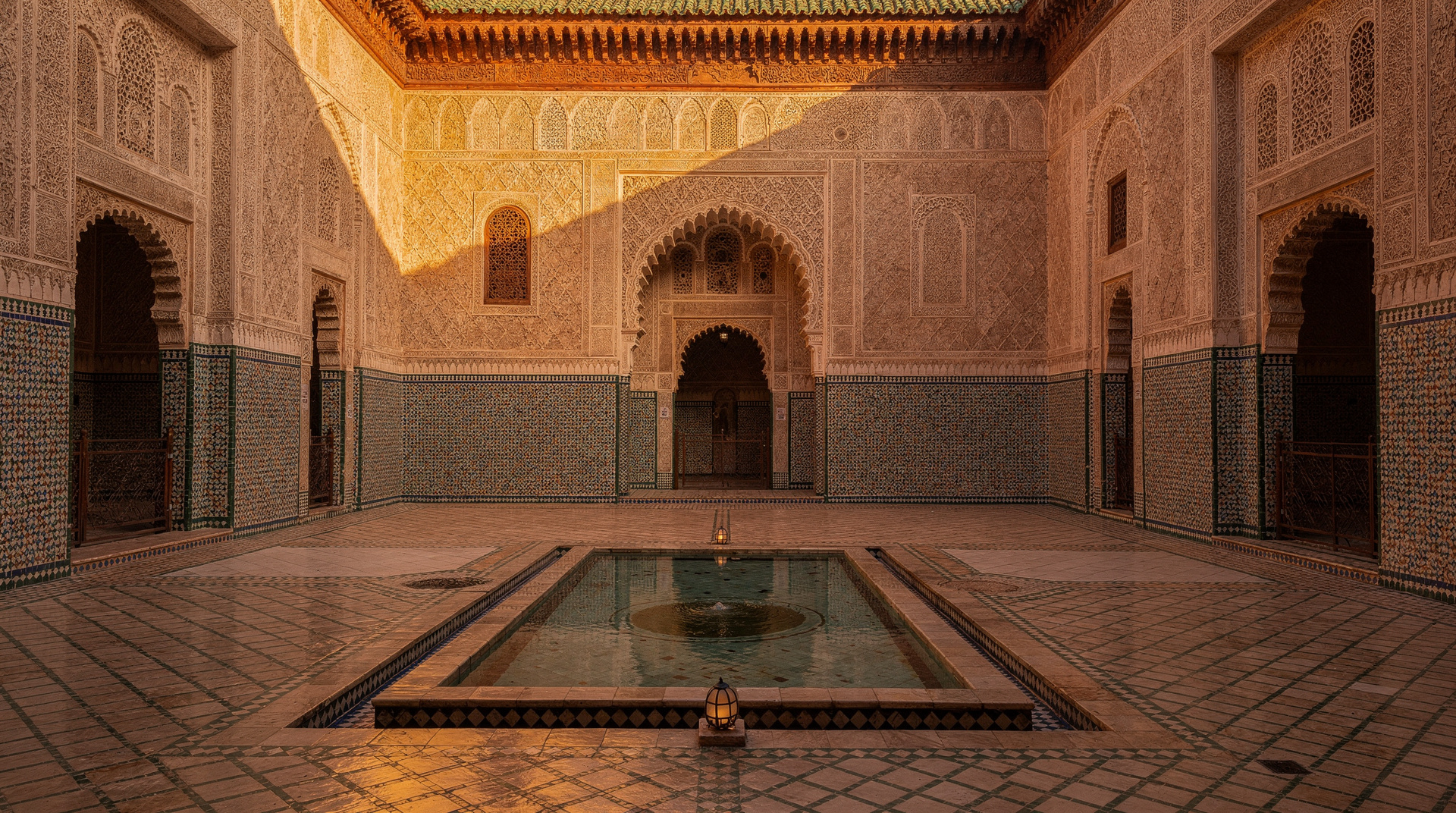
A traditional hammam visit is non-negotiable for a hen weekend in Marrakech. The experience — steam room, black soap scrub, full-body exfoliation (kessa glove), and optional massage — takes about 90 minutes to two hours and costs far less than equivalent spa treatments in Europe.
For a group, the hammam experience with hotel transfer and optional massage is the most convenient format:
3-hour traditional hammam + massage with hotel transferFor those who want the full classical hammam experience:
Best traditional Moroccan hammam and spa experienceA few practical notes for groups: book the entire hammam for a private slot if your group is 6 or more — most mid-range hammams can accommodate this for around MAD 300–500 per person including scrub and black soap (€27–45). The kessa scrub is not gentle — it removes dead skin vigorously and leaves you feeling genuinely polished. Anyone with sensitive skin should flag this when booking. Do not eat a heavy meal immediately before.
What to skip: The cheap neighbourhood hammams (€5–8 per person) are authentic but not the right setting for a group that wants the full experience with changing rooms, clean towels, and an English-speaking attendant. They’re worth doing individually on future trips, but for a hen weekend, go mid-range minimum.
The full guide to hammam etiquette in Morocco covers exactly what to expect, what to bring, and what the black soap scrub actually involves.
Souks shopping — kaftans, matching outfits, gifts
The souks are at their best between 10am and 1pm, before the main tour groups arrive. For a hen group, the shopping focus tends to be: kaftans or matching outfits, jewellery, argan oil and beauty products, leather bags, lanterns and homewares.
Kaftans and matching outfits: The souk area around Rue Mouassine and the Rahba Kedima square has the highest concentration of kaftan shops. Prices range from MAD 150 (€13) for a basic cotton kaftan to MAD 800–1,500 (€70–135) for hand-embroidered silk. Bargaining is expected — start at roughly 40% of the first asking price for textiles and work up. A matching set of kaftans for the entire group makes for excellent photos and is genuinely affordable here.
For the bride: The souk around Bab Mellah (Jewish quarter edge) has the best selection of bridal kaftans and traditional accessories. Some shops will do same-day alterations for simple adjustments.
Beauty products: Fixed-price argan oil cooperatives have proliferated in Marrakech — look for ones affiliated with a women’s cooperative (marked on the storefront) for the genuine product at a fair price. Avoid the shops on the main tourist drag off Jemaa El-Fna where everything is overpriced.
Bags and leather: The tannery area in Bab Debbagh produces most of Morocco’s leather goods. You’ll find better prices and less pressure in the medina souk streets around Derb Dabachi than in the tourist-facing shops near the square.
See the full Marrakech souks guide for neighbourhood-by-neighbourhood breakdown and bargaining tactics.
Cooking class with the whole group
A Moroccan cooking class is one of the best group activities available anywhere in Morocco. The format — market walk, ingredient selection, guided cooking, shared meal — works naturally as a group activity in a way that a walking tour or museum visit does not. Everyone has a task, the kitchen is social, and the end result is a meal you’re proud of.
La Maison Arabe’s cooking school is the most polished option and accepts groups up to 12. The session covers tagine, couscous, or pastilla depending on the day, with proper instruction in a traditional kitchen. It runs for roughly four hours and includes the meal.
For a slightly more off-the-beaten-path version, several independent Marrakchi cooks run smaller class formats in their own homes through booking platforms — these are less polished but more intimate and authentic. The Marrakech cooking classes guide covers both ends of the spectrum.
Agafay desert — the “wow” moment of the trip
The Agafay plateau is the answer to “is there a desert experience near Marrakech?” Yes — and it takes 40 minutes to reach rather than 10 hours. It is not the Saharan sand dunes of Merzouga, but it is genuinely beautiful: a flat rocky hammada ringed by the Atlas Mountains to the south, turning amber and pink at sunset.
The golden hour combination of camel ride, desert light, and a Berber tent dinner with musicians is the single most memorable experience a hen group can book in Marrakech. Most operators pick up at the riad, transfer the group to the desert, run the camel experience (30–45 minutes), then seat everyone for dinner as the sun goes down.
For the full picture on what the Agafay experience involves, read the Agafay desert day trip guide.
Premium option — hot-air balloon: For groups that want to start day 3 with something spectacular before the Agafay evening, a dawn hot-air balloon flight over the Atlas Mountains is an extraordinary experience. It launches before sunrise, drifts for about an hour over the palm groves and red earth south of Marrakech, and lands with a Berber breakfast:
Hot-air balloon over Marrakech with Atlas views and Berber breakfastThis is not cheap (€120–150 per person) but it is a genuinely once-in-a-lifetime experience that works superbly as the hen weekend’s premium activity. Read the hot-air balloon Marrakech guide for booking tips and what to expect.
Rooftop bars and evening venues
Marrakech’s nightlife is less concentrated than a European party city, but the rooftop bar scene is genuinely excellent. The key venues:
Nomad Rooftop (Derb Aarjan, medina): Clean, modern design, good cocktails, overlooks the spice square. Opens for lunch through late evening. Easy to find for groups.
Café des Épices (Rahba Kedima): Less polished but authentic, with medina views and a relaxed atmosphere. Good for the late afternoon before dinner.
Kabana (Rue el Ksour): Specifically positioned as a rooftop bar with music and cocktails. Popular with European visitors. Mixed reviews for service but the view is excellent.
Sky Bar at Es Saadi Hotel (Hivernage): Outside the medina in the hotel district. More polished, higher prices, accessible by taxi. This is the closest thing Marrakech has to a conventional lounge bar experience.
Barometre (Rue Mouassine): Small wine bar inside the medina, European-style, good wine selection. Works well for a quieter pre-dinner drink.
For late-night dancing: The Fellah Hotel (15 minutes outside the medina by taxi) runs the most credible late-night venue in Marrakech. Expect DJs, a pool area, and a relatively international crowd. Book table reservations in advance for groups.
Outfit etiquette in Morocco
This section exists because it comes up in every hen party planning forum and the answer is simpler than the anxiety around it suggests.
In your private riad: Wear whatever you want. The riad is private space. Party outfits, bachelorette sashes, matching swimwear by the pool, the lot — completely fine.
On rooftop terraces of restaurants and bars: Smart-casual is appropriate. What you’d wear to a nice bar in London or Paris is fine. Very revealing outfits attract unwanted attention in the medina area; the rooftop terraces are less exposed.
In the medina and souks: Covered shoulders and knees is strongly recommended — not because you’ll be arrested, but because you’ll have a genuinely better experience. Marrakchi shopkeepers and guides respond to visitors who show basic cultural respect, and the practical effect is less hassle and more normal interaction. Loose linen trousers and a light shirt over a vest works for the souks in any season. Keep bachelorette accessories (sashes, tiaras) for the riad.
At Agafay and outdoor experiences: Casual and comfortable. The camel ride gets dusty — wear clothes you don’t mind getting a layer of red dust on. Loose cotton is better than synthetics in any heat.
Budget breakdown per person (4 days)
Mid-range group (riad hire + experiences)
| Item | Cost per person |
|---|---|
| Riad (4 nights, mid-range, shared 8 people) | €130–200 |
| Flights (EU short-haul return) | €80–180 |
| Airport transfer (private minivan both ways) | €20–30 |
| Hammam + massage | €40–55 |
| Cooking class | €55–70 |
| Agafay sunset + dinner | €65–80 |
| Rooftop dinners x 2 | €60–90 |
| Souks shopping budget | €80–150 |
| Breakfasts (riad included x2, café x2) | €20–30 |
| Estimated total | €550–885 |
Luxury group (premium riad + hot-air balloon)
Add: premium riad surcharge €100–200, hot-air balloon €130–150, spa day at Royal Mansour €120–180, final dinner at Dar Yacout or La Mamounia restaurant €90–130. Estimated total per person: €1,100–1,600, which still compares favourably to a luxury Ibiza or Mykonos weekend.
Group logistics
Airport transfers: Always pre-book for groups of 6 or more. The transfer from Menara Airport to the medina takes 15–20 minutes by road — close, but taxis outside the airport are small and the approach to the medina’s gates involves narrow streets that minivans navigate better than a fleet of individual cabs.
Getting around the medina: Walk. The medina streets are narrow and cars cannot reach most riad entrances. Your riad will give you a map with GPS coordinates for the nearest vehicle drop-off point — this is normal and universal. Allow 10–15 minutes to walk from the drop-off to any riad in the old city.
Getting to Agafay and other day trips: Most tour operators include group transfers. If booking independently, a private minivan from the riad handles this well. Agree the price in advance with the driver and confirm it covers both directions.
Keeping the group together: Designate one person as logistics coordinator who has all booking confirmations and the riad address in Arabic (the riad will provide this as an image you can show taxi drivers). Group WhatsApp for real-time coordination is obvious but worth mentioning.
Money: Moroccan dirham (MAD). Most souks are cash-only. Restaurants and tour operators increasingly accept cards but it is unreliable — budget to have MAD 500–1,000 cash per person at any given time. ATMs are available around Jemaa El-Fna and on Mohammed V Avenue outside the medina. Airport exchange rates are poor; use an ATM on arrival instead.
Frequently asked questions about Marrakech Bachelorette Weekend
Can we wear bachelorette sashes in the medina?
You can, but be prepared for them to generate significant attention — mostly friendly and curious, sometimes persistent. The medina is a working neighbourhood, not a resort. Sashes and tiaras are fine for the riad, the rooftop terraces, and evening venues. For the souks and hammam, most groups find it’s more relaxed to save the accessories for the private spaces. There is no rule against them; it’s just a practical quality-of-experience question.
Are bachelorette decorations allowed in the riad?
Yes, with advance notice to the riad. Most riads are happy to help decorate a room or set up the terrace for the occasion — some do this as a paid extra (MAD 300–600, around €27–55), others do it as a goodwill gesture. Let them know at the time of booking. Balloons, banners, flower petals — all standard requests. Candles are often restricted for fire safety, so check in advance.
What is the best riad for a group of 8 women?
A private riad with at least 4 bedrooms, a central courtyard with a fountain or small pool, and a rooftop terrace. For mid-range, Riad Dar Zitoun and Riad Dar Attajmil both hit this spec reliably. For luxury, Riad El Fenn has 28 rooms and a genuine pool — it doesn’t do exclusive hire, but 4–5 rooms here gives you a private cluster. If you want the entire property, use a specialist riad-rental agency (Riad Rental and Hip Marrakech both handle exclusive hire). Always confirm that the listed capacity includes actual double rooms, not sofa beds or mezzanines.
Which hammam is best for a group?
For a curated group experience in English with private slots, the hammam experiences bookable through GYG with hotel transfer are the most convenient.
For standalone hammams with good private booking options: Hammam de la Rose (Rue de la Kasbah, central, clean, English-speaking staff), Hammam Bab Doukkala (more traditional, less tourist-oriented but excellent), and Les Bains de Marrakech for a hybrid hammam-spa approach. Avoid the neighbourhood hammams listed as “public” on Google Maps — these are single-sex community facilities not set up for tourist groups.
Can we drink alcohol in Marrakech?
Yes, though Morocco is a Muslim country and alcohol is not sold everywhere. Alcohol is available in licensed restaurants, hotel bars, rooftop venues aimed at tourists, and via your riad’s bar if they have one. Supermarkets in the Guéliz (Ville Nouvelle) neighbourhood — specifically Marjane and Carrefour — sell wine and beer. The medina itself has very few off-licences. The practical takeaway: you can drink normally in the right venues, but you won’t find a corner shop selling beer outside the new town. For the evening in your riad, stock up at Carrefour Guéliz on arrival day. Outside Ramadan, this is straightforward.
Is Marrakech safe for a group of women travelling without men?
Yes. Marrakech sees several million tourists annually and is well-used to international groups of women travelling independently. Jemaa El-Fna can feel intense after dark — touts, horse-drawn carriages, and persistent attention from some vendors. Walk with purpose, make clear and polite refusals if needed, and stay on lit streets. With a guide for the first medina day (recommended anyway), you learn the layout quickly and the navigation becomes easy.
Solo women travelling in the medina late at night should be more cautious, but a group of 6–10 women is a very different situation — you’re unlikely to experience anything worse than mild over-enthusiasm from vendors. The Marrakech destination guide covers safety and practical orientation in more detail.
Should we extend the trip beyond Marrakech?
Only if you have 6+ days. A day trip to Essaouira works well for a group that wants a beach and seafood day mid-trip, and a few groups add an extra night there for a change of pace from the medina. Trying to combine Marrakech with Fes or the Sahara on a 4-day hen trip spreads the group too thin — better to keep the celebration concentrated in one city and save the wider Morocco circuit for a future trip. The 7-day itinerary shows what a longer version of the trip could look like.