Halal-Family Morocco Travel Guide: Where to Stay, Eat & Explore
Is Morocco halal-friendly for Muslim families?
Yes — Morocco is one of the most halal-friendly destinations globally. 99% of restaurants are halal by default, mosques are everywhere, most riads have prayer mats and qibla direction, and many are alcohol-free. Friday afternoon affects some opening hours. Family experiences (cooking, hammam, desert) are abundant.
At a glance
| Halal food availability | Default everywhere except a minority of international hotel venues |
| Alcohol-free riads | Common — ask directly at booking, or see the curated list below |
| Prayer facilities | Provided on request at most traditional riads |
| Best first city | Marrakech, for logistics and accommodation range |
| Best time | Year-round; Ramadan and Friday rhythms both covered below |
Morocco: the Muslim family’s natural home away from home
For Muslim families, planning a holiday often means a long checklist before you even book a flight — halal restaurants, prayer facilities, modest dress norms, alcohol-free accommodation, and child-friendly pacing. Morocco collapses that checklist almost entirely. The country is 99% Muslim, which means halal food is the default, the call to prayer marks your day, and cultural expectations around family and modesty already match your own.
This guide is written specifically for families from the UK, Gulf states, Indonesia, Malaysia, and other Muslim-majority contexts who want to travel Morocco with confidence rather than constant improvisation. It covers food, accommodation, prayer, city-by-city highlights, and the best family experiences — all from a halal-first perspective.
See also our broader family travel Morocco guide and the detailed Morocco with kids guide for non-halal-specific practical advice.
The halal food landscape — what to expect (and what to watch for)
The default: halal everywhere
In Morocco’s medinas, souks, local restaurants, street stalls, and family-run riads, halal is simply the norm. There is no halal certification system because it is not needed — slaughter follows Islamic practice by default. You will not find a supermarket meat section labelled “halal” because all meat is halal. The concept of searching for halal options the way you might in London or Paris does not apply in a Marrakech souk or a Fes riad.
Street food is safe and excellent: msemen (layered flatbread), harira (tomato-lentil soup), merguez, kefta brochettes, bstilla, tagines. All halal.
Where caveats apply
Three categories deserve attention:
International hotel restaurants and rooftop bars. Morocco permits alcohol, and upscale hotels — particularly in Marrakech, Casablanca, and Tanger — typically have licensed bars and restaurants where non-halal wines are served alongside the food. The food itself in these venues is usually still halal-slaughtered, but alcohol is present at the same table or on the same menu. If you prefer a fully alcohol-free dining environment, eat in the medina or choose a riad that explicitly does not serve alcohol.
French-influenced restaurants in Casablanca and Tanger. These cities have a legacy of French and European dining culture. Some restaurants in the Corniche (Casablanca) or the Ville Nouvelle (Tanger) are clearly influenced by French brasserie culture and may serve pork charcuterie alongside Moroccan food. A glance at the menu is sufficient to identify them — they are a minority, but they exist.
Western fast food chains. McDonald’s, KFC, and Pizza Hut in Morocco are certified halal. Burger King Morocco also operates halal-only. These are useful for children who need familiar food after a long day of tagines.
Riads: alcohol-free stays, prayer facilities, and family fit
Alcohol-free riads
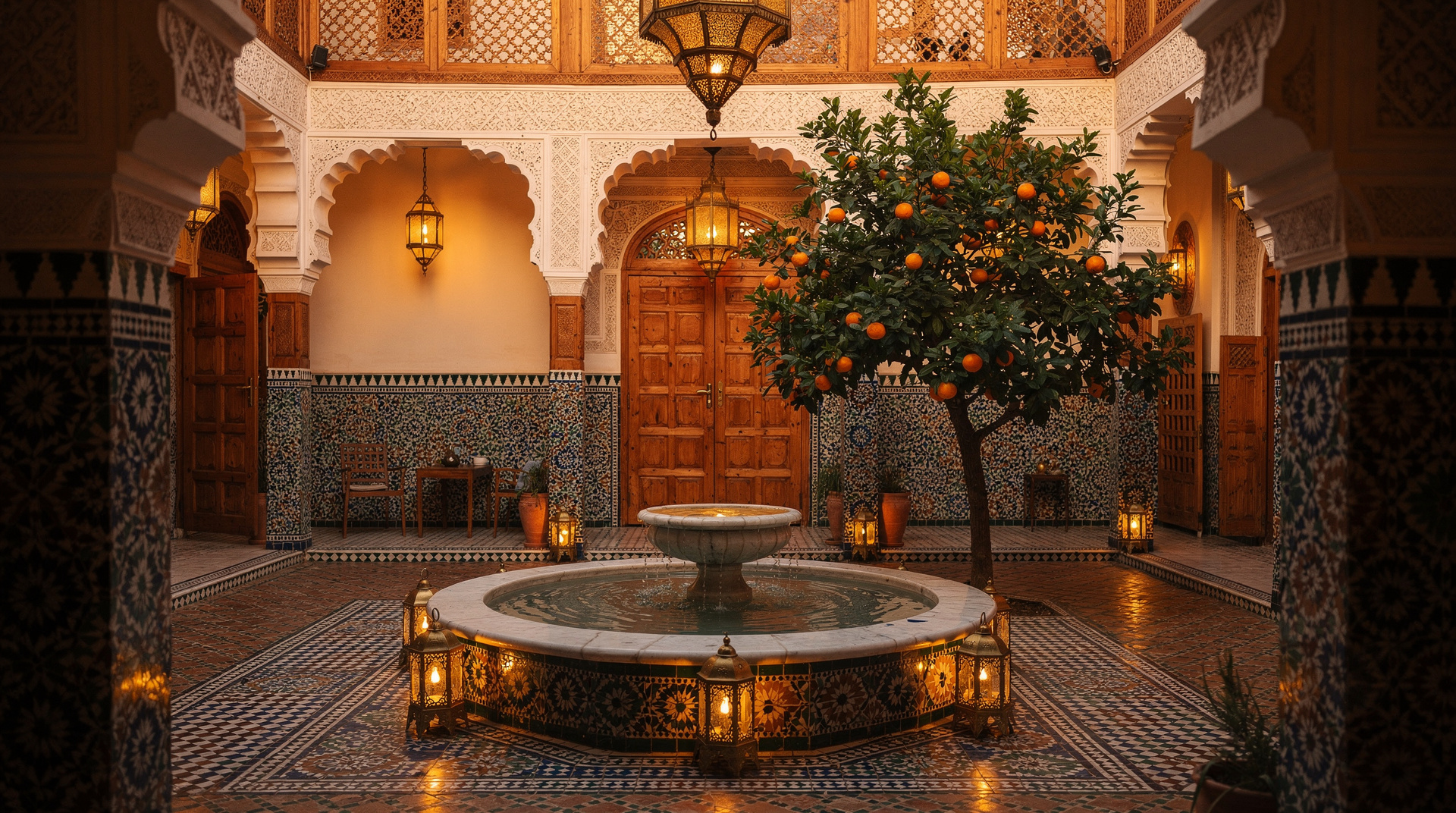
Many traditional riads — particularly owner-run properties in Marrakech, Fes, and Chefchaouen medinas — are entirely alcohol-free. This is worth confirming at booking because it is not always advertised. Phrases to use when booking: “do you serve alcohol on the premises?” or “is this a dry property?” Most riad owners will answer directly.
Some explicitly halal-positioned riads in Marrakech include Riad Yasmine, Riad Dar Darma, and Riad Kniza (which has a long track record with Gulf families). In Fes, Riad Laaroussa and Riad Idrissy cater specifically to families and neither serves alcohol as standard.
Prayer facilities in riads
Most traditional riads will provide prayer mats and qibla direction on request, and many place these in rooms as standard — especially properties that receive regular Gulf guests. The better riads often have a small dedicated space for salah. When booking, mention that you will need qibla direction and a prayer mat, and virtually all medina riads will accommodate this without hesitation.
Proximity to a mosque is rarely an issue in any Moroccan medina. You will hear the adhan from wherever you sleep.
Gender-respectful hammams
Traditional hammams in Morocco are gender-separated by either separate facilities or timed sessions (men’s hours, women’s hours). This is standard across medina hammams — not an exception made for Muslim visitors, simply how hammams work. See our hammam etiquette guide for full detail on timings, process, and what to expect with children.
Hammam sessions for families are best booked in the morning women’s slot or an afternoon private session. Many riads offer in-house hammam facilities, which allow for genuine family privacy.
Top 8 cities for Muslim families — highlights and logistics
1. Marrakech
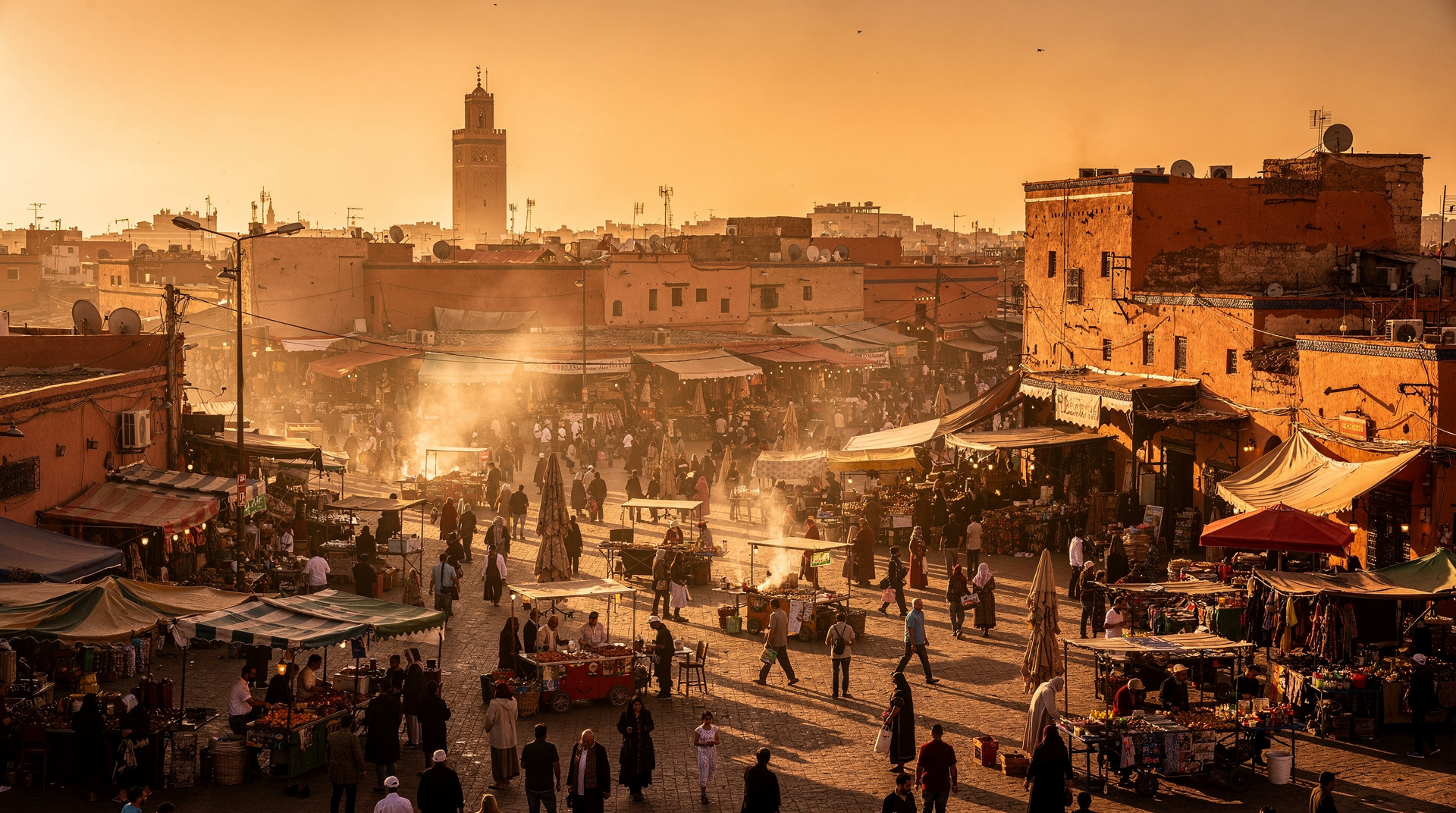
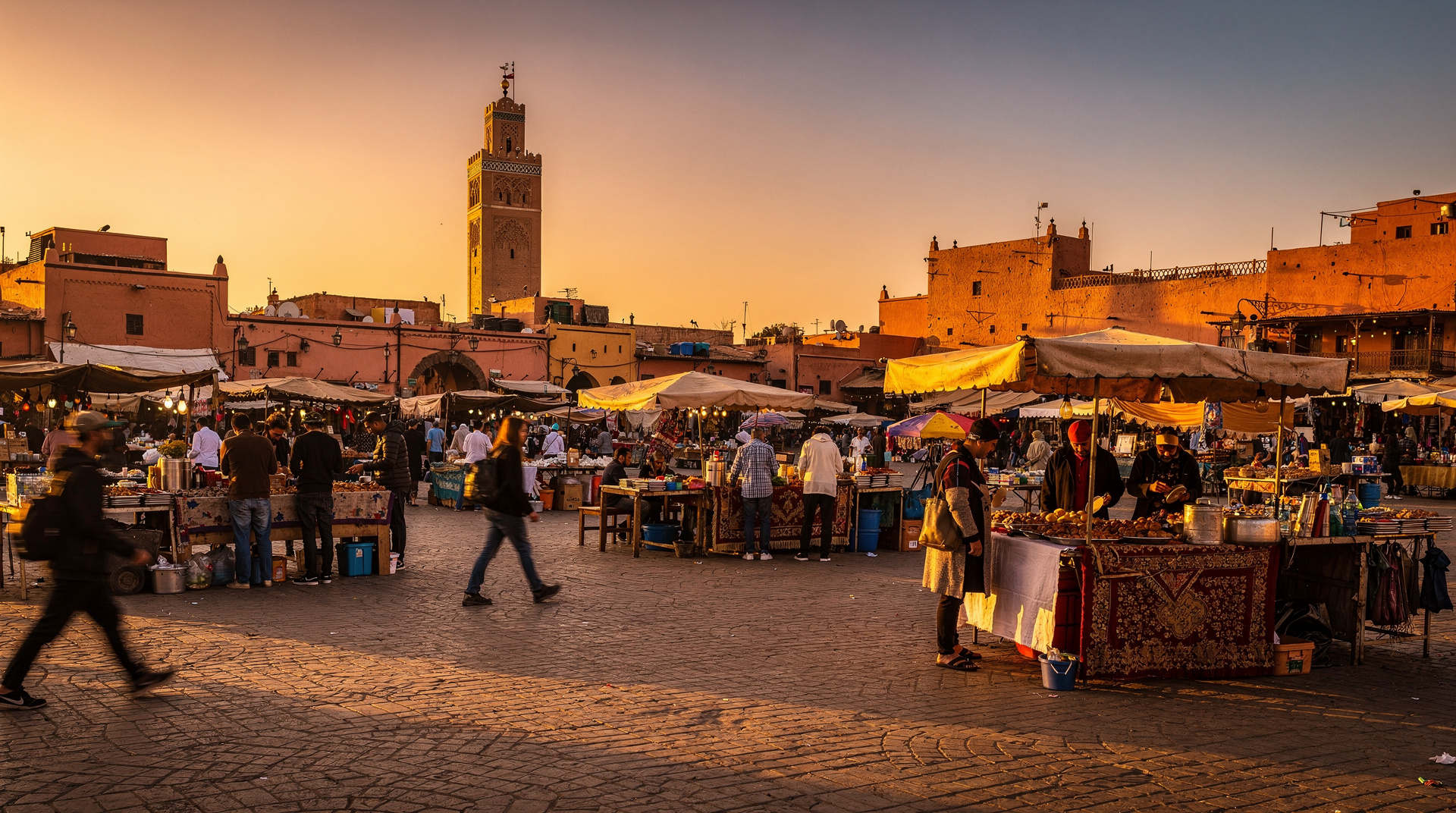
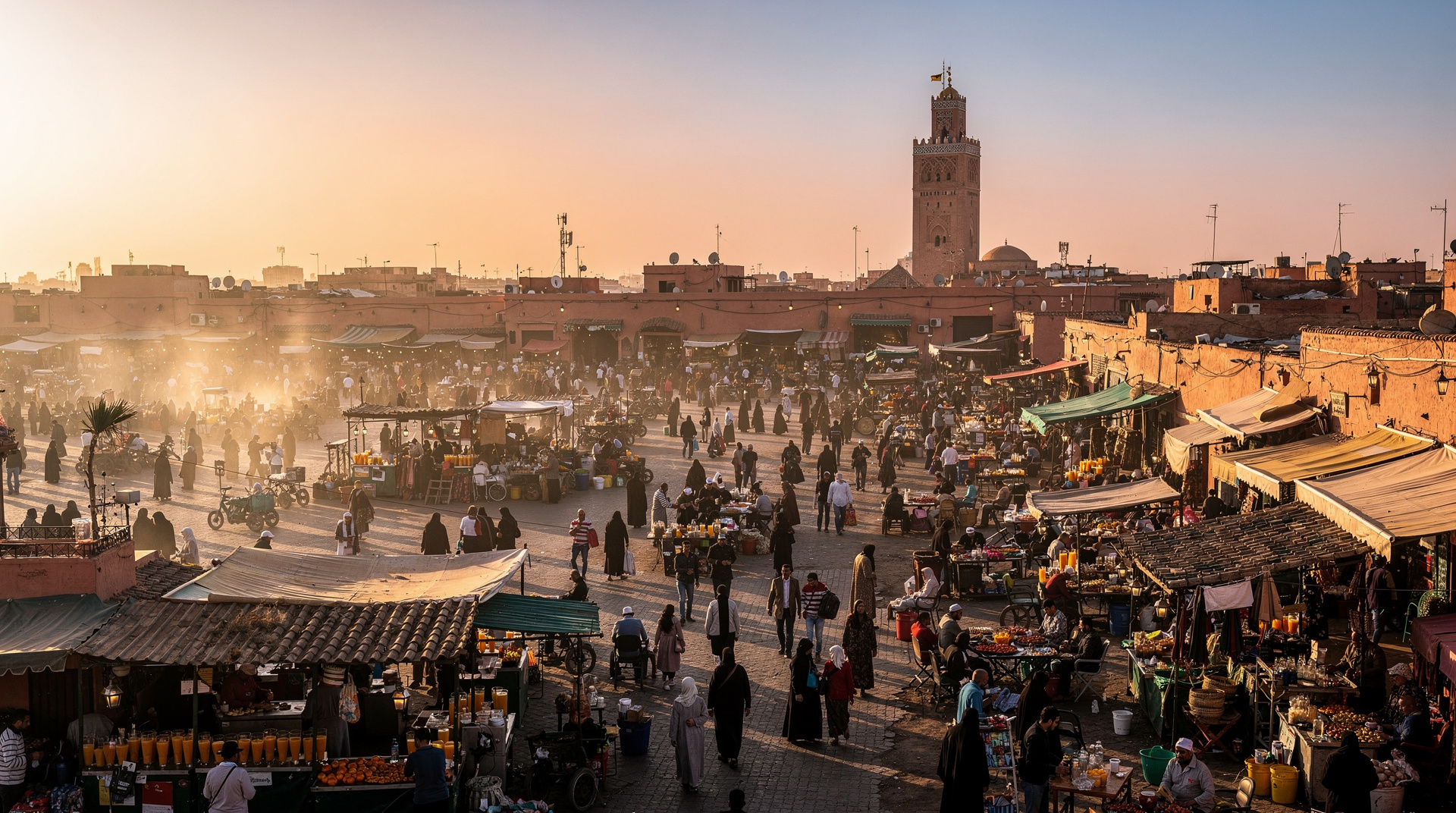
The most-visited city and an excellent base for families. The Marrakech destination page covers logistics in full. From a halal perspective, the medina is comprehensively halal — souks, restaurants, and street food without exception. The Koutoubia Mosque at the edge of Jemaa el-Fna is one of Morocco’s most iconic mosques (non-Muslims cannot enter, but the exterior and gardens are open to all). Families should plan the full cooking class experience — it is one of the most memorable halal-appropriate activities available.
Book a Marrakech cooking class with market visit (GetYourGuide)2. Fes
Fes is arguably the most spiritually resonant city in Morocco for Muslim families. The medina — the largest car-free urban area in the world — is a living medieval city centered on Qarawiyyin, one of the oldest universities on earth, founded by Fatima al-Fihri in 859. Non-Muslims cannot enter Qarawiyyin or the Qarawiyyin Mosque, but the exterior views and the surrounding Talaa Kebira are extraordinary. The tanneries, madrasas (including Bou Inania, which is accessible to non-Muslims), and the sheer density of Islamic architecture make Fes uniquely moving for Muslim visitors.
Cooking classes in Fes are also excellent — see our cooking classes Marrakech guide for comparison, though Fes classes tend to be more intimate and market-focused.
3. Casablanca
Less medina-oriented than Marrakech or Fes, Casablanca is a modern city with a beach, good transport links, and one unmissable halal-significant site: Hassan II Mosque. See the full section on mosques below. The Casablanca destination page covers logistics. For families with children, the Corniche area along the Atlantic provides open space, sea air, and the best view of the mosque at sunset or dawn.
4. Rabat
Morocco’s capital is calm, spacious, and underrated by most itineraries. The Kasbah des Oudayas, the Hassan Tower, and Chellah are all easily walkable. Rabat has excellent parks and is less overwhelming for young children than Marrakech medina. The Mohammed V Mausoleum is open to non-Muslims and is architecturally stunning — a respectful and moving place to visit with older children.
5. Chefchaouen
The blue medina city in the Rif Mountains is photogenic, cool in summer, and easy to navigate with young children because it is compact and largely car-free. The medina is small enough to explore in a morning. The town has no alcohol-facing tourist infrastructure to speak of — it is one of the more authentically conservative places you will visit. See the related section on northern Morocco in our main family travel Morocco guide.
6. Essaouira
The Atlantic port city is windy, beautiful, and relaxed. It has a long tradition of Gnawa music, Jewish and Muslim coexistence, and a medina that is genuinely walkable with a stroller. Seafood here is exceptional and halal. Beach activities — horse riding, quad bikes, surf lessons for teenagers — are all halal-appropriate.
7. Tanger
The gateway city between Europe and Africa has a dramatic medina, the Kasbah Museum, and Cap Spartel. It is a useful entry or exit point if you are travelling from Spain. The city’s French-influenced Ville Nouvelle has some alcohol-serving venues, but the medina itself is entirely aligned with traditional Moroccan food culture.
8. Merzouga (Sahara desert)
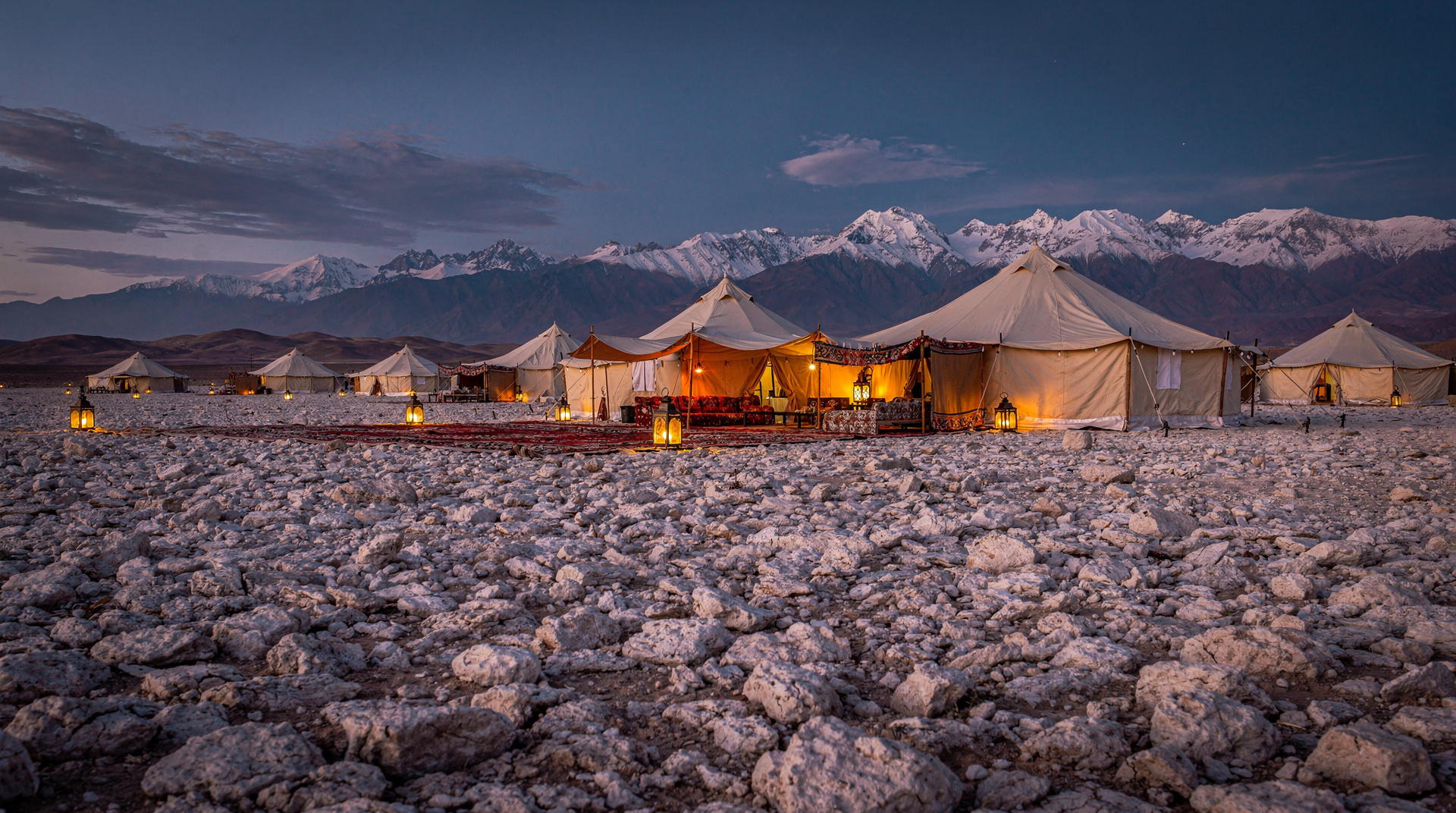
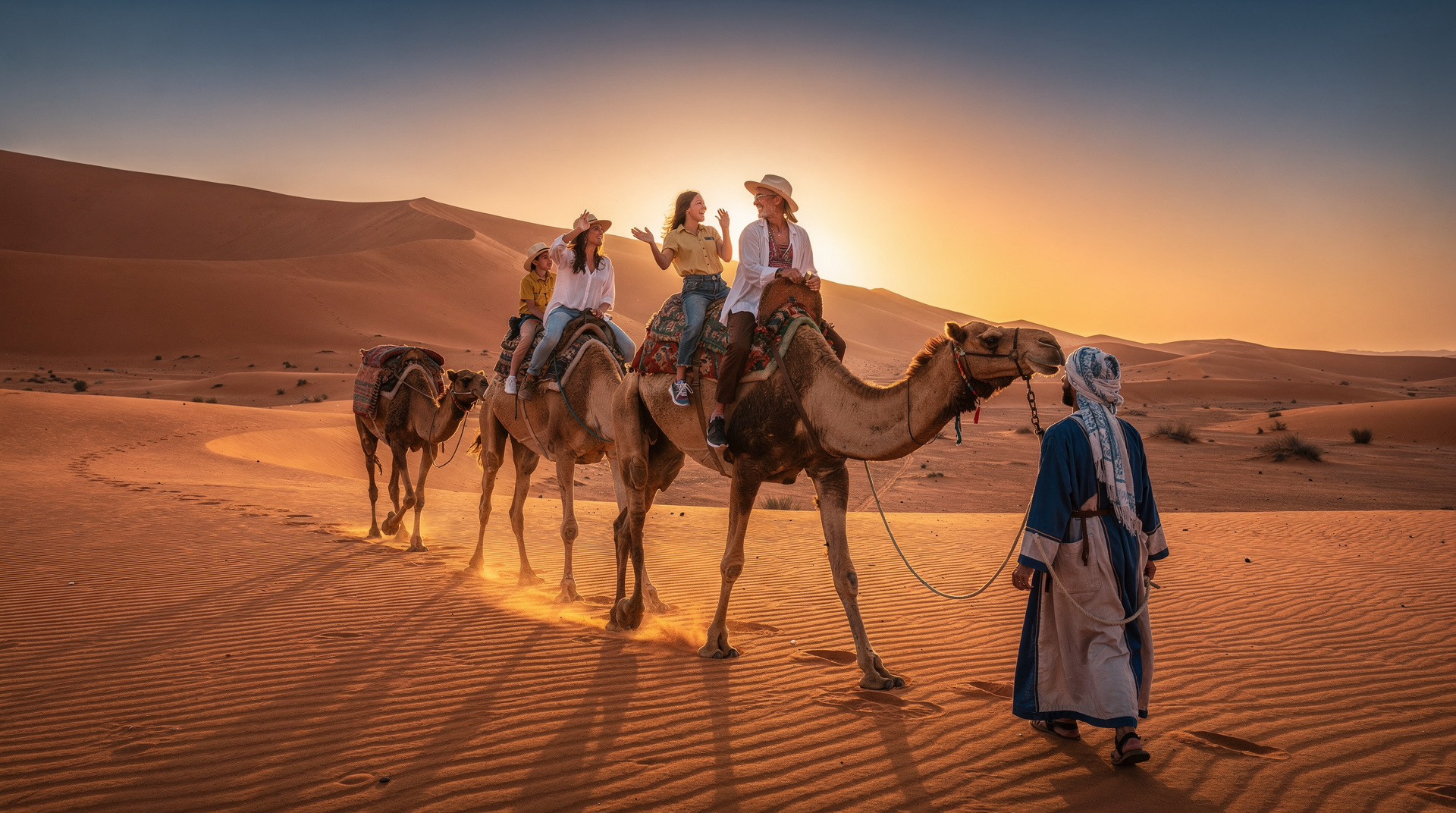
The Sahara is a transformative experience for Muslim families — the silence, the stars, and the dunes carry a particular spiritual weight. Overnight camps in the Erg Chebbi dunes near Merzouga are generally operated by Berber families with no alcohol on premises. Camel rides at sunrise or sunset are a standard experience.
Book a 3-day Sahara family tour from Marrakech (GetYourGuide)Family-friendly halal experiences worth booking ahead
Cooking class (Marrakech or Fes)
A Moroccan cooking class is one of the best family activities available. You visit a morning souk with a local guide, select produce, then cook a full Moroccan meal — tagine, salad, pastilla, mint tea. Every ingredient is halal. Children as young as six can participate meaningfully. Sessions typically run three to four hours and include lunch. See cooking class options in Marrakech and also our guide to cooking classes in Marrakech for deeper comparison.
Traditional hammam (family session)
A hammam visit is a genuinely important cultural experience, and the gender-separated format makes it entirely appropriate for Muslim families. Book an in-riad hammam or a private session at a traditional hammam for the most comfortable experience with children. See our hammam etiquette guide for everything you need to know.
Book a traditional hammam experience in Marrakech (GetYourGuide)Agafay Desert camel ride and dinner
The Agafay Desert — a rocky plateau 40 minutes from Marrakech — offers camel rides, sunset views, and Berber-style dinner under the stars without a multi-day journey. Most Agafay camps serve alcohol-free options and the dinner is always halal food. Confirm alcohol-free when booking if this matters to you.
Book sunset camel ride and dinner in Agafay Desert (GetYourGuide)Atlas Mountains day trip
A day trip from Marrakech into the High Atlas — visiting a Berber village, a valley, and a waterfall — is excellent for children who have energy for mild walking. The villages you visit are Muslim communities and the experience is culturally cohesive. Lunch is served in a Berber home or local restaurant, always halal.
Mosques you can visit as a non-Muslim family — and those you cannot
This is one of the most common questions Muslim visitors have, because the rules in Morocco differ from many other Muslim-majority countries.
Hassan II Mosque, Casablanca — open to non-Muslims. This is the only major mosque in Morocco that non-Muslims can enter. It is the third-largest mosque in the world (capacity 105,000), built on a platform extending over the Atlantic, and architecturally extraordinary. Guided tours run outside prayer times and include the main prayer hall, the ablutions room, the hammam, and the library. This is an essential visit for any Muslim family regardless of faith background of travelling companions.
Book a guided Hassan II Mosque tour with entry ticket (GetYourGuide)All other major mosques — closed to non-Muslims. This includes the Koutoubia (Marrakech), the Qarawiyyin (Fes), the Moulay Idriss Zawiya (Fes), the Kairouan Mosque (Casablanca), and the Grand Mosque of Tangier. Exteriors, medina surroundings, and adjacent plazas are always accessible. For Muslim visitors, entering these mosques for prayer is of course permitted.
Madrasas — often open. The Bou Inania Madrasa in Fes and the Ben Youssef Madrasa in Marrakech are open to non-Muslim visitors as cultural sites and are architecturally magnificent examples of Andalusian-Moroccan craftsmanship.
The Friday rhythm — what to expect
Friday is the most important prayer day of the week in Morocco, and this has practical implications for family itineraries.
Friday lunchtime (roughly 12:00–14:30) is the main disruption window. Many small shops in the medina close for Jumu’ah prayer. Some local restaurants close for this period. Souks in residential medina areas may be quieter. Tourist-facing sites (museums, gardens, guided tours) generally continue operating — they are accustomed to international visitors.
Friday morning is a good time to visit major sites because they are often less crowded before prayer time. Friday afternoon, once prayer is complete, tends to be lively — markets reopen, families are out, street food is at its best.
Government offices, banks, and post offices close on Fridays in Morocco (Saturday and Sunday are the working weekend days). This does not affect most tourist activities.
For families visiting during a Friday: plan your meals either before noon or after 14:30, use the lunchtime window for a riad rest or hammam, and enjoy the Friday afternoon energy in the medina.
Ramadan travel for Muslim families — a genuinely different experience
Most general travel advice about Ramadan focuses on the inconvenience for non-Muslim visitors: closed restaurants during daylight, reduced service, hot queues. For Muslim families, Ramadan in Morocco is the opposite — it is one of the most beautiful times to visit.
Why Ramadan works for Muslim families:
- Iftar is a community event. Breaking fast in Morocco happens simultaneously at sunset, announced by cannon fire in some cities. Restaurants, riads, and street stalls prepare extraordinary spreads: harira, chebakia (sesame-honey pastries), dates, meloui, hard-boiled eggs. Sharing iftar in a Marrakech riad courtyard or at Jemaa el-Fna is a memory your children will carry for life.
- Suhoor is available. Many riads and medina restaurants stay open late into the night and re-open before dawn. The night economy during Ramadan is rich.
- The spiritual atmosphere is unlike any other time. Mosques are full, the streets are quiet and reflective during the day, and the cities come dramatically alive after iftar. Quranic recitation fills the air.
- Practical note: some tourist-facing restaurants and cafes in Marrakech medina’s tourist zone do remain open during the day for non-fasting visitors, so you are not stranded if you have non-Muslim travelling companions or young children who cannot fast.
See our detailed Ramadan travel Morocco guide for logistics, city-by-city iftar recommendations, and timing details.
Kid-friendly halal restaurants by city
Marrakech
Nomad (Derb Aarjan, medina): Modern Moroccan food, rooftop terrace, menu includes simpler dishes children eat well. No alcohol served. English-speaking staff.
Earth Cafe (near Jemaa el-Fna): Vegetarian, fully halal, good for children with varied appetites. Calm atmosphere, no smoke.
Le Jardin (medina): Beautiful garden courtyard, Moroccan menu with kid-friendly tagines. No alcohol policy.
Jemaa el-Fna food stalls: For adventurous families, the evening food market (stalls 1–100) is chaotic and fun. Point and choose. All halal. Prices fixed per portion.
Fes
The Ruined Garden: Garden restaurant in the medina, serves excellent Moroccan food, no alcohol, child portions available.
Cafe Clock: Camel burger, Moroccan wraps, mint tea. Popular with both locals and visitors. No alcohol.
Riad Laaroussa restaurant: If staying elsewhere, book dinner here — set menu, medina views, fully halal, family tables available.
Casablanca
Rick’s Cafe is famous but serves alcohol — skip it. Instead: La Sqala (near the old medina ramparts) serves excellent traditional Moroccan food in a garden setting, no alcohol, popular with Moroccan families at weekends.
Sqala Brasserie Marocaine for breakfast and lunch: msemen, amlou, pastilla — a proper introduction to Moroccan cooking. No alcohol.
Tanger
El Tangerino: Medina location, full Moroccan menu, family tables, no alcohol. Good bastilla and couscous.
Populaire Saveur de Poisson: Legendary no-choice fish restaurant — three courses of fresh fish from the harbor. No menu, no alcohol, no choice. Children either love it or endure it.
Best halal riads for Muslim families
A short curated list of properties known to accommodate Muslim families well, either as explicitly alcohol-free properties or as riads with established track records with Gulf and Asian Muslim families:
Marrakech
- Riad Yasmine: central medina, family rooms, prayer facilities on request, no bar
- Riad Kniza: traditional maison d’hôtes with a long history of Gulf guests, excellent family service
- Riad El Fenn: luxury, family suites — note this property does have a bar, but rooms are private and prayer facilities are provided
Fes
- Riad Idrissy: family-run, no alcohol, near Bab Bou Jeloud, prayer mats in rooms as standard
- Riad Laaroussa: beautiful riad, family rooms, halal food only, no bar
Chefchaouen
- Almost all small riads and guesthouses in Chefchaouen are alcohol-free. Dar Echchaouen and Lina Ryad are two reliable options with family rooms.
When booking any property, asking directly — “do you serve alcohol?” — will get a clear answer. Morocco’s hospitality culture is honest about this.
Tour operators catering to Muslim families
Several operators have developed dedicated itineraries for Muslim families travelling to Morocco:
Andalus Tours Morocco: Specialises in halal-verified itineraries for Gulf and UK Muslim families. Accommodation pre-screened for prayer facilities and alcohol-free policies.
Halal Travel (UK): Packages Morocco as part of Muslim-friendly destinations with accommodation certification.
Bamba Experience: Not exclusively halal-focused, but offers highly customisable Morocco family packages where you can specify alcohol-free accommodation.
Local guides in Marrakech and Fes: Many licensed guides are themselves devout Muslims and will naturally route you through the spiritual and architectural heritage rather than tourist-trap restaurants and bars. Ask your riad for a personal recommendation.
For Gulf families specifically, it is worth noting that Morocco is one of very few non-Gulf countries where you will feel entirely at ease in terms of dress norms, food, prayer times, and cultural expectations. Children see Islamic practice reflected in the world around them — which is, for many families, the point.
Building an itinerary around this guide
Most Muslim families combine two or three of the cities above rather than picking one. The family Morocco itinerary and cultural deep-dive Morocco itinerary both work well as starting frameworks — Marrakech and Fes for the spiritual and architectural depth, with Chefchaouen or Essaouira added for a slower, more relaxed leg. The broader family travel Morocco guide and Morocco with kids guide cover the non-halal-specific logistics (pacing, packing, health) that apply on top of everything here.
Frequently asked questions about Halal-Family Morocco Travel Guide
Is all restaurant food in Morocco halal by default?
Yes, in the overwhelming majority of cases. Morocco is a Muslim-majority country and halal slaughter is the default for all meat. You do not need to look for halal certification. The exceptions are: some upscale international hotel restaurants, French-style restaurants in Casablanca and Tanger that may include pork charcuterie, and obviously any non-Moroccan cuisine restaurant (Chinese, Italian) which you would evaluate as you would at home. Street food, souk food, riad meals, and local restaurants are halal without exception.
Do riads serve alcohol?
Some do, many do not. Larger boutique riads catering to European tourists typically have a wine list. Family-run riads in the medina, and most riads in conservative cities like Chefchaouen, do not serve alcohol. When in doubt, ask directly before booking. Properties listed on Muslim-travel platforms will have alcohol-free as a stated filter.
Are prayer facilities available in riads?
Most riads — especially those with experience hosting Gulf families — will provide a prayer mat and qibla direction on request. Better properties place these in rooms as standard. The call to prayer from nearby mosques provides accurate timing wherever you are in a Moroccan medina. If you are staying outside the medina in a modern hotel, you may need to request a prayer mat.
Which mosques can non-Muslim family members visit?
Hassan II Mosque in Casablanca is the only major mosque in Morocco open to non-Muslims as a guided tour. All other major mosques — including Koutoubia (Marrakech) and Qarawiyyin (Fes) — are closed to non-Muslims except the exterior. Muslim family members can pray in any mosque during prayer times.
What is the best city for a first-time Muslim family visit?
Marrakech is the most practical first city because of its range of accommodation, easy airport connections, and proximity to both the desert and the mountains. Fes is the more spiritually significant city and deeply rewarding for families with older children. A 10-day itinerary combining Marrakech, Fes, and Chefchaouen hits the three most culturally rich cities without over-scheduling.
Are hammams co-ed in Morocco?
No. Traditional Moroccan hammams are completely gender-separated — either by physical facility (separate entrances and spaces) or by timed sessions (men’s hours, women’s hours). This is standard practice, not a special accommodation for Muslim visitors. In-riad hammams can be booked as private family sessions, which is the most comfortable option for younger children.
Is Morocco appropriate during Ramadan for families?
For Muslim families, Ramadan is actually one of the best times to visit Morocco. The iftar atmosphere, the communal spirit, and the night-time energy of the medinas is extraordinary. Practical considerations: restaurants open fully after sunset, some cafes close during daylight hours, and the pace of the day is quieter. Children who fast will feel the experience deeply; those who do not yet fast will still be immersed in the rhythm of the month. See our full Ramadan travel Morocco guide for city-by-city planning.
What about halal travel insurance and money?
There is no specific halal financial infrastructure to arrange before travelling to Morocco — the dirham (MAD) is a standard closed currency and standard travel insurance applies. The practical consideration is cash: Morocco remains largely cash-based outside upscale hotels, so budgeting alongside the Morocco currency and money guide is more useful preparation than anything halal-specific.
Are Sahara desert camps appropriate for Muslim families?
Yes, and they’re a highlight for many. Most Erg Chebbi camps near Merzouga are run by Berber families, serve halal food as standard, and do not serve alcohol. The luxury desert camps guide and camel trekking Morocco guide cover what to expect from the camel ride, the camp dinner, and the overnight stay in more detail.