Quick facts
- Language
- Tamazight, Darija
- Access
- 4x4 required from M'Hamid (2 hrs piste)
- Distance from Marrakech
- ~560 km (8.5–9 hrs driving)
- Best for
- Remote desert, large dunes, serious Sahara experience
The Real Sahara
| At a Glance | |
|---|---|
| Where | Far southern Sahara, beyond M’Hamid, reached by 4x4 piste |
| Cost | Around 250–400 MAD/person budget camp; 1,500–5,000+ MAD/person luxury, full board |
| Time needed | 2–3 nights minimum given the travel involved |
| Getting there | ~9 hrs drive from Marrakech to M’Hamid, plus a further 2 hrs by 4x4 |
| Best time | October to April; avoid the deep Sahara June–August heat |
There is a Sahara that tourists visit, and then there is the Sahara that remains. Erg Chigaga is closer to the latter.
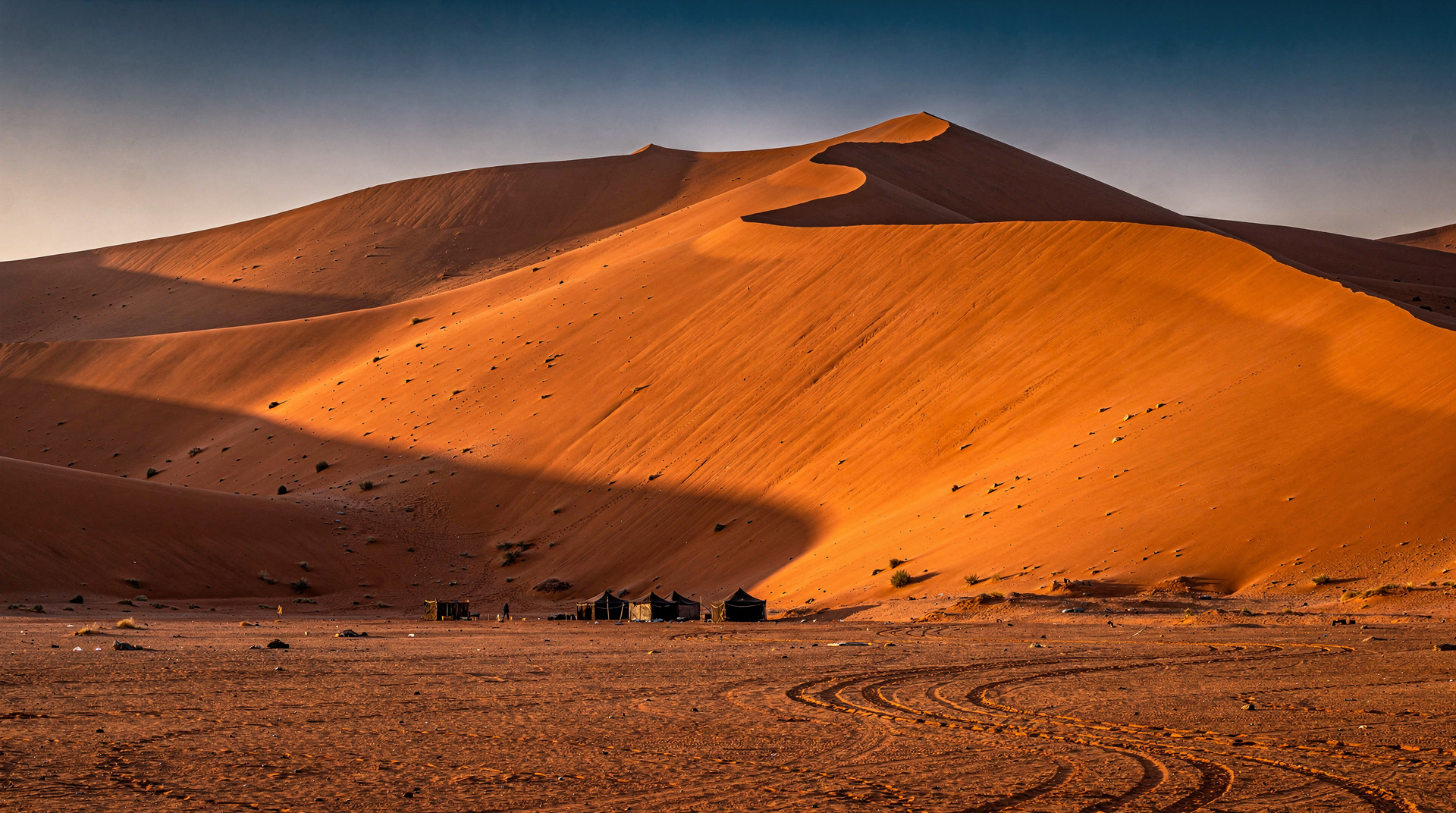
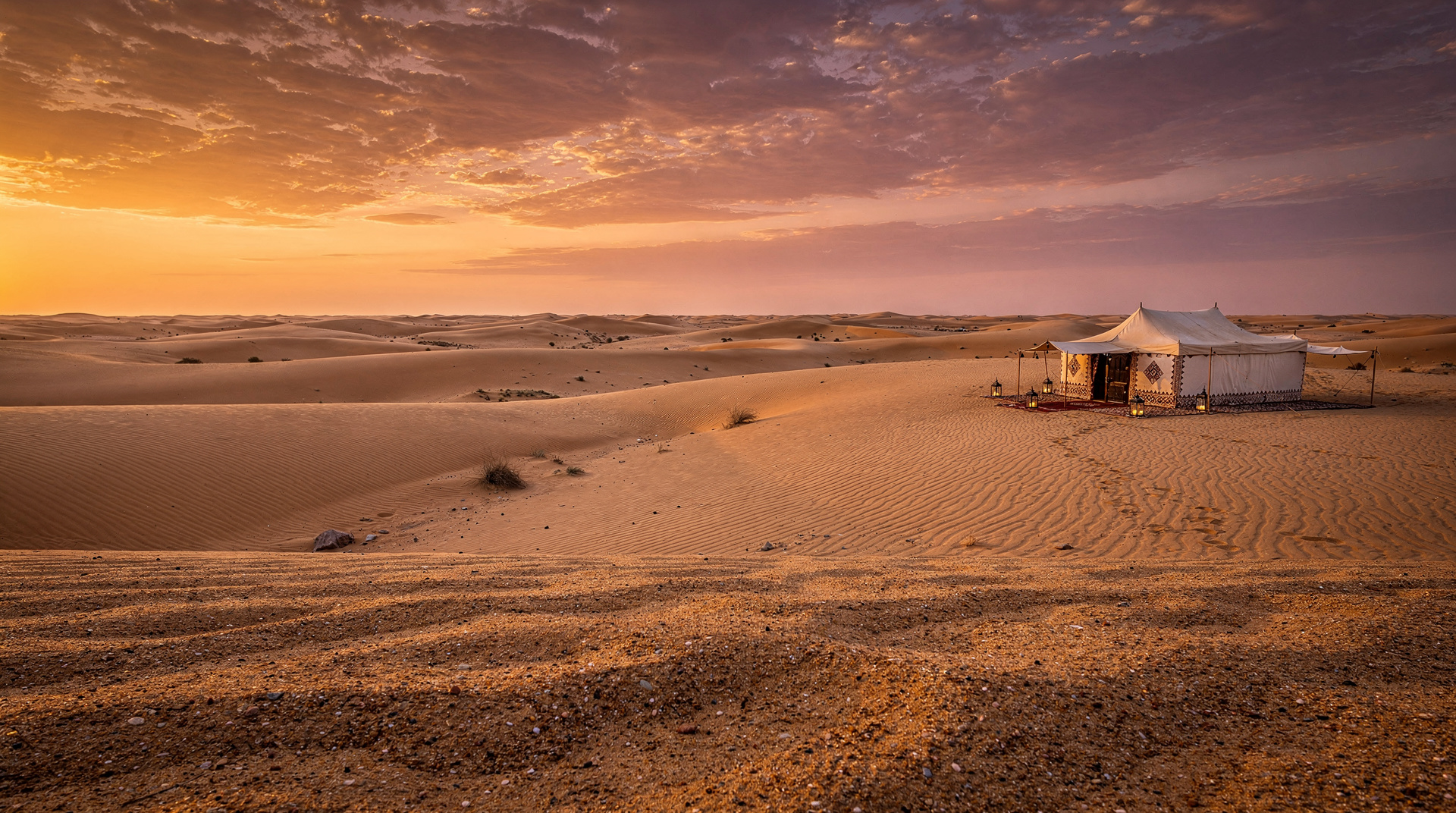
The great dune field of Erg Chigaga stretches 40 km across the far southern edge of Morocco, accessible only by 4x4 across 50 km of open piste from M’Hamid — the last town on the paved road at the end of the Draa Valley. There is no main road to Erg Chigaga. There is no cluster of tour buses at its edge. The camps here are separated from each other by dune ridges rather than by a few hundred metres of compacted sand, and walking an hour from your camp puts you in a landscape where the horizon is nothing but dune and sky.
This is not the experience on offer at Merzouga, where excellent infrastructure has made the dunes accessible to day-trippers from Rissani. Nor is it Zagora’s Erg Lehoudi, where the scale is modest and the return to Marrakech is seven hours rather than nine. Erg Chigaga is for travellers who want the Sahara in its most committed form: remote, challenging to reach, and extraordinarily beautiful.
The dunes themselves reach 100–150 metres and extend far enough that crossing them on foot or camelback takes a full day. The night sky — in the absence of any light pollution for hundreds of kilometres in any direction — is among the darkest in Africa north of the Tropic of Cancer.
Getting There
From Marrakech: The total drive to M’Hamid is approximately 560 km via Ouarzazate and the Draa Valley — allow 8.5–9 hours of driving time, split comfortably over 2 days with an overnight in Ouarzazate or Zagora. From M’Hamid, the Erg Chigaga piste takes 2 additional hours by 4x4.
Organised tour from Marrakech: Most operators running Erg Chigaga expeditions pick up from Marrakech, drive the Draa Valley over 2 days, and spend 2 nights at the dunes before returning. A well-structured circuit includes Aït Benhaddou, Ouarzazate, and Zagora on the way south.
Book a Marrakech Sahara tour via Zagora and Aït Benhaddou toward M’HamidFrom Zagora: Zagora is 100 km north of M’Hamid on the paved road — 1.5 hours by car. From Zagora, it is a further 2 hours to the dune field by 4x4. Total from Zagora to camp: 3.5 hours.
The piste from M’Hamid: The track from M’Hamid to Erg Chigaga crosses the dried Draa bed, sandy flatlands, and isolated dune systems before reaching the main dune field. Navigation without GPS requires local expertise — always travel with a driver who knows the route, as trails can be obscured by sand drift overnight.
Getting Around
Within Erg Chigaga: The dunes are explored on camelback, on foot, or by 4x4. Camp operators provide camel guides for treks of 1–4 hours into the dune interior. Longer cross-dune treks (full day by camel or 4x4 circuit around the entire dune field) can be arranged through camp managers.
Between camps: Camps are spread across the dune edge, often within camel-riding distance of each other but not easily walkable. Arrange transport through your camp.
M’Hamid town: The village is small but has basic services — fuel, a weekly souk, several auberges, and 4x4 rental operators. Stock up on water before heading into the piste.
Top Things to Do
Camelback Trek into the Dunes
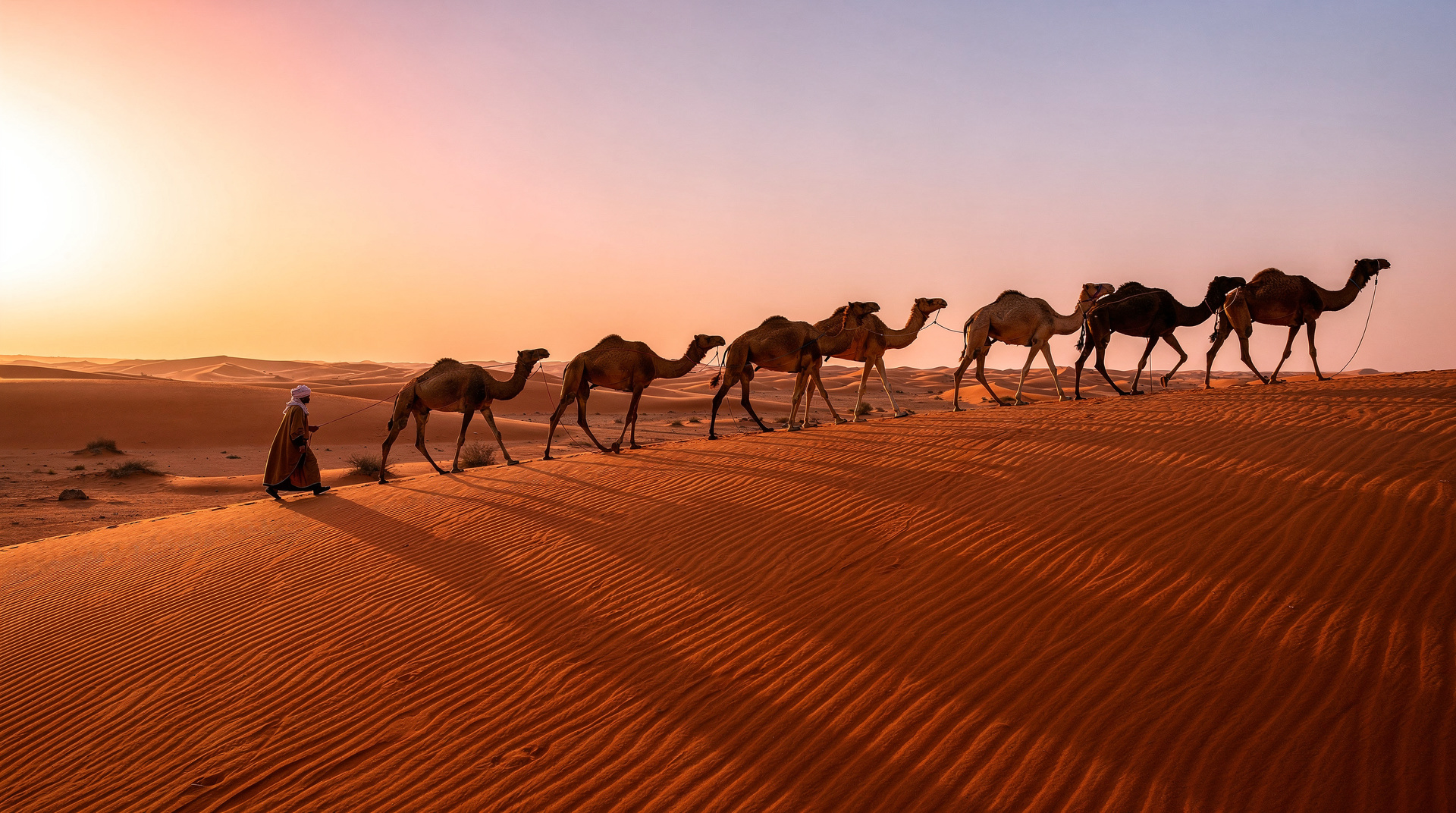
The most fitting way to arrive at camp and to explore Erg Chigaga’s interior is by camel — swaying through the dune corridors as the afternoon sun turns the sand from gold to copper. Unlike the shorter treks at Merzouga, Erg Chigaga offers genuine multi-hour camel journeys that cross multiple dune ridges before reaching the camp. A typical sunset camel arrival from the dune edge takes 1.5–2 hours. Experienced riders can arrange day-length journeys that cross the dune field north to south.
Overnight Desert Camp Under the Stars
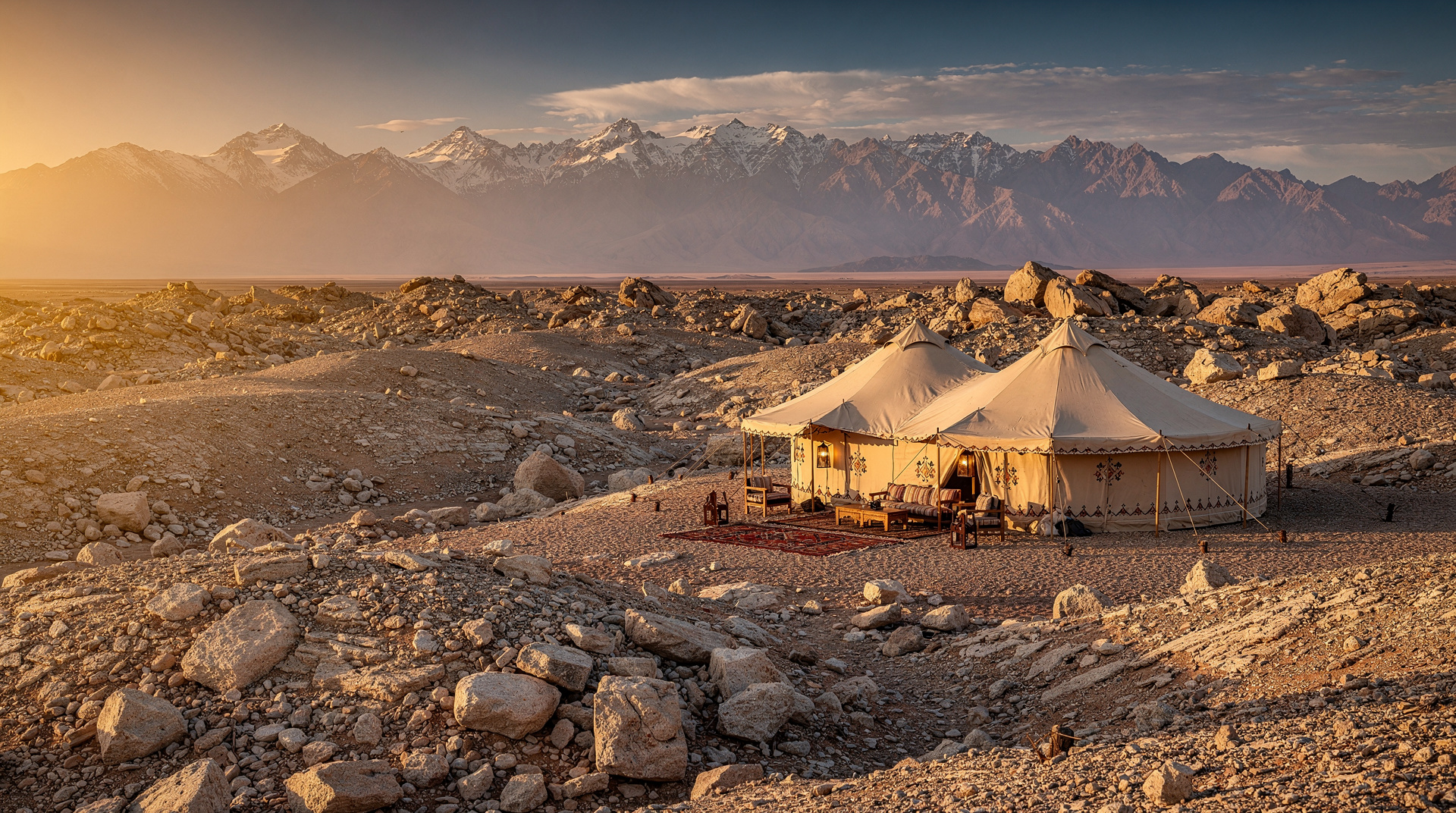
The fundamental Erg Chigaga experience: a luxury or mid-range desert camp positioned so that no other structure is visible in any direction, dinner served by candlelight in the desert silence, and a night sky of extraordinary clarity. Luxury camp operators at Erg Chigaga offer significantly higher standards than comparable prices would buy at Merzouga — fewer tourists means camps compete harder on quality. Expect full-board: Moroccan multi-course dinner, star identification with a guide, and Gnaoua musicians around a fire. Budget camps: 250–400 MAD per person. Luxury glamping: 1,500–4,000 MAD per person.
Book a luxury desert camp experience (similar standards, Merzouga)Stargazing
Erg Chigaga sits in one of the darkest zones in all of North Africa. On clear nights — which are the rule rather than the exception in the Moroccan Sahara — the Milky Way is visible from end to end, and the density of stars is genuinely disorienting. Several camps provide telescopes; even without optical aid, lying on warm sand 30 minutes from any light source with the entire galactic plane above you is one of those travel experiences that is impossible to adequately describe in advance. This alone justifies the effort of reaching Erg Chigaga.
Full-Day 4x4 Dune Circuit
The most active way to experience the dune field’s scale — a 4x4 circuit that ascends the largest dune ridges, navigates through corridors between dune chains, visits fossil-bearing flat areas between the dune systems, and descends to the edge of the ancient Draa riverbed (now usually dry). Allow a full day; bring substantial water (3+ litres per person) and sun protection. This excursion makes the 40 km extent of the dune field comprehensible in a way that camelback alone cannot.
The Road Through M’Hamid
The town of M’Hamid el-Ghizlane (often simply called M’Hamid) has a melancholy, end-of-the-road beauty — a small settlement of mud houses, a crumbling kasbah, and a weekly market that draws Tuareg traders from the deep south. The Friday souk at M’Hamid is one of the most ethnically diverse rural markets in Morocco: Arab, Berber, and Tuareg traders alongside agricultural produce, livestock, and traditional silver jewellery. If you arrive on a Friday, allow time for the market before continuing to the piste.
Draa Riverbed Walk
The ancient bed of the Draa River — now dry for most of its length below Zagora, occasionally flooded in exceptional rainfall years — runs through the area south of M’Hamid. Walking the riverbed in the early morning, when shadows are long and the silence is complete, is a meditative experience unlike anything in the tourist infrastructure. Local guides from M’Hamid can lead riverbed walks that explain the geology and the history of the former river.
Where to Stay
Luxury Desert Camps (2,000–5,000 MAD / €200–500 per person per night)
Azalai Desert Camp is one of Erg Chigaga’s most respected luxury operators — private tents with proper beds and en-suite shower facilities, exceptional food, and a camp position in the dune interior that feels genuinely isolated. Full board included. Reserve months in advance in high season.
Erg Chigaga Luxury Camp (several operators use similar names) offer 10–20 private tents arranged around a central fire area and kitchen. Quality has improved dramatically in recent years as operators compete for high-end travellers who might otherwise choose Merzouga.
Mid-range (500–1,500 MAD / €50–150 per person per night)
Bivouac Chegaga is a well-regarded mid-range operator with comfortable tent accommodation, full-board meals, and reliable camel guide organisation. Good value for the location. From 600 MAD per person including dinner, breakfast, and camel trek.
Several M’Hamid-based operators run their own dune camps with transport from the village — an economical choice that trades direct dune-edge positioning for a better rate.
Budget (250–400 MAD per person)
Basic camps exist at the dune edge but are limited in number compared to Merzouga — the remoteness makes supply chains more expensive. Budget camps at Erg Chigaga are more basic than comparable prices buy at Merzouga; adjust expectations accordingly.
Where to Eat
At Erg Chigaga, all meals are camp-provided. A standard camp dinner includes harira soup, Moroccan salad plate, lamb or chicken tagine with vegetables, fresh khobz, and sweet mint tea. Luxury camps add bastilla, mechoui lamb, and Moroccan pastries.
In M’Hamid village: Before or after the piste, Restaurant Kasbah Azul (near the main roundabout) serves straightforward Moroccan cooking — tagine 80–100 MAD, set menu 120 MAD — and the owner is a reliable source of piste conditions and camp operator recommendations.
Practical Tips
4x4 requirement: The piste to Erg Chigaga is not navigable in a standard car. If you are self-driving the Draa Valley, arrange 4x4 hire in M’Hamid or contract a local driver for the piste section. International rental companies generally prohibit taking their vehicles off paved roads.
Navigation: Do not attempt the piste without a local driver or GPS tracks loaded on your phone. The desert navigation is genuinely difficult — tracks shift with sand drift and there are no road signs. Every camp operator can arrange 4x4 transport from M’Hamid.
Water and provisions: Bring minimum 3 litres of water per person per day in the dunes. Your camp will provide meals but personal water in the dunes (for day treks) is your responsibility. Sunscreen factor 50+, sunglasses, and a headscarf are essential.
Communication: Mobile signal is absent once you leave M’Hamid. Inform your riad or hotel in Marrakech of your return date. Satellite phone rental is available from M’Hamid operators for those planning multi-day dune trekking.
Erg Chigaga vs Merzouga: The honest comparison — Merzouga offers more infrastructure, more choice of camps, and 150-metre dunes accessible in 10 hours from Marrakech. Erg Chigaga offers 50 km of dunes, genuine remoteness, and a more exclusive experience, at the cost of an extra half-day of travel. Both are legitimate choices. See our Merzouga vs Zagora guide and how to book a Sahara tour for a full comparison.
When to Visit
October to April is essential. Summer heat in the deep Sahara (June–August) regularly exceeds 50°C midday — genuinely dangerous and wholly incompatible with the camel trekking and outdoor activities that make Erg Chigaga worthwhile.
November to February: Cold nights (near 0°C, occasionally below) but brilliant days (20–25°C). The desert light in winter is extraordinary — sharp, clean, low-angle. Best for photography. Bring serious sleeping layers.
March to April: Warm days, cool nights, the longest days, and wildflowers on the hamada north of the dunes. Ideal window for first-time desert visitors.
October to November: Similar to spring — good temperatures, lower tourist numbers than the spring peak.
How to Fit Erg Chigaga into a Longer Itinerary
The serious Sahara circuit (7–8 days from Marrakech): Day 1: Marrakech → Ouarzazate → Aït Benhaddou (overnight). Day 2: Ouarzazate → Zagora via Draa Valley (overnight). Day 3: Zagora → M’Hamid → Erg Chigaga by 4x4 (2 nights in dunes). Day 5: Return to M’Hamid → Zagora → overnight. Day 6–7: Return to Marrakech via Ouarzazate.
Draa Valley full exploration (10 days): Add Dades Valley and Todra Gorge to the east for a complete southern Morocco circuit. Fly into and out of Marrakech.
Combined with Merzouga: Drive Marrakech → Ouarzazate → Zagora → Erg Chigaga (2 nights) → M’Hamid → [Foum Zguid piste] → Merzouga (2 nights) → return via Fes. A demanding 10-day itinerary crossing the width of Morocco’s desert region. Requires a 4x4 and careful planning — see our luxury desert camps guide and Sahara from Marrakech vs Fes for further detail.
Erg Chigaga vs Zagora’s Erg Lehoudi vs Merzouga
| Erg Chigaga | Zagora (Erg Lehoudi) | Merzouga | |
|---|---|---|---|
| Distance from Marrakech | ~560 km, ~9 hrs + 4x4 piste | ~360 km, ~6.5 hrs | ~560 km, ~9–10 hrs (paved) |
| Access | 4x4 required, 2-hr piste from M’Hamid | Short 4x4 hop from town | Paved road almost to the dunes |
| Dune scale | Largest, 100–150 m, 40 km field | Modest, small dune patch | Large, 150 m, well developed |
| Crowds | Lowest — genuinely remote | Low, convenient for short trips | Highest, most infrastructure |
| Best for | Serious Sahara travellers, stargazing | Time-pressed travellers wanting “a taste” | First-timers, day-trippers from Rissani |
See our full Merzouga vs Zagora comparison and Zagora vs Erg Chigaga guide for a deeper breakdown.
Frequently asked questions about Erg Chigaga
Is Erg Chigaga worth the extra travel compared to Merzouga?
For most first-time visitors, no — Merzouga delivers 90% of the visual experience with far less driving. For travellers who have already done a standard Sahara tour, or who specifically want isolation, larger dunes, and the darkest skies in the region, Erg Chigaga is worth the additional half-day of travel each way.
Can I visit Erg Chigaga as a day trip?
Not realistically. Given the distance from Marrakech (9 hours one way) and the 4x4 piste from M’Hamid, Erg Chigaga requires at minimum a 3-day, 2-night round trip, and most well-planned itineraries allow 4–5 days including the Draa Valley stops.